Review · SIEM REAP
Siem Reap: 2-Day Temple Highlights Sunrise and Sunset Option
Angkor is best seen before the heat. This two-day tour packs Siem Reap’s major temples and quieter outposts into a sensible plan, with Angkor Wat sunrise on the second morning and a sunset finish on the first day. I like the mix of famous sights and smaller ruins, especially Banteay Srei, Preah Khan, and Ta Nei. I also like the practical service: an air-conditioned vehicle, hotel pickup, bottled water, and cold towels.
The main catch is cost. The tour is advertised at $46 per person, but the required two or three-day Angkor pass costs another $62. Meals are also separate. You should also expect early starts, plenty of walking, uneven stones, and long days in the heat.
Guides including Chhay, Pi, Pal, Sak, Bun, and So have been praised for clear English, humor, cultural insight, and help with photographs. Drivers such as Vichet, Keal, Mao, and Naroo are often singled out for safe driving and cold towels at the end of each stop. The service sounds unusually attentive for a group excursion, though the exact guide and driver depend on the date.
Key points at a glance
- A strong two-day route: You see Angkor Wat, Angkor Thom, Ta Prohm, Banteay Srei, Preah Khan, Neak Pean, Pre Rup, Ta Nei, and Bakheng or a rice-field sunset.
- Sunrise from the eastern side: The early entrance through Angkor Wat’s less-used eastern side gives you a quieter approach before the main crowds gather.
- Banteay Srei is worth the drive: Its small scale and finely cut sandstone carvings offer a sharp contrast to Angkor Wat’s huge courtyards.
- Cooling help matters: The vehicle has air conditioning, while the driver supplies bottled water and cold towels after temple walks.
- Guiding is a major strength: The better guides explain Hindu and Buddhist ideas, Khmer rulers, temple design, and modern Cambodian culture in clear English.
- Budget carefully: The tour price does not include the $62 temple pass or meals, so the realistic base cost is about $108 before food.
Why this route works for a first visit
Angkor is not one temple. It is a huge archaeological area spread around Siem Reap, and visiting it without a plan can mean too much time in the car or too many grand temples in one tiring blur.
This tour handles that problem by splitting the area across two days. Day one moves farther from the central Angkor Thom area and gives you several smaller, more atmospheric sites. Day two focuses on the icons: Angkor Wat, Ta Prohm, and Bayon.
I like that rhythm. The first day introduces you to Khmer temple design without using up Angkor Wat too soon. The second day begins with the most famous sight at dawn, then moves through jungle ruins and the fortified city of Angkor Thom.
The pace is still demanding. You will walk over stone galleries, steps, roots, and rough paths. Several people found the tour tiring, even while calling it worth the effort. If you have knee trouble, tell the guide before setting out. One guide and driver were praised for patiently helping an older parent and a person with a knee problem, but this is not a wheelchair-accessible activity.
More Temple Sunrise Tours in Cambodia
- Angkor Wat Sunrise or Sunset Tour with Guide from Siem Reap
★ 5.0 · 12,109 reviews - Siem Reap: Angkor Wat: Small-Group Sunrise or Sunset Tour
★ 5.0 · 9,444 reviews - Siem Reap: Angkor Wat 2-Day Tour with Sunrise and Sunset
★ 4.9 · 4,429 reviews
Pre Rup and the long road to Banteay Srei
Pre Rup is the first major stop on day one. Built for King Rajendravarman in 961 or early 962, this Hindu temple served as a state temple and uses brick, laterite, and sandstone.
Its stepped temple-mountain design gives you a useful introduction to the vertical style used across Angkor. You can see how the structure rises in layers toward the central sanctuary, though the exposed stone and stairs demand care in hot weather.
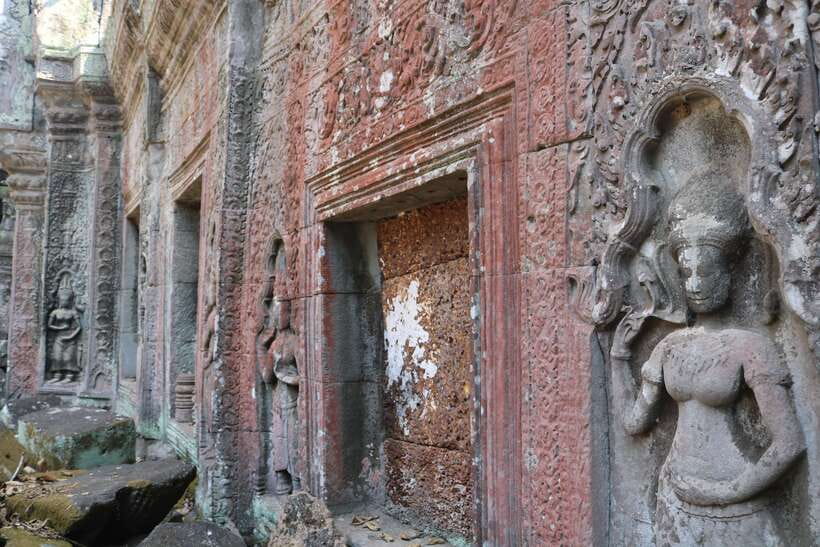
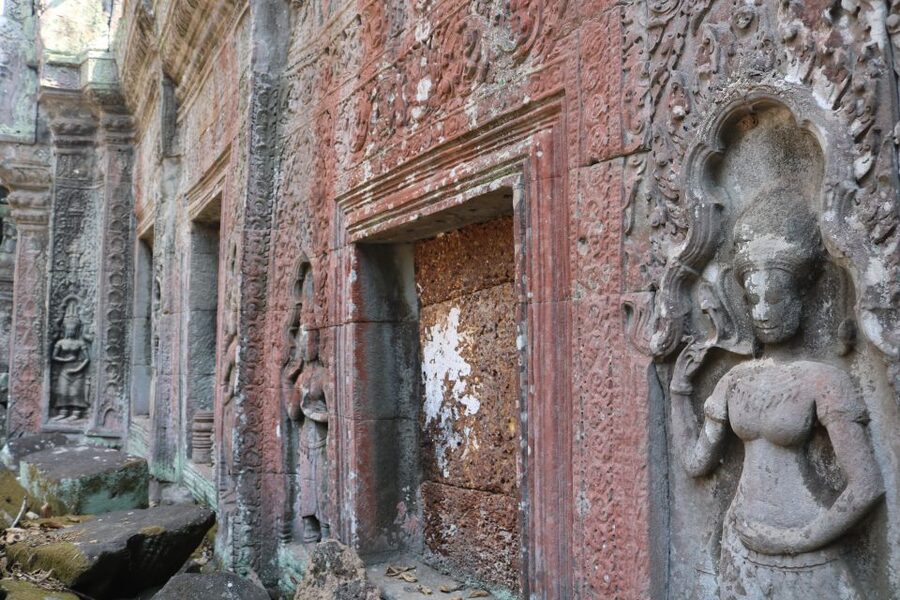
The long drive to Banteay Srei is justified by the carvings. This smaller sandstone temple is famous for precise relief work, with figures and decorative details cut on a finer scale than at many of the larger monuments.
Banteay Srei feels different from Angkor Wat. It is compact, detailed, and easier to take in as a whole. Your guide can point out the Hindu stories and carved figures, which are easy to miss if you simply walk around taking photos.
The temple has only been accessible since the late 1990s, after the Khmer Rouge period ended in the area. That fact adds modern context to the visit, but the site is not a place for careless climbing or touching the carvings. Bring insect repellent and wear sturdy shoes, especially if the paths are damp.
Neak Pean and Preah Khan: water, roots, and ruined stone
Neak Pean gives you a change of mood. The temple sits on an artificial island in the Jayatataka Baray, reached by a walkway over the water.
The central Buddhist shrine was part of a larger sacred and practical setting. The water basin and island make this stop feel open and unusual after the enclosed towers of Pre Rup and Banteay Srei.
Do not expect a large temple complex here. Neak Pean is more about the setting, layout, and contrast. It is a short but worthwhile stop between larger sites.
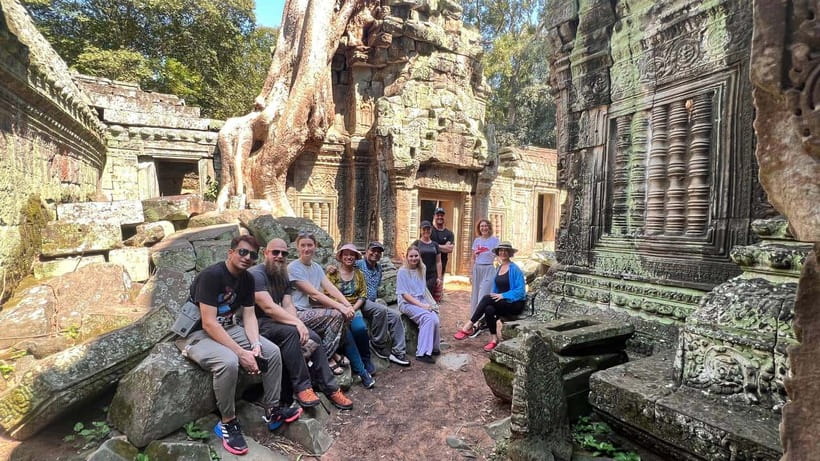
Preah Khan follows, and it is one of the most atmospheric places on the route. Built by Jayavarman VII in honor of his father, it combines long corridors, broken stone, galleries, and trees that have worked their way into the ruins.
The temple is less instantly recognizable than Ta Prohm, but that is part of its appeal. You get a stronger sense of a working religious complex rather than a single famous photo frame. It once served a large community, and its remains show how extensive the Angkor system was.
Some sections are being restored, while others remain rough and partly collapsed. Watch your footing. Preah Khan rewards a slower walk, and a good guide can explain the Buddhist and Hindu elements without turning the visit into a list of dates.
Sunset choices: Bakheng or the rice fields
The sunset arrangement depends on the booking type. The small-group option includes sunset at Bakheng Temple, while the private option includes a rice-field sunset drink.
Bakheng is a temple mountain with a broad view, but sunset visits can be busy. The value here is the elevated view and the chance to finish a temple day in cooler light. Your guide’s timing matters, since the point is not only reaching the site but finding a worthwhile position.
The private option is gentler. A drink in the rice fields gives you a quiet rural setting after several hours among stone ruins. It also avoids making every part of the day another climb or temple circuit.
Check exactly which sunset option applies to your booking. The title promises sunrise and sunset, but the setting is not the same for every tour format. This is a small detail that can shape your expectations.
More Temple Sunrise Tours in Siem Reap
- Angkor Wat Sunrise tour with Small – Group and Guide tours
★ 5.0 · 3,655 reviews - Angkor Wat Highlights and Sunrise Guided Tour from Siem Reap
★ 5.0 · 3,213 reviews - Full-Day Angkor Wat Sunrise Private Tour with Guide from Siem Reap
★ 5.0 · 2,920 reviews - Angkor Wat Sunrise & 3 Main Temples with Breakfast – Small Group
★ 5.0 · 2,857 reviews
Angkor Wat before dawn
Day two begins before sunrise. You enter Angkor Wat in darkness from the eastern side, and you should bring a torch or another small light.
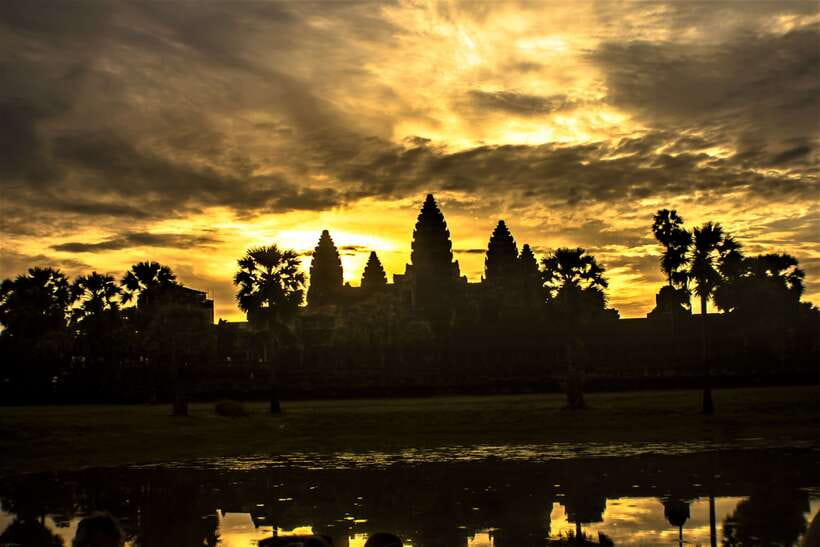
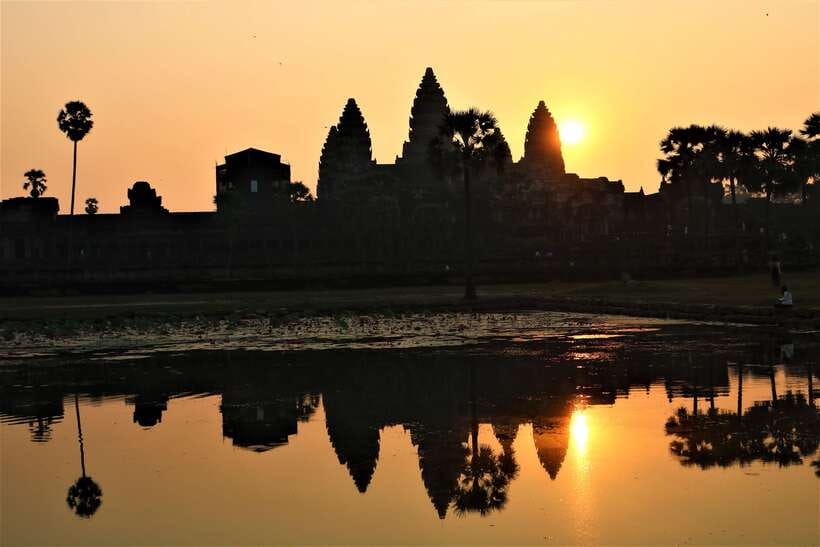
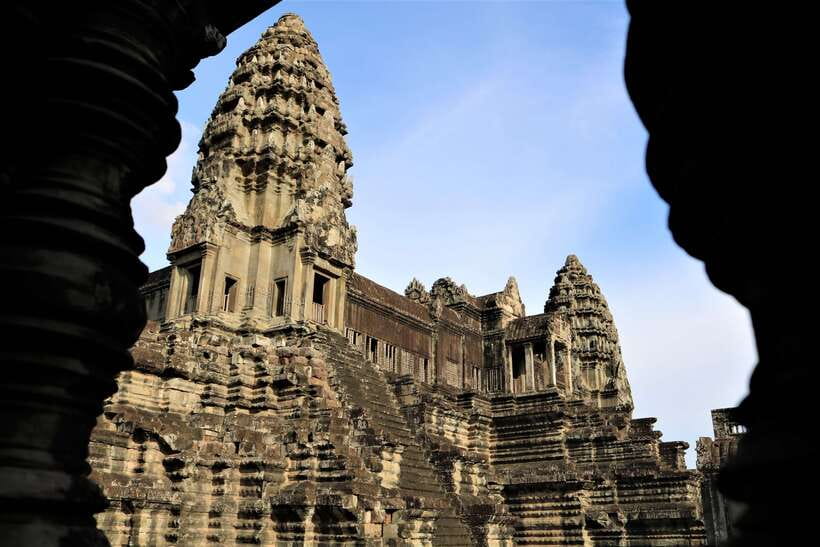
The early start is hard on sleep, but it is one of the best reasons to choose this itinerary. Angkor Wat at dawn changes by the minute as the sky brightens behind the towers. The famous reflection view is only one part of it. Entering through the eastern side lets you move into the temple before the main morning rush.
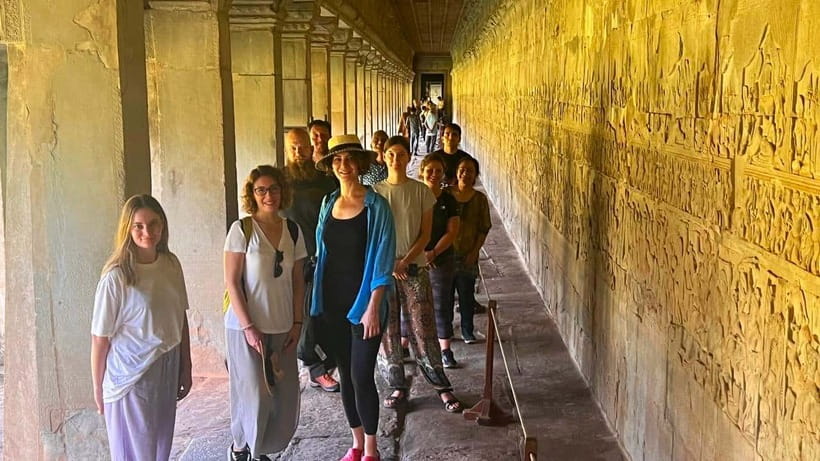
Inside, the long corridors and bas-reliefs gradually become visible. Angkor Wat contains an enormous amount of carved detail, and the low light gives the galleries a different mood from the bright midday heat.
The guide’s position and timing matter here. Several people praised guides for securing a good sunrise viewpoint and keeping the group organized without rushing. Still, no guide can control clouds, crowds, or the exact quality of the sunrise.
After exploring, you stop for breakfast outside the temple. Meals are not included, so bring money and allow for the extra cost. This break is useful because it gives you time to recover before the next set of ruins.
Ta Prohm and the quieter Ta Nei
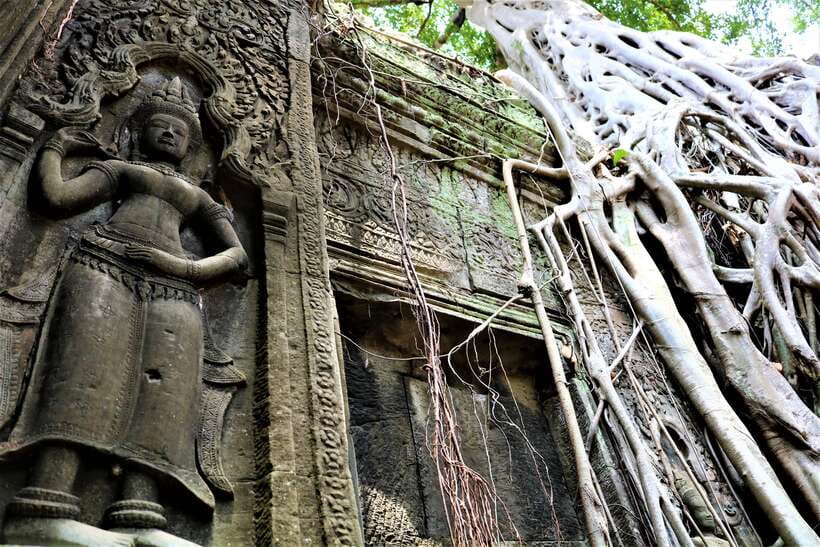
Ta Prohm is the temple most associated with jungle-covered ruins and the film Tomb Raider. Its appeal is not just the famous trees. The site preserves a strong sense of collapse, with roots, stone galleries, and narrow passages creating a memorable walk.
The temple once housed 2,740 monks. Today, its partially ruined corridors show the scale of the religious communities that operated here. A guide can help you read the carvings and explain how the temple functioned, rather than leaving you with only the familiar tree-root photographs.
Expect crowds at the best-known sections. Your guide may lead you toward less congested corners and photography spots, but Ta Prohm is one of Angkor’s major draws. You will not have the place to yourself.
Ta Nei is a useful follow-up because it is smaller and quieter. This late 12th-century stone temple gives you time to look at a less polished ruin after Ta Prohm’s fame and crowds.
The contrast is the point. Ta Prohm shows how a major temple can become a symbol of Angkor, while Ta Nei gives you a more modest site where the stones and forest setting carry the experience.
Angkor Thom and the many faces of Bayon
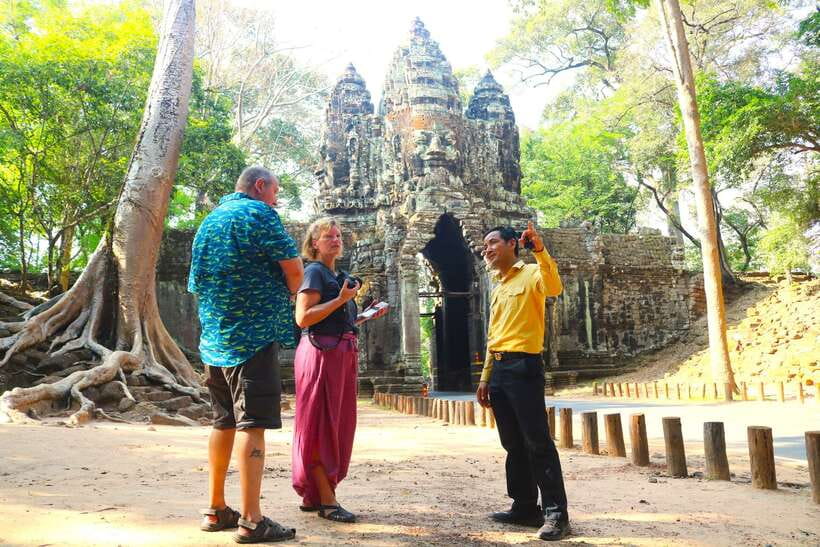
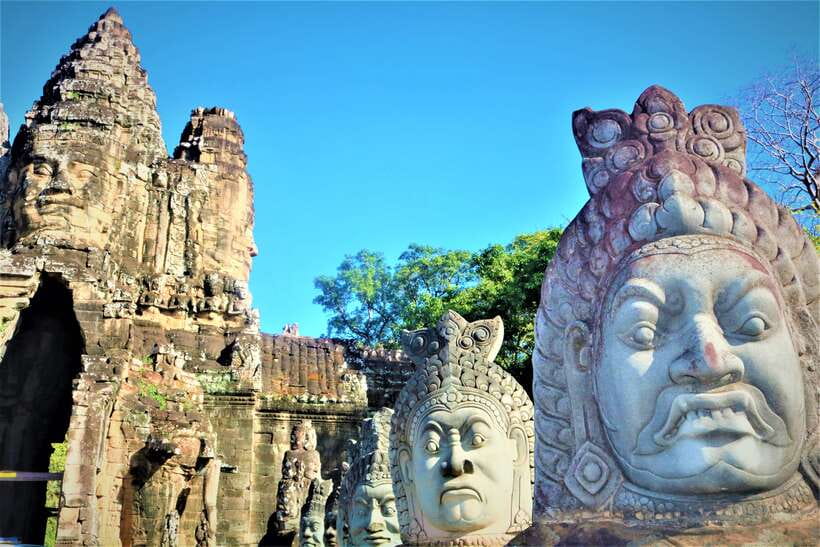
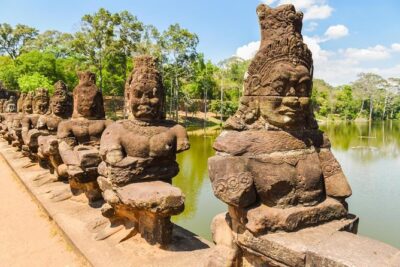
The southern gate of Angkor Thom is one of the most striking entrances in the area. Gods line one side of the approach and demons the other, with 54 stone figures on each side.
This is a place where your guide’s explanation adds real value. The gate is not simply a grand entrance. Its arrangement connects to Khmer religious ideas and the wider design of Angkor Thom.
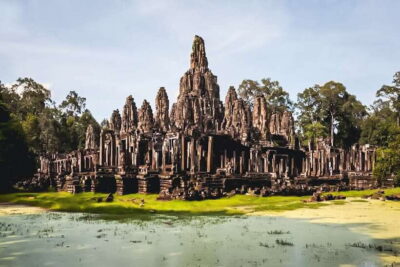
Inside the fortified city, you visit Bayon. Its central towers carry more than 200 enormous carved faces, creating one of Angkor’s most memorable spaces.
Bayon can be confusing without help. Towers overlap, faces appear from unexpected angles, and the reliefs compete for attention. A strong guide points out what you are seeing while leaving you time to walk and take photographs.
The day ends with the Terrace of the Leper King and the Terrace of Elephants. These long stone platforms show the civic and ceremonial side of Angkor Thom. They are less intimate than Ta Prohm, but they complete the picture of a planned royal city rather than a collection of isolated temples.
Guides, drivers, and the comfort factor
The guide is the most important part of this experience. The strongest feedback centers on guides who explain more than construction dates. They discuss Hinduism, Buddhism, Khmer kings, symbolism, Cambodian culture, and daily life.
Pi was praised for explaining the next stop, the drive time, and what to expect. Pal was noted for maps, pictures, historical context, and finding good photo angles. Chhay and Sak were praised for answering questions and keeping the group comfortable. Bun was remembered for creating a friendly group atmosphere and treating the party like a small family.
Guide quality can vary by assignment, but the pattern is clear: this tour is not just transport between ruins. You are paying for interpretation. If you like asking questions, say so. Several guides have been praised for adjusting the amount of detail to the group.
The driver has an important job in Cambodia’s heat. After each temple, drivers such as Vichet, Keal, Mao, and Naroo were repeatedly praised for cold water, chilled towels, punctual pickups, and careful driving.
That may sound minor before you arrive. After walking through hot stone courtyards, it is not minor at all. The air-conditioned vehicle also gives you a proper reset between sites.
Price, group size, and what you actually receive
At $46 per person, the tour price is reasonable for two days of guiding, transport, hotel pickup and drop-off, and the listed refreshments. But add the $62 Angkor pass, and your starting cost becomes about $108 per person before meals.
The tour does not include breakfast or lunch. Stops are made for food and refreshments, and one person specifically appreciated the restaurant choices, but you should budget separately.
Small groups are available. Reported group sizes have ranged from about six to fifteen people, with some days smaller than others. A small group makes it easier to hear the guide, get help with photos, and keep the pace manageable.
Do not assume every day will have the same number of people. The operator assigns groups according to bookings. Still, the vehicle-based format is more comfortable than a large coach, and the 96 percent perfect transport score supports the value of the air-conditioned service.
Free cancellation is available up to 24 hours before the activity, and you can reserve now and pay later. Pickup covers hotels throughout Siem Reap city.
Who should book this temple tour?
I would choose this tour if you want the main Angkor sights but also want Banteay Srei, Neak Pean, Preah Khan, and Ta Nei. It suits first-time visitors who prefer a planned route and clear explanations rather than arranging drivers and temple order themselves.
It is also a good fit if you care about photography. Guides are often happy to take pictures, suggest angles, and position the group for sunrise. The private option may suit couples or families who want more control over the day, while the small-group format offers good value.
You should think twice if you dislike pre-dawn starts, long temple walks, or fixed schedules. It is not suitable for children under eight, wheelchair users, or people with mobility impairments. Covered shoulders and knees are required, and shorts are not allowed.
Should you book it?
Book it if you want a well-organized two-day introduction to Angkor with a strong mix of famous temples and quieter ruins. The route is full, but the split between outer sites and central icons makes sense, and the cold towels are a welcome luxury in Cambodia’s heat.
Before paying, confirm the sunset format, check the extra $62 temple-pass cost, and plan for meals. If you accept the early alarm and the walking, this is a good-value way to see the essential Angkor sights while learning why they matter.
FAQ
How long is the Siem Reap temple tour?
The experience lasts two days and includes temple visits, sunrise at Angkor Wat, and a sunset option.
What temples are included?
The route includes Angkor Wat, Angkor Thom, Bayon, Ta Prohm, Ta Nei, Banteay Srei, Preah Khan, Neak Pean, Pre Rup, and a sunset stop at Bakheng or in the rice fields, depending on the option.
Is the Angkor temple pass included?
No. The temple pass costs $62 per person for a two or three-day pass and must be paid separately.
Are meals included?
No. Breakfast, lunch, and other meals are not included. The tour makes stops where you can buy food and refreshments.
Does the tour include hotel pickup?
Yes. Pickup and drop-off are included from hotels in Siem Reap city.
Is transportation air-conditioned?
Yes. Transport is provided in an air-conditioned vehicle. Bottled water and cool towels are also provided.
What should I bring?
Bring comfortable walking shoes, insect repellent, and a torch for entering Angkor Wat before sunrise.
Is the tour suitable for children?
The activity is not suitable for children under eight years old.
Is the tour wheelchair accessible?
No. The activity is not wheelchair accessible and is not suitable for people with mobility impairments.
More Temple Sunset Tours in Siem Reap
- Siem Reap: Full Day Angkor Wat Temple Experience with Sunset
★ 4.9 · 1,490 reviews - Angkor Wat full Day ‘Small Group with sunset & Tour Guide
★ 5.0 · 1,369 reviews - 2 Days Exclusive Temple Highlights with Sunset and Sunrise Tour
★ 5.0 · 1,157 reviews - Angkor Wat Small Group Tour and Sunset with Lunch Included
★ 5.0 · 398 reviews
More Temple Sunset Tours in Cambodia
- Siem Reap: Full-Day Angkor Wat Guided Tour with Sunset
★ 4.9 · 3,803 reviews - Angkor Wat Sunset Small Group Tour with Lunch Included
★ 5.0 · 3,059 reviews - Siem Reap: Angkor Wat Sunrise or Sunset Guided Tour
★ 4.9 · 2,123 reviews - Full-Day Guided Sunset Tour of Angkor Wat
★ 5.0 · 1,507 reviews
Just added around Siem Reap
- Sunrise at Angkor Wat Temple: 3-Hour Private Tour★ 4.7 · 30 reviews
- Small-Group Explore Angkor Wat Sunrise Tour with Guide★ 5.0 · 3 reviews
- Siem Reap : Private Tuk-Tuk Tour of the Magnificent Temples.★ 4.9 · 14 reviews
- Siem Reap: Ultimate Angkor Wat Offbeat Experience by Jeep★ 4.9 · 8 reviews
- SiemReap: Private Angkor Wat Tour in English or German guide★ 5.0 · 5 reviews
- Siem Reap: Private 4-Day Angkor Wat and Phnom Kulen Tour★ 5.0 · 9 reviews
- Siem Reap: Personalized Angkor Wat Sunrise/Set by TukTuk/Car★ 4.9 · 41 reviews
- Siem Reap: 1-Day Angkor Wat Tour in Portuguese★ 5.0 · 4 reviews
Temple Sunrise Tours, compared.
Angkor Wat Sunrise or Sunset Tour with Guide from Siem Reap
Read our review →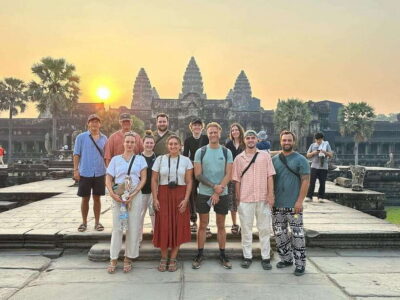
Angkor Wat: Small-Group Sunrise or Sunset Tour
Read our review →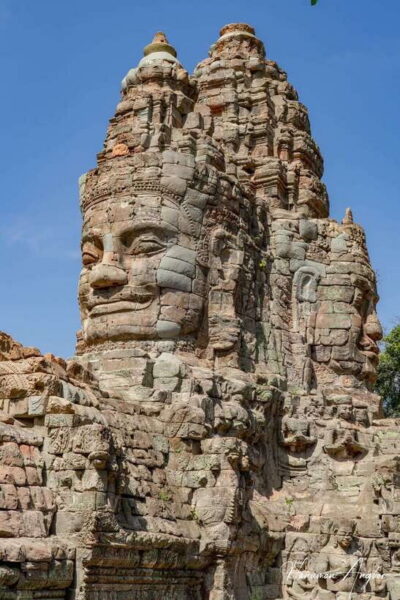
Angkor Wat 2-Day Tour with Sunrise and Sunset
Read our review →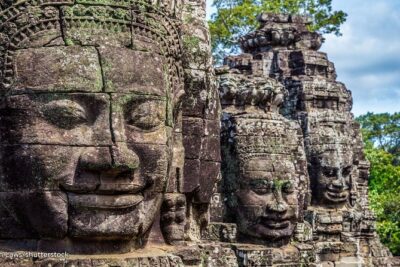
Angkor Wat Sunrise tour with Small – Group and Guide tours
Read our review →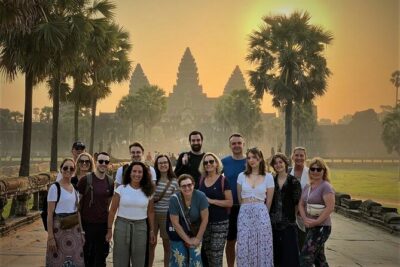
Angkor Wat Highlights and Sunrise Guided Tour from Siem Reap
Read our review →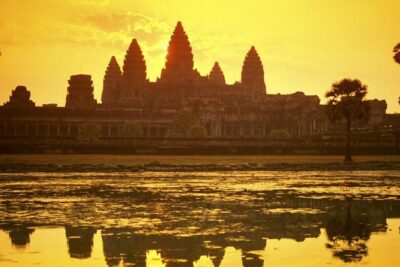
Full-Day Angkor Wat Sunrise Private Tour with Guide from Siem Reap
Read our review →
Angkor Wat Sunrise & 3 Main Temples with Breakfast – Small Group
Read our review →