
Review · BANGALORE
Tipu Palace + Koté Vishnu + Fort + KR Market + Jain Temple = Bengaluru Pété Walk
Bengaluru’s old city has no quiet setting. This walking tour moves from Tipu Sultan’s wooden palace to Hindu temples, a surviving fort, the flower-filled chaos of KR Market, and a Jain temple. I like the sharp contrast between grand monuments and ordinary street life, and I like the way local guides such as Vijay, Raghu, Vanaja, and Vasuki add history, directions, and practical city advice. The main consideration is pace: market lanes can be crowded, noisy, and tiring, and afternoon visits may find the Hindu temple closed.
You get about two and a half to three hours on foot, with entry fees included and a maximum group of 10 people. At $33.55 per person, the price is fair if you want a guided introduction to central Bengaluru, especially if you are short on time. Bring covered clothing, a scarf for temple visits, comfortable shoes, and perhaps a spare pair of socks.
Key points before you book
- Five contrasting stops in one walk: See Tipu Sultan’s Summer Palace, Kote Venkataramana Temple, Bangalore Fort, KR Market, and a Jain temple.
- The flower market is a major highlight: Expect color, fragrance, workers, vendors, bicycles, animals, and tight lanes.
- A strong choice for first-time visitors: The walk gives you history, religion, food-market culture, and daily city life in one compact outing.
- Morning is the safer timing choice: It is usually cooler and less crowded, and the Hindu temple is more likely to be open.
- Guides add real practical value: Several guides have helped with metro directions, shopping advice, coffee or tea stops, and onward transport.
- Dress for religious sites: Cover your legs and shoulders. Women should carry a scarf, and socks may be useful.
Why this Bengaluru Pété walk works
Bengaluru is often introduced through technology parks, cafés, and pleasant weather. This tour takes you somewhere else entirely: the old Pété, the historic market quarter at the city’s core. Here, palaces, shrines, wholesale trade, traffic, flowers, and old lanes all sit close together.
I like this route because it does not treat history as something sealed behind museum glass. You see a palace, then step into a working market. You hear about rulers and architecture, then watch people sort flowers or carry goods. That mix gives you a better sense of how Bengaluru grew and how its older districts still function.
The tour is also useful for orientation. The route starts at Tipu Sultan’s Summer Palace and ends near Chickpet metro station, so you finish in a central area with onward transport nearby. Guides have also helped visitors reach the metro, find an Uber pickup point, choose lunch, and get advice on silk and souvenirs.
You should still set the right expectations. This is a walking tour through a crowded commercial district, not a relaxed garden stroll. The streets can be cluttered, the noise level can be high, and the market requires attention around vehicles, bicycles, animals, and other people.
More Temple Walking Tours in India
- Bangalore: Palace, Temples, Fort & Markets Walking Tour
★ 4.9 · 97 reviews - Old Bangalore Historical Walk thro Palace, Temples, Fort & Market
★ 5.0 · 60 reviews - Bull temple layout Heritage walk
★ 5.0 · 13 reviews
Tipu Sultan’s teak palace in 30 minutes
The first stop is Tipu Sultan’s Summer Palace, a 230-year-old building made largely of teak. Its design reflects Islamic architecture, with carved wooden details and a strong sense of age without the scale of a huge royal complex.
The guide gives you context for the palace and the rulers connected with Bengaluru. Thirty minutes is enough to understand the building and hear its main stories, though not enough for a slow architectural study. If you enjoy old timber construction, royal residences, and the meeting of local and Islamic design, this is a worthwhile opening stop.
The palace also sets the tone for the rest of the walk. You are not being driven from one distant monument to another. The sites are close enough to connect on foot, and the movement between them is part of the experience.
The admission fee is included, which keeps the price simple. You should confirm the opening status on your chosen date, since monument access can change with working hours and seasonal schedules.
Kote Venkataramana Temple and the Hindu heart of the route
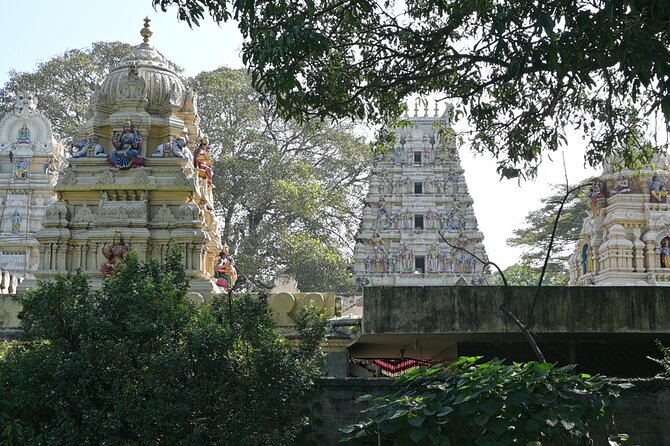
Next door is Kote Venkataramana Temple, also described in the tour title as Kote Vishnu. It was built in 1690 by Chikkadevaraja Wodeyar and is known for carved stone figures drawn from Hindu mythology.
The temple offers a different visual language from the palace. Instead of teak and Islamic forms, you see stone sculpture, religious symbols, and a living place of worship. Your guide can explain the figures and the role of the temple without reducing it to a quick photo stop.
Entry is free, but access depends on temple hours. This matters because one afternoon group could not enter when the temple was closed. If entering the shrine is important to you, choose a morning departure and check the day’s schedule.
Dress respectfully. Your legs and shoulders should be covered, and women should carry a scarf. The temple is an active religious place, so follow the guide’s instructions about footwear, photography, and where you may walk.
Bangalore Fort and the remains of an older city
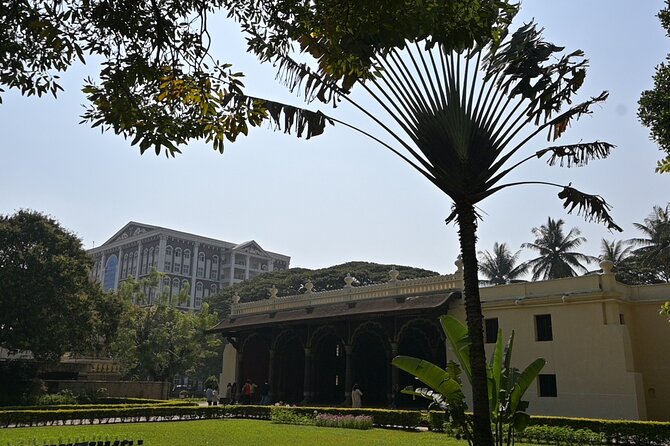
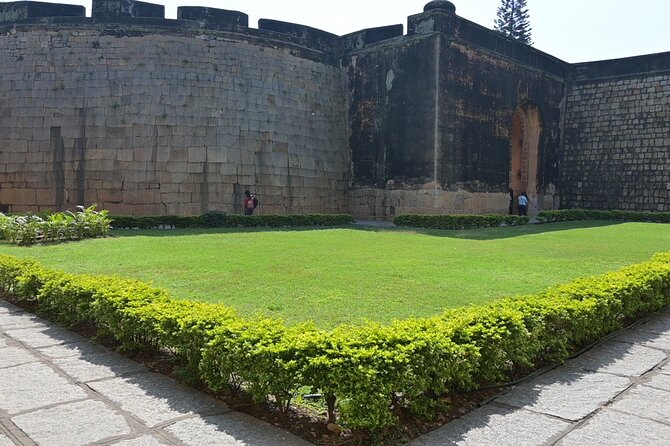
The third stop is Bangalore Fort, which began as a mud fort built by Kempegowda, the founder of Bengaluru, in the 16th century. Hyder Ali rebuilt it in stone during the 1760s.
Only about 5 percent of the original fort remains. That sounds modest, but it makes the stop more interesting rather than less. You are looking at a surviving fragment of the city’s earlier defenses, not a perfectly preserved fortress designed for sightseeing.
The grounds are described as neatly maintained, and the fort provides a useful pause after the palace and temple. Your guide can connect Kempegowda’s early city to the later work of Hyder Ali and Tipu Sultan. In a short visit, that sequence helps you understand that Bengaluru’s past was shaped by several rulers and changing military needs.
Do not expect a large fort complex with hours of rooms and walls to explore. This is a compact historical stop, best appreciated for its place in the city’s story.
More Temple Walking Tours in Bangalore:
- Bangalore: Basavanagudi Walking Tour with Bull Temple
★ 4.9 · 12 reviews - Bangalore City Tour: Walking, Palace & Temples
★ 3.6 · 7 reviews - Bangkok: City Highlights Temple and Market Walking Tour
★ 4.5 · 3,990 reviews - Bangkok: Grand Palace and Wat Phra Kaew Guided Walking Tour
★ 4.4 · 2,417 reviews
KR Market: the tour’s loudest and most memorable hour
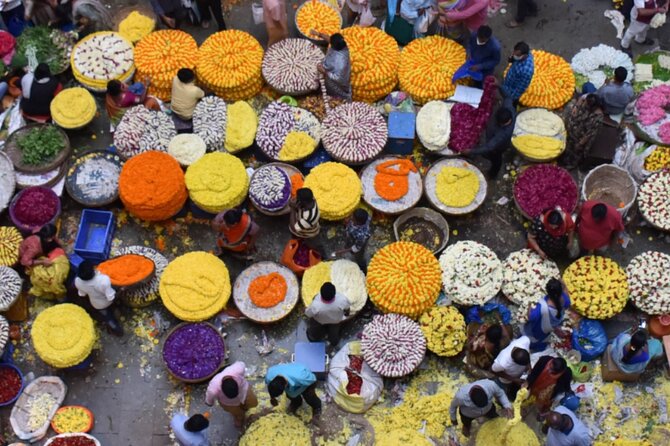
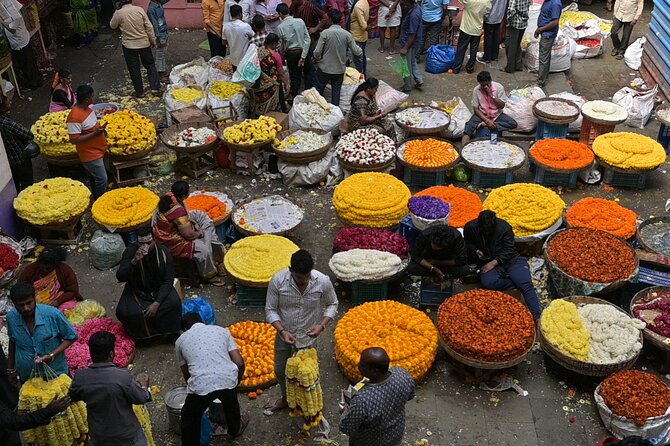
KR Market, officially Sri Krishnarajendra Market, is where the tour shifts from monuments to daily commerce. This is the part I would protect time for. The market and its surrounding lanes bring together vendors, buyers, workers, coolies, hawkers, bicycles, cows, dogs, and goods moving in every direction.
The flower market is often the highlight. You may see heaps of flowers and elaborate arrangements while taking in strong scents and a constant stream of activity. The colors are striking, but the real value is watching the market work. This is not a staged cultural display. It is a functioning wholesale and retail district.
A guide matters here. The lanes can feel confusing, and it would be easy to miss the best sections or stop in the wrong place. Guides including Vijay and Ramesh have been praised for helping people move safely through the market, while other guides have explained what the products, workers, and trading activity mean.
This section also asks the most from you physically. The market can be crowded, hot, noisy, and dusty. Keep your belongings secure, stay close to the group, and watch your footing. One useful tip from the tour experience is to carry a mask for the flower market and fair-market lanes if you are sensitive to dust or strong smells.
You might also get local food advice here or after the tour. Some guides have recommended lunch, stopped for filtered coffee, or offered tea when the group needed a break. Food is not included, so treat those moments as optional extras rather than part of the fixed price.
A quiet ending at the Jain temple
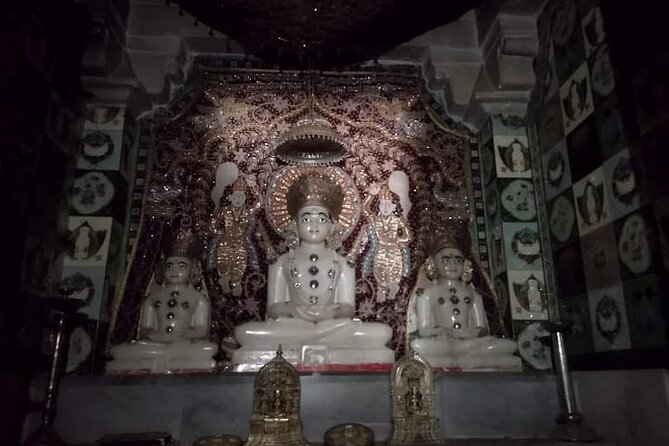
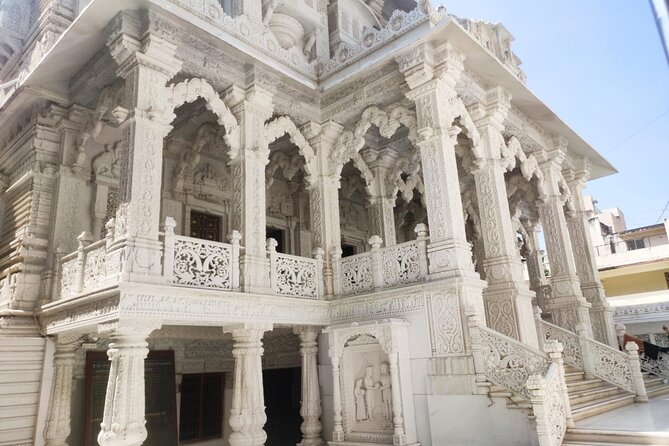
The final stop is Shri Adinath Jain Shwetamber Mandir on Chickpet Road. Jainism is one of India’s oldest religions, with a history of at least 2,500 years and principles centered on non-violence and vegetarian ethics.
After the noise of KR Market, the temple can feel like a change of speed. The guide explains the basic ideas behind Jain worship and helps you understand the religious setting with more care than a quick outside visit would allow.
This is also why the clothing rules matter. Cover your shoulders and legs, carry a scarf if needed, and consider bringing an extra pair of socks. Temple visits may require you to remove shoes, and the spare socks can make the experience more comfortable.
The walk ends close to Chickpet metro station. That is practical if you want to continue sightseeing, return to your hotel, or explore more of the old market area. Guides have also helped people find their next transport after the official end of the tour.
What the $33.55 price really buys
At $33.55 per person, this is not the cheapest way to walk around central Bengaluru. You could visit some sites independently for less, and several stops have no separate admission charge.
The value comes from the combination. You receive entry to the monuments, a licensed Government of India approved guide, a planned route, explanations at five very different places, and help moving through an area that can be difficult to read on your own. The group limit of 10 keeps it smaller than a large coach excursion.
I think the price makes the most sense on a first visit, during a short stay, or for anyone who wants context rather than a list of buildings. It is less compelling if you already know the Pété well, speak with local contacts, or prefer to wander without a schedule.
Transport is not included. A hotel pickup and return may be available for a small extra fee, depending on where you stay. If you are visiting alone, carrying shopping, or finishing far from the old city, ask about this option before booking.
Morning or afternoon?
Morning is my clear preference. The heat is generally easier to handle, the market can be more active, and the Hindu temple is less likely to be closed. One morning group also found the streets less crowded.
An afternoon departure may suit your schedule, but you need to accept two possible tradeoffs: more heat and the chance that Kote Venkataramana Temple will not be open. The walk still includes the palace, fort, market, and Jain temple, but the religious portion may be reduced.
The stated duration is about two and a half to three hours. Allow extra time around the start and finish if you arrange transport, and do not book a tight connection immediately afterward. The group may pause for questions, photographs, coffee, tea, or assistance with onward directions.
Guide quality and group experience
The strongest part of this tour is the guide. Names associated with particularly positive experiences include Vijay Kumar, Raghu, Vanaja, Vasuki, Varun, Phaneesh, Govinda, Ramesh, and Ramakrishna Aithal.
The useful pattern is not simply that the guides know dates and names. They explain the history of the sites, answer unrelated questions, give local shopping advice, help with metro use, and adjust the pace when someone feels unwell. One guide even escorted a solo woman to a place where she could arrange an Uber.
French, Italian, and German-speaking guides may be available, but they are subject to availability. English-language guiding is the option most clearly supported by the tour information.
The maximum group size is 10. That is small enough for questions and easier movement through the market, although the walk will feel more personal if your departure has only a few bookings.
Practical advice for a smoother walk
Wear shoes that can handle several hours on uneven city streets. Keep your clothing modest from the beginning rather than trying to cover up at each temple.
Bring water, a scarf, and a mask if dust or strong market smells bother you. An extra pair of socks is useful for temple visits. Keep a little room in your schedule for a coffee or tea stop, but remember that food and drinks are not included.
Tell the operator where you are staying in Bengaluru. Hotel transport may be possible for an added fee, and this can be useful if you are unfamiliar with the city or want to avoid finding the start point alone.
The start point is Tipu Sultan’s Summer Palace at 42 Tippu Sultan Palace Road in Chamrajpet. The finish is Shri Adinath Jain Shwetamber Mandir on Chickpet Road, close to Chickpet metro station.
You need a moderate level of physical fitness. The walk is not presented as strenuous, but you will spend much of the time on foot in crowded streets and market lanes.
Who should book this walk?
I would choose this tour if you want a compact introduction to old Bengaluru and prefer local explanation over independent sightseeing. It suits first-time visitors, solo visitors who want help navigating the market, and anyone with only half a day available.
It is also a good fit if you want more than architecture. The market, flower trading, temple customs, coffee stops, and metro advice give the walk a practical local feel.
I would hesitate if you dislike crowds, noise, religious-site rules, or unstructured market activity. You should also think twice if your main goal is a slow palace visit, since each stop receives about 30 minutes and the route covers a lot in a short time.
Should you book the Bengaluru Pété walk?
Yes, if you want to feel central Bengaluru rather than simply photograph it. The route gives you a palace, a Hindu temple, a fort, one of the city’s busiest markets, and a Jain temple in a well-planned half-day.
Book a morning time if possible, wear suitable clothing, and leave room for the walk to run closer to three hours. At $33.55, the guide, included monument entry, small group size, and market navigation make this a good-value introduction to the old city.
FAQ
How long does the Bengaluru Pété walk take?
The experience lasts approximately two and a half to three hours.
What places are included?
The route includes Tipu Sultan’s Summer Palace, Kote Venkataramana Temple, Bangalore Fort, Sri Krishnarajendra Market, and Shri Adinath Jain Shwetamber Mandir.
Where does the tour start?
It starts at Tipu Sultan’s Summer Palace, 42 Tippu Sultan Palace Road, Kamalanagar, Chamrajpet, Bengaluru.
Where does the tour end?
It ends at Shri Adinath Jain Shwetamber Mandir on Chickpet Road, close to Chickpet metro station.
Is transport included?
No. Lunch and transport are not included, but hotel transport may be available for a small additional fee.
Are monument entry fees included?
Yes. Entry fees at all monuments are included in the tour price.
What should I wear?
Your clothing should cover your legs and shoulders for temple visits. Women should also carry a scarf.
Is the Hindu temple always open?
No. Temple and monument access can vary with working hours and seasonal changes. An afternoon visit may find the Hindu temple closed.
How large is the group?
The tour has a maximum of 10 people.
Can I cancel for a full refund?
Yes, if you cancel at least 24 hours before the experience start time. Cancellations made less than 24 hours in advance are not refunded.
More Shopping Tours in Bangalore
- Seoul: Palace, Temple and Market Guided Foodie Tour at Night
★ 4.9 · 750 reviews - Old Delhi Food-Spice Market-Temples Tour Soon Featured on NETFLIX
★ 5.0 · 304 reviews - Seoul Night Palace & Market Food Tour with Vehicle
★ 5.0 · 275 reviews - Chiang Mai: Elephants, Sticky Waterfalls, Market and Temple
★ 4.9 · 227 reviews
More Market Visits in Bangalore
- Lalbagh+Bull Temple+Tipu Palace+Market+Lunch=Bangalore City Tour
★ 5.0 · 9 reviews - Mini Group Xian Day Tour to Terracotta Army, City Wall, Pagoda and Muslim Bazaar
★ 5.0 · 1,320 reviews - Bangkok: Railway and Floating Market Tour with Dragon Temple
★ 4.6 · 1,225 reviews - Bangkok: Night Bike Tour with Temples & Flower Market Visit
★ 4.8 · 751 reviews
Just added around Bangalore
- Lepakshi Temple Day Tour from Bangalore★ 5.0 · 3 reviews
- Day trip from Bangalore to Lepakshi for Temple architecture & paintings★ 5.0 · 15 reviews
- Full Day Private Tour of Temples of Bengaluru★ 5.0 · 5 reviews
- Bull temple layout Heritage walk★ 5.0 · 13 reviews
- Bandipur Tiger Reserve with Somnathpur Temple Tour★ 5.0 · 21 reviews
- Lepakshi Temple and Nandi Hills Day Trip from Bangalore★ 4.5 · 3 reviews
- Lalbagh+Bull Temple+Tipu Palace+Market+Lunch=Bangalore City Tour★ 5.0 · 9 reviews
- From Bangalore: Lepakshi Temple and Adiyogi Statue Day Trip★ 5.0 · 9 reviews
Temple Walking Tours, compared.
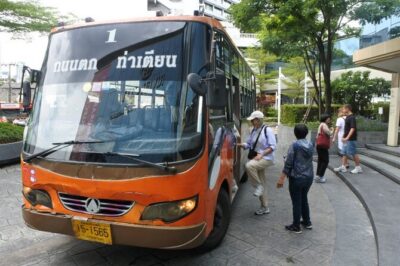
City Highlights Temple and Market Walking Tour
Read our review →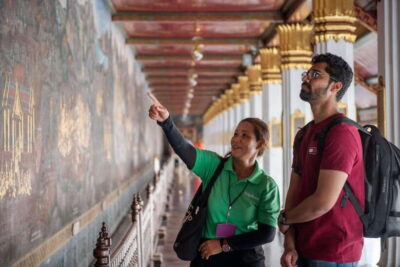
Grand Palace and Wat Phra Kaew Guided Walking Tour
Read our review →
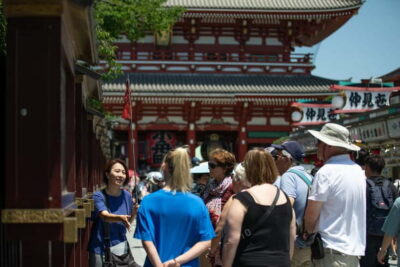
Asakusa Walking Tour with Sensoji Temple Visit
Read our review →
3 Hour Old City and Temples Guided Walking Tour
Read our review →
Kyoto Arashiyama Walking Tour: Bamboo, Monkeys, Gardens & Secrets
Read our review →
Belém Walking Tour with Jerónimos Monastery Ticket
Read our review →Browse the lists this tour appears in