
Review · BANGALORE
Old Bangalore Historical Walk thro Palace, Temples, Fort & Market
Old Bangalore wakes up loudly. This three to four hour walk links a teakwood palace, Hindu and Jain temples, a surviving fort, and the city’s famous market in one compact route. I like the strong mix of history and daily life, and I like that the group is limited to 10 people, which should make questions and street navigation easier. The main drawback is that the walk moves through crowded streets, so it may feel tiring or hectic if you prefer quiet sightseeing.
I also appreciate the practical shape of the experience: it begins at Tipu Sultan’s Summer Palace and ends near Chickpet metro station. Guides such as Raghavendra, Vanaja, and Vasuki have been praised for clear explanations, helpful photography advice, and assistance with onward plans. Modest clothing is required, and women should carry a scarf for the temples.
Key points to know before you go
- Tipu Sultan’s 230-year-old palace is built almost entirely from teak wood and uses Islamic architectural details.
- The market is the tour’s sensory center, with flowers, fruit, vegetables, sellers, buyers, workers, vehicles, cows, and dogs.
- Only about 5 percent of Bangalore Fort remains, giving the stop a focused historical purpose rather than a huge fort complex.
- Two different religious traditions appear in one morning, through the Hindu Kote Venkataramana Temple and the Jain Adinath temple.
- The maximum group size is 10, a useful limit when crossing busy Old Bangalore streets.
- The price is $22.38 per person, with monument entry included but lunch, tips, and optional hotel transport extra.
Why this Old Bangalore walk works
I like tours that show a city through both its monuments and its ordinary routines. This one does exactly that. You begin with royal architecture, move into sacred spaces, pass through the remains of a military fort, and then spend a full hour among the shops and stalls of Sri Krishnarajendra Market.
That sequence gives you a useful way to understand Old Bangalore. The palace and fort explain power and defense. The temples show how religion shaped the area. The market shows how the old center still functions today, with work, trade, worship, traffic, and neighborhood life packed into the same streets.
The walk is also a practical choice if you have only a few hours in the city. It does not try to cover every major Bangalore sight. Instead, it concentrates on a historic section and gives you a guide to explain what you are seeing. The experience has a five-star rating from 62 reviews and a 100 percent recommendation rate, with special praise for pacing, detailed explanations, and the care shown by guides including Vanaja and a husband-and-wife guiding team.
You should set realistic expectations. This is a walking experience in a busy part of Bangalore, not a relaxed garden stroll. The route includes crowded roads and active market lanes. You may need to watch your footing, keep close to the group, and stay alert around vehicles and other street activity.
More Temple Walking Tours in India
- Tipu Palace + Koté Vishnu + Fort + KR Market + Jain Temple = Bengaluru Pété Walk
★ 5.0 · 150 reviews - Bangalore: Palace, Temples, Fort & Markets Walking Tour
★ 4.9 · 97 reviews - Bull temple layout Heritage walk
★ 5.0 · 13 reviews
Tipu Sultan’s palace and the first lesson in Old Bangalore

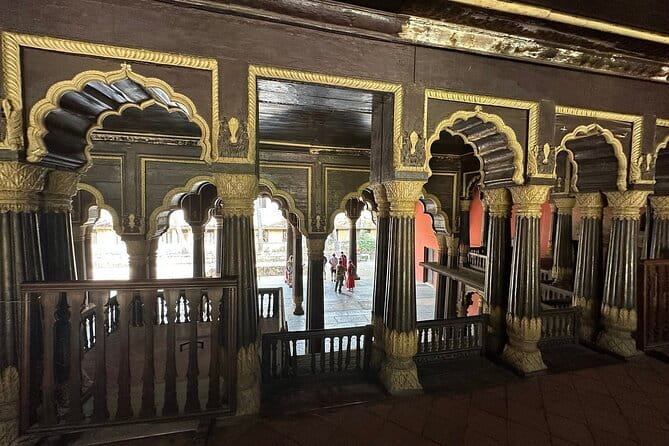
The meeting point is Tipu Sultan’s Summer Palace at 42 Tippu Sultan Palace Road in Chamrajpet. This is a useful starting place because the palace immediately gives you a strong visual introduction to the area.
The building is about 230 years old and made of teak wood. Its Islamic architectural style sets it apart from the Hindu temple and Jain temple later in the walk. A government-approved, licensed guide accompanies you here, explaining the palace and its place in Bangalore’s past.
The scheduled visit lasts about 45 minutes, and entry is included. That gives you enough time to look at the woodwork and structure without racing through the building. The palace is not presented as a grand, sprawling royal complex. Its appeal comes from the material, age, and design, especially the way a wooden building has survived in the middle of a modern city.
I would pay close attention to the guide’s stories here. The strongest part of this experience is not simply entering an old building. It is having someone point out details you could otherwise pass without noticing. Vasuki has been praised for communicating clearly before the experience and for giving useful advice about taking pictures, while Raghavendra has been praised for answering questions and explaining the history.
Photography guidance can matter in a place with dark wood and detailed surfaces. Ask your guide if you are unsure where pictures are suitable. The description specifically notes that monument access can vary with working hours and seasonal changes, so the exact visit may depend on conditions that day.
Kote Venkataramana Temple and living worship
The Kote Venkataramana Temple sits next to the palace, making this a natural transition rather than a long transfer. It was built in 1690 by Chikkadevaraja Wodeyar and is known for stone sculptures of figures from Indian mythology.
You have about 30 minutes here. The temple is not only an architectural stop. You may see prayers being offered by devout Hindus, which gives the visit a living religious setting. That is an important distinction. You are not walking through a silent museum. You are entering a place used for worship, so the guide’s instructions and your own awareness matter.
You must cover your legs and shoulders. Women should carry a scarf, and anyone in shorts, short skirts, or sleeveless clothing should plan ahead. These rules are simple, but they can determine whether you are able to enter.
The temple is valuable because it adds another layer to the palace visit. The palace shows royal and Islamic design. Here, carved stone and Hindu worship create a different mood only a few steps away. I like that the route does not treat Bangalore’s traditions as separate attractions scattered across the city. It shows how they share the same old neighborhood.
Entry is free, though access is subject to working hours and seasonal variations. Keep your visit respectful, avoid treating worship as a performance, and follow the guide’s directions about where to stand and when photography is appropriate.
Bangalore Fort and the remains of a military past

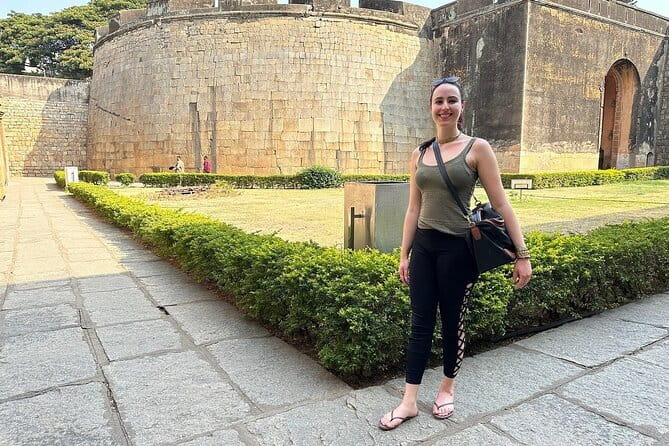
From the temple, the walk continues to Bangalore Fort. Kempegowda, regarded as the founder of Bangalore, built a mud fort in the 16th century. Hyder Ali rebuilt it in stone in the 1760s.
Only about 5 percent of the original fort remains. That fact shapes the visit. You are not entering a complete fortress with long walls and many rooms. Instead, you are seeing a surviving fragment and learning how it fits into the city’s earlier defenses.
The fort stop lasts around 30 minutes and has no separate admission charge. It is described as neatly maintained and open to visitors. The short duration suits the site. You can examine what remains, hear the historical explanation, and keep moving before the route becomes repetitive.
I find partial ruins useful when the guide gives them context. Without an explanation, a small surviving section can seem modest. With the story of the original mud fort, the later stone rebuilding, and the limited amount left today, the stop becomes a lesson in how cities change.
This is also where expectations matter most. If you want an enormous fort complex, this will not provide it. If you want a concise explanation of Bangalore’s early defenses and the later work of Hyder Ali, the stop earns its place.
More Temple Walking Tours in Bangalore:
- Bangalore: Basavanagudi Walking Tour with Bull Temple
★ 4.9 · 12 reviews - Bangalore City Tour: Walking, Palace & Temples
★ 3.6 · 7 reviews - Bangkok: City Highlights Temple and Market Walking Tour
★ 4.5 · 3,990 reviews - Bangkok: Grand Palace and Wat Phra Kaew Guided Walking Tour
★ 4.4 · 2,417 reviews
Sri Krishnarajendra Market in full working order
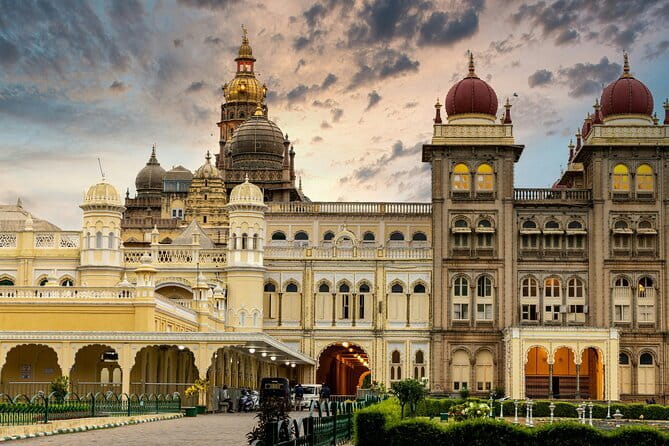
The market is the longest and most energetic section, with about one hour set aside for Sri Krishnarajendra Market, often called KR Market. This is where the tour shifts from preserved buildings to the city’s daily business.
Expect a dense mix of fruit, flowers, vegetables, sellers, buyers, coolies, hawkers, cyclists, cows, dogs, and vehicles. The point is not to admire a polished shopping hall. It is to see commerce happening at close range, with people moving goods and making purchases around you.
The market engages every sense. You will notice colors, smells, voices, traffic, and the physical work behind the city’s food and flower trade. The route passes through streets filled with people walking, working, selling, watching, and trying to get through. That can be exciting, but it can also be tiring.
I consider this the strongest reason to choose the walk over a simple palace visit. A monument can tell you what once happened here. A market shows how the neighborhood functions now. The guide helps you read the scene rather than simply pass through it.
Stay close to the group in this section. The maximum group size is 10, which is helpful, but market lanes can still split your attention. Keep bags secure, follow the guide’s path, and allow time to stop without blocking workers or shoppers.
This is not the best part of the tour for anyone seeking a calm, controlled environment. It is best for you if you enjoy street life and want a direct view of the city’s working rhythms. The market is also a good place to ask questions. You might find that a short explanation about a product, stall, or local practice makes the scene easier to understand.
The Jain temple and a quieter final stop
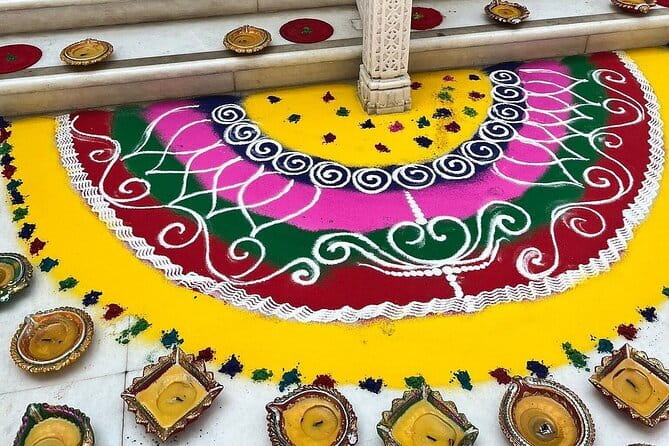
The final stop is Shri Adinath Jain Shwetamber Mandir on Chickpet Road, near Chickpet metro station. The planned visit lasts about one hour, making it the second major religious stop and the quiet counterpoint to the market.
Jainism originated in India and has a history of at least 2,500 years. It is contemporary with Buddhism, and its central principles include non-violence and vegetarianism. The guide introduces this tradition while you look at the temple’s carvings and inlay work.
The change in atmosphere should be welcome after the market. Instead of traffic, hawkers, and constant movement, you get time to notice the temple’s decorative details and learn about a religious tradition that may be less familiar to you.
You still need to cover your legs and shoulders. The same temple access rules apply, and entry depends on opening hours and seasonal conditions. The final location is practical because it is close to Chickpet metro station, allowing you to continue on your own after the walk.
The end point also makes the experience feel like a route through Old Bangalore rather than a loop back to the starting place. That matters if you plan to continue exploring Chickpet or use public transport afterward. A guide may also help you think through your next stop. Raghavendra, for example, has been praised for helping with plans after the walk ended.
Price, group size, and what you actually receive
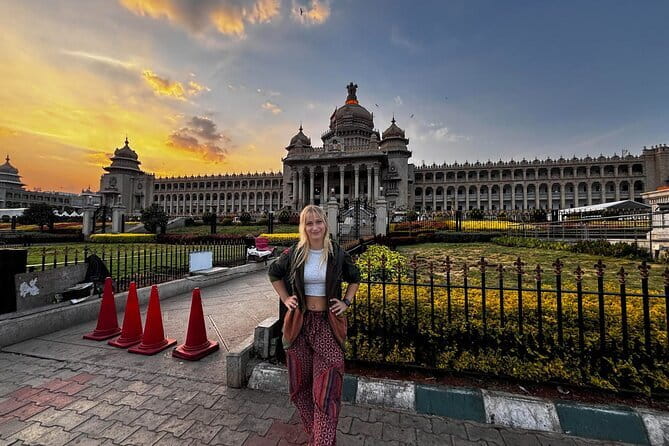
At $22.38 per person, the walk offers good value if you want a guide rather than a self-guided sequence of entrances. Entry fees to the monuments are included, and the price covers a licensed guide for roughly three to four hours.
The main value is the interpretation. You could locate the palace, fort, temples, and market yourself, but it would be harder to connect their dates, religious traditions, building styles, and present-day uses. The guide also reduces the uncertainty of moving through busy streets and visiting active places of worship.
Lunch is not included, and transport from your hotel is not included. Hotel pickup and return can be arranged for an additional fee, with the amount depending on your hotel. Ask about that cost before booking if you need door-to-door transport.
Tips for the guide are also extra. Since the experience depends heavily on the person leading it, budget for a gratuity if the guide gives you the patient explanations and local help that make the walk worthwhile.
The group maximum is 10 people. That is small enough for questions and easier street movement, though it is not a private tour. The mobile ticket and confirmation at booking are convenient, and the starting point is near public transportation.
Free cancellation is available if you cancel at least 24 hours before the local start time. Changes or cancellations inside that window are not accepted for a refund.
Who will enjoy this walk most
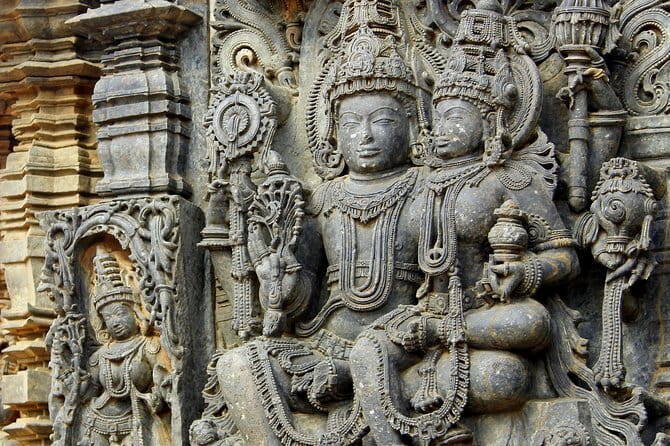
I would recommend this experience to you if you want a compact introduction to Old Bangalore and prefer ordinary city life alongside famous buildings. It suits first-time visitors, people with a short stop in Bangalore, and anyone who likes asking questions while walking.
It is especially useful for you if you want help understanding Hindu and Jain religious spaces. The palace, fort, temples, and market also give you several different subjects in one outing, so the experience does not depend on enjoying only one kind of attraction.
You may want to think twice if you dislike crowds, traffic, uneven attention, or changing noise levels. The market is a major part of the route, not a brief add-on. Also plan your clothing carefully. Bare shoulders or uncovered legs can create a problem at both temples.
The 45-minute palace visit, 30-minute temple visit, 30-minute fort visit, one-hour market visit, and one-hour Jain temple visit add up to more than three hours before meeting, walking between sites, and pauses. The stated duration is approximately three to four hours, so allow room in your schedule rather than booking a tight connection afterward.
Should you book the Old Bangalore Historical Walk?
Book it if you want history tied to real street life, not a checklist of isolated monuments. The mix of a wooden palace, two religious sites, a surviving fort, and KR Market gives you a clear picture of how old Bangalore was built and how it still operates.
The best reasons to book are the small group, the licensed guide, the included monument entry, and the praise for careful pacing and personal help. The strongest guides appear to add real value through stories, photography tips, answers to questions, and suggestions for what to do next.
Skip it if you want a quiet sightseeing morning or a complete fort complex. For everyone else, $22.38 is a fair price for a focused introduction to the city’s oldest center, especially when your time in Bangalore is limited.
FAQ
How long does the Old Bangalore Historical Walk take?
The experience lasts approximately three to four hours. The listed visits include 45 minutes at Tipu Sultan’s Summer Palace, 30 minutes at Kote Venkataramana Temple, 30 minutes at Bangalore Fort, one hour at KR Market, and one hour at the Jain temple.
Where does the walk start?
The walk starts at Tipu Sultan’s Summer Palace, 42 Tippu Sultan Palace Road, Kamalanagar, Chamrajpet, Bengaluru, Karnataka 560018, India.
Where does the walk end?
The walk ends at Shri Adinath Jain Shwetamber Mandir on Chickpet Road in Bengaluru. The temple is close to Chickpet metro station.
Is transportation from my hotel included?
No. Hotel transportation is not included, but transport to and from the walk venue can be arranged for an additional fee. The fee depends on the hotel.
What should I wear?
Your clothing should cover your legs and shoulders because the walk includes a Hindu temple and a Jain temple. Women should also carry a scarf.
Is monument admission included?
Yes. Entry fees at all monuments are included. Access can depend on working hours and seasonal variations.
How many people can join the walk?
The activity has a maximum group size of 10 people.
Can I cancel for a refund?
You can cancel up to 24 hours before the experience start time for a full refund. Cancellations or changes made less than 24 hours before the start time are not accepted for a refund.
More Shopping Tours in Bangalore
- Seoul: Palace, Temple and Market Guided Foodie Tour at Night
★ 4.9 · 750 reviews - Old Delhi Food-Spice Market-Temples Tour Soon Featured on NETFLIX
★ 5.0 · 304 reviews - Seoul Night Palace & Market Food Tour with Vehicle
★ 5.0 · 275 reviews - Chiang Mai: Elephants, Sticky Waterfalls, Market and Temple
★ 4.9 · 227 reviews
More Market Visits in Bangalore
- Lalbagh+Bull Temple+Tipu Palace+Market+Lunch=Bangalore City Tour
★ 5.0 · 9 reviews - Mini Group Xian Day Tour to Terracotta Army, City Wall, Pagoda and Muslim Bazaar
★ 5.0 · 1,320 reviews - Bangkok: Railway and Floating Market Tour with Dragon Temple
★ 4.6 · 1,225 reviews - Bangkok: Night Bike Tour with Temples & Flower Market Visit
★ 4.8 · 751 reviews
Just added around Bangalore
- Lepakshi Temple Day Tour from Bangalore★ 5.0 · 3 reviews
- Day trip from Bangalore to Lepakshi for Temple architecture & paintings★ 5.0 · 15 reviews
- Full Day Private Tour of Temples of Bengaluru★ 5.0 · 5 reviews
- Bull temple layout Heritage walk★ 5.0 · 13 reviews
- Lepakshi Temple and Nandi Hills Day Trip from Bangalore★ 4.5 · 3 reviews
- Bandipur Tiger Reserve with Somnathpur Temple Tour★ 5.0 · 21 reviews
- Lalbagh+Bull Temple+Tipu Palace+Market+Lunch=Bangalore City Tour★ 5.0 · 9 reviews
- From Bangalore: Lepakshi Temple and Adiyogi Statue Day Trip★ 5.0 · 9 reviews
Temple Walking Tours, compared.
City Highlights Temple and Market Walking Tour
Read our review →
Grand Palace and Wat Phra Kaew Guided Walking Tour
Read our review →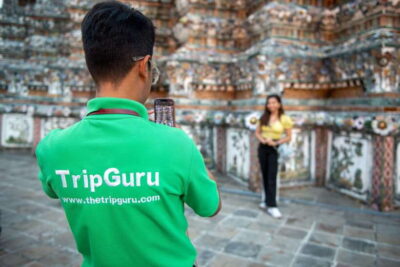
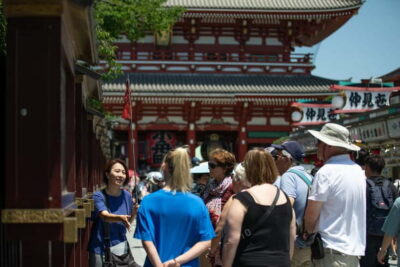
Asakusa Walking Tour with Sensoji Temple Visit
Read our review →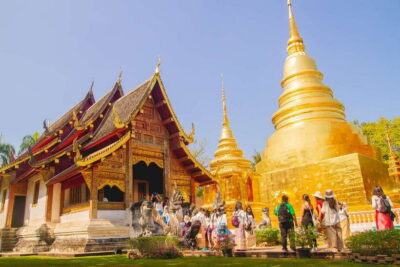
3 Hour Old City and Temples Guided Walking Tour
Read our review →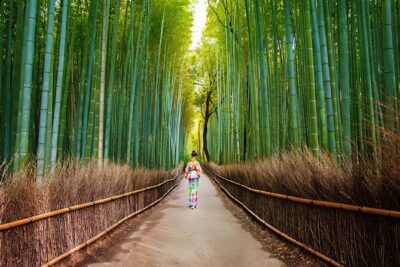
Kyoto Arashiyama Walking Tour: Bamboo, Monkeys, Gardens & Secrets
Read our review →
Belém Walking Tour with Jerónimos Monastery Ticket
Read our review →Browse the lists this tour appears in