Review · SIEM REAP
Siem Reap: Angkor Wat 2-Day Tour with Sunrise and Sunset
Sunrise makes old stones feel alive. This two-day Angkor tour pairs Angkor Wat at dawn with a useful circuit of 11 temples, and I like the way English-speaking guides such as Sary, Sok, Sam, Pheap, and Vone add stories, symbolism, and practical photo tips. The air-conditioned minibus, cold water, and refreshing towels are welcome after long walks. The catch is simple: both days are long, hot, and tiring, while the temple pass and meals cost extra.
You get the famous sights on day one, then quieter and less familiar monuments on day two. That split gives you time to understand how the Khmer empire was built, worshipped, and remembered instead of racing through the whole park in one overheated morning. At $34 per person, it is a strong deal for transport and guiding, provided you are ready for a 4:30 a.m. start and plenty of steps.
Six things to know before you book
- Day one begins around 4:30 a.m. for sunrise at Angkor Wat, followed by Ta Prohm, Angkor Thom, Bayon, Ta Keo, and the South Gate.
- Day two runs about 10:30 a.m. to 7 p.m. and covers Preah Khan, Neak Pean, Ta Som, East Mebon, Pre Rup, and Phnom Bakheng.
- The $34 price excludes your Angkor Archaeological Park pass and meals, but includes hotel pickup, transport, guiding, water, towels, and local tax.
- The guides are a major strength. Sary, Sok, Sam, Pheap, Vone, Nick, and Sayon are praised for clear explanations, humor, organization, and help with photographs.
- The route mixes major icons with quieter temples, so day two may feel more relaxed and rewarding than the crowded first morning.
- Dress modestly and prepare for heat. Shorts, short skirts, and sleeveless shirts are not allowed.
Why two days work better than one
Angkor is not a single temple. It is a huge archaeological park filled with monuments from different rulers, periods, and religious traditions. A one-day visit can show you Angkor Wat, Bayon, and Ta Prohm, but it leaves little room for the outlying temples or the ideas that connect them.
This tour uses two separate routes. The first is the small tour, beginning before sunrise and returning around 1 p.m. The second is the big tour, beginning late morning and ending around 7 p.m. That arrangement gives you a midday break between the two outings, though you should not mistake day two for a light afternoon stroll.
The benefit is context. You can first see the great landmarks that drew you to Siem Reap, then use the second day to notice how temple design changes across the Angkor period. Guides explain Hindu and Buddhist influences, royal power, temple symbolism, and daily life. That background turns carved faces and fallen stones into something easier to read.
The tour also gives you a practical third day option. Since the temple pass is valid for three days, you can rest, revisit a favorite monument, or hire a private tuk-tuk to find additional sites. After two guided days, you will have enough background to choose your own final outing with some confidence.
More Temple Sunrise Tours in Cambodia
- Angkor Wat Sunrise or Sunset Tour with Guide from Siem Reap
★ 5.0 · 12,109 reviews - Siem Reap: Angkor Wat: Small-Group Sunrise or Sunset Tour
★ 5.0 · 9,444 reviews - Angkor Wat Sunrise tour with Small – Group and Guide tours
★ 5.0 · 3,655 reviews
Day one: Angkor Wat before breakfast
Pickup begins early, with the exact start time based on availability and your hotel location. You should be ready at least 30 minutes before the scheduled pickup. The trip to Angkor Wat takes place in the dark, so have your phone charged and keep a light layer handy if you are sensitive to the early morning air.
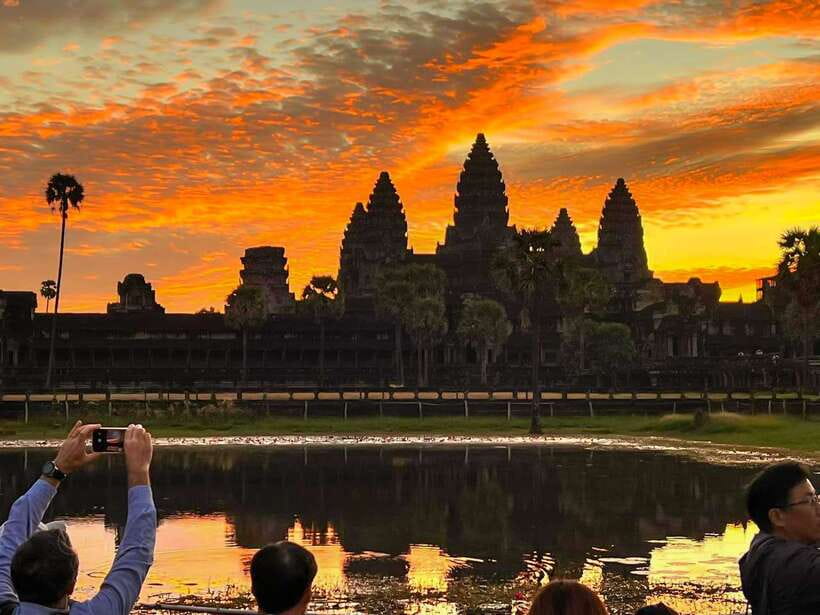
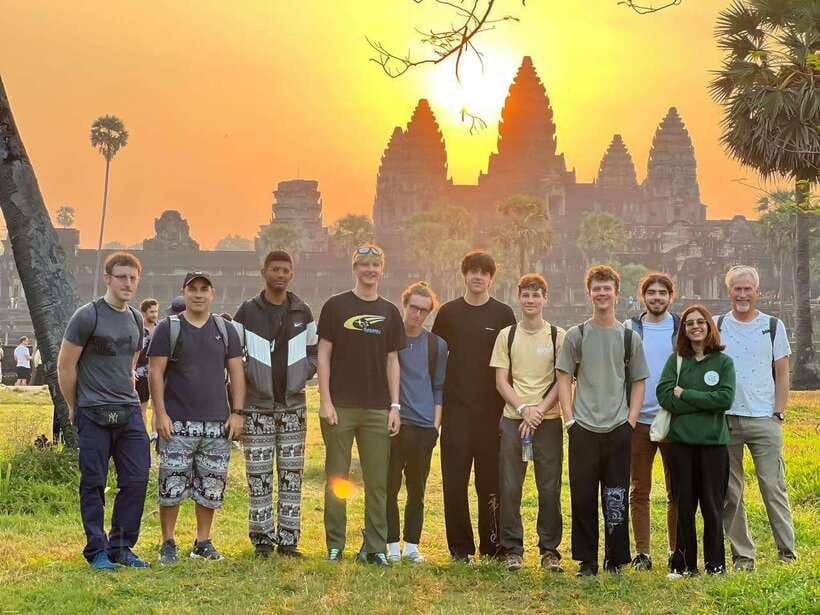
The sunrise is the emotional centerpiece. Angkor Wat’s towers and reflection pool create the classic view, but nature does not follow a tour schedule. Clouds can soften or hide the sunrise, so treat the setting as a chance to see the temple wake up rather than a guaranteed postcard.
After sunrise, the cooler morning hours are used for temple visits. This timing matters. By late morning, the heat can make steep stairs and long paths feel much harder. Early movement also helps the group reach popular monuments before some larger crowds arrive, although you should still expect company at the best-known sites.
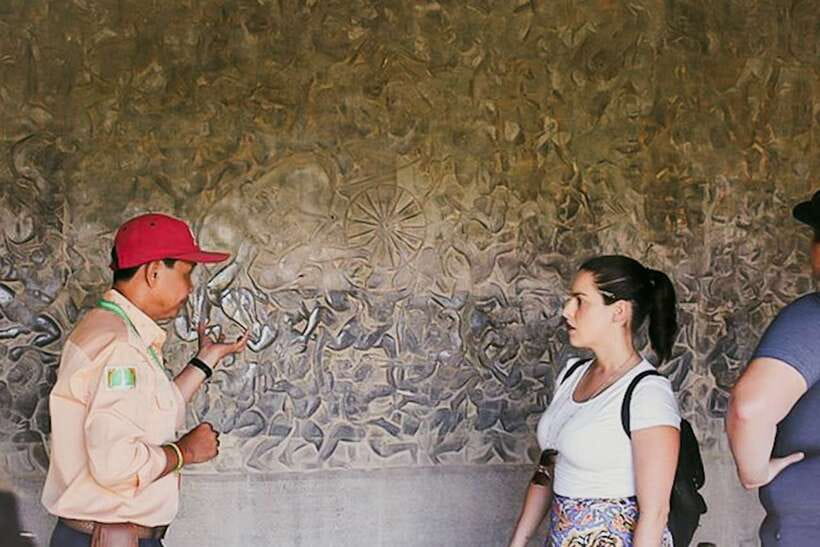
Angkor Wat itself deserves more than a quick photograph. The guide helps explain its religious purpose, architecture, carvings, and place in Khmer history. Pheap has been praised for combining vivid storytelling with good sunrise viewpoints, while Sayon is noted for knowing useful photo locations and keeping the day organized.
Breakfast and lunch are not included. You will have breaks for food and rest, but bring money and do not expect the $34 price to cover meals. A shorter lunch would suit some people better, especially on a tightly scheduled day, so keep your stop efficient if you want more time at the monuments.
Ta Prohm and the power of jungle ruins
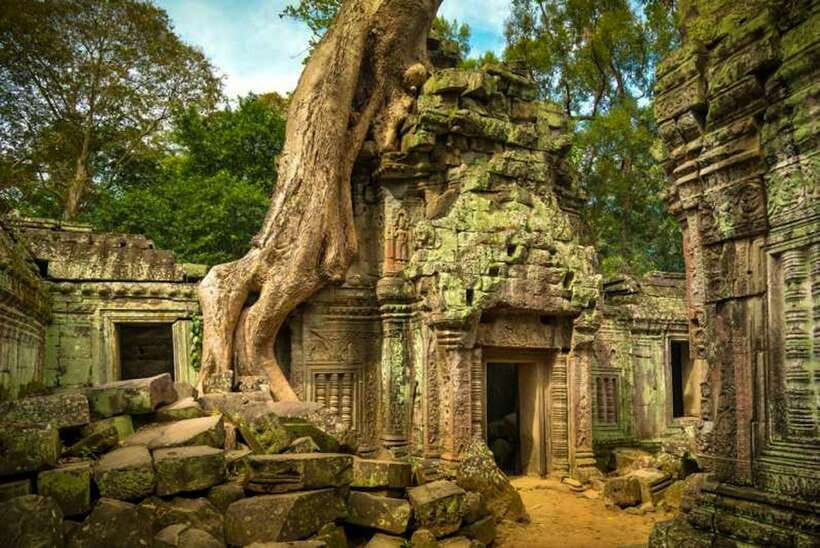
Ta Prohm is the temple most associated with trees growing across ancient stone. Its appearance is striking because the ruins and vegetation have become part of the same picture, though the site is not simply an untouched jungle discovery. It is a preserved and managed monument where nature and conservation meet.
The tour aims to reach Ta Prohm early, before the paths become even more crowded. That is a real advantage. The narrow galleries and famous tree-covered sections can feel cramped when several groups arrive together, so your guide’s timing and route choices matter.
This is also a place where a guide improves the visit. Without context, you may see broken walls and roots. With an explanation of the temple’s purpose, carvings, and place in the wider Angkor complex, the ruins become easier to understand. The movie connection adds familiarity, but the site is much more than a film backdrop.
Angkor Thom, Bayon, and Ta Keo
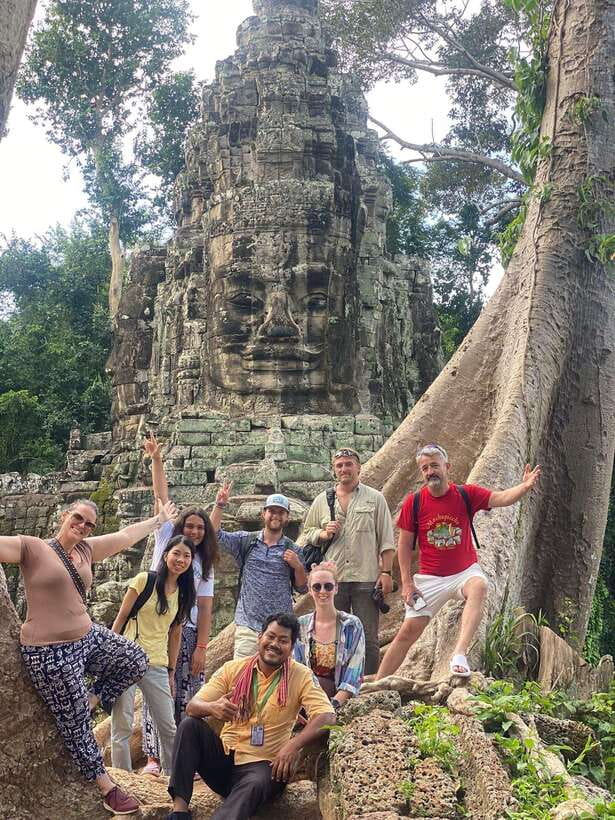
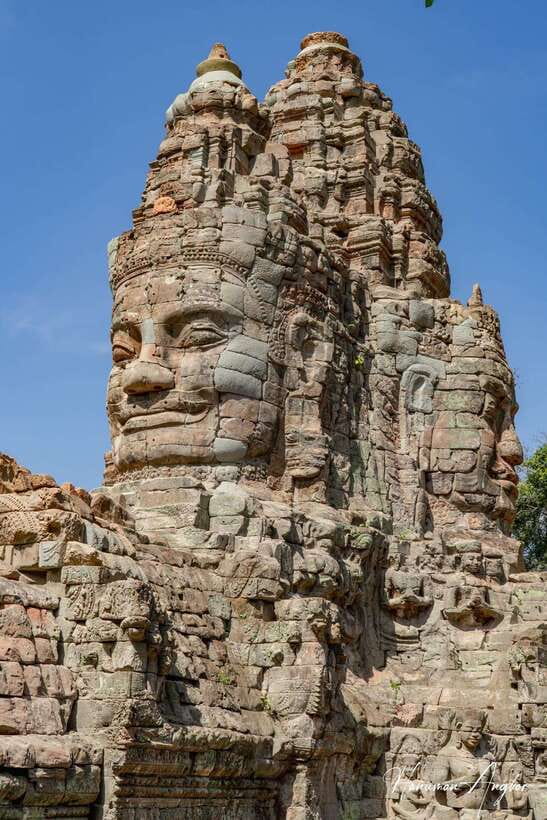
Angkor Thom is a vast walled city, and the South Gate provides one of the tour’s most memorable approaches. Rows of gods and demons pull at the body of a seven-headed naga, forming a dramatic bridge into the city. This is one of the best places to pause and look closely at the sculpture rather than simply pass through by vehicle.
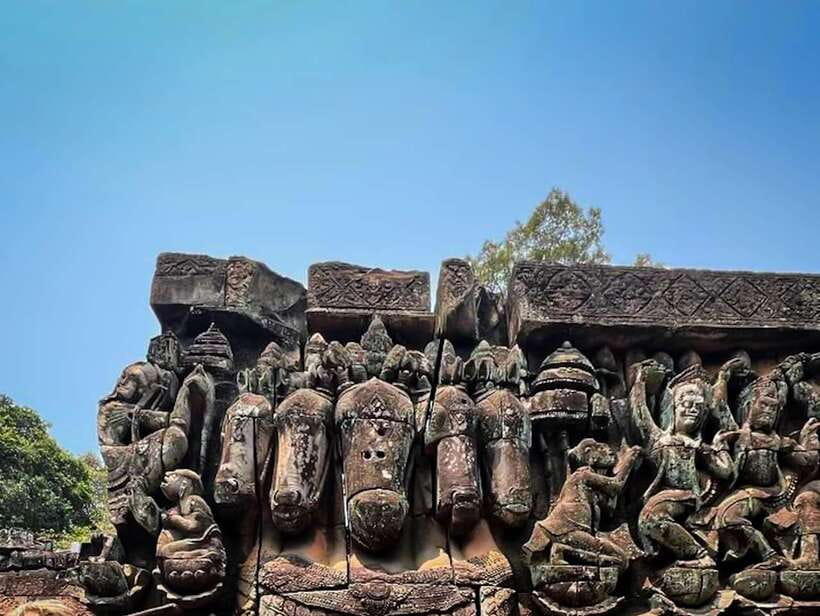
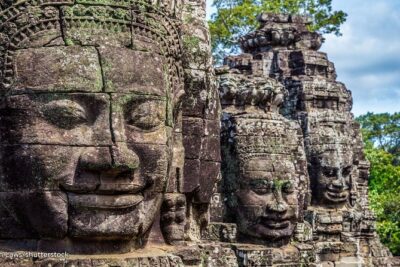
Inside Angkor Thom, Bayon is the main attraction. Its towers carry the famous serene faces, which appear from different angles as you walk among the galleries. Bayon was built during the reign of Jayavarman VII and is associated with Buddhist royal power. Its layered design can be confusing at first, so a good guide helps you understand what you are seeing instead of leaving you with a collection of mysterious stone faces.
Ta Keo changes the mood. This 10th-century mountain temple has a more stripped-back, massive appearance, and reaching its higher levels requires walking up ancient steps. If your knees or feet trouble you, take your time. The guide can help you manage the stairs, but this is not a day built around easy access.
The first day ends at the South Gate of Angkor Thom. By then, you will have seen the three temples most people consider essential, plus several distinct settings and architectural styles. You may also be ready for a shower and a serious rest.
More Temple Sunrise Tours in Siem Reap
- Angkor Wat Highlights and Sunrise Guided Tour from Siem Reap
★ 5.0 · 3,213 reviews - Full-Day Angkor Wat Sunrise Private Tour with Guide from Siem Reap
★ 5.0 · 2,920 reviews - Angkor Wat Sunrise & 3 Main Temples with Breakfast – Small Group
★ 5.0 · 2,857 reviews - Siem Reap: Angkor Wat Sunrise and Full-Day Sightseeing Tour
★ 4.9 · 2,828 reviews
Day two: the quieter grand circuit
Day two starts around 10:30 a.m., a much friendlier hour than the first morning. It follows the large circuit through a different group of temples and finishes around 7 p.m., with sunset included in the advertised plan. Confirm the exact sunset arrangement when booking, since the activity information describes the sunset as part of the big tour while also presenting the sunrise and sunset options in slightly different ways.
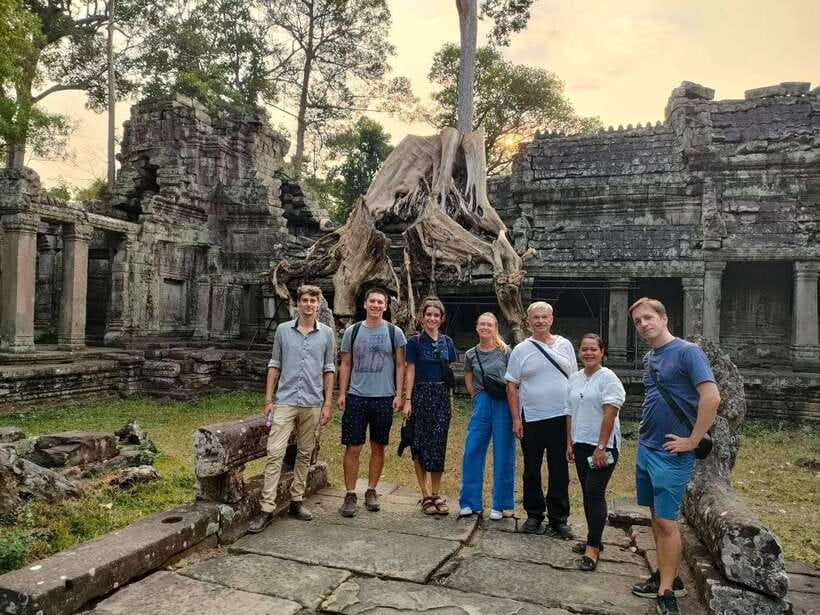
Preah Khan is the largest temple on this route. Its long corridors, courtyards, carvings, and partially restored sections give you a sense of how extensive the religious and royal complex once was. It can feel less dominated by one famous view than Angkor Wat or Ta Prohm, which makes the guide’s explanation especially useful.
Neak Pean is unusual because water shapes the monument. The small island temple sits within a system of pools that were used for bathing and health during the Angkor period. You approach it along a raised walkway, and the setting gives you a pause from the heavy stone architecture found elsewhere.
Ta Som has a more intimate character. A large tree grows over the eastern gate, and carvings of dancers with long hair add movement to the stonework. The temple was built for the king’s sister, a detail that helps broaden your understanding of who royal temple building commemorated.
East Mebon was built for ancestors and once sat in the middle of a reservoir. Today, that original water setting is difficult to picture, so the guide’s explanation fills in an important part of the scene. Its early 10th-century date also helps you compare it with the later temples visited on day one.
Pre Rup was built by a king for himself. It is sometimes mistaken for a crematorium because of a stone structure resembling a coffin, but the explanation given here is tied to Hindu meditation during the full moon. That detail shows why a guide matters: architecture at Angkor often carries religious meaning that is not obvious from the stones alone.
Phnom Bakheng and the final sunset
Phnom Bakheng sits on a hill, so reaching the temple involves an uphill walk. Its 33 towers represent the heavens, making the final stop a fitting place to think about the connection between royal ambition, religion, and the natural world around Angkor.
The sunset can be beautiful, but it is not guaranteed to be dramatic. Weather controls the colors, and the hilltop setting can attract a crowd. Still, ending the second day above the surrounding area gives the tour a strong final scene after a full circuit of temples.
You should approach this stop with realistic expectations. If the heat has worn you down, the climb may feel like extra work. On the other hand, the late-day light and sense of completion can make it worth the effort. The air-conditioned vehicle waiting afterward is particularly welcome.
Guides, transport, and the human side
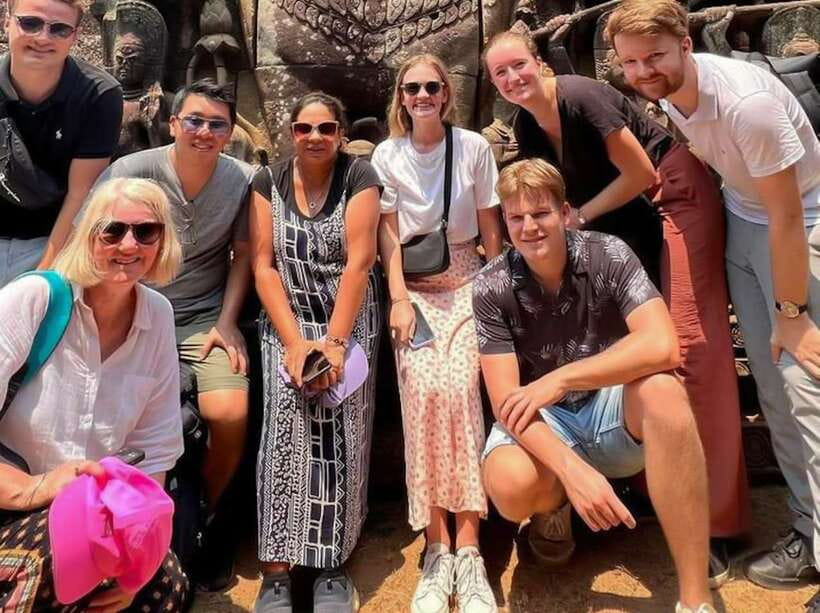
The guides are the strongest part of this experience. You may have different guides on the two days, which means you get two voices and two ways of explaining Angkor. Sam is praised for his historical and religious explanations, Nick for humor and good timekeeping, and Vone for mixing stories, clear explanations, and well-placed photographs.
Pheap is repeatedly praised for his energy, temple knowledge, and ability to answer questions. Sary and Sayon are noted for organization and photo advice. Sok is praised for staying attentive to the group, even during the early start. These individual guides can shape the day, and the large number of positive ratings suggests the company has a dependable guiding team.
The transport is a practical advantage. An air-conditioned minibus gives you a cool place to recover between temples, and drivers supply chilled bottled water. Wet towels or wipe towels are offered during the day, a small touch that becomes surprisingly valuable once you are hot and dusty.
The route is offered as a private or small-group experience. A small group usually gives you more room to ask questions and makes it easier for the guide to keep everyone together. A private option can suit families or couples who want a more flexible pace, though the supplied price is stated per person and may not describe the private rate.
Price, temple tickets, and what you really pay
At $34 per person, the tour offers good value for two days of transport, English guiding, hotel pickup and drop-off, 11 temples, bottled water, towels, and local tax. You are paying mainly for organization and interpretation, not entry to the monuments.
The Angkor Archaeological Park pass is extra. You must buy it yourself, either online through the Cambodian government’s Angkor Enterprise website or at the ticket office after pickup, depending on the arrangement. Budget for that separately before deciding the final cost.
Meals are also extra. You will have food breaks, but the tour does not cover lunch or other meals. This is normal for a low-cost temple tour, yet it matters because two long days in the heat require food and fluids.
You can cancel up to 24 hours in advance for a full refund, and the reserve-now, pay-later option keeps your plans flexible. Pickup is included, but provide the correct hotel address and be ready early. Small timing errors can be frustrating when sunrise is the main event.
Who should book this tour
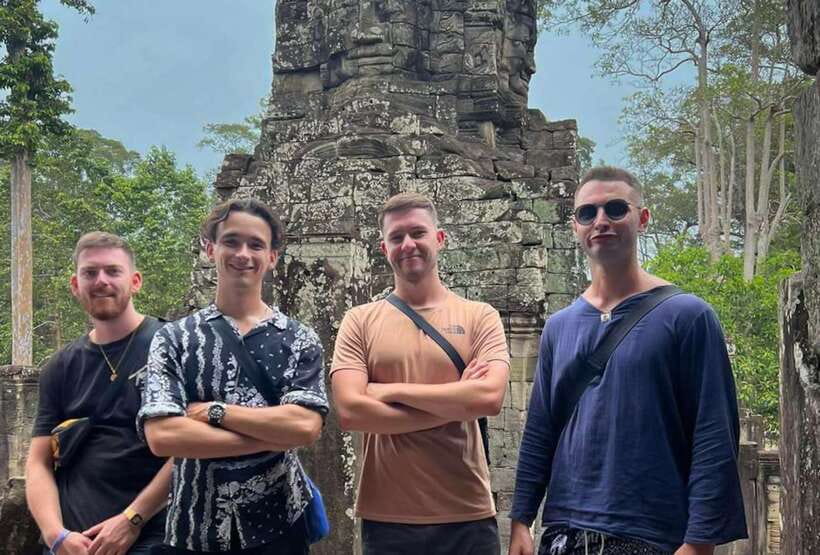
I would choose this tour if you have at least three days in Siem Reap and want the main temples explained in a sensible order. It is especially useful for first-time visitors, solo travelers who want company, and anyone who prefers a guide to studying temple maps and signs alone.
Families can enjoy it, but the heat and walking are real. One family group found the guide patient when a nine-year-old needed to slow down, and guides have also helped visitors with sore knees and feet. Still, this is not a gentle sightseeing ride.
The information says the activity is wheelchair accessible, but it also lists wheelchair users as unsuitable. Treat that as a warning to clarify access directly before booking. Ta Keo, Phnom Bakheng, uneven ground, and temple steps can make the practical experience difficult for anyone with limited mobility.
The tour is not a good fit if you dislike early mornings, long days, hot weather, or fixed group schedules. It is also not right for anyone expecting meals or the temple pass to be included.
Should you book the Angkor two-day tour?
Book it if you want a well-organized introduction to Angkor at a low price, with the major temples on day one and quieter monuments on day two. The guides, cool transport, water, and repeated help with photographs add genuine value, and the split schedule gives the site room to breathe.
Skip it if you want a slow, private exploration with long breaks at each temple. Two days here demand stamina. For most first-time visitors who can handle a 4:30 a.m. start, though, this is an efficient and well-supported way to meet Angkor Wat at sunrise, watch the day fade from Phnom Bakheng, and understand far more than a quick photo stop would reveal.
FAQ
What is included in the $34 tour price?
The price includes hotel pickup and drop-off, an air-conditioned minibus, an English-speaking guide, two separate tour days, visits to 11 temples, bottled water, refreshing wipe towels, and local tax.
Is the Angkor temple pass included?
No. You must purchase the Angkor Archaeological Park entry ticket separately, either online through the government website or at the ticket office.
What time does the first day begin?
Day one begins around 4:30 a.m. for the Angkor Wat sunrise tour and generally ends around 1 p.m.
What time does the second day run?
Day two is scheduled from about 10:30 a.m. to 7 p.m. and includes the big tour route and the advertised sunset experience.
Are meals included?
No. Meals are not included, although the schedule includes occasional food and rest breaks.
What should I wear?
Wear comfortable clothing, sunglasses, and sunscreen. Shorts, short skirts, and sleeveless shirts are not allowed at the temples.
Can I cancel the booking?
Yes. You can cancel up to 24 hours in advance for a full refund. The activity also offers reserve now and pay later booking.
More Temple Sunset Tours in Siem Reap
- Siem Reap: Full Day Angkor Wat Temple Experience with Sunset
★ 4.9 · 1,490 reviews - Angkor Wat full Day ‘Small Group with sunset & Tour Guide
★ 5.0 · 1,369 reviews - 2 Days Exclusive Temple Highlights with Sunset and Sunrise Tour
★ 5.0 · 1,157 reviews - Siem Reap: 2-Day Temple Highlights Sunrise and Sunset Option
★ 4.9 · 445 reviews
More Temple Sunset Tours in Cambodia
- Siem Reap: Full-Day Angkor Wat Guided Tour with Sunset
★ 4.9 · 3,803 reviews - Angkor Wat Sunset Small Group Tour with Lunch Included
★ 5.0 · 3,059 reviews - Siem Reap: Angkor Wat Sunrise or Sunset Guided Tour
★ 4.9 · 2,123 reviews - Full-Day Guided Sunset Tour of Angkor Wat
★ 5.0 · 1,507 reviews
Just added around Siem Reap
- Sunrise at Angkor Wat Temple: 3-Hour Private Tour★ 4.7 · 30 reviews
- Small-Group Explore Angkor Wat Sunrise Tour with Guide★ 5.0 · 3 reviews
- Siem Reap: Ultimate Angkor Wat Offbeat Experience by Jeep★ 4.9 · 8 reviews
- SiemReap: Private Angkor Wat Tour in English or German guide★ 5.0 · 5 reviews
- Siem Reap : Private Tuk-Tuk Tour of the Magnificent Temples.★ 4.9 · 14 reviews
- Siem Reap: Private 4-Day Angkor Wat and Phnom Kulen Tour★ 5.0 · 9 reviews
- Siem Reap: Personalized Angkor Wat Sunrise/Set by TukTuk/Car★ 4.9 · 41 reviews
- Siem Reap: 1-Day Angkor Wat Tour in Portuguese★ 5.0 · 4 reviews
Angkor Wat Tours, compared.
Angkor Wat Sunrise or Sunset Tour with Guide from Siem Reap
Read our review →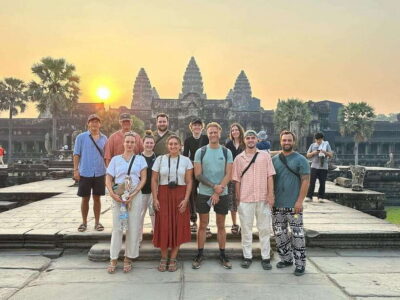
Angkor Wat: Small-Group Sunrise or Sunset Tour
Read our review →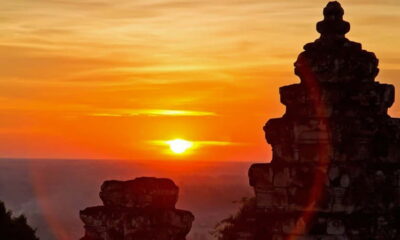
Angkor Wat Sunrise tour with Small – Group and Guide tours
Read our review →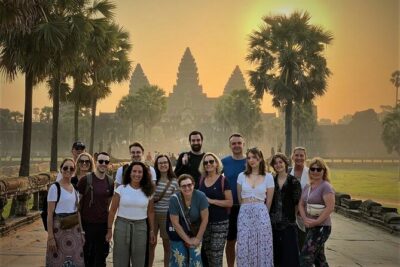
Angkor Wat Highlights and Sunrise Guided Tour from Siem Reap
Read our review →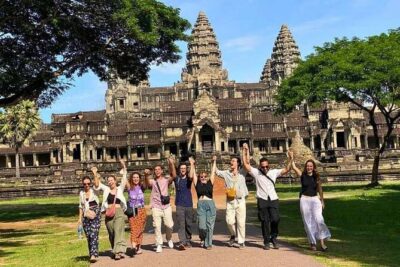
Angkor Wat Sunset Small Group Tour with Lunch Included
Read our review →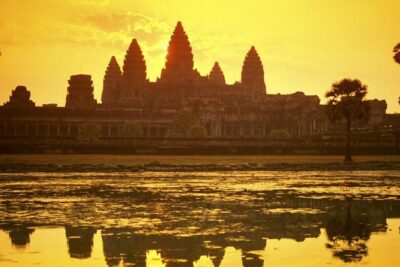
Full-Day Angkor Wat Sunrise Private Tour with Guide from Siem Reap
Read our review →