
Review · MADRID
Madrid: Entrance to the Monastery of Las Comendadoras de Santiago
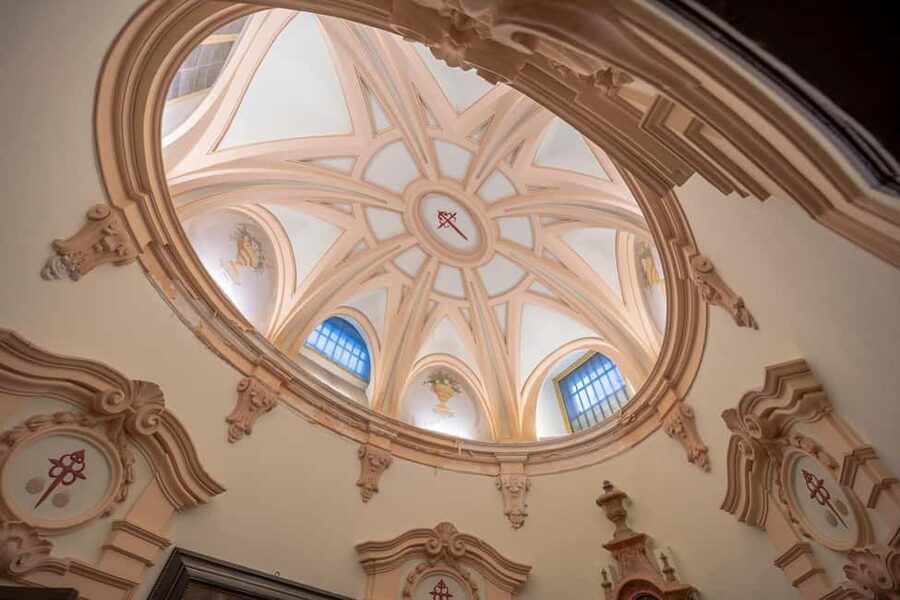
Step inside a quieter side of Madrid. The Monastery of Las Comendadoras de Santiago gives you a close look at centuries of religious life through its girls’ chapel, the Sacristy of the Knights, and the lower choir where nuns once listened to Mass. I like the way the visit joins art with daily monastic history, and I also like that a Spanish, English, or French audio guide helps explain spaces that could otherwise feel easy to miss.
The main caution is practical: opening arrangements need attention. A verified complaint dated December 7, 2025 describes a visitor waiting from 12:30 p.m. until 1 p.m. without the monastery opening, with no useful information by phone. I would confirm the starting time before setting out, rather than treating this as a casual drop-in.
Key points at a glance
- The girls’ chapel offers a glimpse into a special devotional space: Its purpose and design give the visit a more personal feel than a standard church tour.
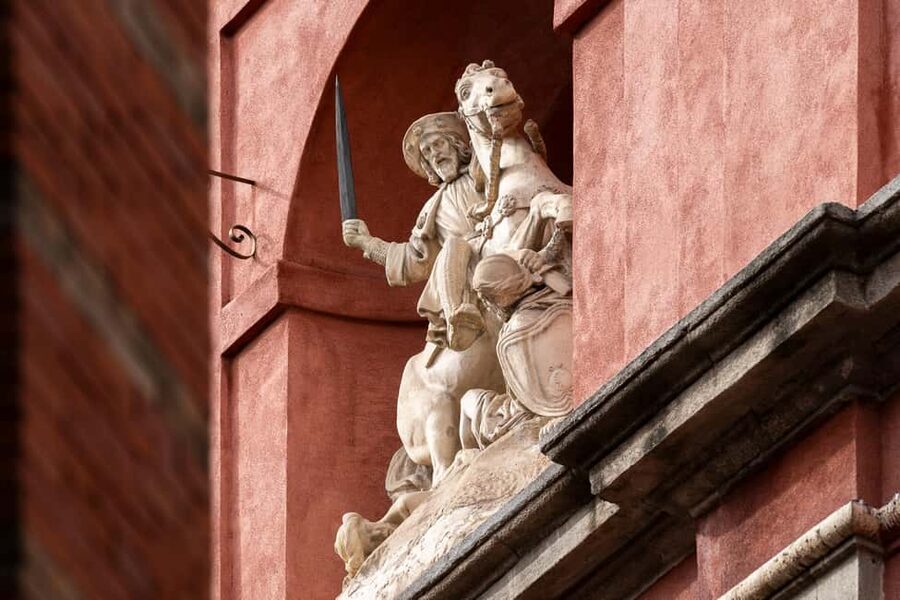
- The Sacristy of the Knights connects the site with the Order of Santiago: This is where members of the order were ordained.
- The lower choir shows how the nuns attended Mass: You get a clearer sense of how worship worked from inside the convent.
- The visit includes the church and cloister: These spaces bring together architecture, sacred art, and monastic life.
- A multilingual audio guide is included: You can choose Spanish, English, or French.
- The $11 price is reasonable for a focused cultural stop: It makes the most sense if you value historic interiors and want more context than a quick look from the street.
Why this Madrid monastery deserves your time
Madrid is famous for grand avenues, major museums, and royal buildings. The Monastery of Las Comendadoras de Santiago offers a different kind of sight. It is a place shaped by prayer, order, routine, and protected community life.
Founded in the 17th century, the monastery has witnessed centuries of devotion and tradition. That age matters because the rooms are not simply decorative backdrops. They were used for worship, ceremony, and the daily structure of the women who lived there.
I like this kind of visit because it asks you to slow down. The experience is not built around a long list of spectacular objects. Instead, it gives you a series of connected spaces, each showing how religious life was organized.
The monastery is also a useful stop for anyone interested in Madrid beyond the headline attractions. You are not only looking at a church. You are learning how a community functioned, where people prayed, and how the Order of Santiago remained linked to the building.
A few more temple visits around Spain worth a look
- Montserrat Monastery Half Day Experience from Barcelona
★ 5.0 · 6,014 reviews - Montserrat Monastery Small Group or Private Tour Hotel pick-up
★ 5.0 · 5,144 reviews - Escorial Monastery and the Valley of the Fallen Tour from Madrid
★ 5.0 · 2,494 reviews
Enter through the temple door
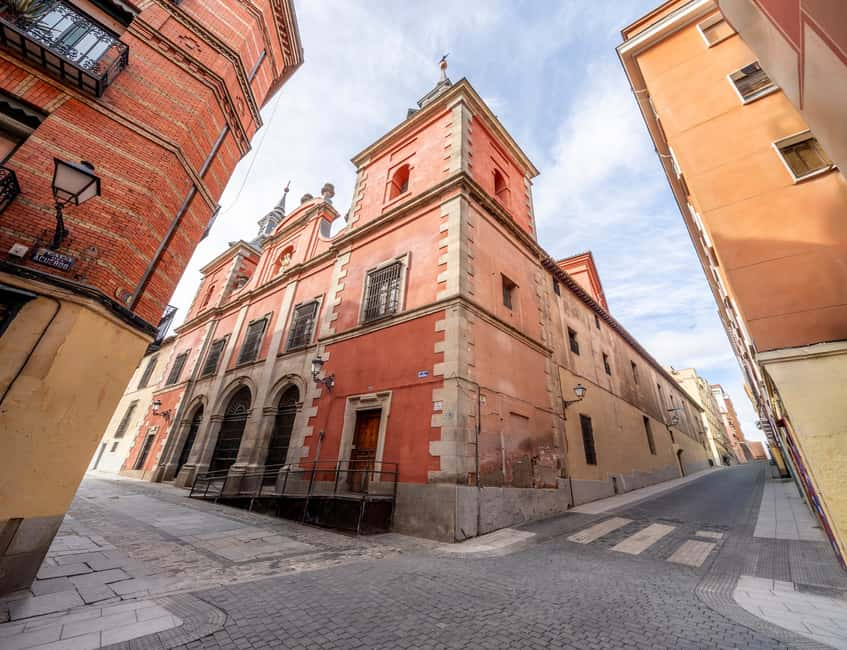
The meeting point is simple. Enter the temple through the door, then find the ticket office inside. The arrangement is convenient once you reach the correct entrance, but it also means you should not expect a large outdoor reception area or a highly visible visitor center.
Your admission costs $11 per person. That is a fair price for access to a historic monastery, church, cloister, and several spaces with distinct religious and institutional roles. The value improves if you use the audio guide rather than walking through without context.
The visit is valid for one day, with available starting times shown during booking. That does not tell you exactly how long you will spend inside. Think of the one-day period as the validity of your admission, not as a full-day guided program.
Because the opening experience has not been entirely reliable, I would check the available time shortly before going. One complaint describes a wait from 12:30 p.m. to 1 p.m. without the doors opening, followed by unsuccessful phone calls. That is a serious inconvenience, especially if you have timed museum tickets or a meal planned nearby.
The church and cloister set the tone
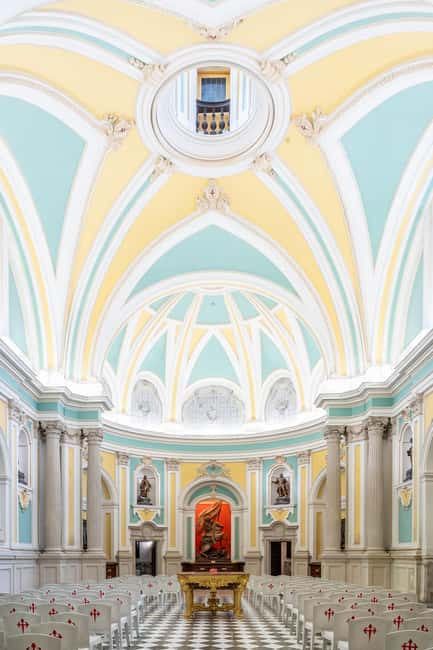
The church is one of the main reasons to come. It provides the setting for the monastery’s religious life and offers a chance to see sacred art in its original setting rather than in a museum gallery.
The surrounding cloister adds another layer. Cloisters were practical spaces as well as beautiful ones, linking the religious rooms and creating a sheltered route through the complex. Here, the architecture helps you picture the controlled rhythm of convent life.
You may find the visit most rewarding if you pay attention to transitions. Moving from a public worship space toward more private monastic areas helps explain the difference between what outsiders could see and what belonged to the community itself.
The audio guide should help with that reading of the building. English, French, and Spanish are available, and some content is presented in its original language. If you prefer to understand the site’s terms and background as you go, choose your language before beginning rather than rushing into the first room.
The girls’ chapel has a personal story
The girls’ chapel is described as a space conceived as something very special. That phrase points to a room with a particular devotional purpose, not simply another corner of the church.
Its appeal is the human scale of the story. A chapel connected with girls brings attention to age, education, care, and religious formation within the wider institution. Even without a long explanation, the space can make you think about the different people who passed through the monastery and the roles they held.
I would give this room time instead of treating it as a quick photo stop. Look at how it feels in relation to the larger church. The contrast between a special chapel and the main worship area may tell you more about the community’s priorities than a grand architectural detail alone.
Since the supplied information does not specify the chapel’s exact decoration or dimensions, I would avoid expecting a certain painting, sculpture, or layout. Go for the meaning of the space and use the audio guide for the details provided on site.
Same place, a different morning at the gates:
- Montserrat Museum and Monastery Entry Ticket
★ 4.5 · 1,740 reviews - Montserrat Small Group: Monastery, Black Madonna & Natural Park
★ 5.0 · 1,690 reviews - From Madrid: Escorial Monastery and the Valley of the Fallen
★ 4.7 · 1,434 reviews - Madrid: Flamenco Show at Tablao Sala Temple with Drink
★ 4.8 · 1,206 reviews
The Sacristy of the Knights and the Order of Santiago
The Sacristy of the Knights is the clearest link between the monastery and the Order of Santiago. This is where members of the order were ordained, giving the room a ceremonial role beyond ordinary church maintenance.
A sacristy can sound like a minor stop if you only think of it as a place where clergy prepare for Mass. Here, its connection with the knights gives it a wider story. The room brings together religious ceremony, institutional power, and the public identity of the order.
This is likely to be one of the most rewarding stops for visitors who enjoy the overlap between Spanish history and religious history. You are not simply seeing a handsome interior. You are standing in a place used for a formal rite tied to a recognized order.
Pay close attention to the audio explanation here. The room’s importance may not be obvious from its appearance alone. Its value comes from knowing what happened there and why the Order of Santiago mattered to the monastery.
The lower choir reveals how the nuns heard Mass
The lower choir offers one of the most useful windows into everyday monastic practice. From this area, the nuns listened to Mass.
That detail changes how you look at the church. Instead of imagining every worshipper seated in the same open space, you can see how the convent community had its own designated place. The arrangement reflects separation, discipline, and a religious routine carried on apart from ordinary public life.
For me, this is the kind of stop that gives a historic building its character. A grand church can impress you for a few minutes, but a lower choir explains how people actually used it.
Take a moment to imagine the sound of Mass from that position. You do not need a dramatic reconstruction to understand the point. The architecture itself shows that worship was experienced differently by the nuns and by those in the main church.
Use the audio guide to connect the rooms
The audio guide is included in the admission, with Spanish, English, and French options. That is important because the monastery’s strongest features depend on context.
Without explanation, you might see a chapel, a sacristy, and a choir and move on. With the guide, those rooms become parts of one story: the monastery’s foundation in the 17th century, the Order of Santiago, and the daily religious life of the nuns.
The guide is not a substitute for looking carefully. Use it as a prompt. Listen to the explanation, then spend a little time studying the room itself. Notice how the spaces relate to one another and how public and private areas differ.
Some content is shown in its original language. If you are comfortable with that, it may add useful character. If not, the listed guide languages give you a clear way to follow the main explanation in English, French, or Spanish.
What the $11 admission gets you
At $11 per person, this is not a major financial commitment. The question is less about affordability and more about interest.
You are paying for entry to a historic religious complex, including the monastery, church, cloister, and featured spaces such as the girls’ chapel, Sacristy of the Knights, and lower choir. The included audio guide adds value, particularly for first-time visitors who do not already know the story of the Order of Santiago.
I would call it good value for a short cultural visit. It is not the right purchase if you want a large museum collection, a long guided tour, or a packed schedule of activities. The attraction works best as a focused architectural and historical stop.
The overall rating is 4.1 from seven reviews, which suggests a generally favorable but not flawless experience. The operational complaint about delayed opening is the key issue to take seriously. A beautiful interior cannot make up for an avoidable wait if the doors are not open at the posted time.
Timing, conduct, and simple planning
The activity is valid for one day, and you need to check availability for the starting time. Because the visit depends on access to an active religious site, timing matters more here than it might at a large city museum.
I would keep your schedule flexible around the visit. If you have another fixed booking immediately afterward, allow extra breathing room. Most importantly, confirm the opening information before leaving your hotel or another attraction.
Inside, food and drinks are not allowed. Drones, explosive substances, bare feet, and noisy behavior are also prohibited. The rules are straightforward and fit the setting. Dress and act as you would in any functioning place of worship.
The information provided does not give details about accessibility, photography, toilets, or the exact length of the interior visit. If any of those points affect your plans, ask the monastery directly before booking.
Free cancellation is available up to 24 hours in advance for a full refund. You can also reserve now and pay later, which helps if your Madrid schedule is still changing. Those terms are useful, but they do not remove the need to confirm the opening time.
Who will enjoy this experience most
I would recommend the monastery to you if you enjoy:
- Religious architecture and sacred art
- Spanish history tied to military or religious orders
- Quiet, focused cultural attractions
- Historic interiors where the building’s use matters as much as its appearance
- Audio-guided visits in English, French, or Spanish
Families with older children may find the girls’ chapel and lower choir easier to understand than a general art display because each space has a clear purpose. The visit can also suit repeat visitors to Madrid who want a more specialized stop.
I would be more cautious if you are looking for a major attraction with guaranteed, all-day access. The monastery is compact in concept, and its appeal depends on your interest in monastic life, sacred spaces, and historical context.
Should you book the Monastery of Las Comendadoras de Santiago?
Book it if you want a modestly priced look at a side of Madrid that many sightseeing plans skip. The Sacristy of the Knights and the lower choir give the visit real substance, while the audio guide helps you understand why the rooms matter.
Before paying, check the available time and confirm that the monastery is opening as expected. That one step is especially important because a documented visit ended badly after the doors failed to open at the expected time.
My verdict: worth booking for history and religious architecture, provided you keep your timing flexible and verify the opening details. At $11, it offers good value for a thoughtful, focused stop, not a full-day attraction.
FAQ
Where is the Monastery of Las Comendadoras de Santiago located?
It is located in the Community of Madrid, Spain.
How much does admission cost?
Admission costs $11 per person.
How long is the ticket valid?
The ticket is valid for one day. You need to check availability for the starting time.
Where do I enter the monastery?
Enter the temple through the door. The ticket office is inside.
Is an audio guide included?
Yes. An audio guide is included with admission.
Which languages are available for the audio guide?
The audio guide is available in English, French, and Spanish.
Can I cancel for a full refund?
Yes. You can cancel up to 24 hours in advance for a full refund.
What is not allowed inside?
Food and drinks, drones, explosive substances, loud noise, and bare feet are not allowed.
Just added around Spain
- Montserrat Monastery Horse Riding & Walk – Small Group (Max 8)★ 5.0 · 45 reviews
- Montserrat & beyond private from Barcelona with different options★ 5.0 · 32 reviews
- Transfer to Montserrat Monastery from Barcelona★ 4.5 · 94 reviews
- Montserrat Nature Walk, Monastery and Museum from Barcelona★ 5.0 · 58 reviews
- Montserrat Tour with Cogwheel Train, Monastery & Black Madonna★ 4.0 · 10 reviews
- Private Montserrat & Hot-Air Balloon Ride with Monastery visit★ 4.5 · 5 reviews
- Montserrat Monastery and Mountain Half Day Hiking from Barcelona★ 4.5 · 6 reviews
- Montserrat Horseback Riding & Monastery – Small Group (Max 8)★ 5.0 · 45 reviews
Madrid Temple Tours, compared.
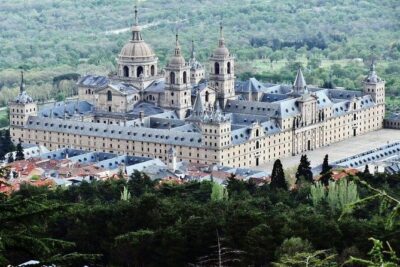
Escorial Monastery and the Valley of the Fallen Tour from Madrid
Read our review →
Flamenco Show at Tablao Sala Temple with Drink
Read our review →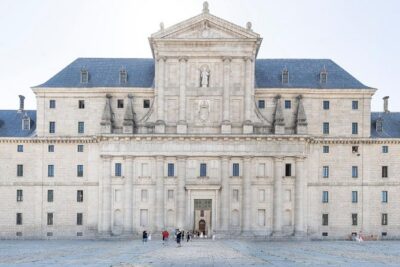
Escorial Monastery and the Valley of the Fallen from Madrid
Read our review →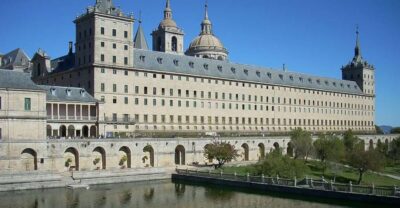
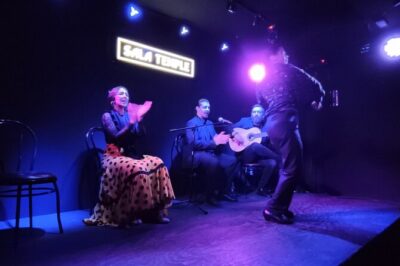
Entrance to the Flamenco Temple Room in Madrid with Tapas Option
Read our review →
Madrid Must-see with Atardeder at the Debod Temple
Read our review →
Combined admission to San Antonio de los Alemanes and the Monastery of San Plácido
Read our review →
San Lorenzo de El Escorial Monastery Private Tour
Read our review →Browse the lists this tour appears in