
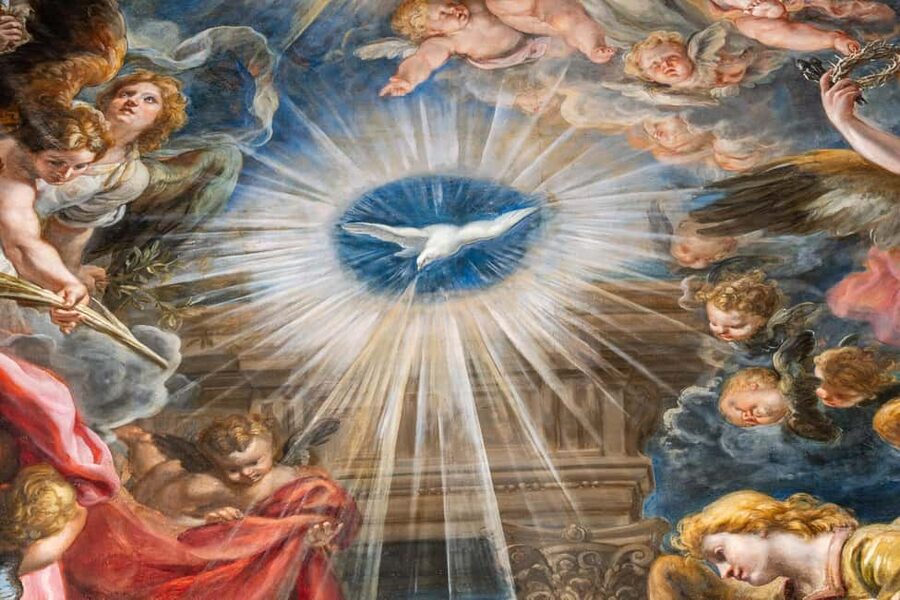
Review · MADRID
Combined admission to San Antonio de los Alemanes and the Monastery of San Plácido
Madrid keeps its finest Baroque indoors. This $14 admission brings you to two remarkable churches that many visitors miss: San Antonio de los Alemanes, with its elliptical plan and ceiling frescoes, and the Benedictine Monastery of San Plácido. I especially like the close look at Madrid’s painted Baroque and the chance to see San Plácido after centuries closed to public visits. The main drawback is that this is an admission ticket with audio guides, not a live guided tour.
The experience is easy to fit into a day in Madrid, and the value is strong if you care about art, churches, or Spanish history. I would allow enough time to listen carefully, since the audio material is available in Spanish, English, and French. The visit is less suited to anyone hoping for a broad museum tour or access to every part of the convent buildings.
Four reasons this Madrid Baroque visit is worth your time
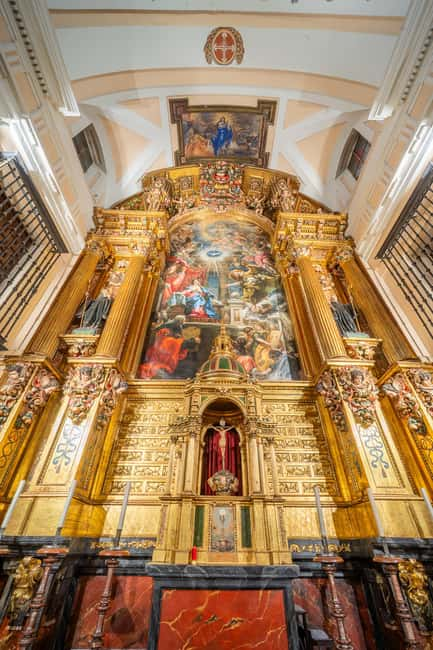
- San Antonio’s elliptical church plan gives the building an unusual shape and helps its painted interior feel intimate rather than monumental.
- Frescoes by Luca Giordano, Francisco Rizi, and Carreño de Miranda turn the church ceiling and walls into a showcase of Spanish Baroque painting.
- San Plácido’s Annunciation by Claudio Coello is almost seven meters high and presides over the main altar.
- Manuel Pereira’s sculptures add three-dimensional drama to San Antonio’s painted decoration.
- The $14 price covers both monuments, making this a good-value cultural stop for art lovers.
- Audio guides in three languages give you useful context, though you will not have a guide on hand for questions.
Why these two churches belong together
Madrid’s famous sights often pull you toward grand royal buildings, major art museums, and crowded central plazas. This visit takes a different route through the city’s Baroque, using two religious buildings to show how painters, sculptors, architects, and religious orders worked together.
I like the pairing because the churches offer different kinds of pleasure. San Antonio de los Alemanes is visually concentrated. You step into an unusual oval space surrounded by painted decoration, sculpture, and theatrical Baroque detail. San Plácido feels more like a discovery built around one exceptional artist, Claudio Coello, whose work gives the church its main artistic focus.
The $14 admission is modest for two monuments. You are not paying for transport, refreshments, or a live guide, but you are getting access to places that are not simply open as casual walk-in attractions. That matters in Madrid, where some of the most rewarding art is found in churches with limited cultural visiting hours.
I would treat this as a focused art visit, not an all-day sightseeing tour. The stated duration is one day because your admission is valid for that period, but no fixed touring time is provided. Check the available starting times before you reserve, then plan the two stops around the rest of your Madrid schedule.
A few more temple visits around Spain worth a look
- Montserrat Monastery Half Day Experience from Barcelona
★ 5.0 · 6,014 reviews - Montserrat Monastery Small Group or Private Tour Hotel pick-up
★ 5.0 · 5,144 reviews - Escorial Monastery and the Valley of the Fallen Tour from Madrid
★ 5.0 · 2,494 reviews
San Antonio de los Alemanes and the painted oval
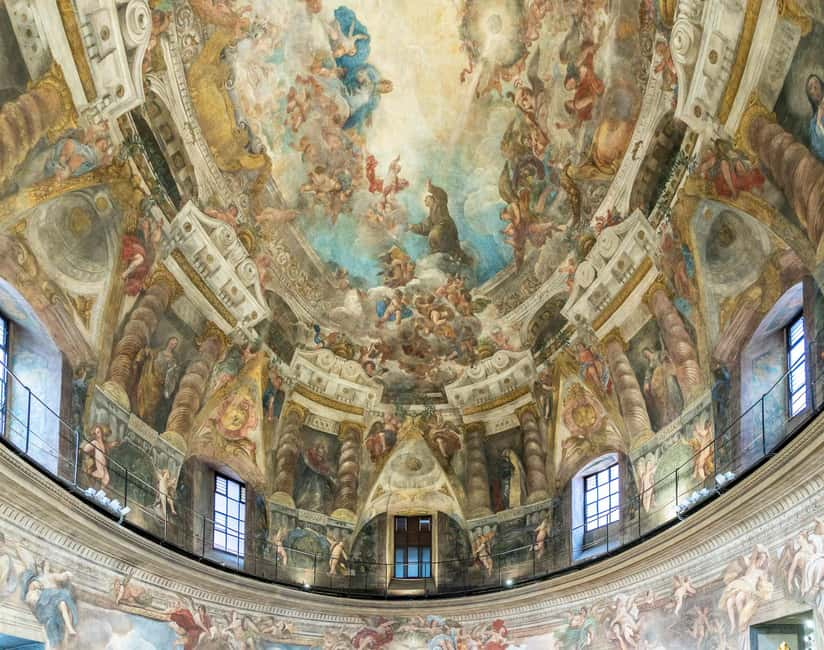
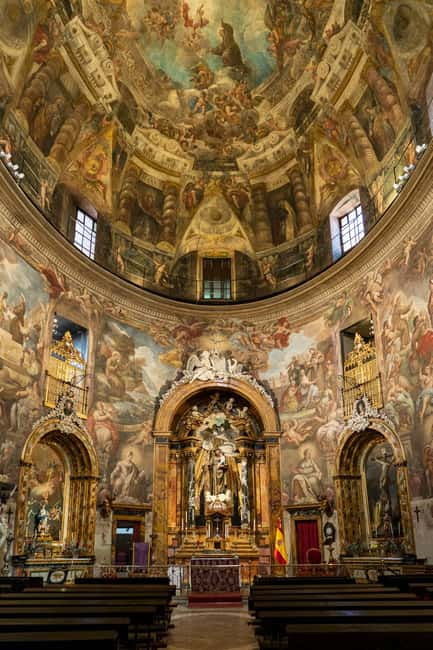
San Antonio de los Alemanes is the visual star of the experience. It is often called the Sistine Chapel of Madrid, a nickname that points to the density and quality of its fresco decoration. The comparison is not about size. This is a more compact setting, but the walls and ceiling create a similarly powerful sense of art surrounding you.
The church’s elliptical layout is one of the first details to notice. A standard rectangular church leads your eye along a clear axis. Here, the curved plan changes how you read the space. Paintings, architectural lines, and sculptures work around the oval, so you should take a moment to look upward, then around the walls, rather than heading straight toward the altar and stopping there.
The frescoes are linked to major names in Spanish and European Baroque art. Luca Giordano, Carreño de Miranda, and Francisco Rizi are all represented, giving the interior a wide artistic range. I would use the audio guide to sort out who created which work, since the decoration can become a blur of figures, clouds, saints, and dramatic movement without some direction.
The audio guide is particularly useful here because the church rewards close looking. You might first notice the overall effect, then begin to pick out individual scenes and figures. The guide can help you understand how the decoration fits together instead of leaving you with the general impression that the ceiling is simply full.
Look for the sculptures by Manuel Pereira as well. They provide a welcome contrast to the painted surfaces. Baroque interiors can sometimes overwhelm you with decoration, but the sculptures give the eye solid forms and shadows to balance the frescoes. I like that the visit is not only about painting. It presents the church as a complete artistic project.
The main practical limitation is the lack of a live guide. If you enjoy asking questions about techniques, iconography, or restoration, you will need to rely on the recorded material. Still, the audio guide is offered in Spanish, English, and French, and the strong praise for its complete information makes it a worthwhile part of the admission.
San Plácido and Claudio Coello’s monumental Annunciation
The second stop is the Monastery of San Plácido, a Benedictine foundation and one of Madrid’s less familiar Baroque religious sites. Its importance here comes partly from its long period away from public cultural visits. After four centuries closed to the public, the church now offers a chance to see its artistic interior in a setting that has not been part of the usual Madrid sightseeing circuit.
I would approach San Plácido with a different expectation than San Antonio. Do not expect another room packed with the same kind of fresco spectacle. The main artistic reason to visit is the collection of works by Claudio Coello, described as the largest collection of his work in the world.
The centerpiece is the Annunciation, a canvas almost seven meters high that presides over the main altar. Its scale matters. A painting of that height changes the way you read the entire church, since the altar becomes a visual anchor from a distance. I would give yourself time to look at the work from farther back before moving closer to study details.
The presence of so much Coello makes San Plácido valuable for anyone trying to understand Spanish Baroque painting beyond the best-known museum collections. You can see how a major religious commission uses scale, placement, and subject to control attention inside a church.
This stop also brings a note of restraint to the visit. Public access is focused on the church and cultural viewing, not on opening every area of the monastic complex. A visitor comment specifically wished for more spaces in the convent and a museum connected with San Antonio. That is a fair expectation to manage before booking. The experience gives you access to two important monuments, but it does not promise a full tour of every room or collection connected with them.
What the audio guide adds
I like an audio guide when it gives you just enough structure to see better. That is the role it plays here. San Antonio’s crowded visual program needs names and explanations, while San Plácido’s connection to Claudio Coello benefits from background about the works and their place in the church.
You can choose Spanish, English, or French. Some content may remain in its original language, so you should not expect every piece of material to be translated in the same way. The available information is still a clear advantage over walking through silently and trying to make sense of the paintings alone.
This format also lets you set your own pace. You can spend longer with the frescoes, pause when the church feels visually full, or move more quickly through material that interests you less. A live guide can offer conversation and local insight, but an audio guide is often better for a quiet church where you want to look without keeping up with a group.
The trade-off is simple: you get interpretation, not personal guidance. If your ideal visit includes questions and discussion, this may feel limited. If you prefer independent sightseeing, it is a sensible arrangement.
Same place, a different morning at the gates:
- Montserrat Museum and Monastery Entry Ticket
★ 4.5 · 1,740 reviews - Montserrat Small Group: Monastery, Black Madonna & Natural Park
★ 5.0 · 1,690 reviews - From Madrid: Escorial Monastery and the Valley of the Fallen
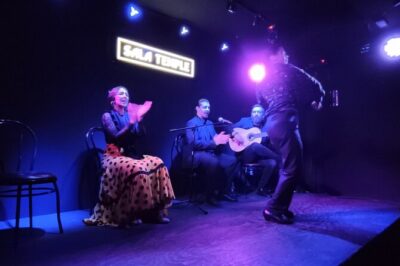
★ 4.7 · 1,434 reviews - Madrid: Flamenco Show at Tablao Sala Temple with Drink
★ 4.8 · 1,206 reviews
The strongest details to watch for
At San Antonio, begin with the building rather than the individual paintings. The elliptical form helps explain why the decoration feels so enveloping. Once you understand the shape, the frescoes by Giordano, Rizi, and Carreño de Miranda become easier to place.
Then turn your attention to the relationship between painting and sculpture. Manuel Pereira’s works interrupt the flat surfaces and give the interior a physical rhythm. I find this mix more rewarding than a church where every inch is treated only as a picture surface.
At San Plácido, make the altar and the Annunciation your first reference point. The nearly seven-meter canvas is not a small object to inspect casually. Its position and scale are part of its power, so take in the complete view before focusing on specific elements.
Also listen for the material about Claudio Coello’s wider body of work. The collection is a major reason to visit, and the church gives you the chance to see several works by one painter in their religious setting rather than as isolated museum objects.
Who will get the most from this admission
I would recommend this experience most strongly to:
- Art lovers who want Madrid Baroque beyond the major museums.
- Visitors interested in church architecture, frescoes, and religious art.
- People who enjoy quieter cultural stops and self-guided visits.
- Repeat visitors to Madrid looking for lesser-known heritage sites.
- Anyone who wants a low-cost addition to a day of central sightseeing.
- Spanish, English, or French speakers who prefer audio interpretation.
It is also a good choice for Madrid residents who have somehow never visited these buildings. A local visitor described being surprised that this cultural heritage is not promoted more widely, and I understand that reaction. The churches are important enough to deserve attention, yet they do not have the same public profile as Madrid’s major museums.
I would be more cautious if you want a long guided program, broad access to monastery rooms, or a large museum collection with many different periods. The focus is narrow and specific: two Baroque religious monuments, with the audio guide as your main source of explanation.
Price, timing, and how to plan the visit
At $14 per person, the combined admission offers good value. You pay one price for San Antonio de los Alemanes and San Plácido rather than choosing between them. Since the ticket is valid for one day, you have some flexibility, although you must check availability for the starting times.
The meeting point is inside the building at the ticket office. Show your electronic voucher to the staff there. This is worth remembering because you should not wait outside expecting a guide or a group sign. The activity is admission-based, and the staff at the ticket office handles entry.
Free cancellation is available up to 24 hours before the visit for a full refund. You can also reserve and pay later, which is useful if your Madrid plans are still changing. I would still check the exact time before finalizing your day, since the information provided does not give a fixed daily schedule.
Plan your clothing and behavior as you would for any active church. The information supplied does not specify a dress code, access rules, or the length of each stop, so I would allow extra time rather than building a tight connection with another booking.
How it compares with a major Madrid museum
A large museum gives you breadth. You can move through rooms of paintings, compare artists, and cover centuries of art in one building. This experience gives you setting. The works remain tied to the churches, altars, walls, and religious spaces for which they were created.
That difference is important. At San Antonio, the architecture and frescoes cannot be separated neatly. At San Plácido, the location of Coello’s Annunciation helps you understand why the painting is so large and how it was meant to be seen. You are not just checking famous names off a list.
The visit also takes less commitment than a major museum. For $14, you can add a focused Baroque experience without giving up half a day to a huge collection. The only risk is that you may wish there were more rooms open, especially at San Plácido. The admission is best viewed as access to two specific monuments, not a pass to every related space.
Is this experience worth booking?
I would book it if you want Madrid’s Baroque in its original religious settings, especially if frescoes and church art appeal to you. San Antonio’s oval plan, major fresco painters, and Manuel Pereira sculptures make it memorable, while San Plácido adds the unusual chance to see an extensive Claudio Coello collection and a monumental Annunciation.
I would skip it only if you need a live guide, dislike audio tours, or expect a full monastery complex and museum to be open. For everyone else, $14 is a fair price for two distinctive sites, and the visit gives you a side of Madrid that many city itineraries leave out.
FAQ
What does the combined admission include?
It includes admission to San Antonio de los Alemanes and the Monastery of San Plácido.
How much does the experience cost?
The price is $14 per person.
How long is the admission valid?
The admission is valid for one day.
Is a live guided tour included?
No. A guided tour is not included. The experience includes an audio guide instead.
Which audio guide languages are available?
Audio guides are available in Spanish, English, and French.
Where do I show my electronic voucher?
Go inside the building to the ticket office and show your electronic voucher to the staff.
Can I cancel for a full refund?
Yes. You can cancel up to 24 hours in advance for a full refund.
Can I reserve now and pay later?
Yes. The booking option allows you to reserve your spot and pay later.
What are the main artistic highlights?
At San Antonio de los Alemanes, the main highlights are the elliptical church, frescoes by Luca Giordano, Carreño de Miranda, and Francisco Rizi, plus sculptures by Manuel Pereira. At San Plácido, the key highlight is Claudio Coello’s almost seven-meter-high Annunciation and the church’s collection of his works.
Just added around Spain
- Montserrat Monastery Horse Riding & Walk – Small Group (Max 8)★ 5.0 · 45 reviews
- Montserrat Nature Walk, Monastery and Museum from Barcelona★ 5.0 · 58 reviews
- Montserrat & beyond private from Barcelona with different options★ 5.0 · 32 reviews
- Transfer to Montserrat Monastery from Barcelona★ 4.5 · 94 reviews
- Private Montserrat & Hot-Air Balloon Ride with Monastery visit★ 4.5 · 5 reviews
- Montserrat Tour with Cogwheel Train, Monastery & Black Madonna★ 4.0 · 10 reviews
- Montserrat Monastery and Mountain Half Day Hiking from Barcelona★ 4.5 · 6 reviews
- Montserrat Horseback Riding & Monastery – Small Group (Max 8)★ 5.0 · 45 reviews
Madrid Temple Tours, compared.
Escorial Monastery and the Valley of the Fallen Tour from Madrid
Read our review →
Flamenco Show at Tablao Sala Temple with Drink
Read our review →
Escorial Monastery and the Valley of the Fallen from Madrid
Read our review →
Entrance to the Flamenco Temple Room in Madrid with Tapas Option
Read our review →
Madrid Must-see with Atardeder at the Debod Temple
Read our review →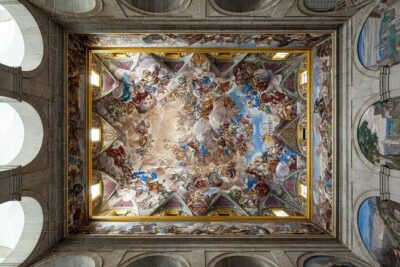
San Lorenzo de El Escorial Monastery Private Tour
Read our review →
Royal Monastery of the Barefoot nuns: Guided Tour + Tickets
Read our review →Browse the lists this tour appears in