Review · SIEM REAP
Siem Reap: Angkor Wat Sunrise and Market Tour by Jeep
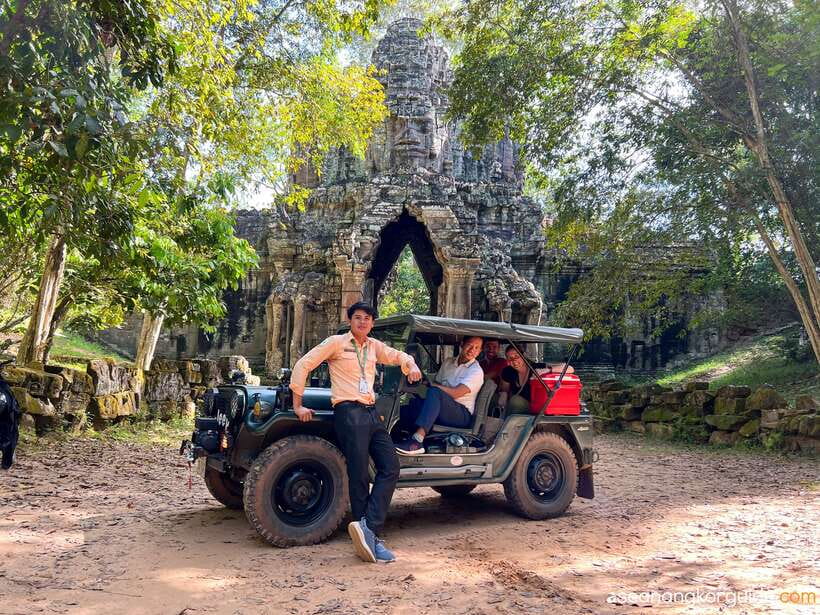
Sunrise is worth the alarm. This private eight-hour outing combines Angkor Wat at first light with the jungle temples of Ta Prohm and Ta Nei, Bayon’s famous stone faces, a local Cambodian breakfast, and a market visit. I like the old army-style jeep, which makes the ride feel more memorable than a standard car transfer, and I like the small private format, since your guide can explain the temples at your pace. The main drawback is the early start, plus the USD 37 Angkor pass is not included in the USD 109 price.
The food stops give this tour more local flavor than a temple-only visit. You can try Khmer noodle soup, palm cake, steamed rice dumplings with palm sugar, fresh fruit, and coconut. Just keep in mind that market food costs extra, and adventurous eaters may be offered fried spiders or scorpions, but nobody needs to order them to enjoy the visit.
Five details that shape the experience
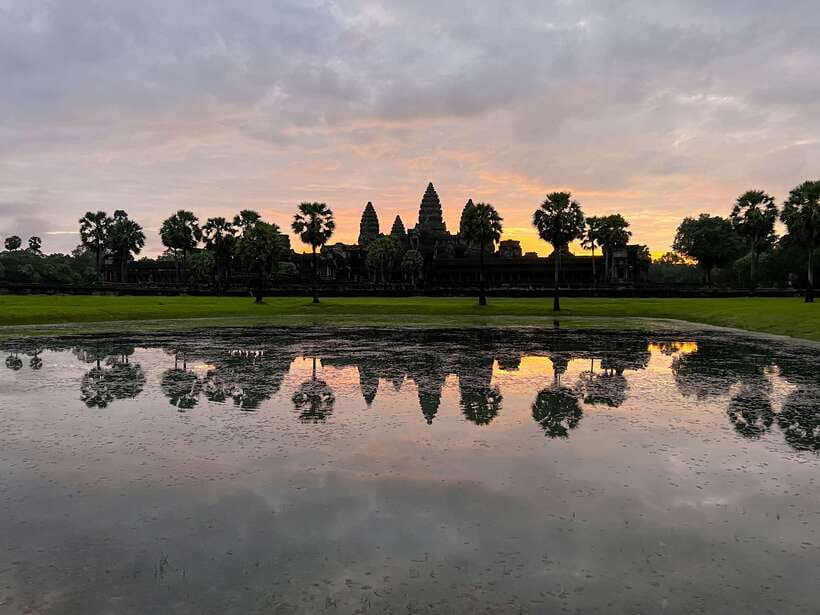
- A classic sunrise view: You reach Angkor Wat in time to see its towers reflected in the water before the heat builds.
- A private jeep day: The group is private, and the original army jeep is one of the tour’s most praised features.
- Breakfast with local sweets: Khmer noodle soup comes with palm cake and steamed rice dumplings filled with palm sugar.
- Two jungle temples: Ta Prohm is famous, while smaller Ta Nei offers a quieter look at the forest reclaiming the ruins.
- Refreshments throughout the morning: Cool bottled water, towels, seasonal fruit, and fresh coconut are provided.
- A market finish: You can watch local buying and selling, then sample Cambodian dishes at your own expense.
An early start for Angkor Wat’s reflection
Your guide and driver collect you from your Siem Reap hotel, with pickup from the lobby or entrance. The exact starting time depends on availability, but this is firmly an early-morning tour. You should be ready before sunrise and confirm the pickup time when booking.
The first stop is Angkor Wat, Cambodia’s largest religious monument and one of the world’s most recognizable temple sites. Built in the 12th century, it began as a Hindu temple and later became an important Buddhist site. Your guide explains the cultural role of the complex as you walk through it after sunrise.
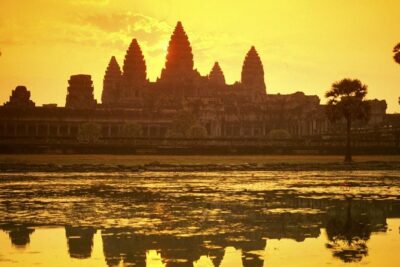
The famous photograph shows the temple towers mirrored in the water in front of the sanctuary. Reflections depend on light, water, weather, and the number of people gathered at the pond, so no sunrise is guaranteed to look identical. Still, arriving early gives you the best chance to find a good position and watch the sky change over the towers.
You have about 1.5 hours to explore Angkor Wat after sunrise. That is enough time for a useful introduction and photographs, though not enough for every corner of the huge complex. If you want an exhaustive architectural study, you may prefer a longer temple program. For a first visit, the time works well because the day includes several other important sites.
The temple’s scale is the first thing you notice. Long galleries, carved surfaces, towers, courtyards, and broad stone approaches make Angkor Wat feel more like a city of worship than a single building. A guide adds value here by explaining what you are seeing instead of leaving you to take pictures without context.
Bring a camera, but also keep your attention on the changing light. The sunrise is brief. After the strongest color fades, the stone details become easier to see, which is when your guide’s explanations become especially useful.
More Temple Sunrise Tours in Cambodia
- Angkor Wat Sunrise or Sunset Tour with Guide from Siem Reap
★ 5.0 · 12,109 reviews - Siem Reap: Angkor Wat: Small-Group Sunrise or Sunset Tour
★ 5.0 · 9,444 reviews - Siem Reap: Angkor Wat 2-Day Tour with Sunrise and Sunset
★ 4.9 · 4,429 reviews
Sras Srang adds a quieter water stop
The route includes Sras Srang, known as the Royal Bath. It is a large reservoir associated with the Angkor period and gives you a change of pace after the crowds and scale of Angkor Wat.
This stop is shorter than the main temple visits, but it helps you understand the importance of water to Angkor’s cities and temples. The calm surface also offers another photo opportunity, particularly when the early light is still soft.
Do not expect a long guided visit here. Sras Srang works best as a brief pause and a way to connect the temple sites with the wider planning of the ancient city.
A Cambodian breakfast, not a hotel buffet
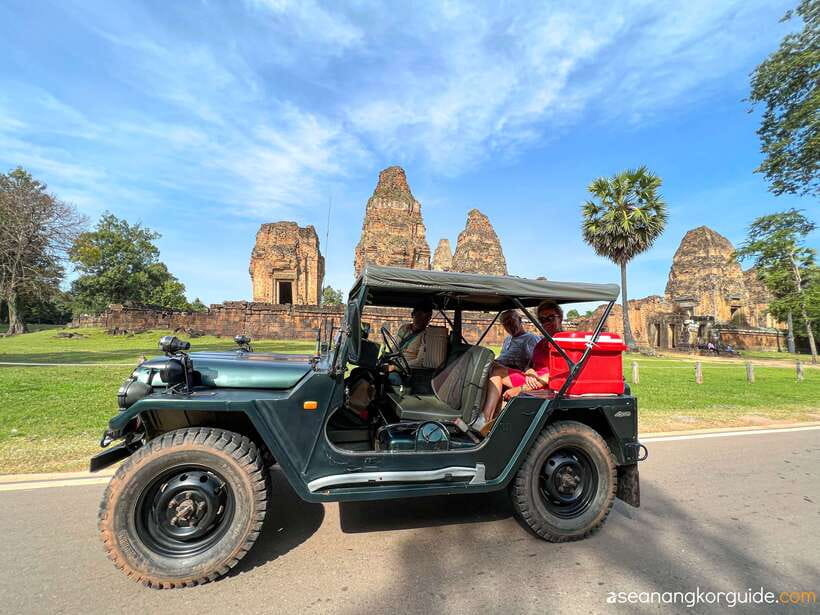
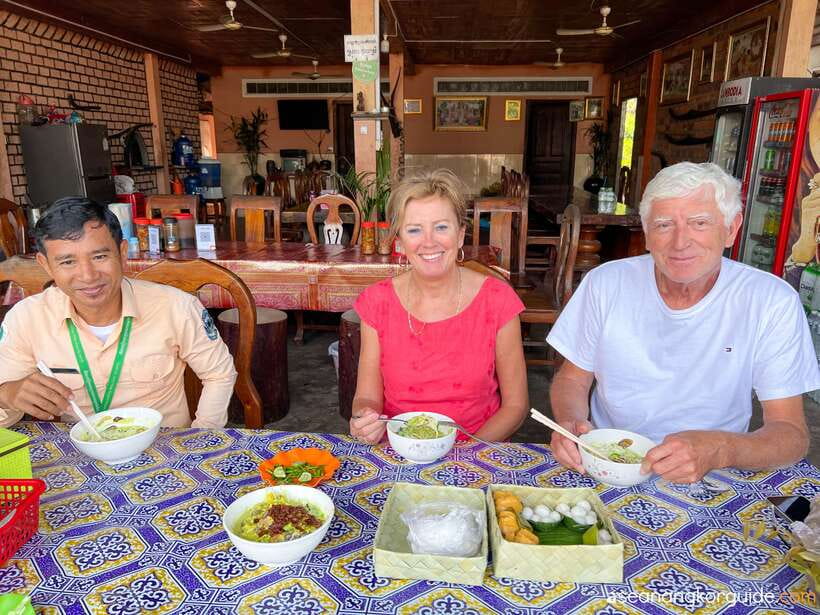
After Angkor Wat, you stop at a local restaurant for breakfast. This is one of the strongest parts of the experience because the meal is specific to Cambodia rather than a familiar tourist breakfast.
The main dish is Khmer noodle soup. It is served with traditional desserts, including palm cake and steamed rice dumplings with palm sugar. You also receive seasonal fruit and fresh coconut during the day, adding something cool and refreshing after the morning walking.
Palm cake is a particularly useful introduction to Cambodian flavors. The palm-based sweetness has a different character from standard pastries, while the steamed rice dumplings offer a soft texture and a gentle palm sugar filling. The meal is not just fuel between temples. It gives you a small but meaningful connection to everyday Cambodian food.
The breakfast is served with locals rather than as part of a large hotel-style arrangement. That makes the stop feel more personal, though you should expect a straightforward local meal, not polished restaurant service. If you have dietary restrictions, ask before booking or tell the guide at pickup, since no specific dietary arrangements are described.
Ta Prohm shows nature taking back the ruins
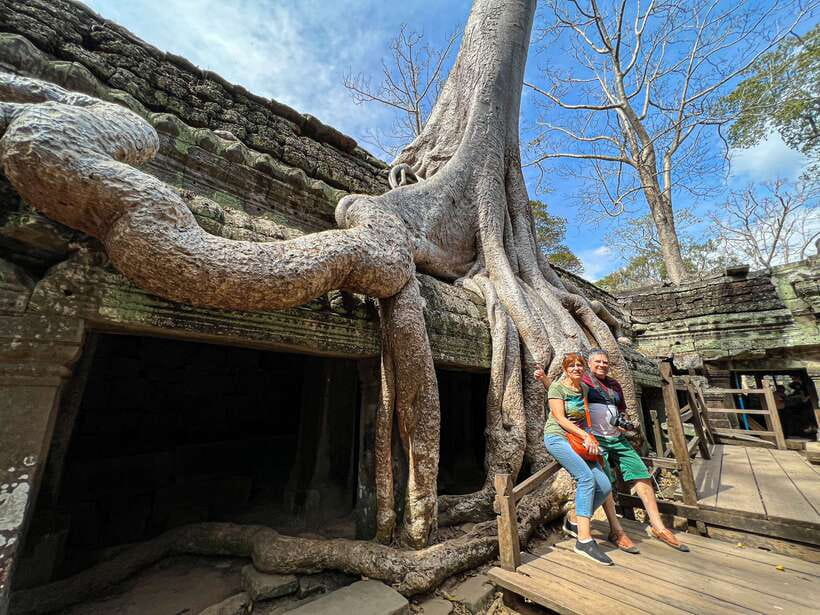
From breakfast, the jeep continues to Ta Prohm. This is the temple most closely linked with the 2001 film Lara Croft: Tomb Raider, and you may recognize its stone corridors, collapsed areas, and large roots growing over the walls.
Ta Prohm is memorable because the jungle has not been completely cleared away. Trees, vines, and roots push through the old structure, creating the famous meeting of stone and forest. The effect is dramatic, but it also makes the site less orderly than Angkor Wat. You will walk around uneven ruins and partially collapsed areas, so sensible footwear matters.
The appeal is not only the movie connection. Ta Prohm shows what happens when a major religious complex is left to the forces of time and vegetation. Roots grip the walls, openings frame the forest, and carved stone appears in fragments. Your guide can help you separate the genuine history of the temple from the film image.
Because Ta Prohm is well known, it can be one of the busier stops. The private tour gives you some flexibility, but it cannot remove other people from the site. If you want photographs without crowds, the early start helps, though the temple is unlikely to feel completely empty.
More Temple Sunrise Tours in Siem Reap
- Angkor Wat Sunrise tour with Small – Group and Guide tours
★ 5.0 · 3,655 reviews - Angkor Wat Highlights and Sunrise Guided Tour from Siem Reap
★ 5.0 · 3,213 reviews - Full-Day Angkor Wat Sunrise Private Tour with Guide from Siem Reap
★ 5.0 · 2,920 reviews - Angkor Wat Sunrise & 3 Main Temples with Breakfast – Small Group
★ 5.0 · 2,857 reviews
Ta Nei offers a more overgrown temple setting
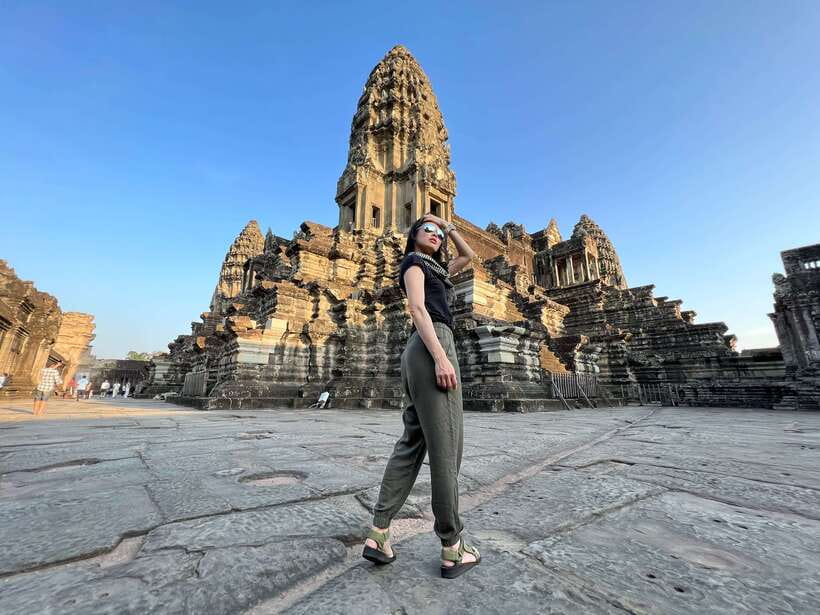
Ta Nei brings a different mood. It is another jungle temple, still surrounded by vegetation and less presented as a polished monument. The forest reclaiming the site is central to its appeal.
I like the contrast between Ta Prohm and Ta Nei. Ta Prohm is the famous one, with a stronger connection to popular culture. Ta Nei feels more like a quiet archaeological stop where you can focus on the walls, roots, and setting without expecting a grand ceremonial approach.
The tradeoff is that an overgrown temple can be harder to read. You may see broken stones and vegetation before you understand the original plan. This is where a guide’s explanation helps. Ask about the temple’s layout and purpose rather than relying only on photographs.
Bayon’s stone faces change the mood
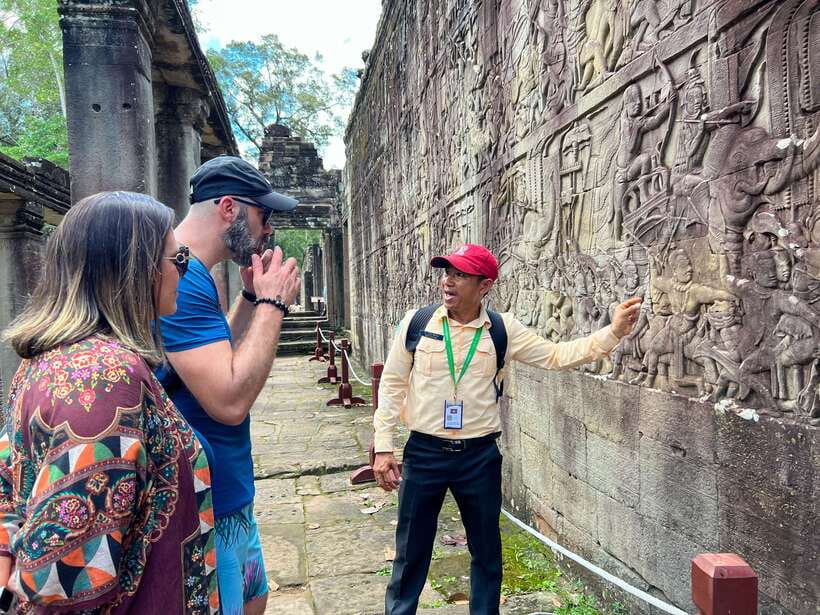
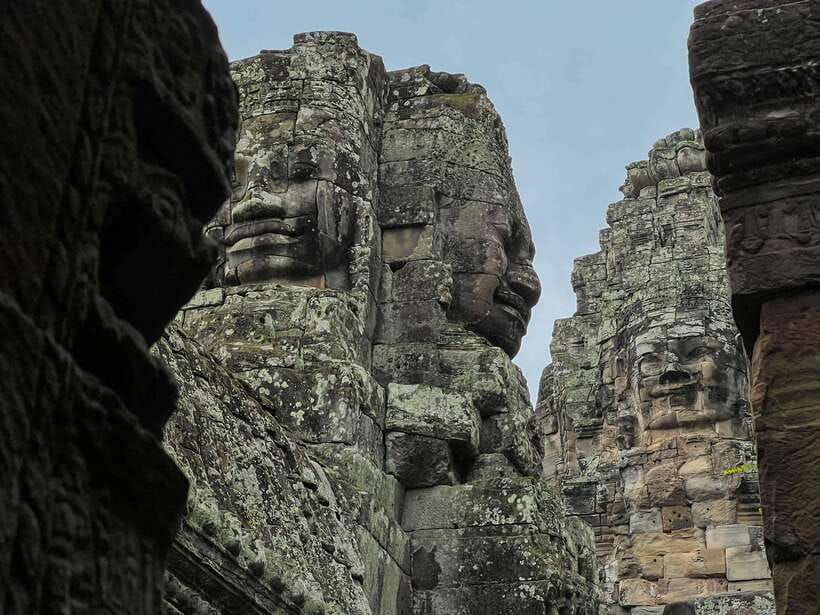
The next major temple is Bayon, located within Angkor Thom. Its architecture differs sharply from Angkor Wat. Instead of Angkor Wat’s long views and clearly ordered galleries, Bayon is a maze of towers and carved faces.
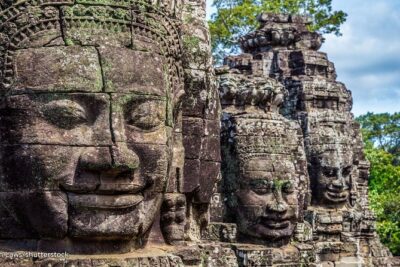
The serene faces carved into the stone are the main attraction. They appear at different heights and angles, sometimes framed by narrow passages or other towers. Every turn offers a new composition, which makes Bayon especially good for photographs.
The faces are often associated with Jayavarman VII, the ruler who built or expanded much of Angkor Thom. Your guide can explain the religious and political ideas behind the imagery, though the amount of detail depends on your questions and the pace of the group.
Bayon can feel confusing at first. The towers are tightly packed, and it is easy to lose your sense of direction. That is not a flaw in the temple, but it does mean you will appreciate having a guide point out the key views and explain how the pieces fit together.
Victory Gate gives Angkor Thom a grand entrance
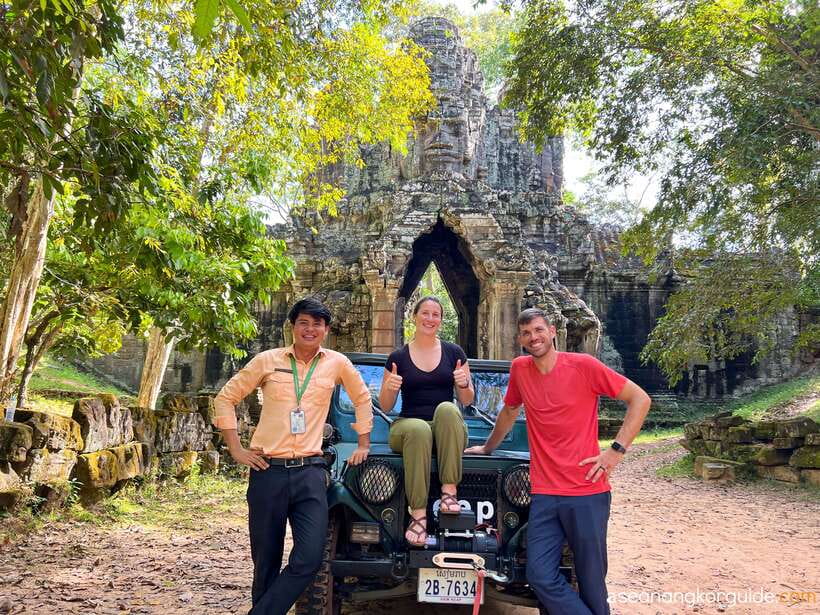
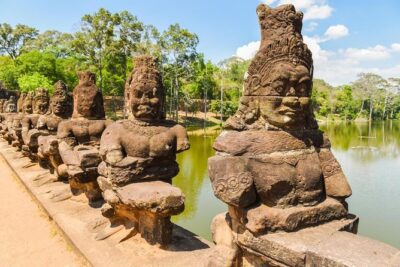
The tour also stops at Victory Gate, one of the entrances to Angkor Thom. The stone gate was built by Jayavarman VII to protect the city from invading neighbors and has survived for centuries.
It is easy to rush past a gate when the larger temples are waiting ahead. Do not. The entrance helps you picture Angkor Thom as a functioning city with controlled access, not merely a collection of monuments scattered through the forest.
This is a short stop, but it gives the day a useful sense of scale. You are not just visiting isolated temples. You are moving through the remains of a planned capital with roads, gates, reservoirs, and religious centers.
The local market is the final taste of Siem Reap
Before returning to your hotel, the jeep stops at a local market in Siem Reap. You can watch people buy and sell produce, handicrafts, clothing, and prepared food. This is a more ordinary setting than the temple zone, which is exactly why it adds value.
The market visit is not a guided shopping mall experience. You can browse at your own pace and decide if you want to buy something or sample food. Cambodian options may include sticky rice, cakes, fruit, and egg noodles.
The more daring choices include fried spiders and scorpions, common snacks in some Southeast Asian markets. You can look without eating. If you do want to try them, bring cash and treat the stop as a chance to experiment rather than a required part of the tour.
Food and drinks at the market are not included. The tour does provide water, towels, fruit, and coconut, but you should carry cash for snacks, drinks, souvenirs, or small purchases.
Why the jeep and private format matter
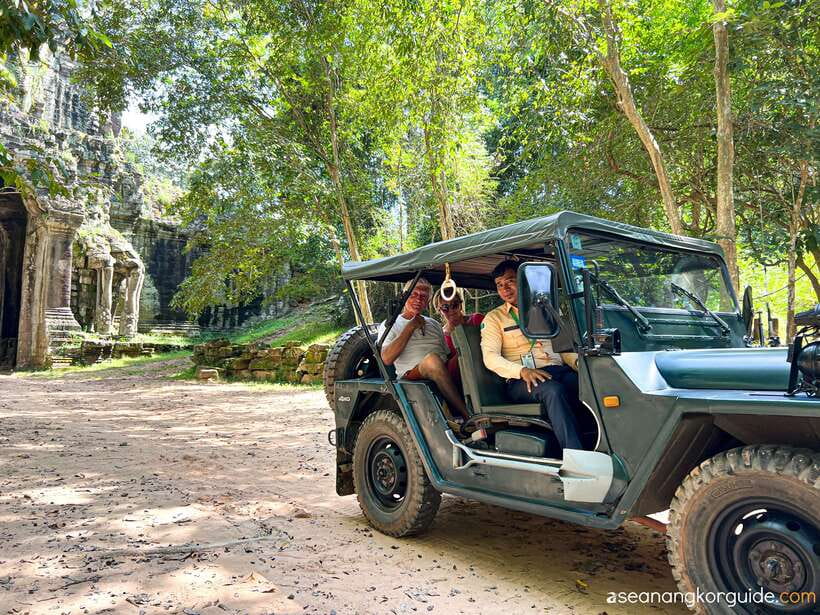
The vehicle is more than a way to get from one temple to another. The original army jeep was a highlight for several people who booked the experience, and it gives the day a distinctive character. You are exposed to more of the surroundings than you would be in a closed vehicle, although Cambodia can be hot and dusty.
The private group format is another major advantage. You are not tied to the interests of a large bus group, and the guide can spend more time answering your questions. A private tour does not guarantee that every stop will be quiet, but it usually makes the day feel less rushed and more personal.
Several guides have been praised by name, including Mr. Raman and Mr. David. Their strengths include clear English explanations, help with photography, and friendly service. One guide also took photographs throughout the day, which is useful if you want pictures of yourself in the temples rather than only pictures of the temples.
The driver matters, too. A punctual pickup, careful transport, and cold water after temple walks can make a long hot day much easier. The included towels are a small but welcome touch, especially later in the day.
Is USD 109 good value?
The price is USD 109 per person for eight hours, with a private group, English-speaking guide, jeep transport, hotel pickup and drop-off, breakfast with desserts, water, towels, seasonal fruit, and fresh coconut.
The Angkor one-day pass costs an additional USD 37 per person. That brings the basic total to USD 146 before anything you eat or drink at the market. You should include that extra cost when comparing this tour with other Angkor options.
The value depends on what you want. If you only need transport between temples, the price may seem high. You are paying for a private guide, a distinctive vehicle, food, refreshments, hotel transfers, and a carefully arranged route that covers the major highlights in one day.
I think the price makes the most sense for couples or small groups who value personal attention. The private format, guide-led temple explanations, and photo help are harder to match with a large shared bus. For solo visitors, the per-person cost may feel less appealing unless the private experience is a priority.
Who should book this temple day?
I would recommend it to first-time visitors who want the major Angkor sights without spending the entire day in a standard enclosed vehicle. It suits couples particularly well, since the private jeep and photo assistance make the outing feel personal.
It is also a good fit if you care about food and local life, not only architecture. The breakfast and market stop break up the temple visits and give you a taste of daily Cambodia.
You should think twice if you dislike very early mornings, outdoor vehicles, hot conditions, or a full day of walking around ruins. The tour covers a lot of ground. It is efficient, but it is not leisurely.
Families may enjoy the jeep and market, though the ruins can include uneven walking surfaces. The tour data does not specify accessibility arrangements, so anyone with mobility concerns should ask the provider before booking.
Cancellation is free up to 24 hours before departure, and you can reserve now and pay later. That flexibility is useful when your Siem Reap schedule may change.
Final verdict: book it for a personal first day at Angkor
Book this tour if you want a strong first look at Angkor Wat with more than a sunrise photograph. You get the major temples, a local breakfast, jungle scenery, a market, and the pleasure of moving around in a memorable old jeep.
The best reasons to choose it are the private format, the guide’s temple explanations, and the blend of monuments with food and ordinary market life. The main cautions are the early start, the extra Angkor pass, and the heat that arrives later in the day.
For a couple or small private group, I consider USD 109 a fair price before the pass, especially when you value service and local detail. If your priority is the lowest possible cost, choose a shared option. If you want a well-paced, personal introduction to Siem Reap’s temples, this is a strong choice.
FAQ
How long does the Siem Reap jeep tour last?
The tour lasts eight hours.
What is included in the price?
The price includes an English-speaking guide, jeep transportation, local breakfast with desserts, hotel pickup and drop-off, cool bottled water, towels, seasonal fruit, and fresh coconut.
Is the Angkor temple pass included?
No. The one-day Angkor pass costs USD 37 per person and must be paid separately.
Where does hotel pickup take place?
Pickup is available from your Siem Reap hotel. You should wait in the hotel lobby or at the entrance.
What language does the guide speak?
The live tour guide speaks English.
Is this a private group tour?
Yes. The experience is arranged as a private group.
Can I cancel the booking for a refund?
Yes. You can cancel up to 24 hours in advance for a full refund.
More Market Visits in Siem Reap
- Siem Reap: FREE Market & Local Temple Tour
★ 4.8 · 3 reviews - Bangkok: City Highlights Temple and Market Walking Tour
★ 4.5 · 3,990 reviews - Mini Group Xian Day Tour to Terracotta Army, City Wall, Pagoda and Muslim Bazaar
★ 5.0 · 1,320 reviews - Bangkok: Railway and Floating Market Tour with Dragon Temple
★ 4.6 · 1,225 reviews
More Angkor Wat Tours in Siem Reap
- Siem Reap: Full-Day Angkor Wat Guided Tour with Sunset
★ 4.9 · 3,803 reviews - Angkor Wat Sunset Small Group Tour with Lunch Included
★ 5.0 · 3,059 reviews - Siem Reap: Angkor Wat Sunrise and Full-Day Sightseeing Tour
★ 4.9 · 2,828 reviews - Siem Reap: Angkor Wat Private Tuk-Tuk Tour
★ 4.9 · 2,222 reviews
Just added around Siem Reap
- Sunrise at Angkor Wat Temple: 3-Hour Private Tour★ 4.7 · 30 reviews
- Small-Group Explore Angkor Wat Sunrise Tour with Guide★ 5.0 · 3 reviews
- Siem Reap : Private Tuk-Tuk Tour of the Magnificent Temples.★ 4.9 · 14 reviews
- Siem Reap: Ultimate Angkor Wat Offbeat Experience by Jeep★ 4.9 · 8 reviews
- SiemReap: Private Angkor Wat Tour in English or German guide★ 5.0 · 5 reviews
- Siem Reap: Private 4-Day Angkor Wat and Phnom Kulen Tour★ 5.0 · 9 reviews
- Siem Reap: Personalized Angkor Wat Sunrise/Set by TukTuk/Car★ 4.9 · 41 reviews
- Siem Reap: 1-Day Angkor Wat Tour in Portuguese★ 5.0 · 4 reviews
Angkor Wat Tours, compared.
Angkor Wat Sunrise or Sunset Tour with Guide from Siem Reap
Read our review →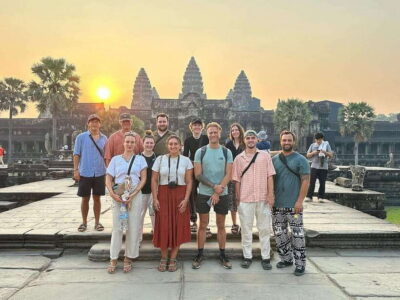
Angkor Wat: Small-Group Sunrise or Sunset Tour
Read our review →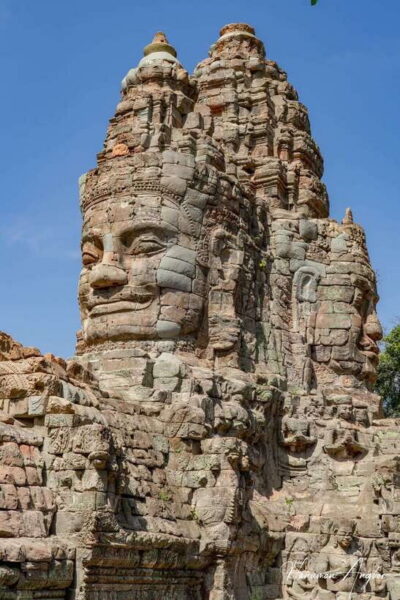
Angkor Wat 2-Day Tour with Sunrise and Sunset
Read our review →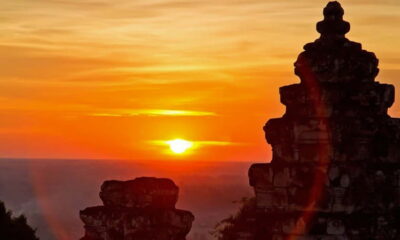
Angkor Wat Sunrise tour with Small – Group and Guide tours
Read our review →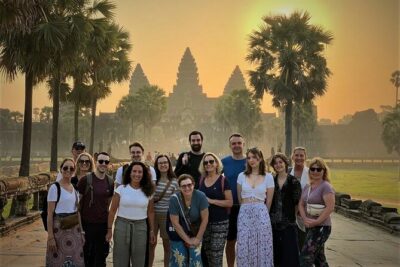
Angkor Wat Highlights and Sunrise Guided Tour from Siem Reap
Read our review →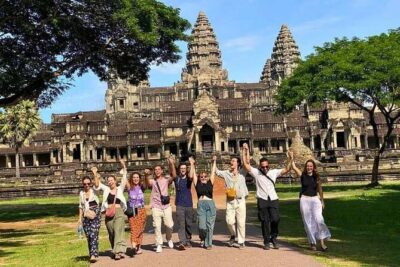
Angkor Wat Sunset Small Group Tour with Lunch Included
Read our review →