
Review · ROME
Rome: Tour of St. Clement’s Basilica Underground Temples
Rome keeps its best stories underground. This tour takes you from San Clemente’s golden apse mosaic down 14 meters through early Christian ruins, a Roman house, a Mithraic temple, and an underground river. I love the way the site lets you see Rome’s layers in one compact visit, and I like that guides such as Francesca, Lorenzo, Paul, and Anestis bring serious historical training without making the hour feel like a lecture. The main drawback is practical: tight underground spaces, stairs, and a ban on photography will not suit everyone.
For $70 per person, the experience is strongest for anyone who wants more than Rome’s headline monuments. The optional 45-minute visit to Santo Stefano Rotondo adds striking martyrdom frescoes and circular architecture, but it costs extra and may not be available during church events. Wear comfortable shoes, dress modestly, and allow extra time if you choose the extension.
Key points to know before you book
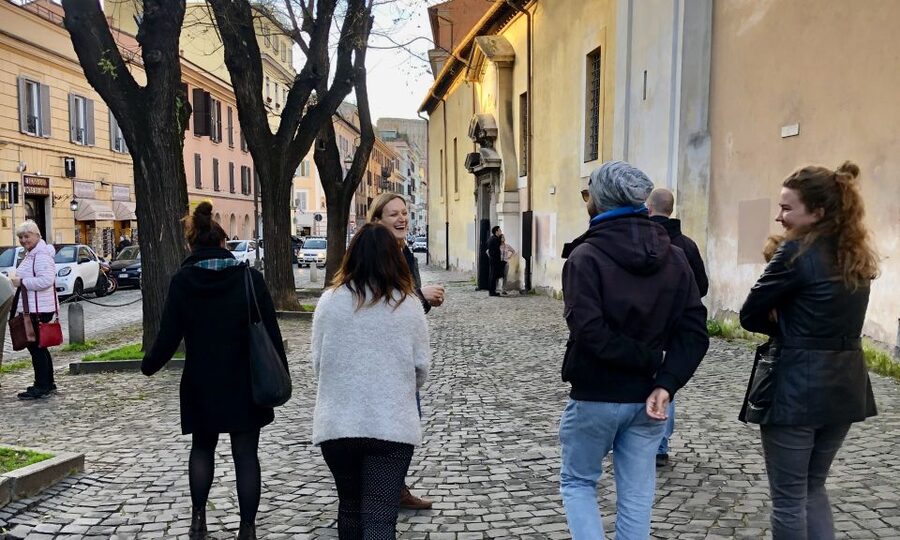
- Fourteen meters below street level: San Clemente reveals successive Roman and Christian structures beneath the present church.
- A rare Mithraic temple: You see one of Rome’s best-preserved examples, along with the sound and sight of an underground river.
- Early Christian art: The lower basilica contains frescoes connected with Christian persecution and martyrdom.
- The guide makes the difference: Paul, an archaeologist and professor according to one visitor’s account, received especially strong praise, as did Francesca and Lorenzo.
- Santo Stefano Rotondo is optional: Add 45 minutes for a circular church and graphic scenes of martyrdom.
- Not suitable for everyone: The lower rooms are inaccessible to wheelchair users and may trouble people with claustrophobia.
Why San Clemente is one of Rome’s best archaeological visits
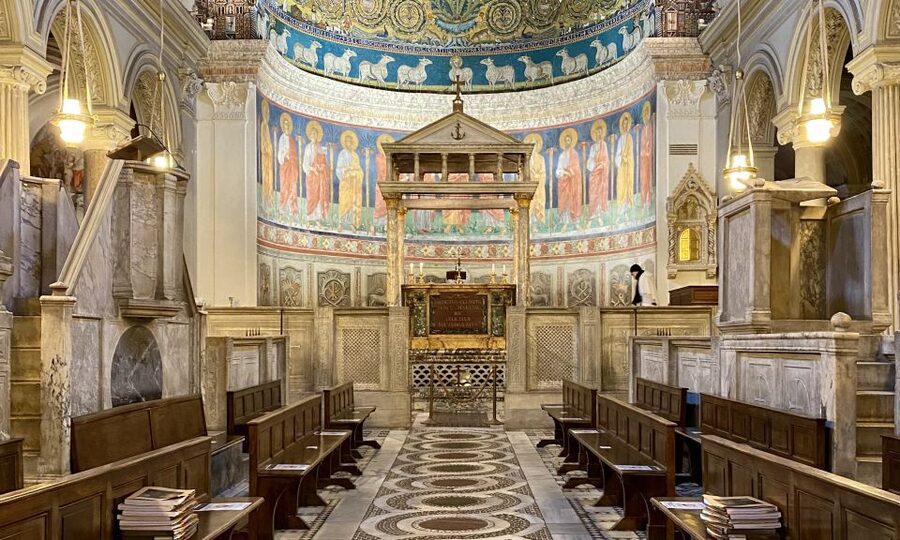
San Clemente does something few Roman sites can match. It lets you move downward through time rather than simply looking at ruins from behind a barrier. You begin in a functioning 12th-century basilica, pass into a 4th-century church, and continue toward older Roman structures and a pagan sanctuary.
That physical movement matters. As you descend, the present day gives way to earlier periods in a way that dates on a plaque cannot quite match. You see how one building was altered, buried, and built over again as Rome changed its religious life.
This is not a huge site. The main guided visit lasts about one hour. That is a benefit if your Rome schedule is crowded, but it also means the guide has to make each stop count. The strongest guides clearly do. Several visitors singled out Francesca for her enthusiasm, Lorenzo for his warmth and excellent English, and Paul for his background as an archaeologist and professor. A small group can make the experience especially good because you can ask questions while moving through the rooms.
You will need to keep your attention on the guide. Without context, the dark chambers and fragments of masonry can blur together. With a good explanation, each level becomes part of a larger story about Roman worship, early Christianity, and the city’s habit of building over its own past.
A few more temple visits around Italy worth a look
- Agrigento: Valley of the Temples Skip-the-Line Sunset Tour
★ 4.5 · 1,512 reviews - Pantheon Elite Guided Tour – Rome’s Iconic Ancient Temple
★ 5.0 · 1,447 reviews - Palermo: Agrigento and the Valley of the Temples Day Tour
★ 4.2 · 1,240 reviews
Start with the 12th-century basilica and its golden mosaic
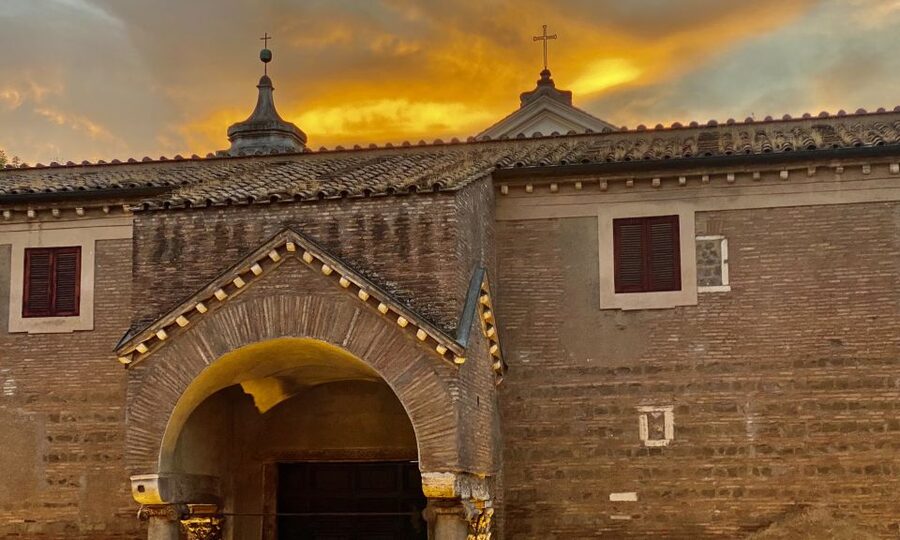
The tour begins at Basilica di San Clemente al Laterano on Piazza di San Clemente. Before heading below ground, your guide introduces the church you can see today.
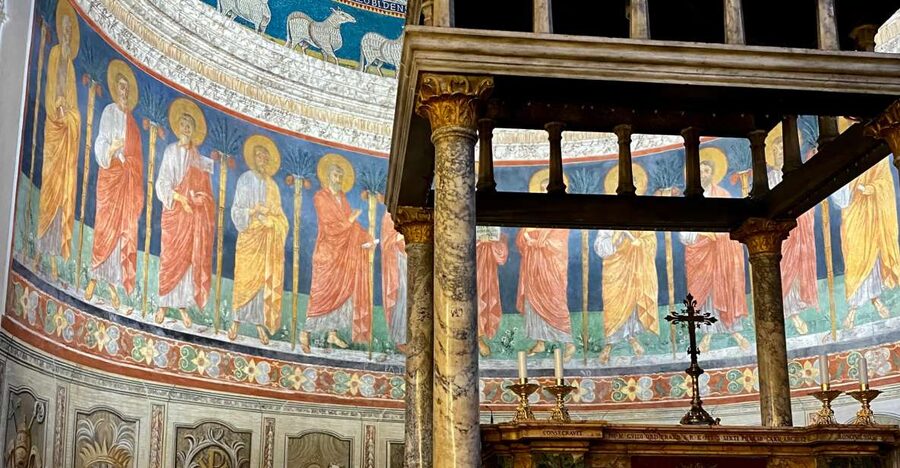
The basilica’s apse mosaic is the visual high point of the upper level. Its gold catches the light, while the design carries layers of Christian symbolism. This opening stop is more important than it may seem. It gives you a clear picture of the later church before you leave it behind, and it helps you understand how Christian worship was presented in medieval Rome.
Take a moment to look up before following the group downstairs. The contrast is part of the experience: polished religious art above, rough ancient masonry below. You are not simply touring a church with a basement. You are moving between different versions of Rome.
The dress rules are those you would expect at an active religious site. Shorts, short skirts, sleeveless shirts, food, and drinks are not allowed. Photography and video recording inside are also prohibited, so plan to remember the visit with your eyes rather than your phone.
Descend 14 meters to the early Christian church
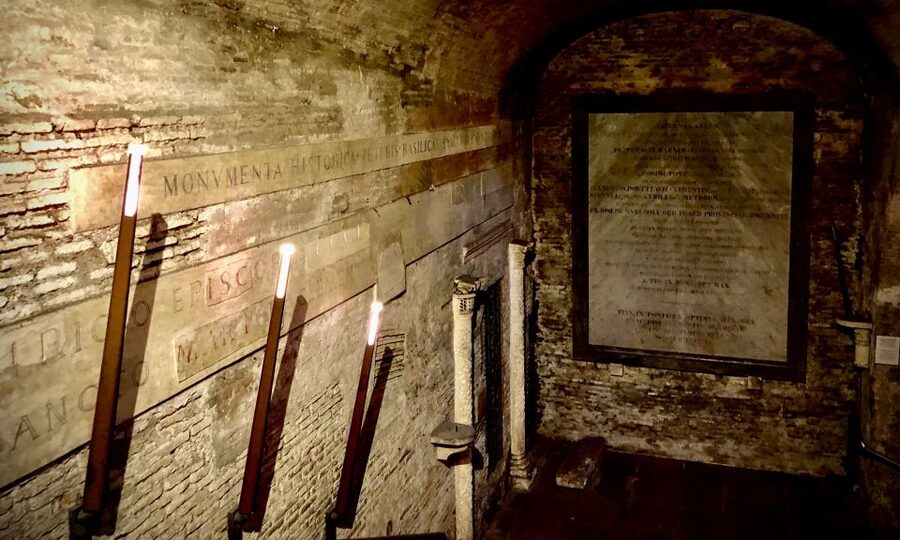
The first underground level brings you to a 4th-century basilica. It was built above the home associated with St. Clement, described as the third pope of Rome. The setting gives you a rare sense of how early Christian worship occupied and reshaped existing Roman spaces.
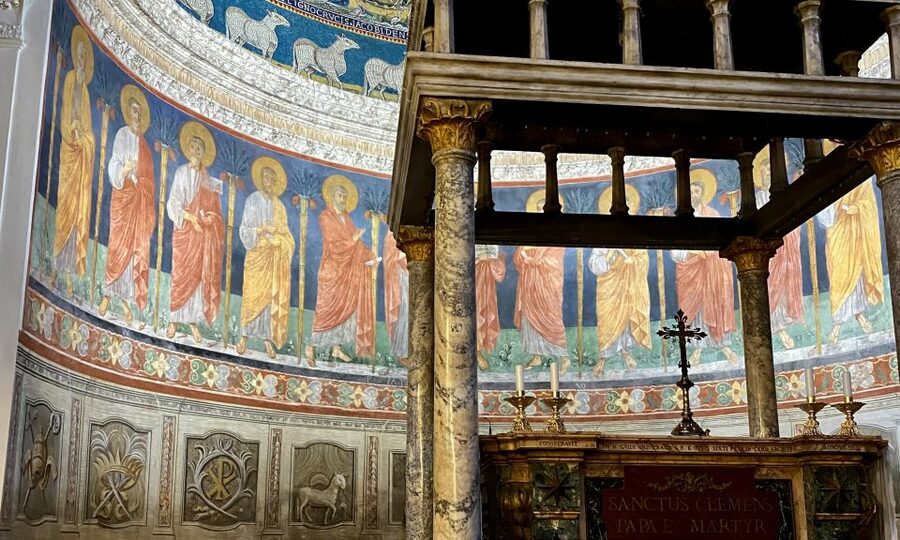
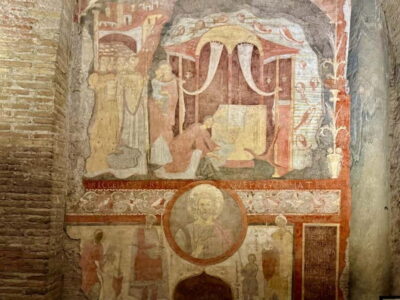
Here, the frescoes are the main attraction. They depict early Christians, their stories, and the persecution they faced. These paintings are not as polished as the grand art in Rome’s major basilicas, but that is part of their appeal. They feel close to the people and beliefs that used them.
A guide is particularly useful at this level because the art can be hard to read in the low light. You may notice a faded figure or fragment of color without understanding what it shows. The guide connects the images with the period’s religious struggles and explains what makes the frescoes important.
I would not rush through this section. Let the group move ahead if possible and spend an extra moment looking at the walls. You can also ask about how the 4th-century church relates to the building above it. That connection is one of the clearest examples of Rome’s repeated reuse of older places.
The lower church is not simply a pile of old stones. It shows Christianity taking root in a city where many religions and cults already existed. That leads naturally to the final underground level.
Meet the Mithraic temple and the underground river
The Mithraic temple is the tour’s most unusual stop. Mithraism was a Roman-era cult with secretive rituals and beliefs, and the sanctuary at San Clemente is one of the best-preserved examples in Rome.
The room has a very different mood from the Christian basilica above. It is smaller, darker, and more enclosed. Your guide explains the cult’s place in Roman religious life and the rituals connected with its followers. This is the point where the tour feels most unlike a standard church visit.
You also see the water of an underground river. It adds a physical sound and sense of movement to the site, making the old rooms feel less like a silent archaeological display. The river is not a separate attraction requiring a long walk. It is part of the underground setting and adds to the strange atmosphere.
The Mithraic sanctuary also helps correct a common impression of ancient Rome. Roman religion was not one simple system. Different cults and beliefs existed side by side, and Christianity rose within that complicated setting. Seeing the pagan sanctuary below an early Christian church gives you a concrete picture of that change.
The rooms can feel close and enclosed. If you dislike underground spaces, ask yourself honestly if the setting will be enjoyable before booking. This is not an accessible route for wheelchair users, and the stairs and structure make it unsuitable for visitors who need step-free access.
Same place, a different morning at the gates:
- Rome’s Iconic Temple: Pantheon Audio Guided Tour with Fast Access
★ 4.0 · 1,188 reviews - Agrigento: Valley of the Temples Ticket & App Audioguide
★ 4.3 · 1,160 reviews - Colosseum Special Access Tour, with Ancient Temples & Tombs
★ 4.8 · 747 reviews - Agrigento: Valley of the Temples E-Scooter Tour
★ 4.6 · 557 reviews
Add 45 minutes at Santo Stefano Rotondo
If you choose the extended option, you walk about 15 minutes from San Clemente to Santo Stefano Rotondo. The added visit lasts approximately 45 minutes.
Santo Stefano Rotondo is known for its circular design and its large, unsettling scenes of Christian martyrdom. The frescoes show graphic violence, so this is not an easygoing stop for young children or anyone uncomfortable with gruesome religious art.
For adults interested in early Christian history, the church makes a strong companion to San Clemente. San Clemente shows buried layers and the transition from Roman pagan worship to Christian buildings. Santo Stefano Rotondo focuses more directly on the stories of suffering and martyrdom that shaped early Christian identity.
The extension also changes the pace of the experience. The main San Clemente visit is compact and concentrated. Adding Santo Stefano gives you more time with early Christian art, but it turns a one-hour stop into a longer outing of roughly two hours, including the walk between churches.
The optional visit can occasionally be unavailable because of special events or liturgical celebrations. The order may also change, so you could visit Santo Stefano first and San Clemente afterward. That flexibility is useful, but it means you should not plan around a fixed sequence.
How much value do you get for $70?
At $70 per person, this is not Rome’s cheapest church visit. The price includes an expert live guide, entrance to San Clemente, and headsets so you can hear clearly. The Santo Stefano visit is included only if you select that version when booking.
The value depends on what you want from the site. If you only want to walk through a church quickly, the price may feel high. San Clemente’s underground levels are easy to underestimate, and without a guide you could miss the connection between the 12th-century basilica, the 4th-century church, the earlier Roman structures, and the Mithraic sanctuary.
For someone interested in archaeology, early Christianity, or Roman religion, the price is easier to justify. You are paying for access plus interpretation. The best guides add the chronology, explain the symbols, answer questions, and turn disconnected rooms into a coherent visit.
The experience can also be worthwhile for repeat visitors to Rome. You do not need another panoramic view or a larger museum to feel that you have seen something different. San Clemente offers a focused hour away from the most crowded sights.
A private group is available. That may be worth considering if you want to ask many questions or prefer a more personal pace, though the standard group can still work well. The strongest feedback consistently centers on guides who are friendly, clear, and able to make complex history easy to follow.
What the guides add to the experience
The guide is the key variable here. Francesca was praised for enthusiasm, humor, and clear explanations. Lorenzo was described as personable, highly informed, and especially strong in English. Paul received exceptional praise for his archaeological and academic background, with one visitor noting that he had worked with a priest involved in discovering artifacts at the basilica.
Those details matter because San Clemente contains plenty of material that needs explanation. A guide can show you what to look for in a damaged fresco, explain why a particular level was built, and describe the difference between a Christian basilica and a Mithraic sanctuary.
You should also feel free to ask questions. The tour is short enough that a guide who welcomes conversation can greatly improve it. At the same time, the amount of information may be substantial. If you prefer a quiet, self-guided visit, the spoken commentary and group movement could feel more structured than you want.
Headsets are provided. That is helpful in the underground rooms, where sound may not carry well and where staying close to the guide is not always easy.
Timing, clothing, and practical limits
The main tour takes about one hour. With Santo Stefano Rotondo, plan on roughly two hours, including the 15-minute walk. Starting times vary, so check the schedule when choosing your day.
Wear comfortable shoes. You will be walking between churches if you take the extension and moving through uneven historic spaces at San Clemente.
Dress modestly for the basilica. Shorts, short skirts, and sleeveless shirts are not allowed. Food, drinks, alcohol, pets, weapons, and sharp objects are also prohibited. Photography and video recording inside are not permitted.
The underground setting may not suit anyone with claustrophobia. Wheelchair users cannot take this route because of the architectural structure beneath the basilica.
Church services, special events, weather, and the liturgical calendar can affect the program. If an area closes, the guide may use an alternative site while keeping the scheduled duration. The Santo Stefano extension is particularly subject to church events.
The tour offers free cancellation up to 24 hours in advance, and you can reserve now and pay later. Those policies help if your Rome schedule is still changing, but the practical details of your meeting point may vary with the option you book. Check the confirmation carefully.
Who will enjoy San Clemente most?
I would choose this tour for you if you like archaeology, religious art, ancient cults, or Rome’s lesser-known corners. It is especially good after you have seen the major monuments and want a smaller site with more explanation.
History-minded families with older children may enjoy it, but the Santo Stefano frescoes contain graphic martyrdom scenes. The underground rooms may also be too tight or intense for some children.
You do not need specialist knowledge to enjoy San Clemente. You only need curiosity and a willingness to listen. A clear guide can explain the site from the beginning, and the physical descent makes the sequence easy to remember.
I would skip it if you need step-free access, strongly dislike enclosed rooms, or want a photo-heavy visit. The photography ban is firm, and the best parts are often details you will need to observe carefully rather than record.
Should you book this tour?
Book it if you want a compact, guided look at Rome’s religious and archaeological layers. The combination of the gold mosaic, early Christian frescoes, Mithraic sanctuary, and underground river gives you several very different experiences in one place.
Choose the extended option if you want more early Christian art and can handle graphic martyrdom scenes. Skip the add-on if your schedule is tight or if Santo Stefano’s church calendar makes availability uncertain.
At $70, the tour earns its price through interpretation rather than sheer length. I would especially seek it out with a guide such as Paul, Francesca, or Lorenzo if that option appears, though guide assignments can vary. For curious visitors who want Rome to feel stranger, older, and more layered than the usual postcard route, San Clemente is a smart choice.
FAQ
How long does the San Clemente tour take?
The main guided visit at Basilica di San Clemente takes about one hour. The optional Santo Stefano Rotondo visit adds 45 minutes, with about 15 minutes of walking between the churches.
What is included in the main tour?
The main option includes an expert live guide, entrance to Basilica di San Clemente, and headsets to hear the guide clearly.
Is Santo Stefano Rotondo included?
Only if you select the extended option during booking. The standard San Clemente tour does not include the guided visit to Santo Stefano Rotondo.
How far underground does the tour go?
The route descends approximately 14 meters below the present Basilica of San Clemente.
Can I take photographs inside?
No. Photography and video recording inside are not allowed.
Is the tour accessible for wheelchair users?
No. The architectural structure inside and beneath San Clemente means the tour is not accessible to wheelchair users.
Is the underground route suitable for people with claustrophobia?
It may not be suitable. The tour enters enclosed underground spaces beneath the basilica.
What should I wear?
Wear comfortable shoes and modest clothing. Shorts, short skirts, and sleeveless shirts are not allowed inside the churches.
Is Santo Stefano Rotondo always available?
No. The extended visit can occasionally be unavailable because of special events or liturgical celebrations. The order of the two church visits may also change.
Just added around Italy
- Private Tour to the Villa Romana del Casale and the Valley of the Temples★ 4.5 · 19 reviews
- Agrigento and Piazza Armerina: Valley of the Temples and Villa Romana del Casale★ 4.5 · 121 reviews
- Villa Romana Del Casale in Piazza Armerina and Valley Of Temples in Agrigento★ 4.5 · 38 reviews
- Padre Pio’s Shrine in San Giovanni Rotondo from Bari (Apulia)★ 5.0 · 3 reviews
- Cooking Class in a former Artist Monastery in the Heart of Monopoli★ 5.0 · 18 reviews
- Agrigento to Siracusa with Valley of Temples and Roman Villa Trip★ 5.0 · 5 reviews
- Private transportation to the Valley of the Temples + Agrigento★ 5.0 · 8 reviews
- Agrigento Valley of the Temples Archaeological Area★ 4.0 · 33 reviews
Rome Temple Tours, compared.
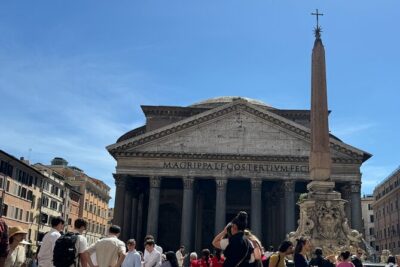
Pantheon Elite Guided Tour – Rome’s Iconic Ancient Temple
Read our review →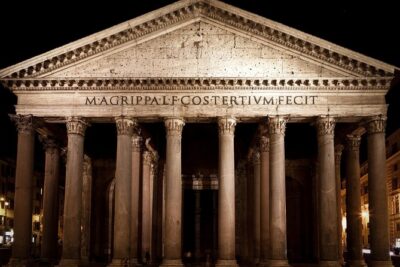
Rome’s Iconic Temple: Pantheon Audio Guided Tour with Fast Access
Read our review →
Colosseum Special Access Tour, with Ancient Temples & Tombs
Read our review →
Walking Guided Tour and Rome’s Iconic Temple Pantheon Entrance
Read our review →
Rome’s Iconic Ancient Temple: Pantheon Fast Track Entry Tickets
Read our review →
Pantheon: The Iconic Ancient Roman Temple – Semi-Private Tour
Read our review →
Rome underground hidden temples, ruins, and secret basilicas
Read our review →Browse the lists this tour appears in