
Review · ASWAN
Nile cruise between Aswan and Luxor: Sail the best temples in Egypt
Ancient Egypt unfolds along the river. This four-day cruise links Egypt’s greatest temple sites with quiet hours on the Nile, and I especially like the included sightseeing and the personal attention associated with guide Mohamed Gaber. The main catch is that Abu Simbel is optional and costs extra, while the early starts and tightly packed temple visits may feel demanding.
You begin with pickup in Aswan and finish with a transfer anywhere you specify in Luxor, such as a hotel, airport, or station. The price is $500 per person, which is a fair package value if you want transport, four nights aboard the cruise, major entrance tickets, lunch, dinner, and a guide-led schedule handled for you.
Key points before you book
- Abu Simbel is optional but worth serious consideration: The rock-cut temples of Ramses II and Nefertari are not included in the ticket price, yet they are one of the most memorable additions to the trip.
- The cruise links Aswan and Luxor in the most useful direction: You see Philae, Kom Ombo, Edfu, Karnak, Luxor Temple, the Valley of the Kings, and Hatshepsut’s temple without arranging separate transport.
- Mohamed Gaber is a major part of the experience: His Spanish, theatrical explanations, humor, and care for the group receive repeated praise.
- The schedule is full: Several visits last one to two hours, with Karnak and Luxor Temple on the same day. You get a lot, but you will want sensible shoes, water, and patience.
- Transfers are practical: Pickup is offered from an Aswan airport, train station, or hotel, followed by drop-off at a Luxor hotel, airport, or station.
- Check the night count before paying: The experience is described as four days, while the inclusions list four nights aboard the cruise. Confirm the exact sailing and checkout arrangement.
Why this Aswan to Luxor cruise works
I like this journey because the Nile is not just transportation between monuments. It gives you a slower middle section between busy temple visits. You can watch the river from the boat, rest by the pool, eat onboard, and let the next ancient site arrive without another long road transfer.
The cultural side is also strong. This is not a cruise where you simply take photographs and move on. The stated aim is to help you understand the places, and the strongest praise centers on Mohamed Gaber, who explains Egyptian religion and culture in clear Spanish. His use of small theatrical scenes and group participation makes complicated stories about gods, pharaohs, and royal power easier to follow.
The group can include up to 30 people, so this is not a private, tailor-made journey. That size can help keep the $500 price reasonable, but it may also mean waiting for the group at entrances or moving through popular sites at a shared pace.
A few more temple visits around Aswan worth a look
- From Aswan: Abu Simbel Temple Day Trip with Hotel Pickup
★ 4.4 · 2,807 reviews - Private Day Tour to Abu Simbel Temples from Aswan
★ 4.5 · 507 reviews - Full Day tour to Abu simbel temples from aswan
★ 4.5 · 309 reviews
Day one in Aswan: Easy arrival, open time
Pickup begins in Aswan at the time and place you provide. That can be useful after a train journey or flight, since you do not need to find the boat alone. You settle into your room, eat according to the onboard schedule, and have the rest of the day free.
This first day is deliberately light. You can rest around the pool or explore Aswan independently. I appreciate that breathing room, especially if you arrive tired or want to recover before the temple visits begin.
You should use this day to ask practical questions. Confirm the next morning’s departure time, the Abu Simbel plan, meal times, and how the group will meet for Philae. The published start time is 6:00 am, so this is not a late-rising holiday.
Aswan itself is part of the appeal, but this cruise does not provide a guided city tour on day one. If you want to see more, you will need to organize your own outing during the free hours.
Abu Simbel: The optional excursion worth adding
Abu Simbel is listed as an optional visit, with admission not included. If your budget and schedule allow, I would ask for the exact extra cost before booking and strongly consider adding it.
The temples were cut into the rock during the reign of Ramses II. One honors Ramses himself, while the other is dedicated to Queen Nefertari. Their scale and setting make them different from the river temples later in the journey.
The practical issue is timing. Abu Simbel is an early excursion, and the cruise already starts with a 6:00 am schedule. You should confirm how this visit fits with the boat’s departure and the rest of day two. The supplied details do not state the transport method, departure time, or extra price, so do not assume those points.
If you are trying to keep the total close to $500, you can skip Abu Simbel. You will still see a strong sequence of temples, but this is the one optional addition I would prioritize.
Philae Temple: Isis on an island
Philae is dedicated to Isis and sits on an island, so you reach it by boat. That short ride gives the visit a special sense of arrival. The water crossing also makes Philae feel separate from the modern world, even though the visit itself is part of a planned group schedule.
The temple’s importance comes from its connection with Isis, one of the central goddesses of ancient Egyptian religion. This is a good place to pay close attention to Mohamed’s explanations, since the stories of Isis, Osiris, Horus, and their family connections can become confusing without a guide.
Admission is included. The planned visit lasts about one hour, enough for an introduction and photographs, but not enough for a slow study of every relief. If you enjoy ancient architecture, you may wish you had more free time here.
Same place, a different morning at the gates:
- From Aswan: Private Guided Tour of Philae Temple with Entry
★ 4.6 · 239 reviews - Full Day Tour to Abu Simbel Temples from Aswan
★ 4.5 · 218 reviews - Aswan: Philae Temple Guided Half-Day Group Tour
★ 4.5 · 202 reviews - Aswan: Philae Temple Sound & Light Show with Entrance Fees
★ 4.1 · 151 reviews
Kom Ombo: Two gods, one unusual temple
Kom Ombo was built for two gods, Sobek and Haroeris. That shared dedication is the key to understanding the site. Instead of one main divine focus, the temple was arranged around two religious traditions.
The visit lasts about an hour and admission is included. It works well as a shorter stop because the idea is easy to grasp, especially with a guide who can point out how the temple’s layout reflects its double purpose.
I like this stop as part of the cruise because it breaks up the sailing with something specific and memorable. It is not as large as Karnak, and you should not expect the same amount of time or grandeur. Its value comes from the unusual two-god design.
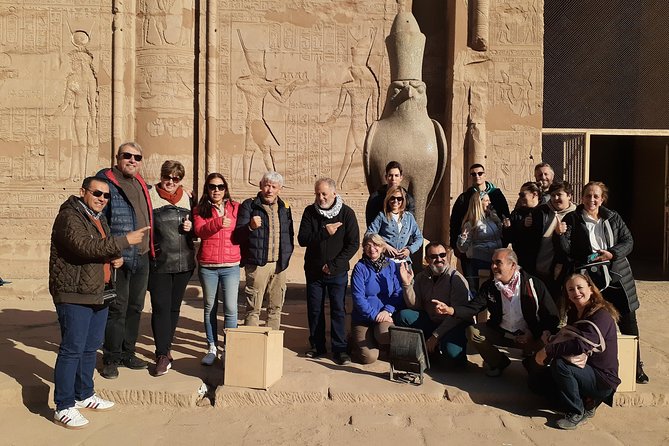
Edfu Temple: Horus in one of Egypt’s best-preserved sanctuaries
Edfu is dedicated to Horus and is described as one of the best-preserved temples from ancient Egypt. The planned visit is about two hours, giving you more time than at Philae or Kom Ombo to look at the walls, columns, and carved scenes.
This is where a good explanation makes a real difference. Preserved reliefs can look like a collection of figures if you do not know what you are seeing. With a guide, you can connect the images to Horus and the wider religious system instead of simply photographing the stonework.
The two-hour visit is useful, but the full day still has a lot ahead. Wear comfortable shoes and keep water with you. Egypt’s sun can make even a short walk between the boat, transport, and temple feel longer than expected.
Karnak Temple: Egypt’s grandest scale
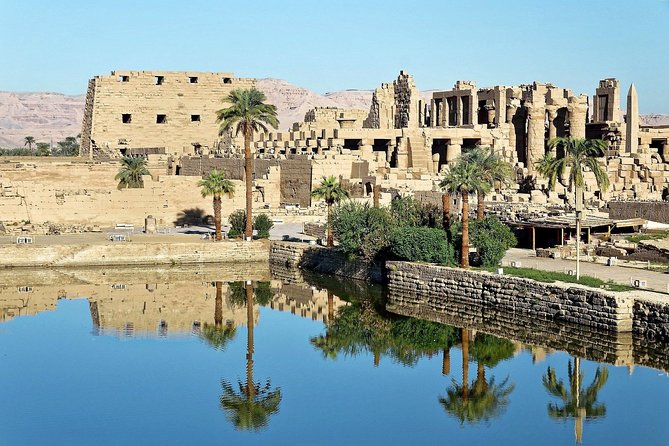
Karnak receives about two hours, and that is a sensible minimum for such a large complex. It developed over more than 2,000 years under different pharaohs, so it is best understood as a long record of changing royal power rather than a single building created at one moment.
The schedule calls attention to the avenue of sphinxes, the hall of columns, and the avenue of rams. The columned hall is the major visual moment. Its scale helps you understand how ancient rulers used architecture to show strength, religious devotion, and control.
Karnak is also where the pace may feel tight. You have a lot to see, and a 30-person group cannot stop everywhere for as long as an enthusiast might like. Listen carefully during the main explanation, then use any remaining time for photographs and a quick look at details your guide has not covered.
Luxor Temple: A second major visit in one day
Luxor Temple follows Karnak, with about two hours planned for the site. It was built in honor of Amun Ra, regarded as the greatest of the gods and connected with kingship.
Seeing Karnak and Luxor Temple on the same day helps you understand that they were part of a larger religious center, not isolated monuments. It also creates one of the most demanding sections of the cruise. Two major temple visits after earlier stops require energy.
I would not plan another major activity for this evening. Use the return to the boat for dinner and rest. The cruise is designed to give you both sightseeing and quiet time, but the quiet part matters most after a day like this.
The Valley of the Kings: Choose three tombs carefully
On the final sightseeing day, you visit the Valley of the Kings, the great burial ground for many pharaohs of the New Kingdom. The schedule allows entry into three tombs of your choice.
That choice is important. You should listen to the guide before deciding, since the best selection depends on which tombs are open and what interests you most. The information provided does not name the available tombs or include special-ticket rules, so ask for current details on the day.
Tombs are not just underground rooms. Their painted walls were designed to help the dead ruler pass into the next world. A guide can explain the symbols and the purpose of the scenes, which makes the visit more meaningful than moving from one decorated chamber to another.
Two hours is enough for three selected tombs if the group keeps moving. It is not a slow museum visit. Take care with the heat, uneven walking, and the effort of entering several tombs in one morning.
Hatshepsut’s temple and the Colossi of Memnon
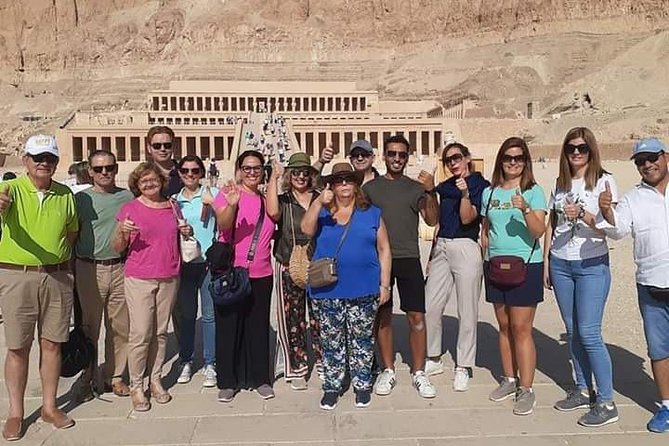
The Mortuary Temple of Hatshepsut receives about one hour. Hatshepsut was one of Egypt’s most important queens, and the temple is remembered as one of the great monuments of ancient Egypt.
The site gives you a different view of royal authority from the Valley of the Kings. Instead of entering hidden burial chambers, you see a large ceremonial complex built to honor a powerful female ruler. One hour is enough for the principal explanation and photographs, but you may want extra time if architecture is your main interest.
The Colossi of Memnon are a quick stop of about 15 minutes. These two huge stone statues represent Pharaoh Amenhotep III. The visit is brief and admission is free, but it is a useful roadside pause and an easy place for photographs.
Do not expect a long guided exploration here. Think of it as a final look at monumental royal sculpture before the trip shifts into checkout and independent time.
What the $500 price really covers
At $500 per person, the package gives you more than a boat cabin. It includes pickup in Aswan, transport and transfer support in Luxor, four nights on the cruise, the listed sightseeing, entrance tickets, four lunches, and four dinners.
That can be good value if you would otherwise need to arrange a guide, taxis, entrance fees, and accommodation separately. The included movement between Aswan and Luxor is especially useful. Egypt’s major sites are spread out, and arranging each transfer yourself can take time and bargaining energy.
Still, read the inclusions closely. Drinks are not included, and tips are not included. Abu Simbel admission is also extra. Breakfast is not listed among the included meals, even though you are staying aboard the cruise, so confirm the meal arrangement before you pay.
The description says four days and also includes four nights. That may reflect the operator’s sailing schedule, but it is worth confirming the exact number of nights, boarding time, and checkout time. Clear answers here prevent a frustrating surprise.
The guide can shape the whole trip
The strongest personal praise centers on Mohamed Gaber. He is repeatedly described as attentive, professional, humorous, and highly capable in Spanish. His explanations are praised for making Egyptian culture easier to understand, and his small role-playing scenes help involve the group.
That matters on a cruise with many temples. Without context, you can see columns, statues, and carved gods without knowing how they connect. Mohamed’s approach appears to focus on making the stories memorable, not simply reciting dates.
His practical help is also important. The praise describes him solving small problems quickly, caring about group comfort, and paying attention to details. That kind of support can make a multi-day trip feel much easier, especially for families.
The experience is not only about one guide, of course. You should still confirm the language of your specific departure, since the supplied information emphasizes Spanish. If you do not speak Spanish, ask what guiding arrangements are available before booking.
Who should book this cruise?
I would recommend it to you if you want Egypt’s major Nile temples in one organized package and prefer not to coordinate trains, taxis, tickets, guides, and hotel transfers yourself.
It also suits families and first-time visitors. The schedule covers the essential sites, and the guide’s theatrical style may help children and adults follow the stories. The free time in Aswan and Luxor gives you at least some room to explore independently.
You may want another style of trip if you prefer long, quiet visits at each monument, private guiding, or a flexible start each morning. A group of up to 30 and a 6:00 am start will not suit everyone.
The cruise also makes sense for people who value time on the river. If every minute of your Egypt trip must be filled with sightseeing, you may see the onboard hours as unused time. I see them differently: after Karnak, Luxor Temple, Edfu, or the Valley of the Kings, a quiet stretch on the Nile is part of the reward.
Should you book it?
Yes, if you want a well-priced, guide-led route between Aswan and Luxor with the major temples, meals, accommodation, and transfers bundled together. The strongest reasons are the broad coverage and Mohamed Gaber’s reported care, humor, and ability to explain difficult religious stories clearly.
Before booking, confirm the four-night arrangement, breakfast, drinks, tips, the Abu Simbel price, and the language of your guide. Add Abu Simbel if your budget allows. With those details settled, this cruise offers a practical way to see ancient Egypt without spending your trip negotiating every ride and entrance.
FAQ
Where does the cruise start and finish?
It starts in Aswan, in Aswan Governorate, and finishes in Luxor Governorate. Pickup is offered from an Aswan airport, train station, or hotel, and the operator can take you to a hotel, airport, or station in Luxor.
What time does the experience start?
The listed start time is 6:00 am. Confirm the exact pickup time for your location in Aswan before the first day.
Is Abu Simbel included?
No. Abu Simbel is an optional excursion, and its admission ticket is not included. The temples are dedicated to Ramses II and Queen Nefertari.
Which meals are included?
Four lunches and four dinners are included. Drinks are not included. Breakfast is not listed, so you should confirm that arrangement before booking.
How many people can join the cruise?
The maximum group size is 30 people. The experience is not described as a private tour.
What is the cancellation policy?
You can receive a full refund if you cancel at least three full days before the local start time. Cancellations made less than three full days before the start time are not refunded, and changes within that period are not accepted.
Just added around Aswan
- Philae Temple and Aswan High-Dam Half-day tour★ 5.0 · 49 reviews
- Sound and Light show at Philae Temple in Aswan★ 5.0 · 5 reviews
- Aswan Philae Temple, Obelisk, and High Dam Private Tour★ 4.5 · 17 reviews
- Abu Simbel Temples from Aswan★ 4.5 · 10 reviews
- Tour to Abu Simbel Temples from Aswan★ 4.5 · 7 reviews
- Visit Abu Simbel temple from Aswan by private A/C vehicle★ 5.0 · 4 reviews
- Temple of Edfu★ 4.0 · 11 reviews
- Tour To Abu Simbel Temples By Road★ 5.0 · 4 reviews
Cruises & Boat Tours, compared.
Rhodes: Symi Island & Panormitis Monastery Day Trip by Boat
Read our review →
Ayutthaya Temples and River Cruise from Bangkok
Read our review →
Skadar Lake National Park: Guided Boat Tour to Kom Monastery
Read our review →
Small-Group Mekong Delta Day Trip: Boat Ride, Cottages & Pagoda
Read our review →
Chiang Rai Temples, Golden Triangle & Boat Tour
Read our review →
Royal Tombs & Pagoda Private Tour By Dragon Boat & Car
Read our review →Browse the lists this tour appears in