
Review · ASWAN
Abu Simbel Temples from Aswan
The desert road is worth the effort. This private Abu Simbel day trip gives you a comfortable, direct ride from Aswan to two of Egypt’s most impressive ancient temples, with a qualified Egyptologist to explain what you are seeing. I especially like the private vehicle and the chance to leave from either an Aswan hotel or Nile cruise boat. The main drawback is important: your guide can explain the temples before you enter, but guides are not allowed to lecture inside, so the live commentary may last only 10 to 15 minutes.
I also like the reliable door-to-door service, bottled water, and the option to choose from several departure times. At about $89 per person, the tour can be good value for a private car, driver, guide, and a full day away from Aswan. Check the entrance-fee wording carefully before booking, since the tour details are inconsistent about whether admission is included.
Key points to know before you book
- Nearly six hours on the road: The drive from Aswan to Abu Simbel takes almost three hours each way, making this a long but manageable day.
- Private means only your party joins: You travel with your own guide and driver rather than a large group.
- The guide cannot explain the temples inside: Plan to listen closely before entering, then explore the interiors on your own.
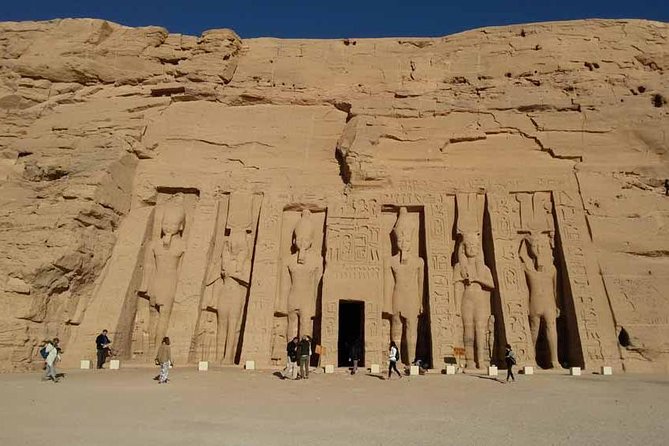
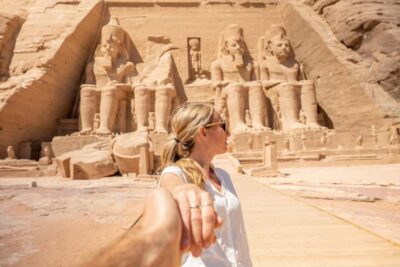
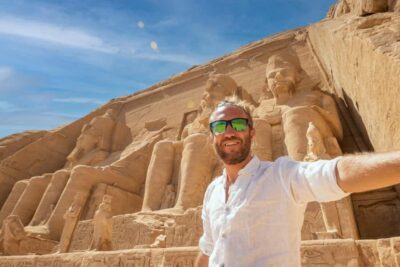
- Ramses II dominates the visit: Four colossal statues, each more than 20 meters high, guard the Great Temple.
- Nefertari’s temple is smaller but highly personal: The Temple of Hathor honors Ramses II’s favorite wife and includes six large statues on its façade.
- The price needs a quick check: Transport, guide service, water, taxes, and hotel or cruise pickup are listed as included, but entrance fees are also listed as excluded.
Why the long drive from Aswan is worth it
Abu Simbel sits far south of Aswan, close to the Sudanese border. It is not a quick side trip, and the roughly three-hour drive each way takes up most of the day. Still, the journey leads to one of Egypt’s great archaeological sights, and arranging a private car removes much of the usual hassle.
You leave from your Aswan hotel or Nile cruise boat and travel in a private, air-conditioned vehicle. That matters in southern Egypt, where the return ride can feel tiring after a hot walk around the temples. The road follows the general route of the dammed Nile, crossing broad desert rather than passing through a string of towns and attractions.
The tour lasts about nine hours in total. That includes the drive, the temple visit, and the return to Aswan. You should think of this as a focused day trip, not a relaxed outing with plenty of spare time.
The private setup is a real strength. Your party travels with its own guide and driver, so you do not have to wait for a bus full of strangers or adjust to a large group’s pace. The driver named Ahmet was praised for being reliable, while guides including Mostapha, Hassim, Hati, and a German-speaking guide were singled out for friendly service, clear explanations, or good organization.
More Abu Simbel and Philae Temple Tours in Aswan:
- From Aswan: Abu Simbel Temple Day Trip with Hotel Pickup
★ 4.4 · 2,807 reviews - Private Day Tour to Abu Simbel Temples from Aswan
★ 4.5 · 507 reviews - Full Day tour to Abu simbel temples from aswan
★ 4.5 · 309 reviews
What the private ride adds to a nine-hour day
The private car gives you a simple start and finish. You are collected at your hotel or cruise boat and returned to the same type of location after the temples. You also receive bottled water, which is a small inclusion but a useful one on a long desert outing. One group appreciated receiving several bottles during the day.
The vehicle is described as clean, air-conditioned, and suitable for the long transfer. A German-language guide was praised for speaking German very well, and another guide helped keep vendors from becoming a nuisance while also helping with prices when the group chose to shop.
That last point may matter to you. Abu Simbel is a major sight, and you may encounter people selling souvenirs near the site. Having a local guide who can help you handle those encounters makes the stop feel less awkward.
The tradeoff is that the guide spends many hours in the car with you but may have limited time to provide formal instruction at the temples. One person felt that the tour was almost more useful as a private driver service because the guide could not accompany the group with a lecture inside. That is a fair concern.
If you already know a lot about ancient Egypt, the vehicle and transfers may be the main reason to book. If you want detailed explanations beside every carving, you may find the format less satisfying.
The Great Temple of Ramses II
The first main stop is the Great Temple of Ramses II, the larger and more imposing of the two buildings. Four enormous seated statues of Ramses II face the desert from the façade. They rise more than 20 meters above the ground, making the human figures at their base look tiny.
Your guide gives an explanation outside before you enter. Listen carefully here, because guides are not permitted to lecture inside the temple. After that introduction, you have free time to walk through the interior and examine the carvings yourself.
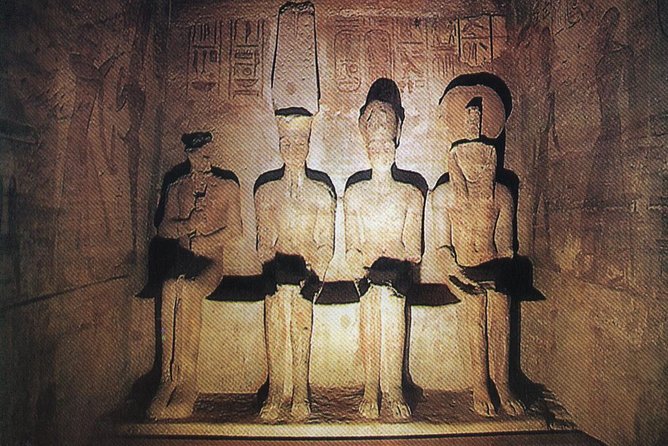
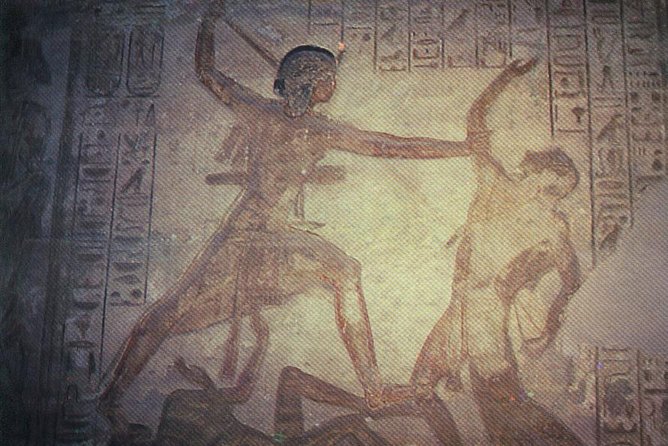
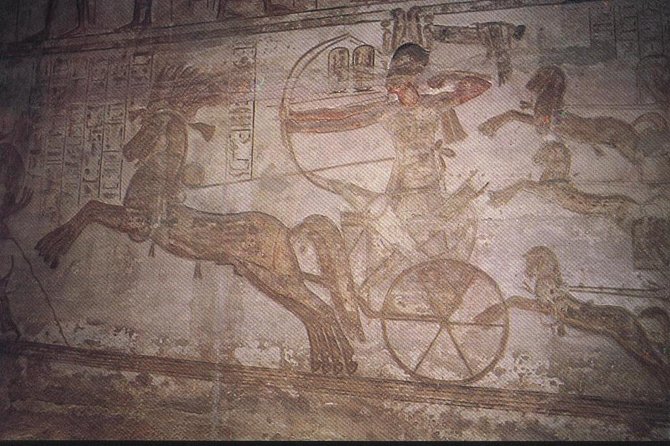
The temple extends about 60 meters into the mountain. Its chambers contain statues and scenes connected with Ramses II, including depictions of military victories and captives. Toward the back, you can see figures associated with Amun, Ra-Horakhty, Ptah, and the deified Ramses himself.
The building was carved during the 13th century BC, during the 19th Dynasty. Its purpose was not only religious. It also presented Ramses II as a powerful ruler, protected by the gods and victorious in war. The scale is part of the message. The temple is meant to make you feel the king’s authority before you have even crossed the entrance.
The stated stop time is about 45 minutes. That is enough to see the main façade and walk into the interior, but it is not a generous amount of time for slow photography, careful study, and a long conversation with your guide. You should expect an efficient visit rather than an unhurried archaeological session.
Because the guide cannot give a full talk inside, take a moment outside to ask questions. You can also ask the guide to point out the main gods, the royal images, and the military scenes before you enter. That preparation will help you understand what you see on your own.
The smaller Temple of Hathor and Queen Nefertari
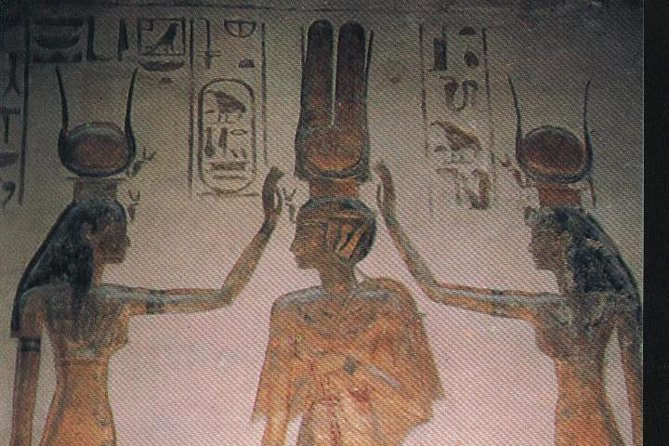
After the Great Temple, you walk to the smaller Temple of Hathor. It was built for Hathor, the cow-headed goddess associated with love, happiness, joy, and music, and it honors Queen Nefertari, Ramses II’s favorite wife.
The façade has six large standing statues, each about 10 meters high. Three represent Ramses II and three represent Nefertari, giving the entrance a more balanced royal presentation than you might expect from a temple built by one of Egypt’s most powerful kings.
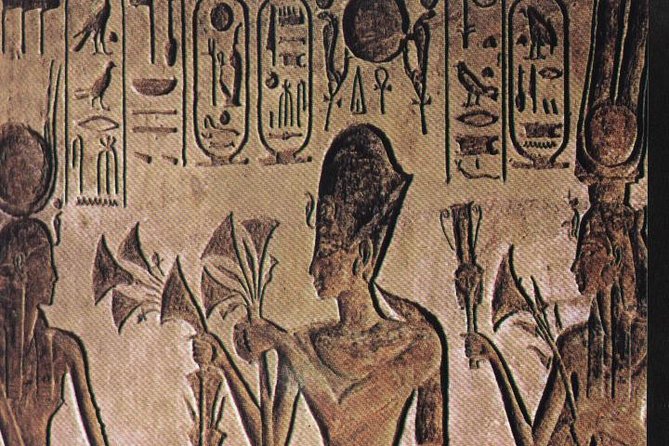
The visit here is shorter, listed at about 30 minutes. That is enough to appreciate the front, enter the temple, and look at the wall scenes, but you will need to keep moving if the schedule is tight. I would give priority to the interior images of the royal couple and the relationship between the king, queen, and goddess.
This temple gives the Abu Simbel visit a more personal side. The Great Temple speaks loudly about kingship, conquest, and divine power. The Temple of Hathor adds a royal family story, with Nefertari receiving an unusually prominent place beside Ramses II.
The two temples work well together. One is grand and political. The other is smaller and more intimate. Seeing both is far more satisfying than visiting only the larger façade and taking a few quick photographs.
A few more temple visits around Aswan worth a look
- From Aswan: Private Guided Tour of Philae Temple with Entry
★ 4.6 · 239 reviews - Full Day Tour to Abu Simbel Temples from Aswan
★ 4.5 · 218 reviews - Aswan: Philae Temple Guided Half-Day Group Tour
★ 4.5 · 202 reviews - Aswan: Philae Temple Sound & Light Show with Entrance Fees
★ 4.1 · 151 reviews
A remarkable modern rescue
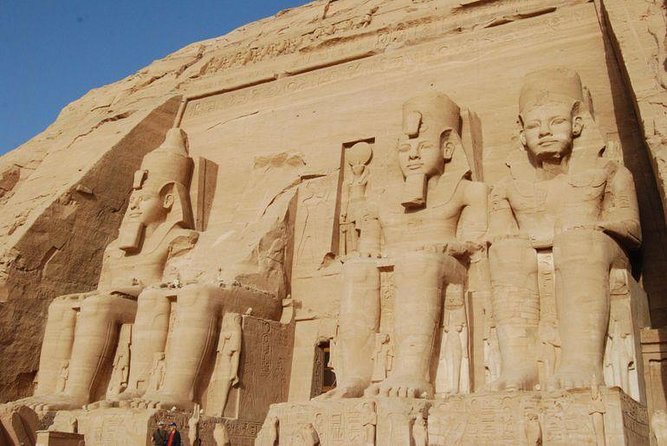
One of the most striking facts about Abu Simbel is not only its ancient construction, but also its modern survival. Between 1964 and 1968, the temples were cut into huge blocks, dismantled, lifted, and rebuilt in a new location.
The new site sits about 65 meters higher and 200 meters farther back from the river. Some blocks weighed as much as 30 tons, with an average weight of roughly 20 tons. The relocation saved the temples from the rising waters of Lake Nasser after the construction of the Aswan High Dam.
Your guide can explain this story before you enter, and it gives the site an extra layer of meaning. You are not looking at a temple sitting in precisely the same spot chosen by its ancient builders. You are looking at a carefully reconstructed monument that survived because of one of the largest archaeological engineering efforts ever attempted.
That story also helps explain why the temples feel so isolated. The surrounding desert and lake area are part of the modern setting created by the dam project. The temples are ancient, but your visit is also connected to a major 20th-century struggle over water, power, and cultural preservation.
The guide format: useful, but limited inside
The Egyptologist guide is a good fit if you want historical context during the drive and a clear introduction before entering the temples. Guides including Hassim were praised for being friendly, proud of their heritage, and helpful with practical matters. A clean vehicle and safe driving were also praised.
But you need to understand the format. Guides are not allowed to provide explanations inside Abu Simbel, so the main formal talk may happen outside and last only around 10 to 15 minutes. The rest of the temple visit is self-guided.
That restriction is the central weakness of this experience. The tour is marketed as guided, but the most important indoor details are yours to interpret. You can reduce the problem by asking questions before entering and by requesting a clear explanation of the key carvings, gods, and chambers.
If you want a guide beside you at every stage, this may disappoint you. If you mainly want safe transport, a private schedule, and a short expert briefing before exploring, the arrangement works much better.
The private format does allow some flexibility. Your guide can focus on your interests before the entrance, and the group size means you do not have to wait for a large party. The information provided does not promise a longer temple visit, so do not assume that private service means unlimited time on site.
Is $89 good value?
At about $89 per person, the price is reasonable for a private nine-hour transfer from Aswan with an air-conditioned vehicle, driver, guide, bottled water, taxes, and hotel or cruise pickup. The cost becomes more attractive when shared by several people, since you are paying for a private service rather than a seat on a large coach.
The value depends on what you want from the guide. If you mainly need a dependable ride to a remote site and appreciate a short Egyptology briefing, the price makes sense. If your priority is extensive guiding inside the temples, the limited commentary may make a driver-only arrangement seem more logical.
There is one point you should settle before paying. The main description says entrance fees are included, but the detailed inclusions and exclusions say entrance fees are not included. That conflict is too important to ignore. Confirm the current admission arrangement with Nile Holiday before the day of departure and budget for tickets if necessary.
Pickup information also needs attention. You must provide the name and address of your Aswan hotel or cruise boat no later than 48 hours before the travel date. A photocopy of every participant’s passport is also requested within that period.
The tour has free cancellation up to 24 hours before the start time. Changes or cancellations made less than 24 hours in advance are not accepted for a refund.
Who should book this Abu Simbel tour?
I would recommend it most strongly to you if you are staying in Aswan, want a private car, and prefer a simple arrangement from hotel or cruise boat to temple and back. It also suits families or small groups that value their own vehicle and do not want to coordinate several separate transfers.
It is a good choice if you want a guide to set the scene, identify the major figures, and explain the rescue of the temples. The friendly service, safe driving, clean vehicle, and regular water supply add practical value to a long day.
You may want another option if you expect a long, detailed talk inside both temples. The guide cannot provide that, and the formal explanation may be brief. In that case, book this primarily for the private transportation and use your own guidebook or prior reading for the interior.
The departure time can affect the feel of the visit. One group left Aswan at 7:00 AM and found the temples much quieter by the time they arrived. The tour offers several departure options, so ask about timing if avoiding the busiest period matters to you. Do not assume that the earliest listed time is your only choice.
Final verdict: book it for transport and access
Abu Simbel is worth the long ride, and this private tour makes the journey easy to arrange. I like the direct pickup, private air-conditioned vehicle, reliable drivers, bottled water, and the chance to see both Ramses II’s huge temple and Nefertari’s smaller sanctuary in one day.
I would book it if your main goal is comfortable private access to Abu Simbel with a useful Egyptologist introduction. I would hesitate only if you want sustained guiding inside the monuments, since that is not how the site operates.
Before confirming, ask two things: Are entrance fees included, and how much time will you have at the complex? Once those points are clear, the tour offers a practical way to reach one of southern Egypt’s great sights without arranging the desert transfer yourself.
FAQ
How long does the Abu Simbel tour from Aswan last?
The tour lasts about nine hours, including transport from Aswan, the temple visit, and the return trip.
How long is the drive from Aswan to Abu Simbel?
The drive takes almost three hours each way in the private vehicle.
Where can pickup take place?
Pickup is available from your hotel in Aswan or your Nile River cruise boat. You need to provide the name and address of the pickup location no later than 48 hours before the travel date.
Is this a private tour?
Yes. Only your party participates, along with the guide and driver.
Are entrance fees included?
The information provided is inconsistent. The overview says entrance fees are included, while the detailed inclusion and exclusion sections say entrance fees are not included. Confirm this point with Nile Holiday before booking.
Can the Egyptologist guide explain the temples inside?
The guide can explain the site before you enter, but guides are not allowed to lecture inside the temples. You should expect to explore the interiors independently after the outside briefing.
What is the cancellation policy?
You can cancel up to 24 hours before the experience starts for a full refund. Cancellations or changes made less than 24 hours before the start time are not accepted for a refund.
Just added around Aswan
- Philae Temple and Aswan High-Dam Half-day tour★ 5.0 · 49 reviews
- Sound and Light show at Philae Temple in Aswan★ 5.0 · 5 reviews
- Aswan Philae Temple, Obelisk, and High Dam Private Tour★ 4.5 · 17 reviews
- Tour to Abu Simbel Temples from Aswan★ 4.5 · 7 reviews
- Visit Abu Simbel temple from Aswan by private A/C vehicle★ 5.0 · 4 reviews
- Temple of Edfu★ 4.0 · 11 reviews
- Tour To Abu Simbel Temples By Road★ 5.0 · 4 reviews
- Private day tour to Philae temple-unfinished obelisk and high dam in Aswan★ 4.0 · 6 reviews
Abu Simbel & Philae Temple Tours, compared.
Abu Simbel Temple Private Guided Day Trip with Lunch
Read our review →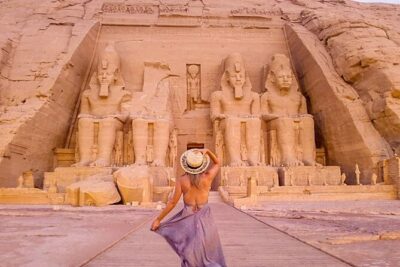
Private Day Tour to Abu Simbel Temples from Aswan
Read our review →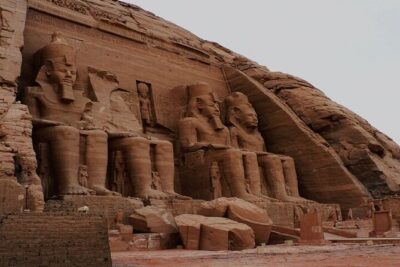
Private Guided Tour of Philae Temple with Entry
Read our review →
Philae Temple Sound & Light Show with Entrance Fees
Read our review →Browse the lists this tour appears in