
Review · CAIRO
Luxury Cruise from Aswan to Luxor 4 Days with Abu Simble Temple
Ancient temples make the Nile feel wonderfully unreal. This four-day cruise links Aswan and Luxor with visits to Abu Simbel, Philae, Kom Ombo, Edfu, Karnak, Luxor Temple, and the Valley of the Kings. I especially like the full-board format, which keeps meals and sailing simple, and the chance to see major monuments without changing hotels every night. The main catch is that entrance tickets are not included, despite the sightseeing being included in the program.
The cruise costs $650 per person and includes an air-conditioned vehicle, private guides, meals, and transfers to the airport or train station. I also like that the route includes Abu Simbel, often the highlight of a southern Egypt trip. Still, this is a packed schedule, and the ship may arrive in Luxor late, so you should be comfortable with early starts, long sightseeing days, and a group that can reach up to 50 people.
Key points to know before booking
- Abu Simbel is included: This is one of the strongest reasons to choose this cruise over a shorter Aswan to Luxor sailing.
- Three major ancient sites in Aswan: You visit the High Dam, the Unfinished Obelisk, and Philae Temple before sailing.
- Classic Nile route: Kom Ombo and Edfu provide memorable temple stops between Aswan and Luxor.
- Luxor’s essential sights: The West Bank, Valley of the Kings, Temple of Queen Hatshepsut, Colossi of Memnon, Karnak, and Luxor Temple are all part of the plan.
- Meals are covered: Breakfast, lunch, and dinner are provided on board, but drinks and alcohol cost extra.
- Practical support is included: Pickup is available, confirmation arrives at booking, and transfers can be arranged to Luxor Airport or the train station.
What the $650 price really covers
At $650 per person, this is not a bare-bones boat ride. The price covers full board, an air-conditioned vehicle, private guiding, and the sightseeing listed in the schedule. That matters in Egypt, where arranging separate cars, guides, meals, and local transfers can quickly become tiring.
The strongest value comes from combining the hotel, transport, and meals in one package. You unpack once, wake up beside the Nile, and move between Aswan and Luxor while the ship handles the long distance. For many people, that is worth more than squeezing every last dollar from the trip.
Still, keep your budget open for entrance fees. The program says admission tickets are not included, even though the attractions themselves are included in the schedule. You should also pay for drinks separately, including alcoholic beverages.
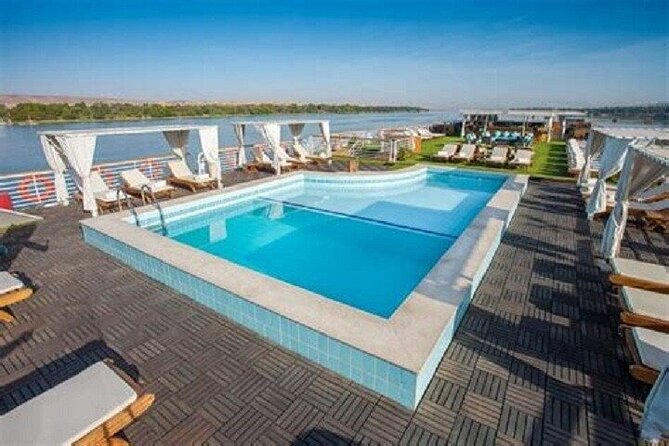
The ship is described as luxurious, with Nile-view rooms, spacious cabins, good room service, and clean shared areas. Food receives especially warm praise, with fresh meals and a broad selection served on board. One useful caution comes from a passenger who found the air conditioning weaker than expected, so room comfort may vary.
A few more temple visits around Cairo worth a look
- 4 Days 3 Nights from Aswan to Luxor Nile cruise+Abu simbel temple
★ 5.0 · 27 reviews - 4 Days Expedition From Bangkok to Angkor Wat
★ 5.0 · 26 reviews - 4 Days Nile Cruise; Aswan to Luxor Including Abu Simbel Temples
★ 5.0 · 10 reviews
Day one in Aswan: three important stops before sailing
The trip begins with a meeting at Aswan Airport or the train station. The listed start time is 1:00 pm, followed by a transfer to the cruise ship before lunch. Confirm the exact meeting arrangement before arrival, particularly if you are reaching Aswan by train rather than plane.
The first sightseeing stop is the Aswan High Dam, a major modern engineering project that changed the flow of the Nile and created Lake Nasser. It is not an ancient temple, but it gives useful context for understanding why Abu Simbel was moved and how modern Egypt reshaped the river.
Next comes the Unfinished Obelisk. This enormous granite monument remains partly attached to the bedrock, giving you a rare look at how stoneworkers began shaping these objects. The cracks and unfinished surfaces are more informative than a perfectly completed monument because you can see the risks of working such a massive piece of stone.
Philae Temple is the star of the Aswan sightseeing day. Dedicated mainly to the goddess Isis, the temple complex was relocated to higher ground after the construction of the High Dam threatened to submerge it. Its setting among the waters near Aswan gives the visit a special sense of place.
The first day includes lunch and dinner on board, with an overnight stay in Aswan. Since the schedule is listed as roughly six hours, you will have a full afternoon rather than a leisurely morning. Wear practical shoes and carry water, especially during the warmer months.
Abu Simbel: the trip’s biggest extra
Abu Simbel is the most important reason many people choose this particular package. The temples were built by Ramses II and are famous for their monumental seated figures carved into the rock. The scale is startling, even after you have seen photographs for years.
The schedule places Abu Simbel alongside the cruise program, but the exact timing is not clearly explained. One part of the schedule lists breakfast on board, Kom Ombo, Abu Simbel, lunch, Edfu, and a late arrival in Luxor. Since Abu Simbel is not directly beside the normal sailing route, ask the operator to confirm precisely when the visit happens and how the transfer works.
That point matters. You want to know how early you must leave, how much time you will have at the temples, and how the Abu Simbel visit fits with sailing and meals. The package clearly advertises the temple as included in the sightseeing plan, but the schedule deserves clarification before you pay.
If Abu Simbel is a priority, this addition gives the cruise much greater value. If you prefer slow mornings and long stretches on deck, the extra visit may make the journey feel rushed.
Kom Ombo and Edfu: two different temple experiences
Kom Ombo is unusual because its temple is dedicated to two gods, Sobek and Horus. Sobek, shown with a crocodile’s head, connects the site to the Nile and the dangers of the river. The divided design gives the temple a different feel from the single-deity complexes in Luxor.
The cruise then sails toward Edfu. Edfu Temple is dedicated to Horus and is one of the best-preserved large temples in Egypt. Its walls, columns, and carved scenes are easier to read than the remains at many older sites.
The schedule includes lunch on board and sailing to Luxor, with a late arrival expected. That late arrival is worth taking seriously. You may have little energy left after Abu Simbel, Kom Ombo, and Edfu, so treat the sailing time as a chance to rest rather than another sightseeing session.
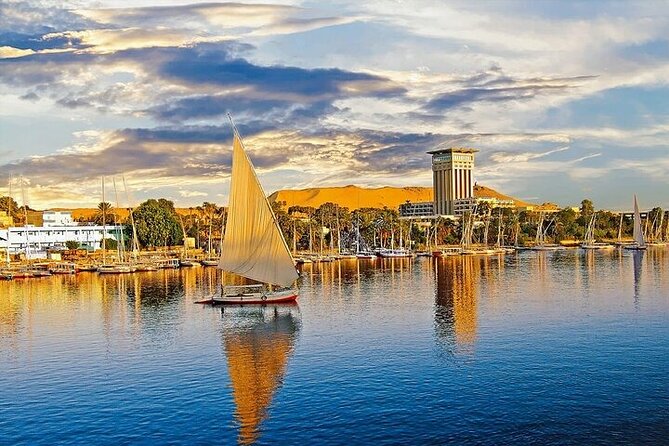
This is also the part of the trip where the Nile itself becomes the attraction. From the deck, you can watch fields, villages, palms, and river traffic pass by at a gentle pace. The view is not a dramatic wilderness scene. Its appeal comes from seeing daily life unfold beside the water.
Same place, a different morning at the gates:
- Cairo Old Coptic Church and Monastery St Simon Cave Church
★ 5.0 · 66 reviews - Giza Pyramids and Sphinx with Camel ride & Mummification Temple
★ 5.0 · 38 reviews - Private Giza pyramid,sphinx, Mummification temple& inside pyramid
★ 5.0 · 32 reviews - St Simon Monastery ,Cave Church , Garbage City and Coptic Cairo Private day tour
★ 5.0 · 29 reviews
Luxor’s West Bank: the Valley of the Kings and Hatshepsut
The second major sightseeing day focuses on Luxor’s West Bank and lasts about eight hours. This is the longest listed tour day, so have breakfast, carry water, and expect a substantial amount of walking and standing.
The Valley of the Kings contains the tombs of pharaohs hidden in the dry hills west of the Nile. The exact tombs open on the day can vary, and the standard entry arrangement does not mean every tomb is automatically included. Since entrance tickets are extra, ask which tickets you need and which tombs are covered by the basic admission.
The tombs are not grand because of their size. Their value is in the painted chambers, religious scenes, and careful planning that helped rulers prepare for the afterlife. Crowds and heat can make the visit tiring, but the underground decoration is well worth the effort.
The Temple of Queen Hatshepsut has a very different character. Its broad terraces rise against the cliffs, creating a strong visual contrast with the narrow tomb entrances nearby. Hatshepsut’s story is also unusual, since she ruled Egypt as pharaoh and presented herself through royal symbols traditionally associated with male rulers.
The Colossi of Memnon provide a shorter stop. These huge seated statues once guarded the entrance to a temple complex that has largely disappeared. You will not need a long visit, but the scale of the figures makes them a useful opening to Luxor’s West Bank.
Lunch and dinner are served on board, with an overnight stay in Luxor. This arrangement is convenient, though the West Bank day can feel tightly packed if your guide moves quickly between sites.
Luxor’s East Bank: Karnak and Luxor Temple

After breakfast and checkout, the final sightseeing focuses on the East Bank. Karnak Temple and Luxor Temple are the two essential stops, and they show Luxor at its most monumental.
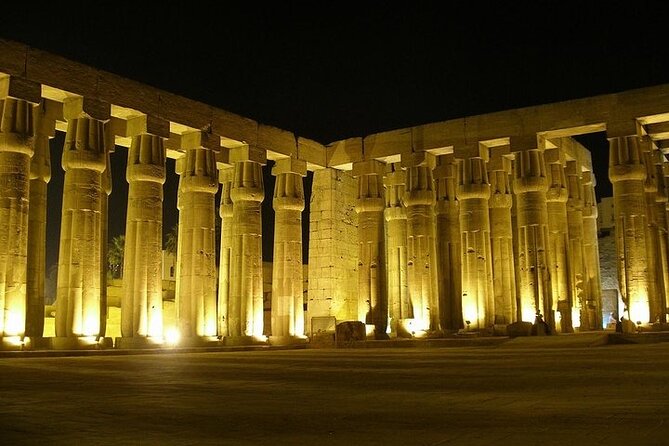
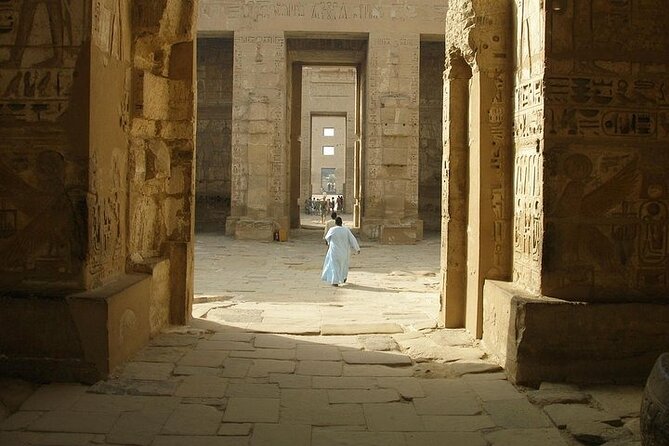
Karnak is a huge religious complex rather than one single building. Its columns, courtyards, pylons, statues, and sacred spaces were added by different rulers over many centuries. Give yourself time to look upward and outward. The scale only makes sense when you pause beneath the massive columns.
Luxor Temple is more compact and easier to understand as a single ceremonial space. Its position within modern Luxor also gives the visit a different atmosphere from the isolated temples farther south. The contrast between ancient stone and present-day city life is part of the experience.
A private guide can make a major difference here. The carvings are far more meaningful when someone explains the gods, royal ceremonies, and changes made by later rulers. Several passengers praised guides for being friendly, clear, and well informed. One guide named Mohammed was singled out for his warm manner and strong explanations, while Khaled received praise for handling questions and changes before and during the trip.
After the East Bank visit, the company transfers you to Luxor Airport or the train station. Check departure times carefully. The schedule gives you the sightseeing stops and transfer, but it does not promise a specific departure hour.
Life on board: comfort, food, and the Nile view
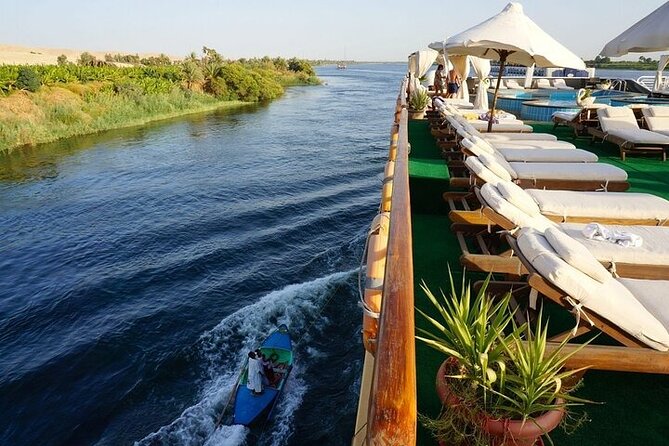
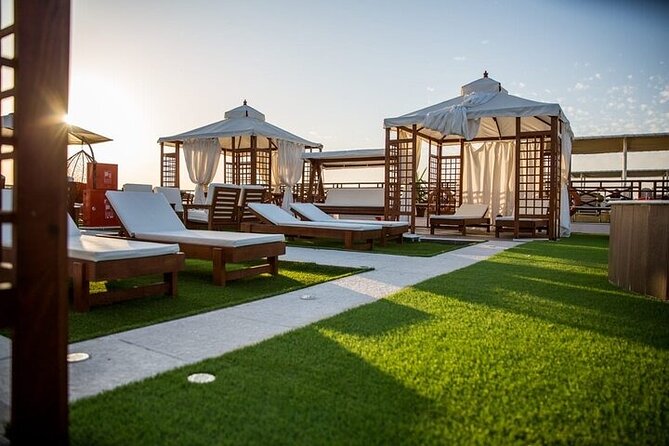
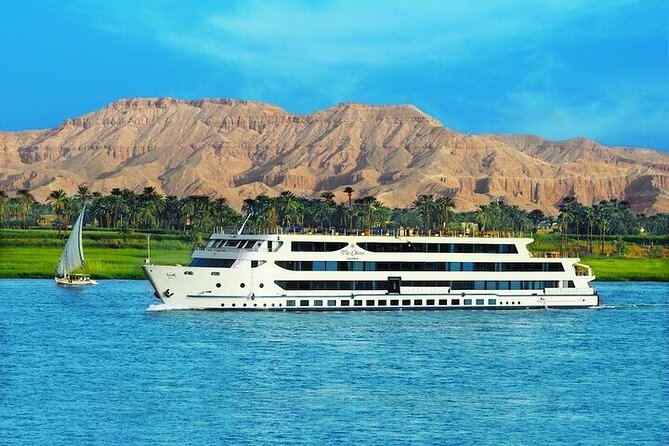
The ship is promoted as a luxury cruise, and the strongest practical advantage is having your room, meals, transport, and guide support tied together. Cabins are described as clean and spacious, with direct Nile views available in some rooms.
A Nile-facing room can improve the whole trip. You are not simply using the ship as a place to sleep. You can watch the river from your cabin or move to the shared deck when the boat is sailing. Ask exactly what room category is included if the view matters to you.
Food receives some of the clearest praise. Breakfast, lunch, and dinner are included, and the meals are described as fresh with a wide range of choices. That makes the package easier for families and first-time visitors who do not want to search for restaurants after long temple visits.
The ship is not a private yacht. The maximum group size is 50 people, and the sightseeing may be handled by several guides for a larger group. That can provide useful support, but it also means you should not expect a quiet, custom-designed journey at every moment.
The experience also includes an air-conditioned vehicle for road transfers. This is important for Abu Simbel and other shore excursions, though the exact vehicle schedule is not provided. Service animals are allowed, and the experience is near public transportation. Most people can participate, but you should be ready for walking, stairs, heat, and long days at archaeological sites.
Who will enjoy this cruise most?
I would recommend this cruise to someone visiting Egypt for the first time who wants the main Aswan and Luxor sights handled in one booking. It is also a good fit if you value full-board meals, a Nile-view cabin, guided visits, and airport or train-station transfers.
Families may appreciate the simple structure. Couples may like the mixture of temple visits and quiet sailing. History-focused visitors will value the number of major sites packed into four days, especially Abu Simbel and the Valley of the Kings.
This is less suitable if you want a slow, independent trip. The days are full, the group may reach 50 people, and late arrival in Luxor can reduce your downtime. You should also be comfortable paying entrance fees separately and confirming details that are not clearly spelled out, especially the exact Abu Simbel timing.
The booking terms are fairly flexible. You can cancel for a full refund up to 24 hours before the local start time. Changes or cancellations made inside that window are not accepted for a refund.
Should you book the Aswan to Luxor cruise?
Book it if you want maximum sightseeing with minimum daily planning. The package brings together Aswan’s major stops, Abu Simbel, Kom Ombo, Edfu, Luxor’s West Bank, and the East Bank in a single four-day route. The strongest features are the included meals, Nile views, friendly guides, and Abu Simbel visit.
Before booking, ask three direct questions: Which entrance tickets must you pay for, exactly when does the Abu Simbel visit take place, and what cabin category includes a direct Nile view? If the answers suit you, $650 offers solid value for a guided, full-board Nile journey.
FAQ
How long is the cruise from Aswan to Luxor?
The experience lasts approximately four days. It is described in the program as a four-day, three-night cruise.
What time does the experience start?
The listed start time is 1:00 pm. Pickup takes place at Aswan Airport or the Aswan train station.
Is Abu Simbel included?
Yes. Abu Simbel Temple is included among the planned sightseeing stops. The exact timing and transfer arrangement should be confirmed before booking.
Are meals included?
Yes. Breakfast, lunch, and dinner are included on board for the cruise.
Are entrance tickets included?
No. Entrance tickets are not included in the price, although the listed sightseeing visits are included in the program.
What is not included besides entrance tickets?
Alcoholic beverages and other drinks are not included. You will need to pay for those separately.
How many people can join the cruise?
The activity can have a maximum of 50 travelers.
Just added around Cairo
- Monastery St Simon with Cave Church and Garbage City Private Tour★ 5.0 · 15 reviews
- half-day Saint Simon monastery and miracle of Moqqatam mountain★ 4.0 · 4 reviews
- Pyramids of Giza & Sphinx & valley temple Tour with Egyptian lunch★ 5.0 · 7 reviews
- Tour to Giza Pyramids, Sphinx, Valley Temple, Camel Ride & Lunch★ 5.0 · 7 reviews
- St Simon Monastery ,Cave Church , Garbage City and Coptic Cairo Private day tour★ 5.0 · 29 reviews
- Pyramids of Giza & Sphinx & valley temple Tour with Camel Ride & Egyptian lunch★ 5.0 · 5 reviews
- Shared Tour To Abu Simbel Temple From Aswan★ 5.0 · 7 reviews
- Overnight Trip to Saint Catherine Monastery from Cairo★ 4.0 · 14 reviews
4-Day Experiences, compared.
4 Days 3 Nights from Aswan to Luxor Nile cruise+Abu simbel temple
Read our review →
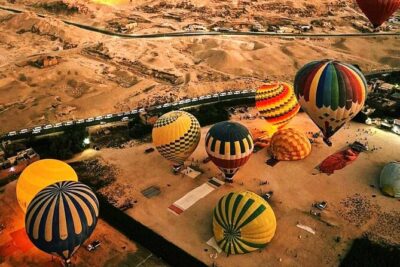
4 Days Nile Cruise; Aswan to Luxor Including Abu Simbel Temples
Read our review →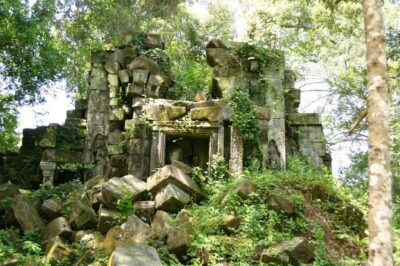

Browse the lists this tour appears in