
Review · BEIJING
Confucius Temple and Imperial College Entrance Ticket
Imperial China is written in stone. Beijing’s Temple of Confucius and Guozijian Museum offer a quiet, focused look at the old imperial education system, just a short walk from the Lama Temple. I like the low $8 price and the freedom to explore at your own pace, with enough English information to make a self-guided visit worthwhile.
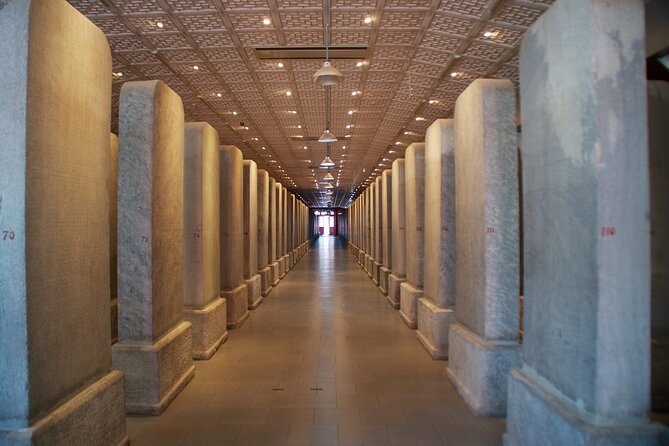
I also like the hundreds of stone steles recording scholars who passed the Imperial Examination, a detail that gives the site a human scale. The main caution is practical: one booking for two people once produced only one working QR code, so you should check both admission codes before arriving.
Key points to know before you go
- Two historic institutions in one stop: Visit the Temple of Confucius, founded in 1302, and the neighboring Guozijian, built in 1306.
- A close companion to the Lama Temple: The two sites are only a short walk apart, making this an easy addition to a central Beijing sightseeing day.
- A rare look at imperial education: Stone tablets, scholarly halls, statues, and carvings explain how officials honored Confucius and how scholars earned rank.
- Good value at $8 per person: You can spend about two to three hours here, especially if you read the English explanations.
- Optional English-speaking guide: The ticket works for independent visits, while the related guided option adds live explanation and historical stories.
- Check your QR codes carefully: Tickets are sent five days before the travel date, and both codes should be tested before you reach the entrance.
Why this small Beijing site matters
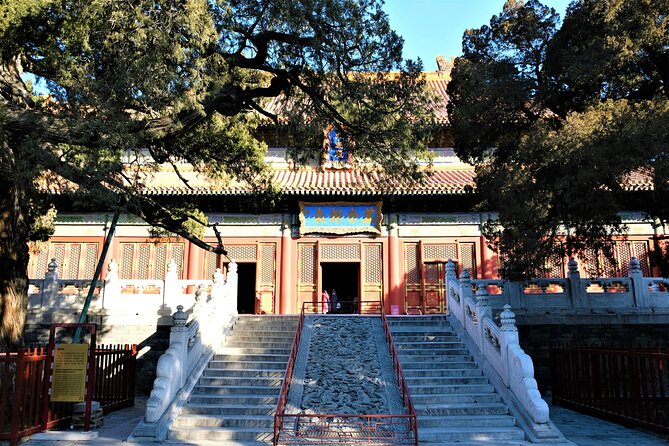
Beijing has no shortage of grand imperial sights. The Temple of Confucius and Guozijian Museum offer something different: they show how the empire trained, tested, and honored the people who ran it.
The temple was first built in 1302. Its purpose was not simply worship in the modern sense. Officials came to honor and offer sacrifices to Confucius, whose ideas shaped education, government, family life, and public conduct for centuries.
Next door, the Guozijian served as the imperial college during the Yuan, Ming, and Qing dynasties. This was where the state’s highest educational system was represented. Together, the two sites connect moral teaching with the machinery of government.
I find that pairing especially useful. The temple shows the ideal, Confucius as the great teacher. The college shows the system built around that ideal, including the path by which scholars could gain official status.
More Entry Tickets in Beijing:
- Beijing: The Temple of Heaven or Summer Palace Entry Ticket
★ 4.6 · 1,286 reviews - Temple of Heaven Ticket
★ 5.0 · 482 reviews - Beijing: Lama Temple (Yonghe Temple) Admission Ticket
★ 4.8 · 297 reviews
The Temple of Confucius begins with ceremony
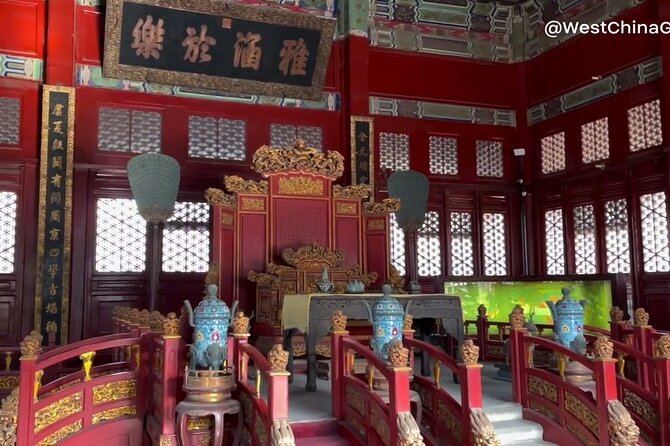
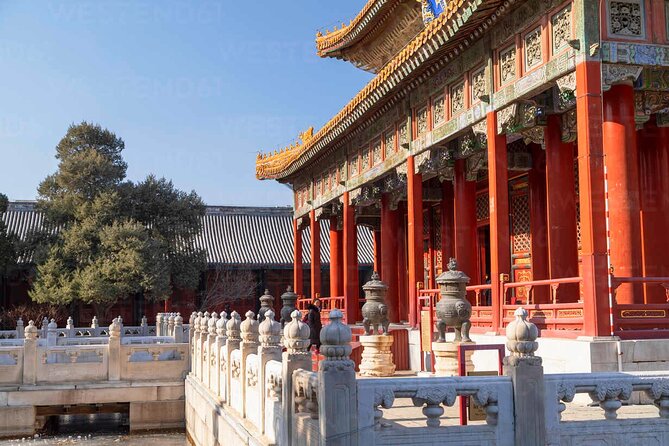
The Temple of Confucius is the first major stop and the emotional center of the visit. It is the second largest Confucian temple in China, after the temple in Qufu, Confucius’s hometown.
Expect a series of traditional halls, statues, carvings, and stone inscriptions rather than a single spectacular object. This is a place to read the site as a whole. The arrangement reflects respect, study, and formal ceremony.
You can look for the statues and carved details connected with Confucian learning. The setting helps explain why Confucius became more than a historical teacher. He became a symbol of disciplined study and proper public service.
The temple may be most rewarding if you slow down. A quick walk gives you attractive old buildings. A careful visit lets you connect those buildings with the demanding education system that supported imperial rule.
The available information does not give a fixed route or a timed presentation, so your pace is largely your own. That is good news if you want to pause over inscriptions, but less helpful if you prefer a tightly organized tour with a guide explaining every hall.
The stone steles tell the human story
The most unusual feature here is the collection of stone steles recording the names of scholars who passed the Imperial Examination. These are not just decorative tablets. They preserve the names of people who succeeded in one of the most important tests in imperial China.
That detail changes how you see the site. Instead of thinking only about emperors and famous thinkers, you are reminded of generations of students who spent years preparing for official examinations.
The system could open a path into government, but the examination was demanding. The steles give a physical record of success, with each name linked to years of study and competition. Even if you do not read every inscription, the scale of the collection makes the point.
English explanations are available around the museum, so you do not need a guide to understand the main displays. One visitor found it easy to spend two to three hours reading the information. That is a useful guide for your own timing, especially if you enjoy museums with written interpretation.
If you prefer a quick photo stop, the site can feel slower than expected. The value is in the written material and the connections between the objects, not in racing through a list of famous sights.
Guozijian explains the old education system
The Guozijian Museum sits beside the temple and was originally constructed in 1306. It was the imperial college during the Yuan, Ming, and Qing dynasties.
This second half of the visit gives the temple a practical setting. Confucius represented the ideals of learning and ethical conduct. Guozijian represented the institution that trained people for service under the imperial government.
The museum consists of scholarly halls, stone steles, and displays about education in imperial China. You might find this section more informative than visually dramatic, particularly if your interest is in how the state worked.
I recommend giving the Guozijian enough time to read the explanations. The site is not simply a collection of old buildings. It presents a system in which education, examination, social status, and government were closely tied together.
A guide can be useful here. The ticket option that includes an English-speaking guide is designed to add history and stories as you move through the halls. Without a guide, the English signs still make independent exploration possible, but you will need to assemble the larger story for yourself.
A few more temple visits around Beijing worth a look
- Beijing Classic Full-Day Tour including the Forbidden City, Tiananmen Square, Summer Palace and Temple of Heaven
★ 4.0 · 610 reviews - Temple Heaven, Lama Temple, Summer Palace & Peking Duck Bus Tour
★ 5.0 · 377 reviews - Temple Heaven, Summer Palace, Lama Temple, Hutong Bus Tour
★ 4.7 · 319 reviews - Beijing: Entry to Temple of Heaven Park
★ 4.6 · 314 reviews
How long should you plan?
The experience is sold as a one-day admission, but that does not mean you need an entire day inside. A realistic visit is about two to three hours if you read the English displays and take time with the stone inscriptions.
You can combine it with the Lama Temple because the two attractions are a short walk apart. This makes the site a sensible choice for a day focused on Beijing’s temples and traditional institutions.
The location is near public transportation, which keeps the visit practical. No private transport is required by the information provided, and most people can participate.
I would avoid treating this as a rushed filler between major palace visits. The site rewards a quieter pace. If you arrive with only 30 minutes, you may see the architecture but miss much of the educational story.
Is the $8 ticket good value?
At $8 per person, the admission is easy to justify for anyone interested in Beijing’s past. The price is low compared with the time you can spend on site, and the English interpretation means you are not paying for a beautiful setting without knowing what you are seeing.
The value is strongest for independent visitors. You can enter with your prepaid ticket, read the displays, and choose how long to stay at each hall and stele.
A guide changes the calculation. The guided option includes an English-speaking tour guide and is intended to explain the history and stories in person. If you enjoy asking questions or want help connecting the temple to imperial government, the extra cost may be worthwhile.
If your main goal is a quick look at traditional Chinese buildings, the basic ticket is enough. If you want a structured history lesson, choose the guide option. The supplied information does not state the guided upgrade price, so compare the final total before booking.
Group discounts are listed as a feature. The exact discount amount is not provided, but larger parties should check the available price when selecting their tickets.
Booking and QR code advice
Confirmation is provided when you book, but the actual tickets are sent five days before the travel date. That timing matters. Do not assume the confirmation message is the admission ticket itself.
When the QR codes arrive, check that every person in your booking has a usable code. A booking for two once resulted in one functioning QR code. The pair entered only because a guard kindly understood the problem.
That is not a reason to avoid the attraction, but it is a reason to prepare. Save the ticket information before leaving your hotel, and keep the supplier’s contact phone number available in case an issue arises at the entrance.
The provider is Unique Beijing Tours. If you select the guided version, an English-speaking guide is included. The activity is private when booked as a tour, meaning only your own group participates, rather than joining a larger shared party.
What the visit feels like without a guide
This site works well without live guiding. English instructions and displays are available throughout the museum, and the low entrance price makes an independent visit practical.
I would choose the self-guided ticket if you like reading, want control over your pace, or have already studied Confucius and the Imperial Examination. You can stop for the stone tablets, move between the scholarly halls, and spend more time on the parts that interest you.
The tradeoff is context. Written panels explain the main points, but they may not answer every question that comes to mind. You will also need to keep the two institutions straight: the Temple of Confucius is the ceremonial and philosophical side, while Guozijian represents the imperial college and education system.
For families or mixed-interest groups, a guide may help hold everyone’s attention. For a solo visitor or a pair on a tight budget, the ticket alone offers plenty to see.
What the visit feels like with a guide
The English-speaking guide option is best for readers who want the site interpreted as they walk. A live guide can explain why Confucius mattered to officials, how the examination system shaped careers, and why the stone steles deserve more than a quick glance.
The guided option may also help you use your time efficiently. Instead of reading every panel in order, you can hear the main story and then pause for details.
The available details do not name a particular guide, and no fixed tour length is given for the guided option. Ask about the meeting arrangements and duration when you select that version.
Since the activity is private for your group, you are not being placed with strangers. That can make it easier to ask questions, slow down, or move on when younger members of your party lose interest.
Who should book this experience?
I would recommend it to you if you like history, old institutions, museum displays, or the less obvious side of Beijing. It is especially useful after visiting the Lama Temple, since the short walk between the two sites lets you build a compact cultural route.
Students and families may find the examination records useful because they show how education affected public life. Anyone interested in Chinese government, philosophy, or traditional scholarship will get more from the visit than someone looking only for grand imperial architecture.
The site may not be the best pick if you want a lively performance, a large collection of treasures, or a fast list of famous landmarks. Its appeal is quieter. You read, compare, and think about the system behind the buildings.
The two to three hour visit also suits a flexible day. You are not locked into a long tour schedule, and the basic ticket lets you set your own pace.
My practical verdict
The Temple of Confucius and Guozijian Museum make a strong low-cost addition to a Beijing sightseeing plan. I like the combination of a historic temple, an imperial college, and stone records of successful scholars. The English displays mean you can make sense of the site without paying for a guide.
I would book the basic ticket if you are comfortable reading museum information and want maximum flexibility. Choose the English-speaking guide if the history is your main reason for coming or if you want the examination system explained as you move through the halls.
Before you go, confirm that every member of your party has a working QR code. With that small check handled, this is a useful, affordable visit that shows how learning and government shaped imperial China.
FAQ
How much does admission cost?
The listed price is $8 per person. Group discounts are available, although the exact discount amount is not provided.
How long does the visit take?
The experience is listed as approximately one day, but a typical visit can take about two to three hours if you read the English displays and inscriptions.
Where is the Temple of Confucius and Guozijian Museum?
The site is in Beijing, a short walk from the Lama Temple and near public transportation.
Is an English-speaking guide included?
An English-speaking guide is included only when you select the related guided option. The basic entrance ticket is for independent exploration.
Can I visit without a guide?
Yes. English instructions and exhibits are available throughout the museum, so you can explore independently.
What can I see at the temple?
You can see traditional scholarly halls, statues, carvings, and hundreds of stone steles recording scholars who passed the Imperial Examination.
When are the tickets sent?
The tickets are sent five days before the travel date. Booking confirmation is provided at the time of booking.
Can I cancel for a full refund?
Yes, if you cancel at least 24 hours before the experience start time. Cancellations made less than 24 hours before the start time are not refunded, and changes within that period are not accepted.
Just added around Beijing
- Temple of Heaven Morning Walking Tour with Ticket★ 5.0 · 7 reviews
- Temple of Heaven Admission Ticket★ 4.0 · 36 reviews
- 3-Hour Private Tour: Temple of Heaven and Lama Temple★ 5.0 · 3 reviews
- Small Group Beijing Temple of heaven and Summer Palace with Pearl market★ 5.0 · 3 reviews
- Full-Day Beijing Forbidden City, Temple of Heaven and Summer Palace Tour★ 4.5 · 40 reviews
- Summer Palace and Temple Of Heaven Private Tour★ 5.0 · 9 reviews
- Private Day Trip of Forbidden City, Temple of Heaven and Summer Palace★ 4.5 · 3 reviews
- Private Day to T-Square, Forbidden city, Temple of heaven, Summer palace Tour★ 5.0 · 54 reviews
Tickets, compared.

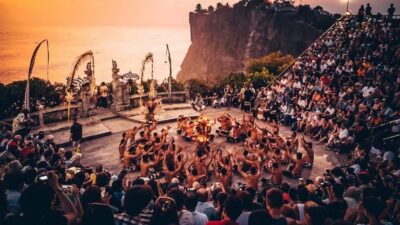
Kecak Fire Dance Show & Uluwatu Temple Entry Ticket
Read our review →

The Temple of Heaven or Summer Palace Entry Ticket
Read our review →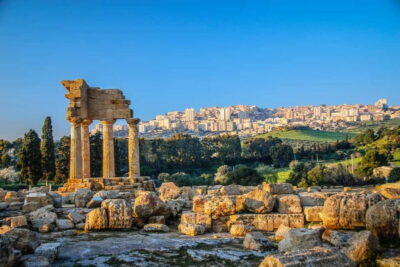
Valley of the Temples Ticket & App Audioguide
Read our review →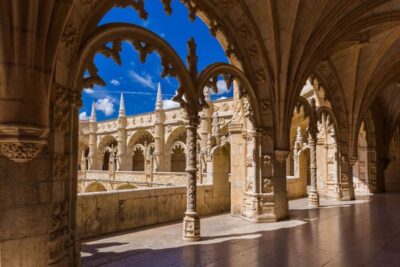

Belém Walking Tour with Jerónimos Monastery Ticket
Read our review →Browse the lists this tour appears in