
Review · PERU
Arequipa: Walking Tour and Santa Catalina Monastery
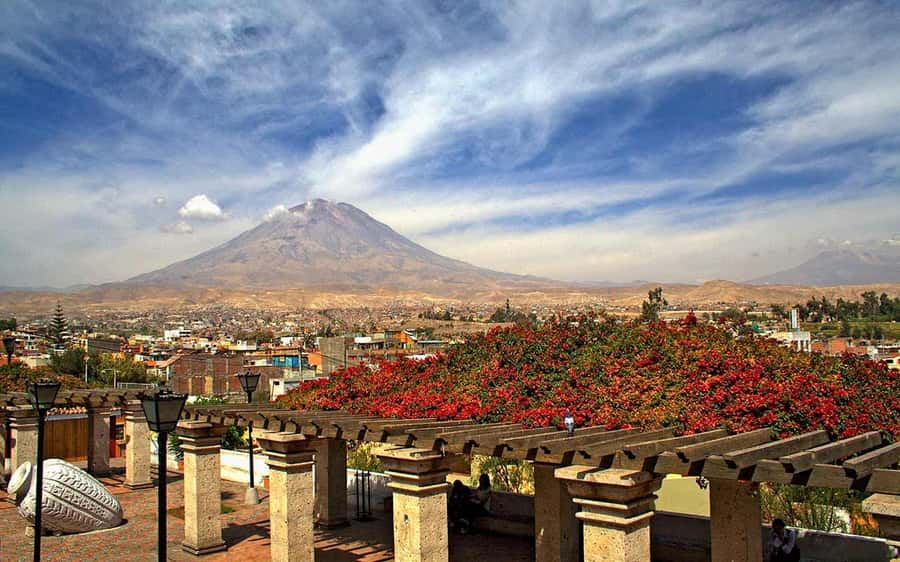
White stone tells Arequipa’s story. This three-hour tour links the city’s old San Lázaro neighborhood, colonial tambos, Plaza de Armas, and the remarkable Santa Catalina Monastery in one well-paced outing. I especially like the walk through quiet streets built from white volcanic sillar, and the chance to see historic places that sit beyond the usual central square. The main drawback is that the tour involves several walks over old streets and is not suitable for wheelchair users.
The guide adds real value here. Guides such as Gisela, Milei, and Sline have been praised for being kind, clear, precise, and willing to answer questions. At $35 per person, the tour is a fair deal if your chosen option includes the monastery entrance and hotel transport, but you should check carefully because those extras can be optional.
Key points to know before booking
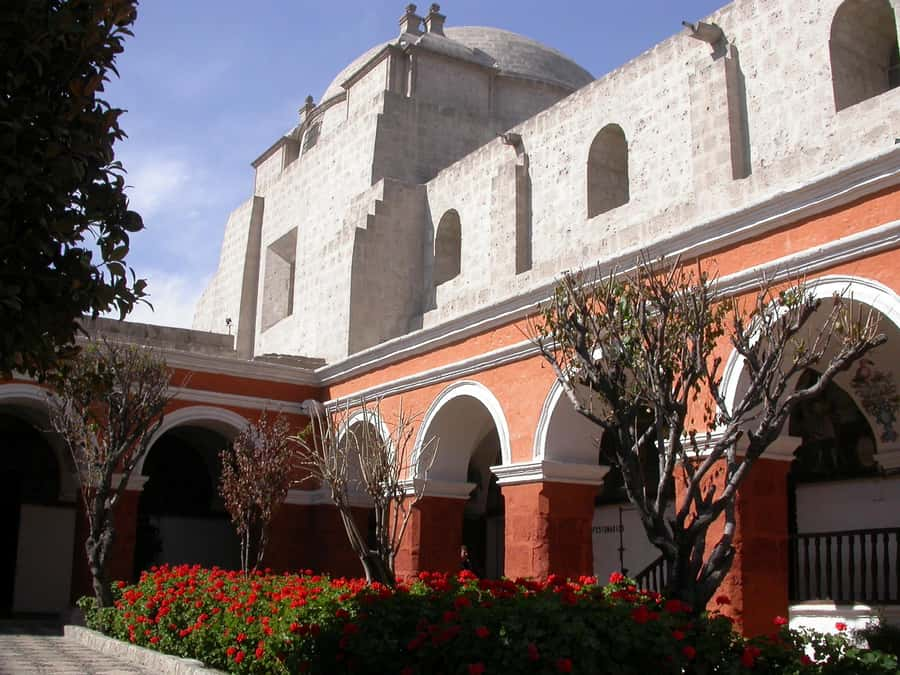
- San Lázaro comes first: Begin among narrow lanes, small squares, and white sillar houses in one of Arequipa’s oldest districts.
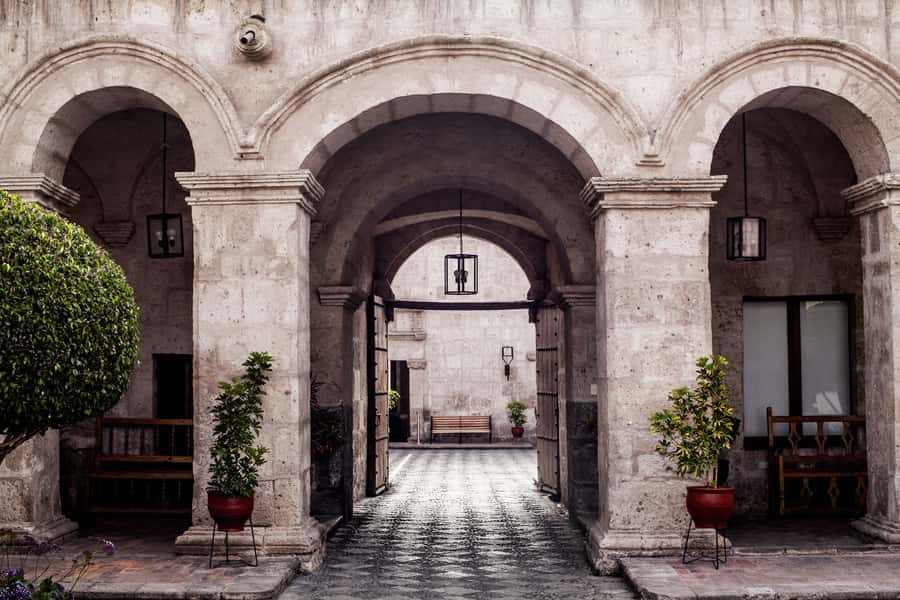
- The tambos feel more local: Tambo El Matadero and Tambo La Cabezona show how colonial lodging and working spaces have been adapted over time.
- Santa Catalina takes about an hour: The monastery is a large complex of cloisters, patios, streets, a church, and a bell tower.
- The guide matters: English and Spanish tours are available, with past praise for Gisela, Milei, and Sline’s friendly explanations.
- Costs need checking: The $35 price is per person, but entrance fees and hotel pickup depend on the option you select.
- Wear practical clothing: Bring sunglasses, sunscreen, a hat, comfortable clothes, and insect repellent.
Why this three-hour route works well
Arequipa’s historic center can feel easy to understand from the Plaza de Armas. Yet the city makes more sense once you walk through its older neighborhoods and see how volcanic stone shaped daily life. This tour gives you that wider view without taking up an entire day.
The route combines short van rides with walking sections. You begin with a 10-minute ride, spend time in several historic areas, and finish with a 10-minute return ride. The walking is broken into manageable sections, though the streets and surfaces may not suit anyone who has trouble walking.
I like the order of the experience because it builds from neighborhood scale to city scale. San Lázaro offers small lanes and low walls. The Barrio del Solar and its tambos show older commercial life near the Chili River. The Plaza de Armas gives you Arequipa’s grand public face. Santa Catalina then provides the longest and most detailed stop.
The whole experience lasts three hours, with about an hour inside Santa Catalina. That is enough time to understand the place and take photographs, but it is not enough for a slow, independent look at every corner.
More Temple Walking Tours in the world:
- Bangkok: City Highlights Temple and Market Walking Tour
★ 4.5 · 3,990 reviews - Bangkok: Grand Palace and Wat Phra Kaew Guided Walking Tour
★ 4.4 · 2,417 reviews - Bangkok: Wat Pho and Wat Arun Guided Walking Tour
★ 4.6 · 1,720 reviews
San Lázaro and the language of white sillar
Your first stop is Barrio de San Lázaro, around five blocks from the Plaza de Armas. The area is known for its small streets, little squares, and houses made from sillar, the pale volcanic stone used throughout Arequipa.
This is one of the strongest parts of the tour for anyone who wants to see the city at walking pace. The streets are more intimate than the grand square, and the white walls give the neighborhood a clear visual identity. Your guide explains how the area was occupied by pre-Inca and Inca cultures before the Spanish conquest and the founding of the city.
That context helps you look at the buildings with more care. The district is not simply a pretty collection of colonial walls. It is part of the Historic Center of Arequipa, which UNESCO recognizes as a World Heritage Site. You get a sense of how older settlement patterns and later Spanish construction overlap.
The scheduled stop lasts about 20 minutes. That is enough for a guided look and photographs, but you should not expect a long, unhurried wander. Keep your camera ready, since the small squares and white stone walls are among the most attractive scenes of the morning.
Barrio del Solar and the old river route
From San Lázaro, you walk for about 15 minutes to Barrio del Solar. This district sits near the Chili River and includes colonial and traditional buildings along attractive streets.
Here the tour shifts from neighborhood origins to the practical side of city life. The guide introduces the tambos, old lodging centers where merchants could rest during the colonial period. That detail makes the area feel more connected to work and movement, rather than just architecture.
The Barrio del Solar stop lasts about 20 minutes. You will see historic buildings and hear how the district functioned, but the experience remains a guided overview. If you enjoy architecture, this section gives you a useful link between the city’s position near the river and its role as a place of trade.
The walking segment is short enough for most reasonably fit visitors, but comfortable shoes matter. The tour does not describe the streets as wheelchair accessible, and the activity specifically excludes wheelchair users.
Tambo El Matadero, a working colonial building
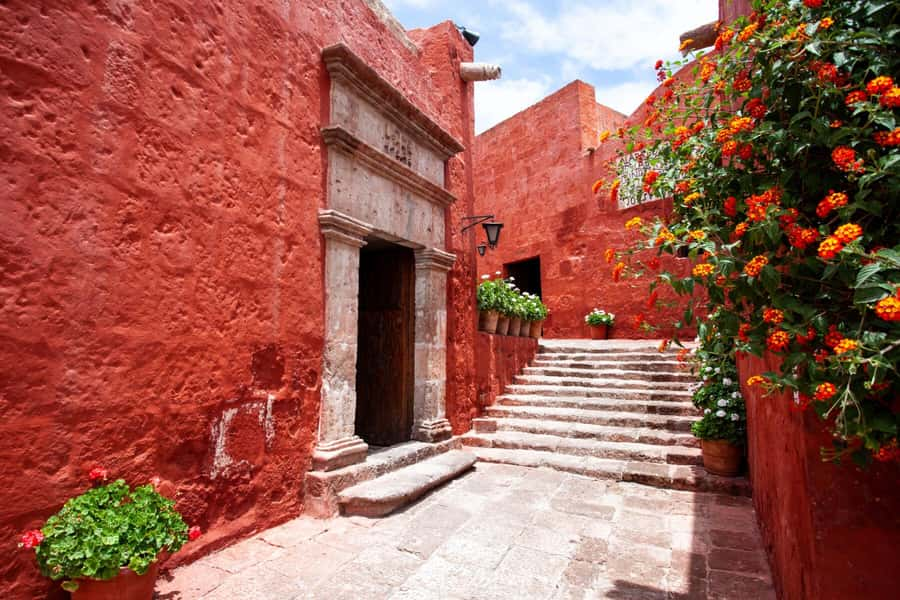
The next stop is Tambo El Matadero, a seventeenth-century building whose original use was less genteel than its name might suggest. Animals were sacrificed here during the colonial period.
Today, roughly 30 families live in the building. That makes this stop especially interesting because it is not simply a preserved monument with no present-day connection. You are looking at an old structure that continues to function as a residential space.
The visit lasts about 20 minutes and includes a guided explanation, sightseeing, and photographs. I find that combination useful: you get the historical purpose of the building, then see how time has changed its role.
You should also keep your expectations realistic. This is a historic residential complex, not a polished museum designed around a visitor route. The appeal lies in the contrast between its seventeenth-century use and its current life. Stay attentive to your guide and respectful of the families who live there.
A few more temple visits around the world worth a look
- Lisbon: Jerónimos Monastery Entrance Ticket
★ 4.1 · 14,164 reviews - Angkor Wat Sunrise or Sunset Tour with Guide from Siem Reap
★ 5.0 · 12,109 reviews - Teotihuacan, Guadalupe Shrine & Tlatelolco Day Tour with Lunch
★ 5.0 · 11,603 reviews - From Bangkok: Ayutthaya Temples Guided Tour with Lunch
★ 4.7 · 10,535 reviews
Tambo La Cabezona and an early city mill
After another walk of around 10 minutes, you reach Tambo La Cabezona. This colonial group of houses dates from the sixteenth century and is arranged around a communal entrance.
The site is linked to one of the first mills in Arequipa. That small fact gives the stop extra weight. You are not only seeing old homes. You are seeing part of the city’s early economic system, where housing, trade, and production could exist close together.
The stop includes a walk and guided visit lasting about 20 minutes. Compared with the grand monastery later in the tour, La Cabezona is modest. Its value comes from the explanation and from the chance to notice how colonial buildings were organized for shared use.
I would pay close attention here if you like urban history. The communal entrance and mill connection help explain how Arequipa grew beyond its ceremonial center. This is also a good place to ask your guide questions, especially if you want to understand how the tambos differed from ordinary homes.
Plaza de Armas and Arequipa’s grand public face
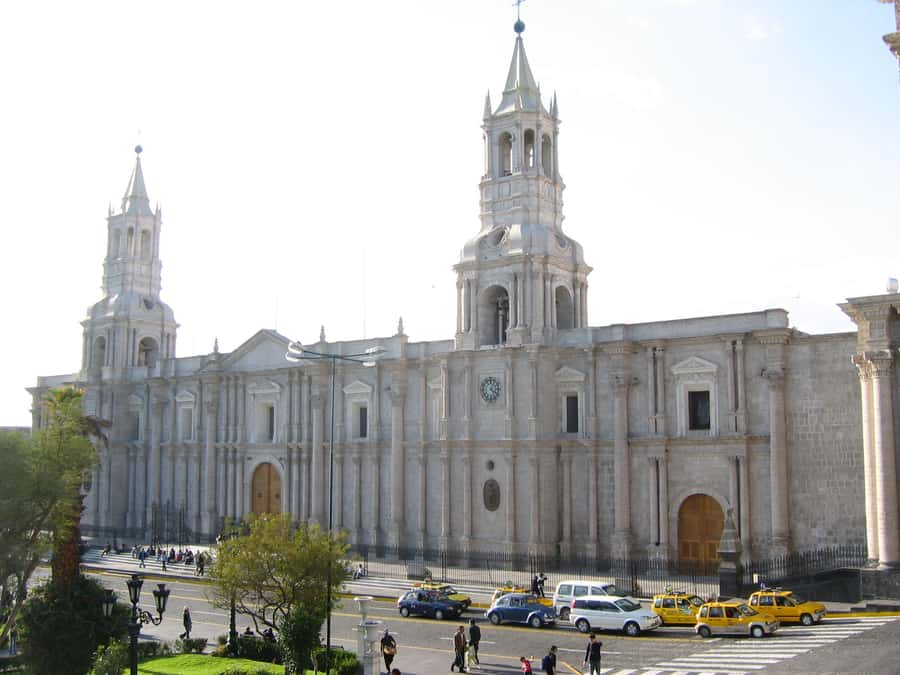
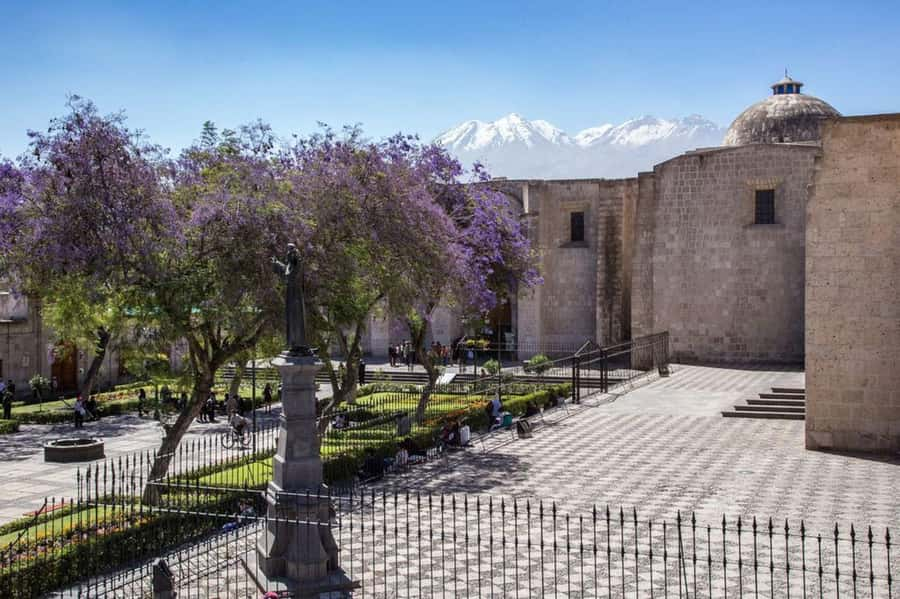
The route then takes you on a 15-minute walk to the Plaza de Armas, the city’s main meeting point. The square is framed by attractive arcades, with the Cathedral of Arequipa on one side and a bronze fountain in the center.
After the smaller lanes of San Lázaro and the residential tambos, the square feels broad and formal. This contrast is part of the tour’s strength. You see both sides of Arequipa: the compact old neighborhoods and the grand civic center.
The stop lasts about 30 minutes, including sightseeing, photographs, and a guided explanation. That gives you time to look at the cathedral and the surrounding portals without rushing straight through.
The square is also a useful orientation point for the rest of your stay. You can recognize it as the city’s central reference point, and the nearby historic streets make it easy to continue exploring later. The tour only offers a panoramic visit, so you should not expect a full interior tour of the cathedral.
Entering Santa Catalina’s 20,000 square meters
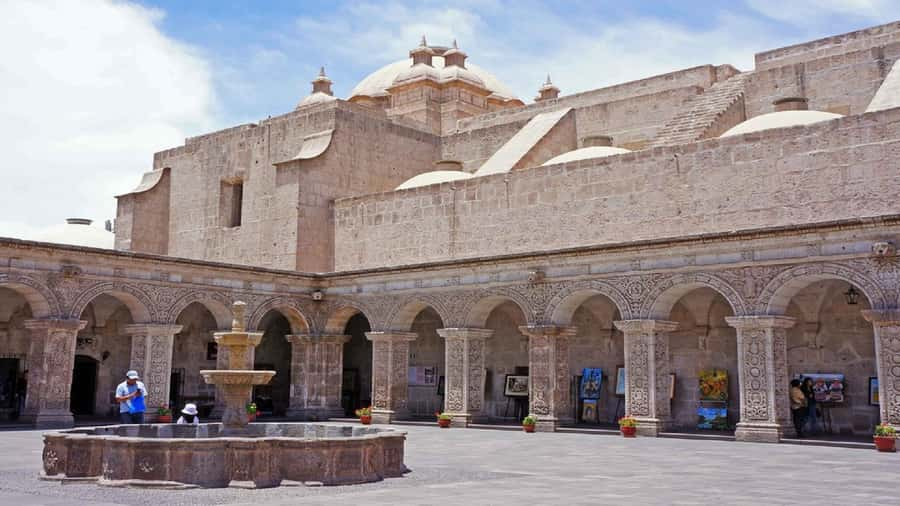
From the Plaza de Armas, it is only about a five-minute walk to Santa Catalina Monastery. This is the main attraction and the point where the tour spends its longest single period, about one hour.
Founded in 1579, the monastery covers around 20,000 square meters. The complex includes cloisters, patios, small squares, streets, a bell tower, and a church. It is large enough to feel like a small enclosed town rather than a single religious building.
The route through the monastery gives you a different kind of history from the earlier stops. San Lázaro and the tambos show a city shaped by settlement, trade, and work. Santa Catalina shows the private religious world created by wealthy women during the viceroyalty.
The story of Doña Maria de Guzman is central. She was a wealthy woman who donated her property and began life as a cloistered nun. Many women who entered the convent came from wealthy families. Cloistered nuns still live at Santa Catalina today.
That continuing religious use is important. It keeps the monastery from feeling like a shell built only for sightseeing. At the same time, you should remember that the tour provides a guided visit rather than unlimited time to explore on your own.
Patios, red walls, and the Patio del Silencio
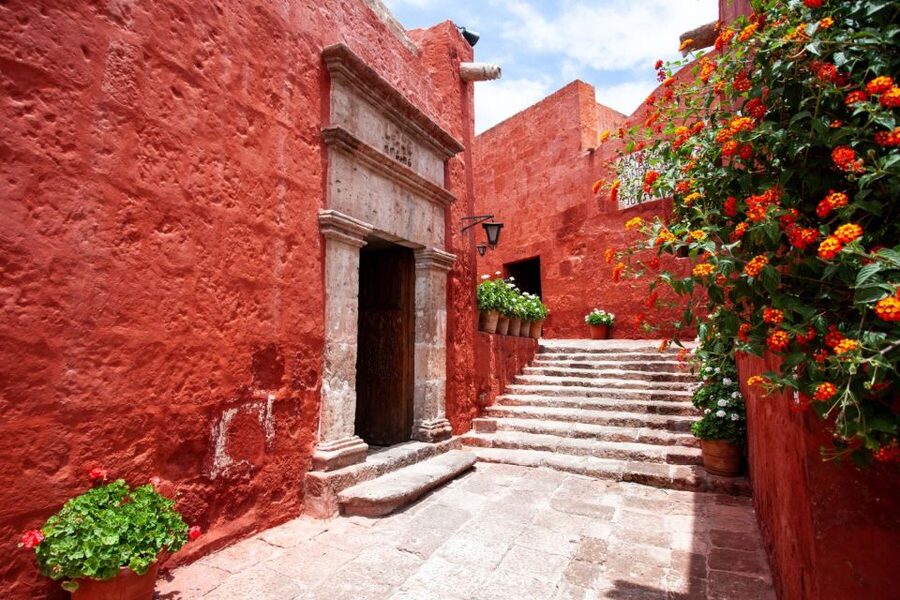
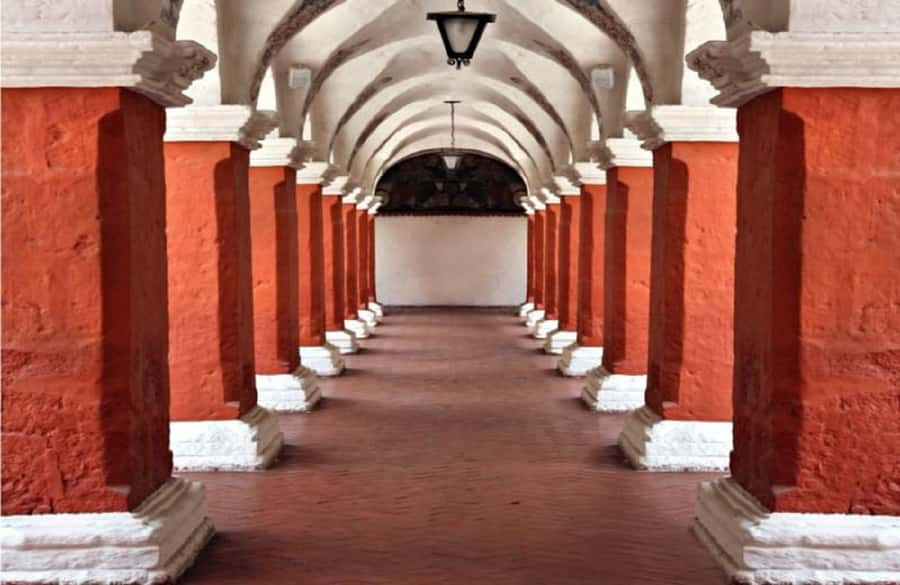
Santa Catalina is known for its ashlar streets and sections painted in natural red tones. The color change gives the complex a strong character and makes the one-hour visit visually varied.
One especially meaningful area is the Patio del Silencio. This was where the nuns met to pray and read the Bible in silence. The name and purpose offer a quiet counterpoint to the public spaces of the Plaza de Armas.
You will have time to take photographs, but keep the guide’s pace in mind. The monastery contains many areas, and an hour can pass quickly. If you are interested in religious architecture, courtyards, or photography, this is the section where you may wish for more time.
The monastery is a UNESCO World Heritage Site, as part of Arequipa’s historic center. Its scale, colors, lanes, and religious history make it a strong final stop. It also explains why the tour is more useful than a simple walk around the central square. You see the city’s grand history from the outside, then enter one of its most distinctive enclosed spaces.
Guides and the human side of the experience
The guide can make or break a walking tour, particularly one with several short stops. The strongest feedback here centers on personal qualities: Gisela was described as cordial and precise, while Milei was praised for being empathetic, kind, and able to answer questions. Sline was also singled out for being friendly and explaining everything clearly.
Those details matter because the route includes places that need interpretation. A white wall is attractive on its own, but the guide explains why sillar matters. A communal entrance at Tambo La Cabezona becomes more meaningful once you know about its early mill. A quiet patio at Santa Catalina gains purpose when you learn how the nuns used it.
English and Spanish guiding is available. The precise guide assigned to you is confirmed after booking, so you should not assume one particular guide will lead every departure.
Price, pickup, and what the $35 buys you
The advertised price is $35 per person. That is reasonable for a three-hour guided route covering several historic areas and the Santa Catalina complex, provided you choose the option that includes the entrance fee and the services you need.
The important detail is that pickup, drop-off, and the monastery entrance can be optional. If you stay in the Historic Center and select hotel transport, pickup and return to your hotel are available when access is suitable. If your accommodation is outside the historic center, you need to meet at Calle Zela 301, beside Santa Catalina, at the Hotel Mirador del Monasterio.
If entrance is not included, you pay locally. The listed cost is 45 PEN for adults and 25 PEN for people aged 7 to 21. Children aged 4 and younger are complimentary. Add that cost when comparing the tour with arranging the walk yourself.
Food and drinks are not included. Bring water and a small snack if you need one, though the tour is short enough that most people can manage without a meal break.
Practical advice for a smoother walk
Wear comfortable clothes and shoes. The tour includes several walking sections, and historic streets are not always as easy underfoot as modern sidewalks.
Sunglasses, sunscreen, and a hat are sensible additions. Insect repellent is also listed as something to bring. The itinerary includes outdoor walking and photo stops, so sun protection is more useful than it may first appear.
Santa Catalina closes on December 25 and Good Friday. The order of the stops can also change, so treat the sequence as a guide rather than a guarantee.
The tour offers free cancellation up to 24 hours before departure and a reserve-now, pay-later option. Those policies are useful if your Peru plans are still shifting, but confirm the exact starting time after booking because departures vary.
Who should book this Arequipa tour?
I would recommend it to first-time visitors who want a clear introduction to Arequipa in half a day. It suits anyone who likes architecture, religious history, photography, and guided context more than a purely independent walk.
It is also a good fit if you are staying in the Historic Center and want hotel pickup without arranging several separate visits. Families with older children can benefit from the variety of stops, though the walking and historic surfaces may be tiring for very young children.
I would think twice if you prefer a slow pace, long periods of independent exploration, or full access to every site. The three-hour schedule is efficient, but the monastery alone could reward more time. Anyone using a wheelchair should not book this activity because it is specifically listed as unsuitable.
Should you book it?
Book this tour if you want the essential Arequipa story in one compact route: volcanic sillar, old neighborhoods, colonial tambos, the Plaza de Armas, and Santa Catalina Monastery. The guides’ warmth and clear explanations are a major reason to choose it over simply walking between the sights alone.
Before paying, confirm three things: if entrance to Santa Catalina is included, if hotel pickup applies to your address, and which meeting point you will use. With those details settled, the tour offers good value and a useful first look at Arequipa’s Historic Center.
FAQ
How long does the Arequipa walking tour last?
The tour lasts three hours, including transport, walking sections, guided visits, and the visit to Santa Catalina Monastery.
What languages are available?
The tour is available with a live guide in English or Spanish.
Is hotel pickup included?
Hotel pickup and drop-off are optional and available for hotels located within Arequipa’s Historic Center. If your hotel is outside the center, you should meet at Calle Zela 301 beside Santa Catalina, at the Hotel Mirador del Monasterio.
Where does the tour meet if hotel pickup is not included?
The meeting point is Calle Zela 301 in the Historic Center, next to the Convent of Santa Catalina at the Hotel Mirador del Monasterio.
How much is the Santa Catalina entrance fee if it is not included?
The entrance fee is 45 PEN for adults and 25 PEN for people aged 7 to 21. Children aged 4 and younger are complimentary.
What should I bring?
Bring sunglasses, sunscreen, insect repellent, comfortable clothes, and a hat.
Is the tour suitable for wheelchair users?
No. The activity is not suitable for wheelchair users.
Just added around the world
- No.1 Chiang Mai: 3-Hour Monk Trail Hike to Wat Doi Suthep & Palad★ 5.0 · 11 reviews
- Chennai City Highlights – Government Museum & Temple Discovery★ 4.0 · 7 reviews
- South India Tour- Temple Architecture and Backwaters★ 5.0 · 7 reviews
- 8 Days Private South India Temple Tour with 4 Star Luxury Hotels★ 5.0 · 3 reviews
- Chania Private Tour: Monastery, Scenic Gorge & Mountain Views★ 5.0 · 12 reviews
- 2-Day Private Tour of Leshan Grand Buddha and Emei Shan including Monastery Stay★ 4.5 · 8 reviews
- Half-Day Trip to Arkadi Monastery and Melidoni Cave★ 4.5 · 4 reviews
- Monastery, Elafonissi and Winery Tour from Chania★ 5.0 · 8 reviews
Temple Walking Tours, compared.

City Highlights Temple and Market Walking Tour
Read our review →
Grand Palace and Wat Phra Kaew Guided Walking Tour
Read our review →
Asakusa Walking Tour with Sensoji Temple Visit
Read our review →
3 Hour Old City and Temples Guided Walking Tour
Read our review →
Kyoto Arashiyama Walking Tour: Bamboo, Monkeys, Gardens & Secrets
Read our review →
Belém Walking Tour with Jerónimos Monastery Ticket
Read our review →Browse the lists this tour appears in