
Review · ASWAN
Abu Simpel Temple
Leave before sunrise, meet ancient Egypt by midmorning. This long day trip from Aswan takes you by air-conditioned car to Abu Simbel, where Ramses II’s huge rock temple and Queen Nefertari’s smaller temple await. I like the hotel pickup and drop-off and the chance to have a private guide explain the temples instead of simply walking through them alone.
The clean, new minivan and punctual pickup have been major strengths, and the drive has been described as smooth and professionally handled. The main concern is time at the site: the schedule may leave you with only about two hours for both temples, which can feel rushed for a place of this scale.
Key points to know before booking
- A 4:00 am departure: You leave Aswan very early to cover the roughly three-and-a-half-hour drive each way.
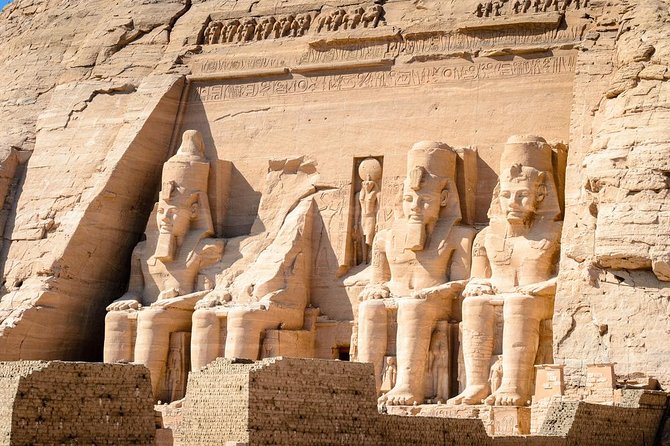
- Two major temples in one visit: The outing includes the Temple of Ramses II and the Temple of Queen Nefertari, also called the Hathor Temple.
- Private, air-conditioned transport: Pickup and return to your Aswan hotel are included in a private car, with a small-group format described in the tour details.
- A guide is included: The tour provides a private guide, and French-language guiding has been available.
- Entrance fees cost extra: The $95 price covers transport, guide service, and hotel transfers, but not admission tickets.
- Free cancellation up to 24 hours ahead: Changes or cancellations made less than 24 hours before departure are not refunded.
Why Abu Simbel deserves the long road from Aswan
Abu Simbel is not a quick side trip. From Aswan, the drive takes about three and a half hours in each direction, so the day is mostly a major road journey with a concentrated visit at the end.
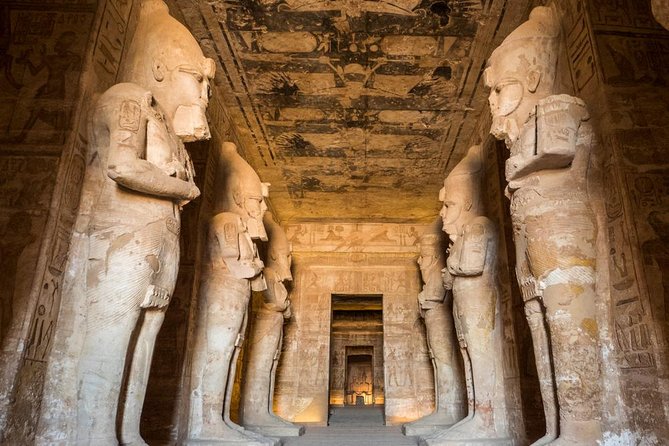
Still, the destination earns its place on an Egypt itinerary. The two temples were carved into rock under Ramses II and Queen Nefertari during Egypt’s New Kingdom. They are not small neighborhood monuments. Their scale, setting, and decoration make them different from the temples around Aswan.
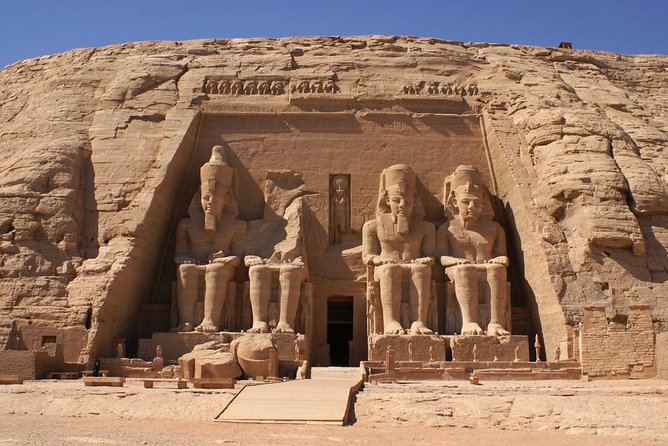
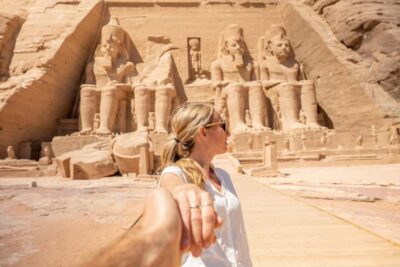
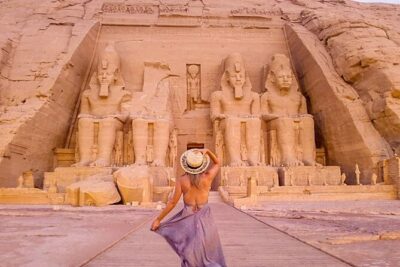
The larger temple belongs to Ramses II. It was dedicated to the gods Ptah, Re-Her-Akhtey, and Amun-Re, along with Ramses himself. It is also known as the Sun Temple of Ramses II.
The second temple was built for Queen Nefertari and is also called the Temple of Hathor. Seeing both matters. The first temple shows the king’s political and religious power, while the second gives the visit a different focus and honors the queen alongside Hathor.
The temples also carry a modern story. Egypt’s government worked with UNESCO to save them from flooding. That rescue effort is part of what makes Abu Simbel more than an ancient site. The monuments you see today survived because they were moved and preserved rather than left to disappear beneath rising water.
A few more temple visits around Aswan worth a look
- From Aswan: Abu Simbel Temple Day Trip with Hotel Pickup
★ 4.4 · 2,807 reviews - Private Day Tour to Abu Simbel Temples from Aswan
★ 4.5 · 507 reviews - Full Day tour to Abu simbel temples from aswan
★ 4.5 · 309 reviews
The 4:00 am pickup and the long drive
The day begins at 4:00 am with pickup from your hotel in Aswan. That early start is not a minor detail. You need to be comfortable waking before dawn and spending much of the day on the road.
Transport is provided in a private, air-conditioned car. Some bookings may use a clean minivan, and the available feedback describes a new vehicle arriving on time. The driver has also been praised for professional conduct and for offering some information during the drive.
Air conditioning matters here. You are crossing a dry region, and a long ride in a cool vehicle is far easier than trying to arrange transport on your own. Hotel pickup also removes the need to find a taxi in the dark or work out a meeting point before sunrise.
The tour is described as a private activity in which only your group participates, while the overview also refers to a small-group tour. Because those descriptions do not fully match, I would confirm the exact vehicle and group size before paying if that detail matters to you.
The drive itself is functional rather than scenic in the sightseeing sense. Its purpose is to get you safely to the temples. You should think of the outing as a full-day transfer with guided sightseeing, not as a relaxed short excursion.
Arriving at the Temple of Ramses II
The first major stop is the Temple of Ramses II, the larger and more imposing of the two monuments. The temple’s purpose was both religious and political. Ramses II connected himself with major gods and placed his own image at the center of the complex.
Your guide is included, which gives the visit more shape than simply looking at enormous statues and decorated walls. A good guide can help you understand why the temple was built, who it honored, and how the separate gods fit into the religious program.
The size of the temple is the first thing you notice. The monument was designed to impress, and it still does. This is a place where a guide’s explanation can help you move past the obvious scale and understand the message behind it.
You may also want quiet time to look carefully at the carvings. That is where the schedule becomes important. One account describes having only about two hours for both the Ramses temple and Nefertari’s temple. Two hours can be enough for a clear first visit, but it may not satisfy you if you want to study the reliefs, take photographs, and listen to a detailed explanation.
I would keep your expectations realistic. You are getting access to the two main temples, but not an unhurried day at the site. If Abu Simbel is one of the main reasons you came to Egypt, ask the operator how much time is fixed for the monuments before booking.
The Temple of Queen Nefertari and Hathor
The Temple of Queen Nefertari is the second principal stop. It is also known as the Hathor Temple, linking the queen with the goddess Hathor.
This temple is smaller than Ramses II’s monument, but smaller does not mean unimportant. Visiting both gives you a fuller picture of Abu Simbel and lets you compare two related but distinct expressions of royal power.
You can expect the guide to cover the temple’s dedication and its connection to Nefertari and Hathor. A French-speaking guide has been available for at least some visits, so French-language service may be possible. Since a specific guide name is not provided, confirm language needs in advance.
The main practical issue remains time. If the total stop lasts around two hours, you will need to divide that between both temples. I would enter the first temple with a simple plan: listen to the key explanation, take a few minutes for your own look, then keep enough time for Nefertari’s temple.
Do not assume the second temple is merely an optional add-on. It is included in the advertised route and is one of the reasons the trip feels worthwhile after such a long drive.
Same place, a different morning at the gates:
- From Aswan: Private Guided Tour of Philae Temple with Entry
★ 4.6 · 239 reviews - Full Day Tour to Abu Simbel Temples from Aswan
★ 4.5 · 218 reviews - Aswan: Philae Temple Guided Half-Day Group Tour
★ 4.5 · 202 reviews - Aswan: Philae Temple Sound & Light Show with Entrance Fees
★ 4.1 · 151 reviews
The return to Aswan and the real value of the price
The cost is $95 per person. Included are private air-conditioned transfers, a private guide, and pickup and drop-off at your hotel in Aswan. Entrance fees, tips, and extra tours are not included.
That makes the price easier to judge. You are paying mainly for transport and organization. The distance is substantial, the departure is very early, and a private vehicle avoids the work of arranging a separate driver and guide.
The price is less attractive if you expect admission tickets, meals, or additional sightseeing to be covered. Those costs are separate, so include them in your daily budget. Tipping is also not included.
For two people or a small party, the arrangement may offer good value because the vehicle and guide are organized around your group. Group discounts are offered, though the amount is not specified. Ask for the exact discounted price rather than assuming it applies automatically.
The return drive brings you back to your Aswan hotel after the temple visit. The overall duration is about 11 hours, so this is not a light morning outing. It uses most of a day, but it also avoids the need to change hotels or arrange an overnight stay near Abu Simbel.
What the organization does well
The strongest part of this experience is its basic organization. Pickup is offered directly from your hotel, the departure time is clear, and the return transfer is included.
A punctual arrival matters at 4:00 am. Starting late would reduce your already limited time at the temples or make the return even later. The available experiences describe the vehicle arriving on time, with a smooth ride and a professional driver.
The vehicle quality also matters more than it might on a short city tour. You will spend about seven hours on the road in total. A clean, air-conditioned car or minivan can make the difference between a tiring but manageable day and a miserable one.
The guide is another useful inclusion. Abu Simbel is visually powerful, but its story is easier to follow when someone explains the dedication of each temple, the role of Ramses II and Nefertari, and the modern rescue from flooding.
The tour operates in all weather conditions, so dress for the conditions on the day. Comfortable clothing is sensible, and you should be ready for a very early start and a long day outside the vehicle.
Where this tour may fall short
The main weakness is the balance between driving time and time at Abu Simbel. You spend roughly seven hours on the road for a visit that may allow only about two hours at the temples.
That ratio will not bother everyone. If you want to see Abu Simbel and have limited time in Aswan, the trip solves a practical problem. If you prefer slow sightseeing, detailed photography, or long conversations with a guide, the schedule may feel too tight.
There is also a small uncertainty around group size. The experience is described as private, but the overview uses the phrase small group. That may simply reflect how the operator presents the service, but I would ask for clarification.
Entrance fees are excluded, and the listing does not give their amount. You should confirm the current admission cost before setting your final budget. The same applies to the exact language of the guide if you need French service.
The tour does not include extra stops or optional activities. That can be a benefit if you want a direct trip, but it means you should not expect a flexible sightseeing day around Aswan.
Who should book this Abu Simbel day trip?
I would recommend it to you if you are staying in Aswan, want a direct visit to both Abu Simbel temples, and prefer having transport and a guide arranged in advance.
It suits people who value convenience more than a slow pace. The hotel pickup, private air-conditioned vehicle, and return transfer remove several practical chores from a difficult day trip.
It is also a sensible choice if you are traveling with family or a small party and want your own transport. Group discounts may improve the price, but you should request the exact terms.
I would hesitate if your main goal is to study every carving or spend many hours at the site. In that case, ask about a longer visit or a different schedule before booking. The temples deserve attention, and the drive leaves little room for delays.
At $95, the tour is a reasonable transport-and-guide package, not an all-inclusive day. Add admission fees and a tip, then decide if the convenience matches your budget.
Final decision: is the Abu Simbel tour worth it?
Yes, for most visitors with limited time in Aswan, this is a practical way to reach one of Egypt’s most important monuments. The reliable pickup, clean vehicle, professional driver, and included guide are the strongest reasons to choose it.
The catch is simple: you must accept the 4:00 am start, the long road journey, and the possibility of only about two hours at the temples. Book it if seeing Abu Simbel matters more to you than having a leisurely day. Before confirming, ask about the exact group size, guide language, time at the site, and current entrance fees.
Free cancellation is available up to 24 hours before the start time. After that point, the payment is not refunded, and late changes are not accepted.
FAQ
What time does the Abu Simbel tour start?
Pickup begins at 4:00 am from your hotel in Aswan.
How long does the tour last?
The experience lasts approximately 11 hours.
How long is the drive from Aswan to Abu Simbel?
The drive takes about three and a half hours each way.
Which temples are included?
The visit includes the Temple of Ramses II and the Temple of Queen Nefertari, also called the Hathor Temple.
Is hotel pickup and drop-off included?
Yes. Pickup and drop-off from your hotel in Aswan are included.
Are entrance fees included in the $95 price?
No. Entrance fees are not included. Tips and extra tours are also separate.
Can I cancel for a full refund?
Yes, if you cancel at least 24 hours before the experience start time. Cancellations made less than 24 hours in advance are not refunded.
Just added around Aswan
- Philae Temple and Aswan High-Dam Half-day tour★ 5.0 · 49 reviews
- Sound and Light show at Philae Temple in Aswan★ 5.0 · 5 reviews
- Aswan Philae Temple, Obelisk, and High Dam Private Tour★ 4.5 · 17 reviews
- Abu Simbel Temples from Aswan★ 4.5 · 10 reviews
- Tour to Abu Simbel Temples from Aswan★ 4.5 · 7 reviews
- Visit Abu Simbel temple from Aswan by private A/C vehicle★ 5.0 · 4 reviews
- Temple of Edfu★ 4.0 · 11 reviews
- Tour To Abu Simbel Temples By Road★ 5.0 · 4 reviews
Aswan Temple Tours, compared.
Private Day Tour to Abu Simbel Temples from Aswan
Read our review →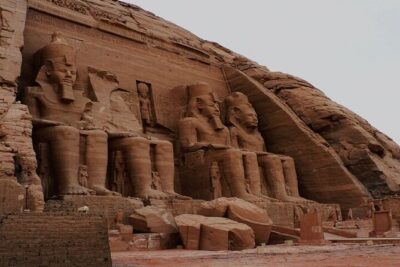
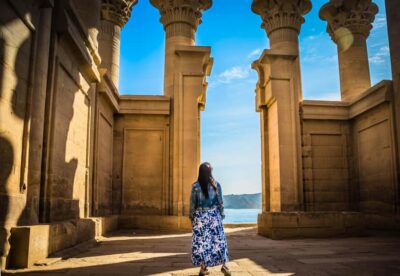
Private Guided Tour of Philae Temple with Entry
Read our review →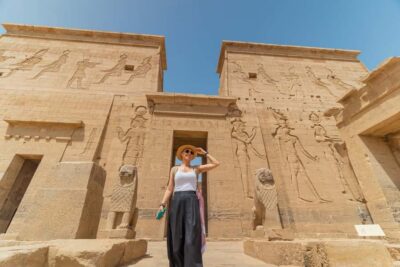
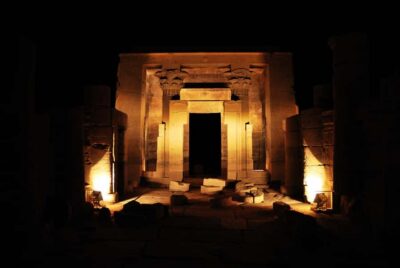
Philae Temple Sound & Light Show with Entrance Fees
Read our review →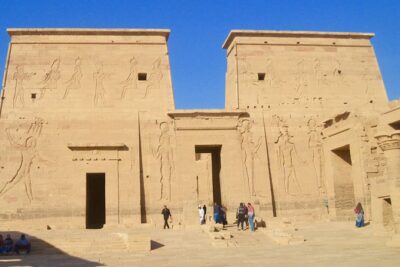
Aswan Day Tour Visiting Philae Temple, Unfinished Obelisk and High Dam in Aswan
Read our review →Browse the lists this tour appears in