
Review · CAIRO
A Week In Egypt: Pyramids, Felucca Cruise And Ancient Temples
Ancient Egypt comes at you fast. This seven-day trip links Cairo, Aswan, Kom Ombo, Edfu, and Luxor with domestic flights, guided sightseeing, and a traditional Nile felucca cruise. I especially like the excellent range of sights, from the Pyramids of Giza to the Valley of the Kings, and the chance to sleep beside the Nile rather than simply view it from a road. The main drawback is the pace: several days are long, with flights, road transfers, and temple visits packed close together.
I also like that the tour handles the awkward pieces, including airport transfers, domestic flights, guides, and transport between scattered monuments. Guide names that have earned praise include Essam, who has customized trips for returning visitors, and Super Mo, who is described as fun, reassuring, and well informed. You should still expect a physically active week, with heat, walking, early starts, and limited downtime.
Key points to know before booking
- The trip covers Egypt’s essential first-time sights, including Giza, Saqqara, the Egyptian Museum, Karnak, Luxor Temple, and the Valley of the Kings.
- The two-night felucca portion is simple and atmospheric, with meals aboard and overnight stops along the Nile banks.
- Domestic flights save enormous time, replacing long overland journeys between Cairo, Aswan, and Luxor.
- The group is limited to 16 people, a useful middle ground between a private tour and a large coach group.
- The $1,400 price includes major transport and meals, but not every meal or drink, so you should confirm exactly what is covered.
- The schedule suits active sightseers, not anyone hoping for a slow resort-style holiday.
A fast-paced week that connects the dots
Egypt is not a compact sightseeing destination. Cairo sits in the north, while Aswan and Luxor are far to the south. This tour works because it uses domestic flights to connect the major zones, then combines guided visits with road transfers and a felucca cruise.
I like the basic design. You see the famous monuments, but you also get quieter moments on the river. The felucca is not a luxury cruise ship. It is a traditional sailing boat with simple comforts, shared meals, and a closer connection to the Nile. That contrast gives the week some welcome variety.
The tradeoff is time. You are not spending several days in each city. Instead, you move quickly from one major site to the next. That makes this a strong introduction to Egypt, but a less suitable choice if you want long museum visits, relaxed café time, or unplanned wandering.
Other temples and shrines people visit around Cairo:
- Cairo Old Coptic Church and Monastery St Simon Cave Church
★ 5.0 · 66 reviews - Luxury Cruise from Aswan to Luxor 4 Days with Abu Simble Temple
★ 5.0 · 60 reviews - Giza Pyramids and Sphinx with Camel ride & Mummification Temple
★ 5.0 · 38 reviews
Arrival in Cairo and a gentle first evening
Your representative from Egypt Best Vacations meets you at Cairo International Airport and assists with arrival procedures and the transfer to your hotel. The first day is intentionally light, with about an hour assigned to the airport welcome and hotel transfer.
That is sensible. Cairo can be noisy and tiring after a long flight, so a free evening gives you time to settle in. The exact hotel is not specified here, so you should ask for its name and location before booking if neighborhood choice matters to you.
The airport assistance is useful, especially if this is your first visit to Egypt. You are not left to work out the arrival process and onward transfer alone. The tour also offers pickup and mobile tickets, which makes the first meeting easier to manage.
Giza and Saqqara: two very different pyramid experiences
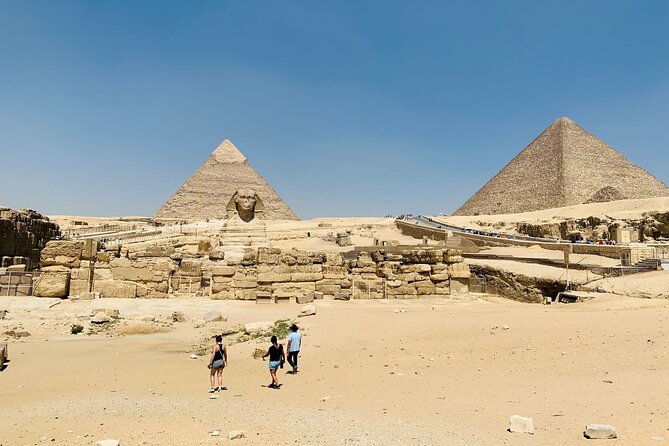
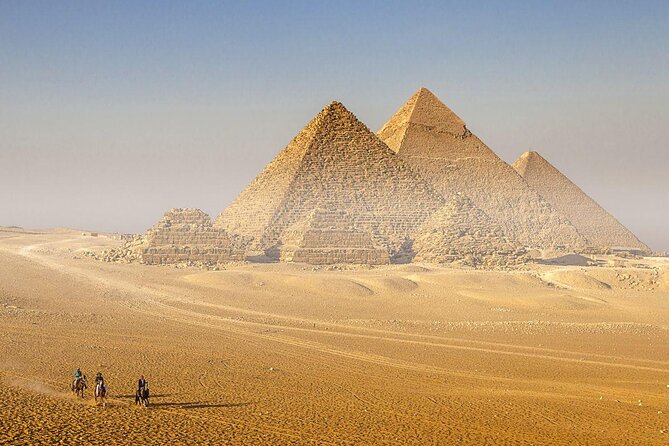
The second day begins at the Giza Plateau, where you see the Great Pyramids of Khufu, Khafre, and Menkaure, along with the Sphinx. The visit lasts about four hours, enough for a guided introduction to the monuments and their purpose.
The Great Pyramid of Khufu is the only surviving wonder of the ancient world. The experience is not only about photographs from the plateau. The program also offers the chance to enter the pyramid, an important detail to confirm when you receive your final arrangements because interior access can depend on ticket availability and site rules.
Your guide explains how the pyramids were built and why they were built. That context matters. Without it, Giza can become a quick series of viewpoints and souvenir stalls. With a good guide, the stones become part of a much larger story about royal power, labor, burial beliefs, and the organization of ancient Egypt.
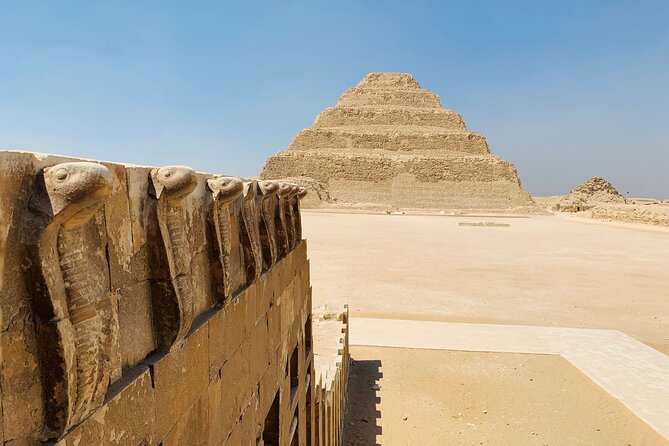
After Giza, you continue to Saqqara, about 20 kilometers south of the plateau. Saqqara served as the cemetery for Memphis, the first capital of a united Egypt, and stretches across a huge area. Its main prize here is the Step Pyramid of Djoser, often described as the first pyramid in human history.
I like this pairing because Giza gives you the famous image, while Saqqara shows an earlier stage in pyramid design. The contrast helps you understand that Egyptian architecture developed over time. The Saqqara visit lasts about three hours, followed by a transfer back to your hotel.
Aswan’s dam, Philae, and the unfinished obelisk
Day three begins with a transfer to Cairo Airport and a domestic flight to Aswan. Once you arrive, you meet your guide outside the terminal and visit the Aswan High Dam.
The dam is a major twentieth-century engineering project built to control the Nile’s floods and store water. A visit here adds modern Egyptian history to a week otherwise focused on pharaohs. Ancient Egypt depended on the river’s annual rise, but floods could destroy crops and low water could bring famine. The dam changed that cycle, while also transforming parts of the region.
Next comes Philae Temple, reached by a short boat ride because the temple sits on an island. Dedicated chiefly to Isis, Philae is often called the Pearl of Egypt. The island setting makes this one of the more memorable temple visits, and the boat ride adds a pleasant break from vehicles and stone courtyards.
The temple’s connection to the cult of Isis gives the visit a strong mythic thread. Isis was linked with Osiris, and her image was carried to nearby Bigah at regular intervals so the goddess could symbolically reunite with her husband. You do not need to memorize every name to appreciate the setting, but the guide’s explanation will help the reliefs make sense.
The final Aswan stop is the Unfinished Obelisk in an ancient granite quarry. The enormous stone remains partly attached to the bedrock, showing how workers shaped obelisks before lifting and transporting them. This is a good place to think about ancient engineering in practical terms. The monument was never completed, but that failure gives you a rare look at the working process.
A few more temple visits around Cairo worth a look
- Private Giza pyramid,sphinx, Mummification temple& inside pyramid
★ 5.0 · 32 reviews - St Simon Monastery ,Cave Church , Garbage City and Coptic Cairo Private day tour
★ 5.0 · 29 reviews - Tours Giza pyramidS,sphinx,Mummification temple,Inside 3rdPyramid
★ 5.0 · 24 reviews - Overnight Tour Moses Mountain St. Catherine Monastery from Cairo
★ 5.0 · 21 reviews
The felucca night: simple, quiet, and worth understanding
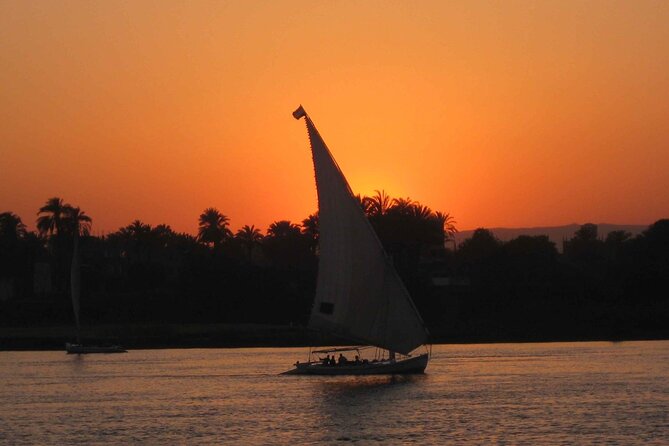
After the quarry, you board the felucca and sail on the Nile. Lunch and dinner are provided aboard, and the boat stops along the bank for a peaceful night.
This is the most unusual part of the week, but also the part that requires realistic expectations. A felucca is simple, not a floating hotel. The experience praised by the tour’s customers involved a three-day, two-night cruise from Aswan toward Kom Ombo, with kind Nubian sailors, basic but comfortable conditions, and shared food.
That description is useful preparation. You should choose the felucca for the open-air setting, the slow river views, and the chance to sleep near the water, not for private cabins or polished shipboard service. The river can provide a calm pause after the busy Cairo sightseeing, though the boat’s basic nature will not suit everyone.
The schedule places you on the river for one night before disembarkation the next morning. Ask ahead about sleeping arrangements, bathing facilities, and what you should pack for the overnight stop, since those details are not specified.
Kom Ombo and Edfu reveal Egypt’s temple variety
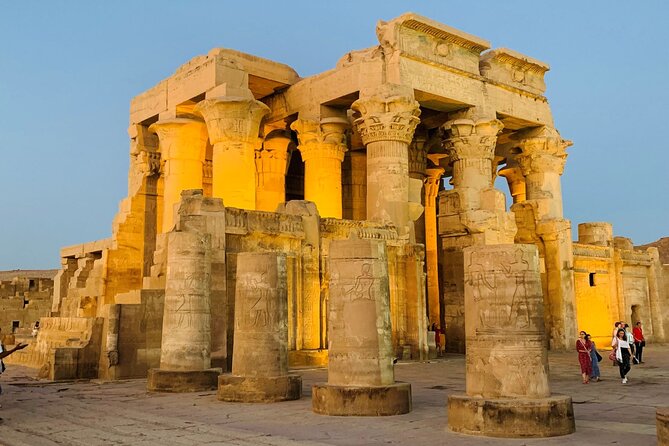
After breakfast, you disembark and drive to Kom Ombo. The temple here is unusual because it is dedicated to two sets of gods. One side honors Sobek, the crocodile deity, along with Hathor and Khonsu. The other honors Horus the Elder, his consort, and their son.
The nearby Crocodile Museum adds a small but distinctive detail. Kom Ombo is not just another columned temple. Its twin design reflects the way two religious traditions shared one complex, and the crocodile connection gives the visit a character that differs from the grand sanctuaries in Luxor.
The next stop is Edfu, home to the Temple of Horus. This temple is unusually intact, with extensive reliefs and hieroglyphs on the inside and outside walls. Two obelisks and the sacred lake are missing, but much of the structure remains.
I find Edfu especially valuable for first-time visitors because the building’s scale and preserved decoration make ancient temple planning easy to understand. You can see the gates, courtyards, columns, and inscribed walls as parts of one complete religious site rather than scattered ruins.
After Edfu, you drive to your hotel in Luxor. The day involves several hours of sightseeing and road travel, so it will feel full. Still, the combination of Kom Ombo and Edfu gives you two distinct temple experiences before the main Luxor visits.
The Valley of the Kings and Hatshepsut’s striking terrace
Day five is the big Luxor sightseeing day. You begin on the west bank with the Valley of the Kings, the burial ground of pharaohs from the 18th through 20th Dynasties, roughly 1550 to 1080 BCE.
The valley is known for royal tombs cut into the hills. The tour includes admission, but the exact tombs available to enter are not specified. You should check what the standard ticket covers, since some famous tombs may require an extra ticket.
A guide adds real value here. Tomb decorations are full of symbols, gods, and scenes from the afterlife. Without help, it is easy to see painted walls without understanding what you are looking at. The visit lasts about three hours, including the time needed to move between the site’s different areas.
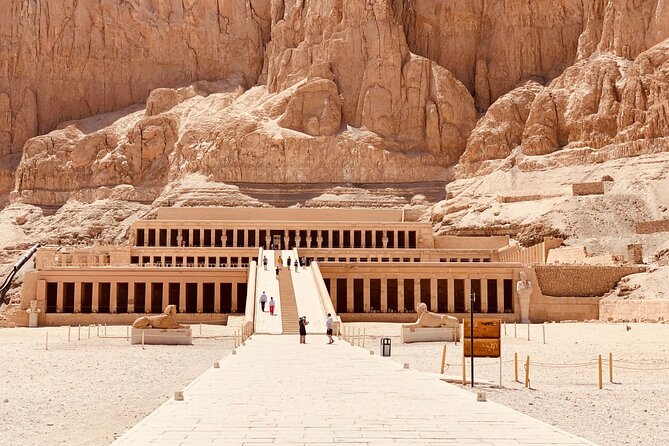
From the valley, you continue to the Temple of Hatshepsut at Deir el Bahari. Hatshepsut was a powerful female ruler who used monumental building projects to support her authority and present herself as a legitimate pharaoh. Her temple is set against the cliffs, with broad terraces that give it a very different shape from the enclosed temples farther south.
The monument was later abandoned and became a Christian convent, known as the Convent of the North. That later use is a reminder that Egyptian sites did not simply stop mattering after the pharaohs. They were reused, altered, and interpreted by new communities.
The final west-bank stop is the Colossi of Memnon, two huge statues that once guarded the approach to the mortuary temple of Amenhotep III. The larger temple has disappeared, probably after flooding and later stone reuse, leaving the statues as a dramatic fragment of a much bigger complex.
Karnak and Luxor Temple after lunch
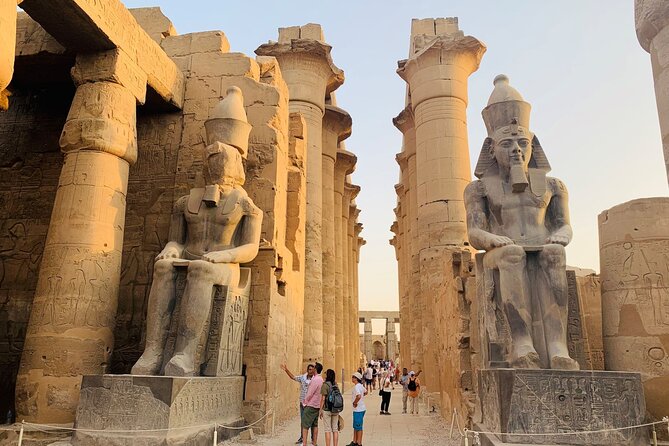
After lunch at a local restaurant, you visit Karnak Temple. This enormous complex grew for about 1,700 years and covers a vast area. It was the chief sanctuary of Amun-Re, and successive rulers added pylons, columns, shrines, and reliefs.
Allow yourself time to look upward and around. Karnak is not a single building with one clear plan. It is a collection of religious structures shaped by many rulers. That layered design can feel confusing, but it also makes the site one of Egypt’s best places for seeing how a sacred center changed over centuries.
The Great Hypostyle Hall is one of the obvious highlights, with its forest of massive columns. Your guide should help connect the hall, pylons, reliefs, and processional routes so you do not spend the whole visit simply walking from one large stone feature to another.
You finish at Luxor Temple, begun by Amenhotep III and expanded by Ramses II. Tutankhamun, Horemhab, and Alexander the Great also added inscriptions or buildings. That sequence makes Luxor Temple a useful companion to Karnak, with both places tied to the worship of Amun and to royal building programs.
After Luxor Temple, you transfer to Luxor Airport, fly back to Cairo, and continue to your Cairo hotel. This is one of the longest days of the week. The sightseeing is excellent, but the evening transfer and flight mean you should not expect a relaxed night.
Cairo’s museum, citadel, and market
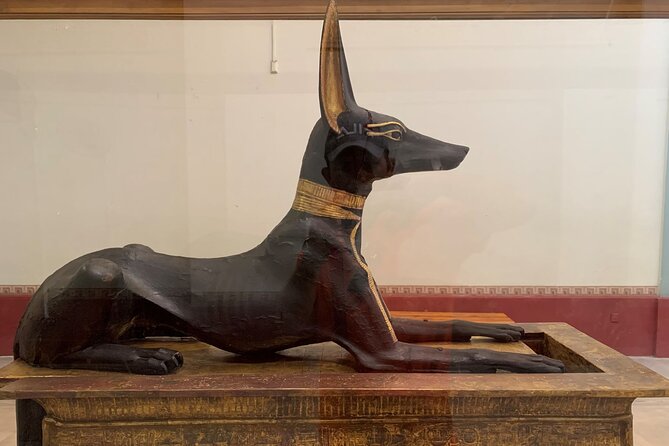
The final full sightseeing day begins at the Egyptian Museum in Cairo. The museum contains more than 120,000 objects from different periods of ancient Egyptian history and occupies a building designed by French architect Marcel Dourgnon, completed in 1902.
Three hours is enough for a guided overview, but not enough to examine every room. I recommend deciding what matters most to you before entering. The museum includes large statues, sarcophagi, coffins, and many smaller objects, so a guide’s selection can keep the visit from becoming tiring.
You then visit the Citadel of Saladin, built to defend Cairo against the Crusaders. It later served as the seat of government until the British colonial period in 1882. Built on a steep hill about 75 meters above eastern Cairo, the citadel also gives you a change of pace after the museum’s indoor galleries.
The final stop is Khan Al-Khalili, Cairo’s famous old market district. It is a maze of adjoining bazaar areas near Sayyidna Al-Hussein and Muski Street. You have about an hour and a half here before returning to the hotel.
I would treat this as a place for atmosphere and small purchases, not a quick shopping errand. Prices can require bargaining, and the lanes can feel crowded. Keep your plans simple, stay with the group’s meeting instructions, and allow yourself time to look around without feeling obliged to buy.
What the $1,400 price really covers
At $1,400 per person, this tour offers solid value if you want the major logistics handled. The price includes air-conditioned transport, domestic flights listed in the schedule, guided site visits, breakfast, lunch, and dinner where specified, plus airport transfers and the felucca portion.
The value is strongest in the flights. Moving between Cairo, Aswan, and Luxor independently can take substantial planning, while this package links the pieces into one route. You also avoid arranging separate guides and ground transport at nearly every major monument.
Do not read the price as fully all-inclusive. Meals and drinks not specifically included are extra, and the precise hotel category is not provided. Ask for a clear list of hotels, included meals, tomb tickets, and any optional pyramid interior access before paying.
The maximum group size is 16. That is small enough for a guide to answer questions, but not private. If you want total control over timing, a custom trip with someone such as Essam may be a better fit. For a standard first visit, the group format keeps costs and planning under control.
Who should book this Egyptian week?
I would recommend this trip to a first-time visitor who wants the major ancient sites without arranging domestic flights, airport pickups, guides, and river transport separately. It also suits visitors who enjoy full sightseeing days and prefer a clear plan to spontaneous travel.
You should be comfortable with moderate physical activity. The week includes walking at large archaeological sites, heat exposure, stairs or uneven ground in places, road transfers, airport changes, and an overnight felucca stay with basic comforts.
It is less suitable if you want long, quiet museum visits or several free days. The schedule is a highlights tour, and its success depends on accepting that some experiences will be brief.
Should you book it?
Book this tour if you want a practical first look at Egypt with the country’s biggest sights, a traditional Nile night, and the main transport arranged for you. The combination of Giza, Saqqara, Aswan, Kom Ombo, Edfu, Luxor, and Cairo gives you an unusually broad view in one week.
Before booking, confirm the hotel names, felucca sleeping arrangements, exact domestic flight times, meals, and which pyramid or tomb tickets are included. If those details suit you and you can handle the pace, the $1,400 cost is reasonable for the amount of ground covered. If you prefer flexibility, more rest, or higher comfort on the river, choose a slower and more customized plan instead.
FAQ
How long is the Egypt tour?
The tour lasts approximately seven days, from arrival at Cairo International Airport through departure on the final day.
Where does the tour begin?
It begins with pickup and assistance at Cairo International Airport in Cairo, Egypt.
What major sites are included?
The program includes the Pyramids of Giza, the Sphinx, Saqqara and the Step Pyramid of Djoser, the Aswan High Dam, Philae Temple, the Unfinished Obelisk, Kom Ombo, Edfu, the Valley of the Kings, Hatshepsut Temple, the Colossi of Memnon, Karnak Temple, Luxor Temple, the Egyptian Museum, the Citadel of Saladin, and Khan Al-Khalili.
Does the tour include domestic flights?
Yes. Domestic flights are included according to the scheduled route, including travel between Cairo, Aswan, Luxor, and Cairo.
Is a felucca cruise included?
Yes. The program includes a traditional felucca cruise from Aswan, with lunch and dinner aboard and an overnight stop on the Nile bank.
Are meals included?
Breakfast, lunch, and dinner are included where specified in the program. Meals and drinks not listed as included are extra.
How large is the group?
The maximum group size is 16 people.
What happens if I need to cancel?
You can receive a full refund if you cancel at least six full days before the experience begins. Cancellation two to six full days ahead may receive a 50 percent refund. Cancellations less than two full days before the start are not refunded. Poor weather or failure to meet the minimum group size may result in a different date, another experience, or a full refund.
Just added around Cairo
- half-day Saint Simon monastery and miracle of Moqqatam mountain★ 4.0 · 4 reviews
- Monastery St Simon with Cave Church and Garbage City Private Tour★ 5.0 · 15 reviews
- Tour to Giza Pyramids, Sphinx, Valley Temple, Camel Ride & Lunch★ 5.0 · 7 reviews
- St Simon Monastery ,Cave Church , Garbage City and Coptic Cairo Private day tour★ 5.0 · 29 reviews
- Pyramids of Giza & Sphinx & valley temple Tour with Egyptian lunch★ 5.0 · 7 reviews
- Pyramids of Giza & Sphinx & valley temple Tour with Camel Ride & Egyptian lunch★ 5.0 · 5 reviews
- Shared Tour To Abu Simbel Temple From Aswan★ 5.0 · 7 reviews
- Overnight Trip to Saint Catherine Monastery from Cairo★ 4.0 · 14 reviews
Cairo Temple Tours, compared.
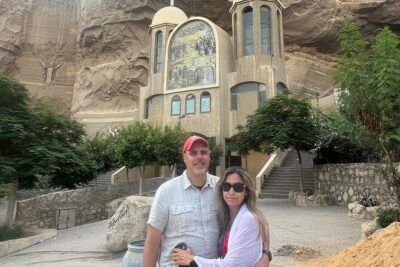
Cairo Old Coptic Church and Monastery St Simon Cave Church
Read our review →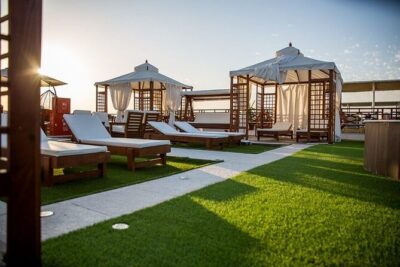
Luxury Cruise from Aswan to Luxor 4 Days with Abu Simble Temple
Read our review →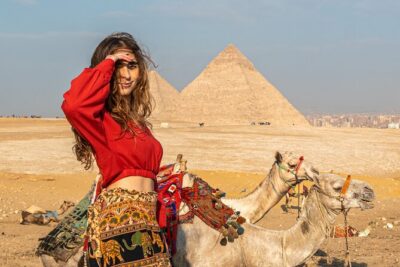
Giza Pyramids and Sphinx with Camel ride & Mummification Temple
Read our review →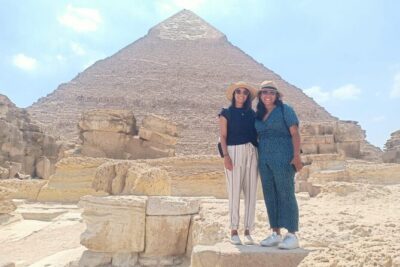
Private Giza pyramid,sphinx, Mummification temple& inside pyramid
Read our review →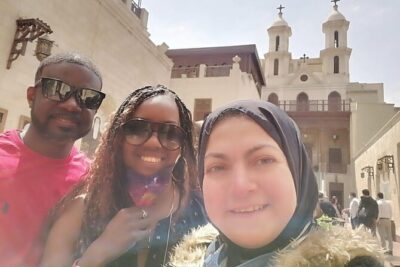
St Simon Monastery ,Cave Church , Garbage City and Coptic Cairo Private day tour
Read our review →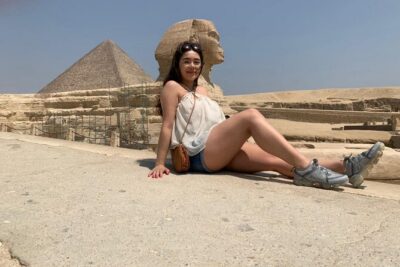
Tours Giza pyramidS,sphinx,Mummification temple,Inside 3rdPyramid
Read our review →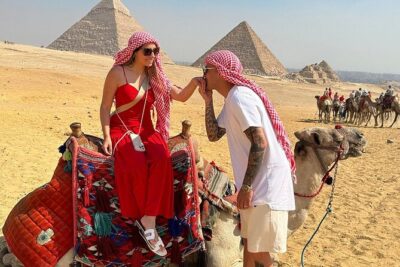
Overnight Tour Moses Mountain St. Catherine Monastery from Cairo
Read our review →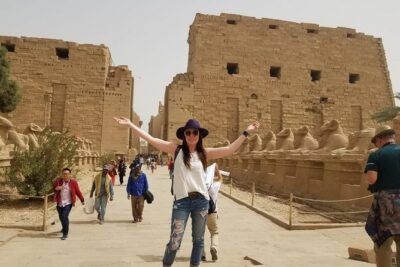
Luxor East and West Bank: Valley of the kings, Habu Temple,Karnak&Luxor Temples
Read our review →Browse the lists this tour appears in