
Review · SIEM REAP
Angkor Wat Small-Group Exploration with Expert Guide
Ancient stone, jungle roots, and unforgettable faces await. This half-day-to-full-day outing gives first-time visitors a smart introduction to Angkor Wat, Bayon, Angkor Thom, and Ta Prohm, with hotel pickup, an English-speaking guide, and transport included. The $18 price is unusually low for a guided visit of this scale.
I especially like the small-group format, capped at 12 people, and the thoughtful relief from Cambodia’s heat: chilled bottled water is provided, and some visitors also received cold towels after each temple. The guides, including Phy, Wat, Nak, San, Voath, and Sophy, are repeatedly praised for clear explanations, friendly care, and helpful photos.
The main catch is that the $37 one-day Angkor National Park pass is extra, as are meals and tips. The temples also demand plenty of walking, stairs, and time outdoors, so this is not a soft sightseeing ride. A stop at a park restaurant can also cost more than lunch in Siem Reap.
Key Points to Know Before You Go
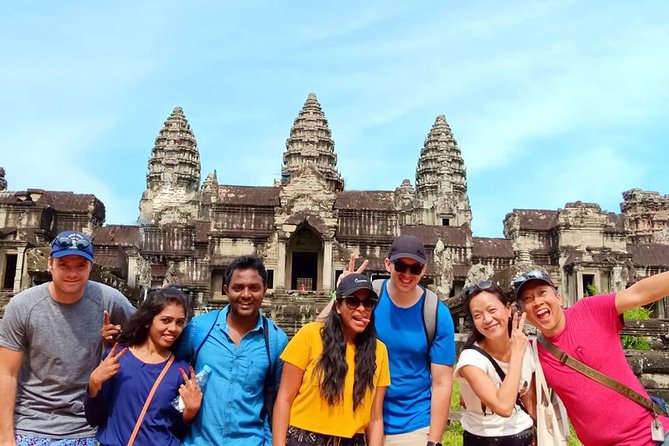
- Angkor Wat, Bayon, and Ta Prohm form the core visit: You get the three most famous temple sites, plus Angkor Thom, in one well-used route.
- The small group matters: With no more than 12 people, you have more room to ask questions than on a large coach tour.
- Transport fits the group size: One or two people travel by tuk-tuk, while groups of three or more use a minivan.
- The guide adds real value: Guides such as San, Phy, Wat, Nak, and Voath explain carvings, symbolism, royal history, and practical details on the ground.
- Expect a physically active day: Stairs, uneven surfaces, heat, and long temple walks call for moderate fitness.
- Budget beyond the advertised fare: Add the national park ticket, lunch, optional snacks, and tips before deciding on the total cost.
Why This $18 Angkor Tour Offers Good Value
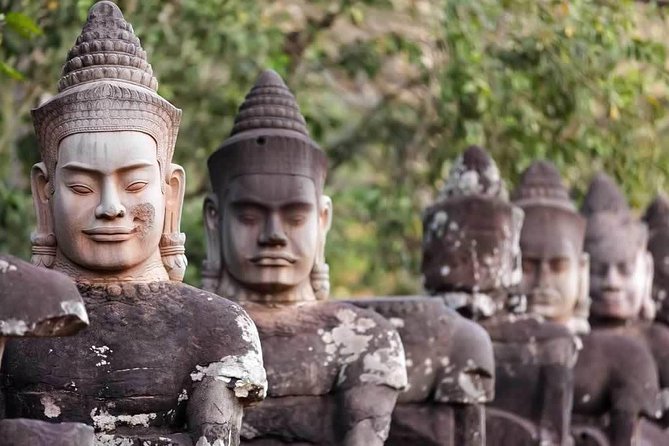
At $18 per person, this tour is priced more like basic transport than a guided cultural day. The fee covers hotel pickup and drop-off, an English-speaking guide, transport, and cold bottled water. That combination gives you a useful base for exploring one of Southeast Asia’s largest temple areas without having to negotiate transport at every stop.
The low price does not include the one-day Angkor National Park admission, which costs $37 per person. That ticket is a major part of your total budget, so you should count the tour and park entry together. Food is also separate. The guide normally stops at a restaurant inside the park around lunchtime, and that choice may cost more than a meal back in town.
Still, the value is strong if this is your first visit. Angkor is spread over a large area, and the temples can be confusing without someone explaining what you are seeing. A good guide also helps you use your limited time well, points out details you might walk past, and handles the route while you focus on the ruins.
The transport arrangement is simple. One or two people generally ride in a tuk-tuk. Groups of three or more use a minivan. The minivan offers more protection from heat and road dust, while a tuk-tuk gives you the open-air feel many people associate with Siem Reap. Both arrangements include bottled water.
More Angkor Wat Tours in Siem Reap:
- Angkor Wat Sunrise or Sunset Tour with Guide from Siem Reap
★ 5.0 · 12,109 reviews - Siem Reap: Angkor Wat: Small-Group Sunrise or Sunset Tour
★ 5.0 · 9,444 reviews - Siem Reap: Angkor Wat 2-Day Tour with Sunrise and Sunset
★ 4.9 · 4,429 reviews
Starting at Angkor Wat, the Morning’s Big Assignment
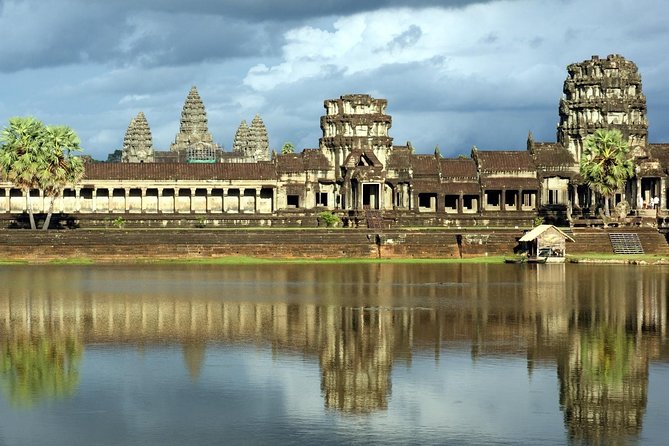
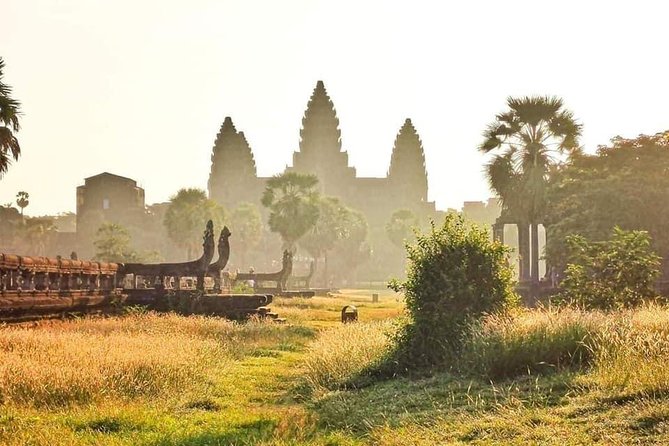
The tour begins with up to two hours at Angkor Wat, the enormous temple built for King Suryavarman II in the early 12th century. It was designed as a state temple and capital, and its scale is the first thing you need to understand. You do not simply walk into one building, look around, and leave. The complex unfolds through galleries, courtyards, towers, and long approaches.
I like having a guide here because Angkor Wat can overwhelm you with stonework. The carved scenes and religious symbols make more sense when someone explains what you are looking at. Guides such as San and Sophy are praised for bringing the carvings and stories into focus without burying visitors under too much information.
The temple is also the best-preserved major site in the Angkor area. That makes it a useful starting point, since you can see the original plan more clearly before moving on to temples that have been altered by time, vegetation, or restoration.
Allow for a lot of walking. One account describes the highest level and its stairs as a serious part of the visit, while another guide helped a visitor manage steep or uneven areas. You do not need to be an athlete, but you should be comfortable walking for extended periods and handling steps.
Wear long pants or a knee-length skirt or dress. The clothing rule applies to temple visits, so this is not the day for shorts or very short skirts. Light, practical clothes will help, but keep the required coverage in mind.
Angkor Thom and Bayon: Faces in the Stone
After Angkor Wat, the route moves to Angkor Thom, the late 12th-century capital built under King Jayavarman VII. The area is broader than a single temple, so the one-hour visit gives you an introduction rather than an exhaustive survey.
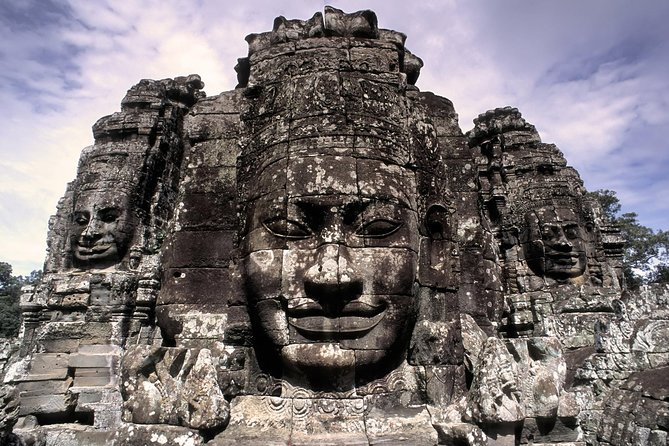
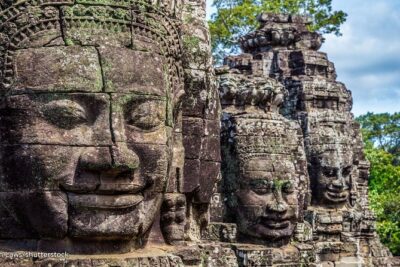
The next stop is Bayon, located at the center of Angkor Thom. This late 12th or early 13th-century temple was built as the state temple of the Mahayana Buddhist king Jayavarman VII. Its famous stone faces are the main attraction, but your guide can also help you read the walls and understand how the temple fit into the wider royal city.
This is where the guide’s skill becomes especially useful. The carvings are not just decoration. They show people, scenes, and ideas tied to Khmer royal and religious life. A guide such as Voath has been praised for explaining both the temple’s history and the symbolism in its carvings, while Wat is noted for keeping explanations clear and enjoyable.
The one-hour schedule at Angkor Thom and Bayon is sensible for a first visit, though you should not expect to see every corner. The complex is huge, and the route is designed around the major sights. If you want a slow photographic study of every gallery, you will need more time than this outing allows.
Ta Prohm and the Famous Tree Roots
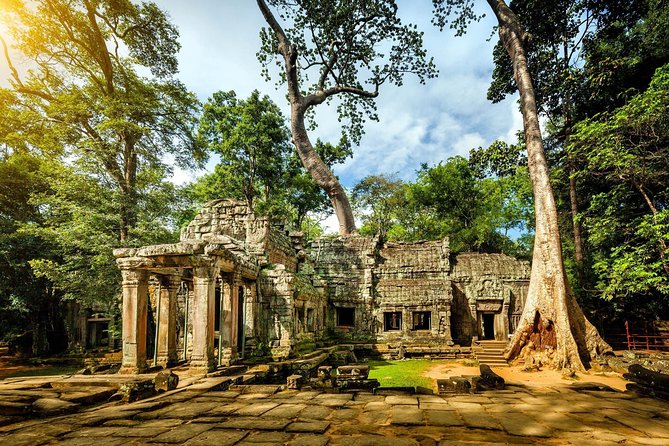
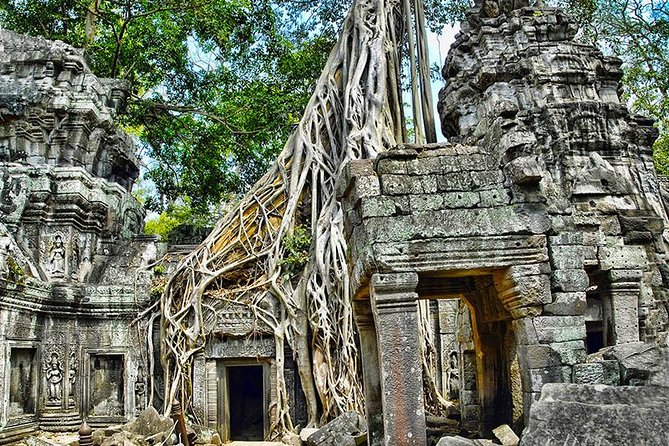
Ta Prohm receives about an hour, and for many people it becomes the most atmospheric stop of the day. The temple is known for its ruined walls and large tree roots growing across the stone. Here, nature and architecture meet in a way that feels unlike Angkor Wat’s ordered grandeur.
The site is located near Angkor Thom and the East Mebon area, and it offers a different mood from the earlier temples. Instead of focusing mainly on symmetry and scale, you spend more time noticing collapsed corridors, broken stone, and the force of roots pressing into old structures.
Ta Prohm can also be awkward underfoot. Uneven ground, narrow areas, and steps make sturdy footwear and careful movement useful. Guides have helped visitors over difficult sections, but you should still expect to manage your own pace and safety.
The one-hour stop gives you time to see the best-known parts and take photographs without turning the day into an exhausting marathon. If Ta Prohm is your personal priority, ask your guide practical questions early in the day about how much time will be available and how the route will be handled.
A few more temple visits around Siem Reap worth a look
- Siem Reap: Full-Day Angkor Wat Guided Tour with Sunset
★ 4.9 · 3,803 reviews - Angkor Wat Sunrise tour with Small – Group and Guide tours
★ 5.0 · 3,655 reviews - Angkor Wat Highlights and Sunrise Guided Tour from Siem Reap
★ 5.0 · 3,213 reviews - Angkor Wat Sunset Small Group Tour with Lunch Included
★ 5.0 · 3,059 reviews
What the Guides Add to the Day
The strongest reason to choose this tour instead of arranging basic transport is the guide. The temples are impressive on their own, but the right explanation gives the stones a human and political setting.
San, also called Chau San Touchsan, is described as having studied Angkor history with a local university history professor. He also helped visitors with photographs and adapted the route to their needs. Phy and Sophy are praised for explaining the temple area clearly, taking photos, and keeping the day comfortable. Wat is repeatedly described as kind, patient, and attentive to physical limits.
Nak receives praise for his pride in Cambodian heritage and his ability to mix serious history with humor. Voath is noted for his clear explanations of temple stories and carved symbols. These details matter because a guide can either make Angkor easier to understand or turn it into a tiring sequence of names and dates.
The small-group arrangement gives you a better chance to ask questions. The maximum group size is 12, but the group may be smaller depending on bookings. On one outing, only two people joined, turning the day into a private tour. You should not assume that will happen, but a smaller group is possible.
English ability appears to vary by guide, though the strongest comments describe communication as easy to follow. If you have a particular interest, such as religion, architecture, photography, or Cambodian history, ask about it early. A good guide can shape the explanations around what you want to understand.
Heat, Transport, Lunch, and the Practical Details
Cambodia can make a temple visit feel harder than the distances suggest. The tour helps with the basics by providing chilled bottled water throughout the day. Some guides and drivers also provide cold towels or towelettes after temple visits, a small touch that becomes very welcome in humid weather.
The drivers receive praise for being prompt, safe, and helpful. One driver known as James Bond was singled out for careful driving and a clean vehicle. Other drivers, including Ken, Sim, Mom, and Billy, are described as reliable and courteous.
Do not expect the transport to remove all the physical work. The tuk-tuk or minivan gets you between sites, but each temple involves walking. The route lasts about six to seven hours, including the return transfer, and the combination of heat, stairs, and long paths can wear you down.
Lunch is not included. The guide normally stops at a local restaurant inside the national park around midday because it is the practical option during the route. Prices may be higher than in Siem Reap, so bring enough money and keep expectations modest. You can buy food and drinks separately, but breakfast, lunch, dinner, snacks, beer, wine, and soft drinks are all your responsibility.
Hotel pickup and drop-off cover Siem Reap city center. At the end, you can return to your hotel or request another drop-off point within the city center. Pickup is a real convenience, since you do not need to locate the temple entrance or arrange a tuk-tuk negotiation before sunrise or during the morning rush.
Who Will Enjoy This Tour Most?
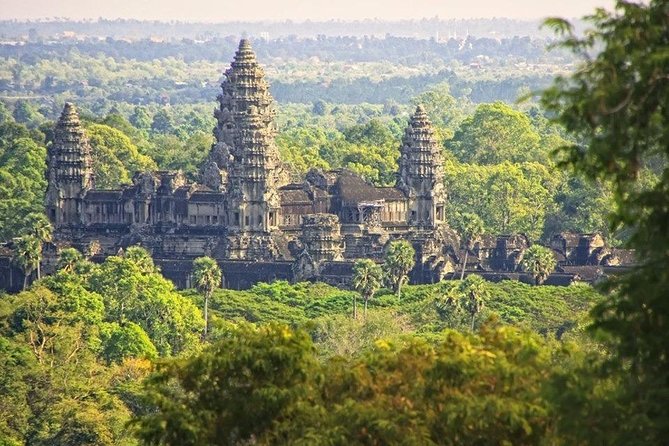
I would choose this outing if I were visiting Angkor for the first time and wanted the main sights in one day. The route covers the essential trio of Angkor Wat, Bayon, and Ta Prohm, while Angkor Thom adds useful context around Bayon.
It also suits people who want more than transport. The best parts are the explanations of the carvings, the stories behind the temples, and the small practical helps such as photographs, water, and route advice. If you prefer to wander alone for hours, this schedule may feel too structured.
Families can join, but children must be accompanied by an adult. Older visitors can also enjoy it, provided they are comfortable with moderate walking and stairs. One guide helped a 69-year-old visitor manage the site, and another assisted with steep or uneven terrain. That shows a caring approach, but it does not change the physical demands of Angkor.
This is not the best choice for anyone who needs a fully accessible route or a short, low-effort outing. The sites contain stairs and uneven ground, and the tour information specifically calls for moderate physical fitness.
Booking Advice and Final Verdict
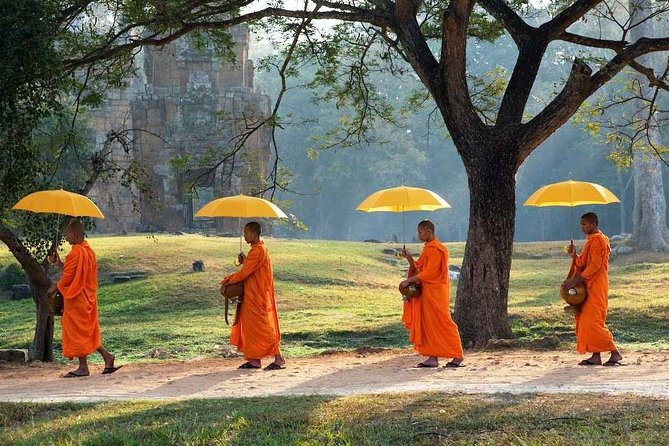
This tour earns its strong reputation through a useful mix of price, route, guide support, and simple comforts. The most praised qualities are the guides’ warmth, their command of Angkor’s stories, the safe drivers, the cold drinks, and the thoughtful help with photos and difficult steps.
You should budget at least $55 before food and tips: $18 for the tour and $37 for the one-day park pass. Add lunch and any drinks beyond the supplied water. Tipping the guide and driver is not included, and travel insurance is your responsibility.
The cancellation terms are straightforward. You can receive a full refund if you cancel at least 24 hours before the start time. Changes or cancellations inside that window are not accepted for a refund.
Should You Book This Angkor Wat Tour?
Book it if you want a first-day introduction to the main Angkor temples, a guide who can explain the carvings, and hotel transport at a low tour price. It is especially useful if you do not want to arrange a driver, study the temple map, or figure out the best order yourself.
Think twice if you want a private, slow-paced photography day, dislike group schedules, or cannot manage stairs and uneven ground. Also remember that the advertised price is only the tour fee, not the full cost of visiting Angkor.
For most first-time visitors to Siem Reap, I think it is a sensible choice. The temples provide the spectacle, but the right guide helps you see why the stones matter. With guides such as San, Phy, Wat, Nak, Sophy, and Voath receiving especially warm praise, the human side of the day may be as memorable as the towers and tree roots.
FAQ
Is the Angkor National Park admission included?
No. The one-day Angkor National Park pass costs $37 per person and must be paid separately.
How long does the tour last?
The tour takes approximately six to seven hours, including the return transfer to Siem Reap.
Which temples are visited?
The planned route includes Angkor Wat, Angkor Thom, Bayon Temple, and Ta Prohm. The tour finishes with a drop-off in Siem Reap city center.
What transport is used?
One or two people generally travel by tuk-tuk. Groups of three or more use a minivan.
What should I wear to the temples?
Long pants or a knee-length skirt or dress are required for visiting the temples.
Is lunch included?
No. Food and drinks are not included. The guide normally stops at a local restaurant inside the national park around lunchtime, where prices may be higher than in town.
Just added around Siem Reap
- Sunrise at Angkor Wat Temple: 3-Hour Private Tour★ 4.7 · 30 reviews
- Small-Group Explore Angkor Wat Sunrise Tour with Guide★ 5.0 · 3 reviews
- Siem Reap: Ultimate Angkor Wat Offbeat Experience by Jeep★ 4.9 · 8 reviews
- SiemReap: Private Angkor Wat Tour in English or German guide★ 5.0 · 5 reviews
- Siem Reap : Private Tuk-Tuk Tour of the Magnificent Temples.★ 4.9 · 14 reviews
- Siem Reap: Private 4-Day Angkor Wat and Phnom Kulen Tour★ 5.0 · 9 reviews
- Siem Reap: Personalized Angkor Wat Sunrise/Set by TukTuk/Car★ 4.9 · 41 reviews
- Siem Reap: 1-Day Angkor Wat Tour in Portuguese★ 5.0 · 4 reviews
Angkor Wat Tours, compared.
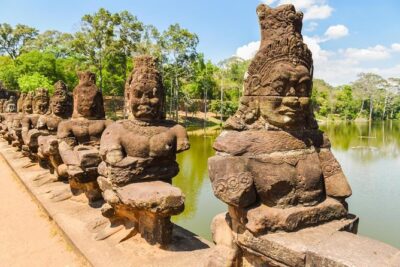
Angkor Wat Sunrise or Sunset Tour with Guide from Siem Reap
Read our review →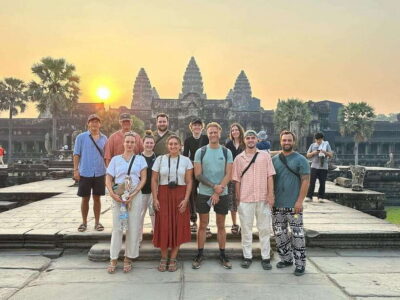
Angkor Wat: Small-Group Sunrise or Sunset Tour
Read our review →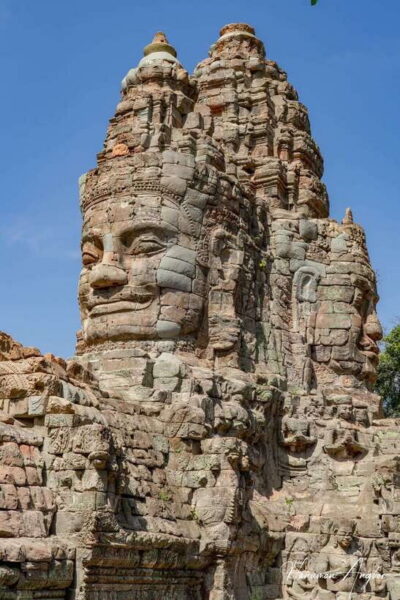
Angkor Wat 2-Day Tour with Sunrise and Sunset
Read our review →
Angkor Wat Sunrise tour with Small – Group and Guide tours
Read our review →
Angkor Wat Highlights and Sunrise Guided Tour from Siem Reap
Read our review →
Angkor Wat Sunset Small Group Tour with Lunch Included
Read our review →
Full-Day Angkor Wat Sunrise Private Tour with Guide from Siem Reap
Read our review →Browse the lists this tour appears in