
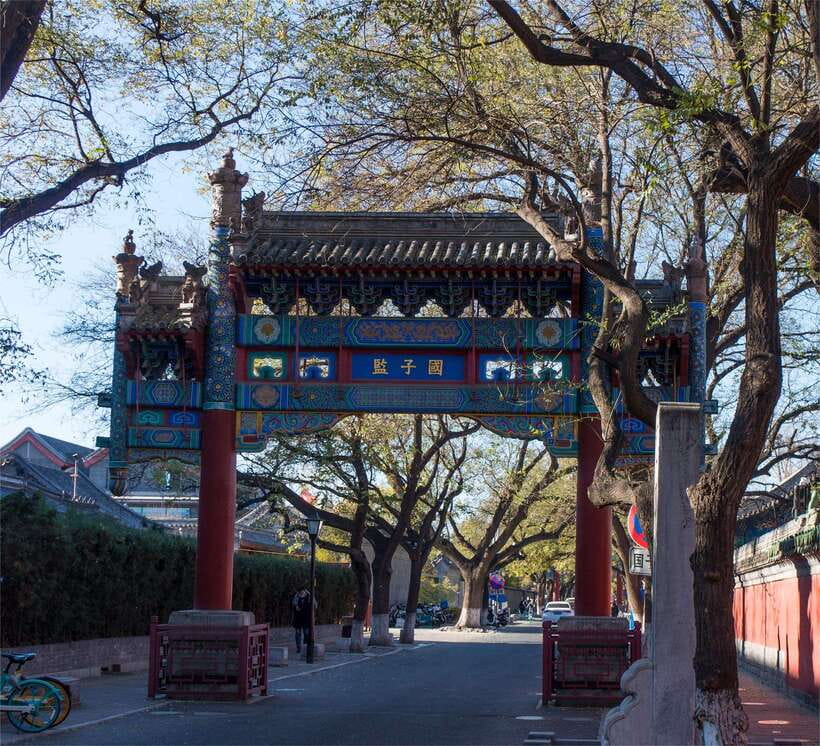
Review · BEIJING
Beijing: Confucius Temple and the Impercial College E-ticket
Two old institutions share one powerful lesson. Beijing’s Confucius Temple and Imperial College offer a calm, focused look at how China honored learning, trained officials, and recorded academic success. I especially like the Yuan Dynasty architecture and the forest of stone tablets listing 51,624 successful candidates from the imperial examinations.
I also like the simple entry system. You use the electronic ticket and your original passport, without needing a paper voucher. The main drawback is that this is an attraction ticket rather than a guided tour, so visitors who want detailed explanations may need to purchase the audio guide at the temple entrance.
At $7 per person, this is an easy addition to a Beijing sightseeing day. You can spend several hours examining the courtyards, halls, relics, and exhibitions, or make a shorter visit if your schedule is tight. The attraction is wheelchair accessible, and the ticket is valid for one day.
Key points to know before you go
- 51,624 names on stone tablets: The tablets record the names, birthplaces, and ranks of successful imperial examination candidates.
- Two connected institutions: The Confucius Temple sits on the left, while the Imperial College occupies the right, following a traditional arrangement.
- More than 700 years of history: Both sites began during the Yuan Dynasty in the 14th century.
- Three courtyards in each complex: The buildings unfold along a central north-south axis, making the visit easy to follow.
- QR code and original passport entry: Bring the passport used for booking, since the electronic ticket must be matched with your original identification.
- Audio guide available: An audio guide can be purchased at the temple entrance if you want more background while exploring.
Why the Confucius Temple and Imperial College matter
Beijing’s Confucian Temple and Imperial College are not simply two old building compounds placed side by side. Together, they explain the connection between moral teaching, education, and government in imperial China.
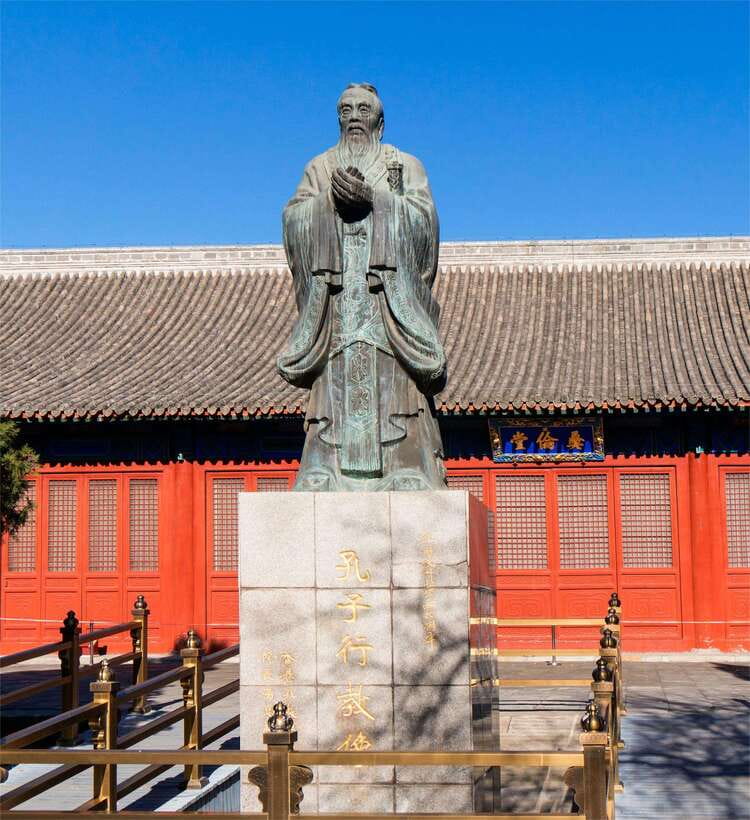
The Confucius Temple was built in 1306, during the Yuan Dynasty. It served as a place for ceremonies honoring Confucius through the Yuan, Ming, and Qing periods. Confucius was remembered not only as a philosopher, but also as the great teacher whose ideas shaped education and public service for centuries.
The Imperial College, known in Chinese as Guozijian, opened in 1308. It was the highest educational institution and the state authority responsible for education during the Yuan, Ming, and Qing Dynasties. In practical terms, this was where the imperial education system received its official center.
That pairing gives the visit its real value. The temple represents respect for the teacher. The college represents the system built around learning and government service. You are not just looking at decorative halls. You are seeing two sides of the same idea: education was a moral duty and a path into public life.
More Entry Tickets in Beijing:
- Beijing: The Temple of Heaven or Summer Palace Entry Ticket
★ 4.6 · 1,286 reviews - Temple of Heaven Ticket
★ 5.0 · 482 reviews - Beijing: Lama Temple (Yonghe Temple) Admission Ticket
★ 4.8 · 297 reviews
Walking through the Confucius Temple’s three courtyards
The Confucius Temple covers more than 22,000 square meters, with about 7,400 square meters of construction. Its layout follows a clear central axis through three courtyards, so you can explore it without a complicated route.
The sequence runs from south to north through the Teacher Gate, Dacheng Gate, Dacheng Hall, and Chong Sheng Temple. Each gate marks a move farther into the ceremonial heart of the complex.
The architecture is restrained and formal. That is part of the appeal. Instead of a packed collection of unrelated sights, the temple gives you a sense of order. Gates frame the route, courtyards create pauses, and the main halls provide visual focus.
Dacheng Hall is the central highlight. One of the current exhibitions presents a restored version of the hall, helping you understand how the ceremonial space was used and how its design fits into the wider temple. Another exhibition focuses on Confucius himself, while a third traces the history of the Beijing Confucius Temple.
The exhibition titles and displays give the site more context than the buildings alone can provide. If you arrive with little background on Confucian education, these exhibits help explain why the temple mattered to imperial officials and students.
Allow yourself time to look upward and sideways, not just straight ahead. The value here is in the arrangement of courtyards, gates, halls, and stonework. You do not need to rush from one named building to the next.
The stone tablets that record academic success
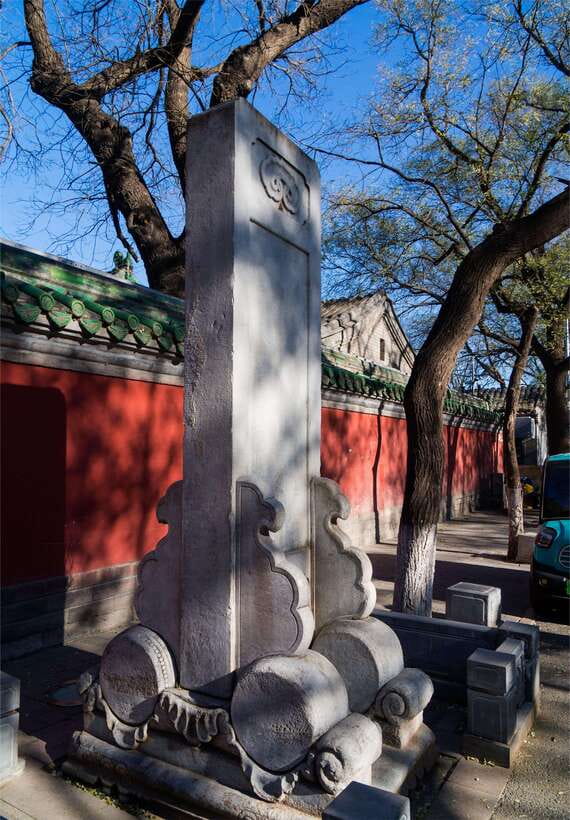
The most distinctive feature of the temple may be the collection of stone tablets in the front courtyard. There are 198 tablets, arranged in four groups on both sides of the courtyard.
Together, they list the names, birthplaces, and ranks of 51,624 Jinshi degree holders. Jinshi was the highest level in the imperial examination system. These inscriptions turn the courtyard into a record of achievement covering generations of scholars.
For you, the tablets may first look like a large field of carved stone. Their meaning becomes clearer when you understand what they record. Each name represents a person who passed an examination that could lead to a government career. The inscriptions also show how seriously the state treated academic credentials.
This is one place where a guide or audio guide could make a real difference. Without explanation, the tablets are impressive but difficult to interpret. With context, they become a large-scale record of the people who passed through China’s examination system.
The collection also has research value. The names, homeplaces, and ranks provide material for studying the imperial examinations and the people who succeeded in them. You do not need to read Chinese to appreciate the scale of the record, but the experience is stronger if you pause to understand what the stones represent.
Entering the Imperial College on the right
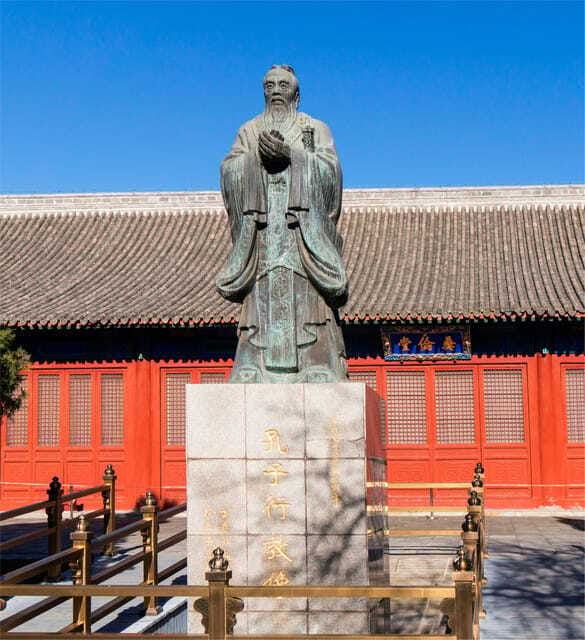
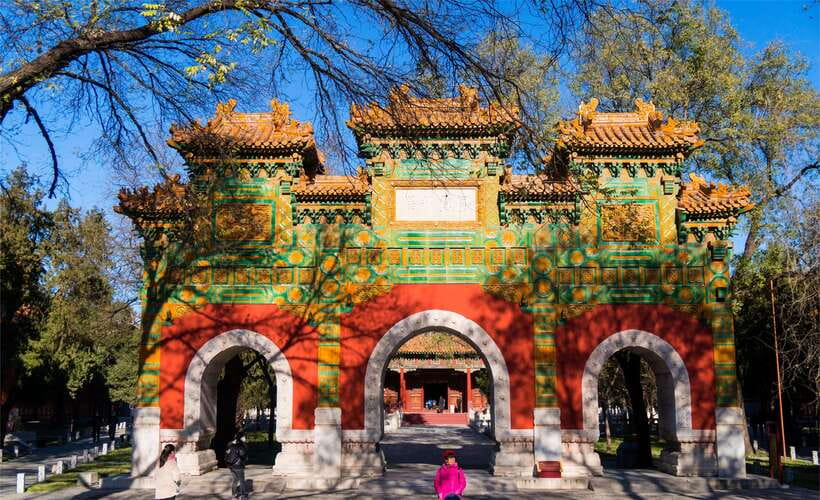
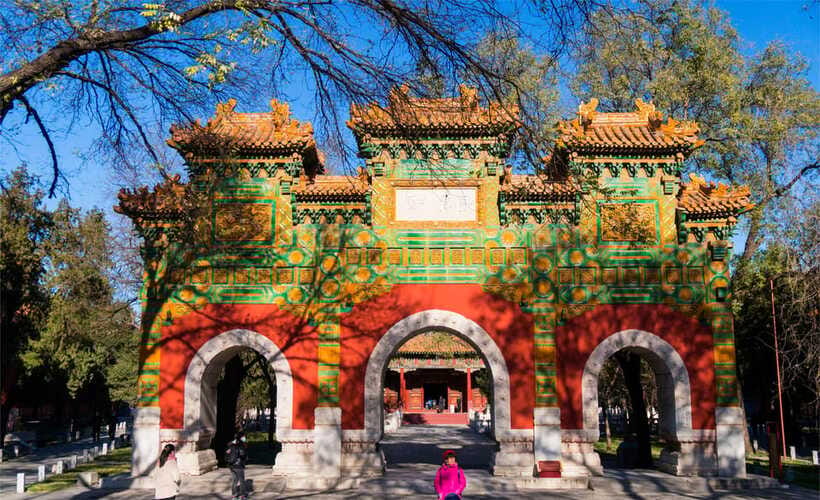
The Imperial College covers about 28,000 square meters and also contains three courtyards. Its central route passes through Jixian Gate, the Taixue Gate, the Glazed Memorial Arch, Biyong Hall, Yilun Hall, and Jingyi Hall.
The Glazed Memorial Arch gives the route a strong visual marker. From there, the buildings continue along the main axis, with two halls and six principal rooms arranged in a formal pattern.
The college also contains the Imperial Tablet Pavilion and separate Bell and Drum Pavilions. These structures sit beside the central axis in a traditional symmetrical arrangement. The symmetry is not merely decorative. It reflects the order expected of an institution that supervised education across the empire.
Biyong Hall is the key building in the college complex. The sequence of gates and halls helps you see how the institution was organized, but do not expect a modern school campus with classroom displays at every turn. Much of the experience comes from architecture, spacing, and the relationship between the buildings.
The Imperial College is especially worthwhile if you are interested in how the state used education. The Confucius Temple honors the source of the teaching. The college shows the official structure that carried those ideas into government and society.
A few more temple visits around Beijing worth a look
- Beijing Classic Full-Day Tour including the Forbidden City, Tiananmen Square, Summer Palace and Temple of Heaven
★ 4.0 · 610 reviews - Temple Heaven, Lama Temple, Summer Palace & Peking Duck Bus Tour
★ 5.0 · 377 reviews - Temple Heaven, Summer Palace, Lama Temple, Hutong Bus Tour
★ 4.7 · 319 reviews - Beijing: Entry to Temple of Heaven Park
★ 4.6 · 314 reviews
Exhibitions and cultural relics worth your time
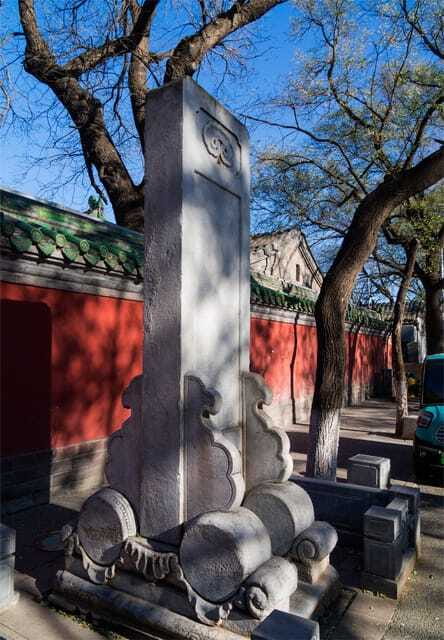
The Confucius Temple currently has three exhibitions. One focuses on the restored Dacheng Hall, one presents Confucius, and one covers the history of the Beijing Confucius Temple.
These displays add needed interpretation to the site. Architectural details can be hard to read on their own, especially if you do not speak Chinese. The exhibitions help connect the buildings with ceremony, teaching, and the imperial examination system.
The cultural relics collection also gives the visit more substance. You are not only moving through courtyards for photographs. You can connect the objects and displays with the function of the temple and college.
An audio guide is available for purchase at the entrance to the temple. That is useful to know before you arrive. The ticket itself does not include a guide, so budget a small extra amount if you want spoken commentary.
I would not treat the audio guide as essential for every visitor. The layout is straightforward, and the architecture is attractive even without a long explanation. But if you want to understand why the tablets matter or how the ceremonies worked, the guide could make the visit far more rewarding.
How long to spend and how to plan the visit
The admission is valid for one day, and the listed duration is one day rather than a fixed timed tour. That gives you room to fit the visit around other Beijing plans.
You can make this a short cultural stop by walking through the principal courtyards and seeing the main halls. A longer visit lets you read the exhibitions, study the tablet groups, and compare the temple and college in greater detail.
Because this is a self-directed attraction ticket, your pace is up to you. There is no guide leading you from room to room, and no stated group itinerary to follow. That works well if you dislike being hurried or want to focus on architecture.
The tradeoff is that you must create your own structure. I would begin with the Confucius Temple, give the stone tablets proper attention, and then move through the Imperial College. This order follows the main cultural idea from teacher and ceremony to education and administration.
The two complexes are close enough in purpose and layout that visiting them together makes sense. Seeing only one would give you part of the story. The paired admission creates a fuller picture without requiring a separate transport plan between sites.
Is the $7 ticket good value?
At $7 per person, this is a strong-value cultural visit. The price covers admission to both the Confucius Temple and the Imperial College, not just a single hall or exhibit.
The value comes from the amount of historical material packed into the compounds. You get Yuan Dynasty origins, later imperial use, formal courtyards, architectural details, exhibitions, and one of Beijing’s most unusual collections of examination tablets.
You should keep the limits in mind. The ticket does not include a personal guide, and the audio guide costs extra. If you want a detailed lecture about Confucian philosophy, examination procedures, or the meaning of each building, this is not a full guided experience.
For independent visitors, that is not a serious weakness. You get freedom, a low admission cost, and enough to occupy a meaningful part of the day. For visitors who prefer a planned commentary at every stop, the lack of an included guide matters more.
The attraction also offers free cancellation up to 24 hours before the visit and a reserve-now, pay-later option. Those terms are useful when your Beijing schedule is still changing.
Entry requirements and practical details
Bring the original passport used for the booking. The electronic ticket is checked together with your original passport, so a photograph or copy may not be enough.
You can enter with the QR code from the electronic ticket and your passport. The attraction ticket is designed for simple admission, and it allows you to skip the ticket line according to the stated conditions.
The experience is wheelchair accessible. That is an important practical advantage, although the supplied information does not describe the condition of every path, courtyard surface, or interior route. If you need very specific access details, confirm them before arrival.
The booking is listed as a private group, but this should not be confused with a private guided tour. The attraction ticket itself does not identify a personal guide or a planned tour service. Treat it as flexible admission for your own visit.
The rating is 4.4 from 92 ratings, which suggests a generally positive experience with some room for individual preference. Two recent verified bookings received five-star scores, including one simple five-star assessment from a Romanian customer and a five-star rating from Liliya in France, who specifically noted the option to buy an audio guide at the temple entrance.
That audio guide detail is the most useful practical tip. If you want interpretation, decide at the entrance rather than assuming it comes with the ticket.
Who will enjoy this Beijing attraction most?
I would recommend this visit to anyone interested in Chinese education, government, philosophy, architecture, or historical records. It also suits visitors who prefer quiet cultural sites to large entertainment attractions.
Families with older children may find the examination tablets useful if an adult explains what they represent. Younger children may enjoy the gates and halls but could lose interest in the inscriptions without an audio guide or preparation.
The site works well for independent visitors because you can set your own pace. It is also a good choice for repeat visitors to Beijing who want a different side of the city beyond the best-known imperial landmarks.
Photography-focused visitors will find formal courtyards, gates, halls, tablets, and glazed architectural details. Still, the main reward is not a single spectacular view. The attraction asks you to notice the pattern and meaning of the whole complex.
If your main goal is a guide-led story with constant explanation, you may find the ticket too basic. In that case, purchase the audio guide or arrange separate guiding. If you like learning by looking carefully and reading at your own speed, the format works very well.
Should you book the Confucius Temple and Imperial College?
Yes, if you want an inexpensive and substantial cultural stop in Beijing. The combination of Yuan Dynasty buildings, Confucian ceremonial space, Imperial College architecture, and 51,624 examination names gives the visit a clear purpose beyond sightseeing.
Book it when you value flexibility, since the ticket is valid for one day and uses QR entry with your original passport. Plan to spend extra time at the exhibitions and consider the audio guide if you want the historical details explained.
Skip it only if you need a fully guided tour or have no interest in architecture, education, or imperial history. For $7, the attraction offers a lot of material, but you get the most from it when you arrive curious and willing to read the site rather than simply take a quick photograph and leave.
FAQ
How much does admission cost?
The ticket costs $7 per person.
How long is the ticket valid?
The ticket is valid for one day.
What must I bring to enter?
Bring your original passport or ID card. The instructions specifically require entry with your original passport and electronic ticket.
Can I enter with a QR code?
Yes. You can use the QR code from the electronic ticket together with your original passport.
What does the ticket include?
The ticket includes admission to the tourist attraction, covering the Confucius Temple and Imperial College.
Is the attraction wheelchair accessible?
Yes, the experience is listed as wheelchair accessible.
Can I cancel for a refund?
Yes. You can cancel up to 24 hours in advance for a full refund.
Do I have to pay when I book?
No. A reserve-now, pay-later option is available, allowing you to book without paying immediately.
Just added around Beijing
- Temple of Heaven Morning Walking Tour with Ticket★ 5.0 · 7 reviews
- Temple of Heaven Admission Ticket★ 4.0 · 36 reviews
- 3-Hour Private Tour: Temple of Heaven and Lama Temple★ 5.0 · 3 reviews
- Small Group Beijing Temple of heaven and Summer Palace with Pearl market★ 5.0 · 3 reviews
- Full-Day Beijing Forbidden City, Temple of Heaven and Summer Palace Tour★ 4.5 · 40 reviews
- Summer Palace and Temple Of Heaven Private Tour★ 5.0 · 9 reviews
- Private Day Trip of Forbidden City, Temple of Heaven and Summer Palace★ 4.5 · 3 reviews
- Private Day to T-Square, Forbidden city, Temple of heaven, Summer palace Tour★ 5.0 · 54 reviews
Tickets, compared.

Kecak Fire Dance Show & Uluwatu Temple Entry Ticket
Read our review →

The Temple of Heaven or Summer Palace Entry Ticket
Read our review →
Valley of the Temples Ticket & App Audioguide
Read our review →

Belém Walking Tour with Jerónimos Monastery Ticket
Read our review →Browse the lists this tour appears in