
Review · CHIANG MAI
Chiang Mai City and Temples Half-Day Tour
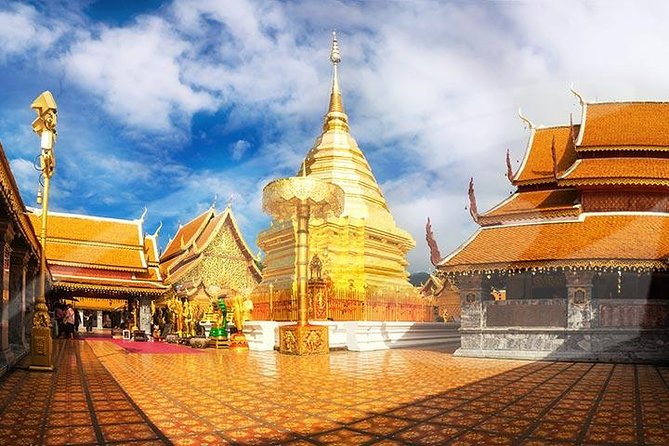
Chiang Mai’s temples tell the city’s story. This three-hour tour pairs the mountain sanctuary of Wat Phrathat Doi Suthep with two important city temples, giving you a useful first look at Northern Thailand’s religious life without taking over your day. I especially like the small-group format and the mix of mountain views, old brickwork, white memorial chedi, and active Buddhist sites.
The guides are a major part of the appeal. Guides such as Peo, Arrow, Pien, Van, Owen, and Games have been praised for clear explanations and friendly service, while one former novice monk brought extra insight into Buddhist practice. The main drawback is time: traffic, especially in the afternoon, can eat into your temple visits, and this tour offers little city sightseeing beyond the wats.
Key points to know before booking
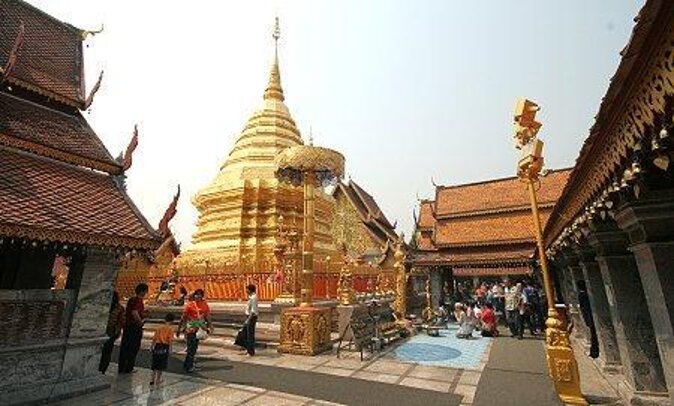
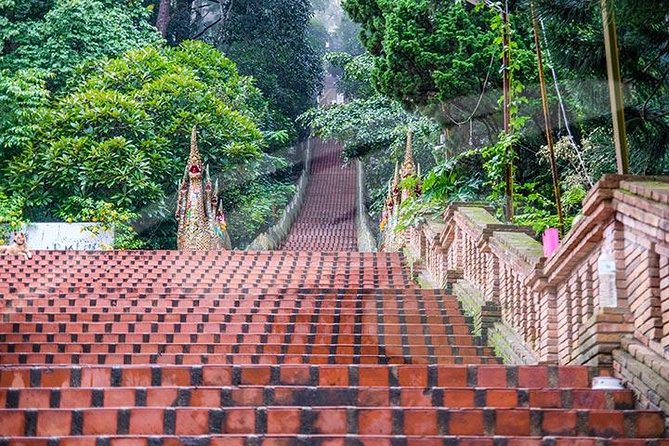
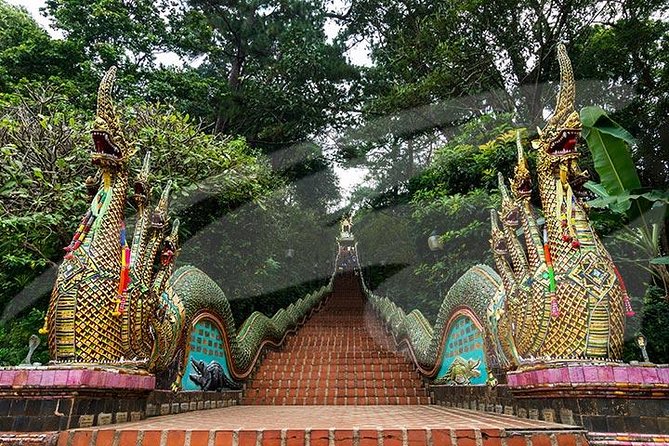
- Doi Suthep is the centerpiece: Spend about 90 minutes at Chiang Mai’s famous mountain temple, including the striking 306-step Naga staircase.
- Three temples in about three hours: The schedule covers Wat Phrathat Doi Suthep, Wat Suan Dok, and Wat Phra That Chedi Luang.
- Guides add real value: The strongest part of the experience is the explanation of Buddhist customs, temple history, and local culture.
- Air-conditioned transport matters: Hotel pickup and a cool vehicle make the hot climb and drives between sites easier.
- Afternoon traffic can slow things down: A morning departure is the smarter choice if you want more time at each temple.
- Dress carefully: Men and women need modest clothing, with covered shoulders and appropriate leg coverage.
Why this half-day tour works well in Chiang Mai
Chiang Mai has around 36 Buddhist wats, and choosing three on your own can be harder than it sounds. The temples vary in age, purpose, and setting, but the differences are not always obvious at first glance. A good guide helps you see why one site matters for its old chedi, another for royal memorials, and another for its mountain setting.
This tour gives you that framework in a short block of time. You are not trying to cover every temple in the old city. Instead, you get one major mountain sanctuary and two city temples, which creates a useful contrast between sacred sites inside Chiang Mai and the grand destination above it.
The price is $38.13 per person. I consider that fair value because the fee includes hotel pickup and drop-off, an air-conditioned vehicle, a local guide, and admission to Doi Suthep. You are also paying for the simple logistics of reaching a temple 15 kilometers from central Chiang Mai, then returning to the city without arranging separate transport.
The group can reach 20 people, though some departures are much smaller. Groups of around six have been reported, and one departure had only one booking party. A smaller group makes it easier to hear the guide and ask questions, but you should not assume every departure will be private or nearly private.
More Half-Day Tours in Chiang Mai:
- Athens: Cape Sounion & Poseidon Temple Sunset Half-Day Trip
★ 4.8 · 8,241 reviews - Cape Sounion and Temple of Poseidon Half-Day Small-Group Tour from Athens
★ 4.5 · 3,205 reviews - From Athens: Temple of Poseidon & Cape Sounion Half-Day Tour
★ 4.3 · 1,082 reviews
Starting with Wat Phrathat Doi Suthep
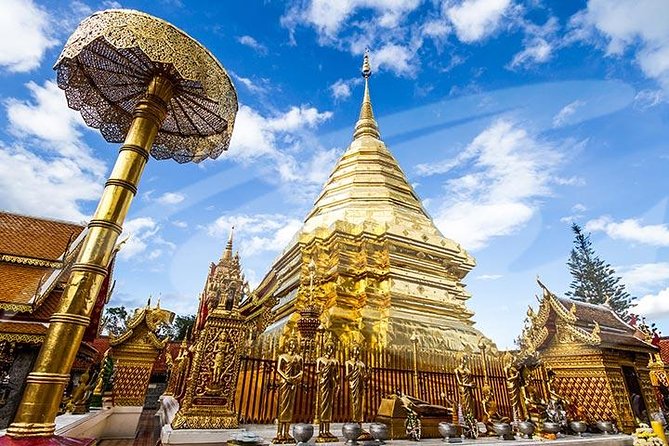
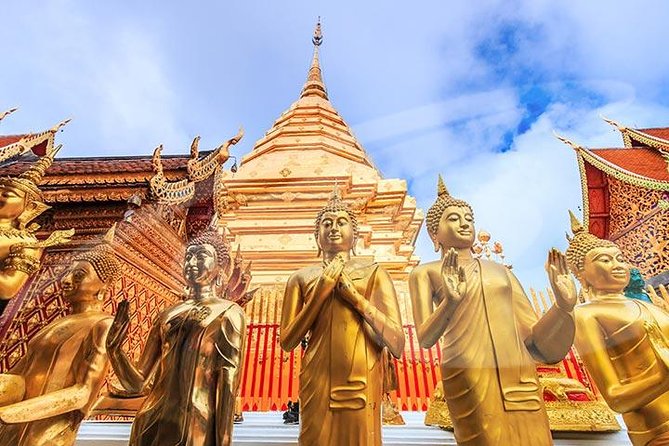
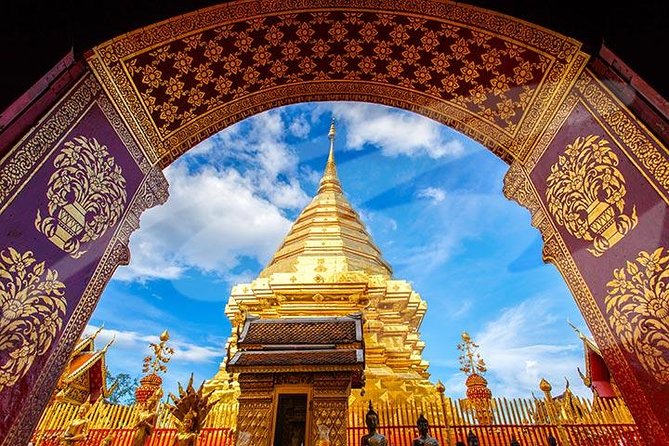
Wat Phrathat Doi Suthep is the big reason to book this outing. The temple sits on Doi Suthep, about 15 kilometers from central Chiang Mai, at an elevation of roughly 1,050 meters. The mountain peak is described at about 1,615 meters, so the ride takes you well above the city and gives the visit a sense of occasion.
The approach is part of the experience. The final staircase has 306 steps, lined by a long Naga, the mythical dragon-headed serpent found in Thai religious art. The staircase looks impressive in photographs, but it is also a real physical task in Chiang Mai’s heat. You may find the climb manageable at a steady pace, though anyone who dislikes stairs should take it slowly.
The tour allows about 90 minutes here, the longest stop of the morning or afternoon. That is enough time to climb, enter the temple grounds, listen to the guide, take photographs, and pause for the view. It is not an unlimited visit, so you will need to keep an eye on the meeting time.
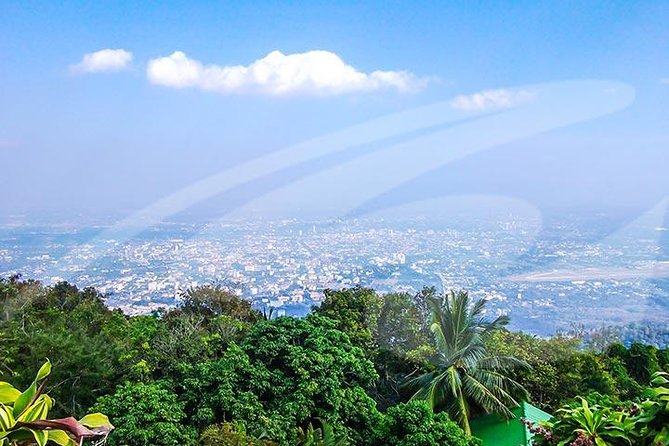
At the top, the reward is a broad view toward Chiang Mai and the surrounding hills. On a clear day, this is the tour’s best photo stop. The setting also helps explain why Doi Suthep is more than a pretty viewpoint. The temple’s height, religious importance, and distance from the urban center give it a different feel from the city wats.
The site can be busy. Having a guide and driver helps because you do not need to work out the route, parking, or temple entrance on your own. The guide can also point out the right places to pause and explain what you are seeing rather than leaving you to photograph a gold-covered complex without context.
A little practical tip: save room for the ice cream stalls near the top of the stairs. It is a small pleasure, but a cold treat after the climb makes good sense.
Wat Suan Dok and its white memorial chedi
Wat Suan Dok provides a quieter contrast to Doi Suthep’s grand mountain setting. It sits west of Chiang Mai’s old city and is known for its collection of small white memorial chedi containing the remains of members of Chiang Mai’s royal family.
The stop lasts about 30 minutes. That is enough for a guide to explain the role of the memorials and for you to take in the layout, but it is not long enough for a slow, detailed visit. I would treat Wat Suan Dok as a focused stop rather than the main event.
The white chedi make this temple particularly photogenic. Their pale surfaces look very different from the darker brick of Chedi Luang and the more ornate appearance associated with Doi Suthep. That variety is one of the tour’s strengths. In a short time, you see three distinct expressions of northern Thai religious architecture.
This stop also makes the itinerary feel less like a single sightseeing dash to Doi Suthep. You get a little more local context and a reminder that Chiang Mai’s temples are connected to family, memory, ritual, and the city’s past, not just decoration.
Wat Phra That Chedi Luang and its damaged brick tower
The final listed temple is Wat Phra That Chedi Luang, in central Chiang Mai. Its main chedi was first built in 1411 and once rose more than 84 or 85 meters above the city. An earthquake in 1545 damaged the structure, and the remaining tower now reaches about 60 meters.
That damage is part of the appeal. Chedi Luang does not present a polished, untouched monument. Its scale and worn brick show how age, earthquakes, repair, and religious use shape a living historic site. I find it more visually powerful than a perfect reconstruction because you can read the passage of time in the structure.
The temple also contains the city pillar, an important local religious marker. Your guide can give this detail meaning, explaining why the site matters to Chiang Mai rather than simply pointing out an old tower.
The stop lasts about 45 minutes. You should have time to hear the main story, look around the grounds, and take photographs, but you will not have the freedom of an open-ended visit. If Chedi Luang interests you most, note the locations carefully so you can return later for a longer look.
A few more temple visits around Chiang Mai worth a look
- Chiang Mai: Chiang Rai Temples, Karen Tribe and Hot Springs
★ 4.7 · 5,401 reviews - Chiang Rai White Temple and Blue Temple Day Tour
★ 4.6 · 3,366 reviews - Chiang Mai: White, Red/Black & Blue Temples Tour with Lunch
★ 4.2 · 2,017 reviews - Chiang Mai: Doi Suthep and Wat Umong Enchanting Evening Tour
★ 4.6 · 1,811 reviews
What the guides add to the visit
The guide can make or break a temple tour, and this experience has received especially strong praise for its staff. Peo has been described as friendly and engaging. Arrow has been singled out for patience and detailed explanations of Thai spiritual life. Pien has been praised for teaching about Buddhism and local culture, while Van has been appreciated for clear comments on history, religion, and customs.
One guide had trained as a novice monk when young. That background can add a useful personal perspective to explanations of temple behavior, monks’ routines, and Buddhist practice. It does not turn the tour into a formal religious lesson, but it can help you understand why people remove shoes, dress modestly, make offerings, or move quietly through certain areas.
Other guides named by participants include Mrs. Nai, Khun Oom, Owen, Games, and Frankie. The repeated pattern is clear: the strongest part of the tour is usually the human explanation, not simply the transport between temples.
There is one caution. English ability and presentation style may vary by guide. One otherwise positive experience found a young guide’s accent difficult to follow, which meant some explanations were missed. If you do not catch something, ask the guide to repeat it. This is exactly the sort of tour where a short question can turn a beautiful building into a meaningful place.
Timing, heat, and the three-hour schedule
The advertised tour takes about three hours, but hotel pickup begins roughly 30 minutes to one hour before the tour starts. Your total time commitment will therefore be longer than the sightseeing portion, depending on where your hotel is located and how many pickups are scheduled.
The itinerary is compact. Doi Suthep receives about 90 minutes, Wat Suan Dok 30 minutes, and Chedi Luang 45 minutes. The remaining time goes to driving and transitions. That balance works if you want an introduction, but it will feel quick if you like to linger over architectural details or take many photographs.
Afternoon traffic is the main scheduling concern. The roads between the temples can be slow, and a late departure may leave you sitting in the vehicle during valuable daylight. I would choose the morning if you have a choice. It should give you a better chance of keeping the planned rhythm and may make the heat more manageable.
The weather matters too. Chiang Mai can be very hot, especially in October. The air-conditioned vehicle is a welcome part of the package, but it cannot cool the staircase or the temple courtyards. Carry water, wear sensible footwear, and do not rush the 306 steps.
Clothing and temple manners
Dress is not optional here. Men need long pants and a shirt with sleeves, and sleeveless tops are not accepted. Sandals or flip-flops require socks, so bare feet in open footwear are not suitable.
Women should also wear modest clothing, with covered shoulders and no see-through fabric. Bright colors are best avoided according to the tour guidance. I would pack a light shirt or scarf that can cover your shoulders, plus trousers or a longer skirt that reaches below the knees.
These rules are easy to manage and help you avoid being turned away at the entrance. They also show respect for places that remain active religious sites rather than museum displays.
You will also spend time watching monks and other worshippers go about their routines. Keep voices low, follow the guide’s instructions, and ask before photographing people. The more carefully you behave, the more comfortable the visit will feel.
Who should book this experience
I would recommend this tour to a first-time Chiang Mai visitor who wants a clear introduction without spending a full day in a van. It suits couples, families, and anyone who wants time free for dinner or independent exploring later.
It is also useful if you have limited mobility for long walks but can manage stairs. The air-conditioned vehicle reduces the amount of walking between sites, though Doi Suthep still involves the staircase unless another access arrangement is available. The tour data says most people can participate, but it does not promise a stair-free route.
This is less suitable if you want a deep architectural study, a private guide, or a relaxed temple schedule. The group may reach 20 people, and the short stops require you to follow the timetable. It is also not the right choice if your main goal is a broad city tour. One criticism of the experience is fair: you see temples, but not much else of Chiang Mai’s streets, markets, or neighborhoods.
Is the $38.13 price worth it?
For $38.13, I think the value is solid. The tour brings together three well-known temples, includes transport from central hotels, supplies a guide, and covers the Doi Suthep admission. Reaching the mountain temple independently would still require transport planning, and you would lose the explanations that give each stop its purpose.
The value is strongest when you make use of the guide. If you simply follow the group for photographs, you are paying mainly for a vehicle and a schedule. If you listen, ask questions, and compare the three temples, the fee buys a much better first understanding of Chiang Mai.
The price does not buy a leisurely day. Traffic can cut into the schedule, and the group size may be larger than expected. Still, for a half-day orientation, the combination of Doi Suthep’s views, Chedi Luang’s damaged brick chedi, and Wat Suan Dok’s white memorials is well chosen.
Should you book the Chiang Mai temple tour?
Book it if you want the main temple highlights, a mountain view, and a guide who can explain Buddhist customs in a short, organized outing. Choose a morning departure, dress properly, bring water, and expect a brisk pace.
Skip it if you prefer to wander alone, want extensive city sightseeing, or need a completely flexible schedule. For most first visits, though, this is a sensible way to get your bearings and decide which temple deserves a second, longer visit.
Free cancellation is available up to 24 hours before the start time. The operator may cancel if minimum numbers are not met, in which case an alternative or full refund is offered.
FAQ
How long does the Chiang Mai temple tour last?
The sightseeing experience lasts about three hours. Hotel pickup begins roughly 30 minutes to one hour before the tour start, so your full time commitment may be longer.
Which temples are included?
The itinerary includes Wat Phrathat Doi Suthep, Wat Suan Dok, and Wat Phra That Chedi Luang.
Is hotel pickup included?
Yes. Hotel pickup and drop-off are included for hotels in central Chiang Mai.
Is transportation air-conditioned?
Yes. Transport is provided in an air-conditioned vehicle.
How many people can join the tour?
The maximum group size is 20 people. Some departures may be smaller.
What should I wear to the temples?
Men should wear long pants and shirts with sleeves. Women should dress modestly, with covered shoulders and no see-through clothing. If you wear sandals or flip-flops, you should wear socks.
Can I cancel for a full refund?
Yes, if you cancel at least 24 hours before the experience start time. Cancellations or changes made less than 24 hours ahead are not eligible for a refund.
Just added around Chiang Mai
- No.1 Chiang Mai: 3-Hour Monk Trail Hike to Wat Doi Suthep & Palad★ 5.0 · 11 reviews
- Monk trails hike, Wat Phalat, Monk chanting, Wat Doi Suthep.★ 5.0 · 3 reviews
- Long Neck Village, Silver Temple & Chiang Mai Top Sites★ 4.7 · 17 reviews
- Lalita Cafe & Chiang Rai Temple(White+Blue) from Chiangmai★ 4.8 · 5 reviews
- Private : Sticky Waterfall & Secret Temple & Karen Village.★ 5.0 · 9 reviews
- Chiang Mai: Temples & Culture Tour★ 4.7 · 64 reviews
- From Chiang Mai: White Temple, Blue Temple & Black House★ 4.5 · 15 reviews
- From Chiang Mai: Lamphun and Lampang Temples Tour★ 4.9 · 33 reviews
Half-Day, compared.
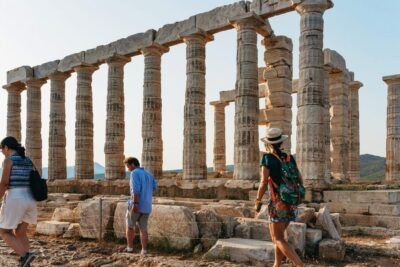
Cape Sounion & Poseidon Temple Sunset Half-Day Trip
Read our review →
Cape Sounion and Temple of Poseidon Half-Day Small-Group Tour from Athens
Read our review →
Temple of Poseidon & Cape Sounion Half-Day Tour
Read our review →

Half-Day Ubud Electric Cycling Tour to Tirta Empul Water Temple
Read our review →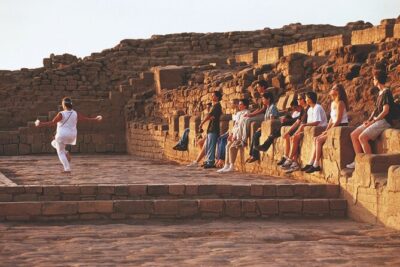
Pre Inca Temple of Pachacamac Half-Day Tour from Lima
Read our review →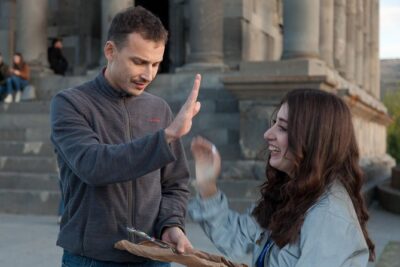
Private Half-Day Garni Temple and Geghard Monastery Tour from Yerevan
Read our review →
Browse the lists this tour appears in