
Review · SIEM REAP
Angkor Wat: Sunrise 2.5 Days Temples & Tonle Sap-Small Group
Sunrise is only the beginning. This 2.5-day small-group tour gives you a well-paced look at Angkor Wat, Angkor Thom, Banteay Srei, Ta Prohm, and Tonle Sap Lake, with an English-speaking guide and hotel transport included. I like the early entry at Angkor Wat, especially the walk through the quieter eastern side, and I like the practical care from the drivers, who have handed out cold water and wet towels after temple walks.
The main drawback is the extra temple pass. The tour costs $69 per person, but you must also buy the three-day Angkor pass for $62. Breakfast is not included, and the long temple days involve plenty of walking, stairs, heat, and uneven stone.
Key points at a glance
- Sunrise at Angkor Wat: Enter before dawn and see the temple gradually take shape in the morning light.
- Banteay Srei’s fine carvings: This smaller temple has some of Cambodia’s most precise sandstone decoration.
- A useful three-day rhythm: Outer temples come first, the central Angkor complex follows, and Tonle Sap finishes the experience.
- Small groups capped at 15: You get more access to the guide than on a large coach tour.
- Cold water and towels: Drivers such as Keal, Ro, and Mao have been praised for meeting the group with refreshments after temple stops.
- Seasonal final-day choice: Tonle Sap Lake is replaced by Cambodia Phare Circus during the stated dry-season period, from March 1 to June 31.
What the $69 price really covers
At first glance, $69 for two and a half days around Angkor looks like a bargain. It includes hotel pickup and drop-off, an air-conditioned vehicle, an English-speaking licensed guide, mineral water, and the Tonle Sap boat trip with its entrance fee. During the stated dry-season alternative, the package includes a Category C seat at Phare Circus instead.
You should budget another $62 for the required three-day temple pass. That brings the basic cost to $131 per person, before breakfast and any personal spending. I still consider that fair value if you want a guide and transport, since the schedule covers major temples spread across a large area and removes the need to arrange separate rides each morning.
The value depends on how you like to explore. If you enjoy history, want help reading temple carvings, and prefer not to negotiate several daily rides, this is a sensible package. If you only want Angkor Wat and a short visit to one other temple, you may find the 2.5-day format too much.
The small-group limit matters. With no more than 15 people, the guide can usually explain details without speaking to a huge crowd. It is not a private tour, so you still need to accept the pace and preferences of the group, but it offers a more personal setting than a full-size bus.
More Temple Sunrise Tours in Cambodia
- Angkor Wat Sunrise or Sunset Tour with Guide from Siem Reap
★ 5.0 · 12,109 reviews - Siem Reap: Angkor Wat: Small-Group Sunrise or Sunset Tour
★ 5.0 · 9,444 reviews - Siem Reap: Angkor Wat 2-Day Tour with Sunrise and Sunset
★ 4.9 · 4,429 reviews
Day one: Pre Rup, Banteay Srei, Neak Pean, and Preah Khan
The first temple day heads away from Angkor Thom and concentrates on sites with very different moods. That variety is one of the best features of the plan. You do not spend all day looking at the same type of tower.
Pre Rup and the temple mountain idea
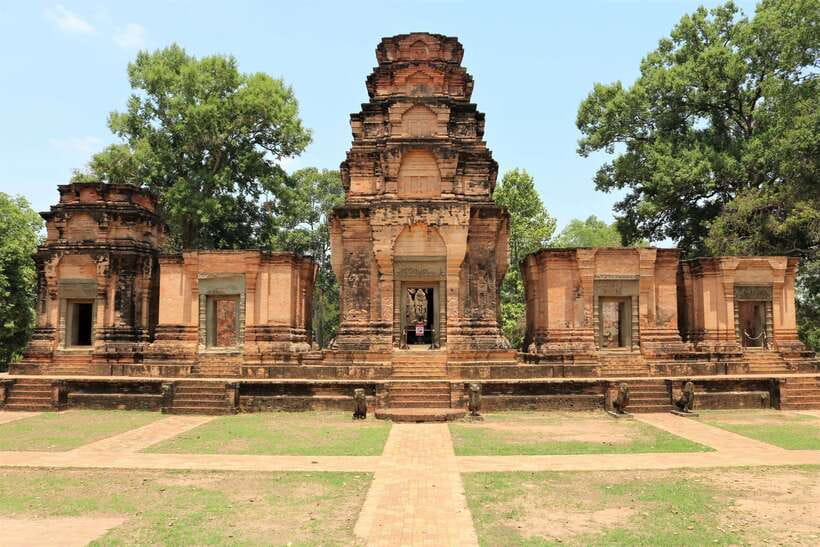
Pre Rup is a Hindu state temple built from brick, laterite, and sandstone. Its stepped design shows the Khmer preference for temple mountains, where the climb toward the upper levels carried religious meaning.
I like starting here because it gives you a useful introduction to Angkor architecture before the most famous sites. The brickwork and broad upper platforms help you see how a temple was built as both a sacred space and a symbol of royal power.
The stone can be uneven, and climbing is part of the visit. Wear shoes with a secure grip rather than loose sandals. This is not the place for a leisurely stroll on flat ground.
Banteay Srei and the finest small-scale carving
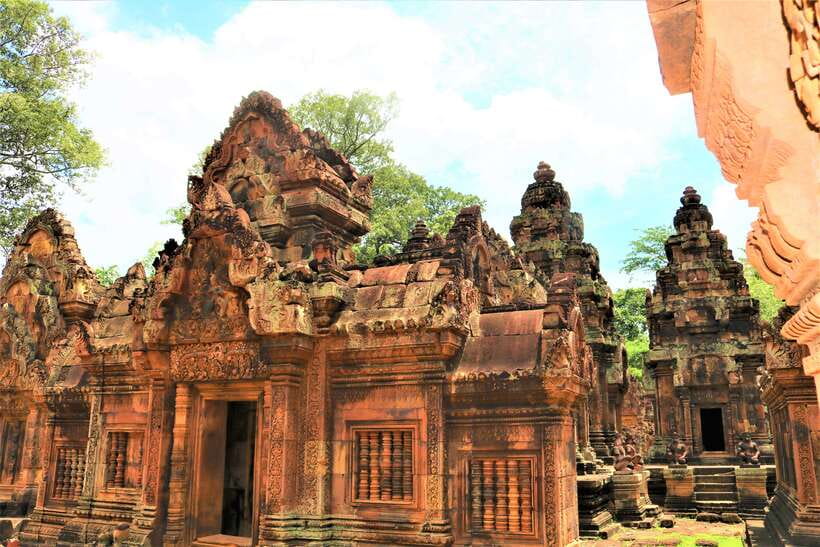
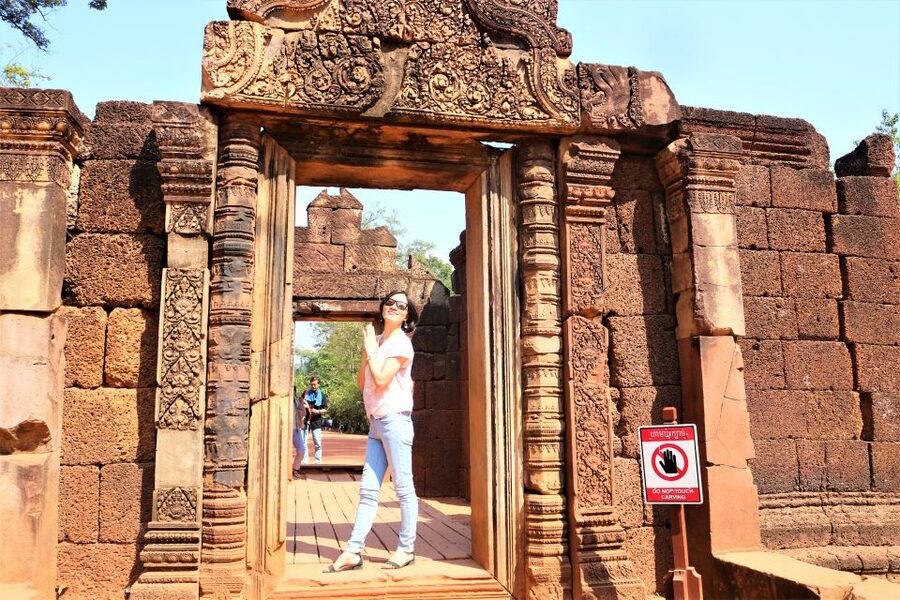
Banteay Srei is smaller than the grand temples near Angkor Wat, but its detailed reliefs are among the most carefully crafted in Cambodia. Pinkish sandstone and tightly cut figures give the temple a delicate appearance that differs sharply from the massive walls of Angkor Thom.
The carvings reward a slower look. Your guide can point out scenes and design details that are easy to miss when you are simply taking photographs. Several guides who have led this tour, including Pal Saruon, Pireak, and Sam, have been praised for explaining both temple history and Cambodian culture in clear English.
Banteay Srei only became accessible to visitors in the late 1990s, after the Khmer Rouge left the area. That recent history gives the stop another layer of meaning. You are not just visiting an old monument. You are seeing a place that was cut off from ordinary sightseeing for decades.
Because it lies outside the central Angkor group, the drive takes time. That is the trade-off. You spend part of the day in the vehicle, but the reward is one of the most distinctive temples in the area.
More Temple Sunrise Tours in Siem Reap
- Angkor Wat Sunrise tour with Small – Group and Guide tours
★ 5.0 · 3,655 reviews - Angkor Wat Highlights and Sunrise Guided Tour from Siem Reap
★ 5.0 · 3,213 reviews - Full-Day Angkor Wat Sunrise Private Tour with Guide from Siem Reap
★ 5.0 · 2,920 reviews - Angkor Wat Sunrise & 3 Main Temples with Breakfast – Small Group
★ 5.0 · 2,857 reviews
Neak Pean, a temple on water
Neak Pean sits on an artificial island, with the Buddhist temple placed on a circular island at its center. The approach gives you a change of pace after the stone platforms and carved walls of the morning.
The setting is as important as the small temple itself. Water, raised walkways, and the unusual island design make Neak Pean feel different from the mountain temples. Depending on conditions, some of the surrounding water features may be more striking than others, so it is best to appreciate the design rather than expect a large monument.
Preah Khan, roots and broken stone
Preah Khan finishes the first temple day with a more atmospheric visit. It is a ruined complex where tree roots, fallen stones, corridors, and remaining carvings share the same space.
I like this stop because it shows Angkor as an archaeological site rather than a row of perfectly preserved monuments. You can see how time, vegetation, and weather have altered the buildings. The broken sections also make the scale of the complex easier to understand.
By the end of this day, you will likely be tired. The schedule covers several sites, and the Cambodian heat makes even moderate walking feel demanding. The air-conditioned vehicle, water, and short pauses are not minor comforts here. They help keep the day manageable.
Day two: Angkor Wat before dawn
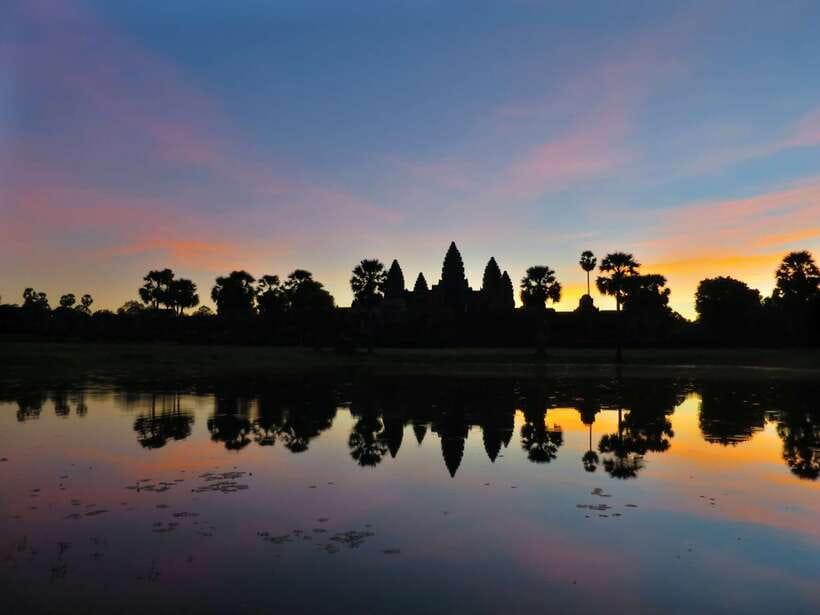
Day two begins with an early hotel pickup for sunrise. You enter Angkor Wat in darkness, carrying a torch, and approach through the eastern side, which is described as less visited than the better-known western entrance.
That early start is the defining feature of the tour. You are not simply arriving after breakfast and taking a quick photograph of the towers. You have time to watch the monument emerge slowly as the sky brightens.
Sunrise conditions are never guaranteed. Clouds, haze, or a crowded viewing area can change the scene. The useful part is the early access and the chance to see the temple before the hottest part of the day, not just the possibility of a perfect red sky.
Inside, the guide explains the bas-reliefs and the stories behind them. Angkor Wat has an unusually long stretch of carved scenes, and it is easy to walk past them without knowing what you are seeing. A good explanation turns the walls from decoration into a guide to Khmer religious ideas, royal power, and daily life during the empire.
You then have breakfast outside the temple, followed by a short rest. Breakfast is not included, so plan to pay for it yourself. This pause is important. Without it, the rest of the day would feel like one long march through stone corridors.
Angkor Thom and Bayon’s stone faces
The morning continues at the southern gate of Angkor Thom. Gods and demons line the approach, each side pulling on a giant serpent in a famous scene linked to Hindu mythology.
The gate works as more than a photo stop. It shows how the city was presented as a protected royal center, with the causeway and figures creating a dramatic entrance. Your guide can help you make sense of the repeated figures instead of treating them as background decoration.
Inside Angkor Thom, the scale changes again. This was a fortified city, not a single temple. The walls, gates, and central monuments show how Angkor functioned as an urban and political center.
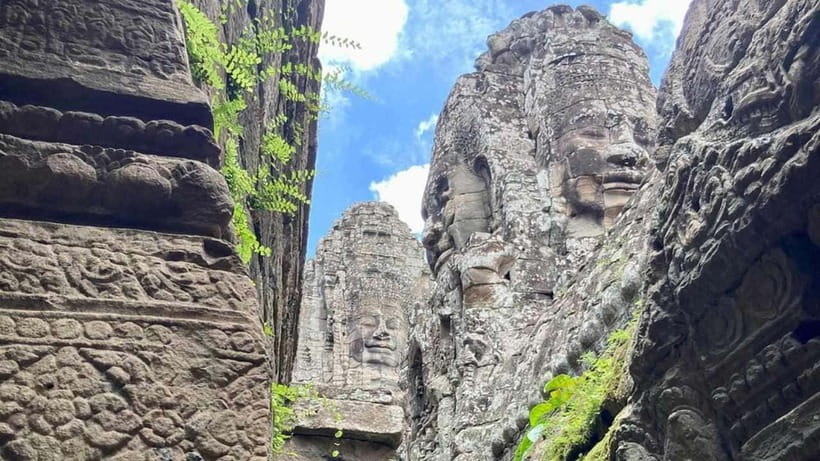
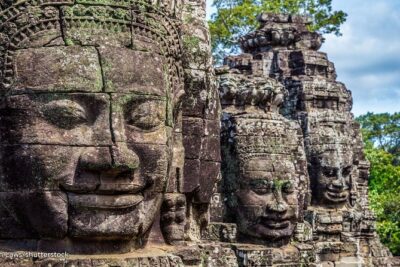
At Bayon, the famous towers carry enormous carved faces. More than 200 faces are associated with the temple, looking out from different levels and corners. The effect is memorable, but the layout can be confusing. Corridors turn quickly, towers crowd together, and the faces appear at different heights.
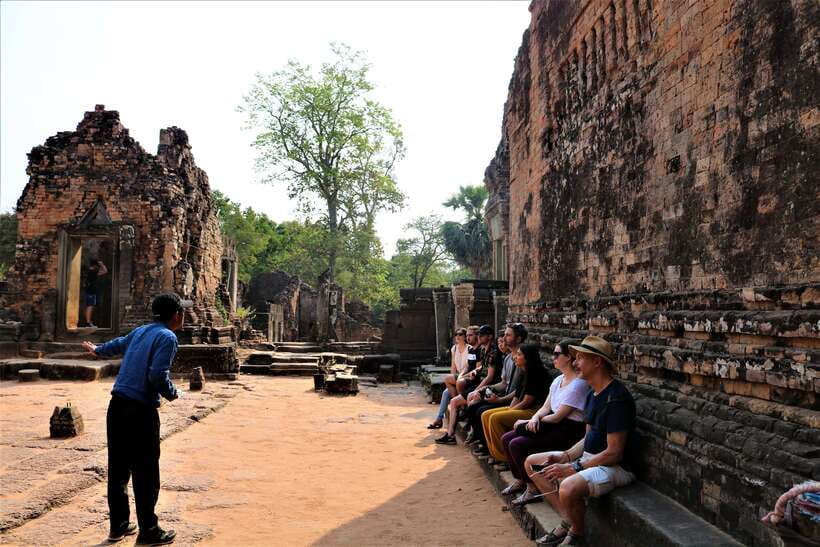
This is where a guide earns the fee. An experienced guide can point out what you are looking at, explain the temple’s religious setting, and help you find the strongest views without turning the visit into a rush from one selfie stop to another.
After lunch and another rest break, the tour continues to Ta Prohm. Lunch is not included, so you should allow for that cost. The pause also gives you a chance to escape the midday heat before the final temple.
Ta Prohm and the appeal of ruins
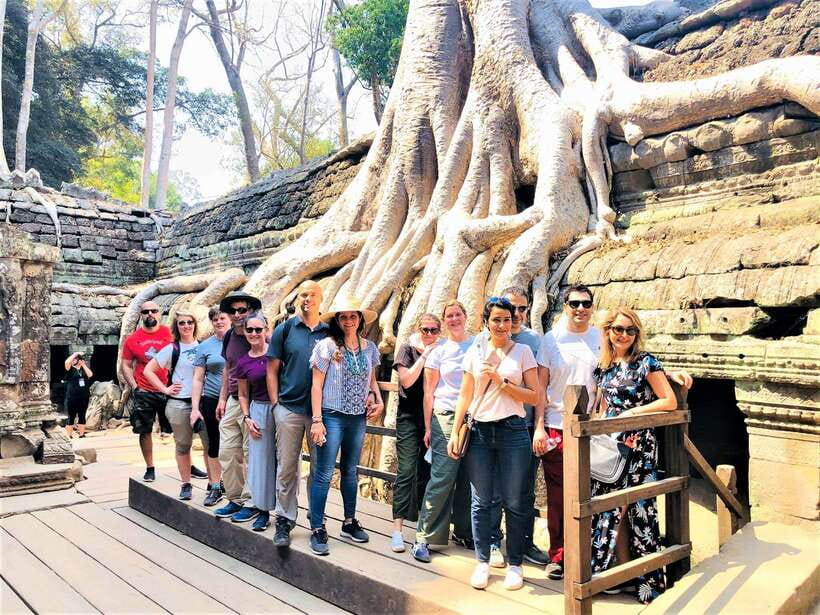
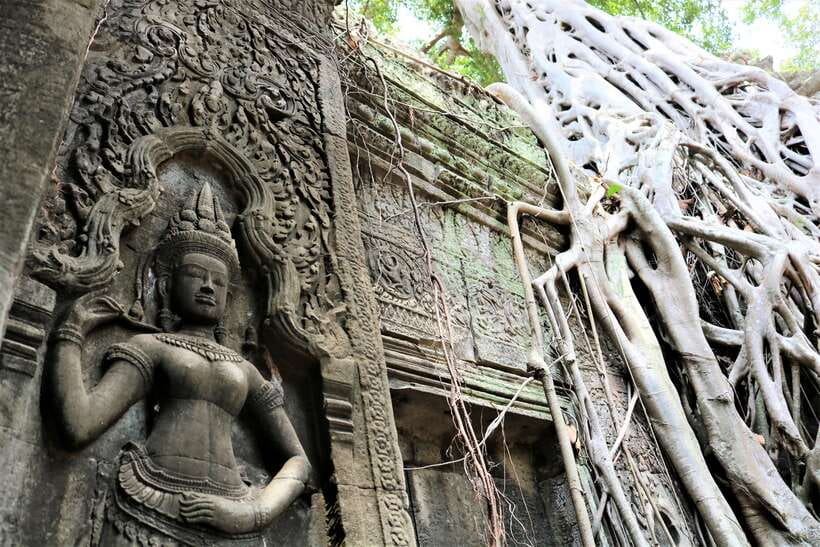
Ta Prohm is one of Angkor’s most atmospheric sites because trees and roots have grown around the remaining stonework. It offers the famous image of nature pressing into architecture, but the appeal is broader than one photograph.
You can see corridors, courtyards, carved doorways, and collapsed sections woven together by time. The temple feels less formal than Angkor Wat and less monumental than Bayon. It is a good final stop because it leaves you with a sense of Angkor as a living archaeological problem, not just a collection of polished sights.
The drawback is crowding. Ta Prohm is one of the best-known temples in the complex, so the narrow passages may feel busy. The small group helps with organization, but it cannot remove other visitors from the site.
Day three: Tonle Sap and Kampong Phluk
The final morning leaves the temple zone and heads through the countryside to Tonle Sap Lake, described as the world’s second-largest freshwater lake. The focus is Kampong Phluk, a group of three fishing villages set among a flooded forest.
The boat trip gives you a different view of Cambodia. Instead of carved stone and royal monuments, you see houses built on stilts, boats, fishing activity, and people working in a watery environment. The lake is not an add-on with a quick photo from shore. The boat is the main way to understand how the village and forest fit together.
The water level and appearance of the flooded forest can change with the season. That matters because the experience is tied to the lake’s conditions. You might see more or less exposed ground, changing views of the stilt houses, and different boat surroundings depending on when you go.
One guide, AJ, has been noted for explaining village life, traditional fishing practices, local produce, and the nearby market. That kind of local context improves the visit. Without it, you may see an unusual arrangement of houses but miss how residents use the water and adjust to seasonal change.
The boat entrance fee and cruise are included. This keeps the final day simple, though the lake section is not as long as the two temple days. If you want only ancient monuments, it may feel like a change of subject. I think the contrast is useful. After two days of royal temples, you see a present-day community shaped by water.
The Phare Circus alternative
During the stated dry-season period from March 1 to June 31, Cambodia Phare Circus replaces Tonle Sap Lake. The package includes a Category C seat.
This is not a small variation. The lake offers a countryside and community visit, while the circus gives you a performance-based cultural experience. Check the exact option available for your date before booking, especially if Tonle Sap is your main reason for choosing the tour.
Guides, vehicles, and the small-group experience
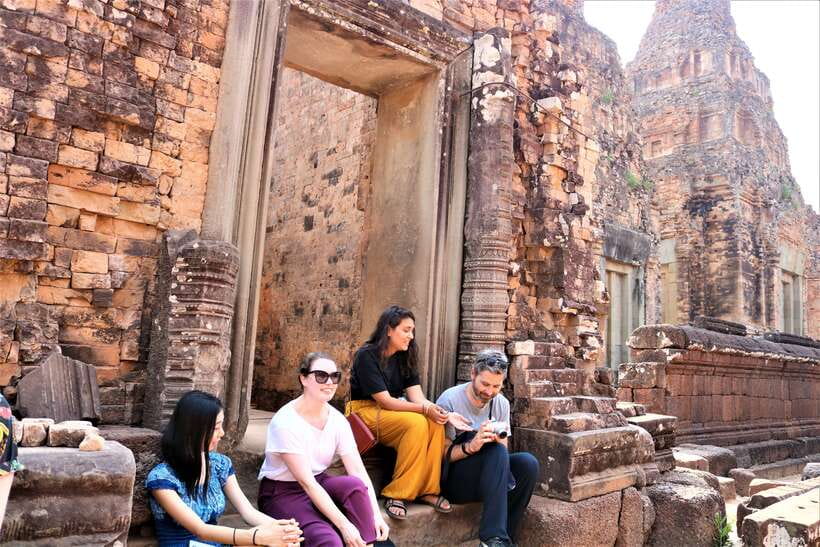
The guide is central to the quality of this tour. Past departures have included Saruon Pal, Pireak, Sokpee Sumsot, AJ, Pi, Sam, and Usa. Their strengths have included clear English explanations, temple interpretation, cultural context, patience, and help with photographs.
Some guides have also explained modern Cambodian traditions rather than stopping at ancient dates and royal names. That broader conversation can make Angkor easier to understand as part of Cambodia, not an isolated monument.
The drivers receive especially strong praise for practical care. Keal, Ro, and Mao have been associated with cold water and refreshing wet towels at the vehicle after temple walks. Saruon Pal’s driving team was also noted for coming forward as the group approached the exit, reducing the wait in the heat.
Pickup is from your hotel lobby, and the vehicle is air-conditioned. With groups limited to 15, you should expect some waiting for others at entrances and exits, but the setup remains more manageable than a large bus.
Bring comfortable shoes. Short skirts are not allowed, so dress with temple rules in mind. The tour is not suitable for people with mobility impairments because of uneven paths, stairs, long walking periods, and temple terrain.
Who should book this tour?
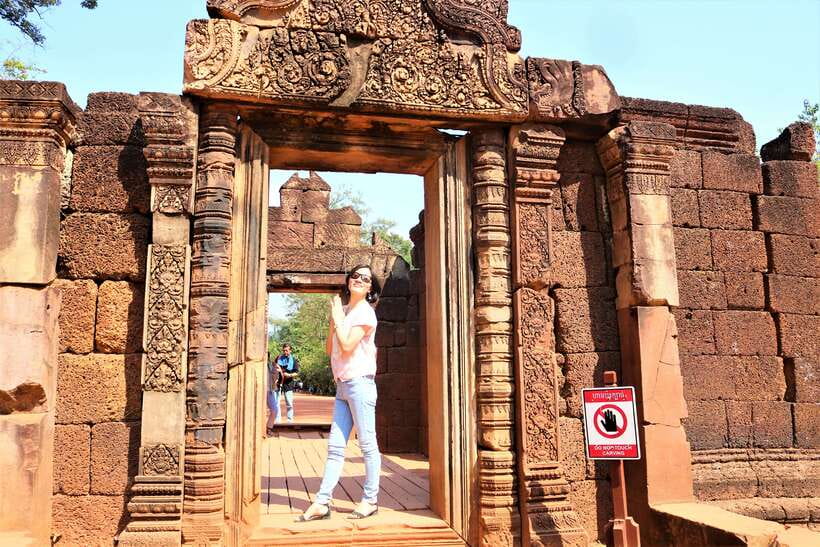
I would choose this tour if you have two and a half days in Siem Reap and want the main Angkor sights without arranging every ride yourself. It suits first-time visitors who want a guide to explain carvings, religious stories, and Cambodian culture.
It is also a good fit if you like a mix of famous sites and less central stops. Banteay Srei, Neak Pean, Preah Khan, and Tonle Sap prevent the experience from becoming only Angkor Wat, Bayon, and Ta Prohm.
I would think twice if you dislike early mornings, cannot manage long walking days, or want a flexible private schedule. The sunrise departure is very early, the temple pass adds a sizable cost, and the group sets the pace.
FAQ
Is the Angkor temple pass included?
No. The three-day temple pass costs $62 per person and is not included in the tour price.
What does the $69 tour price include?
It includes 2.5 days of temple and lake or circus visits, a licensed English-speaking guide, hotel pickup and drop-off, an air-conditioned vehicle, mineral water, and the Tonle Sap entrance fee and boat cruise, or the Phare Circus ticket when that option applies.
Is breakfast included?
No. Breakfast is not included, so you should plan to buy it yourself during the morning break outside Angkor Wat.
How large is the tour group?
The tour is a small-group experience limited to 15 participants.
What happens during the dry season?
From March 1 to June 31, Cambodia Phare Circus is listed as the alternative to Tonle Sap Lake. Check the available option for your date.
What should I bring?
Bring comfortable shoes. Short skirts are not allowed at the temples.
Is the tour suitable for people with mobility impairments?
No. The experience is not considered suitable for people with mobility impairments because it involves extensive walking and temple terrain.
Should you book it?
Book this tour if you want a guided Angkor introduction with sunrise, the major temples, an outer-temple day, and either Tonle Sap or Phare Circus. The strongest reasons are the useful three-day pass coverage, the small group, and the steady support from guides and drivers.
Just price it honestly at $131 before meals, not $69 alone. If that total works for your budget and you can handle early starts and rough temple paths, this is a practical, well-rounded way to see Siem Reap.
More 5-Day Experiences in Siem Reap
- 5-Day All Major Temples & Kulen Mount Waterfall & Koh Ker & Beng Mealea
★ 5.0 · 13 reviews - Angkor Wat: Sunrise 2.5 Days with Tonle Sap Lake Tour
★ 5.0 · 7 reviews
More Angkor Wat Tours in Siem Reap
- Siem Reap: Full-Day Angkor Wat Guided Tour with Sunset
★ 4.9 · 3,803 reviews - Angkor Wat Sunset Small Group Tour with Lunch Included
★ 5.0 · 3,059 reviews - Siem Reap: Angkor Wat Sunrise and Full-Day Sightseeing Tour
★ 4.9 · 2,828 reviews - Siem Reap: Angkor Wat Private Tuk-Tuk Tour
★ 4.9 · 2,222 reviews
Just added around Siem Reap
- Sunrise at Angkor Wat Temple: 3-Hour Private Tour★ 4.7 · 30 reviews
- Small-Group Explore Angkor Wat Sunrise Tour with Guide★ 5.0 · 3 reviews
- Siem Reap: Ultimate Angkor Wat Offbeat Experience by Jeep★ 4.9 · 8 reviews
- SiemReap: Private Angkor Wat Tour in English or German guide★ 5.0 · 5 reviews
- Siem Reap : Private Tuk-Tuk Tour of the Magnificent Temples.★ 4.9 · 14 reviews
- Siem Reap: Private 4-Day Angkor Wat and Phnom Kulen Tour★ 5.0 · 9 reviews
- Siem Reap: Personalized Angkor Wat Sunrise/Set by TukTuk/Car★ 4.9 · 41 reviews
- Siem Reap: 1-Day Angkor Wat Tour in Portuguese★ 5.0 · 4 reviews
Angkor Wat Tours, compared.
Angkor Wat Sunrise or Sunset Tour with Guide from Siem Reap
Read our review →
Angkor Wat: Small-Group Sunrise or Sunset Tour
Read our review →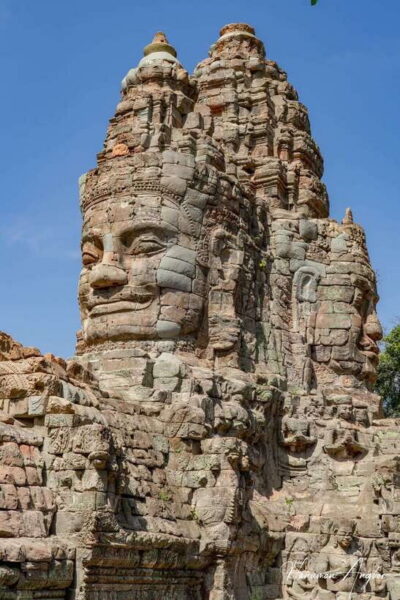
Angkor Wat 2-Day Tour with Sunrise and Sunset
Read our review →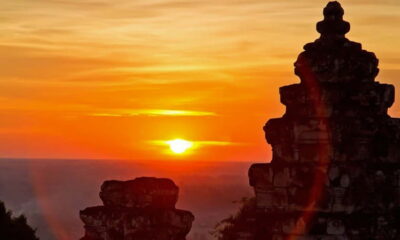
Angkor Wat Sunrise tour with Small – Group and Guide tours
Read our review →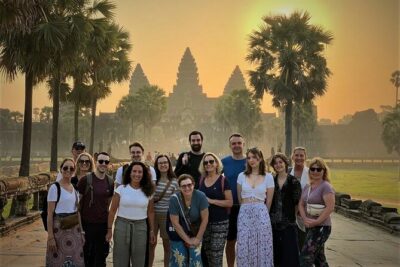
Angkor Wat Highlights and Sunrise Guided Tour from Siem Reap
Read our review →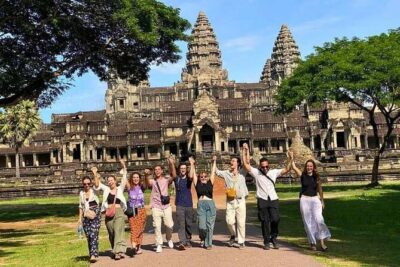
Angkor Wat Sunset Small Group Tour with Lunch Included
Read our review →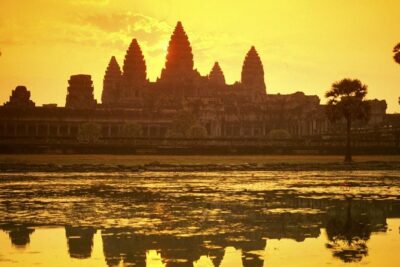
Full-Day Angkor Wat Sunrise Private Tour with Guide from Siem Reap
Read our review →Browse the lists this tour appears in