

Review · ROME
Rome: Temples, Squares & Markets Guided Walking Tour
Rome rewards a good route. This private three-hour walk links famous sights, ancient ruins, lively squares, and lesser-known corners without making you spend the day inside a museum. You see the Pantheon, Piazza Navona, Jewish Ghetto, Circus Maximus, and Tiber Island, while a local guide explains how the pieces fit together.
I like the private format and the freedom to adjust the route. Guides Juan and Daniele have shown the sort of personal attention that makes a walking tour useful: Juan added places his guests had missed, while Daniele shaped the route toward a hotel and offered further Rome and Italy recommendations. I also like that the tour includes a taste of Roman street food, not just a parade of monuments.
The main drawback is simple: three hours is a tight window for this many stops. You see the outside of several important sites, and entrance tickets are not included. At $79.30 per person, the price makes the most sense if you value a private guide and tailored route rather than a long visit inside each attraction.
Key points to know before booking
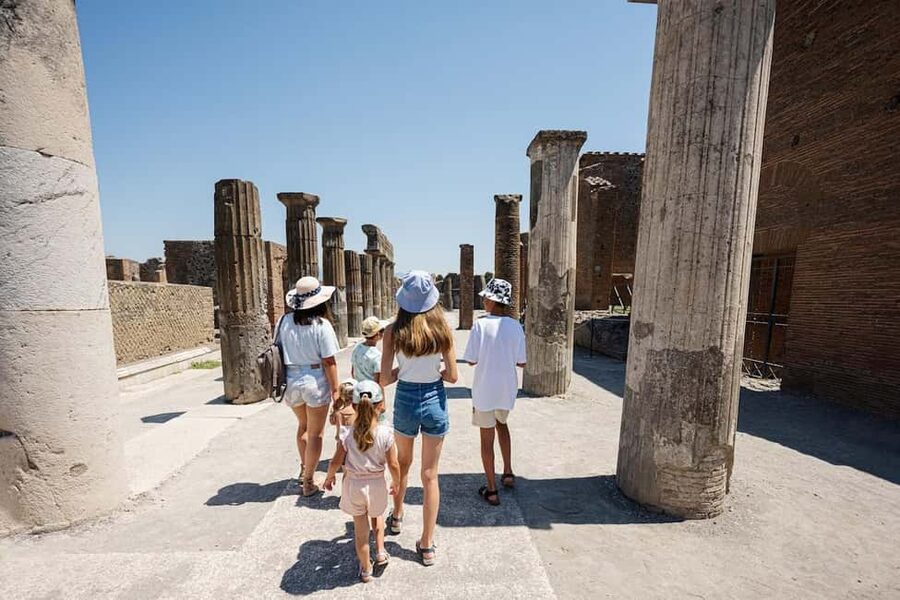
- The route packs in Rome’s historic center: You move from Sant’Ignazio and the Pantheon to Piazza Navona, Campo de’ Fiori, Largo di Torre Argentina, the Jewish Ghetto, and ancient Rome.
- You get one Roman food tasting: The planned specialty is supplì, a fried rice croquette that gives you a quick taste of everyday Roman food.
- The tour is private: You receive the guide’s full attention, with room to ask questions or request changes.
- Several stops are viewing points rather than ticketed visits: The Pantheon, Palatine Hill, and other attractions may require separate admission if you want to go inside.
- The route ends near Tiber Island: The stated itinerary finishes there, though the meeting information also says the activity ends back at the meeting point, so confirm the exact finish when booking.
- The tour is offered in three languages: You can select English, Spanish, or Italian, and the activity is listed as wheelchair accessible.
Why this three-hour route works

Rome can feel like a history book dropped onto a modern street. A bakery, baroque church, imperial ruin, and ancient temple may all appear within a few minutes of one another. This walk takes advantage of that compact mix.
I like the route because it does not focus only on the obvious headline sights. You get the Pantheon and Piazza Navona, but also Largo di Torre Argentina, the Portico of Octavia, the Temple of Portunus, and the Jewish Ghetto. Those stops give you a better sense of Rome as a living city built over its own past.
The private format matters here. On a large group walk, you may have little time to ask why an obelisk is in a particular square or what happened at a specific ruin. With your own guide, you can ask for more Roman food, more ancient history, more films and architecture, or fewer stops and a gentler pace.
The pace will still be brisk. The itinerary assigns roughly 15 minutes to many stops, with 20 minutes at the Portico of Octavia and more open-ended time at Palatine Hill. You should think of this as a guided overview, not a full archaeological visit.
More Temple Walking Tours in Italy:
- Walking Guided Tour and Rome’s Iconic Temple Pantheon Entrance
★ 4.5 · 422 reviews - Bangkok: City Highlights Temple and Market Walking Tour
★ 4.5 · 3,990 reviews - Bangkok: Grand Palace and Wat Phra Kaew Guided Walking Tour
★ 4.4 · 2,417 reviews
Sant’Ignazio and the painted illusion overhead
The tour begins at the entrance of the Church of Sant’Ignazio of Loyola. This is a smart starting point because the church offers immediate visual drama before you reach the better-known monuments.
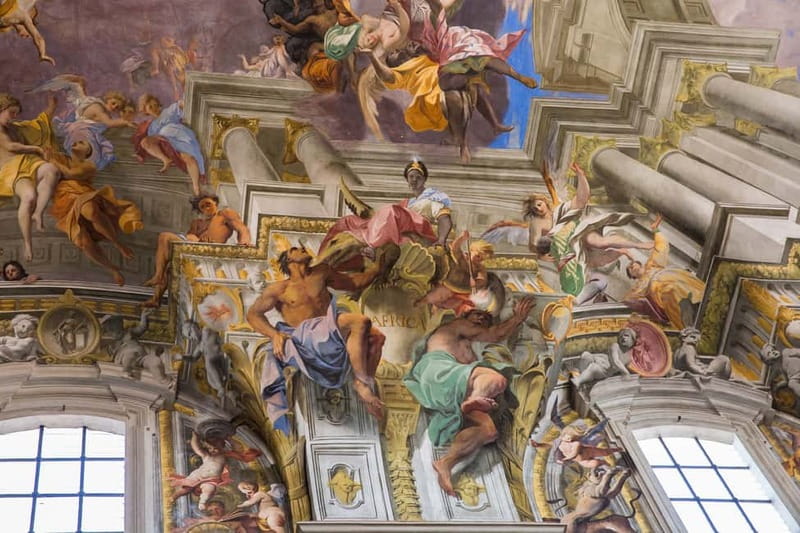
Your guide spends about 15 minutes here, pointing out the frescoed ceiling and the church’s baroque character. Sant’Ignazio is particularly useful for setting the tone of the tour: Rome’s art is not confined to grand museums. It appears in churches that can look modest from the street.
Take a moment to look upward. The ceiling is the main visual reward, and your guide can help explain what you are seeing rather than leaving you to admire it without context. Since the tour is private, this is a good place to ask about Roman churches, baroque design, or the way religious buildings shaped the city.
The Pantheon and Rome’s ancient obelisks
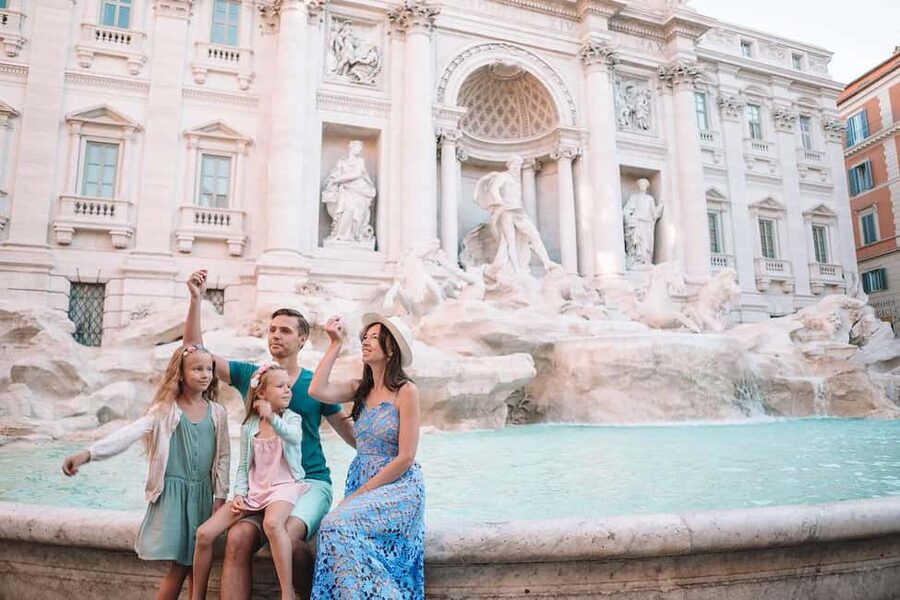
From Sant’Ignazio, you walk to the Pantheon. The planned guided visit lasts about 15 minutes, so you should clarify whether your price includes any interior admission. The activity details state that attraction tickets are not included.
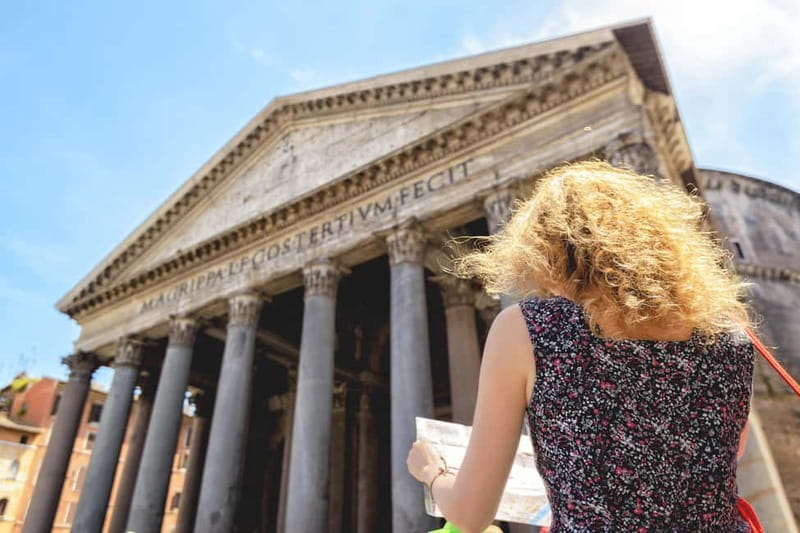
Even from outside, the Pantheon is an essential Rome stop. Its scale and age help make sense of the city’s unusual mixture of ancient structure and daily life. Your guide also discusses Rome’s obelisks, including monuments brought from Egypt thousands of years ago.
That detail adds useful context to the walk. Rome did not simply preserve its past in one location. Ancient Egyptian monuments, Roman temples, Christian churches, and later civic spaces were reused and repositioned across the city. The obelisks are part of that long process.
If entering the Pantheon is a priority, budget time and admission separately. Fifteen minutes is enough for an introduction, but not for a slow architectural inspection.
Piazza Navona and the city’s talking statues
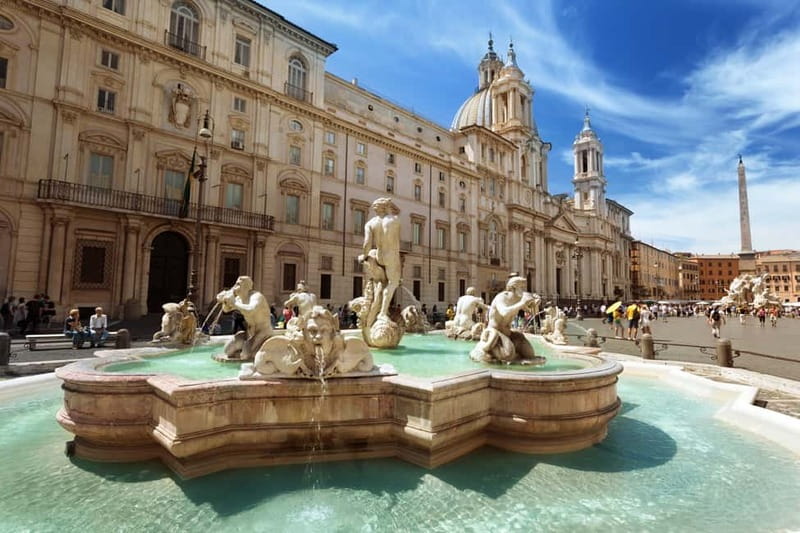
Piazza Navona gives the route a change of mood. The broad square is a place to look at architecture, watch city life, and hear stories that are less formal than a standard history lecture.
Your guide explains Rome’s talking statues, a peculiar local tradition in which citizens used public statues to post anonymous political comments. That small subject brings the city’s old frustrations to life. Rome’s monuments were not only decoration. They also became public noticeboards.
The stop lasts about 15 minutes. I would use this time to ask your guide how the square changed over time and which details are easy to miss. The private setting is helpful in places like Piazza Navona, where a guide can point out features without trying to keep a large group together.
A few more temple visits around Italy worth a look
- Agrigento: Valley of the Temples Skip-the-Line Sunset Tour
★ 4.5 · 1,512 reviews - Pantheon Elite Guided Tour – Rome’s Iconic Ancient Temple
★ 5.0 · 1,447 reviews - Palermo: Agrigento and the Valley of the Temples Day Tour
★ 4.2 · 1,240 reviews - Rome’s Iconic Temple: Pantheon Audio Guided Tour with Fast Access
★ 4.0 · 1,188 reviews
Campo de’ Fiori and a taste of Roman street food
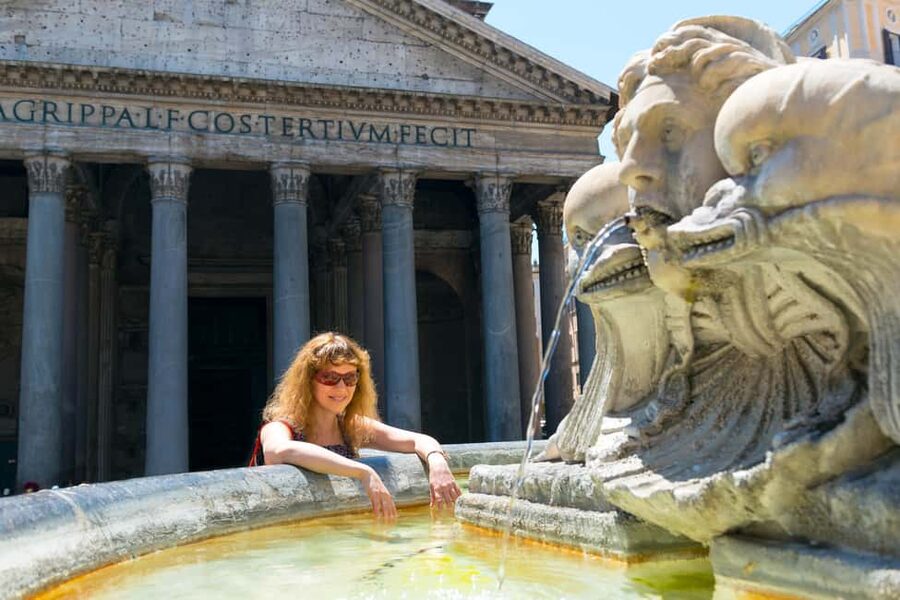
Campo de’ Fiori is one of the more practical stops because it combines history, food, and neighborhood life. The route includes the local food market and one street food tasting.
The planned bite is supplì, a Roman fried rice snack. It is usually served as a compact, filling street food, and the tour uses it to introduce Italian ingredients and Roman eating habits. One tasting will not turn you into a food expert, but it gives you a useful first sample and a reason to ask your guide what else to try later.
I like the food element because it breaks up the monuments. Rome should not be experienced only through stone and dates. Food tells you something about how the city works today.
Keep your expectations realistic. The included food is one tasting, not a market lunch. If you are hungry, use the guide’s recommendations for additional places after the tour. You can also ask about authentic places to eat and shop before saying goodbye.
Largo di Torre Argentina and the Ides of March
The walk continues to Largo di Torre Argentina, an archaeological area tied to one of Rome’s most famous political murders. Your guide explains the place where the Ides of March brought a terrible end to Julius Caesar.
This is also where the tour introduces the idea of Rome as a kind of lasagna, with layer after layer of construction and history beneath the modern streets. The comparison is simple but useful. You are not looking at a city that developed in one clean period. You are looking at centuries placed on top of one another.
The stop is listed at about 15 minutes. That is enough for the story and the main visual points, but not for a long examination of every ruin. If Roman political history interests you, ask your guide to spend more time here and trim a less important stop.
The Jewish Ghetto and the Portico of Octavia
The Jewish Ghetto gives the walk a more local and reflective stretch. The neighborhood is described as an area that has retained its character, with narrow lanes and unusual street names that your guide helps explain.
The route passes the Portico of Octavia, with about 20 minutes planned for the stop. This is one of the longer scheduled visits, which makes sense. The site connects ancient Roman construction with the later life of the Jewish neighborhood around it.
You should pay attention to the transitions here. The value is not only the individual ruin or street. It is seeing how a distinct community developed beside ancient remains and within the changing city. The guide can help explain the area’s character without reducing it to a quick photo stop.
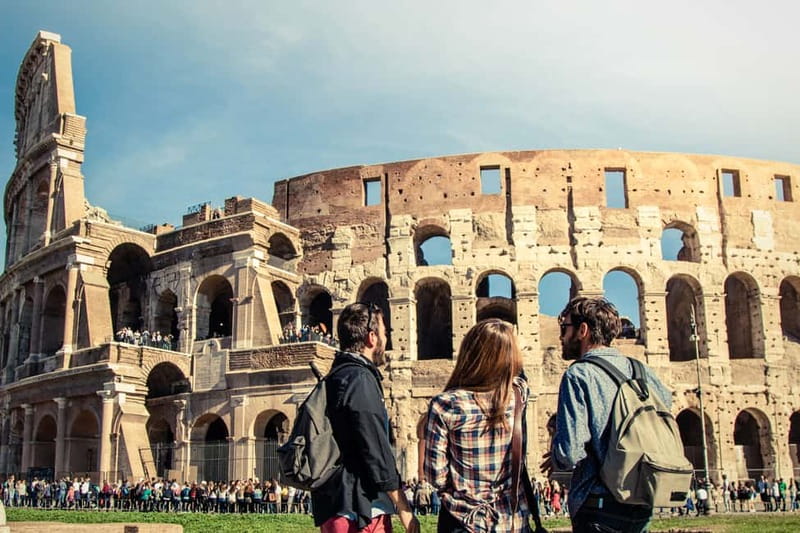
The tour also includes the so-called fake Colosseum, an ancient ruin that resembles the famous amphitheater. It is a fun visual comparison, though you should not expect an actual second Colosseum. This is exactly the sort of detail that can disappear if you explore Rome without local explanation.
Temples, the Mouth of Truth, and a film connection
The Temple of Portunus is another ancient stop on the route. It gives you a close look at one of Rome’s surviving temples and helps broaden the picture beyond the Colosseum and Forum.
The walk then reaches the Mouth of Truth, a spot made famous for its appearance in the film Roman Holiday. The movie connection makes this stop approachable even if you are not an ancient-history enthusiast. It also shows how Rome’s image has been shaped by cinema as well as archaeology.
The Mouth of Truth can be a brief stop, particularly if you are trying to fit the full route into three hours. Your guide can connect the film story to the surrounding ancient buildings, giving you more than a simple photograph.
The itinerary includes several stops with blank location labels alongside the named sights. That likely reflects short walking segments or nearby points of interest, but the exact details are not given. If a particular temple, square, or ruin matters to you, tell your guide early so the private route can be adjusted.
Circus Maximus and Palatine Hill
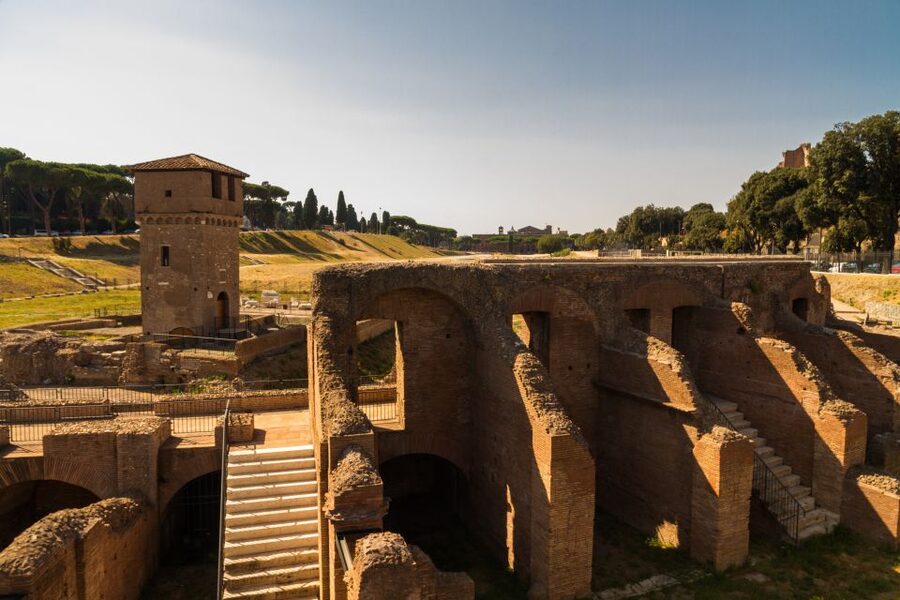
The route heads toward the Circus Maximus and Palatine Hill, where the scale of imperial Rome becomes easier to grasp. The Circus Maximus was a huge public venue, while the Palatine was associated with the rulers of the Roman Empire.
You see views of the Imperial Palace remains and learn about the area’s role as an imperial home. The itinerary gives about 15 minutes to the Circus Maximus and lists Palatine Hill as a guided stop without a fixed duration.
This is one point where the tour’s limits matter most. The walk gives you an overview and exterior views, but it does not include admission to the archaeological area. If you want to walk through Palatine Hill or inspect the palace ruins closely, you will need a separate ticket and more time.
Still, the guided viewpoint has real value. A guide can help you understand how the Circus, Palatine, and nearby ancient areas related to each other. Without that context, the ruins can look like disconnected stones.
Crossing to Tiber Island
The final listed stop is Tiber Island. Crossing the bridge gives the tour a natural finish and a chance to see how the river shaped Rome’s growth.
The island is not presented as a long archaeological visit. Instead, it works as a final city view after the temples, squares, markets, and imperial sites. Your guide can also use the last part of the walk to suggest places to eat, shop, and explore independently.
There is a small logistical point to clear up. The detailed route says the tour finishes at Tiber Island, while the meeting information says the activity ends back at the meeting point. Ask for confirmation before the day of the tour, especially if you are planning a timed reservation afterward.
What the $79.30 price buys you
At $79.30 per person, this is not the cheapest way to see Rome’s center. The price reflects a private group, a three-hour local guide, route flexibility, and one food tasting.
I think the value is strongest for first-time visitors who want orientation without committing to a full day. You get a broad introduction to central Rome and several areas that a basic Pantheon and Colosseum route might skip.
The value is weaker if you mainly want entry into major attractions. Admission tickets are not included, and the short stop lengths mean you will not fully explore the Pantheon or Palatine Hill during the walk. In that case, you may prefer to book a guided interior visit separately and use this tour for neighborhood context.
The private format can also make the price worthwhile for families, couples, or small groups with a shared interest. You are not paying only for information. You are paying for the ability to ask questions, change emphasis, and receive personal suggestions.
Guides, languages, and practical details
The tour is offered in English, Spanish, and Italian. It is listed as wheelchair accessible, but the route includes historic streets, squares, bridges, and archaeological viewing areas. If you have specific mobility needs, confirm how the guide will handle each part of the route before booking.
The tour lasts three hours, with starting times dependent on availability. Wear comfortable shoes and bring water, since the experience is entirely on foot. The itinerary is packed, so arrive ready to keep moving between stops.
The guide quality appears to be a major strength. Juan is warm, adaptable, and able to personalize the route. Daniele is praised for arriving on time, planning for strong visual views, ending near a hotel when possible, and offering useful suggestions for the rest of a trip through Rome and Italy.
You can cancel up to 24 hours before the tour for a full refund, and you can reserve now and pay later. Those terms help if your Rome schedule is still changing.
Who should book this Rome walk?
I would choose this tour if you want a private introduction to Rome’s center, enjoy asking questions, and prefer local stories to a fixed script. It is especially useful early in a Rome stay, when you can use the guide’s food and sightseeing suggestions afterward.
It also suits repeat visitors who have already seen the biggest monuments and want a route with the Jewish Ghetto, Largo di Torre Argentina, Portico of Octavia, Temple of Portunus, and Tiber Island.
I would look elsewhere if you want long interior visits, a slow food tour, or a focused study of one ancient site. Three hours cannot do all of that, and tickets are extra.
Should you book it?
Book this walking tour if you want a private, flexible overview that combines major Rome sights with food, neighborhood streets, ancient temples, and useful local advice. Juan and Daniele add the personal touch you hope for from a private guide, and the route reaches beyond the standard postcard stops.
Skip it if your priority is entering every major attraction or spending an hour at each ruin. For most visitors who want a well-shaped first look at Rome, the route offers good variety and a practical introduction, provided you understand that it is a fast-paced exterior tour with one small food tasting.
FAQ
How long does the Rome walking tour last?
The tour lasts three hours.
What language is the tour offered in?
The live guide is available in English, Spanish, or Italian.
Is the tour private?
Yes. It is offered for a private group.
Where does the tour start?
The meeting point is at the entrance of the Church of Sant’Ignatius of Loyola.
Where does the tour finish?
The detailed route lists Tiber Island as the finish. The meeting information also says the activity ends back at the meeting point, so confirm the exact ending location when booking.
Is food included?
One traditional Roman street food tasting is included. The planned tasting is supplì.
Are attraction entrance tickets included?
No. Tickets to attractions are not included.
Is the tour wheelchair accessible?
Yes. The activity is listed as wheelchair accessible.
Can I cancel for a refund?
You can cancel up to 24 hours in advance for a full refund. You can also reserve now and pay later.
Just added around Italy
- Private Tour to the Villa Romana del Casale and the Valley of the Temples★ 4.5 · 19 reviews
- Agrigento and Piazza Armerina: Valley of the Temples and Villa Romana del Casale★ 4.5 · 121 reviews
- Villa Romana Del Casale in Piazza Armerina and Valley Of Temples in Agrigento★ 4.5 · 38 reviews
- Padre Pio’s Shrine in San Giovanni Rotondo from Bari (Apulia)★ 5.0 · 3 reviews
- Cooking Class in a former Artist Monastery in the Heart of Monopoli★ 5.0 · 18 reviews
- Agrigento to Siracusa with Valley of Temples and Roman Villa Trip★ 5.0 · 5 reviews
- Private transportation to the Valley of the Temples + Agrigento★ 5.0 · 8 reviews
- Agrigento Valley of the Temples Archaeological Area★ 4.0 · 33 reviews
Temple Walking Tours, compared.

City Highlights Temple and Market Walking Tour
Read our review →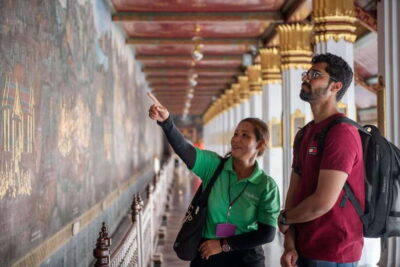
Grand Palace and Wat Phra Kaew Guided Walking Tour
Read our review →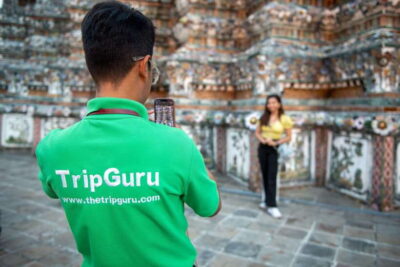
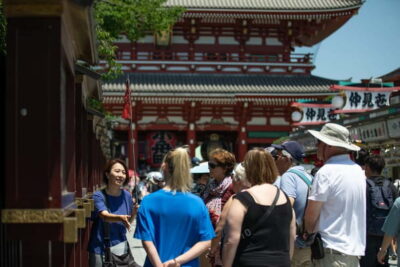
Asakusa Walking Tour with Sensoji Temple Visit
Read our review →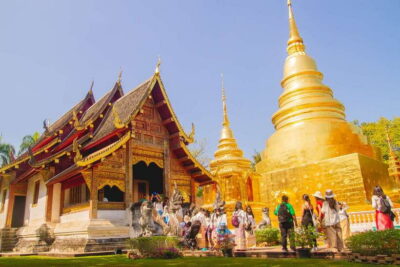
3 Hour Old City and Temples Guided Walking Tour
Read our review →
Kyoto Arashiyama Walking Tour: Bamboo, Monkeys, Gardens & Secrets
Read our review →
Belém Walking Tour with Jerónimos Monastery Ticket
Read our review →Browse the lists this tour appears in