
Review · MALTA
Prehistoric Temples of Malta Tour
Ancient stones, dramatic sea views, and a very old mystery. This half-day tour takes you to Malta’s Hagar Qim and Mnajdra Temples, then adds Ghar Dalam Cave and Museum for a wider look at the island’s prehistoric past. I like the way the guide brings the stones and their builders into focus, and I like that transport and entrance fees are included. The main drawback is time: some visitors want another 20 minutes at the temples.
The tour costs $59 per person and lasts about 4.5 hours. That is fair value if you want a simple way to reach sites spread across southern Malta, especially from Valletta, Sliema, St. Julian’s, or the northern resort areas. Expect pickup delays, a fair amount of walking, and a guide who may explain everything in several languages.
Key points to know before you book
- Hagar Qim sits on a limestone ridge: The temple area has open views toward the Mediterranean and the small island of Filfla.
- Mnajdra is the architectural highlight: It is widely regarded as the finest surviving example of Maltese megalithic architecture.
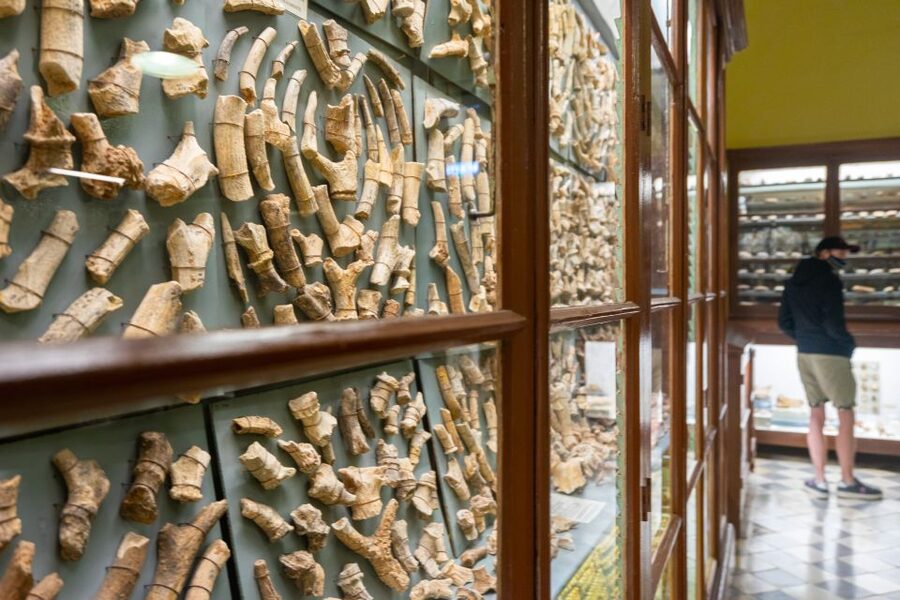
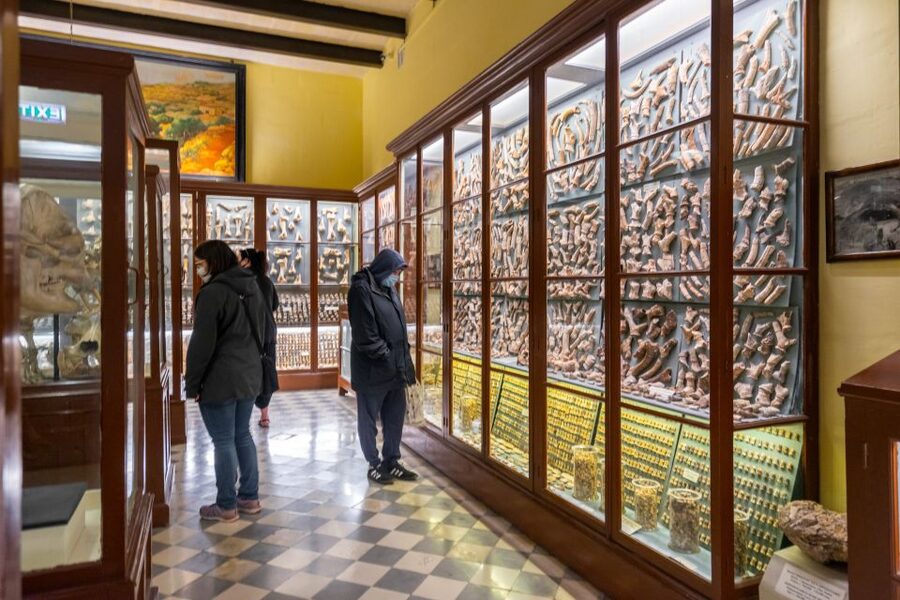
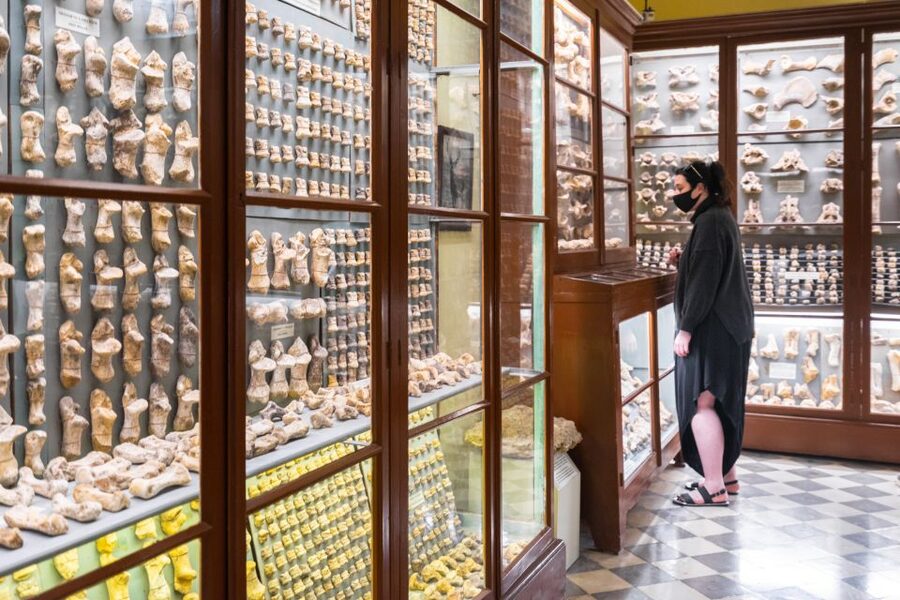
- Ghar Dalam adds a useful prehistoric layer: The cave itself is modest, but the museum’s animal bones and fossils help explain Malta before the temples.
- The tour includes Hamrija Tower: This 17th-century watchtower adds a later chapter to the morning, built by Grand Master Martin de Redin.
- Guides earn much of the praise: Mark, Marco, Mario, Marlon, Miriam, Maria, and Nick have all been singled out for clear, engaging explanations.
- Comfortable shoes and water matter: You will walk between sites, and the return route from the temples is uphill.
Why Malta’s prehistoric temples matter
Malta’s megalithic temples date from roughly 3150 BC, making them about 5,500 years old. They are recognized by UNESCO as the oldest free-standing stone structures in the world.
That age can be hard to grasp when you are simply looking at a block of limestone. A good guide helps bridge the gap. The useful question is not only how old is this? but also how did people move, shape, and arrange these stones without modern machinery?
This is where the tour earns its keep. You could reach the sites independently, but the remains are easier to understand when someone points out the carved details, explains the likely purpose of different spaces, and places Malta’s prehistoric culture within the wider story of the Mediterranean.
The evidence is fragmentary. Nobody can hand you a complete explanation of why each chamber was built or how every ritual worked. That uncertainty is part of the appeal, and guides such as Mark and Marco have been praised for making visitors think about how archaeologists found and interpreted the sites rather than simply reciting dates.
A few more temple visits around the world worth a look
- Lisbon: Jerónimos Monastery Entrance Ticket
★ 4.1 · 14,164 reviews - Angkor Wat Sunrise or Sunset Tour with Guide from Siem Reap
★ 5.0 · 12,109 reviews - Teotihuacan, Guadalupe Shrine & Tlatelolco Day Tour with Lunch
★ 5.0 · 11,603 reviews
Starting the morning with hotel pickup
Pickup is included from a long list of areas. The published times begin at 8:30 in Cirkewwa and Attard, with stops in Mellieha, Xemxija, Golden Bay, St. Paul’s Bay, Bugibba, Qawra, St. Julian’s, Sliema, and Valletta.
The exact meeting point and time are sent by email the day before. Treat that message as important. Pickup arrangements have caused some uncertainty in the past, particularly for people staying in Valletta who had to walk about 10 minutes to the meeting point. Check your email before bed and allow extra time in the morning.
The vehicle is generally comfortable, and one useful touch is air conditioning, especially in warmer months. The downside is the collection route. Picking up people across Malta can take longer than expected, and some departures include a wait while another bus joins the group.
That is the tradeoff for hotel pickup. You give up some time to avoid finding the sites and arranging transport yourself. The driving can also feel lively on Malta’s roads. Most reports describe the drivers as careful and professional, though one person found the driving unsettling and another mentioned an older bus on the return journey.
Ghar Dalam Cave and Museum: small cave, useful context
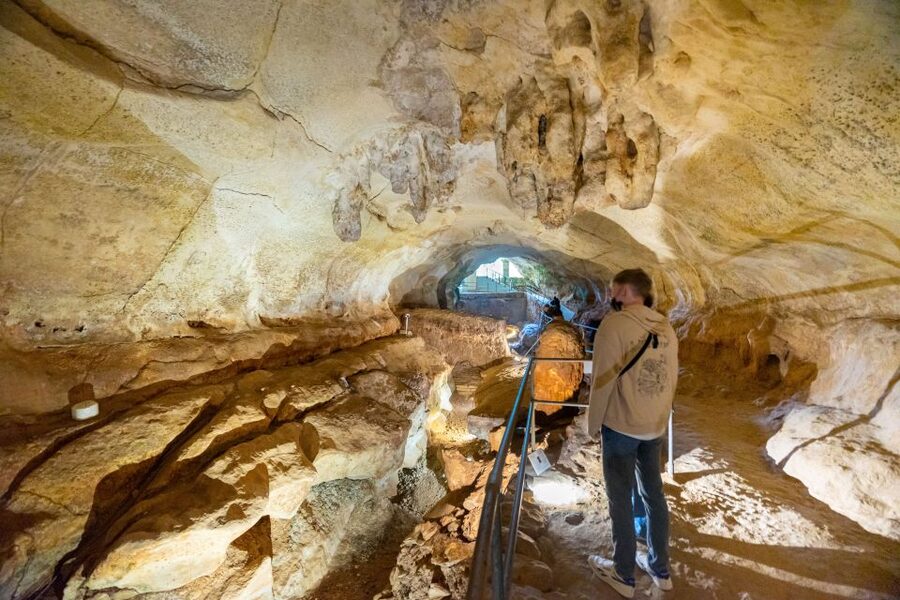
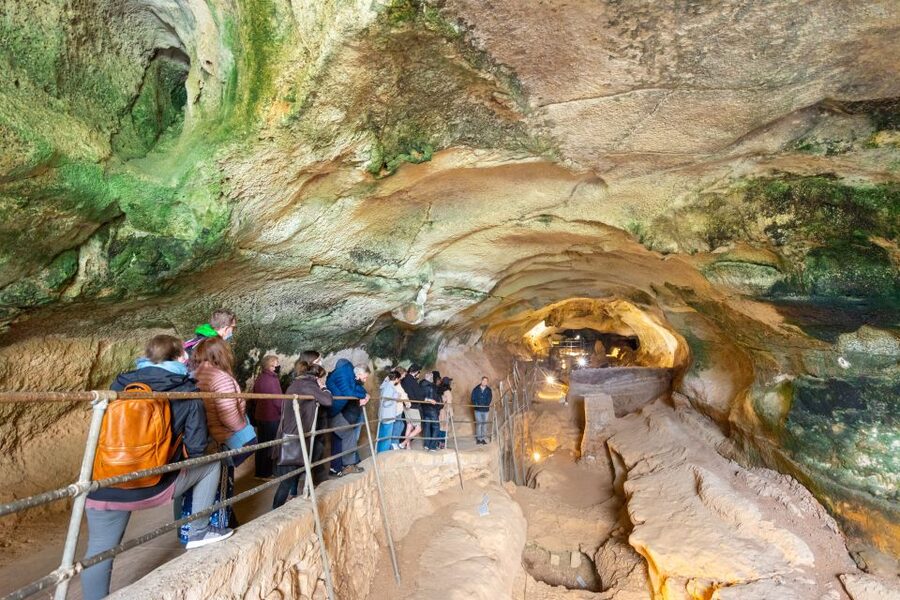
Ghar Dalam Cave is an easy place to underestimate. The cave itself is not a grand cavern filled with stalactites, underground lakes, or dramatic formations. One visitor specifically found it small for that reason.
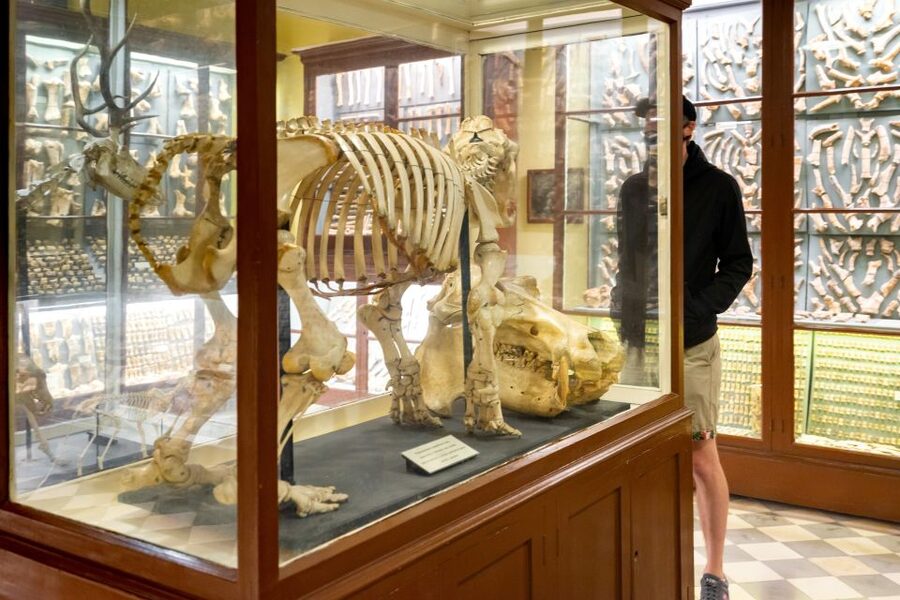
The museum is the stronger part of the stop. Its displays include bones and fossils from animals that lived on Malta during prehistoric periods. That material gives you a picture of the island before the temple builders and helps explain how Malta’s natural environment changed over time.
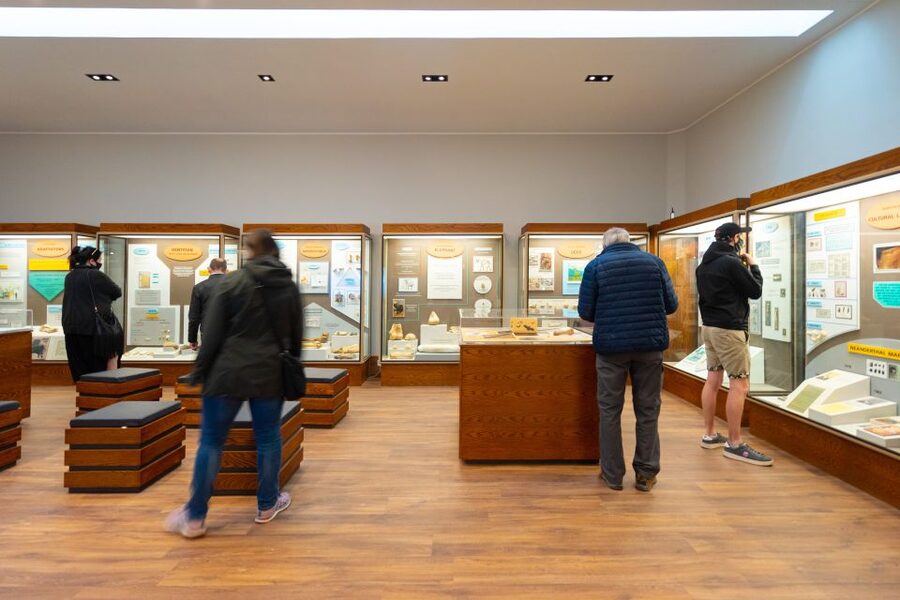
You normally have a short period here, so do not expect a full museum visit. Still, the stop adds breadth to the tour. Hagar Qim and Mnajdra show what people built. Ghar Dalam helps you think about the animals, geology, and earlier periods that came before them.
If you are especially interested in archaeology, you may wish you had longer with the displays. If you have limited time in Malta, the stop works well as an introduction rather than a specialist museum visit.
Hagar Qim: massive stones on Malta’s southern ridge
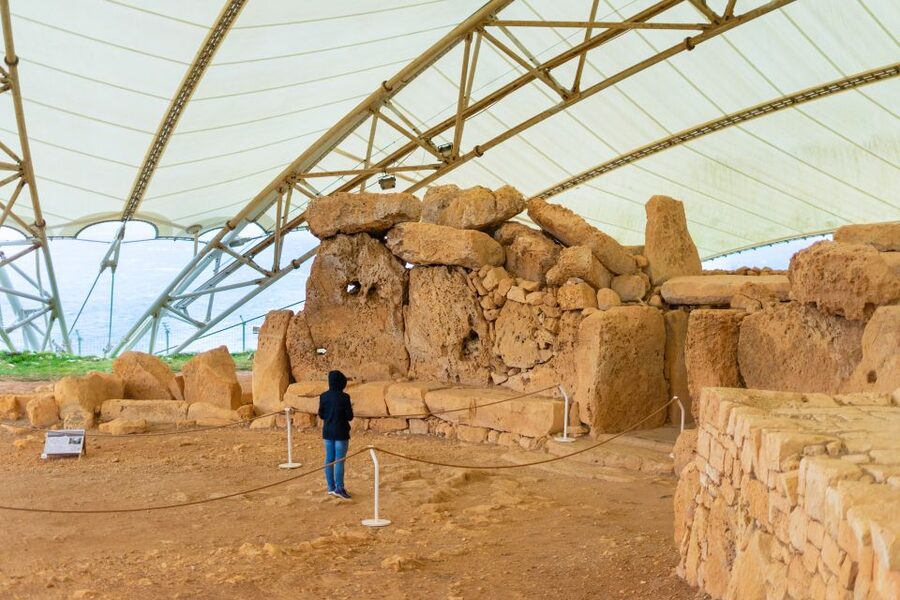
Hagar Qim is built from the soft, honey-colored globigerina limestone found on this part of Malta. The temple sits on a ridge along the southern edge of the island, in an exposed setting with views across the sea.
The setting is one of the reasons this stop feels different from an ordinary museum visit. You are not looking at stones behind glass. You are standing beside enormous blocks in the same open country where the builders placed them thousands of years ago.
The temple complex is fragile, and protective measures have been installed over the ruins. These shelters may change the visual experience slightly, but they help preserve the remains for future visitors. You can still see the scale of the construction and the careful placement of the stones.
Your guide will point out carved stonework and explain what archaeologists believe about the spaces. Listen for the distinction between evidence and theory. The best explanations make clear what is known, what is suggested, and what remains uncertain.
Hagar Qim is also where you begin to feel the physical demands of the visit. The paths are manageable for many people, but the tour includes walking over open ground and between archaeological areas. Strong shoes help, and water is a sensible addition, particularly in hot weather.
Same place, a different morning at the gates:
- From Bangkok: Ayutthaya Temples Guided Tour with Lunch
★ 4.7 · 10,535 reviews - Siem Reap: Angkor Wat: Small-Group Sunrise or Sunset Tour
★ 5.0 · 9,444 reviews - Athens: Cape Sounion & Poseidon Temple Sunset Half-Day Trip
★ 4.8 · 8,241 reviews - Ubud: Monkey Forest, Jungle Swing, Rice Terrace, and Water Temple
★ 5.0 · 7,160 reviews
Mnajdra: the morning’s architectural centerpiece
A walk of several hundred meters connects Hagar Qim with Mnajdra. The route passes through Mediterranean garrigue, low scrub that gives the area a stark, dry character.
This walk is part of the experience, not just a transfer from one entrance to another. The setting makes the temples feel connected to the land rather than isolated as a single monument. It also means you should not arrive expecting a fully seated, low-effort excursion.
Mnajdra is considered possibly the best surviving example of Maltese megalithic architecture. Its layout, stonework, and position make it the strongest stop for anyone who wants to understand how the temple complexes were designed.
Some people feel they could use more time here. The usual schedule gives you enough to see both temple areas, but not unlimited freedom to study every display, take photographs, and listen to a full explanation at a leisurely pace. Traffic and the pickup route can affect the amount of time available.
The return walk is uphill. One older account mentions an open cab that could be used for the distance between the ancient sites, with a small charge. Do not assume that option will always be available, but do ask your guide if walking is difficult. Marco and Mario have been praised for explaining the walking conditions and possible alternatives clearly.
Hamrija Tower and Malta’s later history
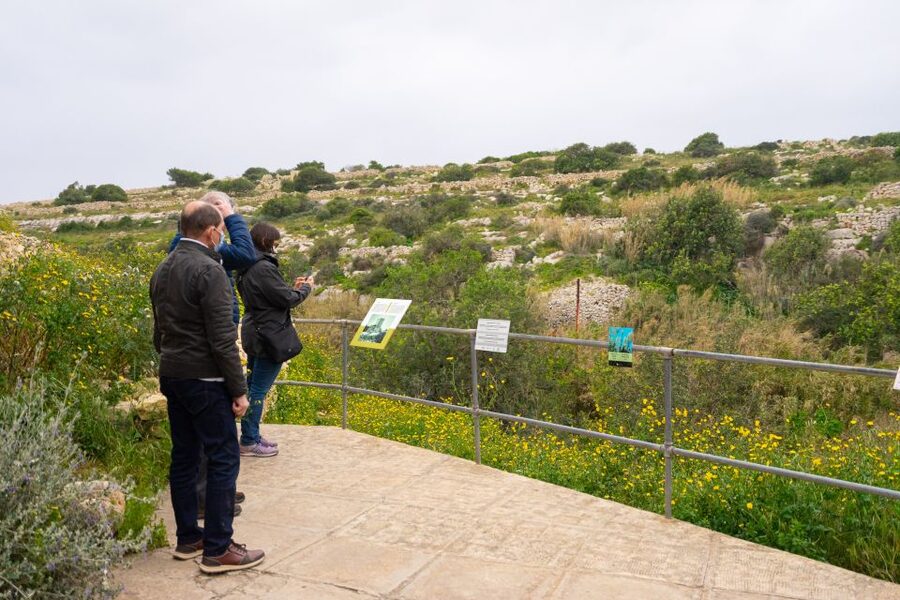
A few hundred meters from the temple area is Hamrija Tower, one of 13 watchtowers built by Grand Master Martin de Redin. It dates from a much later period than Hagar Qim and Mnajdra, when Malta’s coastal defenses were part of the world of the Knights of Malta.
The tower is not the main reason to book this excursion, but it gives the route a useful change of scale. First you are considering communities from the fourth millennium BC. Then you are looking at a defensive structure from the age of the Knights.
The tower also helps you read Malta as a place shaped by repeated layers of settlement and defense. The tour remains focused on prehistory, but this brief addition prevents the morning from feeling like one long sequence of similar stone walls.
How the guides shape the experience
The guide can make or break an archaeology tour, and this one has received especially strong praise for guiding. Mark is frequently described as clear, lively, and well informed. Marco has been praised for his archaeological background and for answering questions about both the sites and the people who built them.
Mario has also been singled out for his enthusiasm, strong English, and ability to explain Malta’s geography, plants, society, and history along the route. Marlon, described as a retired archaeologist and lecturer, brought particular passion to the subject. Other praised guides include Maria, Miriam, and Nick.
The tour operates in English, German, Italian, and French. A multilingual guide may repeat each explanation in several languages, which is helpful for mixed groups but can make the pace feel slower. One older account found the English explanation weak, so the quality can vary by guide and date, even though the overall score is a solid 4.2 out of 5 from 517 ratings.
The strongest guides do more than identify stones. They ask you to consider how the sites were discovered and interpreted, and they explain the difficult parts of the visit before you reach them. That practical warning is useful if you have limited mobility or simply dislike surprises.
Walking, heat, and accessibility
Bring comfortable shoes. You will walk between Hagar Qim and Mnajdra, and the route back is uphill. The open setting can also feel hot, so carry water even if the day begins cool.
This is not a suitable choice for someone who cannot manage stairs, uneven ground, or a longer outdoor walk unless the guide and operator can confirm an alternative. The tour has been praised for giving people with mobility limitations enough information to make their own decisions, which is the right approach.
The route is not described as fully accessible. Ask in advance about the current conditions and any available transport between the temple sites. Do not assume that every part of the archaeological area can be reached without walking.
Is $59 good value?
At $59 per person, the price is reasonable if you want a planned half-day with transportation, a guide, and entrance fees to Ghar Dalam Cave and Museum, Hagar Qim, and Mnajdra.
The value is strongest if you are staying outside the south of Malta or do not want to arrange buses and admissions yourself. Hotel pickup and drop-off remove much of the day’s practical work, and the guide adds information that you would miss by simply arriving with a map.
The price feels less attractive if you prefer long, independent visits. You are paying for convenience and interpretation, not unlimited time. Some people would gladly pay more for the easy transport, while others find the schedule tight and would rather visit at their own pace.
For a first visit to Malta, the tour is a sensible way to cover several important sites in one morning. For a dedicated archaeology enthusiast, a private visit or a longer specialist tour may offer more time with the displays and stones.
Who should book this half-day tour?
I would recommend it to first-time visitors, history fans, cruise passengers, and anyone with only a few days in Malta. It is also useful if you are based in Valletta, Sliema, St. Julian’s, or the northern resort areas and want transport handled for you.
Families can enjoy it if children are comfortable walking and listening for stretches of time. The stones are impressive, but there is no hands-on activity, and the archaeological explanations may be demanding for very young children.
You should think twice if you dislike group transport, get frustrated by pickup routes, or want to photograph every corner without a schedule. The temples deserve time, and the tour gives you a well-organized introduction rather than a slow, solitary visit.
Should you book the Prehistoric Temples of Malta Tour?
Book it if you want an efficient introduction to Malta’s ancient temples, with transport, admissions, and a guide included for $59. The combination of Hagar Qim, Mnajdra, Ghar Dalam, and Hamrija Tower gives you more than a single monument visit, and the sea views around the temples are a real bonus.
Skip it if you need a fully accessible route, dislike walking in the heat, or want extended time inside the museum and temple grounds. For most visitors with limited time, though, this is a worthwhile half-day, especially when the guide is one of the strong archaeology-focused leaders such as Mark, Marco, Mario, or Marlon.
FAQ
How long does the Prehistoric Temples of Malta Tour last?
The tour lasts approximately 4.5 hours. It is designed as a half-day excursion.
What sites are included?
The tour includes Ghar Dalam Cave and Museum, Hagar Qim Temples, and Mnajdra Temples. It also includes a view of Hamrija Tower near the temple area.
Is hotel pickup included?
Yes. Pickup and drop-off are included from listed areas including Valletta, Sliema, St. Julian’s, St. Paul’s Bay, Bugibba, Qawra, Mellieha, Cirkewwa, Golden Bay, Xemxija, and Attard.
What languages are available?
The live guide service is available in English, German, Italian, and French.
What should I bring?
Bring comfortable shoes for the walk between the sites. Water is also a sensible choice because the temple area can become hot.
Is the tour suitable for people with limited mobility?
The tour includes walking between the temple sites and an uphill return route. Ask the operator in advance about current conditions and any alternative transport options.
Are entrance fees included?
Yes. Admission to Ghar Dalam Cave and Museum, Hagar Qim Temples, and Mnajdra Temples is included.
How much does the tour cost?
The listed price is $59 per person.
Can I cancel the tour?
You can cancel up to 24 hours in advance for a full refund. The reserve now and pay later option allows you to book without paying immediately.
Just added around the world
- No.1 Chiang Mai: 3-Hour Monk Trail Hike to Wat Doi Suthep & Palad★ 5.0 · 11 reviews
- 8 Days Private South India Temple Tour with 4 Star Luxury Hotels★ 5.0 · 3 reviews
- Chennai City Highlights – Government Museum & Temple Discovery★ 4.0 · 7 reviews
- South India Tour- Temple Architecture and Backwaters★ 5.0 · 7 reviews
- 2-Day Private Tour of Leshan Grand Buddha and Emei Shan including Monastery Stay★ 4.5 · 8 reviews
- Half-Day Trip to Arkadi Monastery and Melidoni Cave★ 4.5 · 4 reviews
- Chania Private Tour: Monastery, Scenic Gorge & Mountain Views★ 5.0 · 12 reviews
- Monastery, Elafonissi and Winery Tour from Chania★ 5.0 · 8 reviews
Malta Temple Tours, compared.

From Malta: Gozo Day Trip Including Ggantija Temples
Read our review →
From Malta: Gozo Full-Day Tour with Guide, Temples, & Train
Read our review →
Malta: Prehistoric Temples, Limestone Heritage & Blue Grotto
Read our review →
Valletta: Monastery and Secret Garden Entry Ticket
Read our review →
Gozo Guided Day Trip Incl. Ggantija Temples and Lunch
Read our review →
Malta: Prehistoric Temples and Highlights of the South
Read our review →
Mysterium Fidei Monastery & Secret Garden in Valletta
Read our review →
Gozo Full Day visiting Ggantija Temples, Salt Pans & Dwejra
Read our review →Browse the lists this tour appears in