
Review · OSAKA
Osaka: Japan’s Oldest Temple & Bone Buddha Walking Tour
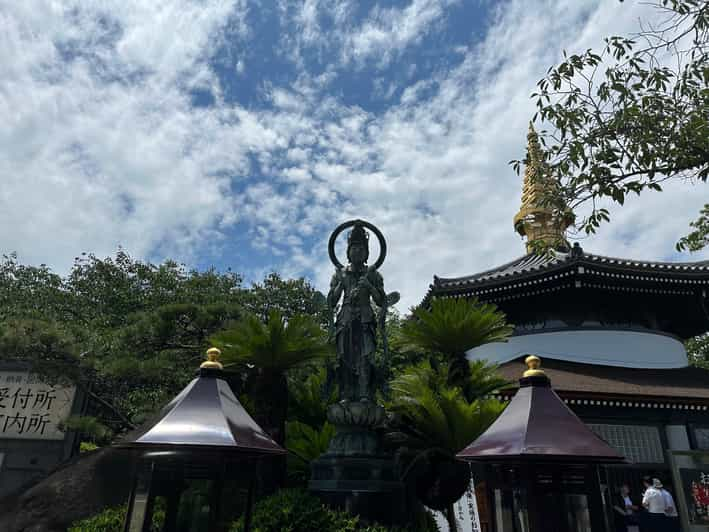
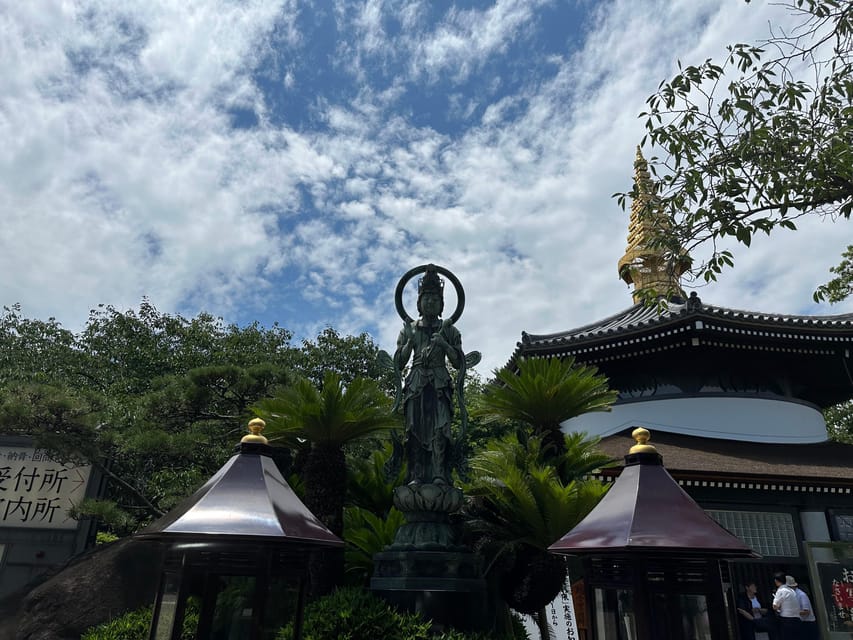
Osaka has a quiet spiritual side. This private walking tour links Shitennoji, founded in 593, with Isshinji Temple and its remarkable Bone Buddhas, offering a clear look at how Buddhism shaped Japan and everyday life in Osaka. I especially like the contrast between Shitennoji’s ordered early Buddhist design and Isshinji’s bold modern gate. I also like that the tour includes the Pure Land Garden, not just the main temple buildings.
The main drawback is the tight schedule. The advertised tour lasts two hours, while the detailed plan assigns 1.5 hours to Shitennoji and another hour to Osaka, so you should confirm the exact timing when booking. The tour also does not include transportation to the meeting point, food, drinks, or personal expenses.
Key points to know before booking
- Shitennoji dates to 593: Prince Shotoku founded this officially established Buddhist temple during Buddhism’s early growth in Japan.
- The central precinct has a clear design: Your guide explains the meaning behind its symmetrical arrangement and major buildings.
- The Pure Land Garden adds a quieter stop: Its setting connects sunset, Amida Buddha, and the Buddhist idea of rebirth in the Western Paradise.
- Isshinji offers a striking contrast: A modern gate leads to a temple with nearly 900 years of history.
- The Bone Buddhas are made from ashes: Cremated remains are combined respectfully to form Buddhist statues.
- The tour is private and guided: English and Japanese guiding are available, with admission to Shitennoji’s main complex and garden included.
Why these two Osaka temples belong together
Osaka is easy to associate with food streets, shopping arcades, neon, and quick-moving city life. This walk shows another Osaka, one shaped by religion, family memory, and centuries of rebuilding.
The two temples tell different parts of the same story. At Shitennoji, you see Buddhism taking root in early Japan under Prince Shotoku. At Isshinji, you see Buddhism functioning as a living urban tradition, tied to the cremated remains of more than two million ancestors of Osaka residents.
That contrast gives the tour its purpose. It is not simply a walk between two old buildings. You begin with a national religious foundation and finish with a deeply personal place of remembrance.
I find this approach more useful than visiting temples one by one without context. A guide can point out why a gate is shaped a certain way, explain what a garden represents, and connect religious ideas to Japanese society. Without that help, much of the meaning would be easy to miss.
The tour costs $65 per person. For two hours of private guiding, temple admission, and access to the Pure Land Garden, that can be fair value if you want interpretation rather than a quick photo stop. It is less compelling if you prefer to wander independently or are mainly looking for ornate buildings.
More Temple Walking Tours in Japan
- 1-Day walking tour in Osaka:Castle, temples and Ukiyoe
★ 5.0 · 4 reviews - Tokyo: Asakusa Walking Tour with Sensoji Temple Visit
★ 4.8 · 1,583 reviews - Kyoto Arashiyama Walking Tour: Bamboo, Monkeys, Gardens & Secrets
★ 5.0 · 1,216 reviews
Meeting at Shitennoji’s stone torii
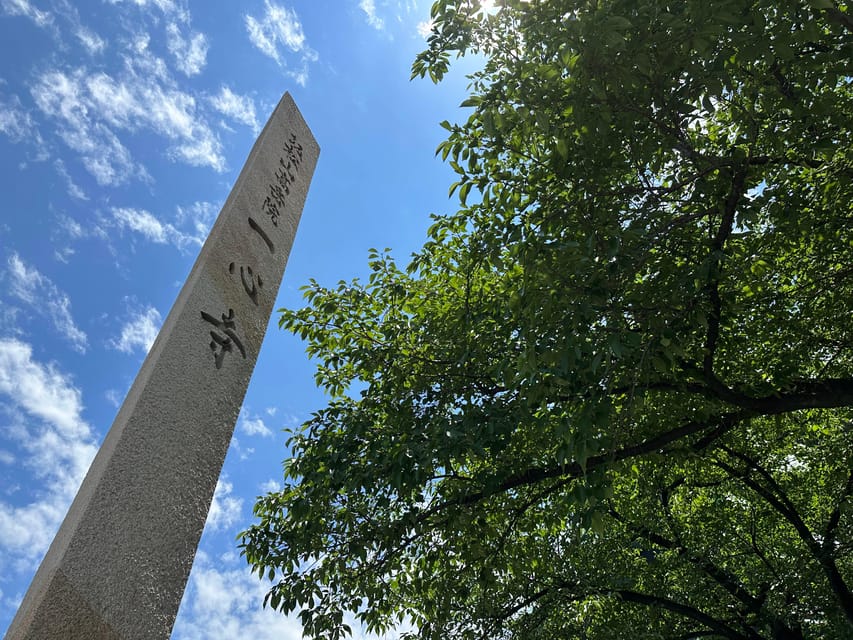
The tour begins at the stone torii gate, called the Ishidori, at Shitennoji’s main entrance. Your guide will hold a sign with your name, and the meeting point is a short walk from Shitennoji-mae Yuhigaoka Station.
This is a sensible place to start because the torii marks the approach to the temple grounds and gives you an immediate sense that you are entering a sacred space. Arrive with enough time to locate the gate without rushing. Transportation to the meeting point is not included, so you will need to arrange that part yourself.
Because this is a private group, you can expect the experience to feel more focused than a large group walk. That matters at a religious site. You can ask about customs, architecture, or Buddhist ideas as they come up, instead of waiting for a general explanation to finish.
The available guide languages are English and Japanese. A verified booking from Francisca of Portugal, dated June 19, 2025, praised the guide’s help in explaining Japanese culture and religion. That is exactly where this experience earns its keep: the temples are worth seeing, but the explanations help you understand what you are looking at.
Shitennoji and Prince Shotoku’s Buddhist foundation
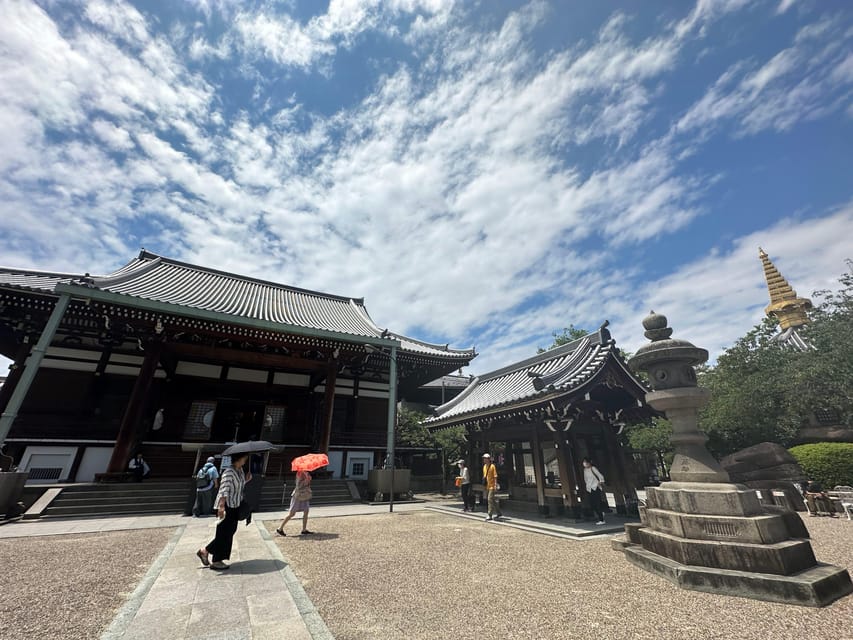
Shitennoji was founded in 593 by Prince Shotoku, an important early promoter of Buddhism in Japan. The date alone gives the temple unusual weight. You are not visiting a later temple that borrowed an old style. You are visiting a site linked to the period when Buddhist ideas were becoming part of Japanese society.
The temple is dedicated to the Four Heavenly Kings, known as the Shitenno. These guardian figures were believed to protect the nation. Your guide explains how this religious role connects with the temple’s name and purpose, giving you a clearer sense of why the site mattered beyond private worship.
The central precinct is especially valuable for understanding early Buddhist architecture. Its buildings follow a symmetrical layout, and your guide explains how that arrangement reflects classic early Japanese Buddhist design.
Look at the site as a planned religious setting rather than a collection of separate structures. The alignment and order help communicate that the temple was built around a clear spiritual and social idea. This is the kind of detail that turns a pleasant walk into a more meaningful visit.
Shitennoji has faced fires, wars, and repeated reconstruction. That point is important because the present buildings should not be mistaken for untouched structures from 593. The temple’s identity has survived through rebuilding, which is a different kind of continuity.
I appreciate that distinction. Many historic Japanese sites are living places that have been repaired or rebuilt over time. Shitennoji’s value lies not only in the age of its foundation, but in the way its religious role and layout have continued through periods of damage and change.
The central temple complex is included in the tour, so you do not have to decide on admission after arriving. You can focus on the explanation and the setting.
The Pure Land Garden and the meaning of sunset
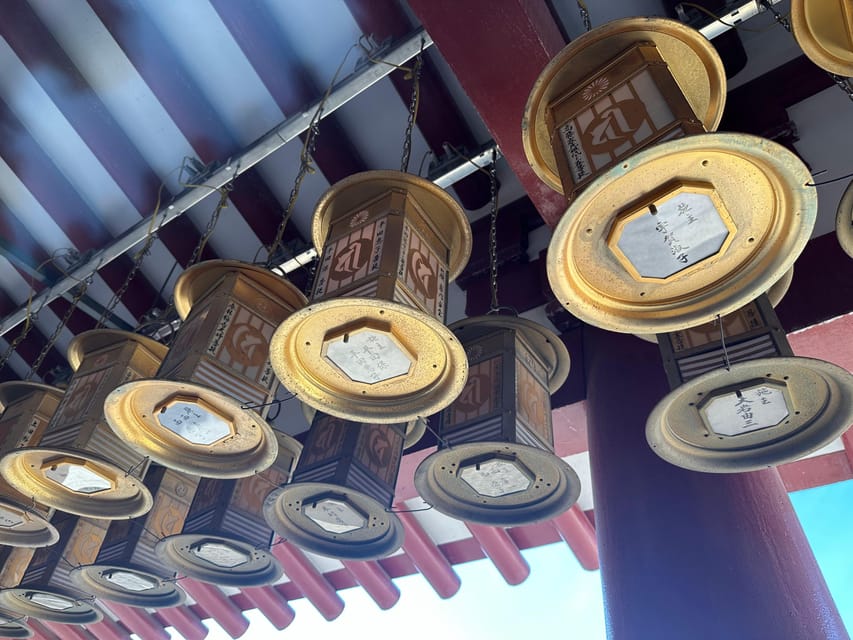
The Pure Land Garden provides a change of pace from the central precinct. The garden is inspired by Buddhist visions of the Western Paradise, the realm associated with Amida Buddha.
Your guide introduces Pure Land thought and explains the symbolic connection between the setting sun and the promise of rebirth in Amida’s paradise. That connection is especially fitting in this part of Osaka, which has long been associated with sunset views.
You do not need a detailed background in Buddhism to follow this section. The idea is presented through the relationship between place, light, direction, and religious belief. The garden becomes more than a decorative space. It shows how Buddhist teaching can shape the way people understand a view.
Admission to the Pure Land Garden is included. That is a useful part of the $65 price, since the garden is not treated as an optional extra. If you enjoy gardens, symbolism, or quiet spaces, this may be the most reflective part of the visit.
The garden also helps balance the historical material. After learning about Prince Shotoku, the Four Heavenly Kings, and the temple’s formal layout, you get a setting where the focus shifts toward belief and the hope of rebirth.
Do not expect a long garden stroll. The tour has a limited overall duration, and the garden is one part of the Shitennoji visit. Still, it adds an idea that you would not get from looking only at gates and buildings.
More Temple Walking Tours in Osaka:
- Bangkok: City Highlights Temple and Market Walking Tour
★ 4.5 · 3,990 reviews - Bangkok: Grand Palace and Wat Phra Kaew Guided Walking Tour
★ 4.4 · 2,417 reviews - Bangkok: Wat Pho and Wat Arun Guided Walking Tour
★ 4.6 · 1,720 reviews - Chiang Mai: 3 Hour Old City and Temples Guided Walking Tour
★ 4.6 · 1,568 reviews
Walking to Isshinji’s modern entrance
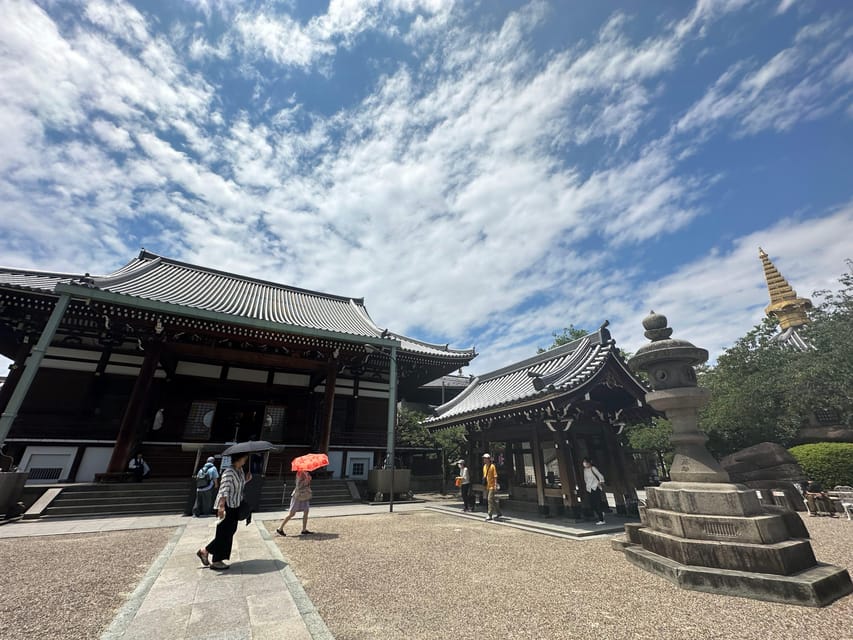
The route then moves to Isshinji Temple. This change is one of the tour’s strongest features because Isshinji looks and feels different from Shitennoji.
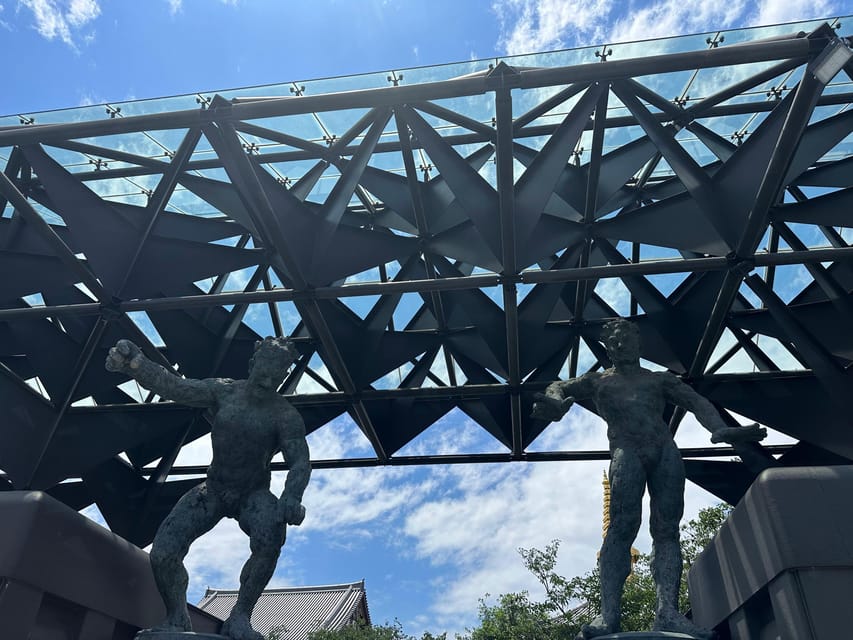
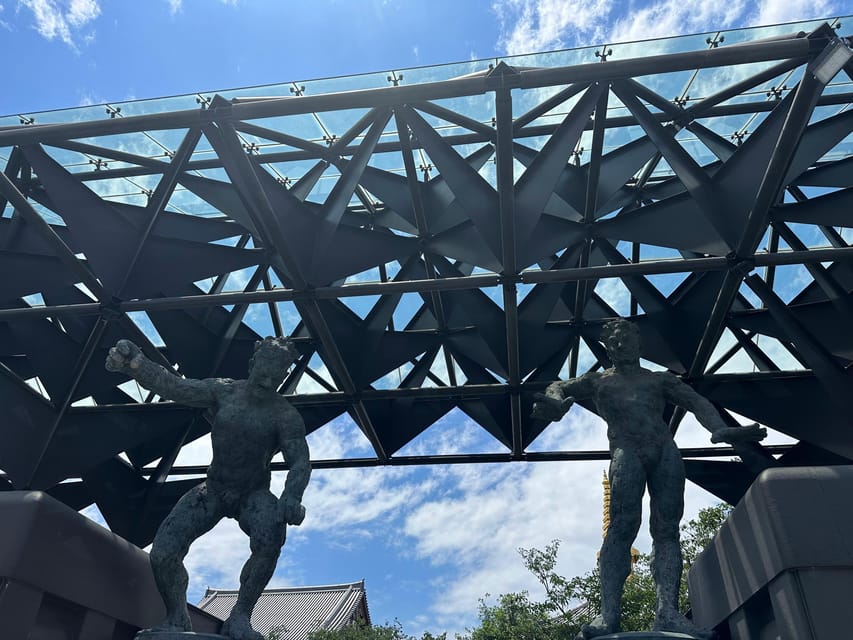
The first thing you notice is the modern main gate, designed by Isshinji’s current head priest. Its contemporary appearance creates a sharp contrast with the temple’s long past. Behind it is a religious institution with nearly 900 years of history.
That pairing is worth your attention. Japanese temples are not frozen museum pieces. They can preserve old practices while changing their architecture, public face, and relationship with the city around them.
The modern gate also prepares you for the subject that follows. Isshinji is not presented simply as an old temple with traditional decoration. It is a place where religion responds to urban life and the needs of families across generations.
The walking portion between the temples is part of the experience, but the exact route details are not provided. Wear comfortable shoes and keep your schedule flexible. You are moving between two sites, and the tour is focused on walking and guided interpretation rather than transportation.
The Bone Buddhas and Osaka’s communal memory
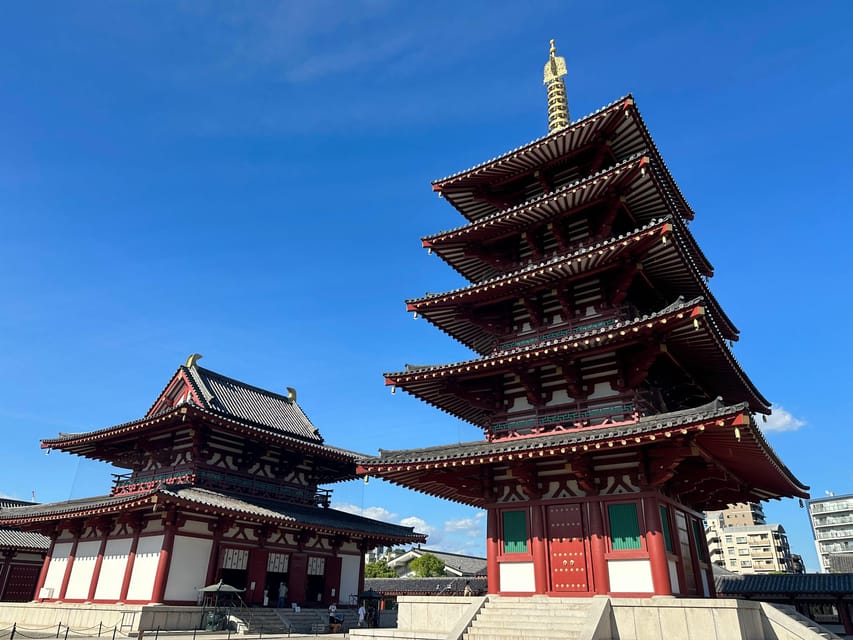
Isshinji is known for its Bone Buddhas, called Kotsubotoke. These statues are formed by combining cremated ashes, a practice that gives the temple its most unusual and powerful feature.
More than two million ancestors of Osaka residents are connected with the ashes held at Isshinji. The remains are respectfully combined to create the statues, bringing many families into one shared religious setting.
This can be an emotional stop. The Bone Buddhas are not curiosities in the usual sense, and your guide explains how the tradition began and how it continues to serve families. The point is remembrance, not spectacle.
I find this part especially valuable because it shows Buddhism in a very direct, urban form. Shitennoji introduces Buddhism as a force in early national history. Isshinji shows how Buddhist practice can help families remember the dead and maintain a connection across generations.
You may find the subject solemn, and that is appropriate. This is a temple connected with cremation and ancestral memory. The experience asks for quiet attention and respect.
The Bone Buddhas also make Isshinji different from the temples most commonly featured in a first visit to Japan. If you are looking for another standard image of a wooden hall, this may not be the stop for you. If you want to understand how religious customs relate to real family life, it is one of the more distinctive places in Osaka.
What the private format adds
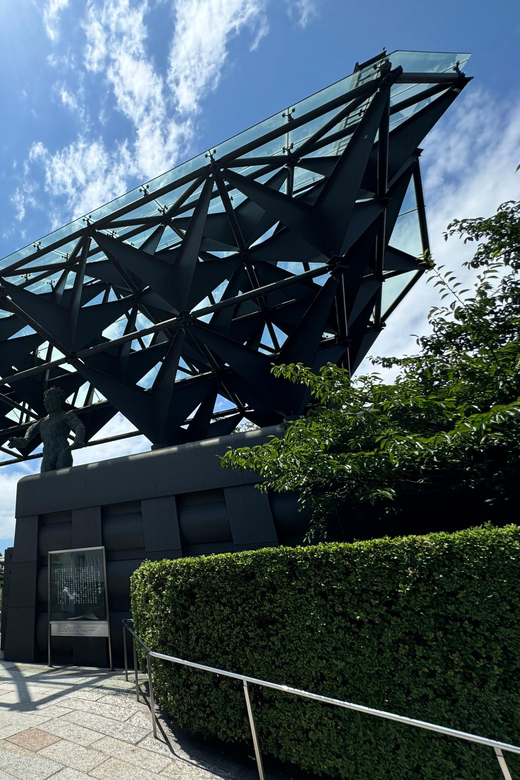
A private group format can make a major difference on a tour about religion. You can ask why Shitennoji’s layout is symmetrical, how the Four Heavenly Kings relate to the temple, or why the Pure Land Garden is connected with sunset.
At Isshinji, you can also pause over the Bone Buddha tradition rather than treating it as a quick explanation before moving on. The subject deserves time and careful wording.
The guide speaks English or Japanese. Based on the supplied experience, the guide’s explanation of Japanese culture and religion was a major reason the tour felt worth the time and money. That praise points to the most important feature here: interpretation.
The tour is not designed as a casual photo walk. Its strength is in showing how architecture, religious ideas, and social customs connect. You should book it with curiosity and allow yourself to listen.
Timing, cost, and practical limits
The stated duration is two hours, which makes this easy to fit into a day in Osaka. You can schedule it around other sightseeing without giving up half a day.
There is one timing point to clarify. The detailed route assigns 1.5 hours to Shitennoji and one hour to the Osaka portion, yet the total duration is listed as two hours. Since the outline may use approximate segments, confirm the start and finish time before booking if you have a tight schedule.
At $65 per person, the experience is not the cheapest way to see temples. The price makes better sense for people who value a private English-speaking guide, included access to Shitennoji’s main complex, and the Pure Land Garden.
It is less suitable if you only want to enter the grounds, take a few pictures, and leave. You will also pay separately for transportation to the starting point, food, drinks, and any personal expenses.
Free cancellation is available up to 24 hours before the tour for a full refund. You can also reserve and pay later, which helps if your Osaka plans are still changing.
Who should book this Osaka temple walk?
I would recommend this tour to you if you want religious and cultural context, not just famous sights. It suits first-time visitors who want a quieter side of Osaka, as well as returning visitors who have already seen the city’s food and entertainment districts.
It is particularly good for:
- People interested in Buddhism and Japanese history
- Visitors who want a private guide rather than a large group
- Anyone curious about how temples serve families and communities
- Garden lovers who want more than architecture
- Visitors drawn to unusual cultural sites such as the Bone Buddhas
You may want to skip it if you have only a short time in Osaka and prefer major city landmarks, shopping, or food stops. The subject matter is serious, and the Bone Buddha tradition may not suit everyone.
Should you book the Bone Buddha walking tour?
Book it if you want to understand Osaka through its religious foundations. The combination of Shitennoji’s 593 origin, the Pure Land Garden, Isshinji’s modern gate, and the Bone Buddhas creates a strong two-part story.
The best reason to pay for this experience is the guide. Francisca’s June 2025 booking praised the cultural and religious explanations, and that matches the tour’s real purpose. You are paying for meaning, not just entry.
Before committing, confirm the exact two-hour schedule and make sure the subject of cremated remains feels right for you. If it does, this is a thoughtful, focused way to see a side of Osaka that many visitors miss.
FAQ
How long does the tour last?
The tour is listed as lasting two hours. The detailed schedule gives 1.5 hours to Shitennoji and one hour to the Osaka portion, so confirm the exact timing when booking.
Where does the tour begin?
Meet in front of the stone torii gate, or Ishidori, at the main entrance of Shitennoji Temple.
How do I identify the guide?
The guide will hold a sign with your name.
Which station is near the meeting point?
The meeting point is a short walk from Shitennoji-mae Yuhigaoka Station.
Which temples are included?
The tour includes Shitennoji Temple and Isshinji Temple.
Is admission to Shitennoji included?
Yes. Admission to Shitennoji’s main temple complex and the Pure Land Garden is included.
What are the Bone Buddhas?
The Bone Buddhas, called Kotsubotoke, are statues formed from respectfully combined cremated ashes.
Which languages are available?
Live guiding is available in English and Japanese.
Can I cancel for a refund?
You can cancel up to 24 hours in advance for a full refund. Reserve now and pay later is also available.
Just added around Osaka
- Osaka Temple :Warm Bamboo Oil Massage – Deep Restore〈60min〉★ 4.9 · 19 reviews
- Osaka Temple :Warm Bamboo Oil Massage – Deep Restore〈90min〉★ 5.0 · 14 reviews
- Osaka: Sumiyoshi, Osaka’s Most Iconic Shrine – Private Tour★ 4.7 · 4 reviews
- Osaka: Temple Tour and Traditional Calligraphy Lesson★ 4.9 · 24 reviews
- Osaka: Private Tour of Shitennoji, Osaka’s Oldest Temple★ 4.5 · 6 reviews
- Osaka Temple Head Spa &Matcha Facial – Refresh & Glow〈90min〉★ 5.0 · 24 reviews
- Osaka: Mind & Spirit Balance Temple Reiki Healing★ 5.0 · 41 reviews
- Osaka Morning Tour: Shitennoji Temple, Shinsekai &Doutonbori★ 5.0 · 23 reviews
Temple Walking Tours, compared.

City Highlights Temple and Market Walking Tour
Read our review →
Grand Palace and Wat Phra Kaew Guided Walking Tour
Read our review →
Asakusa Walking Tour with Sensoji Temple Visit
Read our review →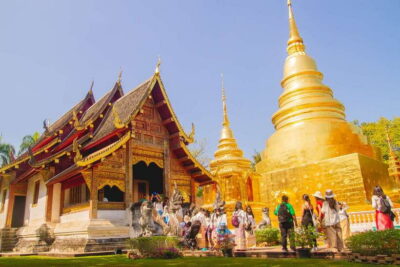
3 Hour Old City and Temples Guided Walking Tour
Read our review →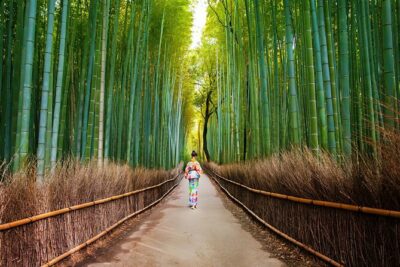
Kyoto Arashiyama Walking Tour: Bamboo, Monkeys, Gardens & Secrets
Read our review →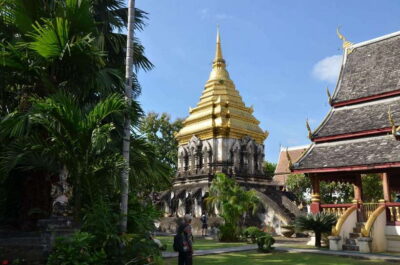

Belém Walking Tour with Jerónimos Monastery Ticket
Read our review →Browse the lists this tour appears in