
Review · CAMBODIA
Morning Tuk tuk: City, Handicrafts, Killing field, Temples
Rice, temples, and village life fill one busy morning. This five-hour tuk-tuk trip gives you a useful introduction to Battambang, mixing city sights with small family-run food workshops, Buddhist sites, rice fields, and a serious memorial to Cambodia’s Khmer Rouge past. I especially like the close look at local food production and the chance to reach rural places that are hard to connect by yourself.
I also like the guide-led storytelling. Guides such as Samol and David have been praised for clear English, safe driving, humor, and thoughtful explanations of Cambodian history, Buddhism, farming, and daily life. The main drawback is the pace: you visit many places in five hours, and the Killing Field stop can feel heavy after several cheerful food tastings. Pickup is also limited to accommodations or restaurants within 5 kilometers of Battambang town.
Key points before you book
- Fresh food made by hand: Watch locals produce Khmer rice noodles, rice paper, bamboo sticky rice, and rice wine, with tastings included.
- A strong local guide matters: Samol is noted for his lively explanations, good photos, relaxed manner, and careful driving.
- History is not softened: Wat Samrong Knong includes a torture house and Killing Field linked to approximately 10,008 deaths.
- The countryside comes naturally: Paddy fields, small villages, village workshops, and Buddhist monuments give the morning a broad view of Battambang life.
- Good value at $20 per person: Hotel pickup and drop-off, admissions, water, snacks, donations, and an English-speaking guide are included.
- Dress and health limits apply: Sleeveless shirts are not allowed, and the activity is not suitable for people over 70 or those with high blood pressure.
A 7:20 AM start gives you a cooler ride
The morning begins with pickup at 7:20 AM from your accommodation or a restaurant. If you are staying beyond the 5-kilometer pickup area around Battambang town, you will need to arrange your own way to the meeting point.
The tuk-tuk is the right vehicle for this outing. You get open views of streets, homes, fields, and roadside activity rather than watching Cambodia pass behind glass. The tradeoff is exposure to sun, dust, and road noise, so bring practical clothing and accept that this is a working local ride, not a polished coach excursion.
Your guide introduces the history, culture, religion, agriculture, and folk stories of Cambodia and Battambang as you go. That running commentary is important because the stops are spread across different parts of the city and countryside. Without a guide, a noodle workshop or old temple could be pleasant but hard to place in context.
Samol receives especially warm praise for being funny, relaxed, and clear. He also takes photos and shares them through WhatsApp, which is a useful extra if you want pictures of the morning without constantly holding up your own phone. David is also described as friendly and accommodating, with explanations grounded in local daily life.
More Temple Tuk-Tuk Tours in Cambodia
- Siem Reap: Angkor Wat Private Tuk-Tuk Tour
★ 4.9 · 2,222 reviews - Angkor Wat Private Tuk-Tuk Tour (sunrise Option) & more
★ 5.0 · 439 reviews - Angkor Wat Private Tour by Tuk-Tuk with English Speaking Driver
★ 5.0 · 142 reviews
Battambang’s civic center and Ta Dambong Kranhoung
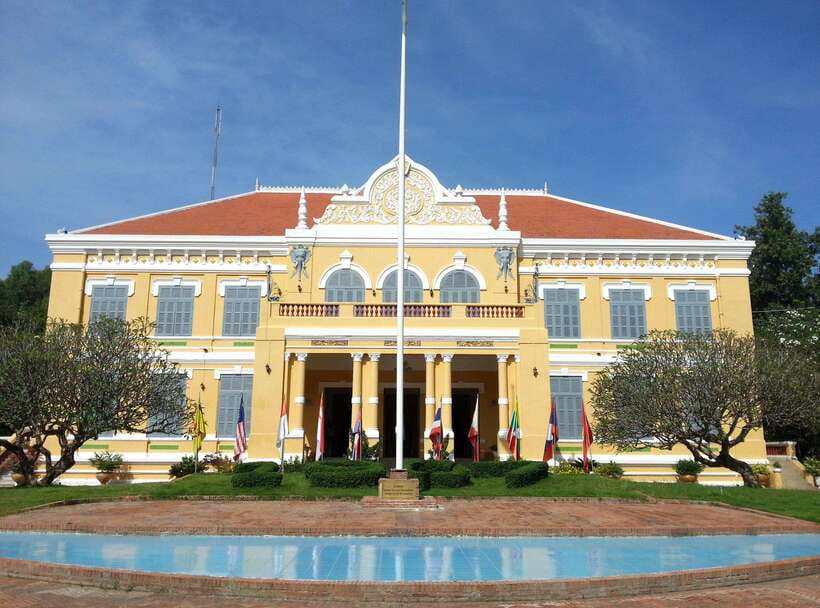
The first city section introduces Battambang through its public buildings and central landmarks. You see historical buildings, the central market, the provincial hall, and the statue of Ta Dambong Kranhoung, the city’s best-known symbol.
This is a short orientation rather than a long architectural tour. Its value is practical: you begin to understand the city before heading into the villages. The market and civic buildings help show Battambang as a working provincial center, not simply a base for temple trips.
Listen closely to the stories here. The tour is designed to connect visible places with local beliefs and folk tales, and this is where the guide can give the city a human voice. If you want a detailed museum-style account of each building, this will probably feel too brief. If you want a clear first look at Battambang, it works well.
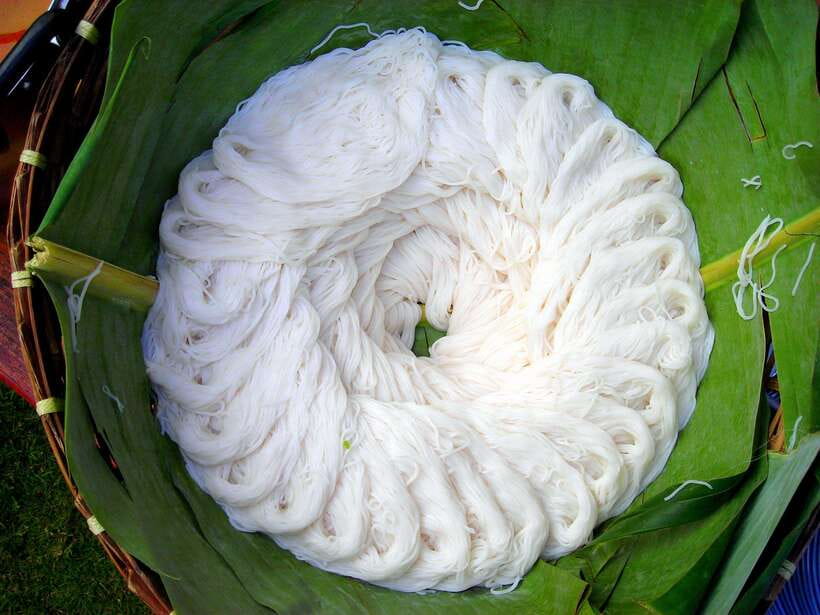
Khmer rice noodles made for everyday meals
The first food workshop takes you to a local Khmer rice noodle producer. You see how the noodles are made and learn that they are eaten for breakfast, lunch, and dinner, rather than being reserved for a special occasion.
This stop is one of the strongest parts of the morning because it shows food as work, not just food as a tasting. You see a familiar Cambodian staple being prepared by local people and get a better sense of how rice shapes daily life. You can also try the noodles.
The setting is modest and hands-on. Do not expect a large commercial factory with signs, displays, and a formal presentation. The appeal is the small-scale production and the opportunity to watch a family or village business at close range. The people making the food are part of the experience, and the best moments come when your guide helps explain what you are seeing.
Bamboo sticky rice is a dessert with a practical side
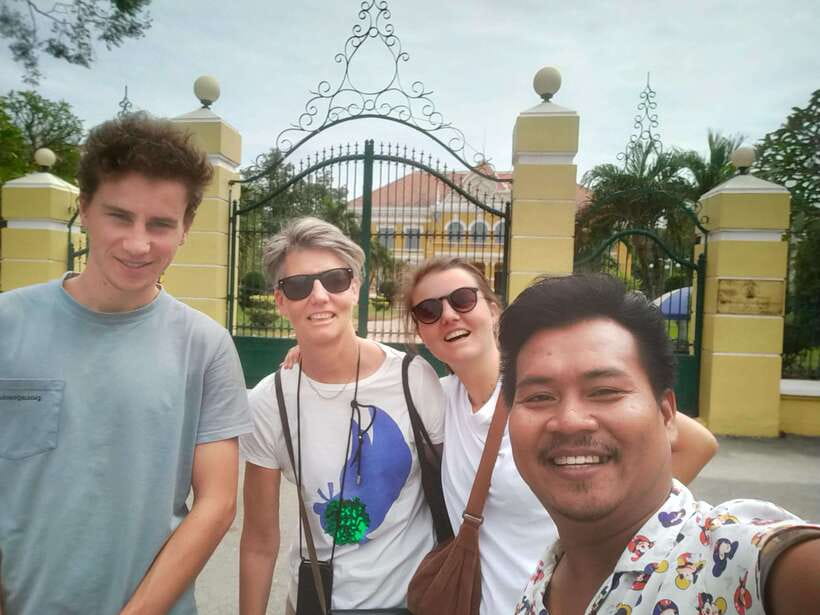
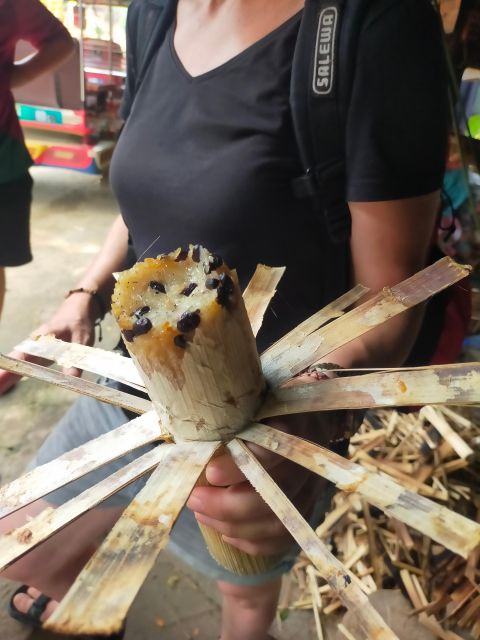
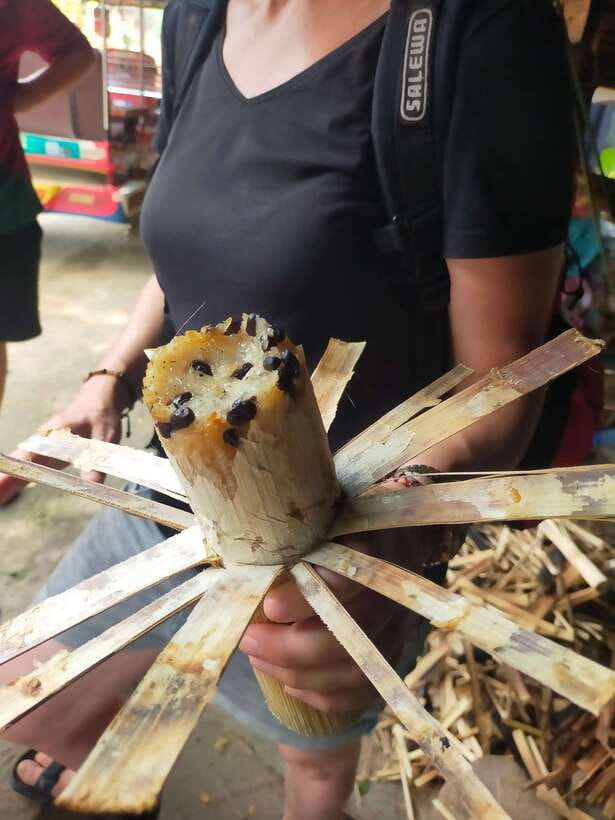
Next comes bamboo sticky rice, a sweet snack or dessert cooked inside bamboo. It is popular with both locals and visitors, and the preparation gives you another look at how Cambodian cooks use rice in different forms.
This is a pleasant contrast to the noodle stop. The noodles show an everyday staple, while bamboo sticky rice is more closely linked with a sweet treat. You watch the cooking process and taste the finished product, so the stop is not simply a photo opportunity.
The tour does not present these workshops as staged cultural shows. You see ordinary production methods and hear how villagers earn a living from them. That makes the visit more meaningful, though it also means conditions can be basic and the amount of activity may depend on what is being prepared that morning.
Same place, a different morning at the gates:
- Angkor Wat Sunrise or Sunset Tour with Guide from Siem Reap
★ 5.0 · 12,109 reviews - Siem Reap: Angkor Wat: Small-Group Sunrise or Sunset Tour
★ 5.0 · 9,444 reviews - Siem Reap: Angkor Wat 2-Day Tour with Sunrise and Sunset
★ 4.9 · 4,429 reviews - Siem Reap: Full-Day Angkor Wat Guided Tour with Sunset
★ 4.9 · 3,803 reviews
Wat Samrong Knong carries the morning’s hardest history
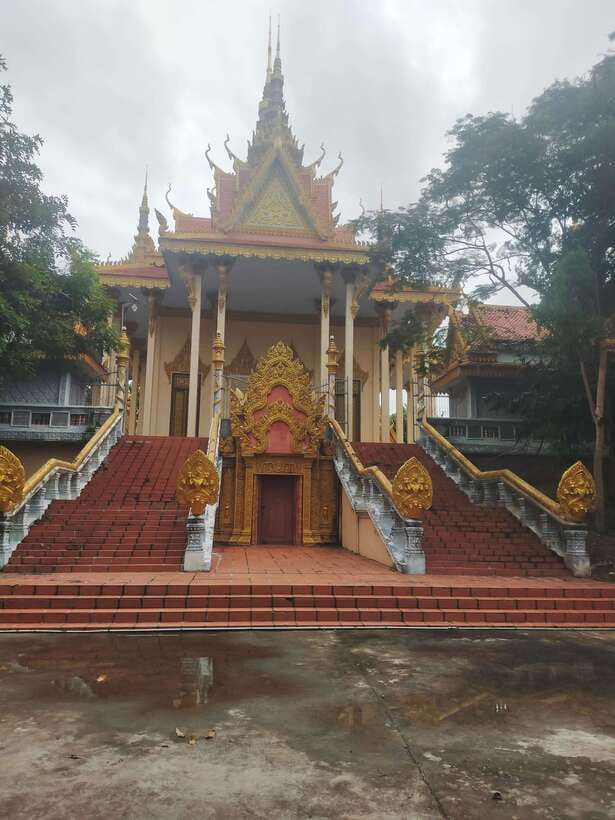
Wat Samrong Knong is the most emotionally difficult stop. The temple is identified as one of Battambang’s oldest Buddhist sites, dating to 1707, with a brick stupa built in 1887.
The site also has a painful Khmer Rouge history. The pagoda was used to house Khmer Rouge soldiers and as a detention area for victims. You see a torture house and a Killing Field where approximately 10,008 people were killed.
This stop deserves quiet attention. It is not simply another temple visit added to a sightseeing route. The contrast between Buddhist surroundings and the violence that took place there is stark, and your guide’s explanation helps you understand why the site matters.
I would not rush through this part. The tour schedule is fairly full, but give yourself a moment to take in the memorial, listen, and respect the place. The sequence can also affect your mood for the rest of the morning. Coming from cheerful food tastings into a site of mass killing is not easy, but it gives the day a more honest picture of Cambodia. The country’s beauty and hospitality exist alongside memories that remain close to the surface.
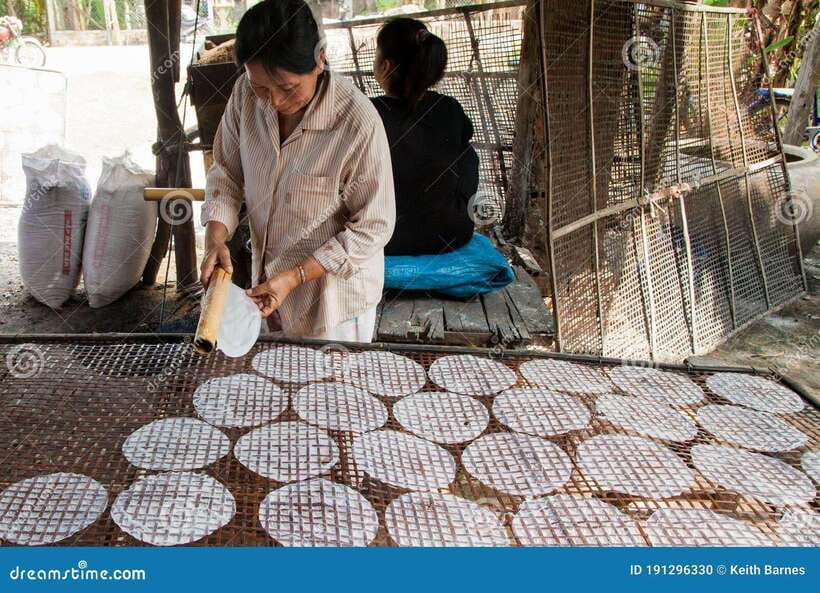
Rice paper production shows village skill and patience
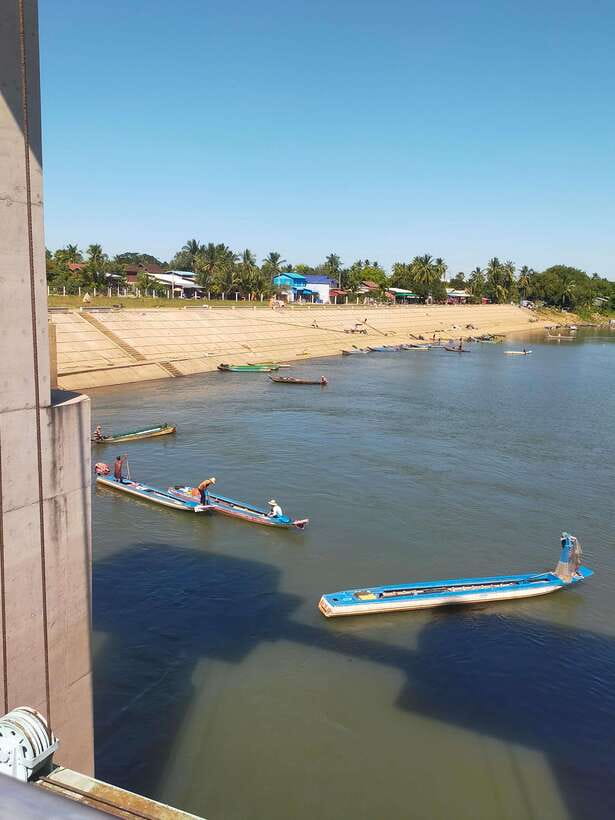
The next workshop returns to food production, this time with rice paper. You see how the thin sheets are made and learn how they are used for spring rolls.
The production is still a source of income for villagers, who can make at least 1,500 sheets per day. That number helps you understand the speed and labor behind a product that can seem simple when it arrives on a plate.
This is also the place to pay attention to texture and timing. Rice paper must be thin, even, and handled carefully. The process turns a basic ingredient into something central to a familiar dish. You may get to taste fresh food during the visit, and spring rolls are a particular highlight of the tour.
For me, this kind of stop gives the best value because you see the whole chain in miniature: local rice, household production, village income, and food served at the table. It is a more useful souvenir than a quick view from the road.
Rice wine includes tasting and unusual local uses
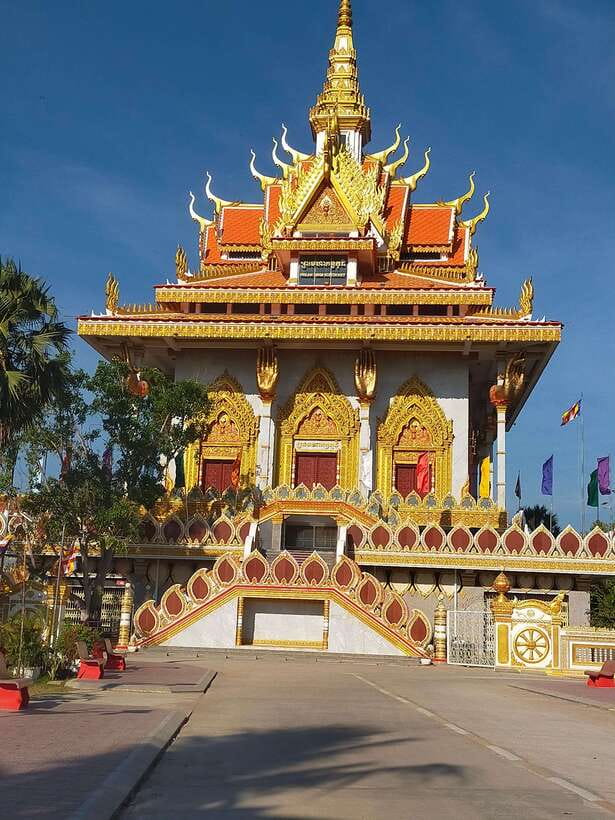
The rice wine stop takes you to a production plant that has been operating since the 1980s. Your guide explains how rice wine is made, and you can sample it.
You also hear about traditional uses beyond drinking. The wine has been used as medication and to soak plants, fruits, and even poisonous animals such as cobras and tarantulas. Those details may surprise you, but they show how one product can serve several roles in local practice.
The tasting is optional in spirit, even if sampling is part of the visit. If you do not drink alcohol, personal expenses and preferences are your responsibility, and you can simply focus on the production explanation. This is also a good reason to keep the morning’s pace in mind. With several tastings, a temple visit, and a tuk-tuk ride still ahead, moderation makes sense.
Ek Phnom combines a giant Buddha with Angkorian ruins
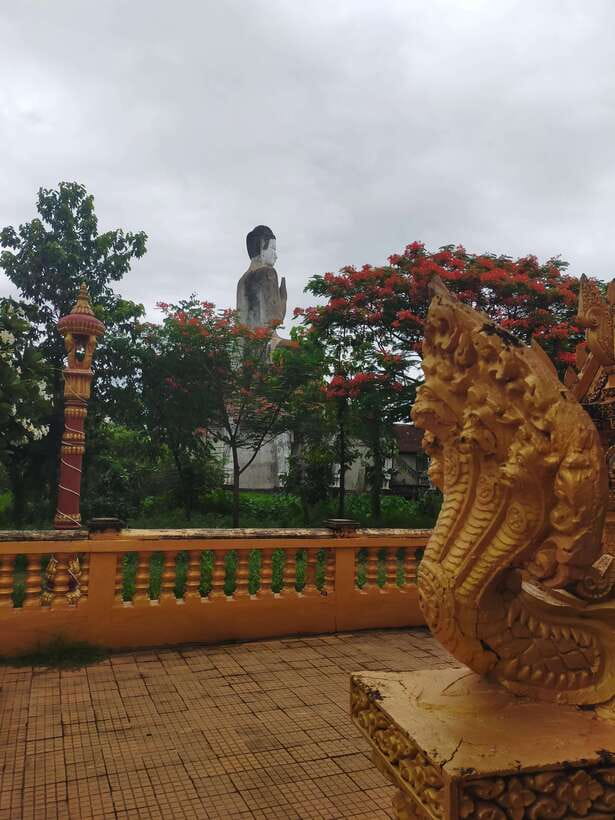
The final major stop is Ek Phnom, where a 25-meter-high Buddha draws attention first. Standing Buddha statues surround it, creating a large modern religious display that is easy to see from a distance.
You then visit a Buddhist temple built in 1991. Inside, murals show the story of Buddha, giving you another chance to connect the architecture with Buddhist teachings. The temple is more recent than Wat Samrong Knong, so the two sites offer a useful comparison between older religious traditions and modern Cambodian devotion.
Nearby are the ruins of an 11th-century Angkorian Hindu temple built under King Suryavarman I. This gives the stop a second layer. You are not seeing only one Buddhist complex, but also the remains of an earlier Hindu structure from the Angkor period.
The combination is rewarding, though you should set your expectations correctly. This is not Angkor Wat, and the ruins are not presented as a vast temple complex. Their value comes from the contrast between the ancient remains, the newer Buddhist temple, and the giant Buddha image. Your guide’s explanation is what ties those pieces together.
What $20 includes, and where the value lies
At $20 per person, this is a strong-value half-day outing. The price includes hotel pickup and drop-off within the stated area, an English-speaking guide, cold bottled water, wet wipes, snacks and tastings, all admissions, and donations.
The admissions and food samples alone are not the main reason to book. The real value is having transport between many scattered stops and a guide who can explain what the products, buildings, and memorials mean. Hiring separate rides and arranging each workshop would take more time and could leave you without the local background that makes the visits useful.
The tour returns you to Battambang for lunch or back to your hotel. That timing makes it easy to pair with a free afternoon, although the morning contains enough stops that you should not expect long, leisurely visits at every site.
The activity allows cancellation up to 24 hours in advance for a full refund, and you can reserve now and pay later. Those terms are useful if your Battambang plans are still changing, but the practical details matter more: confirm that your pickup point is within 5 kilometers and dress for temple visits.
Who will enjoy this tour most
I would recommend it to anyone who wants more than a city-center tour. You get food production, rural roads, religious sites, local work, and difficult history in one morning. It is particularly suitable if you have limited time in Battambang and want a broad introduction without arranging several separate trips.
Food lovers will get the most obvious pleasure from the noodles, bamboo sticky rice, rice paper, rice wine, and spring rolls. You will also appreciate the tour if you like seeing how ordinary products are made rather than only visiting major monuments.
It suits solo participants well. One solo booking was able to continue with the tour, and the guide’s personal attention made the experience feel comfortable and worthwhile. It can also suit couples and small groups who prefer a flexible tuk-tuk outing over a larger organized vehicle.
This is less suitable if you want a slow temple tour, dislike open-air transport, or prefer attractions with polished visitor facilities. The morning includes a serious Killing Field, so anyone looking only for light sightseeing should consider the emotional weight of Wat Samrong Knong.
The activity is not suitable for people with high blood pressure or people over 70. Baby strollers are not allowed, and sleeveless shirts are not permitted, so wear shoulders-covered clothing suitable for Buddhist sites.
Should you book the Battambang tuk-tuk morning?
Book it if you want to understand Battambang through its food, farms, religious places, and people at work. The strongest features are the small local workshops, the English-speaking guides, the fresh tastings, and the useful mix of city and countryside.
I would choose this over a simple temple transfer because it gives you more context for the area. Just plan for an early start, dress respectfully, keep the food and rice wine tastings sensible, and be ready for the serious history at Wat Samrong Knong. At $20, it is a practical and unusually full introduction to Battambang.
FAQ
What time does the Battambang tuk-tuk tour start?
Pickup starts at 7:20 AM from your accommodation or a restaurant.
How long does the tour last?
The tour lasts five hours and returns you to Battambang for lunch or to your hotel.
What language does the guide speak?
The live guide speaks English.
What food and drink can I taste?
You can taste Khmer rice noodles, bamboo sticky rice, rice paper products, spring rolls, and rice wine, depending on the stop and production taking place.
Is hotel pickup included?
Yes. Hotel pickup and drop-off are included when your accommodation or restaurant is within 5 kilometers of Battambang town.
What clothing is required?
Sleeveless shirts are not allowed. Wear clothing that covers your shoulders for the temple visits.
Is the tour suitable for everyone?
The activity is not suitable for people with high blood pressure or people over 70. Baby strollers are also not allowed.
Just added around Cambodia
- Oudong Temples & Phnom Prasith Private Tour from Phnom Penh★ 5.0 · 11 reviews
- Grand Tour-Ek Phnom. Baset. Bamboo Train. Wat Banan. Phnom Sampov★ 5.0 · 20 reviews
- Full-day: Wat Banan. Old bamboo train. Bat Cave. Killing cave★ 5.0 · 13 reviews
- Morning Tour,Ak Phnom temple,Rice wine,Rice Paper, killing Field★ 5.0 · 22 reviews
- Two Days Angkor Wat Park-Beng Mealea and Kampong Phluk Village★ 5.0 · 14 reviews
- 2-Days in temples and other areas★ 5.0 · 101 reviews
- Sunrise at Angkor Wat Temple: 3-Hour Private Tour★ 4.7 · 30 reviews
- Small-Group Explore Angkor Wat Sunrise Tour with Guide★ 5.0 · 3 reviews
Temple Tuk-Tuk Tours, compared.
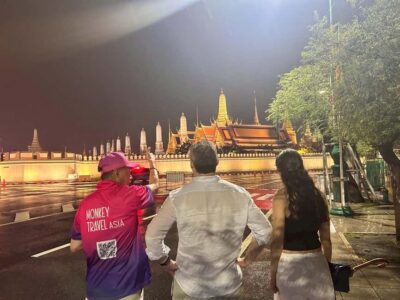
Bangkok by Night: Temples, Markets and Food Tuk-Tuk Tour
Read our review →
Markets, Temples and Food Night Tour by Tuk Tuk
Read our review →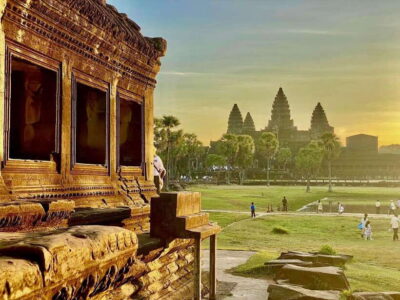
Tuk Tuk Adventure Chinatown Michelin Food & Temples
Read our review →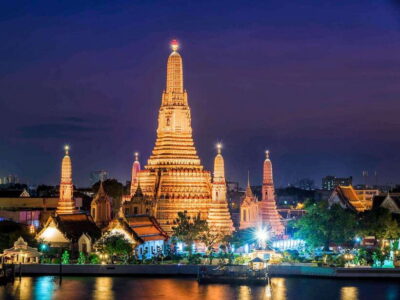
Evening Tour with Wat Arun, Wat Pho & Tuk Tuk Ride
Read our review →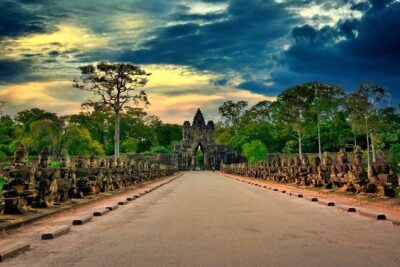
Chiang Mai Temples and Market Tuk-Tuk Evening Night Tour
Read our review →
Angkor Wat Private Tour by Tuk-Tuk with English Speaking Driver
Read our review →Browse the lists this tour appears in