
Review · LISBON
Lisbon: Belém Private Walking Tour & Jerónimos Monastery
Belém tells Portugal’s biggest stories. This private walking tour links the Monument to the Discoveries, Belém Tower, and Jerónimos Monastery in one well-paced history lesson. I like the guided access inside the monastery, where carvings and tombs make far more sense with context, and I like the small private-group format, capped at 12 people. The main drawback is the price: at $353 per person, you are paying for expert guidance and convenience rather than a low-cost sightseeing walk.
The tour lasts 210 minutes, though several visitors found the morning closer to four hours in practice. That extra time can be useful, especially with a guide such as Frederico, Federico, Marta, or Francisco, but you should be ready for extended periods of standing. Belém Tower is closed until 2026, so this is an exterior visit only.
Key points to know before booking
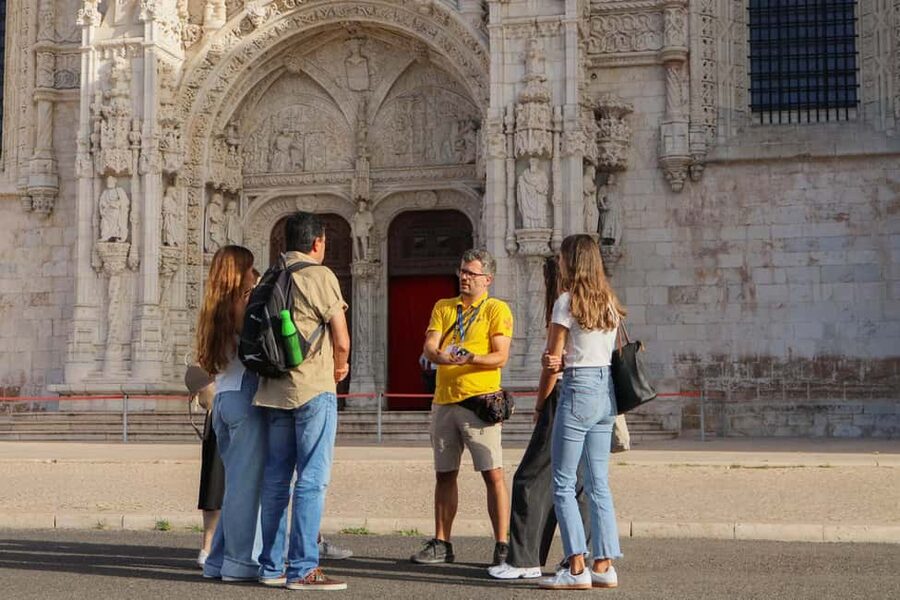
- Jerónimos Monastery is the centerpiece: Your ticket includes guided access to the cloisters and Church of Santa Maria.
- The Age of Discoveries gets context: Learn how Vasco da Gama, Prince Henry the Navigator, and Luís de Camões fit into Portugal’s story.
- Belém Tower is exterior only: Renovation work keeps the tower closed to the public until 2026.
- The guide makes the difference: Frederico and Federico receive especially warm praise for clear, energetic history lessons.
- Expect a lot of standing: The monastery portion can involve long explanations in one place, so comfortable shoes matter.
- Private does not always mean one couple: The standard group may include up to 12 people.
Why Belém deserves a dedicated morning
Belém is not simply another collection of pretty Lisbon monuments. This riverside district is tied to the voyages that made Portugal a major maritime power in the 15th and 16th centuries. Ships left from this part of the city, and the monuments here were built to honor faith, royalty, navigation, and national ambition.
I like this tour because it puts the sights in a sensible order. You begin outdoors, where your guide can explain the broad story of Portugal’s expansion, then move inside Jerónimos Monastery, where that story appears in stone, sculpture, and religious ceremony.
The setting also gives you a break from Lisbon’s steep central streets. Belém is known for broad promenades and leafy avenues, with the river nearby. You will still walk for several hours, but the route is not built around climbing Lisbon’s hills.
The subject needs some care, though. Portugal’s maritime wealth brought major cultural and commercial change, but it also belongs to the history of overseas empire. The supplied tour description emphasizes explorers, kings, monks, and national achievement. If you want a fuller discussion of the costs and consequences of expansion, ask your guide directly. A good private format gives you room to do that.
More Temple Walking Tours in Portugal
- Lisbon: Belém Walking Tour with Jerónimos Monastery Ticket
★ 4.9 · 637 reviews - Lisbon: Belem Walking Tour with Jeronimos Monastery Ticket
★ 4.7 · 490 reviews - Belem and Jeronimos Monastery Guided Small Group Walking Tour
★ 5.0 · 410 reviews
Starting at the Jerónimos Monastery entrance
The meeting point is directly in front of the Jerónimos Monastery entrance, beside the plaque indicating the church. That is useful because you do not need to search for a café, hotel, or obscure street corner.
Arrive ready to walk. Wear comfortable shoes and clothes, and avoid bringing oversize luggage. Weapons, sharp objects, smoking, vaping, alcohol, drugs, speakers, and non-folding strollers or wheelchairs are not allowed. Assistance dogs are permitted, but pets are not.
The guide may speak French, Spanish, Portuguese, or English. Depending on the group, the tour may be handled by a multilingual guide. If language clarity matters to you, confirm the available language when you check the starting time.
The standard group size is limited to 12 people. That is small enough for questions and individual attention, but do not assume it means a one-to-one tour. Several strong guide reports point to the value of this format, especially when the guide takes time to respond to each person.
The Monument to the Discoveries and Portugal’s outward gaze
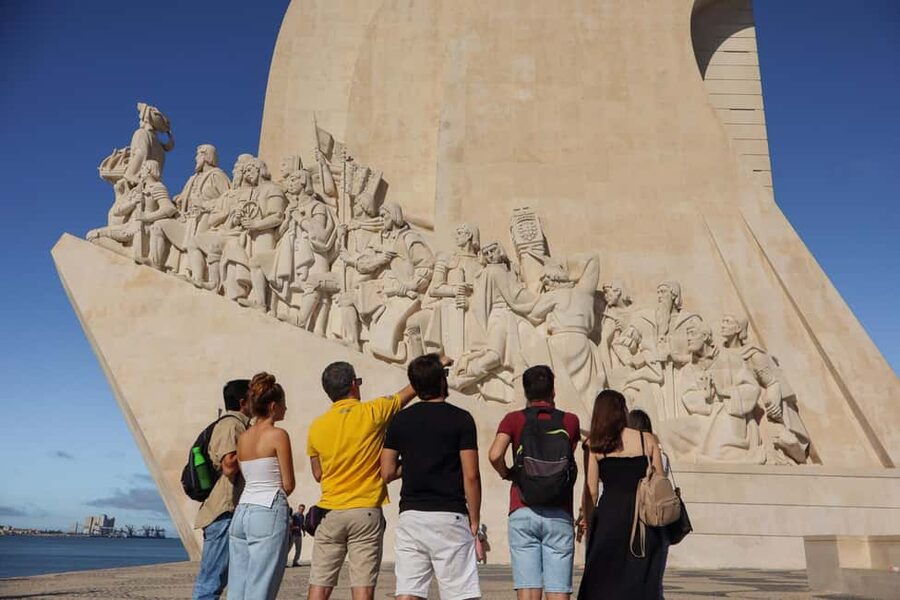
The Monument to the Discoveries is one of Belém’s most recognizable landmarks. Its sculpted figures face the river, recalling the navigators, royal sponsors, and religious figures linked to Portugal’s voyages.
You will not get much from a quick photograph alone. The guide’s role here is to explain the people behind the monument and how their choices changed Portugal and the wider world. Vasco da Gama and Prince Henry the Navigator are central names, but the broader point is how exploration depended on royal money, religious purpose, shipbuilding, and political ambition.
This is one of the more active sections of the tour. You move along the riverfront rather than staying in one place for a long lecture. That change of pace matters because the monastery visit later may require extended standing while the guide points out details.
The monument is also a good spot for photographs, but your view depends on crowds and weather. One tour group continued in rain and strong wind and still found the experience worthwhile, though that is a reminder to bring a light rain layer when Lisbon’s forecast looks unsettled.
Belém Tower from the riverfront
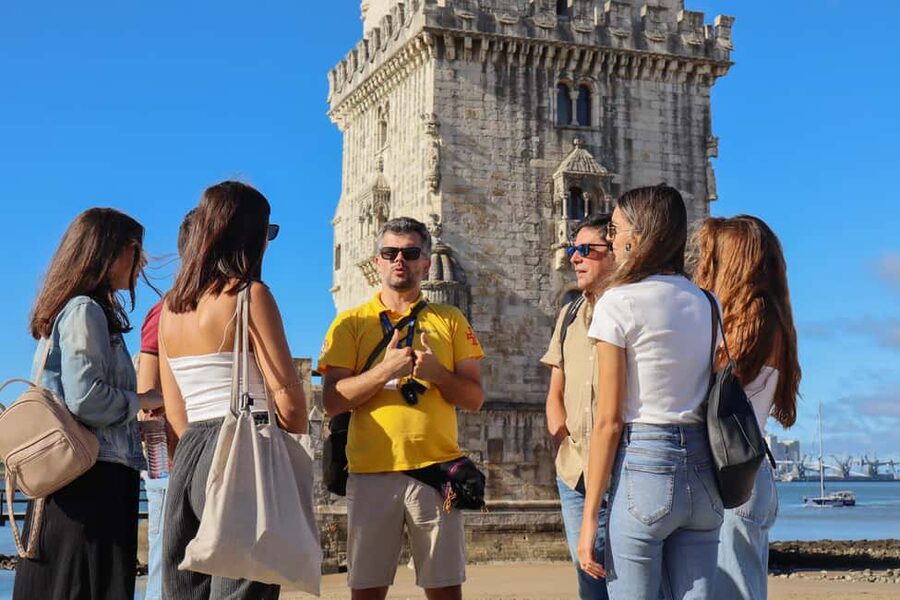
Belém Tower once helped guard the entrance to Lisbon. Built in the Manueline style, it combines defensive features with elaborate decoration. Its position by the water makes the tower easy to understand as part of the city’s maritime defenses, not just as a decorative landmark.
For now, you can admire and photograph it from outside, but you cannot enter. The tower is closed to the public until 2026 because of renovation work. That detail is important if you are booking this tour mainly to climb the tower or inspect its interior rooms.
The exterior visit still earns its place in the route. Your guide can explain the tower’s defensive purpose and its later symbolic role in Portugal’s maritime identity. I would treat the stop as a visual and historical introduction, not as a full monument visit.
The tour’s outdoor portion works best when you want explanation rather than a quick checklist of landmarks. You will hear how the tower and monument connect to the same period, then see how those ideas appear in Jerónimos Monastery.
More Temple Walking Tours in Lisbon:
- Lisbon: Belem Walking Tour with Jeronimos Monastery Entry
★ 4.9 · 163 reviews - Belém Walking Tour + Jerónimos Monastery Ticket
★ 5.0 · 24 reviews - Bangkok: City Highlights Temple and Market Walking Tour
★ 4.5 · 3,990 reviews - Bangkok: Grand Palace and Wat Phra Kaew Guided Walking Tour
★ 4.4 · 2,417 reviews
Inside Jerónimos Monastery’s Manueline cloisters
Jerónimos Monastery is the main reason to book this experience. Your admission is included, and the tour provides skip-the-ticket-line access, subject to the site’s operating procedures. That can save significant time, particularly during busy periods.
The cloisters are the architectural heart of the visit. Columns, arches, and carved details reflect the Manueline style, a Portuguese form of late Gothic design associated with the Age of Discoveries. Nautical motifs and religious symbols are not random decoration. They connect the monastery to Portugal’s royal power, seafaring ambitions, and Catholic faith.
This is where a guide adds real value. Without explanation, you can see beautiful stonework and move on. With a strong guide, you can begin to understand why certain details appear, how the monastery relates to Portugal’s national story, and why the building became a symbol of the country’s Golden Age.
Frederico and Federico received particular praise for linking the outdoor history to the interior architecture. Francisco was also singled out for presenting the material with the level of detail expected from someone studying Portuguese history at an advanced level. Names can vary by date, but the repeated pattern is clear: guide quality is the strongest part of this experience.
There is one practical weakness. You may spend a long time standing while the guide explains the cloisters. One person felt the information would be easier to absorb if it were broken into shorter sections with more chances for questions. I agree with that concern. The material is worthwhile, but the pace may feel heavy if you prefer constant movement.
Church of Santa Maria and the national tombs
The church visit gives the tour a quieter finish. The Church of Santa Maria has soaring ceilings and a more solemn atmosphere than the open cloisters. It is also where figures such as Vasco da Gama and Luís de Camões are buried.
These tombs give the national story a human focus. Vasco da Gama represents the voyages celebrated throughout Belém. Luís de Camões, one of Portugal’s most important poets, connects the era of exploration to literature and national identity.
The church is not just another room added to the itinerary. It shows how religion, monarchy, art, and overseas ambition were tied together. Your guide can help you read the building as a statement of power and devotion, rather than as a collection of impressive surfaces.
Plan for more standing here as well. If you have heart or respiratory problems, are pregnant, or use a wheelchair, this experience may not suit you. The tour is specifically not recommended for wheelchair users, and non-folding wheelchairs are not permitted.
What the 210-minute schedule feels like
The advertised duration is 210 minutes, or three and a half hours. Some people experienced closer to four hours, while another felt the time inside the monastery was only about an hour rather than the expected two. The exact balance may depend on the guide, entrance conditions, waiting time, group size, and the day’s pace.
That variation is worth understanding before you book. This is not a quick 90-minute introduction. You are committing to a substantial walking and listening session, with outdoor stops followed by a detailed indoor visit.
The route has a useful rhythm:
- Outdoor orientation in Belém
- The Monument to the Discoveries
- Exterior viewing of Belém Tower
- Guided entry into the monastery
- Cloisters and architectural details
- Church of Santa Maria and the tombs
The outdoor portion tends to feel more active because you keep moving between landmarks. The monastery portion is slower and more concentrated. I would leave the rest of your day flexible rather than booking a tight lunch reservation immediately afterward.
A short coffee and pastry stop was possible during one longer outing, but it is not listed as an included feature. Do not count on food or drinks. Meals, beverages, personal expenses, and entry to other monuments are not included.
How much value do you get for $353?
At $353 per person, this is an expensive walking tour. The price makes the most sense if you place a high value on a private-group setting, included monastery admission, and a guide who can explain Portuguese history in detail.
The skip-the-line access may be worth a great deal of the cost on a crowded day. Jerónimos Monastery is the sort of place where waiting outside, then walking through without context, can use up time without giving you much understanding. Here, the ticket and explanation come together.
Still, I would not call this a budget choice. If you are happy to read about Manueline architecture beforehand and explore at your own pace, independent sightseeing will cost less. You are paying for interpretation, organization, language support, and the chance to ask questions.
The value improves for people who want one substantial history experience during a Lisbon visit. Several people found that the tour helped set the scene for the rest of Portugal, not just for Belém. That is a fair way to judge it: not as a simple entrance ticket, but as a guided lesson built around three major symbols.
The guides are the make-or-break factor
The strongest guide descriptions focus on enthusiasm, clear storytelling, and connections between Portugal and the wider world. Frederico and Federico are praised for bringing energy to long explanations, answering questions, and tying the monastery to Portugal’s past. Marta is described as enthusiastic and well prepared, while Francisco is noted for detailed historical presentation.
That matters because this tour contains a lot of information. If your guide simply names dates and architectural terms, the monastery could feel like a beautiful but empty shell. A lively explanation gives the carvings, tombs, and spaces a purpose.
The private format should also help with questions. You can ask about the Manueline style, the explorers, the church, or the political meaning of the monuments. The tour may be multilingual, however, so the experience can vary with the group’s language mix.
I would tell the guide early if you prefer shorter explanations, more walking, or regular question breaks. That simple request may help shape the rhythm, especially during the cloister visit.
Who should book this Belém tour?
I would recommend it to you if you want:
- A serious introduction to Portugal’s Age of Discoveries
- Guided access to Jerónimos Monastery
- A small group rather than a large coach tour
- Help interpreting Manueline decoration
- The convenience of seeing Belém’s main exterior landmarks in one route
- A guide who can answer questions and connect the sites
It is less suitable if you want to enter Belém Tower, avoid long periods of standing, or keep your sightseeing inexpensive. It is also a poor fit for anyone with the listed health or mobility restrictions.
Bring comfortable shoes, dress for changing weather, and carry only what you need. The riverfront can feel exposed in poor weather, while the monastery may feel crowded or slow at certain points.
Should you book it?
Book this tour if Jerónimos Monastery is high on your Lisbon list and you want its details explained rather than merely photographed. The guides appear to be the real strength, with Frederico, Federico, Marta, and Francisco receiving especially strong praise for energy, history, and personal attention.
Skip it if $353 feels too steep for a walking tour, or if your priority is entering Belém Tower. That tower is closed until 2026, and the monastery visit includes a fair amount of standing.
For the right visitor, this is a useful way to understand Belém in one morning. You see the major monuments, learn how they connect, and leave with more than a handful of attractive pictures.
FAQ
How long does the Belém walking tour last?
The stated duration is 210 minutes, or three and a half hours. The actual outing may run closer to four hours depending on the guide, entry conditions, and pace.
What does the tour include?
It includes Jerónimos Monastery admission, guided visits to the church and cloisters, a guided walk through Belém, and exterior visits to the Monument to the Discoveries and Belém Tower. A professional guide and travel insurance compliant with Portuguese regulations are also included.
Can I enter Belém Tower?
No. Belém Tower is closed to the public until 2026 because of renovation work. The tour visits and explains the exterior only.
Where do I meet the guide?
Meet in front of the Jerónimos Monastery entrance, next to the plaque indicating the church.
What languages are available?
The tour is offered in French, Spanish, Portuguese, and English. The guide may be multilingual depending on the group.
Is this a private tour?
It is described as a private group experience, with the standard group size limited to 12 participants.
Is the tour suitable for wheelchair users?
No. The experience is not suitable for wheelchair users, and non-folding wheelchairs are not allowed. It is also not recommended for pregnant women or people with heart or respiratory problems.
Just added around Lisbon
- Belém: Jeronimos Monastery, Tickets and Guided tour★ 4.9 · 30 reviews
- Lisbon: Tour of Belem and Jerónimos Monastery★ 3.2 · 5 reviews
- Lisbon: Skip-the-line Jerónimos Monastery Tour with Tickets★ 5.0 · 4 reviews
- From Lisbon: Évora, Chapel of Bones, & Roman Temple Tour★ 5.0 · 8 reviews
- Lisbon: Belem Tour with Pastéis at Jerónimos Monastery★ 4.7 · 96 reviews
- From Lisbon: Fátima Sanctuary and Batalha Monastery (UNESCO)★ 5.0 · 5 reviews
- Belém Walking Tour + Jerónimos Monastery Ticket★ 5.0 · 24 reviews
- Half Day Fatima + Aldeia Pastorinhos Private Tour Departure Lisbon★ 4.5 · 22 reviews
Temple Walking Tours, compared.

City Highlights Temple and Market Walking Tour
Read our review →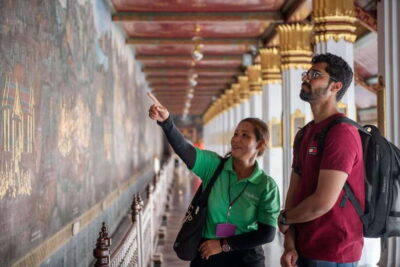
Grand Palace and Wat Phra Kaew Guided Walking Tour
Read our review →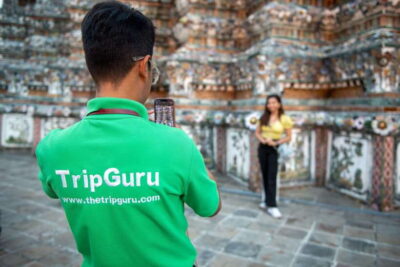
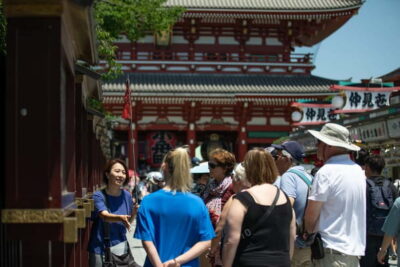
Asakusa Walking Tour with Sensoji Temple Visit
Read our review →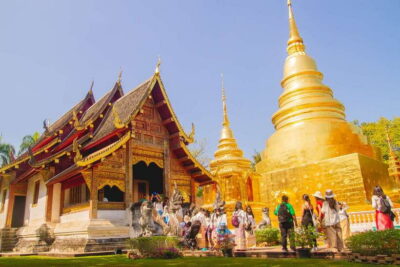
3 Hour Old City and Temples Guided Walking Tour
Read our review →
Kyoto Arashiyama Walking Tour: Bamboo, Monkeys, Gardens & Secrets
Read our review →
Belém Walking Tour with Jerónimos Monastery Ticket
Read our review →Browse the lists this tour appears in