
Review · SIEM REAP
Siem Reap: Angkor Wat Tour Explore The Most Iconic Temples
Angkor rewards an early start. This 8-hour private tour packs Siem Reap’s major temples into one well-organized day, with hotel pickup, transport, bottled water, and a cool towel included. I like the sunrise start at Angkor Wat, which lets you reach the moat before the main heat and crowds build. I also like the mix of famous sights and quieter stops, especially Banteay Kdei and unfinished Ta Keo.
The main drawback is the pace. Seven stops in eight hours means plenty of seeing, walking, and photographing, but not endless time for every carving. You also need to buy the Angkor Temple Pass separately, and the tour is not suitable for wheelchairs because the temple ground is uneven.
Key points to know before booking
- Sunrise begins at Angkor Wat: Choose the early option to see the temple towers reflected in the moat before the day gets hot.
- Seven major stops are included: The route covers Angkor Wat, Banteay Kdei, Ta Prohm, Ta Keo, Bayon, and the South Gate of Angkor Thom, with sunrise at Angkor Wat.
- Private transport keeps the day simple: The price is $24 per group of up to two people, with hotel pickup and drop-off included.
- Tuk-tuk transport may be part of the experience: Several visitors praised the breeze, easy temple access, and reliable drivers during the ride.
- Your driver makes a real difference: Names praised in feedback include Ray, Chamrong, Lay, Lai, Danny, and Soka, with repeated compliments for punctuality and helpful assistance.
- Dress and walking matter: Cover your shoulders and knees, wear comfortable shoes, and expect steps, rough paths, and exposed temple stone.
What this $24 private tour really offers
At $24 for a group of up to two, this is a very low-cost way to arrange transport around Angkor. The value comes less from formal guiding and more from having someone collect you, move you between spread-out temple sites, wait while you explore, and return you to your accommodation.
That distinction matters. The advertised driver language is English, and some drivers provide useful historical explanations and temple advice. Others may function mainly as transport and local support. If you want a detailed archaeological lecture at every shrine, confirm how much guiding your driver provides before booking.
For two people, the price is especially attractive. You share private transport instead of joining a large group, and you can move at a more personal rhythm. The group size is also helpful at the start of the day, when the entrance process and early departure can feel less confusing.
The package includes hotel pickup and drop-off, private round-trip transportation, unlimited bottled water, and a cool towel. Meals and the temple pass are not included. Factor in the separate admission cost when comparing the total price with other Angkor tours.
Feedback gives the transport side a strong record, with a 4.9 rating from 47 reviews and 93 percent of ratings giving the transport a perfect score. Punctuality comes up repeatedly. Ray was praised for finding the correct meeting point, while Soka was praised for waiting outside each temple. Those small details matter in Angkor, where parking areas and temple entrances can feel confusing after a long walk.
More Angkor Wat Tours in Siem Reap:
- Angkor Wat Sunrise or Sunset Tour with Guide from Siem Reap
★ 5.0 · 12,109 reviews - Siem Reap: Angkor Wat: Small-Group Sunrise or Sunset Tour
★ 5.0 · 9,444 reviews - Siem Reap: Angkor Wat 2-Day Tour with Sunrise and Sunset
★ 4.9 · 4,429 reviews
Starting before sunrise at Angkor Wat
For the sunrise option, pickup takes place early from your Siem Reap hotel. The driver takes you to the Angkor Archaeological Park, where you buy the required temple pass at your own expense.
The route uses the western entrance to Angkor Wat, described as a less-visited approach. You then make your way toward the viewing area near the moat. The familiar image is the temple’s five-tower outline reflected in the water as the sky brightens.
Sunrise is a strong reason to choose this option, but keep your expectations sensible. Weather controls the colors, and clouds can soften or hide the effect. The real advantage of arriving early is not only the sky. You also begin exploring before the strongest heat of the day.
Bring cash for the pass and other personal costs. Sunglasses and sunscreen are useful once daylight arrives. A cool towel and cold water may sound like small extras, but they become genuinely welcome after several hours on hot stone.
Angkor Wat’s galleries and central sanctuary
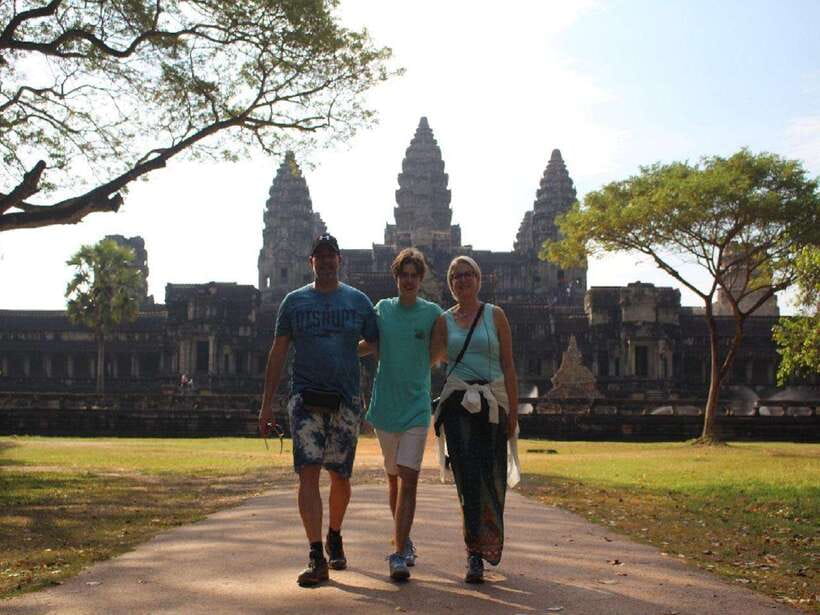
After sunrise, you explore Angkor Wat itself. Built first as a Hindu temple dedicated to Vishnu, it later became a Buddhist site. That change helps explain the mixture of religious imagery and later devotional use you see inside.
The temple’s long galleries are filled with carved bas-reliefs depicting Hindu mythology. Look up and around rather than rushing straight toward the center. The scale is the point here: broad courtyards, long sight lines, towers, and repeated stone details create a very different feeling from the tighter jungle temples later in the day.
The central sanctuary gives the visit its vertical focus. You will walk, climb, and cross uneven surfaces, so sensible shoes are more valuable than fashionable ones. Modest clothing is required, with shoulders and knees covered.
Angkor Wat can easily absorb half a morning by itself. This itinerary moves on after the main exploration, so you should accept that you are getting a broad introduction rather than a slow, specialist visit. If you stop for every carving, you may need to shorten time at another temple.
Banteay Kdei, a quieter pause in the route
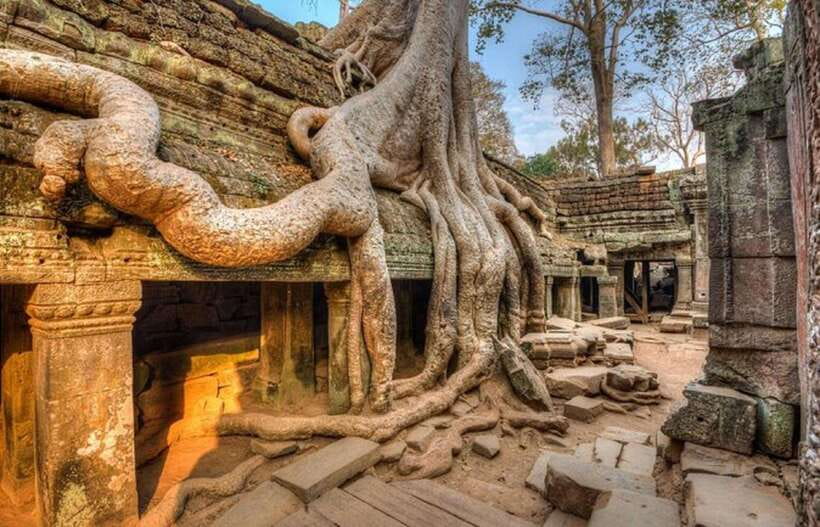
Banteay Kdei means Citadel of Chambers. Built in the late 12th century as a Buddhist monastery, it offers a calmer change after Angkor Wat’s grand scale.
The temple is partly ruined, with corridors and chambers that give the site a quiet, enclosed feel. Its carvings and architecture reward a slower eye, but the main pleasure is the atmosphere. You can see how a large religious complex becomes more intimate when walls are broken, paths are less formal, and the structure feels closer to the surrounding setting.
This is one of the most useful stops for balancing the itinerary. Angkor Wat and Bayon are the headline monuments. Banteay Kdei gives you time to notice smaller spaces and less polished stonework.
Do not expect the same complete structure or dramatic tower view found at Angkor Wat. That is precisely why the stop works. It adds variety and usually feels less overwhelming.
A few more temple visits around Siem Reap worth a look
- Siem Reap: Full-Day Angkor Wat Guided Tour with Sunset
★ 4.9 · 3,803 reviews - Angkor Wat Sunrise tour with Small – Group and Guide tours
★ 5.0 · 3,655 reviews - Angkor Wat Highlights and Sunrise Guided Tour from Siem Reap
★ 5.0 · 3,213 reviews - Angkor Wat Sunset Small Group Tour with Lunch Included
★ 5.0 · 3,059 reviews
Ta Prohm and its giant tree roots
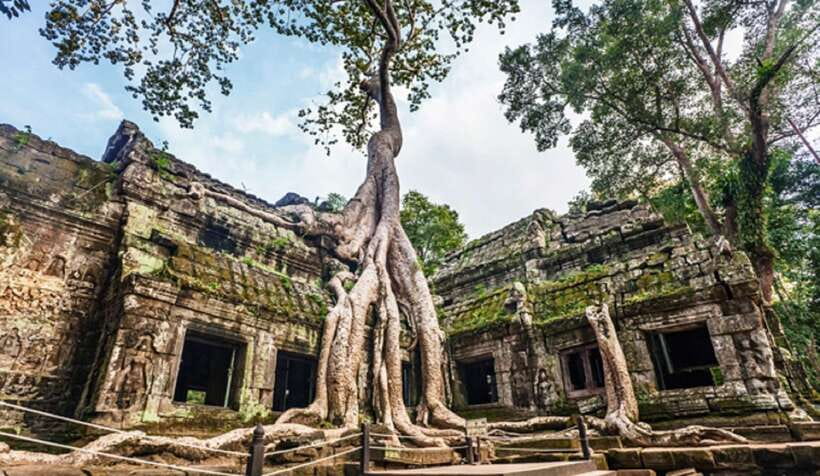
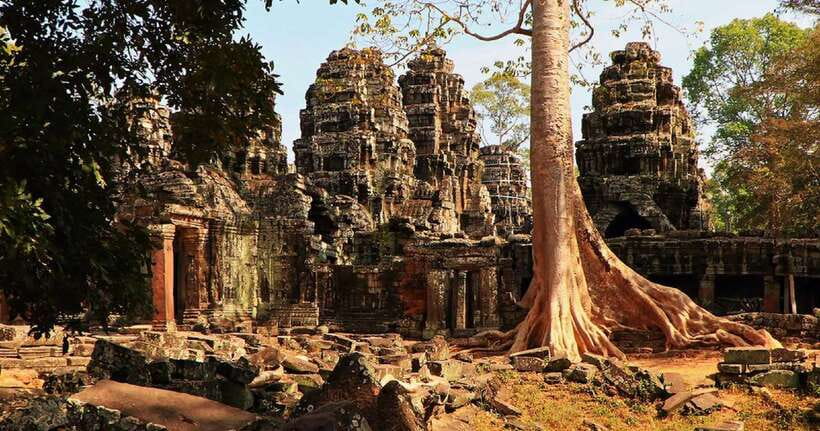
Ta Prohm is the stop most likely to match the picture in your head before arrival. Huge tree roots spread over walls and doorways, while stone corridors disappear into a setting that feels partly reclaimed by nature.
The temple was built in the 12th century and left largely unrestored. That choice creates its famous jungle-temple appearance. It also means broken walls, uneven ground, and narrow sections where you need to watch your footing.
Ta Prohm became widely known through the film Tomb Raider, but the movie connection is only a small part of its appeal. The real pleasure is seeing how architecture and living trees interact. Roots do not merely decorate the ruins. They press through, cover, and reshape the way you read the building.
This is a good place to ask your driver about safe routes and photo points. Rachel’s guide was praised for warning about monkeys and uneven areas, useful advice at a site where it is easy to focus on your camera and forget where you are stepping.
Ta Keo, an unfinished temple with a different feel
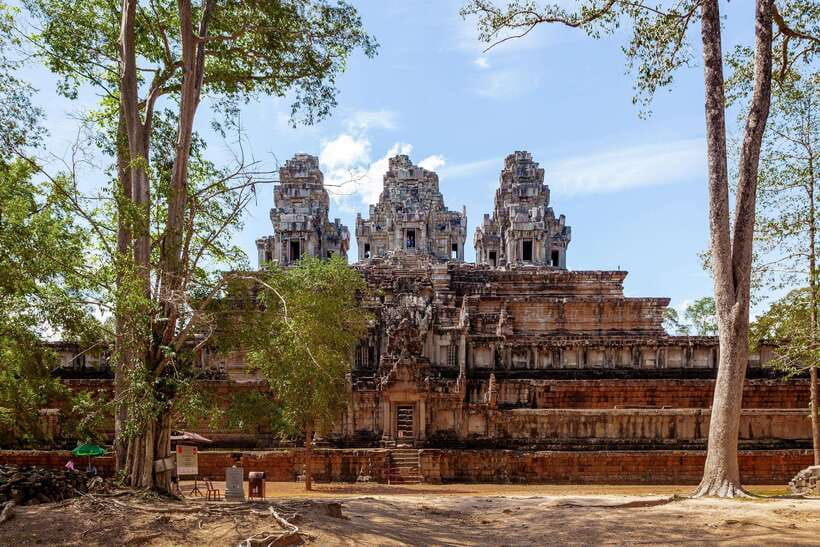
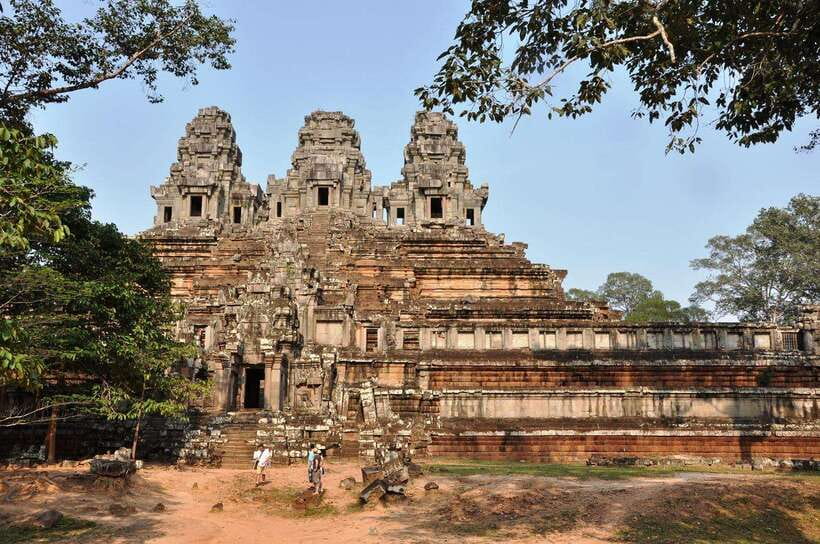
Ta Keo was built during the late 10th and early 11th centuries under King Jayavarman V and later rulers. Its defining feature is simple: it was never fully completed.
That unfinished state makes Ta Keo a useful contrast with Angkor Wat. Instead of seeing a finished religious complex covered in polished detail, you see a more severe structure whose incomplete surfaces reveal something about the building process.
The temple’s stone mass and height give it a strong, solid presence. You may find the ascent and uneven terrain tiring, particularly after several earlier stops. Comfortable walking shoes are important here, and anyone with limited mobility should think carefully about the physical demands of the route.
Ta Keo may not be the most ornate stop, but it is one of the more interesting from a construction point of view. It reminds you that Angkor was not created all at once or in one uniform style.
Bayon and the faces of Angkor Thom
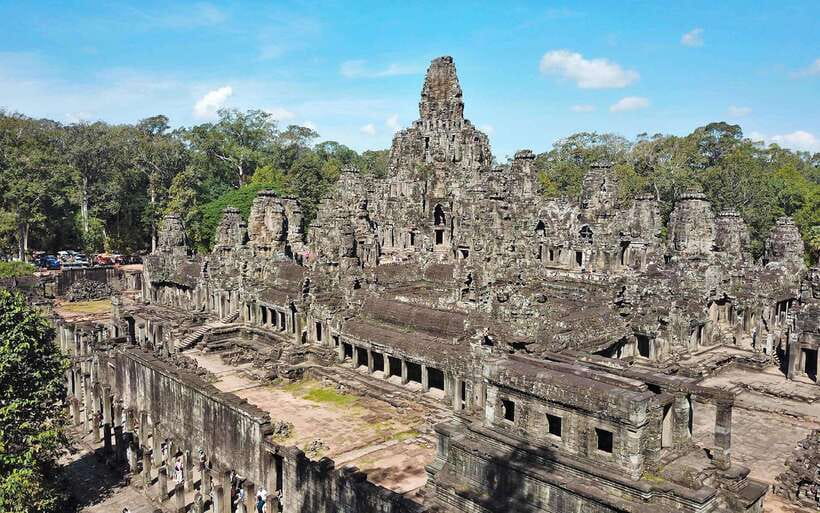
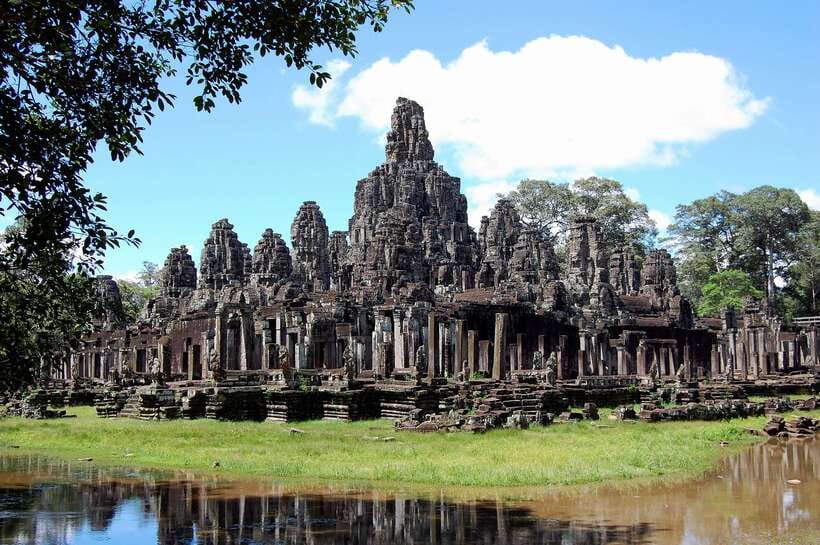
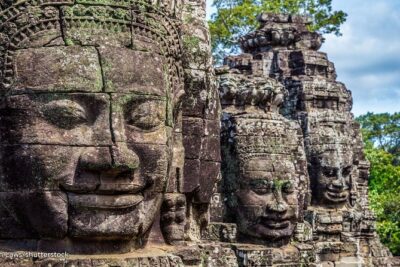
Bayon sits at the center of Angkor Thom and is famous for its towers topped with large serene faces. The temple is associated with 54 towers, each carrying four faces of Avalokiteshvara, though the number of visible faces can vary depending on the condition and arrangement of the monument.
The experience here is close and maze-like. Instead of Angkor Wat’s long, open approach, Bayon brings you among towers, galleries, and carved stone faces. Walk slowly and look from different angles. A face that seems hidden from one path may appear clearly from another.
The carvings also show scenes of daily life and historical battles. This gives Bayon more than a purely religious focus. You see people, conflict, movement, and ordinary activity alongside the famous expressions in stone.
Bayon is one of the busiest and most visually demanding stops on the route. Your driver will wait outside while you explore, which is helpful because you can take your time inside without worrying about arranging another ride.
The South Gate of Angkor Thom
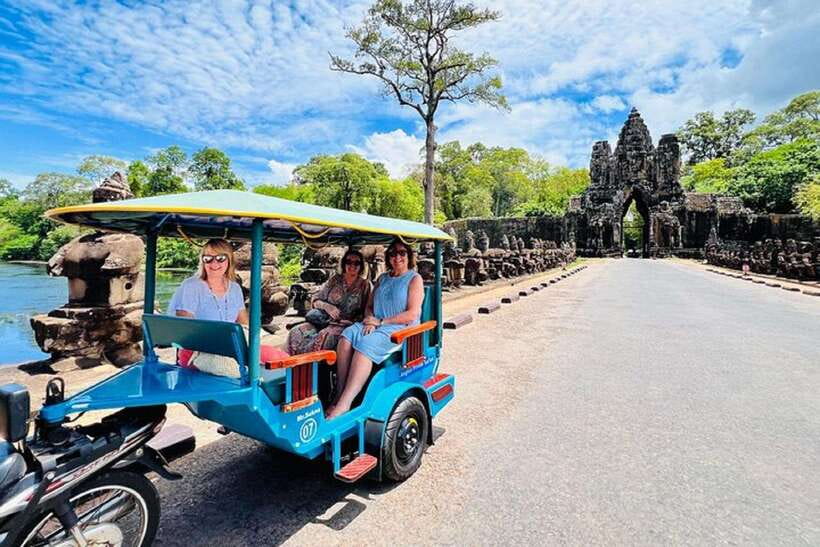
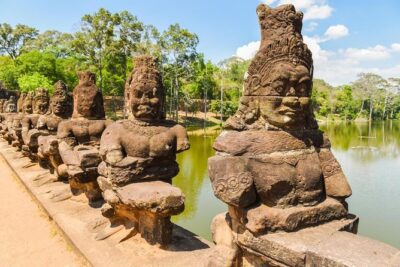
The Tonle Om Gate, also called the South Gate of Angkor Thom, provides a strong final look at the city’s monumental entrance system. A causeway leads toward the gate, lined with statues of gods and demons.
The gate carries four giant stone faces similar to those at Bayon. It is an excellent place for photographs because the causeway, statues, gate, and faces create a clear composition from a distance.
This stop is usually shorter than the main temple visits, but it gives the day a useful sense of place. Angkor Thom was not simply a group of isolated shrines. It was a planned city with gates, walls, ceremonial routes, and a central temple.
After the gate, the driver takes you back to your hotel or accommodation. The full experience lasts about eight hours, although the exact rhythm depends on your pickup time, temple pass arrangements, walking speed, and the time you spend at each site.
What the drivers do well
The strongest pattern in the feedback is dependable personal service. Several drivers were praised for arriving on time, waiting at every temple, and helping with directions. That is exactly what you need during a long temple day.
Chamrong received especially warm praise for helping with temple tips, explaining history when possible, stopping at vendors when requested, and making sure the ride remained comfortable. Lay was praised for taking visitors through the full itinerary with enough time at each stop. Danny was described as attentive and careful with the group.
Ray’s precise meeting-point assistance is worth noting. Hotel pickup sounds simple, but it can become awkward if you are staying in a large property or meeting somewhere nearby. The operator sends a message one day before the tour, and pickup is scheduled roughly five minutes before departure.
Transport may be by tuk-tuk, based on several accounts. That can be a pleasure in itself, with air moving through the open sides as you travel between temples. On a very hot day, the breeze helps, although it does not remove the need for sunscreen, water, and breaks.
The role is not identical to that of a licensed temple guide. Some drivers offer history and practical advice, while others concentrate on transport. Ask directly at the start how much explanation you would like and what the driver can provide.
Heat, clothing, and the physical side of Angkor
This is an active sightseeing day. You will walk through temple courtyards, cross uneven ground, and encounter steps and stone surfaces. The tour is not wheelchair accessible, and it is not suitable for babies under one year or people over 95.
Wear clothing that covers your shoulders and knees. This is required for temple visits, not merely a suggestion. Comfortable shoes are essential, and sandals with poor support may make the later stops harder.
Carry sunglasses, sunscreen, and cash. Bottled water is supplied without a stated limit, and cool towels are included. The jasmine-scented towel praised by Ai gives you an idea of the small comfort provided during the day.
Monkeys may be present around some temple areas. Keep your attention on your belongings and follow the driver’s advice. Pets, alcohol, and drugs are not allowed.
Is the flexible booking policy useful?
The tour allows cancellation up to 24 hours before the start for a full refund. It also offers reserve-now, pay-later booking, which can help if your Siem Reap schedule is still shifting.
The starting time depends on availability. The sunrise option requires an early pickup, while the general eight-hour format may use another departure time. Confirm the exact option and pickup time before booking, especially since the written route emphasizes sunrise at Angkor Wat while also mentioning Phnom Bakheng as a sunset point.
The temple pass is always separate. Do not arrive assuming the $24 covers park admission. The pass is a required extra expense and should be part of your budget from the beginning.
Who should book this Angkor temple tour?
I would choose this tour if I wanted a private, low-cost way to see the classic Angkor circuit without arranging transport myself. It suits couples, friends, and solo visitors who value hotel pickup, a flexible private vehicle, and a driver who waits at each stop.
It is also a good fit for a first day in Siem Reap. You get the essential visual sequence: sunrise at Angkor Wat, quieter Banteay Kdei, tree-covered Ta Prohm, unfinished Ta Keo, face towers at Bayon, and the South Gate.
I would look elsewhere if you want a slow archaeological study, a guaranteed specialist guide, or a very relaxed schedule with only two or three temples. Seven stops in eight hours is efficient, but it is not leisurely.
Should you book it?
Book it if value, private transport, and the major temples matter most. The price is hard to ignore for up to two people, and the repeated praise for punctual drivers, cold water, cool towels, and help at each stop adds real comfort.
Before paying, confirm three things: the exact pickup time, the transport type, and whether your driver will provide historical explanations or mainly drive and wait. If you are ready for an early start, lots of walking, and a separate temple-pass cost, this is a practical way to cover Angkor’s main sights in one full day.
FAQ
How much does the tour cost?
The tour costs $24 per group of up to two people. The Angkor Temple Pass is not included and must be purchased separately.
How long does the experience last?
The tour lasts eight hours. The exact starting time depends on availability and the option you choose.
Is hotel pickup included?
Yes. Pickup and drop-off at your hotel or accommodation are included. The pickup time is approximately five minutes before departure, and a message is sent one day before the tour.
Does the tour include sunrise at Angkor Wat?
The sunrise option begins with an early visit to Angkor Wat. You enter through the western entrance and watch the sunrise near the temple moat before exploring inside.
Which temples are visited?
The route includes Angkor Wat, Banteay Kdei, Ta Prohm, Ta Keo, Bayon Temple, and the South Gate of Angkor Thom. Sunrise at Angkor Wat is included with the sunrise option.
Is the Angkor Temple Pass included?
No. You must purchase the valid Angkor Temple Pass separately at your own expense.
What is included besides transportation?
The tour includes private round-trip transportation, hotel pickup and drop-off, unlimited bottled water, and a cool towel.
What should I wear?
Wear clothing that covers your shoulders and knees. Comfortable walking shoes are strongly recommended because the temple sites have uneven terrain.
Is the tour wheelchair accessible?
No. The tour is not wheelchair accessible because of the uneven temple terrain. It is also not suitable for babies under one year or people over 95.
Just added around Siem Reap
- Sunrise at Angkor Wat Temple: 3-Hour Private Tour★ 4.7 · 30 reviews
- Small-Group Explore Angkor Wat Sunrise Tour with Guide★ 5.0 · 3 reviews
- Siem Reap: Ultimate Angkor Wat Offbeat Experience by Jeep★ 4.9 · 8 reviews
- SiemReap: Private Angkor Wat Tour in English or German guide★ 5.0 · 5 reviews
- Siem Reap : Private Tuk-Tuk Tour of the Magnificent Temples.★ 4.9 · 14 reviews
- Siem Reap: 1-Day Angkor Wat Tour in Portuguese★ 5.0 · 4 reviews
- Siem Reap: Private 4-Day Angkor Wat and Phnom Kulen Tour★ 5.0 · 9 reviews
- Siem Reap: Personalized Angkor Wat Sunrise/Set by TukTuk/Car★ 4.9 · 41 reviews
Angkor Wat Tours, compared.
Angkor Wat Sunrise or Sunset Tour with Guide from Siem Reap
Read our review →
Angkor Wat: Small-Group Sunrise or Sunset Tour
Read our review →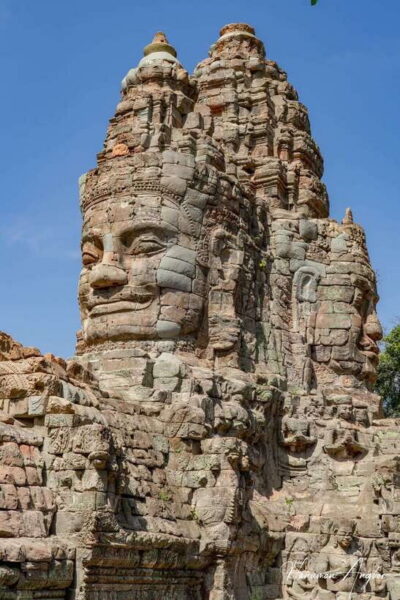
Angkor Wat 2-Day Tour with Sunrise and Sunset
Read our review →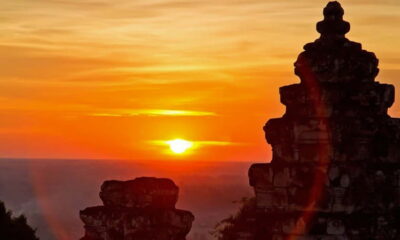
Angkor Wat Sunrise tour with Small – Group and Guide tours
Read our review →
Angkor Wat Highlights and Sunrise Guided Tour from Siem Reap
Read our review →
Angkor Wat Sunset Small Group Tour with Lunch Included
Read our review →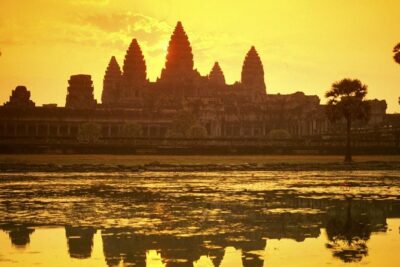
Full-Day Angkor Wat Sunrise Private Tour with Guide from Siem Reap
Read our review →Browse the lists this tour appears in