
Review · JAIPUR
Private Full-Day Jaipur Guided Tour with Monkey Temple
Jaipur rewards a well-planned day. This private tour packs the city’s finest palaces, stepwells, observatory, lakeside views, and Monkey Temple into nine hours, with an air-conditioned car taking the strain out of Jaipur’s traffic. I especially like the private vehicle and the chance to shape the day around your pace. I also like that the route includes both famous sights and the quieter Royal Gaitor cenotaphs. The main caution is simple: the $13 price does not include monument tickets or lunch, so your final cost will be higher.
You can start in Jaipur or Kukas, then travel with a driver and optional private guide. The schedule is full, and each major stop has a set time, so this suits you if you want to see a lot in one day rather than linger at one palace.
The tour has earned especially strong praise for its guides and personal service. Guides named in customer feedback include Farman, Vishan Singh, Abdul, Mustak, Shamshu, and Zunil, while drivers such as Sunny, Manoj, and Sani were praised for helping with water, parking, photographs, and day-to-day arrangements. One useful warning also appears: driver behavior can vary, so clear communication at pickup is sensible.
Key things to know before booking
- Seven major Jaipur sights in nine hours: The route covers Hawa Mahal, Panna Meena Stepwell, Amber Fort, Jal Mahal, Royal Gaitor, City Palace, and Jantar Mantar, then adds the Monkey Temple.
- Private air-conditioned transport: You avoid sharing the vehicle and can travel between widely scattered sights in comfort.
- The Monkey Temple adds a different mood: Galtaji brings pools, temple buildings, rounded roofs, and monkeys to a day otherwise focused on royal architecture.
- Entrance tickets cost extra: The low advertised price is attractive, but budget separately for monument fees and lunch.
- Early departure is smart: Starting early can help you reach the most popular sights before the heaviest crowds.
- The day is flexible in feel, not unlimited in time: You have a private group and guide, but nine hours is still a tight schedule for this many stops.
Why a private car matters in Jaipur
Jaipur’s sights are spread across the city and nearby Amber. The private car turns this into a practical sightseeing day instead of a string of separate transport decisions. You ride in an air-conditioned four-seat sedan for one to three people, a six-seat car for four to five people, or a 10-seat tempo traveler for six to 10 people.
That arrangement is especially useful in hot weather. The package includes bottled mineral water, fuel, parking, and taxes, so you are not constantly sorting out small transport charges. A driver can also wait while you walk through a palace or temple, which keeps the day moving.
The vehicle is not just a luxury here. Amber Fort, Panna Meena Stepwell, and the Monkey Temple are not all clustered around the same central streets. A private car gives you more control than a large group bus, and the private format is helpful if you are traveling alone, with children, or with older family members.
The tradeoff is that the route is ambitious. You will spend a fair amount of time walking at each stop, then returning to the car for the next leg. Wear shoes you can manage for stairs, courtyards, and uneven surfaces. The tour is not suitable for people with pre-existing medical conditions, so consider the heat, walking, and length of the day before booking.
More Monkey Forest Temple Tours in India:
- Jaipur Guided Tour with Monkey Temple
★ 5.0 · 55 reviews - Jaipur: Private Evening Tour with Monkey Temple Sunset
★ 4.6 · 27 reviews - Jaipur sightseeing tour with monkey temple (Galta ji temple)
★ 5.0 · 15 reviews
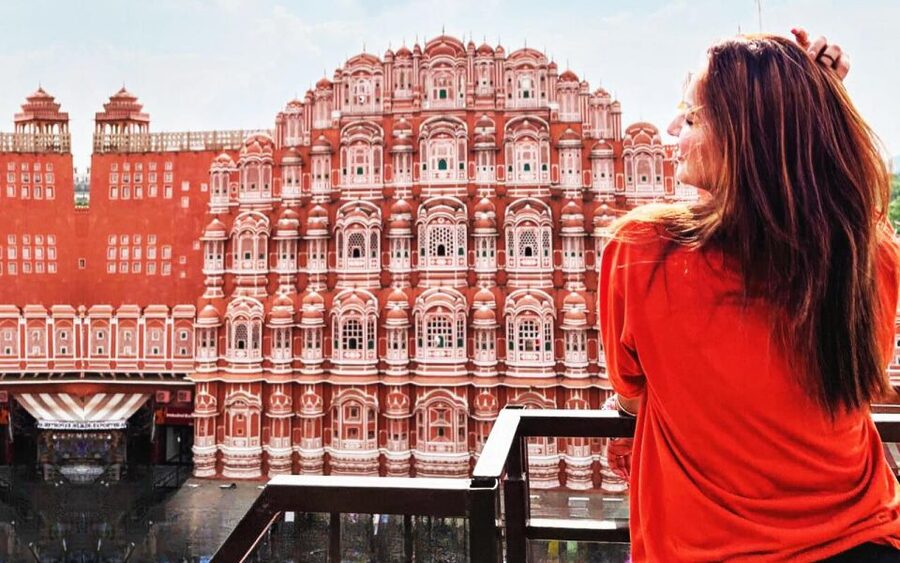
Hawa Mahal: Jaipur’s famous pink facade
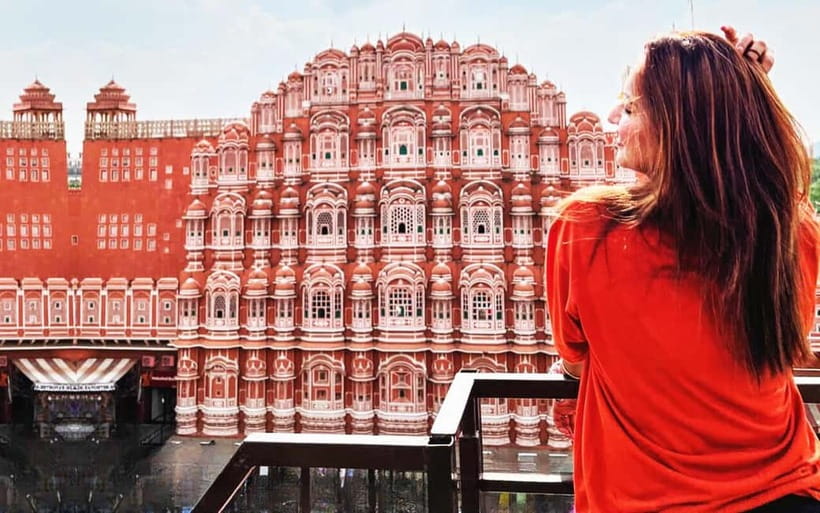
Hawa Mahal is the quick visual introduction to Jaipur. Its ornate facade is filled with small windows and stone screens, built so royal women could observe street life without being seen. Your guide can explain how the latticework helped with airflow and why this palace is so closely tied to Jaipur’s public image.
The scheduled visit lasts about an hour and includes a photo stop, walking, sightseeing, and time for tea. This is a good place to begin because the building is visually striking even if you do not spend a long time inside.
You should expect street activity around the palace. The best photographs are often from across the road, where the full facade comes into view. Since the tour moves on to several larger sites, Hawa Mahal works well as an opening stop rather than a long museum visit.
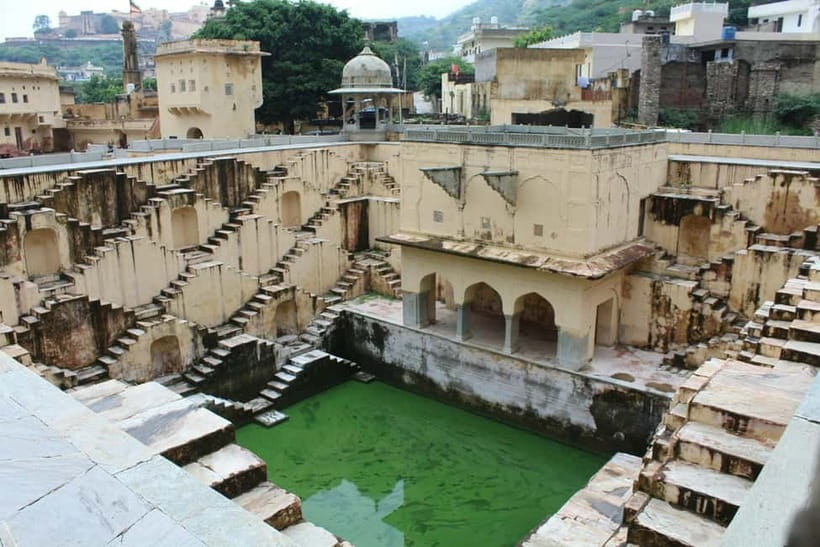
Panna Meena Stepwell and the geometry of water
Panna Meena ka Kund is one of the most distinctive stops on the route. Its repeated flights of steps create a strong geometric pattern leading down toward the well. The design is beautiful from above, but the guide’s explanation helps you understand that this was also a practical water structure.
The visit is planned for about 30 minutes. That is enough for photographs, a walk around the structure, and a short explanation, but not a slow architectural study. I like its place in the itinerary because it breaks up the palaces with something more understated and functional.
The steps can be uneven, so comfortable shoes matter. This is also a stop where your guide can add value by explaining how the space worked rather than simply pointing out its angles.
Amber Fort: allow time for the grandest stop
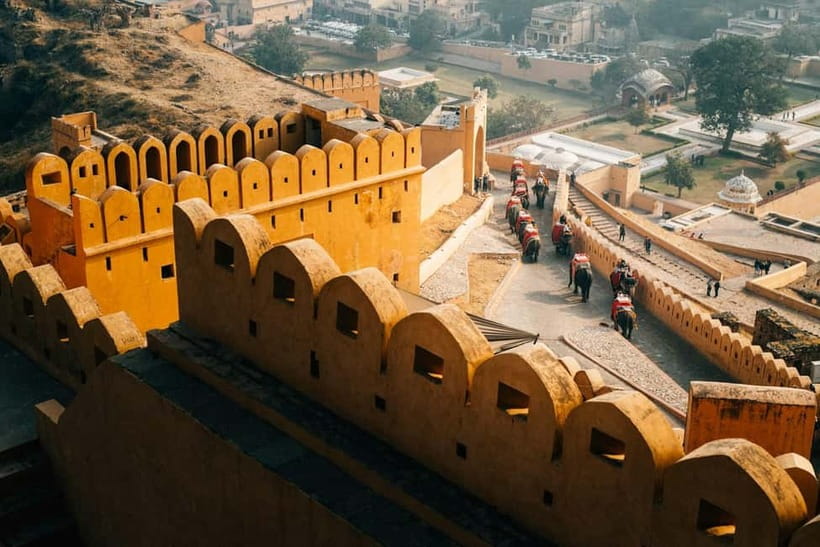
Amber Fort receives about two hours, and it deserves the longest visit of the day. Built with red sandstone and marble, the fort combines defensive walls, courtyards, halls, decorative surfaces, and broad views from its hill setting.
This is where a strong guide makes the biggest difference. The complex can feel like a sequence of impressive courtyards if you walk through it without context. A guide such as Vishan Singh, Farman, or Abdul can help connect the spaces to Jaipur’s rulers, court life, and Rajput architecture, provided your assigned guide has the same level of experience and language ability.
Two hours sounds generous, but Amber Fort can easily absorb the time. You will walk, climb, stop for photographs, and listen to explanations. It is wise not to spend too long at the first courtyard, since City Palace and Jantar Mantar still follow later.
The fort is also the point where heat and crowds may become more noticeable. An early start is a practical choice. One customer specifically advised leaving early to avoid the busiest conditions. The air-conditioned car and included water help, but they do not replace a hat, comfortable clothing, and sensible pacing.
More Full-Day Tours in India:
- Full Day Varanasi Private Tour with Temples, Ghats & Rituals
★ 4.5 · 105 reviews - Full-Day Private Tour to the Kanchipuram Temples from Chennai
★ 5.0 · 73 reviews - Kolkata: Full-Day Spirituality & Temples Tour
★ 4.4 · 18 reviews - Private Full-Day Amritsar Tour: The Golden Temple & Wagah Border
★ 5.0 · 14 reviews
Jal Mahal: a short stop with a strong view
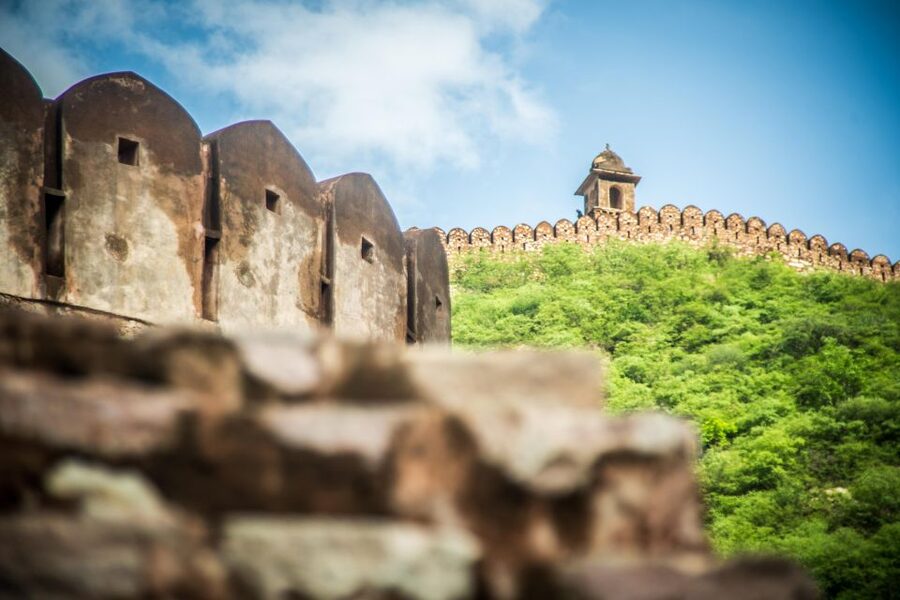
Jal Mahal is the unusual palace partially surrounded by water. The tour allows around 30 minutes, generally enough for a roadside viewing stop and photographs rather than a full interior visit.
This is a pause between larger monuments. You can enjoy the palace’s symmetrical shape and its reflection, then return to the car without using much of your sightseeing time. The stop is brief, so do not expect an extended visit inside the building.
Its value is visual. After the stone courtyards of Amber Fort, Jal Mahal gives you a calmer scene and a chance to rest your legs. Your guide can also explain why the palace appears to float above the water.
Royal Gaitor: quiet marble cenotaphs
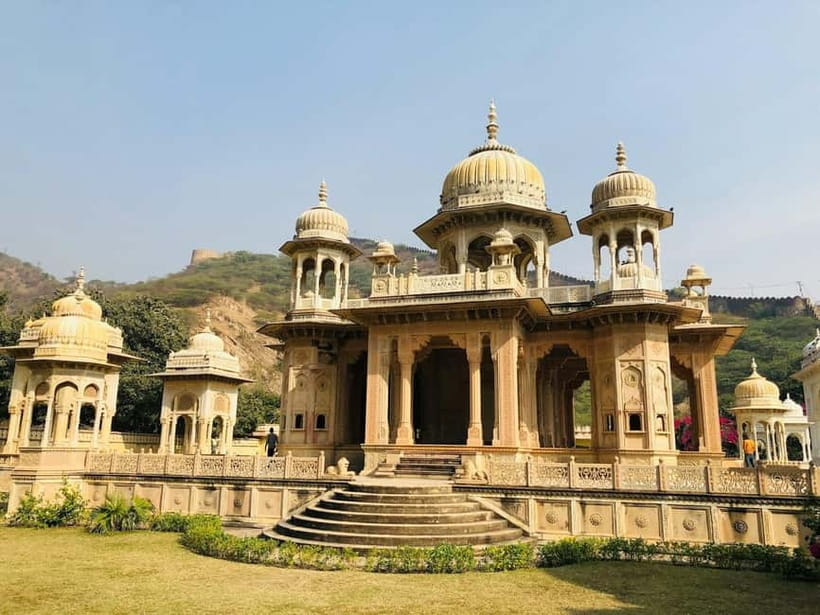
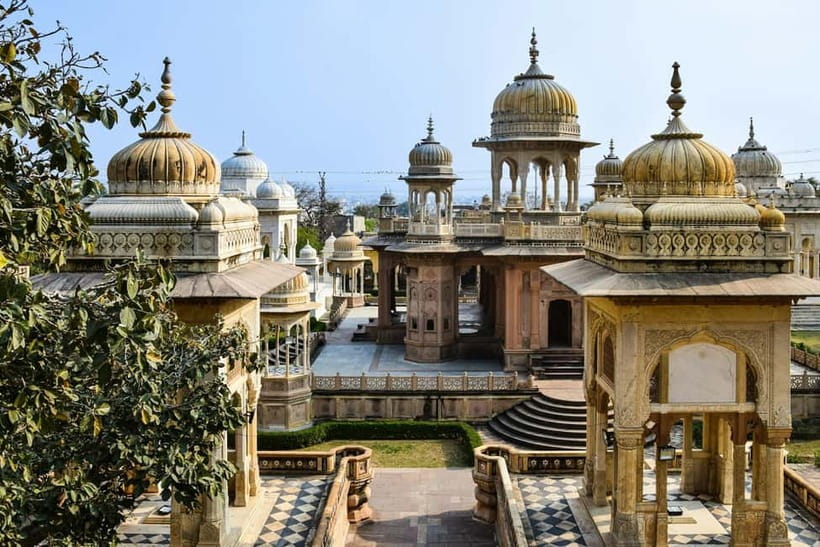
Royal Gaitor, also called Gaitor Ki Chhatriyan, is a worthwhile counterpoint to Jaipur’s most famous attractions. The site contains cenotaphs for Maharajas and members of their families, with carved details and domed pavilions that reward a slower look.
The planned visit lasts an hour. That is enough time to walk through the complex, examine the stonework, and hear about its role in Jaipur’s royal traditions. Compared with Amber Fort and City Palace, this stop usually feels more reflective and less grand in scale.
I would not skip it simply because it is less famous. It gives the day a better balance. You are not only seeing palaces built for display, but also memorial architecture created to honor the ruling family.
City Palace: royal life behind the courtyards
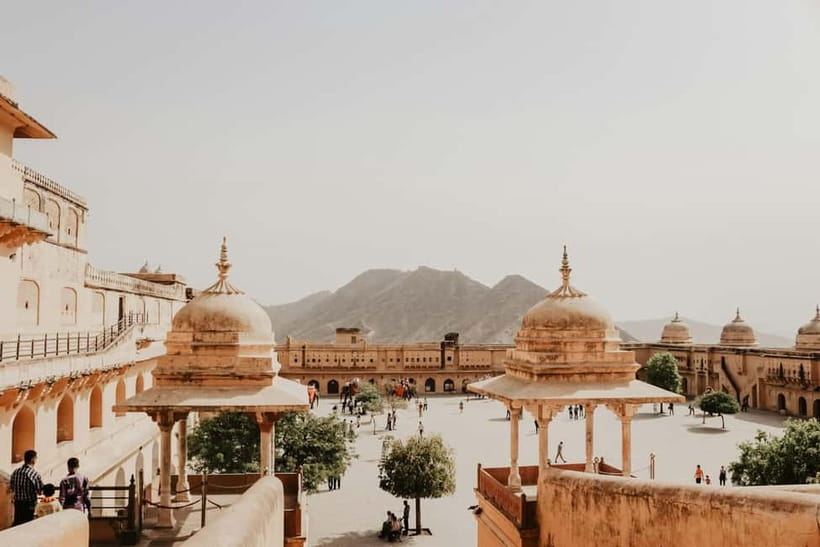
City Palace receives two hours, making it another major stop. It remains the residence of the Maharaja of Jaipur and the head of the Kachwaha Rajput clan, while part of the complex operates as a museum.
That split between living royal residence and public museum gives the site a special character. You can see courtyards, palace architecture, and museum displays while knowing that the complex is not simply an abandoned monument. Your guide can help you separate the public areas from the parts that remain private.
Two hours gives you room to walk at a reasonable pace, but the palace is large enough that you still need to watch the clock. If you are passionate about royal textiles, weapons, costumes, or decorative arts, you may want more time than the schedule allows. For a first visit to Jaipur, though, the allotted period gives you a useful overview.
Lunch is not included. The guide leads you to a restaurant, and one piece of practical feedback is worth noting: the suggested restaurant may feel more expensive than a casual local meal, though it is considered a safer and more comfortable choice. You can ask about the price before ordering. If street food is a priority, Shamshu was specifically praised for helping arrange good local food, but this is something to request clearly rather than assume is included.
Jantar Mantar: science in monumental form
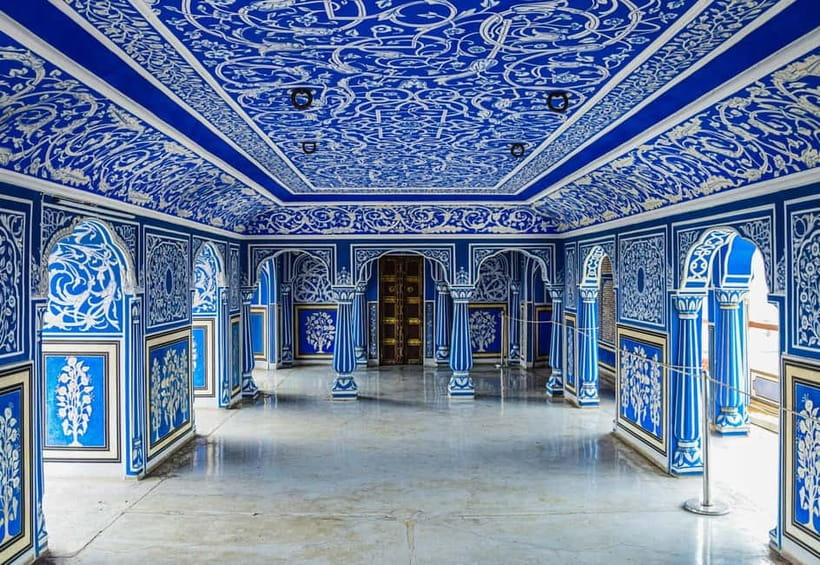
Jantar Mantar is not a conventional museum. It is an observatory filled with large architectural instruments designed to measure time and track astronomical positions. The structures are built at a scale that makes scientific tools feel almost sculptural.
You have about an hour here. That is enough for the guide to explain the purpose of the main instruments and show how earlier astronomers used geometry, shadows, and careful observation. Without an explanation, the site can look like a set of unusual walls and ramps. With one, the design becomes much easier to appreciate.
This is a good final central-city sight because it changes the subject from palaces and royal ceremony to technology. It also sits close to City Palace, making the pairing efficient.
Monkey Temple and the pools of Galtaji
The Monkey Temple, officially Galtaji, gives the tour its most unusual stop. The 18th century complex is built around a series of water tanks, or kunds, leading toward the central temple. Rounded roofs and pavilions give the buildings a classic Rajasthan appearance.
The complex has several names, including Temple of the Sun God and Monkey Temple. The nickname comes from the monkeys found around the site, but the architecture and water system are the real reason to visit.
The route allows about an hour. You can walk through the narrow spaces, view the pools, and take in the temple buildings. The setting feels different from the formal palace complexes, which is why I consider it an important part of the tour rather than an extra add-on.
Dress with respect here. Smart casual clothing is advised, and short shorts or sleeveless tops are not recommended in the temple. Bring cash, since it is listed among the useful items to carry, and keep your passport or ID with you because a valid passport is required on the day.
Jaipur markets and food streets after the monuments
The experience also includes time to walk through Jaipur’s narrow streets and local markets. This is where the day can shift from formal sights to everyday city life, with vendors, small shops, and food stalls offering a different view of Jaipur.
The exact amount of market time depends on the schedule. Nine hours is a lot to fit around seven major sights and the Monkey Temple, so you should tell your guide early if markets or food streets matter more to you than an extended stop at one monument.
The guide can help you make the choice. You might prefer a quick browse after Jantar Mantar, or you might want to shorten a palace visit so you can try local food. The tour gives you a private setting, which makes that conversation possible. It does not guarantee a long evening market visit, so do not book it mainly as a night-market tour.
The $13 price and the extra costs
At $13 per person, this is an unusually low starting price for a private nine-hour car, driver, and sightseeing route. The value is strongest for couples, families, or small groups who can divide the vehicle cost while still having private transport.
The important qualification is that monument entrance fees and lunch are not included. Those charges can change the day’s total substantially, especially because the route includes Amber Fort, City Palace, Jantar Mantar, and other paid attractions. Carry cash and ask your guide about meal prices before ordering.
Parking, fuel, taxes, handling charges, and bottled water are included. That makes the quoted price easier to understand, since you are not expected to pay separate parking or fuel charges along the way.
The tour also offers free cancellation up to 24 hours before departure and reserve-now, pay-later booking. Those terms are useful if your Jaipur plans may change.
Guides, languages, and service quality
The private guide option is available in English, German, French, Spanish, and Italian. The quality of your day depends heavily on the person assigned to you, but the strongest customer feedback centers on guides who explain Jaipur clearly, adjust to personal needs, help with photographs, and communicate well.
Spanish-speaking guests had a good experience with Farman, who spoke enough Spanish to make the day comfortable. Shamshu was praised for strong English, careful driving, and knowledge of Jaipur and Rajasthan. Mustak and Manoj were particularly helpful to a solo woman traveling alone, while Abdul was praised for both guiding and taking photographs.
There is one less positive note about driver behavior. That does not erase the many comments about careful driving and helpful service, but it is a reminder to confirm the pickup details, communicate your preferred pace, and speak up if you need a stop or change.
Is this Jaipur tour right for you?
Book it if you want to cover the main Jaipur sights in one organized day, prefer private transport, and value having a guide explain what you are seeing. It is especially suitable for first-time visitors, small groups, solo travelers who want support, and anyone staying in Jaipur or Kukas for a short time.
You should think twice if you dislike a tight schedule, want long unhurried visits, or care mainly about food markets. The tour includes market and food-street time, but the monuments are the main event. Also budget for entrance fees and lunch rather than treating $13 as the full cost.
For most first visits, I think the route is a strong deal. Amber Fort, City Palace, Jantar Mantar, and the Monkey Temple give you four very different sides of Jaipur, while the private car keeps the day manageable. Start early, wear good shoes, dress modestly for Galtaji, and tell your guide what matters most to you. Those small choices will make a packed day feel far more personal.
FAQ
Where can the tour pick me up?
Pickup is available in Jaipur or Kukas. Airport and railway station pickup can also be arranged, with the driver waiting with a sign showing your name.
How long does the tour last?
The tour lasts nine hours, including transport and visits to the listed sights.
Is the tour private?
Yes. It is operated as a private group experience, with a private vehicle and private guide option.
What type of car is used?
For one to three people, the vehicle is an air-conditioned four-seat sedan. Four to five people use an air-conditioned six-seat car. Groups of six to 10 use an air-conditioned 10-seat tempo traveler.
Are entrance tickets included?
No. Monument entrance fees are not included in the tour price.
Is lunch included?
No. Lunch or dinner is not included. The guide leads you to a restaurant for lunch, and you pay for your meal separately.
Which languages are available?
Host or greeter support is available in English, German, French, Spanish, and Italian.
What should I bring?
Bring a valid passport or ID card, comfortable shoes, comfortable clothing, a camera, and cash. A valid passport is required on the day of travel.
Can I cancel the booking?
You can cancel up to 24 hours in advance for a full refund. Reserve-now, pay-later booking is also available.
Just added around India
- 8 Days Private South India Temple Tour with 4 Star Luxury Hotels★ 5.0 · 3 reviews
- Chennai City Highlights – Government Museum & Temple Discovery★ 4.0 · 7 reviews
- South India Tour- Temple Architecture and Backwaters★ 5.0 · 7 reviews
- Full Day Tour of Konark Temple and Puri★ 5.0 · 7 reviews
- Divine Delhi: Full-Day Tour of Temples & Spiritual Sites★ 4.5 · 3 reviews
- 6-hour Temples tour of Bhubaneswar including hotel pick-up & drop-off★ 4.0 · 3 reviews
- Bhubaneswar city tour & Konark Sun Temple in private car with guide★ 5.0 · 29 reviews
- Puri Jagannath, Konark Sun temple, Pattachitra art in best of Odisha in 2 days★ 5.0 · 10 reviews
Monkey Forest Temple Tours, compared.
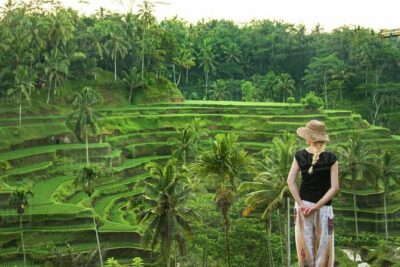
Monkey Forest, Jungle Swing, Rice Terrace, and Water Temple
Read our review →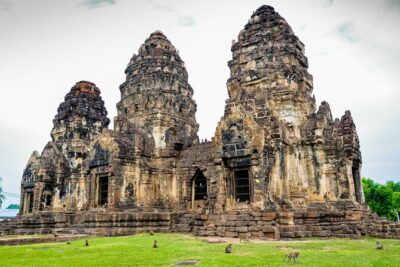
Lopburi Monkey Temple & Ayutthaya Old City Tour From Bangkok
Read our review →Monkey Forest, Water Temple, Rice Terrace, Waterfall
Read our review →
Ubud Tour with Monkey Forest Waterfalls Temples and More
Read our review →
Gorilla Cave ATV Bali Ubud, Monkey Forest, Temple, and Lunch
Read our review →
Saraswati Temple, Monkey Forest, Ubud Waterfalls
Read our review →
Sok River: Bamboo Raft Ride, Monkey Temple & View Point Tour
Read our review →
Ubud Tour with Swing, Temple, Monkey Forest, and Waterfall
Read our review →Browse the lists this tour appears in