
Review · BEIJING
Private City Tour By Public Transportation: Temple Of Heaven, Tiananmen Square and Forbidden City
Beijing’s grandest sights come with a local lesson. This private tour links the Temple of Heaven, Tiananmen Square, and Forbidden City by metro and bus, giving you a useful look at daily city travel along with the imperial landmarks. I like the one-to-one attention from a private guide, and I like that public transportation is part of the experience rather than just a way to fill the gaps. The main catch is the pace: you may walk more than 15 kilometers, and summer heat can make this a demanding six hours.
At $110 per person, the price makes the most sense if you value a private guide, included admission, hotel pickup, and help with Beijing’s transit system. Guides such as Roy Li, Alice, and Coco have earned especially warm praise for clear explanations and patience with questions. Still, you should know that hotel drop-off is not included, Tiananmen Square can close without notice, and strict security checks may consume a large part of your morning.
Key points to know before booking
- Public transportation is part of the lesson: You travel by metro, bus, and a double-decker bus, with your guide handling the route.
- Three major sights fit into one morning and afternoon: The Temple of Heaven, Tiananmen Square, and Forbidden City make this a strong first-day introduction to central Beijing.
- The Temple of Heaven begins with local life: Morning exercise around the imperial grounds adds a human touch before the monuments and rituals.
- A private guide gives you room to ask questions: Roy Li has been praised for making complicated imperial history clear and keeping children engaged.
- Expect a lot of walking: One review reports more than 15 kilometers, especially under summer sun.
- Tiananmen access is not guaranteed: Security lines can exceed an hour, and government activity may close the square without warning.
Why this Beijing tour works so well
The smart idea here is simple: pair Beijing’s famous imperial sites with the city’s ordinary transport system. You do not just move between attractions in a private car. You ride the metro and bus with your guide, see how the city connects, and learn a route you may use again after the tour.
The experience lasts about five to six hours, with pickup at your Beijing hotel around 8:30 a.m. Your group remains private, so you can ask questions freely and adjust the flow within the day’s limits. That matters in Beijing, where a guide who can explain both a palace ritual and a subway transfer is more useful than someone who only recites dates.
The strongest part of the tour is the combination of personal attention and practical help. Roy Li has been praised for answering a steady stream of questions, including questions from children, while Alice was described as informative, helpful, and unhurried. One early problem did arise with a guide spending too much time on phone calls, but the company acknowledged the issue and addressed it. That small detail is worth noting because the quality of your day depends heavily on the individual guide.
More Temple of Heaven Tours in Beijing:
- Beijing: The Temple of Heaven or Summer Palace Entry Ticket
★ 4.6 · 1,286 reviews - Beijing Classic Full-Day Tour including the Forbidden City, Tiananmen Square, Summer Palace and Temple of Heaven
★ 4.0 · 610 reviews - Temple of Heaven Ticket
★ 5.0 · 482 reviews
Temple of Heaven: imperial ritual and morning exercise
Your first stop is the Temple of Heaven, reached by metro or bus depending on your hotel’s location. Starting here is a good choice. The grounds are broad and ceremonial, and the morning setting gives you a chance to see local people exercising before the tour turns toward palaces and national monuments.
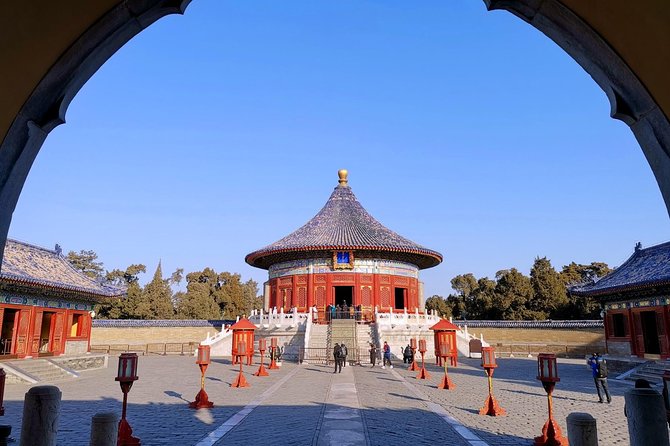
The Temple of Heaven was one of the most important imperial religious sites in Beijing. Your guide explains how emperors came here to perform ceremonies connected with heaven, harvests, and the well-being of the state. The site feels different from the Forbidden City because it was built for ritual rather than residence.
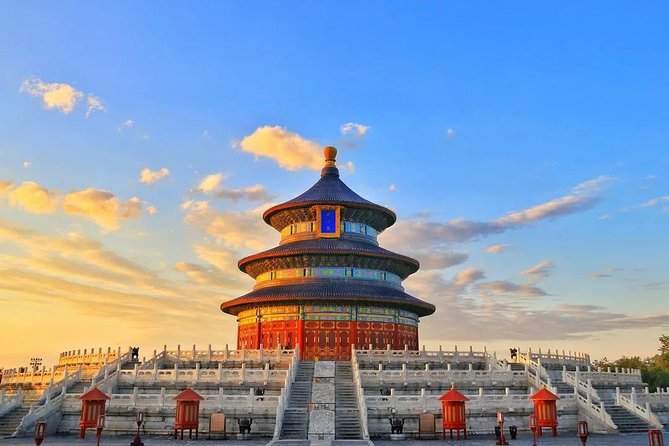
Allow about an hour for the main temple area, followed by time at several key structures. The Hall of Prayer for Good Harvest is the visual star, with its distinctive round form and layered roof. The building’s shape and position reflect the old idea that heaven is round and earth is square, a theme that becomes clearer as your guide points out the design details.
You also visit the Hall of Imperial Zenith, a smaller building used as a resting place for emperors before major ceremonies. The stop is brief, but it helps you understand that imperial rituals involved careful preparation, movement, and protocol, not just one dramatic ceremony.
The Circular Mound Altar and Yuanqiutan add another layer. This three-tiered white marble platform was used for the winter solstice sacrifice to heaven. It can look spare at first, but the simplicity is intentional. Your guide can explain how the circular form, open sky, and marble construction gave the platform its ceremonial force.
Echo Wall and the details worth slowing down for
The Echo Wall is one of the Temple of Heaven’s better-known features, though the tour schedule allows only about 20 minutes in this part of the complex. It is connected with the Hall of Imperial Zenith and the temple’s ceremonial layout.
Do not expect a long stop for every architectural detail. The day has several major sites ahead, so your guide must keep the group moving. If you enjoy old construction methods, symbolic design, and ritual spaces, use this portion to ask focused questions rather than trying to photograph every corner.
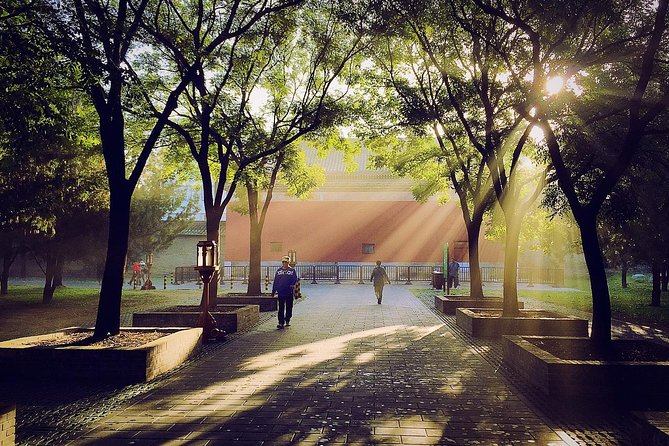
The morning crowds and local exercise groups are part of the appeal. You may see people practicing activities in the park setting, which gives the temple a daily rhythm beyond its role as a historic monument. That is one reason taking public transportation works here: the tour begins with a place that is still connected to ordinary city life.
Tiananmen Square: important, open to change
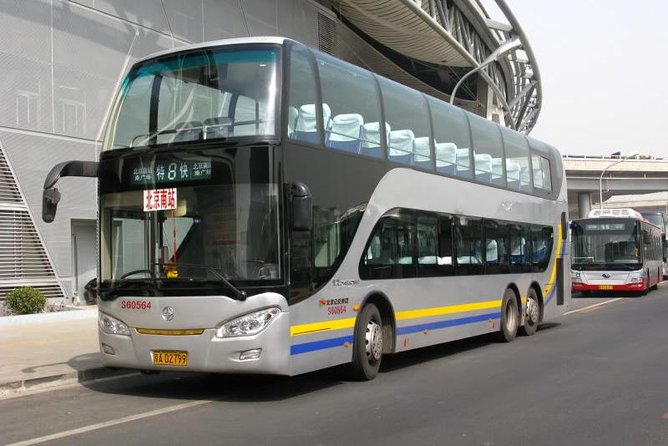
After the Temple of Heaven, you travel toward Tiananmen Square on a double-decker bus. This is a memorable part of the route because you are not simply delivered to the next gate. You see the city from street level and travel as local residents do.
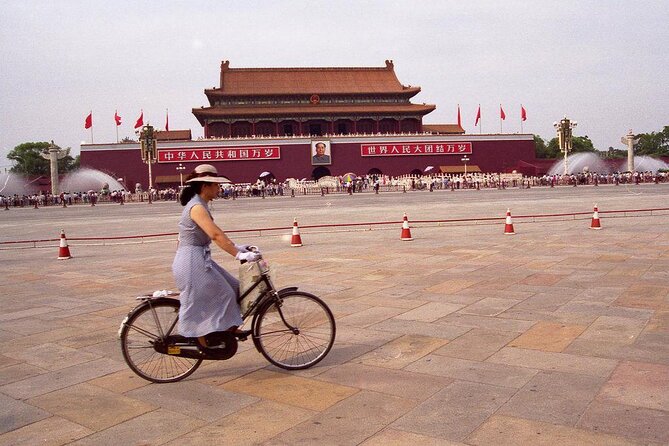
Tiananmen Square is known as one of the world’s largest public squares. Your guide explains its national and political importance, then gives you time to look across the vast open space. The stop itself is planned for about 30 minutes, but the clock can change sharply because security screening is strict.
You should plan for patience here. If the security line lasts more than an hour, the tour provider advises considering a bus ride past the square instead. The square may also close without notice because of government activities. In that case, it will be skipped, and there is no refund for the missed stop because no admission fee is charged.
That policy may feel disappointing, but it reflects a real limitation of visiting a working political site. If seeing Tiananmen Square is the main reason you want this tour, you need to accept that access is not fully within the guide’s control.
A few more temple visits around Beijing worth a look
- Temple Heaven, Lama Temple, Summer Palace & Peking Duck Bus Tour
★ 5.0 · 377 reviews - Temple Heaven, Summer Palace, Lama Temple, Hutong Bus Tour
★ 4.7 · 319 reviews - Beijing: Entry to Temple of Heaven Park
★ 4.6 · 314 reviews - Temple of Heaven, Summer Palace, Lama Temple, Hutong Tours
★ 5.0 · 311 reviews
Walking from Tiananmen to the Forbidden City
From the square, you walk toward the Forbidden City. This connection makes sense geographically and historically, since the imperial palace occupies the center of Beijing’s old ceremonial axis.
The walk also adds to the physical demands of the day. By this point, you have already crossed the Temple of Heaven grounds, used public transportation, and waited through possible security checks. Comfortable walking shoes are essential, and a hat or other sun protection is sensible in warm weather.
The private format helps here. You can ask your guide to explain what you are seeing as you move, rather than simply hurrying from one entrance to another. You can also clarify the city’s layout, which makes later independent visits easier.
Forbidden City: the main event
The Forbidden City gets about two hours, making it the longest stop. That is still a compact visit for a palace complex of this size, but the route covers the buildings most visitors hope to see.
The palace served the Ming and Qing dynasties from 1420 until the end of imperial rule. Its Chinese name, Zijin Cheng, refers to the Purple Forbidden City. The name connects the palace to the North Star and the celestial realm, a reminder that the complex was designed as more than a collection of residences. It was a physical statement about power, order, and the emperor’s place in the universe.
Your route includes the main outer court halls. The Hall of Great Harmony is the largest and most prestigious, used for major ceremonies. The Hall of Central Harmony served as a place for preparation and pause, while the Hall of Preserving Harmony had its own ceremonial role.
A good guide makes these halls easier to understand by explaining how space controlled access. The grand outer buildings projected authority, while later sections became more private. Without that context, you may see one impressive roof after another. With it, the layout begins to read like a carefully organized system.
The inner court and imperial family life
The tour then moves into the inner court, where the focus turns from public ceremony to the emperor, empress, and concubines. You visit the Palace of Heavenly Purity, the Hall of Union, and the Palace of Earthly Tranquility.
This section gives the day a more personal side. Instead of only hearing about state rituals, you learn how the palace was organized around imperial family life and strict court roles. The allotted time is about 20 minutes, so expect an overview rather than a detailed visit to every room.
The guide’s role is especially useful here. A private tour gives you a chance to ask direct questions about who used each building and how the inner court differed from the outer court. If you have children with you, Roy Li’s ability to explain historical figures and palace customs in an engaging way may be a real advantage.
Imperial Garden: a short final stop
The Imperial Garden is the final stop inside the palace. Only about 10 minutes are scheduled, so treat it as a closing glimpse rather than a long garden visit.
The garden follows classical Chinese design, with winding paths, Taihu stone rockeries, and old cypress trees. Some of the trees are more than 400 years old. After the strict symmetry and formal courtyards of the main palace, the rocks, plants, and twisting routes offer a softer finish.
You exit through the North Gate. From there, your guide accompanies you on public transportation back toward your hotel area, but hotel drop-off is not included. Clarify the final meeting point with your guide so you know where the organized portion ends.
The public transportation experience
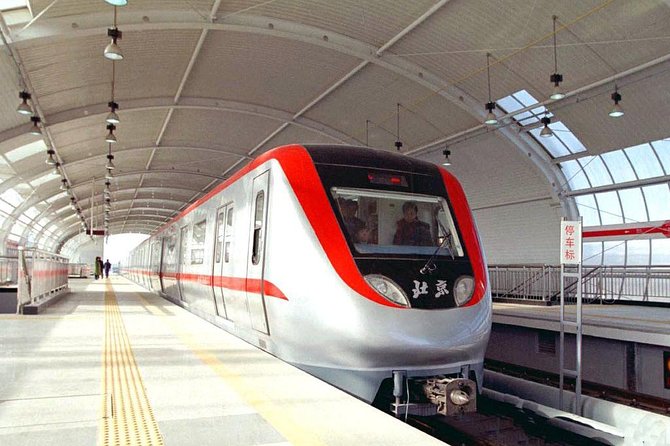
The transport element is more than a budget choice. It gives you practical experience with Beijing’s metro and bus network, which can be valuable if you are staying in the city for several days. One couple who had recently moved to Beijing found this especially useful because the guide showed them how to get around independently.
The public system also changes the rhythm of the tour. You may need to move quickly onto buses, share space with local riders, and follow your guide through stations. One review specifically warns that you should be prepared to hurry onto buses with the locals. That can be fun, but it is not as calm as sitting in a private vehicle.
Your guide pays the public transportation costs, and those costs are included in the tour price. The route may use the metro or bus from your hotel to the Temple of Heaven, followed by a double-decker bus to Tiananmen Square. Exact routing depends on your hotel location and the day’s conditions.
Is $110 per person a fair price?
At $110 per person, this is not the cheapest way to see Beijing’s central sights. You are paying for a private guide, hotel pickup, transportation during the tour, entrance fees, and help with a tightly arranged route.
The value is strongest for first-time visitors, families, and people who want historical explanation rather than a self-guided walk. It is also useful if you are nervous about using Beijing’s transit system or want to learn how to handle it during the rest of your stay.
The value is weaker if you prefer a slow visit, already know the city, or want to spend a full day inside the Forbidden City. The schedule is ambitious, and the guide must balance travel time, security, walking, and several large sites. Food and drinks are not included, and the additional inner sites inside the Forbidden City require separate payment.
Group discounts may be available, so larger private groups should check the final per-person cost. Since the tour is private, you are not sharing the day with strangers, and your group can discuss questions and pacing with the guide.
Who should book this experience?
I would choose this tour if you want the main Beijing landmarks in one organized day and like the idea of learning the city’s transit system at the same time. It suits families especially well when children ask many questions, as well as couples who want a guide focused on their group.
It is also a good fit for people staying in Beijing for a while. Once you have practiced the metro and bus routes with a guide, you may feel more comfortable exploring on your own.
I would hesitate if you have limited mobility, dislike long walks, or want a relaxed pace. The program operates in all weather, and one account puts the walking distance above 15 kilometers. Summer sun can make the day tiring, while winter weather may require careful clothing.
Bring comfortable shoes, dress for the forecast, and keep some flexibility for Tiananmen Square. You will need to provide each participant’s passport name and number at booking so the Forbidden City entrance can be arranged in advance. Chinese citizens, including people from Hong Kong, Macau, and Taiwan, must book seven days ahead and provide the required Chinese name and ID details.
Should you book it?
Book this tour if you want private guiding, major imperial sights, and a practical introduction to Beijing’s buses and metro in one efficient outing. The strongest reasons are the personal attention, included main entrance fees, and guides such as Roy Li, Alice, and Coco, who have been praised for clear explanations and helpful pacing.
Skip it if your priority is a quiet, unhurried palace visit or if a long walking day sounds unpleasant. The Tiananmen stop is subject to security and government closures, and the schedule leaves little room for lingering. For an active first look at central Beijing, though, this is a well-planned choice with a useful local twist.
FAQ
How long does the private Beijing tour last?
The tour lasts approximately five to six hours, with hotel pickup planned around 8:30 a.m.
Which attractions are included?
The tour includes the Temple of Heaven, Tiananmen Square, and the Forbidden City, including the Hall of Prayer for Good Harvest, Circular Mound Altar, major halls, inner court buildings, and Imperial Garden.
Is transportation included?
Yes. Public transportation costs during the tour are included. The route may use the metro, regular buses, and a double-decker bus, depending on your hotel location and the route.
Is hotel pickup included?
Yes. Pickup from your Beijing hotel is included. Hotel drop-off is not included.
Is the tour private?
Yes. Only your group participates in the activity, with a private English-speaking guide.
Can Tiananmen Square be closed?
Yes. Tiananmen Square may close without notice because of government activities. Strict security checks can also create waits of more than an hour. If the square is skipped, there is no refund because admission is free.
What information is needed to book?
You must provide the passport name and number for every participant so the Forbidden City entrance ticket can be arranged in advance. Chinese citizens, including those from Hong Kong, Macau, and Taiwan, must book seven days ahead and provide their Chinese name and ID number.
Just added around Beijing
- Temple of Heaven Morning Walking Tour with Ticket★ 5.0 · 7 reviews
- Temple of Heaven Admission Ticket★ 4.0 · 36 reviews
- 3-Hour Private Tour: Temple of Heaven and Lama Temple★ 5.0 · 3 reviews
- Summer Palace and Temple Of Heaven Private Tour★ 5.0 · 9 reviews
- Small Group Beijing Temple of heaven and Summer Palace with Pearl market★ 5.0 · 3 reviews
- Full-Day Beijing Forbidden City, Temple of Heaven and Summer Palace Tour★ 4.5 · 40 reviews
- Private Day Trip of Forbidden City, Temple of Heaven and Summer Palace★ 4.5 · 3 reviews
- Private Day to T-Square, Forbidden city, Temple of heaven, Summer palace Tour★ 5.0 · 54 reviews
Temple of Heaven Tours, compared.

The Temple of Heaven or Summer Palace Entry Ticket
Read our review →
Beijing Classic Full-Day Tour including the Forbidden City, Tiananmen Square, Summer Palace and Temple of Heaven
Read our review →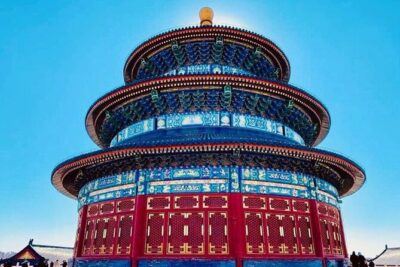
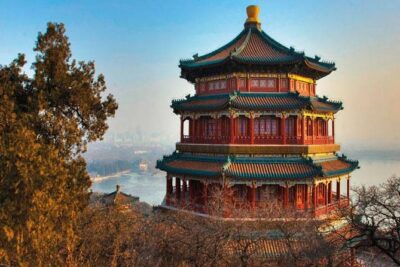
Temple Heaven, Lama Temple, Summer Palace & Peking Duck Bus Tour
Read our review →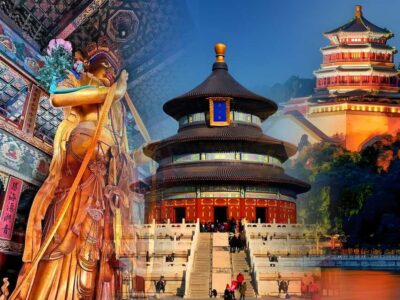
Temple Heaven, Summer Palace, Lama Temple, Hutong Bus Tour
Read our review →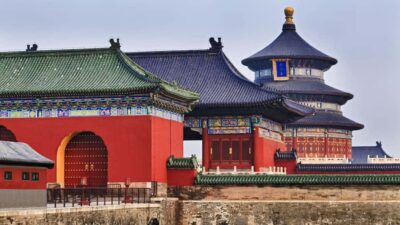
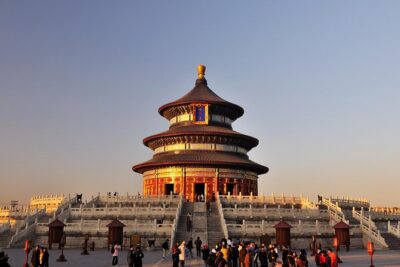
Temple of Heaven, Summer Palace, Lama Temple, Hutong Tours
Read our review →
Browse the lists this tour appears in