
Review · ITALY
Neustift Monastery: Admission with audio guide
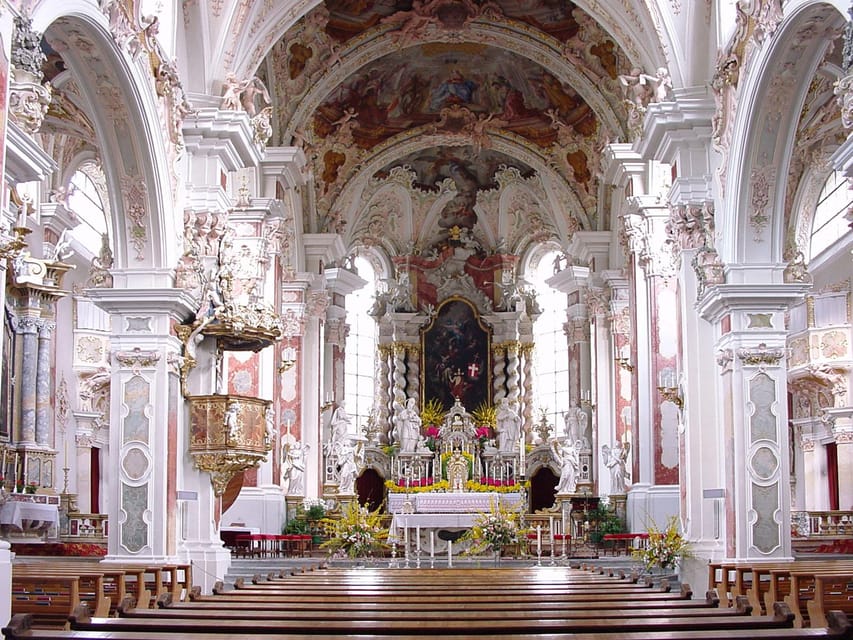
Neustift saves its biggest surprise for the church. I like the freedom of exploring at your own pace, and I like the audio guide’s 18 chapters, which give the monastery’s art, music, education, and daily life a clear shape. The Baroque basilica, with its 365 angels and pink faux marble, is the visual high point. The main drawback is practical: the entrance signage can be hard to follow, and one booking was reported as invalid at the door.
The $15 admission is a fair deal if you plan to examine the whole complex rather than make a quick church visit. You get the abbey church, cloister, museum, and old library hall, plus an audio guide in English, Italian, or German. Bring headphones, and allow enough time to listen instead of racing through.
Key points to know before you go
- The Baroque church is the star: Look for the 365 angels and the pink faux-marble interior.
- The audio guide has 18 chapters: It covers nearly nine centuries of religious, artistic, educational, musical, and economic life.
- You explore independently: There is no live guide or fixed group schedule.
- The library hall adds real variety: This visit is more than a church stop, with museum and architectural highlights included.
- Bressanone is the transport hub: You can reach the monastery by local bus from Bressanone station.
- Allow for entrance confusion: Directions to the main entrance may not be obvious, so arrive with extra time.
Why Neustift Monastery is worth your time
Neustift Monastery, or Kloster Neustift, gives you several kinds of sightseeing in one compact visit. You are not simply entering a church, taking a few pictures, and leaving. The route connects sacred art, architecture, books, education, music, and the economic life of an Augustinian monastery.
That wider context is the main value of the experience. The monastery has nearly 900 years of history, but the audio guide breaks that long span into 18 manageable chapters. You can listen as you move through the complex, pause when you want, and spend more time in rooms that catch your interest.
I like this format for independent sightseeing. A live guide can be excellent, but a fixed explanation does not always match your pace. Here, you can linger in the library hall, move quickly through a less interesting section, or replay a chapter without holding up a group.
The experience has a published rating of 4.6 from nine ratings, with the church receiving the clearest praise. That makes sense. Even if you have limited time, the basilica alone gives you a strong reason to visit. Still, the museum, cloister, and library are what turn the stop into a full cultural visit.
A few more temple visits around Italy worth a look
- Rome’s Iconic Temple: Pantheon Audio Guided Tour with Fast Access
★ 4.0 · 1,188 reviews - Agrigento: Valley of the Temples Ticket & App Audioguide
★ 4.3 · 1,160 reviews - Agrigento: Valley of the Temples Entry Ticket & Audio Guide
★ 4.1 · 268 reviews
Starting at the entrance and finding your way
The first challenge is locating the correct entrance. Signage has been described as poorly marked, especially at the main entrance, so do not assume that the first monastery gate you see is the place where you begin the admission process.
If you are driving, follow the Brenner highway A22 and leave at the Brixen/Pustertal exit. From there, follow signs toward Vahrn and then Kloster Neustift. A free parking lot is located at the entrance to the monastery grounds, which makes driving fairly simple once you reach the site.
By train, travel to Bressanone, called Brixen in German. Local buses connect Bressanone station with Neustift Monastery, and the bus stop is close to the complex. This is useful if you are already staying in or passing through Bressanone and do not want to rent a car.
I would arrive a little early, especially if you are using a mobile booking confirmation. One paid booking was reportedly not accepted at the entrance. That does not prove every digital ticket will cause trouble, but it is a sensible reason to keep your confirmation easy to display and to leave time for staff assistance if needed.
The free audio guide and its 18 chapters
The audio guide is included at no extra charge, but you need to download the HEARONYMUS app from the App Store or Google Play. Search for the keyword Kloster Neustift, then download the monastery guide.
This is an important step to handle before you begin. Bring headphones, since they are specifically required for the experience. The guide is offered in English, Italian, and German, although some content appears in its original language.
The 18 chapters cover more than dates and building names. You can expect the guide to address the monastery’s architectural development, art, music, educational role, and economic history. That range helps explain why the site feels like several attractions in one.
I also like the open-ended nature of the audio tour. You are not locked into a set order or a formal walking group. You can stop the audio, look closely, and continue when ready. The tradeoff is that you need to manage your own route and attention. If you skip chapters, you may miss the connections between the rooms.
The old collegiate church and its 365 angels
The church is the emotional and visual center of the visit. Its Baroque design is meant to overwhelm you with decoration, color, and movement. A striking detail is the reported presence of 365 angels, one for each day of the year.
The interior also uses pink faux marble, a detail that gives the church a soft, theatrical look. It is not real marble, but that does not make the effect less impressive. In fact, the material choice offers a useful reminder that Baroque interiors often relied on painted and artificial finishes to create grandeur without using solid stone everywhere.
Give the church time before reaching for your camera. Look upward, across the walls, and toward the altar area. The point is not simply to count decorative details. The design presents faith as something celebratory and highly visual, a sharp contrast to the simpler spaces you may encounter elsewhere in a monastery.
The basilica has been described as a unique sight that should not be missed. I agree with that priority. If your schedule is tight, begin here. If you have the full day available, use the church as an introduction, then let the other sections explain how the institution functioned beyond its worship space.
More Audio Guides in Italy:
- Agrigento – Valley of the Temples – audio guide
★ 3.9 · 43 reviews - Agrigento: Valley of the Temples Entry Ticket & Audio Guide
★ 3.0 · 40 reviews - Athens: Cape Sounio & Poseidon Temple Trip with Audio Guide
★ 4.4 · 4,521 reviews - Lisbon: Jerónimos Monastery E-Ticket and Audio Guide
★ 3.7 · 660 reviews
The cloister and the quieter side of the complex
The cloister offers a change of mood after the Baroque church. Rather than competing for attention with grand decoration, it gives you a more measured architectural setting and a clearer sense of movement through the monastery.
Your walk through the cloister is part of the larger story of religious life. It links the church with the rooms and collections that supported the monastery’s work. The audio guide helps make that connection, especially if you listen to the chapters in the order intended.
The cloister is also a useful place to slow down. The church may pull your eyes in every direction, while the cloister gives you a more controlled view of lines, openings, and repeated forms. I would not treat it as a corridor to hurry through. Its value comes from the contrast it creates with the ornate basilica.
Because this is a self-guided visit, you can decide how long to stay. That flexibility suits visitors who enjoy architecture and photography, but it may feel less structured if you prefer a guide pointing out every detail in person.
The museum and the monastery’s working life
The museum broadens the visit beyond architecture. It helps present Neustift as an institution with educational, artistic, musical, and economic roles, not just a place of prayer.
That context matters because a monastery’s buildings rarely make sense when viewed as isolated monuments. The museum gives you a chance to consider how the community preserved objects, taught, made music, managed property, and supported its religious life over centuries.
The audio guide is especially helpful here. A museum can otherwise become a sequence of objects with little connection between them. The 18 chapters give you a framework for understanding why the collection belongs within the monastery complex.
Do not expect the museum to function like a modern attraction built around hands-on displays or entertainment. The appeal is the subject itself and the way it fills out the story of Neustift. If you want a quick photo stop, you might find the museum slower than the church. If you enjoy cultural context, it is one of the parts that justifies the admission price.
The famous old library hall
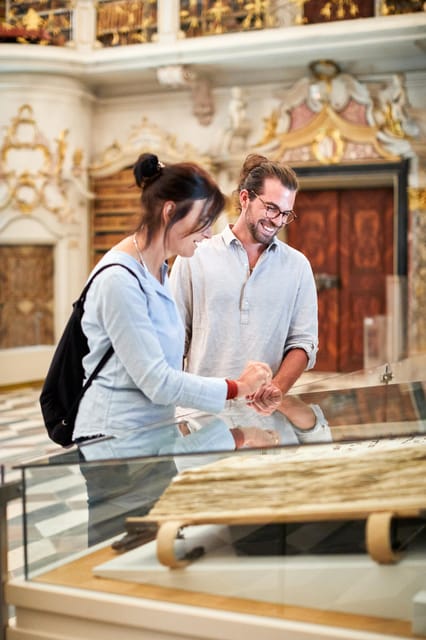
The old library hall is another major reason to take the full route. Libraries in historic religious institutions often show how learning and worship were closely linked, and this room adds an intellectual side to Neustift’s identity.
The library also changes the rhythm of the visit. After the theatrical church and the more open cloister, you enter a space shaped by books, study, and preservation. It supports the idea that the monastery is an ongoing art and cultural history book, rather than a single monument frozen at one date.
Listen to the relevant audio chapter before moving on. The explanation is likely to mean more when you are looking at the room itself, its arrangement, and its decorative treatment. Since no live guide is included, this is where your headphones matter most.
The library hall is also a good test of your touring style. If you enjoy taking in a room quietly and noticing details, you will likely value it. If you only want the most famous church interior, you may feel that the admission covers more than you plan to see.
How much time and money should you allow?
The admission costs $15 per person and is valid for one day. The audio guide is included, so you are not paying a second fee for the main interpretive tool.
At that price, the value depends on how thoroughly you use the admission. A short visit focused only on the church can still be worthwhile, especially because the basilica is the most praised feature. But the price makes more sense when you also visit the cloister, museum, and library hall and listen to several audio chapters.
The one-day validity gives you useful flexibility. You can check the available starting times when booking, then plan the visit around your wider Bressanone or South Tyrol schedule. The information provided does not promise a fixed tour duration, so your pace will determine the length.
You can also reserve now and pay later, which helps if your route is still changing. Free cancellation is available up to 24 hours in advance for a full refund. Keep those terms in mind if weather, transport, or other plans may shift.
Who will enjoy this self-guided visit?
I would recommend Neustift Monastery to you if you like historic buildings, church art, old libraries, or museum visits that reward patience. It is also a good choice if you prefer exploring independently instead of joining a live group.
The experience suits adults and older children who can follow an audio guide and spend time looking closely. The church’s strong visual impact may appeal to almost anyone, while the museum and library will matter most to people interested in culture, books, architecture, or religious institutions.
It may be less suitable if you want a fully guided experience. No live guide is included, and some of the audio content appears in its original language. You also need to download the app and bring headphones, so this is not a completely effortless walk-in attraction.
The site is also not ideal for a rushed stop. The admission includes several sections, and the best value comes from treating the monastery as a full visit rather than a quick photograph outside the church.
Practical advice for a smoother visit
Download the HEARONYMUS app before you reach Neustift. Search for Kloster Neustift and make sure the audio guide is ready before you enter.
Bring headphones, and choose the language you want from English, Italian, or German. Some original-language material may remain, so keep that in mind if you want every word in translation.
If you drive, use the free parking lot at the monastery entrance. If you come by public transport, take a train to Bressanone and then use a local bus to the monastery. The bus stop is close to the complex.
Give yourself extra time to find the main entrance. Clearer directions would improve the arrival, and one reported ticket problem makes it wise to keep your booking details available on your phone.
Should you book Neustift Monastery?
Book it if you want more than a church photograph. The admission combines a spectacular Baroque basilica, a cloister, a museum, and an old library hall, while the 18-part audio guide gives the complex a useful historical thread.
At $15, I consider it good value for a thoughtful self-guided visit. The main cautions are the unclear entrance signs, the need to arrange the audio app and headphones yourself, and the fact that no live guide is included.
If your time in the Bressanone area is limited, make the church your first priority. If you can spare a full day, explore the entire complex and let Neustift’s art, books, music, education, and economic story unfold at your own pace.
FAQ
Where is Neustift Monastery located?
Neustift Monastery is in Trentino-South Tyrol, Italy, near Bressanone, also known as Brixen.
How much does admission cost?
Admission costs $15 per person.
How long is the ticket valid?
The admission is valid for one day.
Is an audio guide included?
Yes. A free audio guide is included with admission and has 18 chapters.
Which languages are available for the audio guide?
The audio guide is available in English, Italian, and German. Some content is presented in its original language.
How do I access the audio guide?
Download the HEARONYMUS app from the App Store or Google Play, search for Kloster Neustift, and download the guide.
Is a live guided tour included?
No. The admission includes independent access and the audio guide, but not a live guided tour.
How can I reach Neustift Monastery by public transport?
Take a train to Bressanone station, then use a local bus that goes directly to Neustift Monastery. The bus stop is close to the monastery.
Is parking available?
Yes. A free parking lot is located at the entrance to the monastery grounds.
Just added around Italy
- Private Tour to the Villa Romana del Casale and the Valley of the Temples★ 4.5 · 19 reviews
- Villa Romana Del Casale in Piazza Armerina and Valley Of Temples in Agrigento★ 4.5 · 38 reviews
- Agrigento and Piazza Armerina: Valley of the Temples and Villa Romana del Casale★ 4.5 · 121 reviews
- Padre Pio’s Shrine in San Giovanni Rotondo from Bari (Apulia)★ 5.0 · 3 reviews
- Cooking Class in a former Artist Monastery in the Heart of Monopoli★ 5.0 · 18 reviews
- Agrigento to Siracusa with Valley of Temples and Roman Villa Trip★ 5.0 · 5 reviews
- Private transportation to the Valley of the Temples + Agrigento★ 5.0 · 8 reviews
- Agrigento Valley of the Temples Archaeological Area★ 4.0 · 33 reviews
Audio Tours, compared.

Cape Sounio & Poseidon Temple Trip with Audio Guide
Read our review →
Rome’s Iconic Temple: Pantheon Audio Guided Tour with Fast Access
Read our review →

Temple of Poseidon and Cape Sounion Sunset Tour with Audio Guide
Read our review →
Cape Sounion and Poseidon Temple Sunset with Audio Guide
Read our review →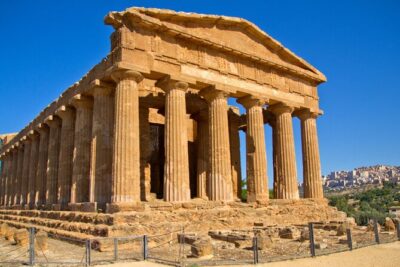
Valley of the Temples Entry Ticket & Audio Guide
Read our review →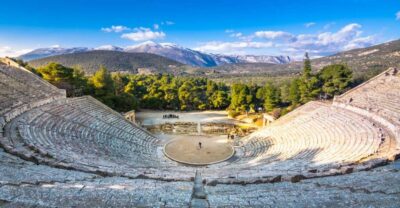
Epidaurus: Temple of Asclepius & Theatre with optional audio
Read our review →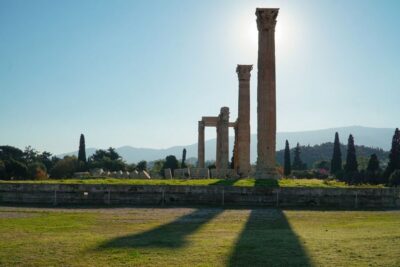
Browse the lists this tour appears in