
Review · JAIPUR
Jaipur: Full-Day City Tour with Camel Ride and Monkey Temple
Jaipur packs centuries into one long day. This 9-hour tour links the city’s major sights with a camel ride at Jal Mahal, a local lunch, and time for shopping. I like the flexible itinerary, which has allowed guides to replace a planned stop with another temple when needed. I also like having both a driver and an English-speaking guide, since Jaipur’s forts and observatories make far more sense with context.
The main drawback is the pace. Amber Fort, Jal Mahal, Hawa Mahal, Jantar Mantar, Galtaji Temple, lunch, and shopping make a full schedule, and one poor experience involved hurried visits and an uncomfortable approach to the Monkey Temple. The $113 price can be fair for private transport and guiding, but only if the day feels well managed.
Key points to know before booking
- Amber Fort is the day’s major historical stop, with gates, courtyards, and palaces tied to Jaipur’s Rajput rulers.
- The camel ride takes place at Jal Mahal, the Water Palace in Man Sagar Lake, not at Amber Fort or the Monkey Temple.
- Jantar Mantar rewards a guide, since its large instruments measure time and planetary positions in ways that are not obvious at first glance.
- The Monkey Temple visit can be physically awkward, with one reported entrance involving a steep stone path and monkeys gathering around dropped food.
- The schedule can change, depending on your hotel location, weather, and the time left in the day.
- The strongest fit is for a first Jaipur visit, especially if you want a private-feeling day with transport between far-flung sights.
An 8 AM start for Jaipur’s major sights
Your driver collects you from your hotel lobby at 8 AM. The meeting point is listed near coordinates 26.912433624267578, 75.78726959228516, but hotel pickup is the practical arrangement.
The early start matters because this is not a short city walk. Amber Fort lies outside central Jaipur, while Jal Mahal, Hawa Mahal, Jantar Mantar, and Galtaji Temple each offer a different part of the city. You spend much of the day moving between them, so a car saves time and energy.
The order may change based on your hotel location. That is useful to know before you judge the day too strictly. A guide may also adjust the plan if weather or timing causes trouble, although the quality of that adjustment depends on the person leading your tour.
The most successful experience described here involved an English-speaking guide who was humorous, easygoing, and willing to suggest another temple when the planned City Palace visit was dropped. That flexibility is worth money on a long sightseeing day. It gives you a chance to shape the final hours instead of being forced through a fixed checklist.
More Monkey Forest Temple Tours in India:
- Jaipur Guided Tour with Monkey Temple
★ 5.0 · 55 reviews - Jaipur: Private Evening Tour with Monkey Temple Sunset
★ 4.6 · 27 reviews - Jaipur sightseeing tour with monkey temple (Galta ji temple)
★ 5.0 · 15 reviews
Amber Fort: Jaipur’s grand opening act
Amber Fort is the strongest historical stop on the route. Its protective design was built by Man Singh, a Rajput king, and the complex is large enough that every gate, courtyard, and palace can carry a different story.
You should give this visit your best attention. The fort is not simply one pretty building. Its gates show how entry was controlled, its courtyards reveal how public and private life were separated, and its palace spaces hint at the power of Jaipur’s former rulers. A guide can connect those pieces so you do not walk through the complex seeing only walls and decoration.
The drawback is time. This tour has many stops, so you may not receive an unhurried exploration of every corner. If Amber Fort is your main reason for visiting Jaipur, tell the guide early that you want enough time here. The itinerary is flexible, but flexibility works best when you state your priorities.
Comfortable shoes matter. That is a simple recommendation rather than a promise about the exact route, since the order and approach can vary. Still, a large fort with multiple gates and courtyards is not a place for flimsy footwear.
Jal Mahal and the camel ride
After Amber Fort, the tour goes to Jal Mahal, the Water Palace, located in the middle of Man Sagar Lake. The setting gives you a sharp change of mood: from a defensive hill fort to a palace surrounded by water.
The camel ride is one of the unusual parts of this tour. It adds a distinctly Rajasthan-flavored activity to a day otherwise filled with architecture and history. I like the contrast. You are not only looking at monuments, you are also given a short, memorable activity connected with the region’s traditional travel culture.
Keep your expectations measured. The supplied information confirms a camel ride at Jal Mahal, but it does not state its length or provide details about the exact route. Treat it as an added experience rather than the central purpose of the tour.
The description also includes exhibitions at the Water Palace, with weapons, royal clothing, Mughal miniature paintings, antiques, and other paintings. These objects help put the palace setting into human terms. A fort can feel distant until you see the tools, clothing, and artwork associated with the people who used it.
The claim that Jaipur’s royal family still resides at the palace should be understood as part of the site’s royal connection, not as an invitation to enter private areas. Follow the guide’s instructions about where you can go and what you can see.
Lunch breaks up the sightseeing
A local restaurant lunch is included in the day. That pause matters because the schedule is dense, and a meal gives you time to sit down before the afternoon monuments.
The information does not specify the restaurant, menu, or dietary choices, so you should not book this tour expecting a particular dish. The useful point is that lunch is built into the route rather than left entirely to chance.
I would use lunch as a chance to reset the day. If the morning has run late, ask how much time remains for the Monkey Temple and shopping. One difficult experience involved rushing through attractions, and a clear conversation at lunch may help prevent the afternoon from becoming a race.
More Full-Day Tours in India:
- Full Day Varanasi Private Tour with Temples, Ghats & Rituals
★ 4.5 · 105 reviews - Full-Day Private Tour to the Kanchipuram Temples from Chennai
★ 5.0 · 73 reviews - Kolkata: Full-Day Spirituality & Temples Tour
★ 4.4 · 18 reviews - Private Full-Day Amritsar Tour: The Golden Temple & Wagah Border
★ 5.0 · 14 reviews
Hawa Mahal and the famous 953 windows
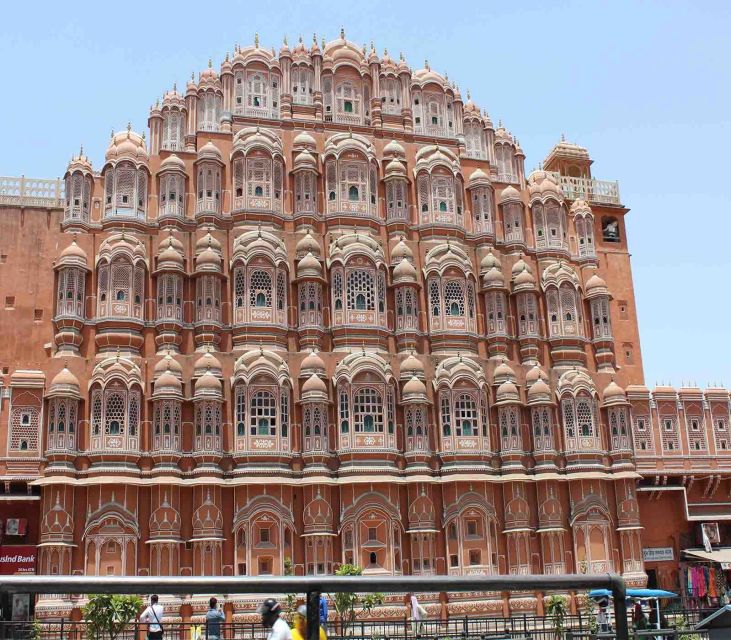
Hawa Mahal, also called the Air Palace, is one of Jaipur’s most recognizable buildings. Maharaja Sawai Pratap Singh, a Kachwaha ruler, commissioned it, and its defining feature is a facade filled with 953 small windows.
The latticework creates the palace’s delicate appearance. From outside, the building looks almost too light to be a royal structure. Your guide should explain why the windows matter, not merely point out their number. They are the reason Hawa Mahal has its distinctive name and visual character.
This is likely a shorter stop than Amber Fort because the attraction is concentrated around the facade and palace structure. That is not a flaw, but you should know that a photograph and a detailed visit are different things. If you want to linger, say so before the group moves on.
The palace is especially useful for understanding Jaipur’s royal architecture. Amber Fort feels defensive and expansive. Hawa Mahal feels urban, ornamental, and designed for a very different purpose. Seeing both on the same day gives you a clearer sense of how varied Jaipur’s royal buildings can be.
Jantar Mantar makes astronomy visible
Jantar Mantar is not a typical monument. It is an astronomical observation site built by Maharaja Jai Singh II, a mathematician who wanted accurate observations of time, planets, and other celestial bodies.
The large instruments can look abstract if you walk through without help. With an English-speaking guide, you can learn how ancient technology was used to study time and the position of planets. This is one of the places where interpretation adds real value. The stone and masonry are only half the experience. The other half is understanding the measurements taking place.
I would pay close attention here, even if you are not usually interested in astronomy. Jantar Mantar shows Jaipur as a center of scientific study, not only a city of palaces and royal decoration.
The tour description does not state how long you spend at the observatory. Since Hawa Mahal, Jantar Mantar, and the Monkey Temple follow lunch, ask your guide to protect enough time for the sites that interest you most. A flexible guide has already shown, in one reported case, a willingness to adjust the plan.
Galtaji Temple and the monkey problem
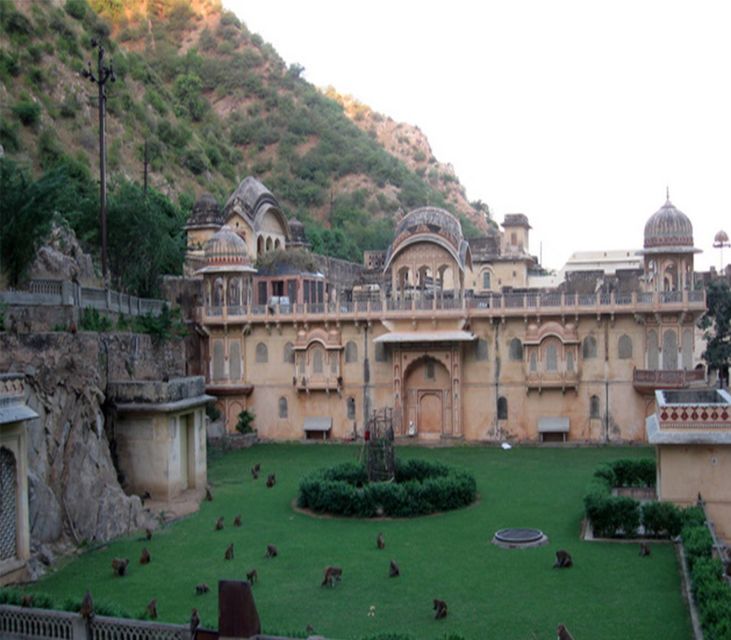
The Monkey Temple, properly called Galtaji Temple, is a Hindu temple complex with seven water pools filled with holy water. Followers come to bathe in them as part of a religious act connected with washing away sins.
The monkeys are a major part of the visit, but they should not turn the temple into a novelty stop. You are entering a religious place, so watch how people use the pools and allow the setting to retain its dignity. The animals are part of the scene, not the whole point of it.
This is also the stop that calls for the most practical caution. One bad experience involved an entrance with a steep stone slope and food thrown onto the ground, which caused monkeys to crowd around the group. That is a useful warning. Do not encourage a guide or anyone else to toss food near you. Ask which entrance you will use and how much walking is involved before leaving the car.
Another unusual point is that one guide took a visitor to the Sun Temple on the monkey mountain instead of the Monkey Temple itself. That may have been an improvised choice, but it shows why you should confirm the plan. If Galtaji is important to you, name it clearly before the afternoon begins.
Shopping closes the day
The final portion of the tour is time in famous local shops. The description does not name the shops or guarantee a particular type of merchandise, so approach this as browsing time rather than a promised specialist shopping visit.
Shopping can be a pleasant way to finish. After forts, palaces, and observatories, you get to see the commercial side of Jaipur and perhaps look for a small reminder of the day. It is also the easiest part of the itinerary to shorten if you are tired or if an earlier stop has taken longer.
You should feel free to set limits. Tell the guide if you want only a brief look, or if shopping is important to you. A day tour works best when the final hour reflects your interests instead of being treated as filler.
Is $113 a fair price?
At $113 per person, this is not a budget sightseeing option. The value depends on what the price includes in practice: hotel pickup, a driver, an English-speaking guide, transport between several separated sites, lunch, the camel ride, and help organizing a long day.
For a first visit to Jaipur, that package can make sense. You avoid arranging separate transport to Amber Fort and Galtaji Temple, and you have someone available to explain Jantar Mantar and the royal buildings. The flexible approach is another advantage when the guide uses it well.
The price feels weaker if the day is rushed or if planned stops are quietly replaced without your agreement. One highly positive experience praised the guide’s English, humor, and ability to improvise. A negative experience described poor pacing, limited help in the rain, and an uncomfortable Monkey Temple approach. The gap between those experiences is important.
Before setting out, tell the guide your top three priorities. I would choose Amber Fort, Jantar Mantar, and Galtaji Temple or Jal Mahal, depending on your interests. That simple step gives the day a better chance of matching what you paid for.
Free cancellation up to 24 hours before the start and the option to reserve without paying immediately reduce the risk of committing too early. The tour is conducted in English, and the stated duration is nine hours.
Who should book this Jaipur day tour?
I would choose this tour if you want to cover Jaipur’s main sights in one organized day and prefer a car with a guide rather than sorting out each ride yourself. It suits first-time visitors who want history, architecture, astronomy, a camel ride, and a little shopping in one package.
It also suits you if flexibility matters. The best account of the day involved changing the plan and visiting another temple instead of City Palace. That kind of adjustment can rescue a tour when your interests or the weather shift.
I would be more cautious if you dislike full schedules, want long periods at each monument, or are uncomfortable around monkeys. The Monkey Temple section needs clear communication, and the itinerary may feel hurried if every listed stop remains in place.
FAQ
Where does the tour begin?
Your driver picks you up from your hotel lobby at 8 AM.
How long does the tour last?
The tour lasts nine hours.
What language is the tour conducted in?
The live tour guide speaks English.
Which main sights are included?
The route includes Amber Fort, Jal Mahal, Hawa Mahal, Jantar Mantar, and the Monkey Temple, also known as Galtaji Temple. It also includes local shopping.
Is a camel ride included?
Yes. The camel ride takes place at Jal Mahal, the Water Palace located in Man Sagar Lake.
Is lunch included?
Yes. The schedule includes lunch at a local restaurant.
Can the order of the stops change?
Yes. The order can change depending on your hotel location.
What is the cancellation policy?
You can cancel up to 24 hours in advance for a full refund.
Can I reserve the tour without paying immediately?
Yes. The reserve now and pay later option lets you book without paying at the time of reservation.
Should you book it?
Book this Jaipur tour if you want an efficient first look at the city, especially with Amber Fort, Jantar Mantar, and a guide-led explanation high on your list. The camel ride and Jal Mahal add variety, while hotel pickup removes much of the transport work.
Before you commit, accept that this is a packed day and confirm your priorities with the guide at the start. Ask for a sensible approach to Galtaji Temple, keep the schedule honest, and do not let shopping or an improvised stop replace a sight you care about. At $113, the tour earns its value through good guiding and thoughtful pacing, not simply through the number of places checked off.
Just added around India
- 8 Days Private South India Temple Tour with 4 Star Luxury Hotels★ 5.0 · 3 reviews
- Chennai City Highlights – Government Museum & Temple Discovery★ 4.0 · 7 reviews
- South India Tour- Temple Architecture and Backwaters★ 5.0 · 7 reviews
- Full Day Tour of Konark Temple and Puri★ 5.0 · 7 reviews
- Divine Delhi: Full-Day Tour of Temples & Spiritual Sites★ 4.5 · 3 reviews
- 6-hour Temples tour of Bhubaneswar including hotel pick-up & drop-off★ 4.0 · 3 reviews
- Bhubaneswar city tour & Konark Sun Temple in private car with guide★ 5.0 · 29 reviews
- Puri Jagannath, Konark Sun temple, Pattachitra art in best of Odisha in 2 days★ 5.0 · 10 reviews
Monkey Forest Temple Tours, compared.
Monkey Forest, Jungle Swing, Rice Terrace, and Water Temple
Read our review →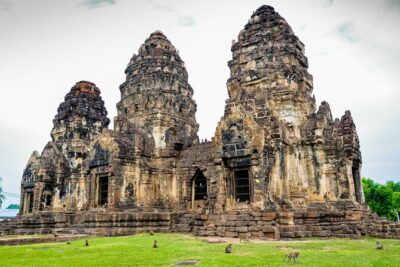
Lopburi Monkey Temple & Ayutthaya Old City Tour From Bangkok
Read our review →Monkey Forest, Water Temple, Rice Terrace, Waterfall
Read our review →
Ubud Tour with Monkey Forest Waterfalls Temples and More
Read our review →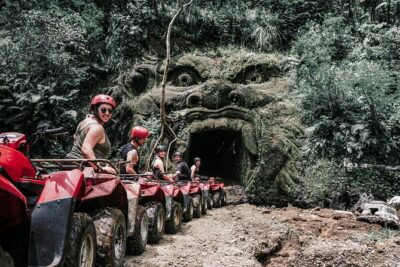
Gorilla Cave ATV Bali Ubud, Monkey Forest, Temple, and Lunch
Read our review →
Saraswati Temple, Monkey Forest, Ubud Waterfalls
Read our review →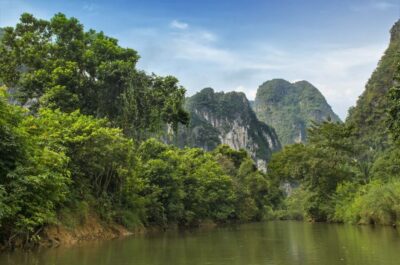
Sok River: Bamboo Raft Ride, Monkey Temple & View Point Tour
Read our review →
Ubud Tour with Swing, Temple, Monkey Forest, and Waterfall
Read our review →Browse the lists this tour appears in