
Review · SPAIN
Granada: Monastery of La Cartuja Entry Ticket
Granada hides a quiet surprise beyond the Alhambra. I like La Cartuja’s peaceful courtyards and the way its Baroque art turns a former monastery into a slow, thoughtful visit. I also like the ticket’s modest $11 price, which includes entry, booking fees, and an audio guide app. The main drawback is practical: the visit is non-refundable, and the rules say cellphones are not allowed even though the audio guide uses your smartphone.
This is a self-guided cultural visit, not a tour with a personal guide. You can enter on the valid date shown with your ticket and spend the day exploring the monastery at your own pace. Give yourself time for the church, sacristy, refectory, chapter house, courtyards, and the remarkable Sancta Sanctorum.
Key points to know before visiting
- Three centuries of design in one monastery: The building began in 1516 and shows changing architectural styles, from a Plateresque entrance to Baroque interiors and neoclassical details.
- The Sancta Sanctorum is the artistic prize: Francisco Hurtado created the space, while Antonio Palomino’s frescoes present the triumph of the Church Militant.
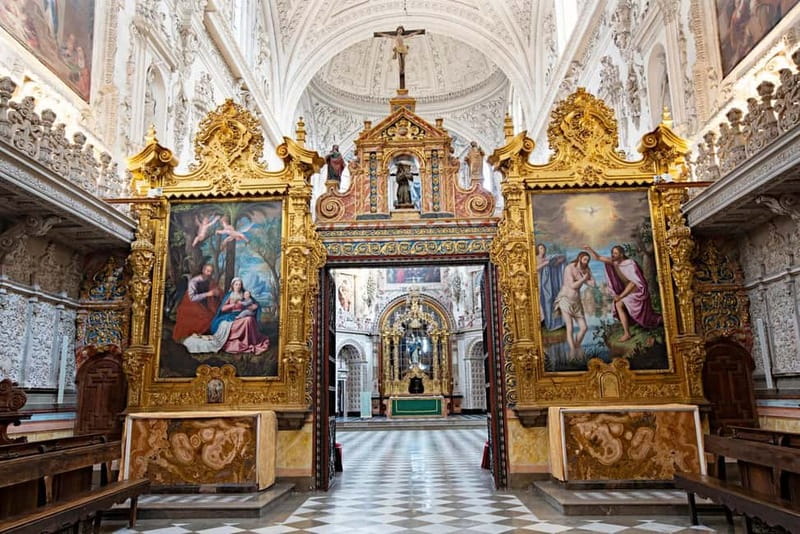
- Sánchez Cotán’s altarpieces add quiet drama: Look for the Rest in the Flight into Egypt and Baptism of Christ inside the church.
- The audio guide app gives the visit structure: You receive it with admission, but clarify how it should be used alongside the no-cellphone rule.
- This is a place for silence and close looking: Smoking, pets except assistance dogs, flash photography, and cellphones are not allowed.
- The visit suits art and architecture lovers best: Wheelchair users should note that the activity is not suitable for them.
Why La Cartuja deserves time in Granada
Granada is often treated as a two-stop city: the Alhambra and the Albaicín. La Cartuja gives you a different experience. Its appeal is not grand views or lively streets. It is the calm of a former Carthusian monastery, where courtyards, chapels, painted vaults, and carved decoration reward patience.
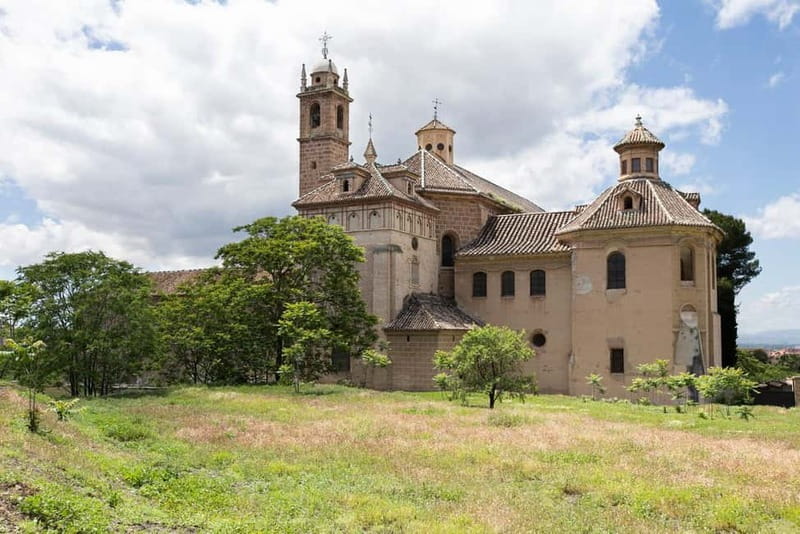
The monastery was founded in 1516. That date matters because you are not looking at one clean architectural style. The complex developed over roughly three centuries, and each period left its mark. You move from the detailed Plateresque entrance to Baroque ornament and later neoclassical work.
I would not plan this as a rushed stop between major sights. The $11 admission is good value if you enjoy religious art, Spanish architecture, and places that explain how monks lived. It is less useful if you want a quick photo stop or a lively guided story.
The overall rating of 4.7 from 25 reviews reflects a strong response to the setting and the amount of information available. One recent German visitor praised the visit for explaining the Carthusian way of life in detail. That is an important point: the monastery is not only about pretty rooms. Its spaces help you picture the daily world of the monks.
More Entry Tickets in Spain:
- Montserrat Museum and Monastery Entry Ticket
★ 4.5 · 1,740 reviews - Mallorca: Carthusian Monastery Valldemossa Entrance Ticket
★ 4.2 · 93 reviews - Barcelona: Montserrat Private Trip with Monastery Ticket
★ 5.0 · 74 reviews
The Plateresque entrance sets the tone
Your visit begins at the historic doorway made by Juan Garcia de Pradas. It is described as Plateresque, a Spanish style known for finely worked ornament that can resemble silverwork carved into stone. Before you enter, take a moment to study the doorway rather than treating it as a simple threshold.
This entrance prepares you for the monastery’s main idea: architecture here is meant to guide the eye and the mind. Details appear in layers. You may first notice the overall shape, then carved decoration, figures, and religious symbols.
The same doorway serves as your exit, so you get a second look at the details at the end. That is useful because a first glance can be crowded with the practical business of entering. On the way out, the entrance may make more sense after you have seen the rooms beyond it.
The visit is valid for one day, with available starting times shown when you book. Since the ticket is non-refundable, check the date carefully before paying. A booking problem has been reported in which a barcode displayed an earlier year, though the entrance staff still allowed the visitor inside. I would not count on that goodwill. Save the correct booking details and check the date before you leave for the monastery.
The church brings together Baroque and neoclassical work
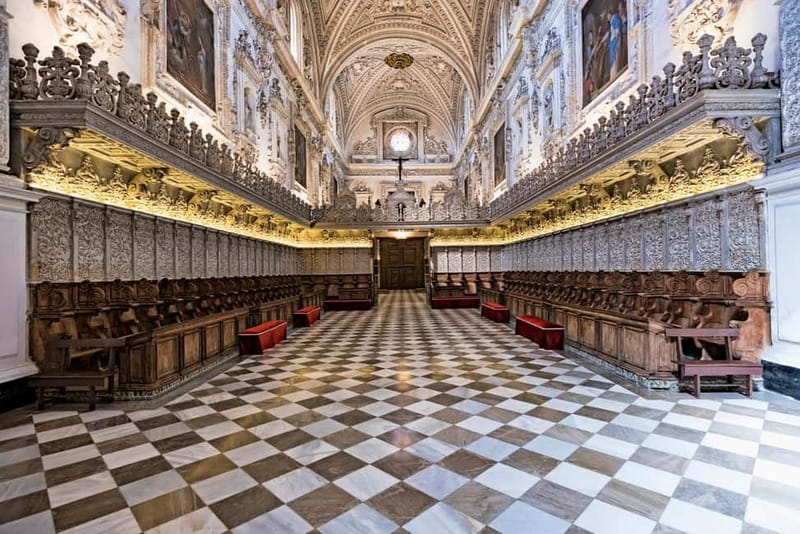
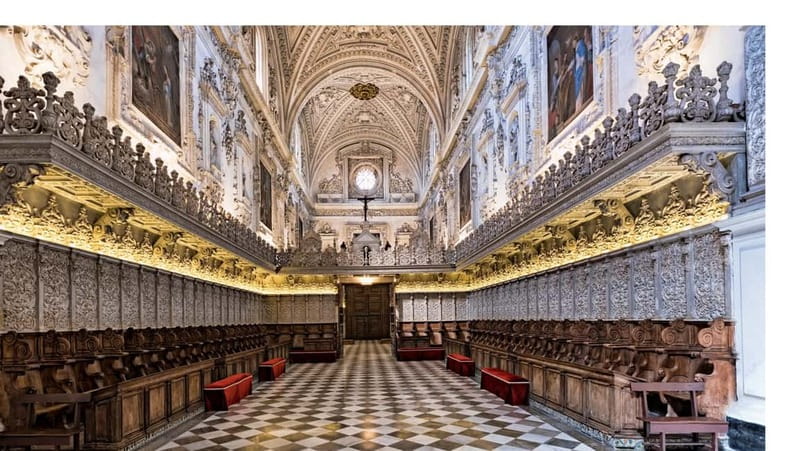
Inside, the church gives you the clearest sense of the monastery’s artistic ambition. Its doorway is neoclassical, with Ionic columns and an image of St. Bruno, the founder of the Carthusian order. The contrast with the older entrance shows how the complex changed over time.
The church’s decoration is not meant to be viewed as a single painting. Look upward, then back toward the altarpieces and architectural details. The elliptical vault of the Presbytery changes the feeling of the room, making the space appear more focused and ceremonial.
A gilded altar-baldachin forms one of the strongest visual points. Gold can easily become too much, but here it helps mark the altar as the center of the church. I recommend standing still for a minute rather than walking straight through. The room is designed to be read from several angles.
The altarpieces by Francisco de Zurbarán? No, the supplied information identifies the works here as being by Sánchez Cotán, so stay with those names when using the audio guide. Two listed works are the Rest in the Flight into Egypt and Baptism of Christ. These pieces connect the monastery’s grand setting with quieter scenes from Christian tradition.
The church will appeal most to visitors who enjoy looking at how painting, sculpture, goldwork, and architecture work together. If you prefer simple interiors, the amount of decoration may feel heavy. That is part of the point, though: this is Spanish Baroque at full volume, even in a place built for retreat.
The Sancta Sanctorum is the monastery’s visual centerpiece
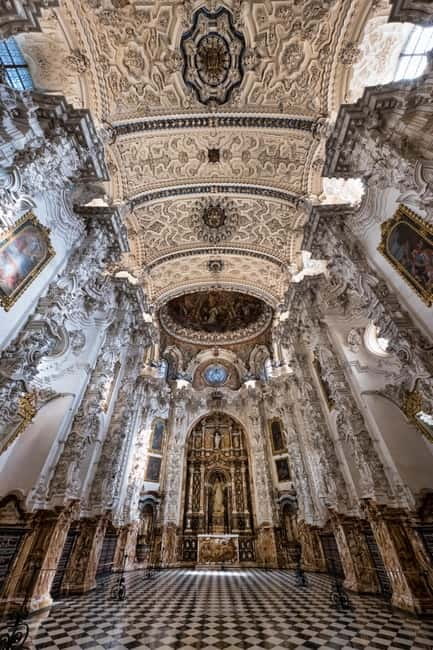
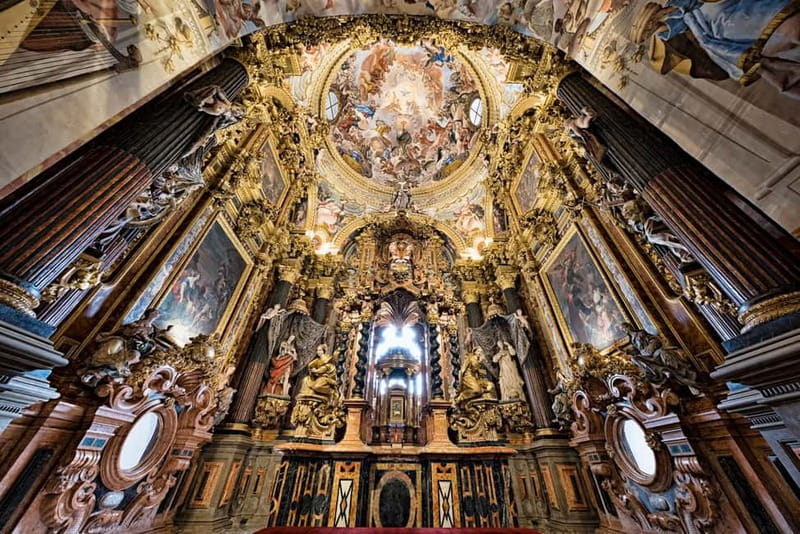
The Sancta Sanctorum, or holy of holies, is one of the rooms you should not rush. Francisco Hurtado created the space, and Antonio Palomino painted frescoes showing the triumph of the Church Militant.
That subject gives the room a strong religious program. You are not looking at decoration chosen only for beauty. The paintings express the role of the Church through a carefully planned arrangement of images, architecture, and sacred space.
Palomino’s frescoes can be difficult to absorb in one glance. Use the audio guide app to help identify what you are seeing, then look again without the narration running. The best approach is to alternate between information and quiet observation.
The Sancta Sanctorum is also a good example of why a self-guided visit can work here. You can pause when a detail catches your eye instead of keeping up with a group. On the other hand, there is no personal guide to answer a question immediately, so visitors who want a conversational explanation may find the audio format limited.
The listed visitor rules ban flash photography. That protects the quiet atmosphere and keeps bright bursts from interrupting other people. It also means you should come prepared to look rather than rely on taking pictures of every detail.
A few more temple visits around Spain worth a look
- Montserrat Monastery Half Day Experience from Barcelona
★ 5.0 · 6,014 reviews - Montserrat Monastery Small Group or Private Tour Hotel pick-up
★ 5.0 · 5,144 reviews - Escorial Monastery and the Valley of the Fallen Tour from Madrid
★ 5.0 · 2,494 reviews - Montserrat Small Group: Monastery, Black Madonna & Natural Park
★ 5.0 · 1,690 reviews
The sacristy shows the skill behind the spectacle
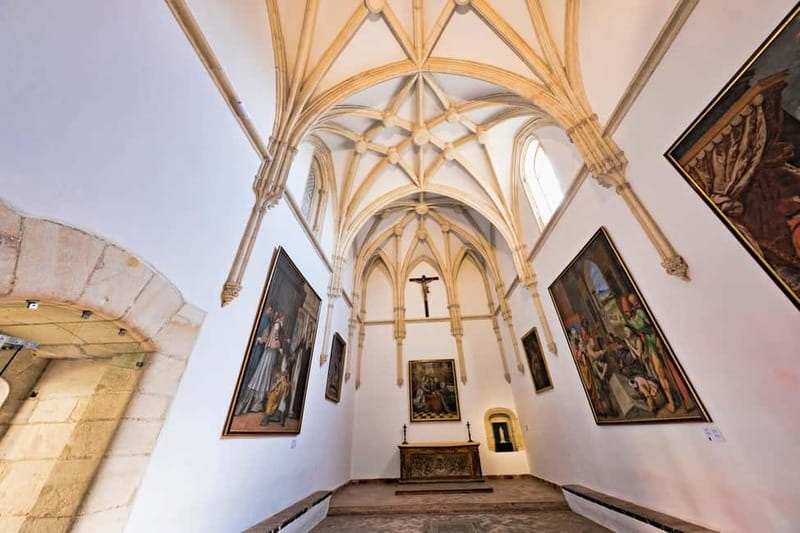
The sacristy is another major stop. It is associated with the work of Francisco Hurtado and helps explain why La Cartuja is valued as an architectural site, not only as a church.
A sacristy served a practical religious purpose, but in an important monastery it could also receive elaborate decoration. Here, the room forms part of the broader artistic plan, linking the needs of worship with the visual language of Baroque Granada.
Look for the relationship between wall surfaces, ceiling forms, and ornament. The pleasure comes from how the room is built as a whole. The audio guide should help you connect the room to the Carthusian setting and the people who used it.
If you are visiting with someone who is less interested in religious buildings, the sacristy can still be a useful stop because it reveals how function and art overlap. You are not simply walking through a gallery. You are seeing a working monastic environment transformed by skilled artists and builders.
The refectory and chapter house bring the monks into view
The refectory and chapter house offer a more direct connection to monastic life. These rooms help you picture the Carthusian community beyond its most decorated sacred spaces.
The refectory was connected with communal meals, while the chapter house served the community’s formal religious and administrative life. The setting makes the order’s discipline easier to understand. A monastery is not only chapels and frescoes. It also needs places for meals, decisions, instruction, and routine.
The supplied information links these areas with works by Vicente Carducho and Sánchez Cotán. That combination of everyday monastic function and important art is one of La Cartuja’s strengths. You can look at the pictures while also thinking about the people who once used the room.
One German visitor gave the experience five stars and specifically praised how much it explains about Carthusian life. I agree that this is the right way to judge the visit. If you only count the most spectacular room, you may miss what makes the monastery distinctive. The refectory and chapter house turn the site from an art display into a place with a human routine.
Courtyards offer a welcome pause
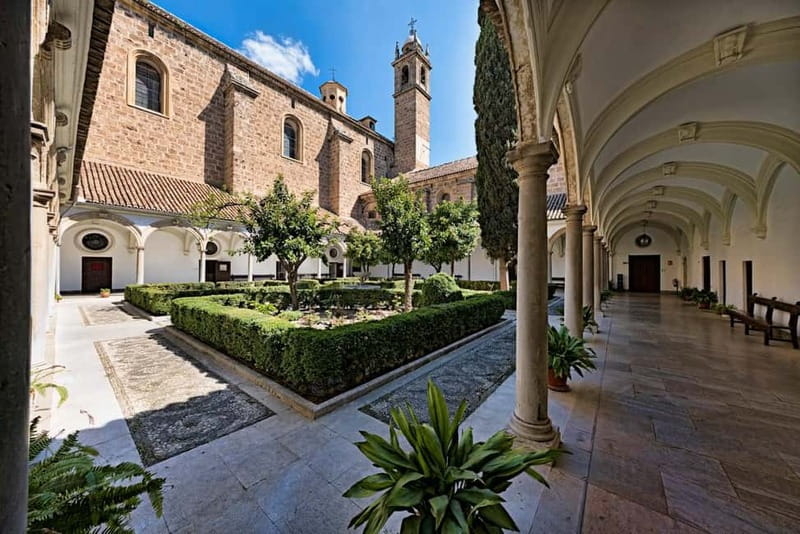
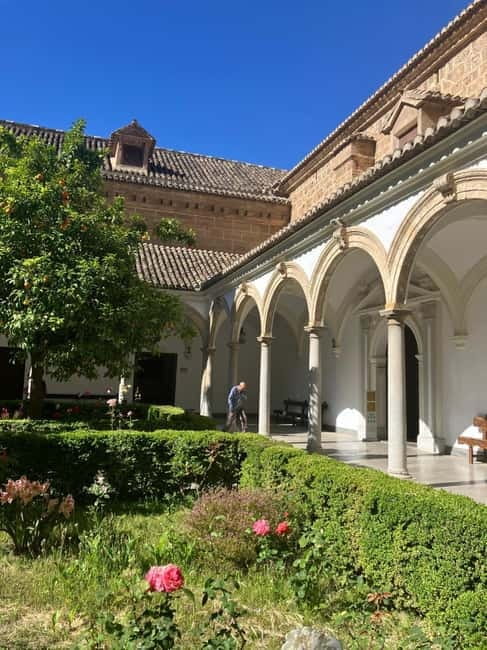
The courtyards provide the visit’s quietest moments. After the church and decorated rooms, the open spaces give your eyes a rest and let the monastery’s calm return.
I like these pauses because they make the visit feel less like a sequence of exhibits. You can take in the proportions of the building, notice the movement from enclosed rooms to open air, and think about how the Carthusian order valued silence and separation.
A recent Spanish visitor described the place as magical. That reaction makes sense in the courtyards, where the monastery’s atmosphere is easier to feel than explain. Still, the experience is personal. If your main interest is busy streets and social energy, the quiet may seem too restrained.
The courtyards are also a good place to end your visit before returning through the historic entrance. Do not treat them as empty connecting spaces. They help explain the monastery’s design and provide a natural pause before you move on to Granada’s other sights.
What the $11 ticket really includes
At $11 per person, this is a reasonable cultural admission. You receive entry to the Monastery of La Cartuja, the audio guide app on your smartphone, and the booking fee. There are no meals, drinks, or personal guide included.
The value depends on how much time you give it. For a quick twenty-minute look, the price may feel less attractive. For a careful visit through the church, Sancta Sanctorum, sacristy, refectory, chapter house, and courtyards, it is a modest way to spend part of a day.
The audio guide adds value because the monastery contains many names, styles, and religious references. You can learn about Juan Garcia de Pradas, St. Bruno, Francisco Hurtado, Antonio Palomino, Vicente Carducho, and Sánchez Cotán without hiring a private guide.
There is one point you should clarify before arrival. The instructions prohibit cellphones, but the included audio guide is an app on your smartphone. That is a direct conflict in the supplied information. Check how the audio guide is meant to be used, and follow staff instructions inside. Do not assume you can use your phone freely for photos or general browsing.
Who should book this visit
I would choose La Cartuja if you enjoy:
- Spanish Baroque architecture
- Religious art and frescoes
- Quiet historic buildings
- The details of monastic life
- Self-guided visits at your own pace
- Seeing more of Granada beyond its best-known sights
It is also a good match for people who like comparing architectural periods. The Plateresque doorway, neoclassical church entrance, Baroque frescoes, gilded altar-baldachin, and later decorative work give you plenty to compare.
I would think twice if you need step-free access, since the activity is not suitable for wheelchair users. I would also reconsider if you want a live guide, a social group atmosphere, or a flexible ticket you can cancel later. This admission is non-refundable.
Smoking and flash photography are not allowed. Pets are not permitted, although assistance dogs are allowed. The no-cellphone rule reinforces the monastery’s quiet character, but it may feel inconvenient when paired with the audio app.
Should you book La Cartuja?
Book it if you want a calm, art-focused visit with real insight into Carthusian life. The low price, included audio guide, and range of rooms make it a good addition to a Granada itinerary, especially after you have seen the city’s louder and more famous sights.
Skip it if your time is extremely limited, you need wheelchair access, or you mainly want panoramic views and outdoor scenery. For everyone else, La Cartuja offers a thoughtful change of pace. Check your date carefully, confirm how the smartphone audio guide works, and give the interiors enough time to reveal their details.
FAQ
Where is the Monastery of La Cartuja located?
It is located in Granada, in Spain’s Andalusia region.
How much does entry to La Cartuja cost?
The listed price is $11 per person.
How long is the ticket valid?
The ticket is valid for one day.
Is a personal tour guide included?
No. The ticket includes an audio guide app on your smartphone, but not a personal tour guide.
What is included in the ticket?
Entry to the Monastery of La Cartuja, the audio guide app, and the booking fee are included.
Are food and drinks included?
No. Meals and beverages are not included.
Can I cancel the activity?
No. The activity is non-refundable.
Are cellphones allowed inside?
The visitor information says cellphones are not allowed. Since the ticket also includes an audio guide app on a smartphone, clarify the proper procedure with the venue or staff.
Is the monastery suitable for wheelchair users?
No. The activity is listed as not suitable for wheelchair users.
Just added around Spain
- Montserrat Monastery Horse Riding & Walk – Small Group (Max 8)★ 5.0 · 45 reviews
- Montserrat Nature Walk, Monastery and Museum from Barcelona★ 5.0 · 58 reviews
- Montserrat & beyond private from Barcelona with different options★ 5.0 · 32 reviews
- Transfer to Montserrat Monastery from Barcelona★ 4.5 · 94 reviews
- Montserrat Tour with Cogwheel Train, Monastery & Black Madonna★ 4.0 · 10 reviews
- Private Montserrat & Hot-Air Balloon Ride with Monastery visit★ 4.5 · 5 reviews
- Montserrat Monastery and Mountain Half Day Hiking from Barcelona★ 4.5 · 6 reviews
- Montserrat Horseback Riding & Monastery – Small Group (Max 8)★ 5.0 · 45 reviews
Spain Temple Tours, compared.
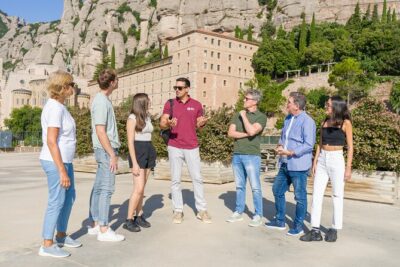
Montserrat Monastery Half Day Experience from Barcelona
Read our review →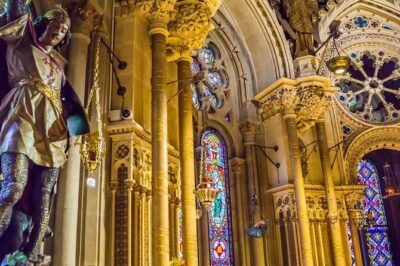
Montserrat Monastery Small Group or Private Tour Hotel pick-up
Read our review →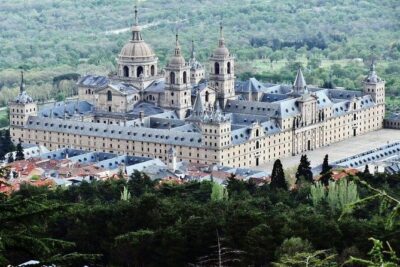
Escorial Monastery and the Valley of the Fallen Tour from Madrid
Read our review →
Montserrat Small Group: Monastery, Black Madonna & Natural Park
Read our review →
Escorial Monastery and the Valley of the Fallen
Read our review →
Flamenco Show at Tablao Sala Temple with Drink
Read our review →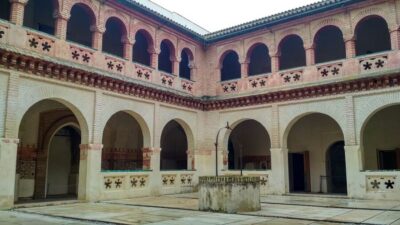
From Seville: Italica Roman City & Medieval Monastery Tour
Read our review →Browse the lists this tour appears in