
Review · PORTUGAL
Fatima Private Tour: Shrine, Sacred Way & Shepherds’ Hometown
Fátima tells its story in places you can still walk through. This private tour links the sanctuary with the Via Sacra, the Angel of Peace sites, and the homes of the three shepherd children. I like the personal format, with only your group taking part, and I like the included transport between the sanctuary and the children’s villages. The main drawback is time: three hours gives you a strong introduction, but not a slow, complete pilgrimage.
The guides are the heart of the experience. Anildo, Neil, Rita, Raquel, and Marta have all been praised for clear explanations, warmth, patience, and a strong grasp of Fátima’s religious story. I would also note the walking involved, the heat on sunny days, and the fact that the standard tour covers only part of the Way of the Cross.
Key points at a glance
- Start beneath the Tall Cross: Meet at the High Cross in the Sanctuary of Fátima, an easy landmark at Cova da Iria.
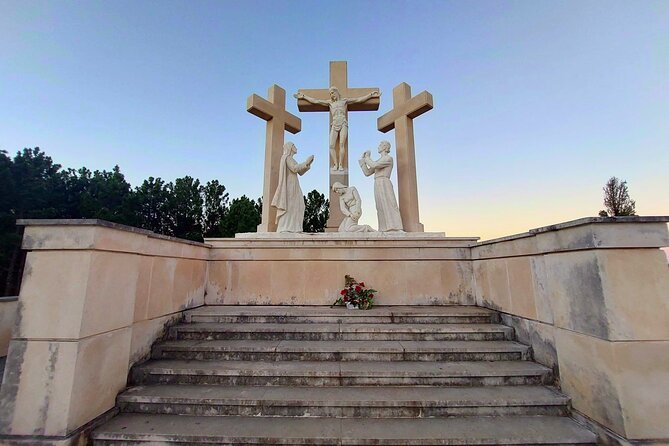
- Walk the final six stations: The tour begins at the ninth station of the Via Sacra and continues to Calvary and the Chapel of Saint Stephen.
- Visit all three shepherds’ homes: See the houses of Lúcia and of Francisco and Jacinta Marto, with transport included.
- Stand at the apparition sites: Loca do Anjo, the Arneiro Well, and the Chapel of the Apparitions connect the story to specific places.
- Private guiding matters here: Guides such as Rita and Raquel adjust the pace for photographs, questions, heat, and prayer.
- Three hours is an introduction, not a full pilgrimage: Choose the extra hour if completing all 14 stations matters to you.
Why this private Fátima tour works well
Fátima can feel spread out when you first arrive. The sanctuary sits at the center, while the shepherd children’s homes and several apparition-related sites are in Aljustrel and the surrounding area. This tour solves that problem with a private vehicle for the outlying stops, then returns you to the sanctuary.
I like that the experience does not treat Fátima as only one large basilica and a square. You see the famous religious center, but you also visit small domestic spaces: the home of Sister Lúcia, the birthplace of Francisco and Jacinta, and the well linked to the Angel of Peace. Those details give the story a human scale.
The private format is especially useful if your group has mixed interests. Someone may want careful religious context, another person may want photographs, and someone else may need a short rest in the shade. Guides have been praised for allowing time for photos and keeping a comfortable pace, even on a day around 90°F, or 29°C.
Still, this is not a leisurely day trip. The advertised duration is about three hours, and the schedule moves briskly. The listed stops add up to more than two hours before driving and transitions, so you should expect brief visits rather than long, unhurried pauses at every site.
More Private Temple Tours in Portugal
- Fatima, Valinhos, Nazaré, Óbidos on Private tour
★ 5.0 · 158 reviews - Fátima Private Tour: Shrine| Sacred Path |Shepherds House
★ 5.0 · 81 reviews - Half Day Fatima + Aldeia Pastorinhos Private Tour Departure Lisbon
★ 4.5 · 22 reviews
Meeting at the Tall Cross in Cova da Iria
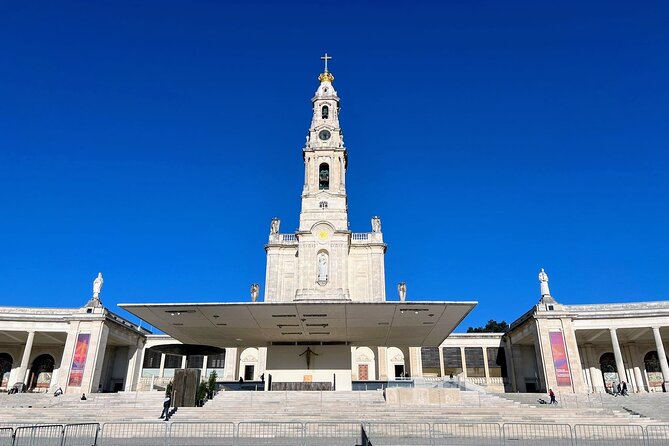
The tour begins at the Tall Cross, also called the High Cross, at the Sanctuary of Our Lady of Fátima. This is the meeting point at Cova da Iria, the central sanctuary area.
The opening stop is listed as about 10 minutes. That sounds short, but the real value comes from getting oriented. Your guide can place the sanctuary within the story of the apparitions before you move toward the smaller sites outside the main complex.
The sanctuary is a place where religious purpose and public space meet. Some people come to pray, some light candles, and others want to understand why Fátima became such an important Catholic pilgrimage site. A private guide can explain the setting without forcing your group into a fixed script.
Because the tour ends back at this same meeting point, you do not need to arrange a separate return from the shepherds’ homes. That is a practical advantage, especially if you are visiting Fátima between other stops in Portugal.
The Shepherds’ Roundabout and the road to Aljustrel
On the way to the children’s homes, the vehicle pauses at Rotunda dos Pastorinhos, the Shepherds’ Roundabout. This is a photograph stop from the vehicle, not a full visit, and you do not get out.
That distinction matters. If you want a posed group picture at the roundabout, this is not the moment for a long session. The stop is best viewed as a quick visual link between the sanctuary and the villages connected to the children.
The transport itself is included for the shepherds’ houses. That saves walking time and makes the three-hour schedule possible. It also keeps the tour focused on the places that are harder to connect on foot in a short visit.
Walking the Via Sacra from station nine
The Way of the Cross is the most active part of the standard tour. You begin at the ninth of 14 stations commemorating the Passion of the Lord, then walk onward to Calvary, where the Chapel of Saint Stephen is located.
This section takes about 30 minutes. It is not the complete Way of the Cross, so you should be clear about what you are booking. If you want all 14 stations, an additional hour tour must be selected.
I like the decision to include a section of the route rather than remove it from a tight schedule. The walk adds a physical, reflective part to a tour that otherwise includes several short vehicle and house visits. It also gives your guide space to explain the religious meaning of the stations as you move along.
The path requires a moderate level of fitness. One review describes a guide accompanying the group through all 14 stations, but the standard details for this experience specify a start at station nine. That likely reflects the longer option, so confirm your selection if the full route is important to you.
Wear shoes suitable for walking and bring water, particularly in warm weather. The guides have been praised for keeping the pace comfortable, but the route still involves walking, and the tour does not promise an indoor, air-conditioned experience.
Same place, a different morning at the gates:
- Lisbon: Jerónimos Monastery Entrance Ticket
★ 4.1 · 14,164 reviews - Lisbon: Jerónimos Monastery E-Ticket and Audio Guide
★ 3.7 · 660 reviews - Lisbon: Belém Walking Tour with Jerónimos Monastery Ticket
★ 4.9 · 637 reviews - Lisbon: Belem Walking Tour with Jeronimos Monastery Ticket
★ 4.7 · 490 reviews
Loca do Anjo and the Angel of Peace
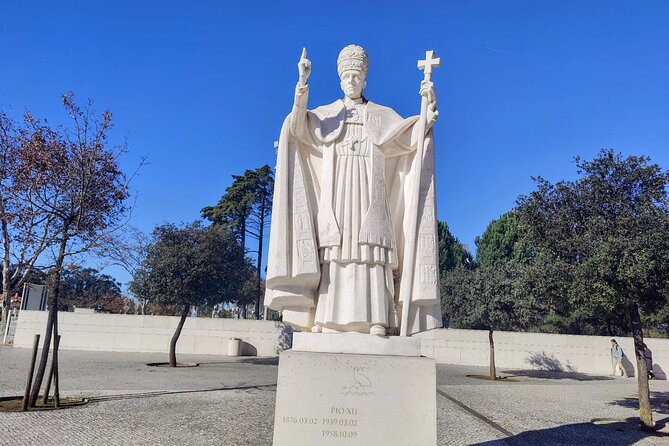
Loca do Anjo is a short stop of about 10 minutes. It is identified as the place where the Angel of Peace appeared to the shepherd children during the first and third apparitions.
For me, this is one of the strongest reasons to choose a guided visit. The site is not simply a scenic pause. Its meaning depends on knowing how it fits into the sequence of events involving Lúcia, Francisco, and Jacinta.
You may find the stop especially useful if you know the broad outline of Fátima but want to separate the different apparition locations. A guide can help you keep track of what happened at Loca do Anjo, what is connected with the Arneiro Well, and what belongs to the Chapel of the Apparitions.
The visit is short, so do not expect a long period of silence or prayer here. Think of it as a focused stop with explanation and time to take in the setting.
Sister Lúcia’s 1885 home
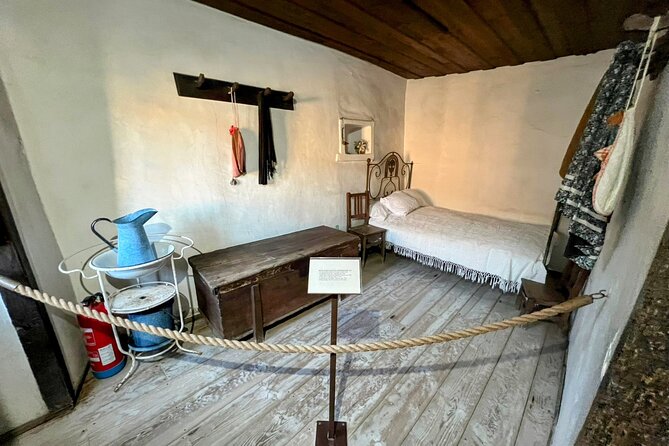
Casa de Lúcia is the former home of Sister Lúcia, born in 1885. The visit lasts about 15 minutes and introduces the family setting of the shepherd who was the only one of the three children to speak with Our Lady during the apparitions.
This house adds an important personal layer. At age ten, Lúcia could not yet read or write when she saw Our Lady at Cova da Iria with her cousins. That fact can be easy to lose when the story is told only through major religious monuments. Inside a simple home, the early life of the children feels more immediate.
Do not expect a large museum visit. The time is limited, and the home is one part of a wider circuit. Its value comes from context: you are seeing where Lúcia lived before she became the best-known surviving witness of the apparitions.
The guides have been praised for answering questions and explaining details in clear English. That is useful here, since the meaning of the house is tied less to grand architecture than to the story told inside it.
The Arneiro Well and the children’s family home
Poco do Arneiro, or the Arneiro Well, takes about 10 minutes. It became important because of the second apparition of the Angel of Peace in the summer of 1916.
This is another modest site with major importance in the Fátima story. The well helps show that the events connected with the children took place across ordinary rural surroundings, not only at the grand sanctuary built later.
Next comes Casa de Francisco and Jacinta Marto, the birthplace and home of the two younger Marto children. The house dates to 1888, and the interior visit lasts about 15 minutes.
I find this pairing effective. Lúcia’s home and the Marto family home let you compare the domestic settings of the three children. You are not simply looking at religious symbols. You are moving through the places where they were raised, before the apparitions changed the course of their lives.
The tour includes transportation to these houses, which is important for anyone with limited time. You will not need to work out a separate route between each stop. The trade-off is that the visits are compact, so listen closely and ask your main questions while you are there.
The parish church and the return to the sanctuary
The vehicle passes the Parish Church of Fátima on the return journey. The stop is about five minutes and is for a photograph from the vehicle, without disembarking.
The church matters because it is where the shepherd children were baptized. Yet this is one of the least substantial stops in terms of time. If you want to enter the church, pray inside, or study its details, this tour does not promise that opportunity.
That limitation is worth knowing in advance. The experience gives you a broad connection between the children’s lives and the religious places around Fátima, but some locations are seen quickly. The guide’s commentary helps compensate, but it cannot replace getting out of the vehicle.
You then return to the Sanctuary of Our Lady of Fátima, where the final two stops take place.
The Rosary Basilica and the children’s tombs
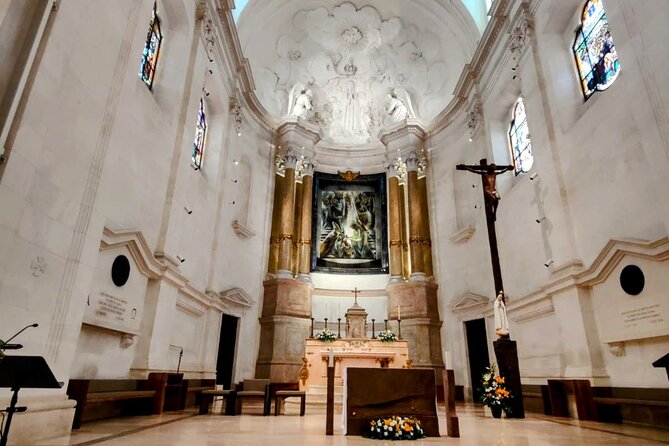
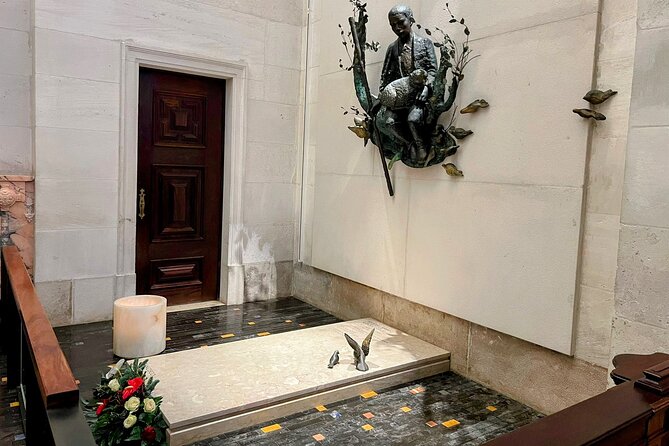
The Basilica of Our Lady of the Rosary of Fátima receives about 30 minutes. It is located where the three shepherds once played during the first apparition and now contains the tombs of Francisco, Jacinta, and Lúcia.
This is one of the tour’s most important stops for understanding how the small-scale story of three children became a major pilgrimage tradition. The tombs make the basilica more than a large church viewed from the outside. They connect the people in the story with the place you have already visited.
A half hour gives you time to listen, look around, and reflect without making the basilica a rushed photo stop. Your guide can also help you understand the relationship between the basilica and the Chapel of the Apparitions nearby.
The religious tone here is strong. If you are interested in Catholic history or pilgrimage, this will likely be a central part of the visit. If you are mainly interested in architecture, the time may feel more than sufficient, since the tour is focused on meaning as much as appearance.
The Chapel of the Apparitions
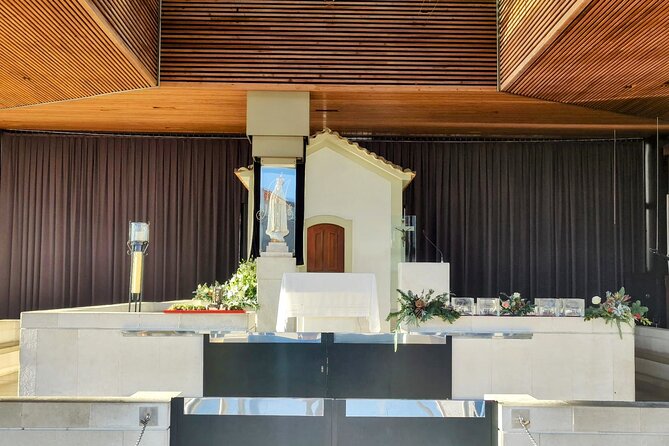
The Chapel of the Apparitions is scheduled for about 20 minutes. It was built by the local community in 1919 after a request associated with one of Our Lady’s apparitions.
The chapel contains an image of Our Lady marking the place associated with the visions, traditionally linked with the holm oak tree. This is the point where the main apparition story comes together after you have visited the surrounding sites.
You have time to light a candle or collect water from the sanctuary. These are simple acts, but they may matter greatly if you are visiting as a pilgrimage rather than as a sightseeing stop. Your guide should also give you space for personal prayer, particularly in this final part of the tour.
The chapel can be an emotional ending, though the schedule remains organized. You are not left to wander indefinitely, so use the time well. If you want a long period of private devotion, you may wish to remain at the sanctuary after the tour finishes.
Guide quality is the real value
At $117.14 per person, this is not the cheapest way to see Fátima. Its value depends on how much you want from a guide and how many people are sharing the cost.
For a private group, the price buys more than transport. It gives you a person who can explain the sequence of the apparitions, identify the importance of sites that are easy to miss, and adjust the pace to your needs. That is especially useful for first-time visitors who might otherwise see the sanctuary but miss Loca do Anjo, the Arneiro Well, or the children’s homes.
The guide team has received strong praise for clear English, courtesy, punctuality, patience, and personal warmth. Anildo was praised for passion and detailed explanations. Rita was appreciated for her English and comfortable pace in hot weather. Raquel was singled out for giving a thoughtful pilgrimage experience while allowing time for rest and photos. Those details suggest a service shaped by the individual guide, not just a fixed route.
Group discounts may improve the value if several people book together. For one or two people, the cost is harder to justify unless private attention and included transport are high priorities.
The tour is recommended by 98 percent of the people who rated it, with an overall rating of 4.9 from 41 reviews. One serious complaint describes a cancellation two hours before departure, while the provider disputed that it belonged to this establishment. I would not ignore the incident, but it appears isolated beside the much larger pattern of positive experiences.
Who should book this Fátima experience?
I would choose this tour if you want the main sanctuary plus the story’s smaller, harder-to-reach places. It suits:
- First-time visitors who want the major sites explained in plain English
- Families or private groups that prefer their own pace
- Pilgrims who want the children’s homes, Angel of Peace sites, and apparition chapel
- People with only three hours in Fátima
- Anyone who prefers included transport rather than arranging local travel
I would hesitate if you want to complete every station of the Via Sacra at a slow pace. In that case, select the additional hour. I would also hesitate if you prefer to explore independently and spend long periods inside each church or chapel.
The walking requirement is moderate, and service animals are allowed. The experience is near public transportation, but the meeting point is at the High Cross in Fátima, not in central Coimbra. The activity information identifies Coimbra as the location, so check your route carefully and plan to reach the Fátima meeting point.
Free cancellation is available up to 24 hours before the start time. Changes or cancellations inside that window are not refundable, and poor weather can lead to a new date or a full refund.
Should you book it?
Book this private Fátima tour if you want a compact, well-explained visit that reaches beyond the main sanctuary. Its best features are the private guiding, transport to the shepherds’ homes, and the clear link between major monuments and modest places such as the Arneiro Well.
Choose the extra hour if the complete Way of the Cross matters to you. Otherwise, the standard three-hour route gives you a useful first look at Fátima, with enough religious context to make the sites meaningful and enough structure to keep a short visit on track.
FAQ
Where does the tour begin?
It begins at the High Cross, also called the Tall Cross, at Cova da Iria in the Sanctuary of Our Lady of Fátima.
Where does the tour end?
The activity ends back at the original meeting point at the sanctuary.
How long does the tour last?
The standard tour lasts approximately three hours.
Is the tour private?
Yes. Only your group participates in the private activity.
Is transportation included?
Transportation to the shepherd children’s homes is included. The tour also uses transport between several locations and returns you to the sanctuary.
Does the tour cover all 14 stations of the Via Sacra?
The standard route begins at station nine and continues to Calvary. You must select the additional one-hour option to complete the entire Way of the Cross.
What is the cancellation policy?
You can cancel at least 24 hours before the start time for a full refund. Cancellations or changes made less than 24 hours before the start time are not refunded. If poor weather causes the tour to be canceled, you can receive a different date or a full refund.
Just added around Portugal
- Belém: Jeronimos Monastery, Tickets and Guided tour★ 4.9 · 30 reviews
- Lisbon: Tour of Belem and Jerónimos Monastery★ 3.2 · 5 reviews
- Lisbon: Skip-the-line Jerónimos Monastery Tour with Tickets★ 5.0 · 4 reviews
- Lisbon: Belém Private Walking Tour & Jerónimos Monastery★ 4.5 · 83 reviews
- From Lisbon: Évora, Chapel of Bones, & Roman Temple Tour★ 5.0 · 8 reviews
- Lisbon: Belem Tour with Pastéis at Jerónimos Monastery★ 4.7 · 96 reviews
- From Lisbon: Fátima Sanctuary and Batalha Monastery (UNESCO)★ 5.0 · 5 reviews
- Between Life & Death: Roman Temple, Cathedral & Bone Chapel★ 4.9 · 6 reviews
Private Temple Tours, compared.

Waterfalls, Water Temple & Rice Terraces Private Tour
Read our review →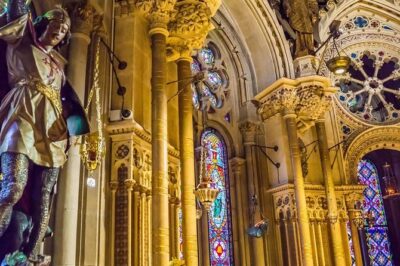
Montserrat Monastery Small Group or Private Tour Hotel pick-up
Read our review →
Full-Day Angkor Wat Sunrise Private Tour with Guide from Siem Reap
Read our review →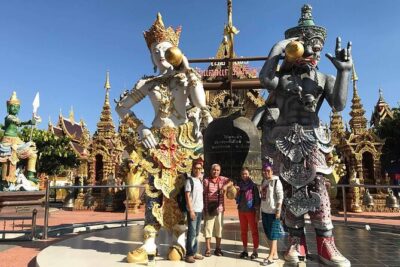
Chiang Rai Temples: Private Tour from Chiang Mai
Read our review →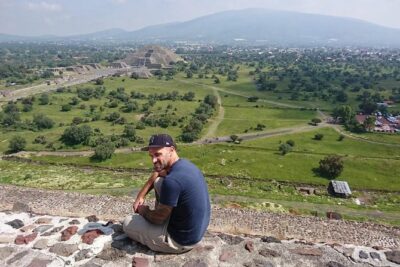
Private Tour: Teotihuacan and Guadalupe Shrine
Read our review →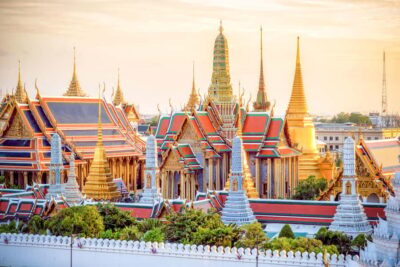
Grand Palace, Wat Pho, and Wat Arun Private Tour
Read our review →
Ephesus and Temple of Artemis Private Tour from Kusadasi Port
Read our review →
Browse the lists this tour appears in