
Review · FIER COUNTY, ALBANIA
Day tour to: Apollonia, Narta Lagoon & Zvernec Monastery
Ancient ruins meet a quiet island monastery. This full-day outing from Tirana or Durrës gives you two very different sides of southern Albania: the archaeological remains of Apollonia and the calm pine-lined setting of Zvernec Monastery. I like the strong mix of Greek and Illyrian-era history with open-air nature, and I like that comfortable, air-conditioned transport is included for the long road journey.
The $51 price is good value because it covers round-trip transport, a local guide, Apollonia admission, and pickup and drop-off in several coastal and city areas. My main caution is the amount of walking and the conflicting accessibility information: the activity is described as wheelchair accessible, but it is also listed as unsuitable for people with mobility impairments and wheelchair users. Confirm the practical details before paying if that affects your plans.
Key points to know before booking
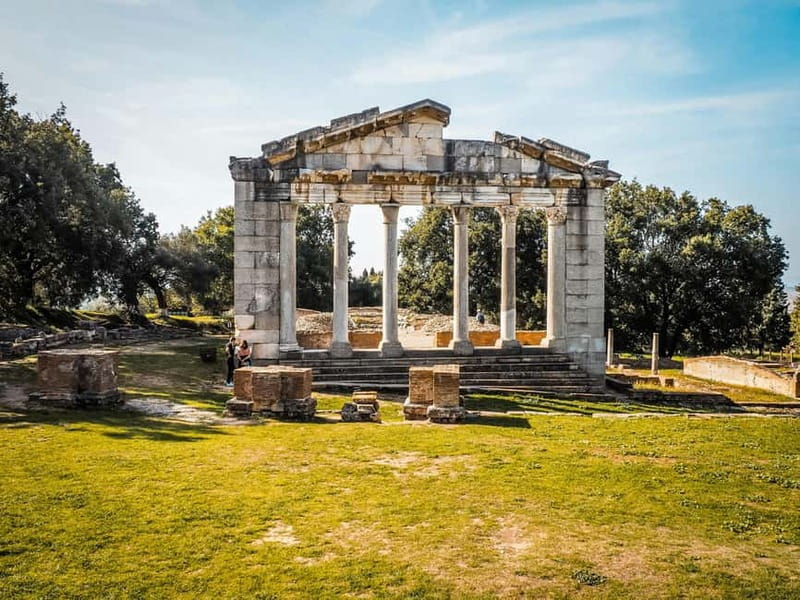
- Apollonia takes about two hours: You have time for the Monument of the Agonothetes, Odeon, Library ruins, and Archaeological Museum.
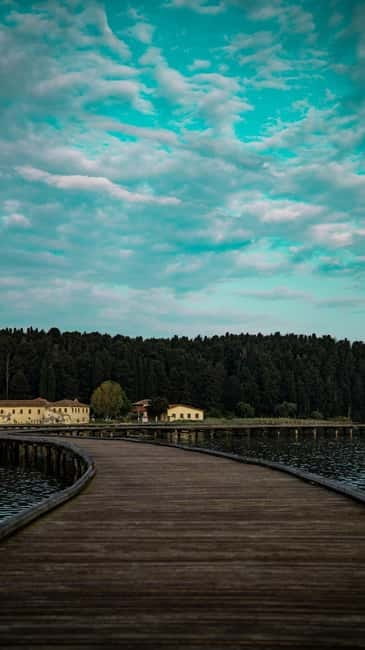
- The 270-meter wooden bridge is part of the experience: It leads across the Narta Lagoon to Zvernec’s small island.
- Guide Toni receives especially warm praise: His historical explanations, enthusiasm, and friendly manner have made a strong impression.
- The tour works from several pickup areas: Choose from Lalëz, Tirana, Qerret, Golem, or Durrës.
- Narta Lagoon is more than a quick photo stop: The schedule allows about 105 minutes for a break, views, and time around the lagoon.
- Bring sun protection and sturdy shoes: Much of the day takes place outdoors, with limited shelter mentioned in the tour details.
The long morning ride from Tirana or Durrës
Your day begins with pickup in Lalëz, Tirana, Qerret, Golem, or Durrës. The guide sends specific vehicle details before arrival, which matters when you are waiting at a hotel or another chosen pickup point.
The drive to Apollonia takes about 110 minutes. That is a substantial first leg, but comfortable round-trip transportation makes the distance easier. The vehicle is air-conditioned, and the guide introduces the day as you go. For a tour that links inland ruins with the coast near Vlora, the travel time is simply part of the package.
I would choose a pickup point carefully. Tirana gives you the obvious city option, while Durrës and the beach areas may be more convenient if you are staying along the coast. Since the day includes a long drive, having a pickup close to your accommodation saves time and avoids starting with a taxi ride.
The schedule is full, but not wildly rushed. You spend around two hours at Apollonia, up to 105 minutes around Narta Lagoon, and 45 minutes at Zvernec Monastery. The timing leaves room for explanations, photographs, and some quiet looking around, though this is not a slow, do-nothing kind of day.
A few more temple visits around the world worth a look
- Lisbon: Jerónimos Monastery Entrance Ticket
★ 4.1 · 14,164 reviews - Angkor Wat Sunrise or Sunset Tour with Guide from Siem Reap
★ 5.0 · 12,109 reviews - Teotihuacan, Guadalupe Shrine & Tlatelolco Day Tour with Lunch
★ 5.0 · 11,603 reviews
Walking through ancient Apollonia
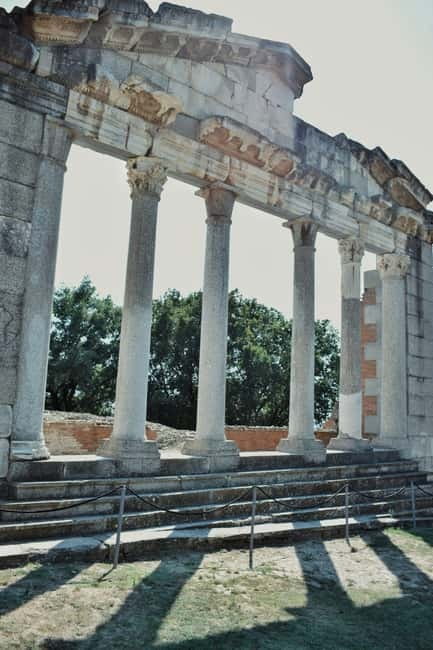
Apollonia is the main historical stop, and it deserves the time given to it. Greek colonists founded the city in 588 BC, and it later became one of the important cities of ancient Illyria. The ruins give you a direct sense of how a city functioned, rather than offering only one isolated monument.
Your guide leads you through the archaeological park, explaining the remains and the role Apollonia played in the area. The site is valuable because the history is spread across streets, public buildings, religious spaces, and museum displays. You are not just looking at stones. You are piecing together the shape of a former city.
The Monument of the Agonothetes is one of the most striking remains. It was connected with city officials and public ceremonies, so it helps explain the civic side of Apollonia. This is a good place to pause and let the guide connect the surviving structure with the public life that once took place there.
The Odeon offers a different view. This smaller theater was used for music performances and public debates. Its scale makes it easier to picture as a working public space, where people gathered for performances and discussion rather than for the huge spectacles associated with larger ancient theaters.
You also visit the ruins of the Library, once part of the city’s learning life. The remains may not look complete, but the location gives the guide a chance to explain Apollonia as a center of culture and education. That context makes the stop more rewarding than simply photographing broken walls.
Allow yourself time to look beyond the headline monuments. The pleasure of Apollonia is in the combination of open ruins, scattered architectural fragments, and the feeling of a large ancient settlement spread across the site. Comfortable shoes are not a minor suggestion here. You will be walking outdoors while moving between several points of interest.
The Archaeological Museum inside Saint Mary’s Monastery
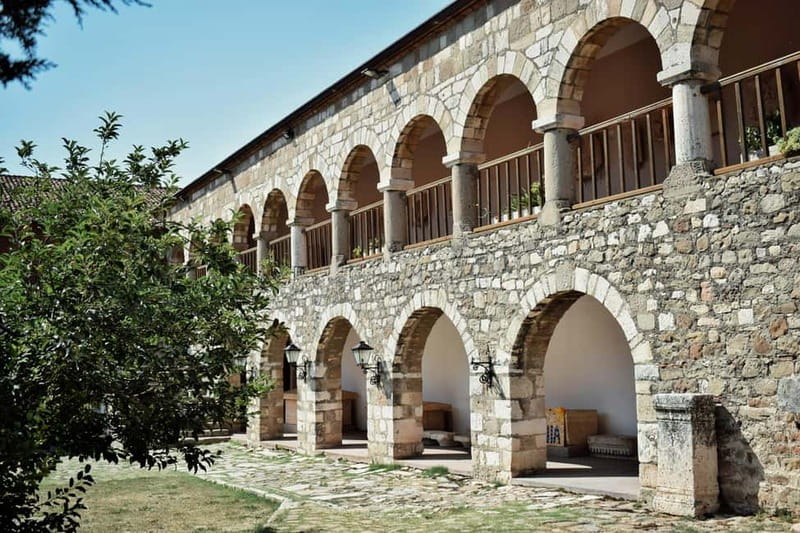
The Archaeological Museum is located within the Monastery of Saint Mary at Apollonia. This is separate from the later Zvernec Monastery, also dedicated to Saint Mary, so keep the two sites distinct in your mind.
The museum displays local artifacts and gives you a more focused look at the objects connected with Apollonia. After seeing columns, foundations, and ruined buildings outdoors, indoor displays can help fill in the gaps. The museum visit also provides a useful change of pace during a morning spent walking under the sun.
The guide speaks English or Italian, and the quality of the explanation is an important part of the experience. Toni is singled out for clear historical information, patience with questions, and an enthusiastic but pleasant manner. That is especially useful at Apollonia, where a good explanation can turn a partial wall into a meaningful part of the city.
You should still keep your expectations sensible. This is an archaeological park, not a fully reconstructed ancient town. Some visitors will love the freedom to picture the past from the remains, while others may prefer more complete monuments. If you enjoy history, photography, and outdoor sites, the stop earns its place in the day.
Narta Lagoon and the road to Zvernec
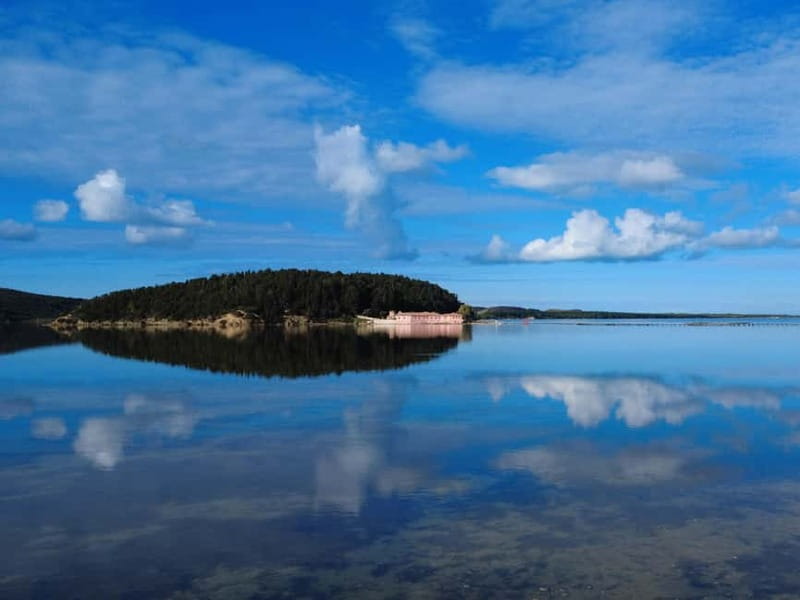
After Apollonia, the route continues toward Narta Lagoon. The drive to Zvernec takes around an hour, with views of the lagoon and pine forests along the way. This part of the day changes the mood completely. You move from an ancient city site to open water, trees, and a quieter island setting.
The schedule allows about 105 minutes for the Narta Lagoon section, including a break, photographs, and time to visit the area. That is helpful because the lagoon is not treated as a passing roadside glimpse. You have time to stop, enjoy the views, and take photographs without having to sprint back to the vehicle.
Bring water, a hat, sunscreen, and a camera. Summer heat can be serious, as shown by one August outing taken in temperatures around 40 degrees. The tour continued successfully in that heat, but you will be happier if you treat sun protection as essential rather than optional.
The lagoon and pine forest also provide a welcome pause after the ruins. Apollonia asks you to concentrate on archaeology and explanations. Narta asks you to slow down, look outward, and enjoy the setting. That contrast is one of the best reasons to choose this particular combination instead of booking a history-only excursion.
Same place, a different morning at the gates:
- From Bangkok: Ayutthaya Temples Guided Tour with Lunch
★ 4.7 · 10,535 reviews - Siem Reap: Angkor Wat: Small-Group Sunrise or Sunset Tour
★ 5.0 · 9,444 reviews - Athens: Cape Sounion & Poseidon Temple Sunset Half-Day Trip
★ 4.8 · 8,241 reviews - Ubud: Monkey Forest, Jungle Swing, Rice Terrace, and Water Temple
★ 5.0 · 7,160 reviews
Crossing the wooden bridge to Zvernec
The approach to Zvernec Monastery is one of the day’s most memorable details. A 270-meter wooden bridge connects the mainland with the small island. Walking across it gives you changing views of the lagoon and a clear sense that the monastery is set apart from ordinary road traffic.
The bridge is not just a practical way to reach the church. It creates a gradual transition from the mainland to the island’s quieter surroundings. Tall pine trees and still water frame the route, and the walk gives you time to appreciate the setting before reaching the monastery.
You have about 45 minutes at Zvernec Monastery. That is enough for a visit and some free time, but it is not an extended study period. Keep an eye on the clock if you want photographs on the bridge, time inside the church, and a calm walk through the island setting.
The monastery dates from the 13th or 14th century and is a well-preserved example of Byzantine architecture. The Church of Saint Mary contains old frescoes and religious icons, adding an intimate, spiritual quality to the stop. After Apollonia’s public buildings and civic spaces, Zvernec feels more personal and contemplative.
I like this pairing because the two sites do not compete. Apollonia is broad, archaeological, and connected with public life. Zvernec is smaller, religious, and surrounded by nature. The second stop does not try to be another major ruin. It gives you a different kind of historical experience.
How the guide affects the day
A local guide can make or break an archaeological outing. At Apollonia, you need context for the Monument of the Agonothetes, Odeon, Library, museum, and monastery. At Zvernec, the guide can explain the church and Byzantine design while still giving you space to enjoy the island.
Toni receives particularly strong praise for his historical explanations, enthusiasm, kindness, and willingness to answer questions. One Italian-speaking couple also praised a punctual and friendly driver, while another group described the car as comfortable. These details suggest that the human side of the tour is one of its strongest assets.
The listed languages are English and Italian. If you need one of those languages, the tour is a straightforward choice. I would still confirm your preferred language when booking, especially if you are sharing the vehicle with people from different language groups.
The tour is guided rather than simply being a transfer between attractions. That matters because Apollonia can feel confusing without explanation, and Zvernec’s importance is easy to miss if you only spend a few minutes taking pictures.
What the $51 price really includes
At $51 per person, the price is attractive for a full day that includes long-distance transportation. You receive round-trip transport, air conditioning, a professional local guide, Apollonia entrance fees, and pickup and drop-off in your chosen service area.
The value is strongest if you are staying in Tirana, Durrës, Golem, Qerret, or Lalëz and would otherwise need to arrange a private car, driver, site admissions, and directions yourself. The guide also removes the work of coordinating two separate attractions that are not next door to one another.
Lunch is not included. That is the main budget detail to plan around. The tour information does not specify a traditional lunch stop, so bring water and ask about the day’s food arrangements before departure. Since the schedule includes a break at Narta Lagoon, you should not assume that a full meal is part of that pause.
The price does not buy a luxury experience. It buys an efficient, guided day with comfortable transport and a useful combination of sites. If your priority is private touring, an unusually slow pace, or a long meal, this may feel too structured. If you want to cover Apollonia and Zvernec without managing transport yourself, the cost is sensible.
Who will enjoy this day most
I would recommend this tour to you if you want history but also need a change of scenery. Apollonia is the main attraction for archaeology fans, while Narta Lagoon and Zvernec give the day visual variety and a calmer second half.
It also suits first-time visitors to Albania who are based in Tirana or along the Durrës coast. The pickup choices simplify planning, and the guide provides an introduction to places that may be difficult to reach efficiently without a car.
Photography-minded visitors should enjoy the mix of ancient stone, pine trees, lagoon views, monastery details, and the long wooden bridge. Bring a camera, but do not let photographs take over the visit. The best parts of Zvernec are tied to the quiet walk and the atmosphere around the church.
The tour is less suitable if you dislike long drives, outdoor walking, or fixed schedules. It may also be a poor fit for anyone who needs step-free access or has difficulty walking over a long bridge and around an archaeological park. The activity details say both wheelchair accessible and not suitable for wheelchair users, so you should get a clear answer from the provider before booking.
Free cancellation is available up to 24 hours before departure, and you can reserve now while paying later. Those terms make it easier to hold a place while your Albania plans are still taking shape, but they do not remove the need to check the accessibility issue.
Should you book Apollonia and Zvernec?
Book it if you want one well-priced day that joins Albania’s ancient past with a peaceful lagoon setting. Apollonia’s monuments and museum give you real historical substance, while the wooden bridge and Zvernec Monastery provide the memorable visual finish.
I would especially choose it with guide Toni if his availability is shown, since his clear explanations and friendly style have been praised repeatedly. Skip it if you want a relaxed beach day, a private itinerary, or very little walking. For most able walkers staying near the listed pickup areas, this is a strong way to reach two distinctive sites without the hassle of arranging transport yourself.
FAQ
Where does the tour pick up passengers?
Pickup is available in Lalëz, Tirana, Qerret, Golem, and Durrës. You receive specific transportation details before the guide arrives.
How long is the tour?
It is a full-day tour. The listed schedule includes about 110 minutes to reach Apollonia, two hours at the archaeological site, about 105 minutes around Narta Lagoon, and 45 minutes at Zvernec Monastery, followed by the return journey.
What languages does the guide speak?
The tour is offered with a live guide in English or Italian.
Is transportation included?
Yes. Good, comfortable, air-conditioned round-trip transportation is included, along with pickup and drop-off in a selected service area.
Are entrance fees included?
Entrance to Apollonia is included. The provided tour details do not separately list an entrance fee for Zvernec Monastery.
Is lunch included?
No. Traditional lunch is not included in the price.
What should I bring?
Bring comfortable shoes, a hat, sunscreen, water, and a camera. These are useful for the outdoor ruins, lagoon stop, bridge, and island visit.
Is the tour suitable for wheelchair users?
The information is inconsistent. It lists the activity as wheelchair accessible but also says it is not suitable for people with mobility impairments or wheelchair users. Contact Balkan Emotion before booking to confirm the actual conditions for the vehicle, archaeological park, bridge, and monastery.
Just added around the world
- No.1 Chiang Mai: 3-Hour Monk Trail Hike to Wat Doi Suthep & Palad★ 5.0 · 11 reviews
- 8 Days Private South India Temple Tour with 4 Star Luxury Hotels★ 5.0 · 3 reviews
- Chennai City Highlights – Government Museum & Temple Discovery★ 4.0 · 7 reviews
- South India Tour- Temple Architecture and Backwaters★ 5.0 · 7 reviews
- Chania Private Tour: Monastery, Scenic Gorge & Mountain Views★ 5.0 · 12 reviews
- 2-Day Private Tour of Leshan Grand Buddha and Emei Shan including Monastery Stay★ 4.5 · 8 reviews
- Half-Day Trip to Arkadi Monastery and Melidoni Cave★ 4.5 · 4 reviews
- Monastery, Elafonissi and Winery Tour from Chania★ 5.0 · 8 reviews