
Review · INDONESIA
Countryside Bike Ride to Golong Village and Lingsar Temple
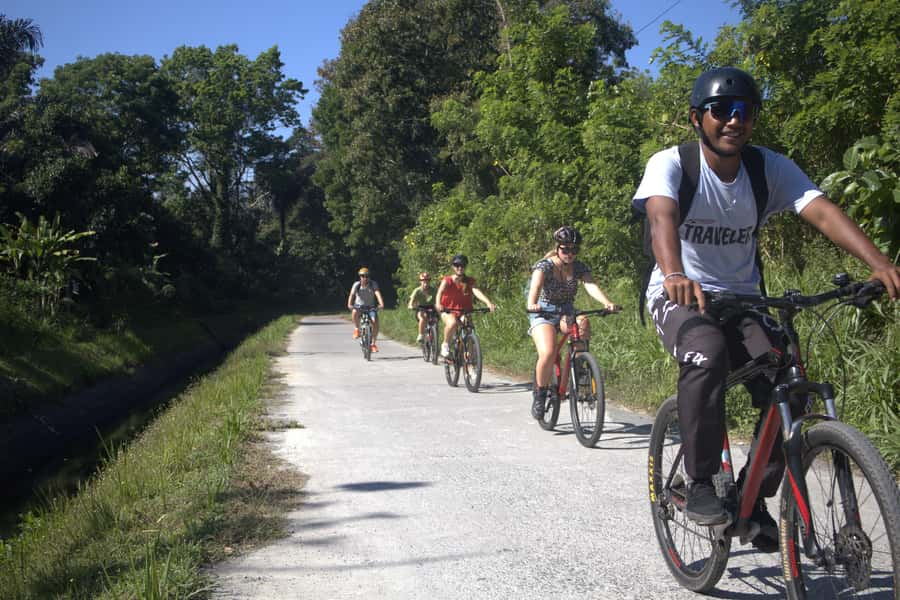
Lombok looks best on two wheels. This six-hour private ride leaves the busy coastal strip behind for rice terraces, small villages, temple grounds and quiet country roads. I especially like the route’s mix of cycling and local life, plus the chance to stop at Ranget Natural Spring and finish at Lingsar Temple. Guide Musleh has also been praised for choosing scenic routes and explaining Lombok’s customs clearly.
The main thing to consider is the physical effort. Most of the ride sounds approachable, but one 15-minute uphill section requires a real push before the route drops toward Praba Village and Endut Village. Lunch is not included in the $70 price, and the one-hour drive from Mataram or Senggigi makes this a full morning and afternoon commitment.
For riders who want more than a beach day, this is a strong choice. You get hotel transfers, an English-speaking guide, bicycle gear and mineral water in a private group. Just bring sun protection, mosquito repellent, a face towel and some cash for food or tips.
Key points to know before you pedal
- The route follows productive rice country: You cycle through paddies, terraces, riverside paths and small villages rather than staying on a standard sightseeing road.
- A 15-minute climb tests your legs: The ride includes a demanding uphill stretch before a downhill trail toward Praba and Endut villages.
- Ranget Spring provides a useful break: You can cool off, eat local food and recharge before the final section.
- The cultural stops are unusually varied: The route includes Suranadi Temple, a handicraft village making large cowbells, and a Hindu temple and mosque close together.
- Lingsar Temple is the finish: A local guide leads the final visit through this important religious site.
- The private format adds flexibility: You travel with your own group, and the guide can focus on your pace and questions.
Why this six-hour ride is different from a standard bike tour
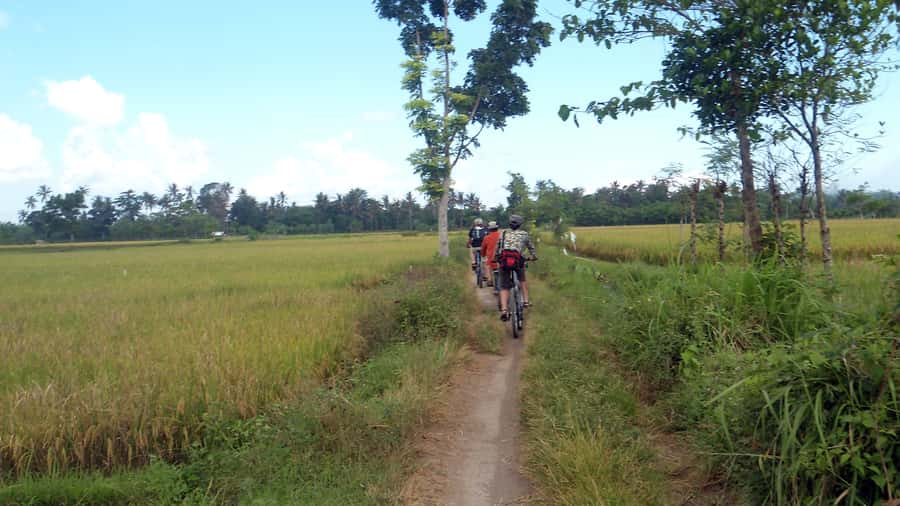
Many cycling tours in Lombok focus mainly on scenery. This one works better as a day of connections: farms lead to villages, villages lead to crafts and religious sites, and the route keeps moving through working countryside.
The West Lombok region is highly productive, so the rice fields are not just decorative views. You see a place where farming shapes the daily rhythm. The route is also designed to use lesser-known roads, which gives you a closer look at village life than a drive along the main highways.
I like that the day does not treat cycling as a race. The sightseeing is spread across roughly three hours in West Lombok, followed by about an hour at Lingsar Temple. Stops for food, water and the spring break up the effort.
The private group format matters here. You are not tied to the pace of a large group, though the exact amount of flexibility depends on your guide and the condition of the route. If you need a short pause after the uphill section, a private tour should make that easier to discuss.
More Cycling Tours in Indonesia:
- Half-Day Ubud Electric Cycling Tour to Tirta Empul Water Temple
★ 5.0 · 315 reviews - Bali: Uluwatu ATV Quad Bike with Temple Tour & Kecak Dance
★ 4.4 · 8 reviews - Bangkok: Temples, Canals & Local Life Bike Tour
★ 4.9 · 3,511 reviews
Starting from Mataram or Senggigi at 7:30 AM
Pickup is scheduled for 7:30 AM from hotels in Mataram or the Senggigi area. The drive to the starting point takes about an hour, so the cycling begins after a fairly early start.
That transfer is useful because it places you in the countryside without asking you to find the trailhead yourself. It also means this is not a quick half-day outing from the coast. Allow the full six hours, including transport and the temple visit.
For hotels outside Mataram or Senggigi, a surcharge applies. Confirm the pickup before booking if you are staying elsewhere. The available pickup and drop-off details also list Danial Online and Jl. Wisata Alam No.184, so it is worth checking the exact meeting point with Adventure Lombok Tour.
The early departure has one advantage: you get onto the route before the day feels too hot. Bring a face towel, sunglasses and sun cream. Mosquito repellent is also sensible for the greener sections near water and vegetation.
Rice paddies, village roads and a working side of Lombok
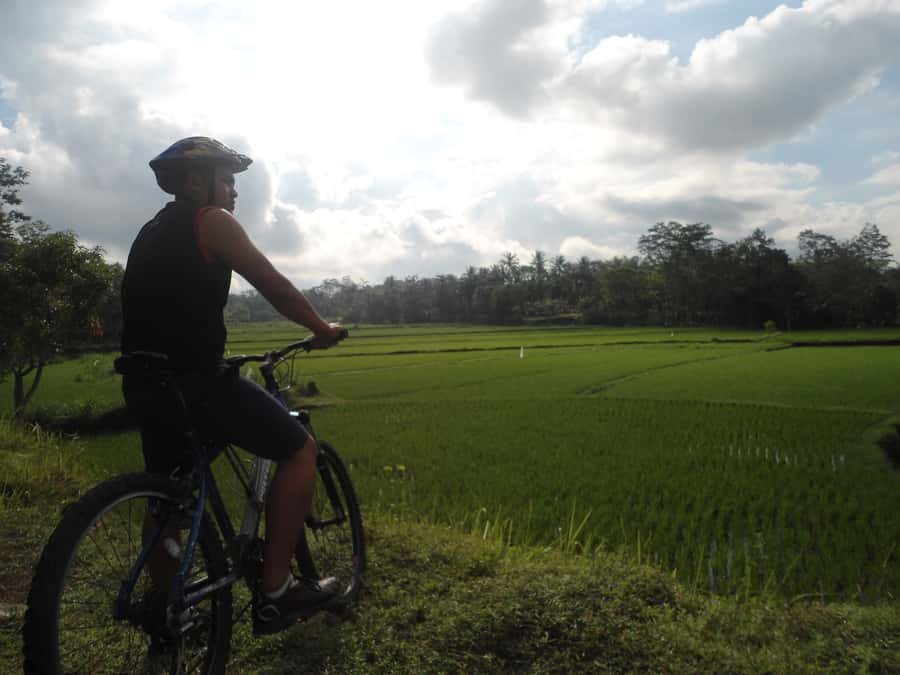
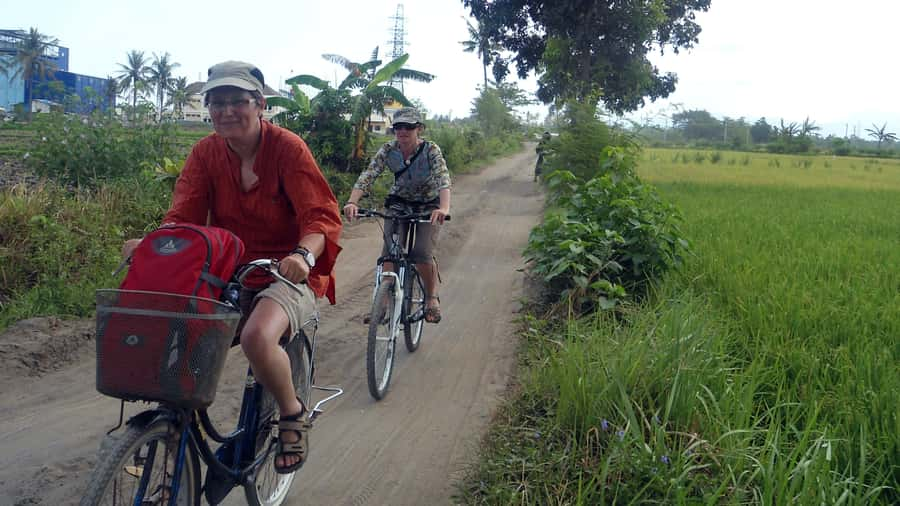
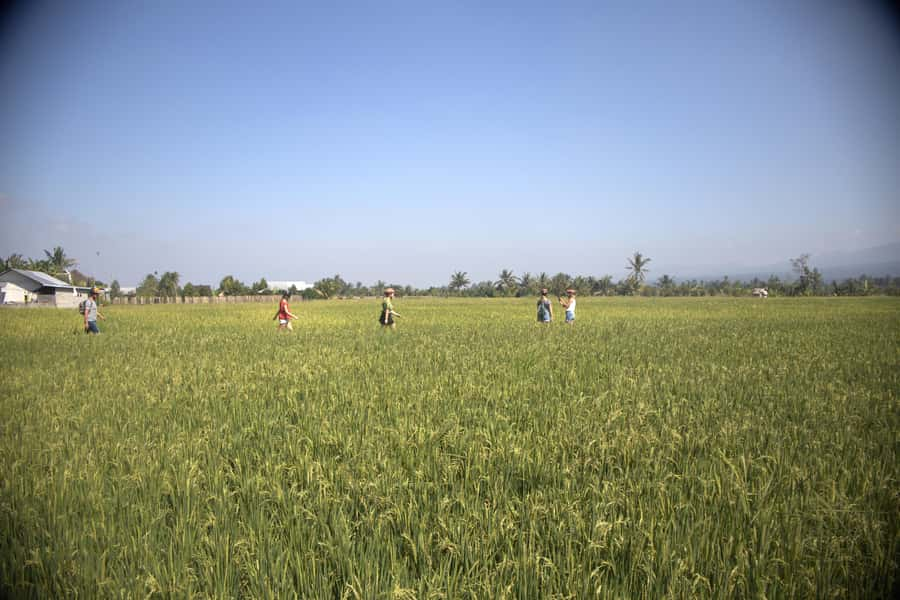
Once the bikes are ready, the ride moves through rice fields and village roads. The appeal is the changing view. One moment you are looking across wide paddies, and the next you are passing homes, local activity and routes bordered by fields.
The countryside is especially rewarding for anyone who wants to understand how Lombok looks away from its beaches. You are not simply stopping at a viewpoint, taking a photo and moving on. You are traveling through the places that supply food and support local communities.
The exact surface can vary along a route that includes riverside riding, village tracks and a later trail. The tour includes bicycle gear, but you should still ask about the bike setup before setting off if you have strong preferences about fit or riding position.
A verified German booking praised the mountain bikes and the route through rice fields, terraces, jungle and small villages. That is useful context: this is not described as a gentle paved cruise from start to finish. It has variety, and variety usually means some uneven or less predictable sections.
Suranadi Temple and the meeting of Hindu and Muslim traditions
Suranadi Temple adds a religious dimension early in the day. The route also brings you near a Hindu temple and a mosque in the same area, a striking sign of the local community’s shared space and mixed traditions.
I value this kind of stop because it gives the scenery a human context. Rice fields and village roads tell you how people work and move. Religious sites show how communities organize their beliefs and public life.
Your English-speaking guide is important here. The temple and mosque area may be visually interesting on its own, but a guide can explain what you are seeing and help you approach the site respectfully. The tour is designed for guided sightseeing rather than an independent ride with no local context.
You should dress and behave with care around the temple grounds. The supplied information does not set out a specific dress code, so ask your guide what is suitable before entering. A little preparation helps keep the visit comfortable for everyone.
A few more temple visits around Indonesia worth a look
- Ubud: Monkey Forest, Jungle Swing, Rice Terrace, and Water Temple
★ 5.0 · 7,160 reviews - Ubud: Waterfalls, Water Temple & Rice Terraces Private Tour
★ 5.0 · 5,484 reviews - Bali: Besakih Temple & Lempuyang Temple Gates of Heaven Tour
★ 4.8 · 3,243 reviews - Bali: Kecak Fire Dance Show & Uluwatu Temple Entry Ticket
★ 4.2 · 3,023 reviews
The cowbell makers and local food stop
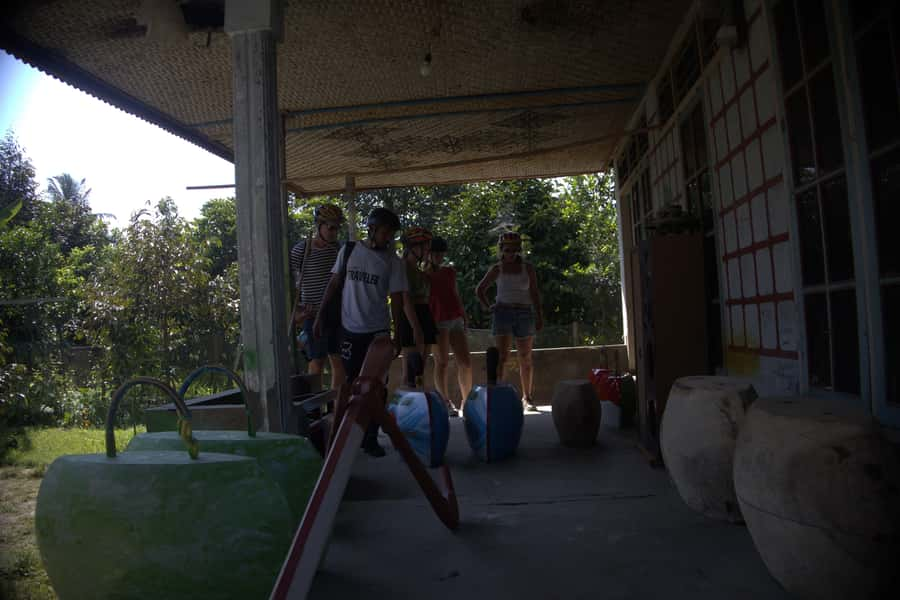
One of the more unusual stops is a handicraft village where artisans make very large cowbells for traditional racing. This is the sort of detail that gives the ride character. You are seeing a local craft tied to a specific cultural practice, not browsing a generic souvenir shop.
The cowbells also show how much local identity can be carried by an ordinary object. Their size and purpose make the stop memorable, especially if you are interested in rural crafts and traditions.
At another village, you can try traditional foods made with jackfruit, along with other local delicacies. Lunch is not included, so budget for food and personal purchases. The experience information says you will stop for local cuisine before or around the spring visit, but it does not specify a fixed menu or meal price.
I would treat this as part of the tour’s value, not as a replacement for a full restaurant lunch. If you have dietary restrictions, ask in advance what is available. The food stop is intended to restore energy, but you should not assume every dish will suit your diet.
Ranget Natural Spring and the mid-ride reset
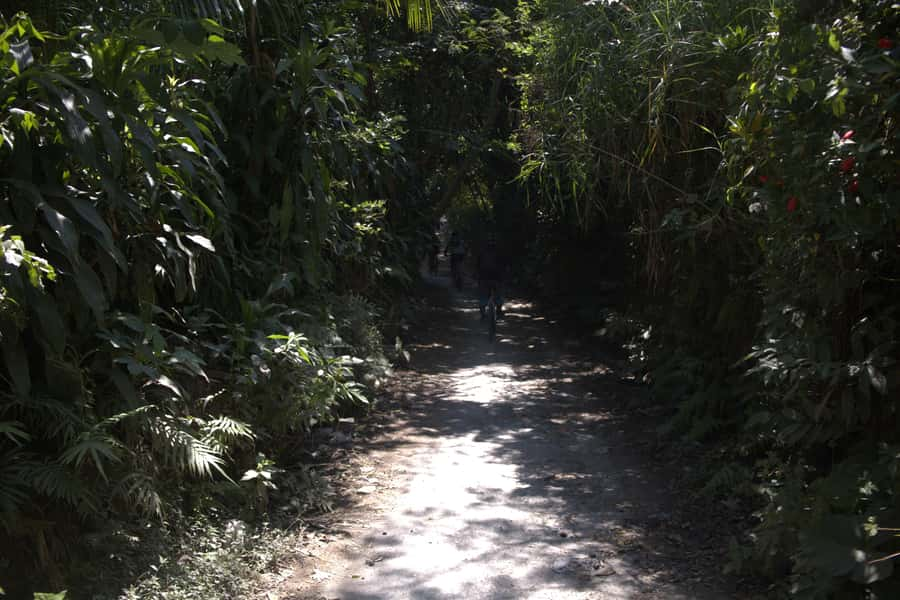
Ranget Natural Spring is the natural pause in the middle of the ride. You can cool off, refresh yourself and take a break before returning to the bike.
That matters because the route is not flat all the way. A spring stop gives you a chance to recover before the river and rice-field section, then the uphill climb. It also changes the pace of the day. Instead of rushing from one landmark to the next, you have time to stop in a setting shaped by water.
The tour includes mineral water, but you should still carry or request enough fluid for the full ride. Heat, sun and physical effort can catch up with you quickly, even when the morning begins comfortably.
The stop may appeal most to people who like active sightseeing with simple outdoor breaks. If you want air-conditioned transport and short walks between attractions, this tour will feel demanding. If you enjoy being outdoors and do not mind getting a little wet or dusty, Ranget Spring adds a welcome change.
The uphill push, river route and descent to Praba Village
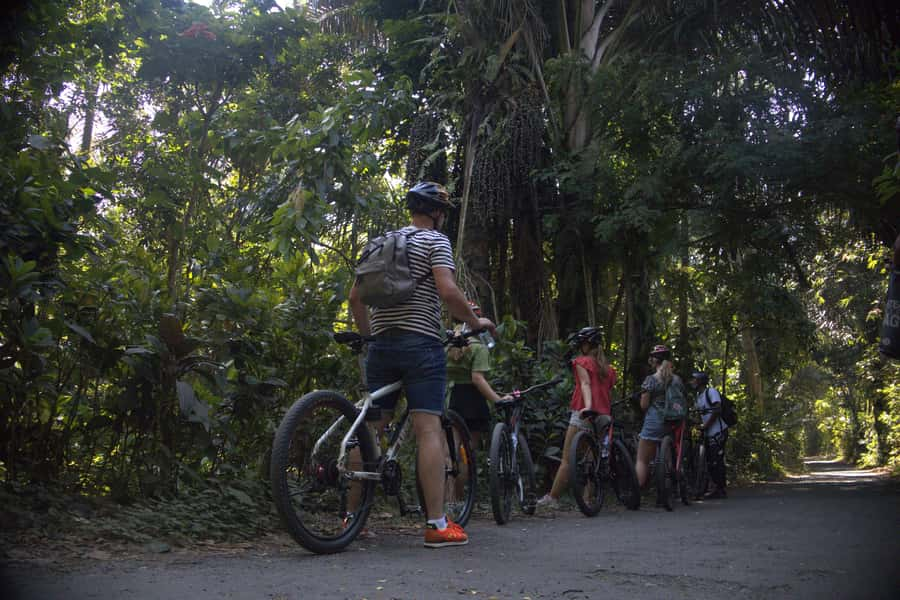
After the spring, the ride continues beside the river and through more rice fields. Then comes the clearest physical challenge: a 15-minute uphill climb.
The climb is short, but the wording matters. You should prepare for sustained effort, not a single steep bump. The private format may help you manage the pace, yet you still need a basic level of cycling fitness. This is not the best pick if you are uncomfortable with hills or have not ridden for some time.
The reward comes after the climb, when the route descends toward Praba Village and Endut Village. A downhill trail can feel exciting, but you should follow your guide’s instructions and ride within your control. The supplied details do not state the trail surface or technical level, so ask before departure if you are concerned about loose ground or uneven sections.
This part of the route is a good example of the tour’s balance. You get broad views and quiet roads, but you also pay for them with effort. That is a fair trade for an active day, as long as you know it in advance.
Finishing at Lingsar Temple with a local guide
The ride concludes at Lingsar Temple, where a local guide leads the visit through the ancient grounds. Ending here gives the day a clear cultural finish rather than simply returning to the vehicle after the cycling ends.
Lingsar is one of the major reasons to choose this tour over a basic countryside bike ride. You are not only riding through rural West Lombok, you are also learning about an important place of worship with guidance on what you are seeing.
The temple visit lasts about an hour. That is enough time for a focused look without turning the end of the day into a long formal tour. You can use this final stop to ask about Lombok’s customs, religious traditions and the communities connected with the site.
Guide Musleh received particular praise for combining route planning, practical care and explanations about Lombok. Another booking described an English-speaking guide who gave useful information about local customs and traditions throughout the day. Since guide quality shapes this experience, mention your interests early and ask questions as you ride.
What the $70 price really covers
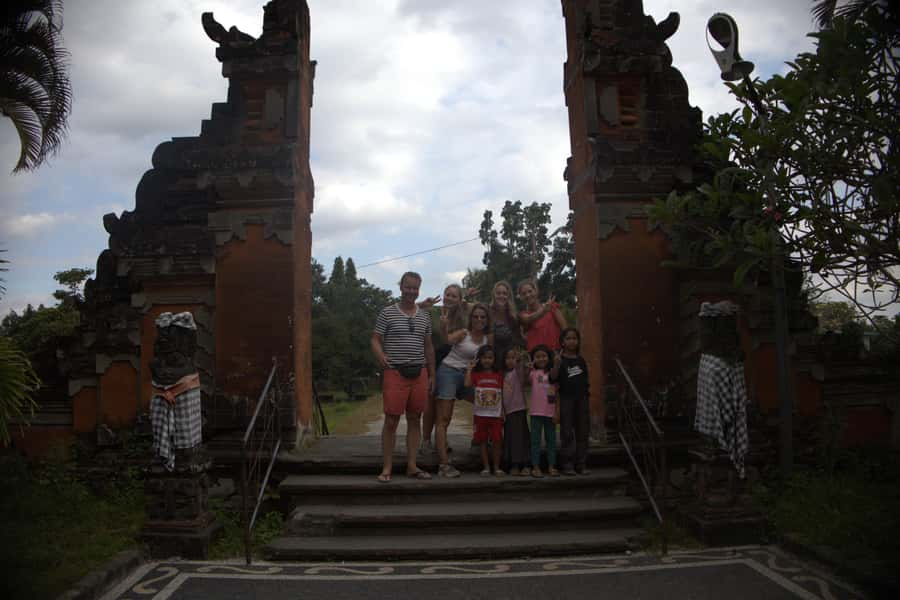
At $70 per person, the tour is not the cheapest way to see rice fields. But the price includes hotel pickup and drop-off from Mataram or Senggigi, an English-speaking guide, bicycle gear and mineral water. It is also a private-group outing, which adds value for couples, families or friends who prefer not to ride with strangers.
The included transfer is significant. You do not need to arrange transport to the starting point, and the hour-long drive would otherwise add both cost and planning work. The guide also links the cycling, village visits, food stop and temple tour into one day.
Lunch and personal expenses are extra. Set aside money for the local food stop, drinks beyond the included mineral water and a tip if you feel the guide has served you well. The tour asks you to bring some cash for tips, so do not rely entirely on cards.
I see the strongest value for people who would otherwise book several separate activities. You get rural sightseeing, cycling, a spring stop, craft encounters and Lingsar Temple in one private day. The value is weaker if you mainly want a relaxed ride with no hills or if you already have transport and plan to visit the temple independently.
Who should book this ride?
I would recommend it to confident casual cyclists, active couples, families with older children who can manage a 15-minute climb, and visitors who want to meet Lombok through its villages rather than only its coastal resorts.
It also suits people who appreciate a guide’s local explanations. The strongest praise for this tour centers on the route, the English communication, the information about customs and traditions, and the care shown during the day.
I would think twice if you dislike early starts, long transfers, hot outdoor activity or uphill cycling. The route is scenic, but it is not presented as completely flat or effortless. You should also clarify food options if you have allergies or dietary restrictions.
For a slower ride, ask if the start time can be adjusted. One verified booking specifically suggested beginning later to avoid arriving back at the hotel too early. That may not always be possible, but it is a reasonable question for a private tour.
Booking is flexible, with free cancellation up to 24 hours before the start and a reserve-now, pay-later option. Check the available start time and pickup details before committing, especially if your hotel is outside Mataram or Senggigi.
Should you book the Golong Village and Lingsar Temple ride?
Book it if you want an active, culturally focused day with real countryside riding. The best parts are the changing route, the cowbell-making village, the shared Hindu and Muslim setting, Ranget Spring and the final visit to Lingsar Temple.
Skip it if you want a flat, easy ride or a short outing near your hotel. The early pickup, hour-long transfer, extra lunch cost and uphill section all matter.
For the right rider, $70 is a fair price for a private day that combines transport, guiding, equipment and several different stops. Bring sun cream, repellent, water-ready clothing, cash and a willingness to work for the views.
FAQ
How long does the countryside bike ride last?
The activity lasts six hours, including the cycling, sightseeing, temple visit and hotel transfers.
Where does hotel pickup take place?
Pickup is included from hotels in Mataram or the Senggigi area. Other locations may require a surcharge.
Is the tour private?
Yes. The activity is operated as a private group tour.
Is an English-speaking guide included?
Yes. An English-speaking live guide is included, and the Lingsar Temple visit is led by a local guide.
Is lunch included in the price?
No. Lunch is not included, although the route includes a stop for local cuisine and traditional foods. Bring cash for food and other personal expenses.
How difficult is the cycling?
The route includes rice fields, village roads, riverside sections and a 15-minute uphill climb. It is not described as completely flat, so you should be comfortable with moderate cycling effort.
What should I bring?
Bring a face towel, sun cream, mosquito repellent, sunglasses and some cash for tips. Mineral water and bicycle gear are included.
Just added around Indonesia
- Chicken Church Local Attraction Near Of Borobudur Temple★ 3.5 · 18 reviews
- Borobudur Temple Combined Ticket Admissions★ 5.0 · 7 reviews
- Yogyakarta: Borobudur Temple Climb Up and Prambanan Temple Tour★ 5.0 · 53 reviews
- The Three Temples of Bali Half Day Private Tour★ 4.0 · 5 reviews
- Bali Pura Taman Ayun Temple, Monkey Forest & Tanah Lot Excursion★ 4.0 · 123 reviews
- Bali Famous Beach, Kecak Dance, Uluwatu Temple, Sunset, Dinner★ 5.0 · 8 reviews
- Guarantee Borobudur Temple Structure & Prambanan Temple.★ 5.0 · 5 reviews
- Sunrise at Punthuk Setumbu, Borobudur Temple, Mendut & Pawon★ 5.0 · 3 reviews
Cycling Tours, compared.
Night Bike Tour with Temples & Flower Market Visit
Read our review →
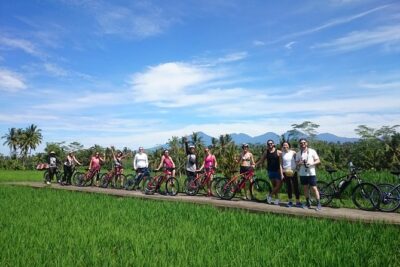
Half-Day Ubud Electric Cycling Tour to Tirta Empul Water Temple
Read our review →Night Bike Tour with Temples & Flower Market Visit
Read our review →
E-Bike Nara Highlights – Todaiji, Knives, Deer, Shrine
Read our review →
Browse the lists this tour appears in