
Review · PRAGUE, CZECH REPUBLIC
Classic Prague Castle Tour, Strahov Monastery & Castle District
Prague’s grandest sights reward a good guide. This walking tour links Strahov Monastery, the Castle District, St. Vitus Cathedral, and several fine viewpoints while adding the stories that turn stone buildings into living history. I especially like the very low price and the way the tour teaches you to use Prague’s public transport before sending you uphill.
I also like the route’s focus on exterior architecture and local anecdotes. Guides such as Aris, Dylan, Lyle, Ian, Andy, Mike, and Jan have been praised for clear storytelling, humor, and practical advice about Prague. The main consideration is simple: you do not enter the paid monuments, so you will need a separate ticket if you want to go inside St. Vitus Cathedral, the Old Royal Palace, or other ticketed areas.
- A smart uphill route: Begin near the river and finish above the city, avoiding a confusing first climb.
- Strahov before Prague Castle: The monastery and its brewery add a quieter, more local start to the day.
- Stories behind the stones: Learn about the 1618 Defenestration of Prague and the later defenestration at Cernin Palace.
- Strong castle coverage: See the main gates, courtyards, St. Vitus Cathedral, Old Royal Palace, and presidential offices from outside.
- Excellent city views: The Gardens Below Prague Castle provide one of the tour’s best closing scenes when open.
- A bargain with one catch: The guide is included, but public transport and indoor admission cost extra.
Why This Route Works So Well
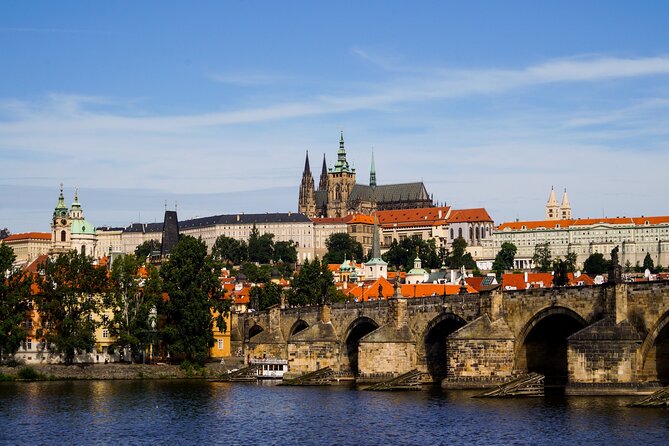
This is a history walk with a useful shape. You meet near the Josef Manes monument beside the Vltava River, learn the basics of Prague’s transport system, and then work your way toward the Castle District. That means you do not have to guess which tram or route will get you uphill.
The stated duration is about two and a half hours. The walking is steady, and several parts take place on cobblestones or sloped streets. I would not choose this outing if you want a slow, seated sightseeing experience. I would choose it if you want a clear introduction to Prague’s western hill and prefer to understand what you are seeing rather than simply photograph it.
The group can include up to 30 people. That is not a tiny private walk, but the strongest comments describe guides who made an effort to answer questions and keep people involved. Aris, in particular, was praised for connecting with a smaller group and adding personal stories and humor. A larger group may feel less intimate, especially at busy castle entrances, so stay close to the guide.
Starting at Klarov Park and Learning the Tram System
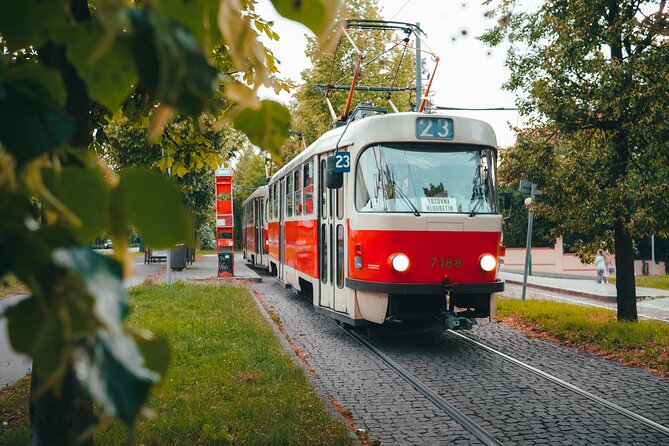
The first stop is Klarov Park, where the guide explains how Prague’s public transport works. This may sound like a small detail, but it is one of the most useful parts of the outing. Prague’s tram and public transport network is a major help during a visit, and a quick orientation can save you from wasting time later.
You will not spend long in the park. The point is to get your bearings and understand how the city connects the riverside, Old Town, and Castle District. Guides have also been praised for sharing practical tips about food, beer, Charles Bridge, and less obvious places around town, so this is a good moment to ask questions beyond the formal route.
The meeting point is at the Josef Manes monument on Alšovo nábřeží in Prague 1. Arrive with enough time to find the monument without rushing. Since the tour is offered in English, you should also listen for the guide’s name and look for the group rather than relying only on the location.
A few more temple visits around the world worth a look
- Lisbon: Jerónimos Monastery Entrance Ticket
★ 4.1 · 14,164 reviews - Angkor Wat Sunrise or Sunset Tour with Guide from Siem Reap
★ 5.0 · 12,109 reviews - Teotihuacan, Guadalupe Shrine & Tlatelolco Day Tour with Lunch
★ 5.0 · 11,603 reviews
Strahov Monastery and Its Brewery
The route then heads up to Strahov Monastery, one of the most rewarding stops on the hill. The tour allows about ten minutes at the monastery itself, followed by a look at the Monastery Brewery and the surrounding Castle District.
The short stop means you should set your expectations correctly. This is an exterior introduction, not a full monastery visit. You may see the impressive buildings, hear how the complex fits into Prague’s religious and political story, and get a sense of why this hill has mattered for centuries. If you want extended time inside the monastery, you would need to plan a separate visit.
The brewery adds a welcome everyday note. Prague is not only a city of kings, cathedrals, and grand palace fronts. Beer culture is part of daily life, and seeing the monastery brewery helps connect the monumental setting with something more familiar and local. The tour does not promise a tasting, so do not book it expecting a brewery experience. Think of it as a useful stop along the walk.
The Strahov Library and Its Curious Details
The Strahov Library receives only about five minutes on the route. The guide focuses on the library’s stories and its unusual curiosities, which gives this stop a strong storytelling role even though you do not enter the paid interior.
This is one of those places where a guide can add real value. From the outside, a library may seem like another grand building. With the right explanation, you begin to understand why its collections, decoration, and odd details matter. Dylan was praised for linking architecture, history, and anecdotes instead of listing dates, and this type of stop benefits from that approach.
If the library is high on your personal wish list, check the current admission arrangements separately. The walking tour itself includes no paid monument entry. That keeps the price low, but it also means the guide must make the exterior and spoken history carry the experience.
Cernin Palace and Prague’s Later Defenestration
The walk continues through the Castle District to Cernin Palace. Here the guide explains the most recent defenestration of Prague, a subject that gives the city’s political past an entertainingly dark edge.
Prague is famous for the 1618 event that helped trigger the Thirty Years’ War, but the city experienced later episodes of political upheaval too. This stop helps show that Prague’s history did not end with medieval kings or imperial palaces. The stories continue into the modern era, and the palace provides a setting for that shift.
You will also see the main square of the Castle District. This section is more about atmosphere and orientation than ticking off a single famous interior. Take time to look around at the scale of the square, the formal buildings, and the way the district feels different from the crowded streets below.
Same place, a different morning at the gates:
- From Bangkok: Ayutthaya Temples Guided Tour with Lunch
★ 4.7 · 10,535 reviews - Siem Reap: Angkor Wat: Small-Group Sunrise or Sunset Tour
★ 5.0 · 9,444 reviews - Athens: Cape Sounion & Poseidon Temple Sunset Half-Day Trip
★ 4.8 · 8,241 reviews - Ubud: Monkey Forest, Jungle Swing, Rice Terrace, and Water Temple
★ 5.0 · 7,160 reviews
Schwarzenberg Palace and Sgraffito Decoration
Schwarzenberg Palace is a quick stop, about five minutes, but its exterior deserves attention. The palace is known for its striking sgraffito decoration, a technique that creates patterned designs across the façade.
This is an excellent example of why an exterior tour can work. You do not need a long museum visit to appreciate the surface of the building. The guide can point out the repeated patterns and explain how the architecture fits into the noble quarter around Prague Castle.
I would keep your eyes up here. The most interesting details are on the façade, and they are easy to miss if you are simply following the group toward the next gate. The short time also means you may want to return later if you enjoy architectural photography.
Prague Castle’s Main Gate and a Thousand Years of Power
Before entering the castle complex, the guide explains its founding and development over more than 1,000 years. The ornate main gate becomes a useful introduction to the layers of power packed into this hilltop site.
The castle is not one single building. It is a complex that changed with successive rulers, architects, and political systems. The tour helps you read those changes before moving into the courtyards. That context matters because the complex can otherwise feel like a collection of impressive but disconnected façades.
You will spend roughly 15 minutes around the entrance and then continue through the Fourth Courtyard and Second Courtyard. The guide also explains twentieth-century additions and finishing work, showing that Prague Castle is not frozen in a medieval past. Modern Czech state life is still tied to this place, including the presidential office seen later in the route.
The Fourth and Second Courtyards
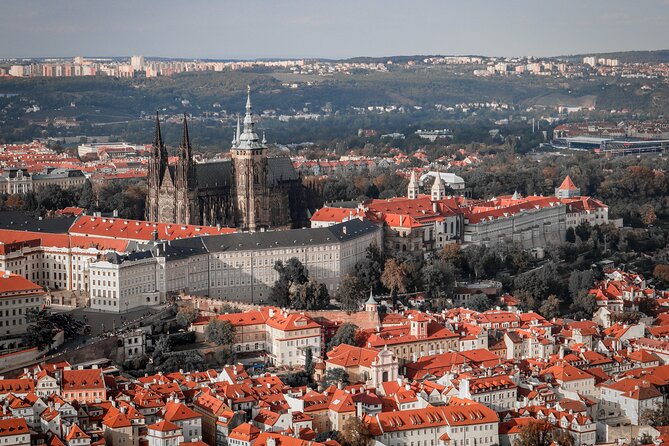
The Fourth Courtyard and Second Courtyard each receive about ten minutes. These stops are useful for understanding how the castle works as a sequence of spaces rather than one dramatic viewpoint.
The courtyards can feel formal and open, which gives the guide room to explain changes made during the twentieth century. You may find that the information here is less immediately theatrical than the cathedral or the city views, but it helps you understand the whole complex.
Because the group may contain up to 30 people, listen carefully when the guide stops. Courtyards can make a group spread out, and it is easy to lose the person explaining the building. The positive side is that guides such as Mike and Andy have been praised for staying organized and keeping stories moving even with larger groups.
St. Vitus Cathedral from the Outside
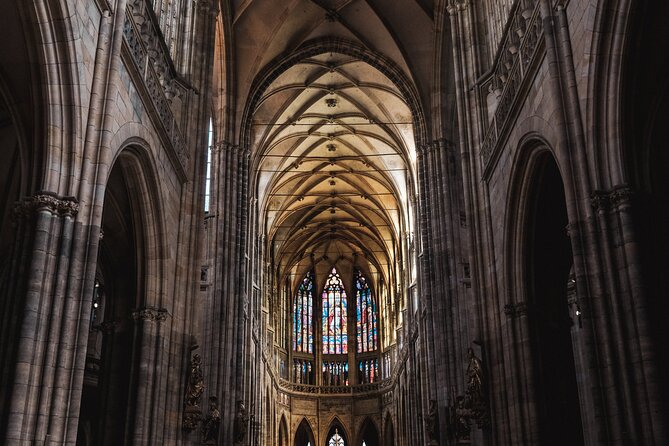
St. Vitus Cathedral is the visual centerpiece of the castle complex. The tour allows about 20 minutes to see it and hear its story, including its connection with Charles IV.
The cathedral’s scale is difficult to absorb at first. A guide helps you notice the layers of architecture, the historical figures connected with the building, and details that can disappear when you are standing beneath such a large façade. Several guides have been praised for making complex history easy to follow, which is especially helpful here.
Be clear about what the tour includes. You see the cathedral from the outside, and the guide explains its history, but the tour does not include entry into paid monuments. One direct comment specifically warns that you need to buy tickets to see inside the cathedral and other areas. If the interior is essential to your Prague visit, budget for that separately and allow more time after the walk.
The cathedral also provides a good test of the guide’s style. A strong guide will connect the building to Prague’s rulers and religious life without turning the stop into a list of dates. Dylan, Jeremy, Ian, and others have received praise for mixing facts, legends, humor, and answers to questions.
The Third Courtyard and the Presidential Office
In the Third Castle Courtyard, you see where the Czech president’s office is located and get one of the best angles toward St. Vitus Cathedral. This stop takes around ten minutes.
The location adds a modern political layer to the visit. You are not only looking at a medieval and royal complex. You are also standing near the center of present-day Czech state life. That contrast is one of the route’s strengths.
Keep your camera ready, but do not rush past the explanation. The cathedral view is often the kind of image people remember, while the presidential connection helps you place the castle in contemporary Prague.
The Old Royal Palace and Architectural Change
The Old Royal Palace receives about five minutes. The guide uses it to explain how each ruler upgraded the palace, allowing you to see architectural change within one building.
Again, this is an exterior stop rather than a full interior visit. Five minutes is enough for a concise explanation, but not enough for a detailed architectural study. If you care about royal apartments, ceremonial rooms, or the famous Vladislav Hall, arrange a separate castle ticket.
The short stop works well within this tour because it keeps the route moving. You get a broad understanding of the castle complex instead of spending the entire morning in one building.
The Gardens Below Prague Castle and the Best Views
The final stop is the Gardens Below Prague Castle, open to the tour only during the summer season, from March through October. The gardens take about 20 minutes and offer some of the finest city views on the route.
This is the payoff for the uphill walk. From the castle ramparts and gardens, you can look across Prague’s rooftops and see how the city fits together. The views are a strong reason to choose this tour over a castle visit focused only on interiors.
The gardens also connect to the 1618 Defenestration of Prague, giving the tour a satisfying return to one of its key themes. Politics, architecture, and scenery meet in the final section.
Weather matters here. One person noted that rain made the gardens less enjoyable, and that is easy to understand. Bring suitable footwear and a rain layer if the forecast is unsettled. If the gardens are closed outside the stated season, the tour still ends near the castle ramparts with a city view, but this exact garden stop will not be available.
The official end point is Hradčany 192, near the castle. From the final viewpoint, it is about a seven-minute walk to the meeting point area. That makes the finish convenient if you want to continue exploring the castle or nearby district.
Price, Group Size, and Overall Value
At $3.63 per person, this is an unusually inexpensive way to get a structured introduction to Prague Castle and the surrounding hill. The price includes a licensed local guide, but not public transport or monument admission. The transport ticket costs 30 CZK, around 1.20 euros according to the tour information.
The low price makes sense because you are paying for guiding rather than entry tickets. I see that as a good deal if you want history, orientation, and exterior views. It is less of a bargain if your main goal is to spend time inside the cathedral, library, or palace rooms.
The tour is offered in English and usually sells about 16 days in advance, so planning ahead is sensible. Free cancellation is available up to 24 hours before the start time. If you cancel later, the amount paid is not refunded.
Most people can participate, and service animals are allowed. Still, you should be comfortable walking on cobblestones and uphill streets. This is a walking tour with a steady pace, not a casual stroll through flat streets.
Which Guides Make the Biggest Difference
The guide is the heart of this experience. The strongest praise goes to guides who combine history with humor and practical local advice.
Aris is described as energetic and attentive, with a talent for drawing a smaller group into the story. Dylan is praised for making Prague Castle understandable and well paced. Lyle, Ian, Andy, Mike, Jeremy, Jan, Filip, Zach, Anna, and Paul also receive strong marks for clear explanations, personal stories, and good humor.
That range suggests the company has several capable guides, but your exact experience will depend on who leads your departure. One negative account describes a slow pace and humor that did not suit the participant. Another booking was cancelled when the other people scheduled did not arrive. These appear to be exceptions among the available feedback, but they are worth keeping in mind.
Should You Book This Prague Castle Walk?
I would book this tour if you want a cheap, story-led introduction to Prague Castle, Strahov Monastery, and the Castle District. It is especially useful on a first visit, when the hill’s layout, transport links, and long political story can otherwise feel confusing.
I would skip it if you want extensive indoor sightseeing or a private, slow-paced tour. The group may reach 30 people, the walking includes cobblestones, and paid monuments are not included.
For most visitors who want strong views, a clear route, and an entertaining guide, the value is excellent. Bring comfortable shoes, set aside money for any interior tickets, and check whether the gardens will be open. If those limits suit you, this tour gives you a lot of Prague in two and a half well-used hours.
FAQ
How long does the Classic Prague Castle Tour last?
The tour lasts approximately 2 hours and 30 minutes.
What is included in the tour?
A licensed local guide is included. The tour is offered in English and uses a mobile ticket.
Are entrance tickets to St. Vitus Cathedral and other monuments included?
No. The tour does not enter paid monuments, so no admission fee is included. You need to buy separate tickets if you want to enter the cathedral or other ticketed areas.
Do I need a public transport ticket?
Yes. Public transport is not included. The stated cost is 30 CZK, approximately 1.20 euros.
Are the Gardens Below Prague Castle open all year?
No. This stop is available during the summer season from March through October.
Where does the tour finish?
The tour finishes near the Prague Castle ramparts at Hradčany 192. The final viewpoint is about a seven-minute walk from the meeting point area.
Just added around the world
- No.1 Chiang Mai: 3-Hour Monk Trail Hike to Wat Doi Suthep & Palad★ 5.0 · 11 reviews
- South India Tour- Temple Architecture and Backwaters★ 5.0 · 7 reviews
- 8 Days Private South India Temple Tour with 4 Star Luxury Hotels★ 5.0 · 3 reviews
- Chennai City Highlights – Government Museum & Temple Discovery★ 4.0 · 7 reviews
- Chania Private Tour: Monastery, Scenic Gorge & Mountain Views★ 5.0 · 12 reviews
- 2-Day Private Tour of Leshan Grand Buddha and Emei Shan including Monastery Stay★ 4.5 · 8 reviews
- Half-Day Trip to Arkadi Monastery and Melidoni Cave★ 4.5 · 4 reviews
- Monastery, Elafonissi and Winery Tour from Chania★ 5.0 · 8 reviews