
Review · PORTUGAL
Batalha: A Local’s Guided Tour of the Batalha Monastery
History comes alive in carved stone. This 1.5-hour guided visit to Batalha Monastery gives you a clear way into one of Portugal’s most important monuments, with attention to the Battle of Aljubarrota, the royal tombs, the cloisters, and the building’s Gothic, Manueline, and Renaissance details. I especially like the focus on the monastery’s political purpose, not just its pretty facade, and I like that the small-group format leaves room for questions.
The main drawback is simple but important: the entrance ticket is not included in the $47 price. One booking also had a serious problem when the guide was canceled shortly before the visit, so I would confirm the meeting and ticket arrangements before setting off.
Key points to know before booking
- Meet at the equestrian statue of D. Nuno Álvares Pereira: The guide waits in front of this statue, making it the key place to get your bearings.
- The tour enters the monastery: You see the church, Founder’s Chapel, and cloisters rather than only walking around the outside.
- King João I and Queen Filipa de Lencastre are central to the story: Their tombs connect the building to Portugal’s royal past and its alliance with England.
- Anna receives especially warm praise: Her friendly, flexible approach and ability to connect the monastery with wider Portuguese history made a strong impression.
- Tickets cost extra: The tour fee covers guiding, not admission to the monument.
- Wheelchair users should choose another visit: The experience is specifically listed as unsuitable for wheelchair users.
Why Batalha Monastery deserves your time
Batalha Monastery is not simply an old church with elaborate stonework. It was built to express a national victory and to support the authority of the Portuguese Crown. That gives every carved arch and royal tomb a second layer of meaning.
The Battle of Aljubarrota is the key. The monastery’s story is tied to Portugal’s independence and to the political need to show that the country’s rulers had both divine favor and a legitimate claim to power. Your guide explains this connection as you move through the building, so the architecture becomes easier to read.
I find that useful because a grand monument can otherwise blur into a long list of dates and decorative details. Here, the central question is more direct: how can a ruler turn a military victory into a lasting national message? Batalha offers the answer in stone.
The experience also links the monastery to the Treaty of Windsor with England. That gives the visit a wider European frame and shows why the royal tombs matter beyond their artistic value. You are not only looking at a burial place. You are seeing a monument tied to diplomacy, dynastic marriage, military success, and the public image of a kingdom.
A few more temple visits around Portugal worth a look
- Lisbon: Jerónimos Monastery Entrance Ticket
★ 4.1 · 14,164 reviews - Lisbon: Jerónimos Monastery E-Ticket and Audio Guide
★ 3.7 · 660 reviews - Lisbon: Belém Walking Tour with Jerónimos Monastery Ticket
★ 4.9 · 637 reviews
Meeting at D. Nuno Álvares Pereira
The tour begins at the statue of the Constable D. Nuno Álvares Pereira. Your guide waits in front of the equestrian statue, which gives you a precise meeting point rather than a vague instruction to find the monastery entrance.
The statue is also a sensible starting image for the tour. D. Nuno Álvares Pereira is connected with the Battle of Aljubarrota, so you begin near a figure who helps explain the military and political story behind the monument.
Plan to arrive with enough time to identify the statue and meet your guide without a last-minute rush. Since the tour returns to the same statue after about 1.5 hours, you also have a clear place to continue your day afterward.
The available information does not include transportation to Batalha, so you need to arrange your own way to the meeting point. This is best treated as a walking tour that begins at the statue, rather than a sightseeing trip with hotel pickup.
Seeing the Gothic and Manueline exterior
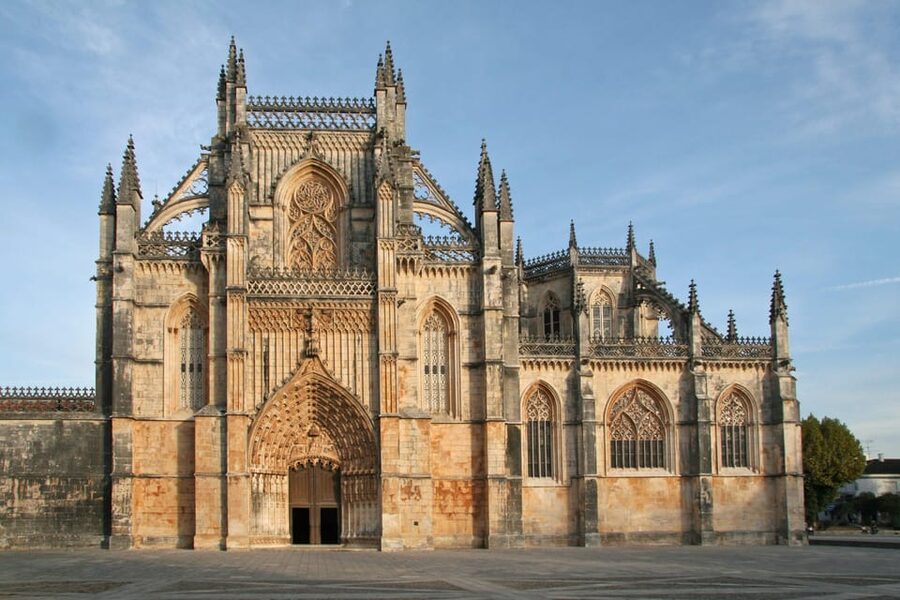
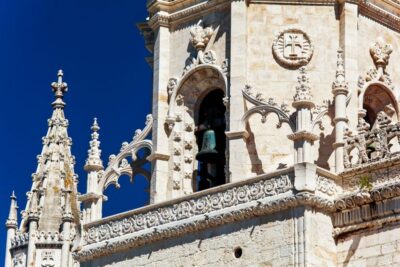
The first visual impression comes from Batalha’s facade. Your guide points out the Gothic and Manueline elements, helping you separate the building’s overall structure from the later decorative work.
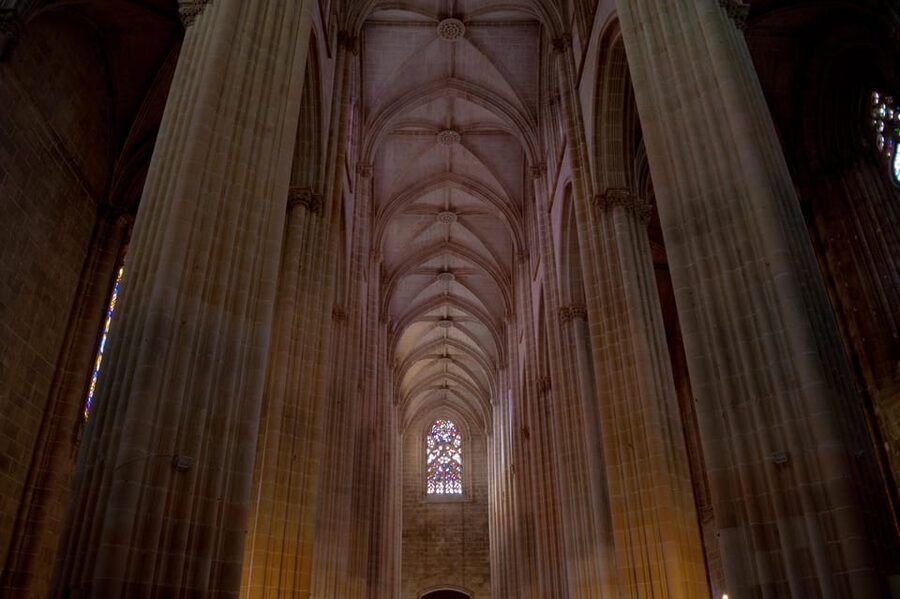
Gothic architecture can be easy to summarize as tall, pointed, and dramatic. At Batalha, though, the stonework carries a political message as well. The scale and care invested in the monastery show the importance placed on commemorating the battle and securing the Crown’s public image.
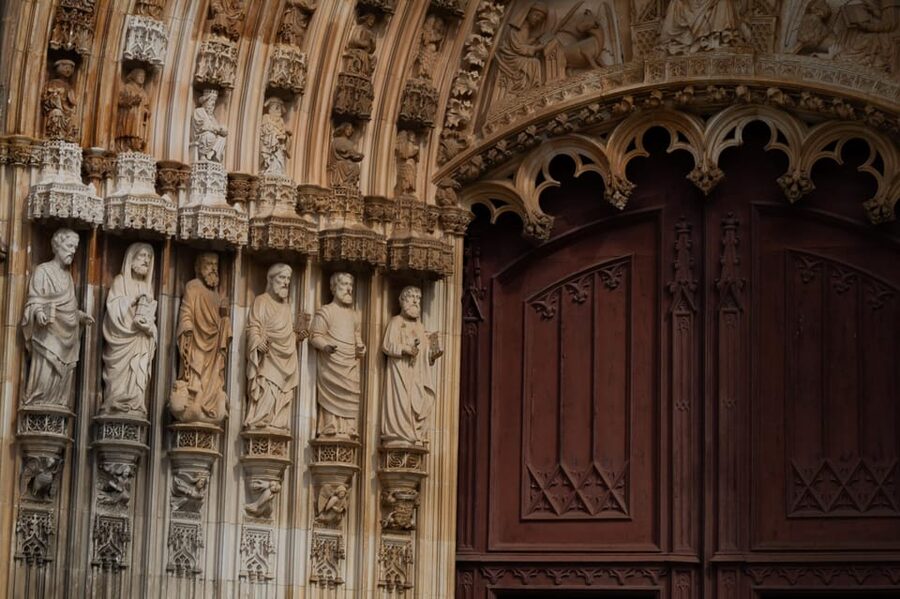
The Manueline details add another layer. This style is associated with highly worked decoration, and the tour gives you a chance to look closely instead of treating the facade as a quick photo stop. You may find that the mixture of styles is one of the most interesting parts of the visit, since it reveals how the monument developed over time.
The building also includes Renaissance influence, so you are not looking at a single, untouched architectural moment. A good guide can make these changes understandable without turning the visit into a technical lecture. That is where Anna’s style seems particularly well suited. Her feedback describes a warm guide who did not rush through a fixed speech and was happy to draw links with other buildings and artistic movements.
Inside the church and Founder’s Chapel
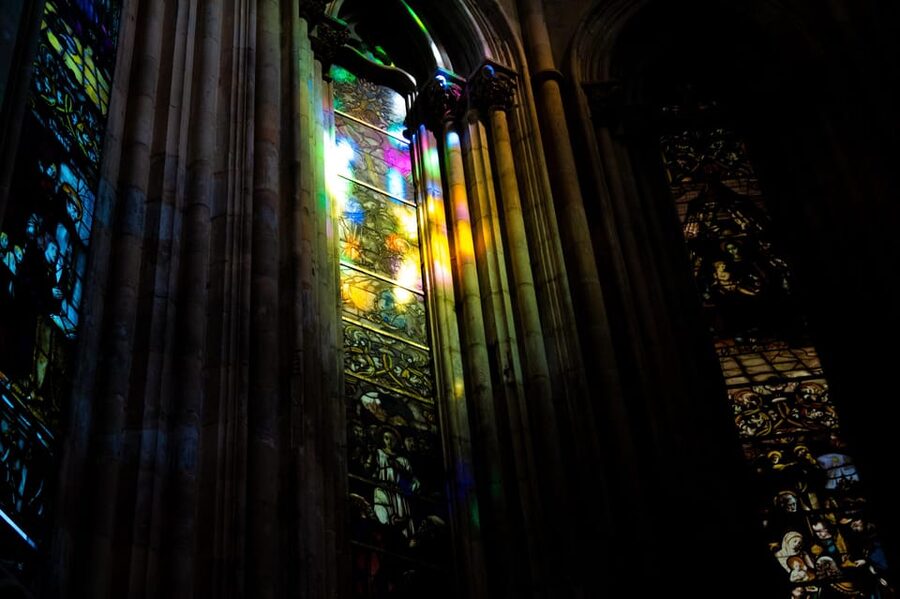
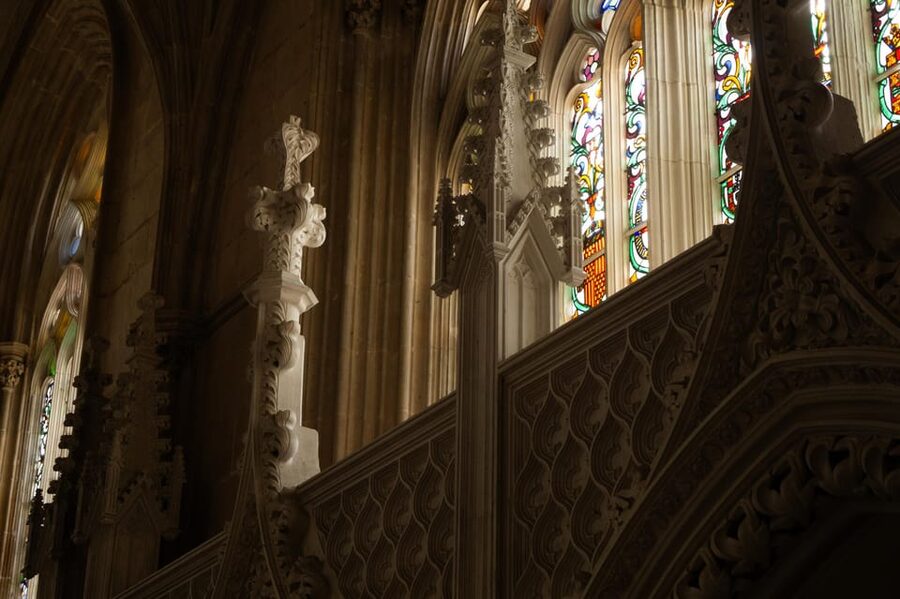
Inside, the focus shifts from the broad public face of the monastery to its religious and royal purpose. You see the church, the interior stonework, stained glass, and the Founder’s Chapel.
The chapel is the emotional center of the visit. King João I and Queen Filipa de Lencastre rest there, and their tombs connect the monastery to the royal family that sponsored it. The pairing also brings the relationship with England into view, giving the Treaty of Windsor a human and dynastic side.
I would pay close attention to how your guide explains the tombs rather than only photographing them. The important point is not just who is buried there, but why their burial place was given such prominence and how it helped shape the memory of the monarchy.
The stained glass and carved stonework reward a slower look. A 1.5-hour visit is long enough to see the main spaces with guidance, but it is not an unlimited study session. If you love architecture, you may wish for more time after the guided portion to revisit details at your own pace.
That time limit is one of the tour’s practical tradeoffs. The guide keeps the visit focused, which helps if you have only part of a day in Batalha. It also means the experience is designed as an introduction and interpretation of the monument, not an exhaustive art-history course.
Same place, a different morning at the gates:
- Lisbon: Belem Walking Tour with Jeronimos Monastery Ticket
★ 4.7 · 490 reviews - Lisbon: Belem, Jeronimos Monastery, and Coach Museum Tour
★ 4.8 · 478 reviews - Belem and Jeronimos Monastery Guided Small Group Walking Tour
★ 5.0 · 410 reviews - “Porto: Fado Show with Guided Tour in a Historic Monastery”
★ 4.9 · 164 reviews
The Battle of Aljubarrota and Portugal’s independence
The Battle of Aljubarrota is not treated as a detached military episode. It is presented as the event that gave the monastery its symbolic force and helped reinforce Portugal’s independence.
This is where a local guide can add real value. A plaque or audio guide can give you names and facts, but the larger connection between battle, monarchy, faith, and architecture is harder to grasp alone. Your guide helps explain why the monastery was worth building and why the Crown needed its message to last.
You will also hear about the Treaty of Windsor and Portugal’s historic ties with England. The tour does not treat this as a separate diplomatic footnote. Instead, it links international relations to the royal figures commemorated in the monastery.
I like this approach because it keeps the story grounded in the place. You see the royal tombs, then consider the alliances and political needs surrounding them. You look at the church, then think about how religious belief supported royal authority. The building becomes easier to remember because the ideas connect.
The strongest praise for the experience centers on this kind of explanation. Anna is described as able to share a great deal of information in an easy way, while leaving room for questions and comparisons. That matters at Batalha, where the sheer amount of history could otherwise feel heavy.
Walking through the cloisters
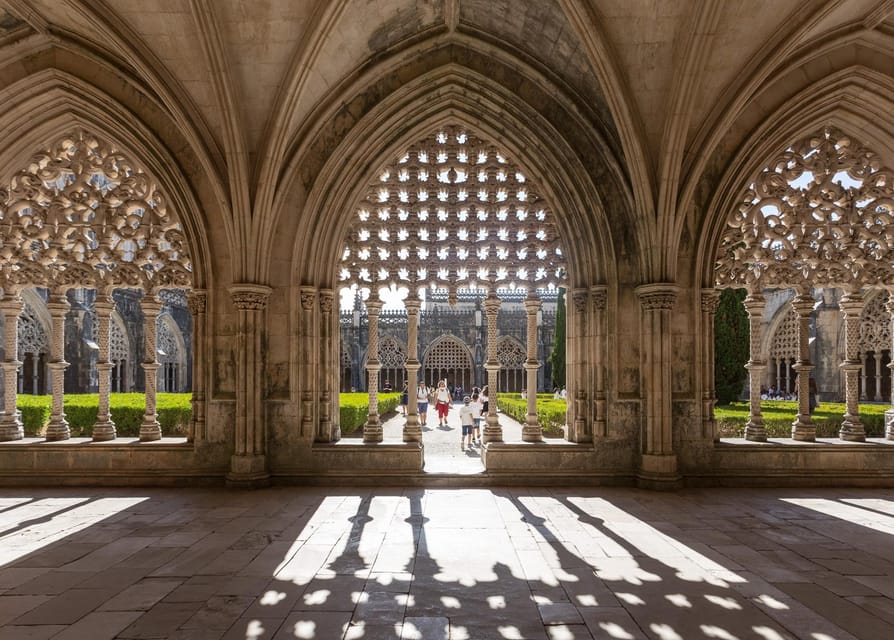
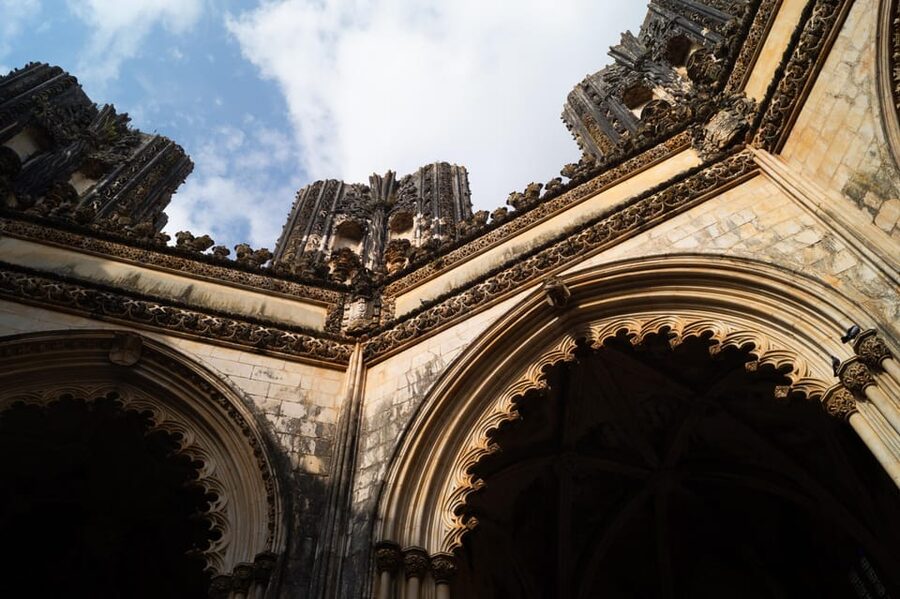
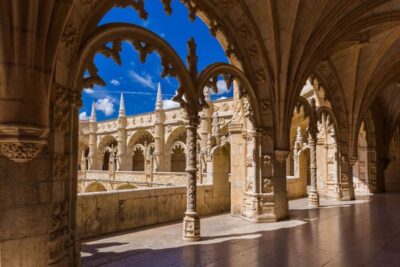
The cloisters provide a quieter change of pace. Here, the focus is on repeated arches, carved details, open space, and the daily religious life that once shaped the monastery.
Your guide points out stories of faith, power, and artistic skill as you walk through. The cloisters help you understand that the monastery was not only a grand church for ceremonies. It was also a working religious complex with spaces designed for movement, prayer, and community life.
This part of the tour should suit you if you prefer architectural details to long historical speeches. The repeated forms make it easier to notice how the builders used rhythm and balance, while the carved stone gives you a chance to look closely at the craftsmanship.
At the same time, the cloisters may be less exciting if you want a fast succession of major sights. Their appeal comes from atmosphere and detail, not from a single dramatic object. The guide’s interpretation is important here, since context helps turn a calm courtyard into a meaningful part of the monastery’s story.
A guide-led visit rather than a quick photo stop
The small-group setup is one of the better reasons to choose this experience. You are not simply following a crowd from one room to the next. The format is intended to feel more personal, and a private group is available if you want the visit arranged just for your party.
The strongest guide feedback is linked to warmth and flexibility. Anna is praised for making the subject easy to follow, welcoming questions, and avoiding a rigid speech delivered at speed. Another booking describes the guide as friendly and well informed, while a separate visitor calls the experience interesting and educational.
That does not mean every visit will be identical. One complaint said the assigned guide lacked experience and missed several historical references. The same complaint also involved confusion over the admission tickets and a late notice that no guide was available. I would take this seriously, even though the overall rating is listed as 4.7 from eight reviews.
Before you go, confirm three things: the guide is scheduled, the meeting remains at the statue, and you understand that the monastery admission is separate. Those checks cost little and can prevent an unpleasant surprise.
Is $47 a fair price?
At $47 per person, the tour is not the cheapest way to see Batalha Monastery, especially because admission is extra. The value rests in the guide’s interpretation and the small-group format.
I would consider the price reasonable if you want the political and religious story explained in person. The tour connects the Battle of Aljubarrota, Portugal’s independence, the Treaty of Windsor, the royal tombs, and the monastery’s architecture. That is a lot to take in without guidance, particularly if you have not studied Portuguese history.
If you mainly want to admire the building and take photographs, buying your own entrance ticket and exploring at your own pace may suit you better. The extra cost makes more sense for people who ask questions, enjoy architectural context, or want help linking the monument to the wider story of Portugal.
A private group is available, which may improve the value for a family or group that wants a more personal pace. The public format should work well for a shorter visit, but the exact group size is not specified, so I would not assume it will be an intimate tour unless that is confirmed.
Who should book this experience?
I would recommend it to first-time visitors who want more than a quick look at the facade. It suits you especially well if you enjoy churches, royal history, medieval and Manueline architecture, or the connection between military events and national identity.
It is also a good choice if you prefer a guide who can adjust the discussion. The praise for Anna’s openness to questions and comparisons suggests that curious visitors will get more from the experience than people who simply want a memorized list of facts.
Families and private groups may appreciate the option of booking privately. English and Portuguese are available, so you should select the language that lets you follow the history most comfortably.
The tour may be less suitable if you use a wheelchair, since the activity is not suitable for wheelchair users. It may also disappoint you if you expect admission to be included in the $47 price or if you want a long, unhurried photography session.
The activity offers free cancellation up to 24 hours before the start and allows you to reserve now and pay later. Those terms provide useful flexibility, especially when your plans around central Portugal are still changing.
Should you book the Batalha Monastery tour?
Book it if you want the monastery explained as a political and religious statement, not just presented as an ornate building. The royal tombs, Aljubarrota story, Treaty of Windsor, and cloisters form a clear route through Portugal’s past, and a good guide makes those links easier to remember.
I would book with two small checks first: confirm that the guide is operating and budget separately for the entrance ticket. If you need wheelchair access, choose another way to visit.
For most history-minded visitors, the tour offers solid value because it puts the monument into context and leaves time to see its most important spaces. Just do not mistake the $47 fee for an all-inclusive admission package.
FAQ
Where does the tour begin?
The meeting point is in front of the equestrian statue of D. Nuno Álvares Pereira.
Where does the tour finish?
The tour returns to the same statue where it began.
How long does the tour last?
The guided visit lasts 1.5 hours.
Is the Batalha Monastery entrance ticket included?
No. Admission to the monument is not included in the tour price.
What parts of the monastery are included in the guided visit?
The tour includes the interior, the Founder’s Chapel, and the cloisters.
Which languages are available?
The live guide is available in Portuguese and English.
Is a private group available?
Yes. A private group option is available.
Is the tour suitable for wheelchair users?
No. The activity is listed as unsuitable for wheelchair users.
How much does the experience cost?
The listed price is $47 per person, with entrance tickets not included.
Can I cancel for a full refund?
Yes. You can cancel up to 24 hours in advance for a full refund.
Just added around Portugal
- Belém: Jeronimos Monastery, Tickets and Guided tour★ 4.9 · 30 reviews
- Lisbon: Tour of Belem and Jerónimos Monastery★ 3.2 · 5 reviews
- Lisbon: Belém Private Walking Tour & Jerónimos Monastery★ 4.5 · 83 reviews
- Lisbon: Skip-the-line Jerónimos Monastery Tour with Tickets★ 5.0 · 4 reviews
- From Lisbon: Évora, Chapel of Bones, & Roman Temple Tour★ 5.0 · 8 reviews
- Lisbon: Belem Tour with Pastéis at Jerónimos Monastery★ 4.7 · 96 reviews
- From Lisbon: Fátima Sanctuary and Batalha Monastery (UNESCO)★ 5.0 · 5 reviews
- Between Life & Death: Roman Temple, Cathedral & Bone Chapel★ 4.9 · 6 reviews
Portugal Temple Tours, compared.
Belém Walking Tour with Jerónimos Monastery Ticket
Read our review →Belem Walking Tour with Jeronimos Monastery Ticket
Read our review →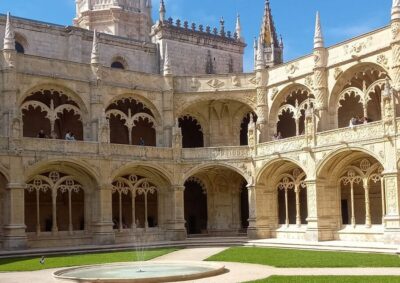
Belem, Jeronimos Monastery, and Coach Museum Tour
Read our review →
Belem and Jeronimos Monastery Guided Small Group Walking Tour
Read our review →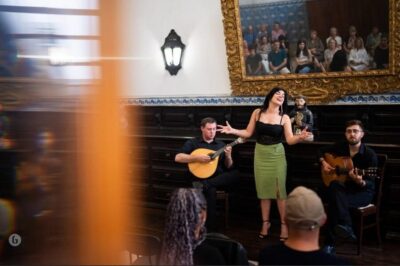
“Porto: Fado Show with Guided Tour in a Historic Monastery”
Read our review →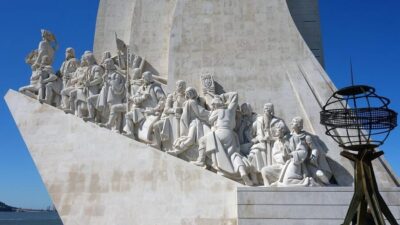
Belem Walking Tour with Jeronimos Monastery Entry
Read our review →Browse the lists this tour appears in