
Review · BANGKOK
Bangkok Shadows: Ghosts, Haunted Temples & Dark Secrets
Bangkok has a darker side. This three-hour private walk links haunted temples, old execution grounds, a former prison, and local ghost traditions, giving you a view of the city far removed from rooftop bars and shopping malls. I like the unusual route through streets and alleys you might not choose alone, and I like the mix of Thai food, history, and folklore. The main drawback is that Bangkok stays noisy, bright, and active at night, so the mood may feel more historical than frightening.
Guide Jeed receives special praise for his energy, food knowledge, and storytelling. His colleague may also join the tour, and the guides speak English and Thai. I would book this for a private evening with an open mind, not for a haunted-house scare show. Traffic can make it hard to reach the meeting point on time, and there are no refunds or changes for a late arrival or no-show.
Key points to know before booking
- The tour begins at Golden Mount: Meet your guide at Romsai Coffee before visiting Wat Saket and its dark associations with plague victims.
- Dinner is part of the experience: A local Thai meal is included, and the food stop is chosen to feel authentic rather than polished for tourists.
- The route follows Bangkok’s death rituals: You visit a former prison, a historic exit for the dead, cremation grounds, and temples linked to restless spirits.
- This is a private walking tour: You receive a guide for your own group, with English and Thai available.
- The atmosphere depends on the city: Bangkok’s traffic, bright lights, and street noise can soften the ghostly mood.
- Comfort matters: Wear good walking shoes, avoid large bags, and bring some cash for personal needs.
Golden Mount begins the story at Wat Saket
The meeting point is Romsai Coffee, near Golden Mount. Your guide waits there, so I would arrive early and allow extra time for Bangkok traffic. A taxi or ride through central Bangkok can take longer than the map suggests, especially at night when roads remain busy.
From the coffee shop, you head toward Wat Saket and the Golden Mount. This temple is not used simply as a scenic opening. The stop introduces the way the tour connects physical places with old stories of death, disease, and fear.
Wat Saket is associated with plague victims who were once left outside the city. The tour presents their suffering through tales of screams and shadows, giving the temple a much darker role than you might expect from its calm religious setting.
I like this beginning because it sets up the whole evening. You are not only being told ghost stories. You are being shown how illness, funerals, religious customs, and city planning helped create Bangkok’s legends.
The stop is still a working temple area, so this is not a theatrical attraction. You may find the setting more serious than scary. Dress comfortably and respectfully, and remember that the experience takes place around active religious sites.
A few more temple visits around Bangkok worth a look
- From Bangkok: Ayutthaya Temples Guided Tour with Lunch
★ 4.7 · 10,535 reviews - Bangkok: City Highlights Temple and Market Walking Tour
★ 4.5 · 3,990 reviews - Bangkok by Night: Temples, Markets and Food Tuk-Tuk Tour
★ 5.0 · 3,752 reviews
A local Thai dinner adds something real
After Wat Saket, the route includes dinner at a local restaurant. Food and drinks are included, although the exact dishes are not specified in advance. One useful detail is that the meal is presented as traditional Thai food rather than a standard tourist buffet.
This matters because the dinner breaks up the walking and gives you a chance to sit with the story. Guide Jeed has been praised for combining food, culture, and history, and the meal appears to be part of that wider conversation rather than a separate restaurant stop.
A previous guest particularly enjoyed being taken to a place they would not normally have selected alone. That is one of the practical benefits of a private guide. You get a local choice and a chance to try food in a setting that may feel less prepared for foreign visitors.
Keep a little cash with you anyway. The dinner is included, but cash is listed for personal needs, and the tour does not promise that every extra purchase will be covered.
Phi Rong’s offerings connect the living and the dead
The tour description includes Phi Rong Temple as a place where local people offer food, flowers, and incense to spirits and ancestors. This is one of the most interesting parts of the evening because it moves beyond horror stories and shows a living religious custom.
These offerings reflect a Thai understanding that family bonds continue after death. Food and incense are not just props in a ghost tale. They express care, respect, and the belief that the dead may still need attention from the living.
The route details also name Dev Mandir Temple Hindu Samaj Bangkok as a stop. Because the supplied route names Dev Mandir while the description discusses Phi Rong Temple, I would confirm the exact temple sequence with the operator before booking if this distinction matters to you.
That small uncertainty does not erase the value of the subject. It does mean you should treat the route as a guided cultural walk with several religious sites, rather than expecting a fixed theatrical performance at one clearly defined haunted temple.
Samranrat Ghost Gate marks the road of the dead
Samranrat is described as Bangkok’s historic Ghost Gate, once the only exit for corpses. The idea is stark: the dead had their own route out of the city, and ordinary streets carried the processions away from the living center.
This stop gives the tour one of its strongest historical images. You are walking through a modern city while hearing how death once shaped movement through it. The contrast is likely to be more effective than a staged scare, especially if your guide explains how the old practice fit into Bangkok’s religious and civic life.
The experience also takes you through streets and alleys that you might not select by yourself. That can be exciting, but it requires attention. Stay with your guide, watch the pavement, and keep your belongings close in crowded areas.
Do not expect complete silence here. Bangkok traffic and street sounds can make the ghost stories harder to hear. One guest found the language easy enough to follow when concentrating, but said surrounding noise often drowned out the guide. That is a fair warning for anyone who needs every word.
Same place, a different morning at the gates:
- Bangkok: Grand Palace, Wat Pho, and Wat Arun Guided Tour
★ 4.8 · 3,632 reviews - Bangkok: Temples, Canals & Local Life Bike Tour
★ 4.9 · 3,511 reviews - Bangkok: Grand Palace and Wat Phra Kaew Guided Walking Tour
★ 4.4 · 2,417 reviews - Bangkok: Markets, Temples and Food Night Tour by Tuk Tuk
★ 4.9 · 2,371 reviews
Romaneenart Park carries the prison’s grim memory
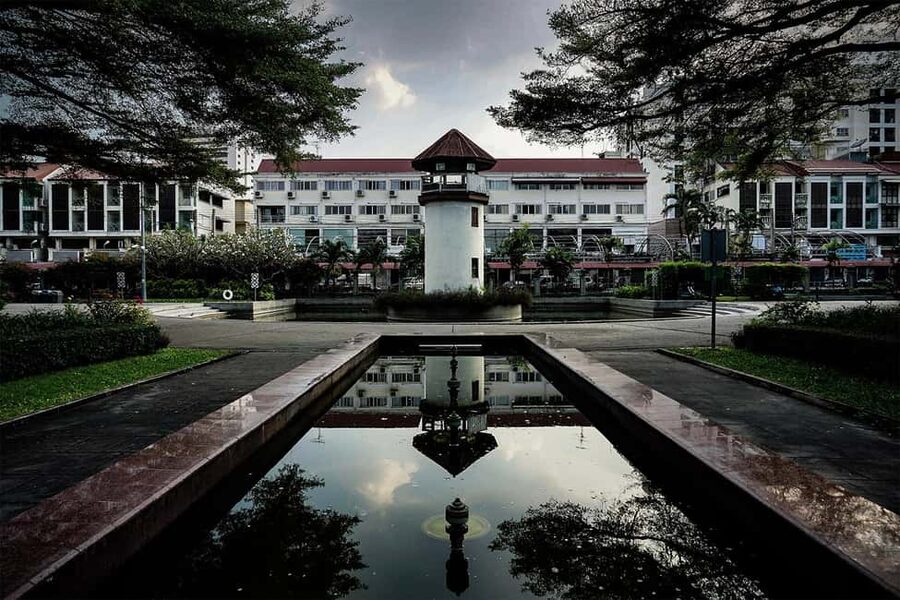
Suan Rommaneenart, also called Romaneenart Park, occupies the site of a former prison. The tour focuses on punishment, imprisonment, and executions, with stories of screams that supposedly remain after the prison itself has changed.
This is one of the places where the dark history may carry more weight than the supernatural claims. A former prison naturally raises questions about crime, justice, punishment, and the people who disappeared behind its walls. The guide’s job is to connect those themes to local beliefs about lingering spirits.
The park may not look frightening in the way a ruined building does. That is part of the point. A public place can sit over a painful past without displaying it clearly, and a storytelling guide can help you notice what a normal walk would miss.
I would keep your expectations sensible. One person found the historical facts interesting but felt the tour lacked a strong scare factor because the route was too bright, busy, and ordinary. If you want a polished horror attraction, this may feel mild. If you enjoy dark urban history, the prison stop should be more rewarding.
Wat Thepsirin and cremation traditions
Wat Thepsirin is linked to the cremation of criminals, outcasts, and people who had fallen from favor. That history gives the temple a different tone from the usual Bangkok temple visit, which often centers on architecture, devotion, or photography.
Here, the subject is social exclusion. The tour asks you to think about who received respect in death and who did not. The stories also connect the site to the idea that people denied peace or honor may return as restless spirits.
This is a useful cultural distinction. Thai ghost traditions are not simply about monsters hiding in the dark. They can reflect guilt, unfair treatment, unfinished duties, and the fear that social violence leaves a mark.
You should keep your camera discreet around religious sites. A phone is recommended for capturing moments, but photography should not interrupt worship or make the setting feel like a stage set.
The Giant Swing closes the route with old legends
The final area includes the Giant Swing and Wat Suthat, ending at 146 Thanon Bamrung Mueang. The Giant Swing is one of Bangkok’s most recognizable landmarks, yet the tour presents it through rituals, accidents, and stories of lost souls rather than as a simple photo stop.
This change in perspective is the route’s main strength. Places you may otherwise visit in daylight for architecture gain another layer after dark. Wat Suthat, the Giant Swing, and the nearby streets become part of a wider story about public ceremony, danger, death, and memory.
The tour finishes in central Bangkok, which is helpful if you want to continue your evening nearby. The final point is not the same as the starting café, so plan your onward transport from Bamrung Mueang Road rather than assuming you will return to Golden Mount.
The tone may remain more reflective than terrifying. Bangkok’s lights and traffic do not vanish, and the Giant Swing is still surrounded by the working city. For me, that makes the experience more believable. The ghosts are part of a lived-in place, not a sealed attraction built to frighten you.
How the guides shape the night
Guide Jeed is the name most closely associated with the strongest feedback. He is described as friendly, energetic, and able to bring the history to life. His strengths appear to be the links between food, culture, and dark stories.
The tour is offered in English and Thai. The English was described as generally understandable, though street noise made parts difficult to hear. If you are concerned, stand close to the guide and ask him to repeat key details when traffic or crowds interfere.
Because the group is private, you have a better chance of asking questions or slowing down for an explanation. The experience is not presented as a large group march with a scripted speech. That private format is especially useful when discussing religious customs, local terms, or stories that need context.
Is $79 good value for three hours?
At $79 per person, this is not the cheapest evening walk in Bangkok. The price includes a private group, a live guide, dinner, the full dark-history presentation, and mandatory insurance.
The value depends on what you want. If you only want a ghost story, you may find the cost high for three hours, especially because there are no special effects and the urban setting can feel too bright or noisy. If you want a guided route through several difficult-to-find places, plus a meal and cultural explanation, the price is easier to justify.
The private format is important here. A couple, family, or small group can shape the conversation and avoid being placed with strangers. It also gives the guide more room to explain local customs instead of rushing through a fixed script.
The overall experience is strongest for people who value access and interpretation. You are paying for the guide’s route choices and storytelling, not just for admission to a temple.
Practical advice for a smoother evening
Wear comfortable clothes and walking shoes. The route covers several stops through central Bangkok, and the tour is not suitable for wheelchair users or people with mobility impairments.
Bring a phone or camera, but do not bring luggage or a large bag. Alcohol and drugs are forbidden. Carry some cash for personal needs, even though dinner and drinks are included.
Arrive early at Romsai Coffee. Bangkok traffic may delay you, but lateness is risky because no refund or reschedule is offered for a delayed arrival or no-show.
You can cancel up to 24 hours before the activity for a full refund, and reserve now while paying later. Check the available starting times when booking, since the tour lasts three hours but the exact departure time can vary.
Should you book Bangkok Shadows?
Book this tour if you like local legends, difficult history, religious customs, and evening walks that show you a less familiar side of Bangkok. It is particularly suitable for a private group that wants dinner and storytelling in one outing.
Skip it if you need a strong horror atmosphere, total darkness, theatrical scares, or a quiet setting. Bangkok remains loud and well lit, and the supernatural side may feel less convincing than the historical material.
My advice is to approach Bangkok Shadows as a dark-history and culture walk with ghost stories, not as a haunted attraction. With Jeed or another strong guide, the route can turn ordinary streets, temples, and parks into a thoughtful look at how Bangkok remembers crime, disease, punishment, and the dead.
FAQ
Where does the tour begin?
The tour begins at Romsai Coffee near Golden Mount. Your guide waits there before the walk starts.
Where does the tour finish?
The tour finishes at 146 Thanon Bamrung Mueang after visiting Wat Suthat and the Giant Swing.
How long does the experience last?
The tour lasts three hours.
What is included in the price?
The price includes an official guide, dinner, dark-history explanations, and mandatory insurance.
Is dinner included?
Yes. A Thai dinner and drinks are included during the experience.
What languages are available?
The tour is available with a live guide speaking English or Thai.
Is this a private tour?
Yes. The group type is private.
What should I bring?
Bring comfortable shoes, comfortable clothes, a camera or phone, and some cash for personal needs.
Is the tour suitable for wheelchair users?
No. The experience is not suitable for wheelchair users or people with mobility impairments.
Just added around Bangkok
- 3-Hour Bangkok Walking Tour: Wat Pho and Wat Arun★ 5.0 · 102 reviews
- Bangkok Half Day Guided Tour: Grand Palace, Wat Arun & Wat Pho★ 5.0 · 4 reviews
- Bangkok 3 Temple Walking Tour: Wat Arun, Wat Pho, Wat Traimit★ 5.0 · 4 reviews
- Visit Wat Pho and Wat Arun with Local Expert★ 4.0 · 14 reviews
- Visit temples in and around Bangkok with a former monk of 10 years★ 5.0 · 30 reviews
- Grand Palace & Emerald Buddha Private Tour [Optional Luxury]★ 5.0 · 27 reviews
- Top 3 Bangkok Temples: Multilingual Private Tour [EN,ES,DE,IT,FR]★ 5.0 · 9 reviews
- Wat Paknam Walking Tour★ 5.0 · 5 reviews
Bangkok Temple Tours, compared.
City Highlights Temple and Market Walking Tour
Read our review →
Bangkok by Night: Temples, Markets and Food Tuk-Tuk Tour
Read our review →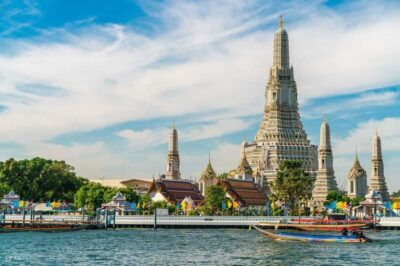
Grand Palace, Wat Pho, and Wat Arun Guided Tour
Read our review →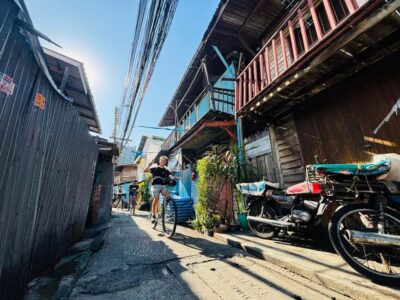
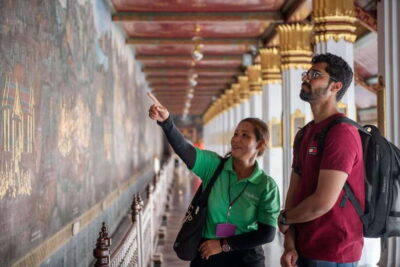
Grand Palace and Wat Phra Kaew Guided Walking Tour
Read our review →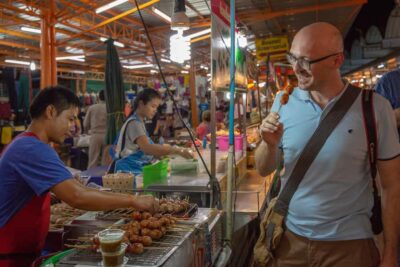
Markets, Temples and Food Night Tour by Tuk Tuk
Read our review →
Grand Palace, Wat Pho, Wat Arun Sacred & Local Tour
Read our review →Browse the lists this tour appears in