
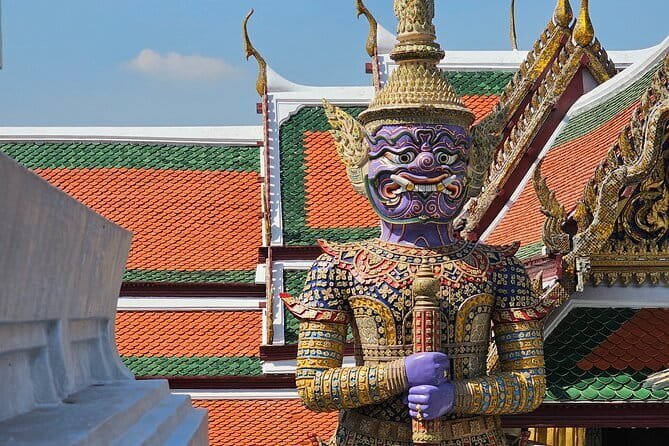
Review · BANGKOK
Bangkok History Temples Markets and Food Tasting
Bangkok tells its story beside the river. This four-hour tour links Wat Pho, the Grand Palace, a local market, street food, and Wat Arun in one compact route. I like the clear historical focus and the chance to travel by local boat rather than staying on the usual tourist path. I also like that guide-led food tasting shows you how to choose food on your own later.
The main consideration is cost. The advertised price is $51.82 per person, but temple admission can add another 1,000 baht if all three entry fees apply. The Grand Palace visit may also be limited to viewing from outside, depending on current royal or ceremonial restrictions, so check the latest conditions before booking.
Key points at a glance
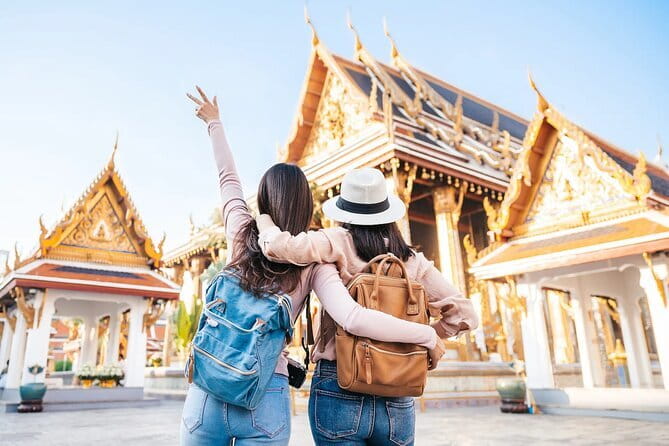
- Wat Pho opens the story: You see the famous reclining Buddha and learn how Bangkok’s royal temple tradition took shape.
- The Grand Palace may be an outside visit: The route still gives you important historical context, but interior access is not guaranteed.
- Food is part of the lesson: Snacks and market tasting are included, with practical guidance for finding local food later.
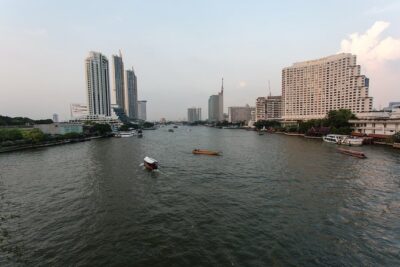
- The river is your transport: A local ferry connects the historic center with the Thonburi side of Bangkok.
- Wat Arun finishes the route: The Temple of Dawn provides a memorable riverside ending, with sunset possible depending on the tour time.
- The guide matters: Guides Rio and Elena received especially warm praise for clear explanations, friendly service, and good pacing.
A four-hour introduction to Bangkok’s past and present
This tour is designed as a short, tightly packed introduction to Bangkok. Its historical frame begins in 1782, when Bangkok became the capital under King Rama I, and continues toward the modern city.
That approach gives the stops a useful order. You begin at Wat Pho, move toward the Grand Palace, cross the Chao Phraya River, taste food in a local market, and finish at Wat Arun. It is not just a collection of temples. The route shows how religion, royal power, transport, trade, and daily meals fit together in the old city.
I think the tour works best during a first visit, especially if you want orientation without spending a full day on temples. It also suits a parent traveling with a teenager. One published account describes a 17-year-old’s first Bangkok experience as a strong introduction to Thailand.
You should expect a fairly active four hours. The route includes walking, temple visits, a ferry ride, market time, and local transport. The pace aims to balance sightseeing and food, but you will not have unlimited time at any one place.
A few more temple visits around Bangkok worth a look
- Bangkok by Night: Temples, Markets and Food Tuk-Tuk Tour
★ 5.0 · 3,752 reviews - Bangkok: Markets, Temples and Food Night Tour by Tuk Tuk
★ 4.9 · 2,371 reviews - Bangkok: Tuk Tuk Adventure Chinatown Michelin Food & Temples
★ 4.3 · 725 reviews
Wat Pho and the reclining Buddha
The tour starts at Wat Phra Chetuphon, better known as Wat Pho. Admission is listed at 300 baht per person, paid separately.
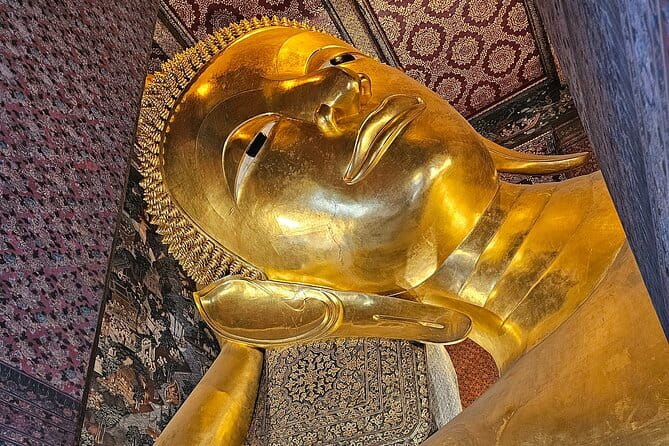
Wat Pho is associated with King Rama I, who rebuilt the complex on the site of an earlier temple. Its best-known feature is the enormous reclining Buddha, a sight that gives the tour an immediate visual punch. You will have about 45 minutes here, enough to see the main attraction and walk through part of the temple grounds with your guide.
The value of beginning here is that you get history and art before the crowds and movement of the later stops take over. Your guide can explain why Wat Pho matters to Bangkok’s royal and religious story, rather than leaving you to see the reclining figure as a quick photo stop.
Keep your expectations sensible. Forty-five minutes is not enough to inspect every corner of the complex. If Wat Pho is your main interest, you may want a separate, longer visit. For this tour, the shorter stop makes sense because four major experiences must fit into the morning or afternoon.
Wear shoes that are easy to walk in. The stated dress rules apply especially to the Grand Palace and temple areas: shoulders should be covered, and men and women should wear long trousers or a skirt or dress reaching at least halfway down the knees. All types of shoes are accepted.
The Grand Palace and the limits of an outside visit
The Grand Palace is scheduled for about an hour and a half, making it the longest stop. The palace was built in 1782 and served as the center of royal and government life for many years. By 1925, the king, royal family, and government no longer lived there permanently.
That history gives the palace more weight than a simple photo opportunity. It helps explain why Bangkok grew around this riverside center and why the royal compound remains one of the city’s most important landmarks.
There is an important catch. The tour information notes that, during the Queen Mother’s funeral period, the Grand Palace visit was available only from outside. You should confirm the current access situation before you go, since ceremonial closures and official restrictions can change the experience.
If exterior viewing is all that is available, the guide’s explanation becomes especially important. You can still learn about the palace’s role, see the outer buildings, and understand its place in the old city. But you should not pay the 500 baht admission fee unless entry is actually allowed and included in your visit.
The palace also has the strictest clothing expectations on this route. A T-shirt must cover the shoulders. Trousers must reach the ankles, and skirts or dresses should extend at least halfway down the knees. Avoid arriving in short shorts, sleeveless tops, or clothing that leaves the shoulders bare.
This is one area where practical preparation saves time. Dress correctly from the start instead of depending on last-minute clothing solutions near the entrance.
Tha Chang Pier and a taste of local Bangkok
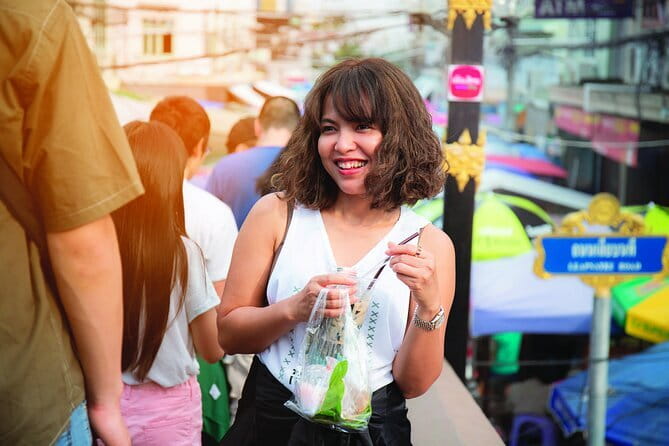
After the palace, the route moves through Tha Chang Pier and a local market. This section lasts about 45 minutes and includes snacks.
I like this part because it breaks up the temple sightseeing. Bangkok’s food culture is not an accessory to the city. It is part of how the city works, and a market stop gives you a glimpse of ordinary buying, eating, and moving around the historic center.
The guide’s role here is more useful than simply handing you a snack. The stated aim is to show you basic ways to find good food on your own later. That can include learning what kinds of stalls attract local customers, how a market is organized, and what to look for when choosing a place to eat.
The food portion is balanced across the group. Vegetarian, vegan, and gluten-free choices are available from only a few vendors, and not every stop can meet those needs. Tell the operator about dietary requirements before booking, and remind the guide at the beginning.
The food tasting is not presented as a full meal. Think of it as a sample of local eating, with bottled water and snacks included. If you usually need a substantial lunch, plan accordingly.
The supplied experiences also describe a small restaurant filled with local students and a stop in a less tourist-focused neighborhood. Those details suggest that the best part of the food segment may be the setting as much as the snack itself. You get a short look at how people eat between classes, work, and errands, rather than only visiting places built for sightseeing groups.
Same place, a different morning at the gates:
- From Bangkok: Ayutthaya Temples Guided Tour with Lunch
★ 4.7 · 10,535 reviews - Bangkok: City Highlights Temple and Market Walking Tour
★ 4.5 · 3,990 reviews - Bangkok: Grand Palace, Wat Pho, and Wat Arun Guided Tour
★ 4.8 · 3,632 reviews - Bangkok: Temples, Canals & Local Life Bike Tour
★ 4.9 · 3,511 reviews
Crossing the river by local ferry
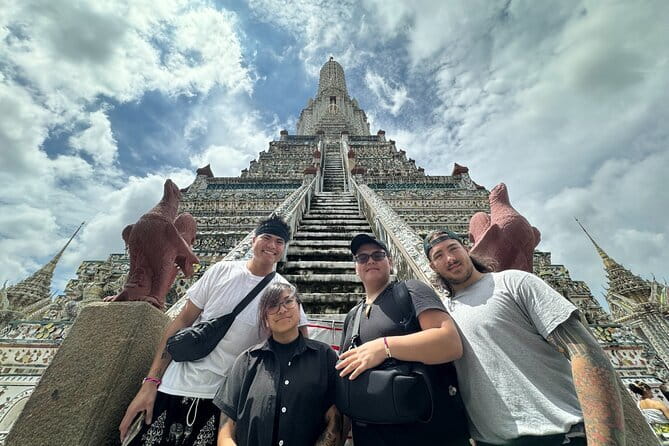
The river crossing is one of the tour’s most practical features. From the Tha Chang area, you take local transportation toward the Thonburi side of Bangkok.
This is a small detail with real value. Bangkok’s Chao Phraya River is not just scenery. It has long connected neighborhoods on both banks, and the ferry gives you a direct sense of that relationship. You also avoid making the whole experience a walk between monuments.
The transport is included, which keeps the price easier to understand. You are not left to work out the ferry route or pay each connection on your own. Your guide handles the movement between stops.
Still, allow for the fact that public transport can bring small delays. The group may need to wait, board together, or move at the pace of the least mobile person. The listed maximum is 300 people, which is a very large possible group, though the actual group size on your date may be smaller. If you prefer a quiet, private visit, this is not the right format.
The river ride also gives you a natural change of scene. Wat Pho and the palace belong to Bangkok’s historic core. Wat Arun, across the water, lets you see the city from a different bank and understand how the capital developed on both sides of the river.
Wat Arun, the final temple by the water
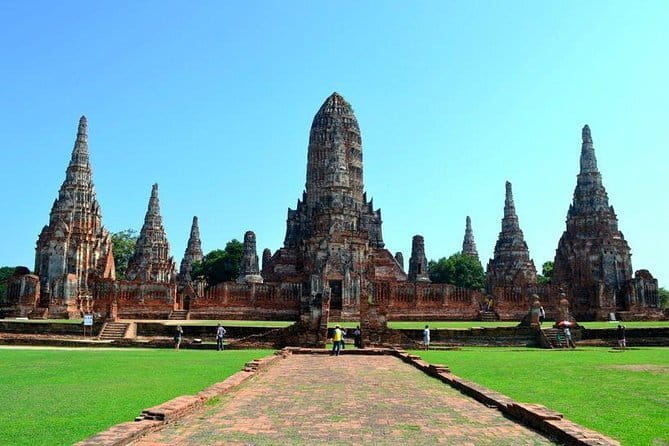
The final stop is Wat Arun, the Temple of Dawn. The tour allows about one hour here, and the schedule aims to finish near sunset when timing permits.
Wat Arun is associated with the Thonburi side of Bangkok and sits near the river. Its location gives the last stop a different feeling from Wat Pho and the Grand Palace. Instead of ending inside another royal compound, you finish beside open water with the temple rising near the bank.
The tour information is not entirely consistent about entry. One section lists a 200 baht admission fee, while the included and excluded details say Wat Arun may be passed by and viewed from outside. Treat the 200 baht as a possible extra, not a guaranteed part of the base price, and ask your guide whether the group is entering.
If you stay outside, you can still appreciate the temple’s setting and exterior. If entry is available, the extra cost is modest compared with the overall day, but you should know what is included before paying.
Ending at Wat Arun is smart from a sightseeing point of view. You finish close to Tha Tian Pier near Wat Pho, and the stated end point is Tha Tian Pier. The tour does not return you to the original meeting point at Golden Place near Tha Chang Pier. That is not a problem if you plan to continue around the old city, but it matters if you have a hotel transfer or another appointment waiting.
What the guides add to the experience
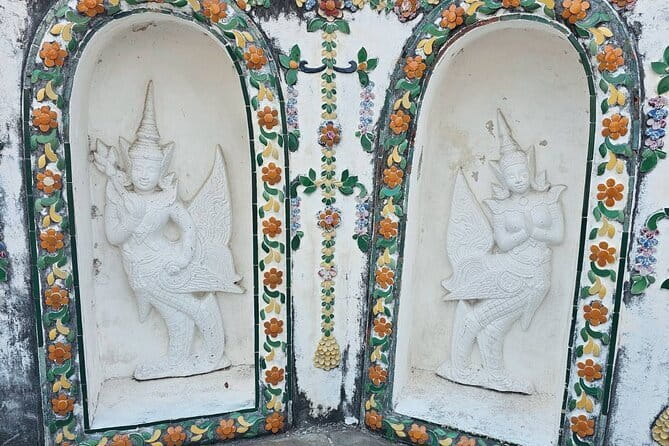
A history and food tour depends heavily on the guide. The strongest praise here goes to Rio and Elena.
Rio was described as excellent for making the experience worthwhile for both repeat visitors to Thailand and a teenager seeing the country for the first time. That suggests a useful balance between basic explanation and material that can still interest someone who has already visited Bangkok.
Elena was praised for being informative, friendly, and engaging. The timing between temple visits and food tasting was also viewed as well balanced. That is important because the tour contains several moving parts. A guide who can keep the group together while still answering questions will make the difference.
You should expect a guide who explains the city as you move through it, rather than a silent escort between attractions. The guide is also the person who makes the market stop worthwhile by explaining how to make food choices later.
As with any group tour, the experience will depend partly on group size and pace. A very large group may make questions, photographs, and ferry boarding less relaxed. The published maximum of 300 is worth noting, even though that does not mean 300 people will attend your departure.
The real cost: $51.82 plus possible temple fees
The base price is $51.82 per person. That includes a professional licensed guide, snacks, bottled water, and transportation listed in the route.
Possible extra admission costs are:
- Wat Pho: 300 baht per person
- Grand Palace: 500 baht per person
- Wat Arun: 200 baht per person
If all three sites require admission, the extra total is 1,000 baht per person. That can make the final cost much higher than the headline price.
The tour offers good value if you want one guide to connect several major sights and handle local transport. You are paying for structure, historical explanation, and a small food experience, not simply for temple entry.
The value is weaker if you only want independent temple visits. Wat Pho, the Grand Palace, and Wat Arun can be visited separately, and you may prefer choosing your own timing. You also need to account for the possibility that the Grand Palace is seen only from the outside while its admission fee remains listed as a possible extra.
The tour is usually booked about 20 days ahead. That is a useful planning clue, especially if your Bangkok dates are fixed. Free cancellation is available until 24 hours before the start time. Changes or cancellations inside that window are not refunded.
Who should book this Bangkok route?
I would choose this tour if you want a short, guided introduction to Bangkok’s old city and prefer a route with several kinds of experiences. It is particularly well suited to:
- First-time visitors who want historical context
- Families with older children or teenagers
- People interested in temples but also curious about local food
- Anyone who wants to learn how to use the river and local transport
- Repeat visitors seeking a different neighborhood and market experience
- People who prefer a guide to manage admissions, directions, and transfers
I would hesitate if you need a fully private experience, have strict dietary requirements, or want long, unhurried time inside each temple. The food choices are limited for some diets, and the possible large group size may feel impersonal.
Dress carefully, bring room for snacks rather than expecting a full meal, and confirm Grand Palace and Wat Arun access before departure. Those three steps will prevent most surprises.
Should you book it?
Book this tour if you want Bangkok explained through its temples, river, markets, and food rather than through monuments alone. The strongest features are the sensible route, the ferry crossing, the practical food guidance, and guides such as Rio and Elena who appear to bring warmth and clarity to the day.
Skip it if your priority is independent exploration or guaranteed interior access to every major site. The admission costs can also change the final price, and the Grand Palace may be an outside-only stop during official restrictions.
For a first taste of Bangkok, I think the tour is a good choice. It gives you enough history to understand what you are seeing, enough local movement to feel connected to the city, and enough food to encourage you to keep exploring on your own.
FAQ
How long does the Bangkok temples and food tour last?
The tour lasts approximately four hours.
Where does the tour start?
It starts at Golden Place, Tha Chang Pier Branch, at 196 and 198 Thanon Maha Rat in Bangkok’s Phra Nakhon district.
Where does the tour finish?
It finishes at Tha Tian Pier near Wat Pho. It does not return you to the original meeting point.
Are temple admission fees included?
No. Wat Pho is listed at 300 baht, the Grand Palace at 500 baht, and Wat Arun at 200 baht. The actual Wat Arun visit may be an outside viewing stop.
What food is included?
Snacks and bottled water are included. The market portion provides a local food tasting, but it is not described as a full meal.
What should I wear?
Your shoulders must be covered. Men and women should wear long trousers, or a skirt or dress reaching at least halfway down the knees. All types of shoes are accepted.
Can people with vegetarian, vegan, or gluten-free diets join?
They can join, but only a few food vendors offer vegetarian, vegan, or gluten-free choices, and not every vendor can meet those needs. You should mention dietary requirements before booking.
More History Tours in Bangkok
- Bangkok: Backstreets and Historic Temples Bike Tour
★ 4.9 · 98 reviews - Bangkok: Backstreets and Temple Historic Bike Tour
★ 5.0 · 84 reviews - Bangkok Heritage Highlights: Grand Palace & Three Temples Tour
★ 4.5 · 52 reviews - Bangkok: Historical Temples Tour & Hidden Bar at Sunset
★ 4.8 · 29 reviews
Just added around Bangkok
- 3-Hour Bangkok Walking Tour: Wat Pho and Wat Arun★ 5.0 · 102 reviews
- Bangkok Half Day Guided Tour: Grand Palace, Wat Arun & Wat Pho★ 5.0 · 4 reviews
- Bangkok 3 Temple Walking Tour: Wat Arun, Wat Pho, Wat Traimit★ 5.0 · 4 reviews
- Visit Wat Pho and Wat Arun with Local Expert★ 4.0 · 14 reviews
- Visit temples in and around Bangkok with a former monk of 10 years★ 5.0 · 30 reviews
- Grand Palace & Emerald Buddha Private Tour [Optional Luxury]★ 5.0 · 27 reviews
- Top 3 Bangkok Temples: Multilingual Private Tour [EN,ES,DE,IT,FR]★ 5.0 · 9 reviews
- Thai Dance Class at Wat Arun★ 5.0 · 30 reviews
Food, compared.
Bangkok by Night: Temples, Markets and Food Tuk-Tuk Tour
Read our review →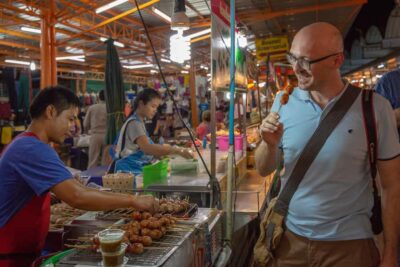
Markets, Temples and Food Night Tour by Tuk Tuk
Read our review →
Palace, Temple and Market Guided Foodie Tour at Night
Read our review →
Tuk Tuk Adventure Chinatown Michelin Food & Temples
Read our review →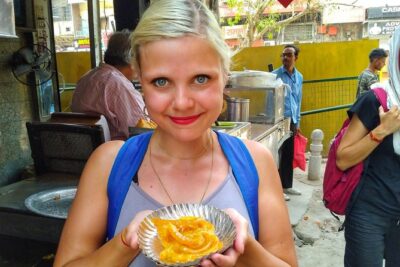
Old Delhi Food-Spice Market-Temples Tour Soon Featured on NETFLIX
Read our review →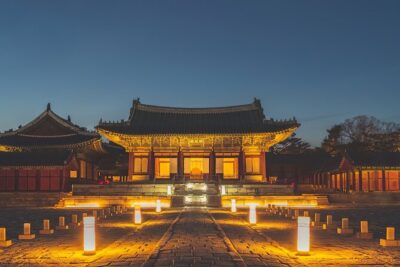
Seoul Night Palace & Market Food Tour with Vehicle
Read our review →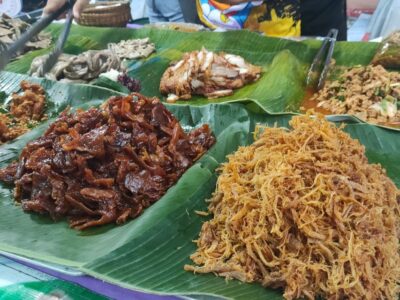
Takua Pa: Food Market, Tsunami Museum, Temple, & Old Town
Read our review →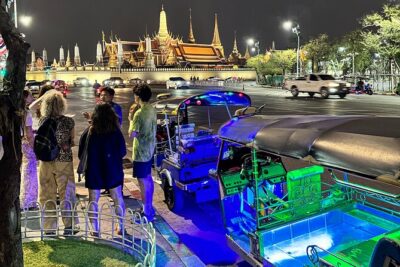
Browse the lists this tour appears in