
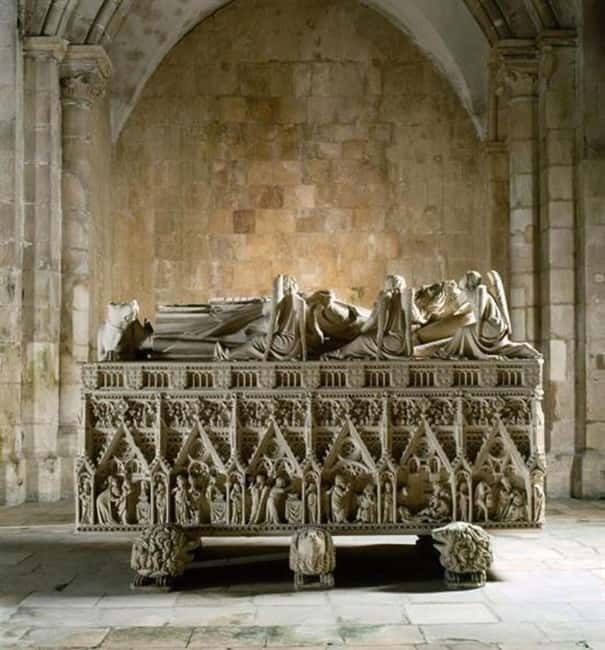
Review · PORTUGAL
Alcobaça: Entry to UNESCO Alcobaça Monastery
Quiet stone can tell a powerful story. The Alcobaça Monastery is worth visiting for its serene Gothic architecture and its medieval rooms, which give you a clear sense of how a major Cistercian abbey functioned across the centuries. I also like that the $17 ticket gives you direct access without requiring a guided tour or a complicated schedule.
The main drawback is that this is entry only. You receive no guide, meals, or beverages, so you need to bring your own context and plan your visit carefully. Late arrivals may also feel rushed, especially near closing time.
Key points to know before you go
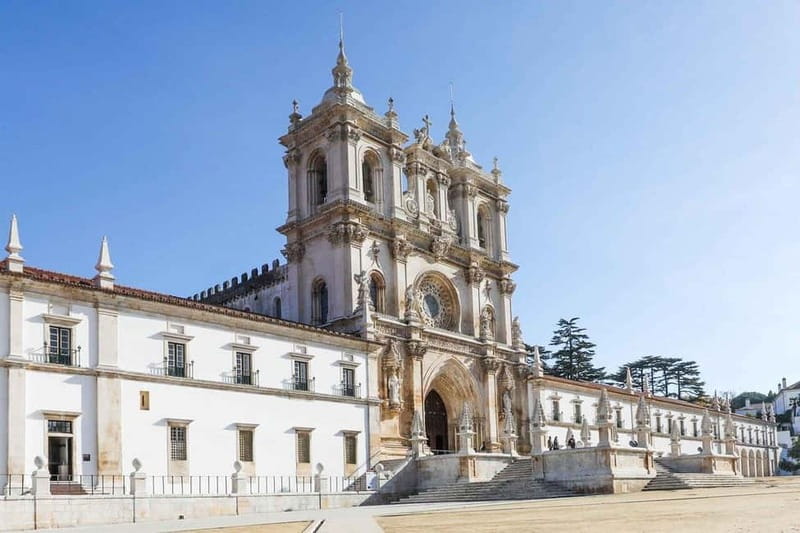
- Founded in 1153: Alcobaça began as one of Portugal’s most important Cistercian foundations.
- Gothic architecture: The abbey’s white stone, tall interior, and restrained design create a calm, powerful setting.
- Medieval rooms included: Your ticket covers access to preserved rooms from the monastery’s earlier years.
- Self-guided visit: There is no guide included, so you can move at your own pace and focus on what interests you.
- Easy central meeting point: Enter at the main entrance on Praça 25 de Abril.
- Plan around closures: The monastery closes on January 1, Easter Sunday, May 1, August 20, and December 25.
Why Alcobaça Monastery matters
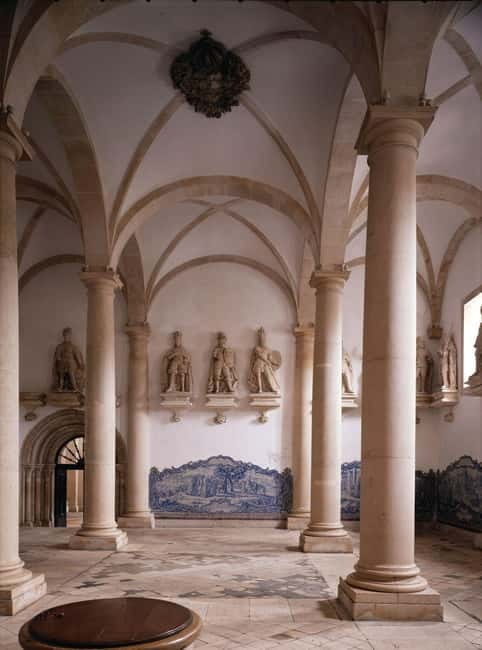
Alcobaça is not simply an old church with attractive stonework. Its construction is tied to the early Christian expansion of Portugal and to the country’s changing political and religious power.
The foundation dates to 1153, while construction of the abbey began in 1178. That gap helps explain why the site feels larger than a single building project. It grew over time, with later additions reflecting changes in architecture, monastic life, and royal support.
The Cistercians favored discipline, prayer, useful work, and relatively plain surroundings. That ideal comes through in the monastery’s early Gothic character. You see a building designed to focus attention rather than overwhelm you with decoration.
At the same time, the complex developed over many centuries. Its architecture reflects changes from the 12th through the 18th centuries. You are not looking at one frozen moment in Portuguese history. You are seeing a long sequence of building choices, repairs, additions, and changing tastes.
That makes this a good place for you if you enjoy reading buildings as historical documents. It also works well if you prefer a major monument that does not depend on theatrical displays or elaborate entertainment.
A few more temple visits around Portugal worth a look
- Lisbon: Jerónimos Monastery Entrance Ticket
★ 4.1 · 14,164 reviews - Lisbon: Jerónimos Monastery E-Ticket and Audio Guide
★ 3.7 · 660 reviews - Lisbon: Belém Walking Tour with Jerónimos Monastery Ticket
★ 4.9 · 637 reviews
Arriving at Praça 25 de Abril
The meeting point is the main entrance at Praça 25 de Abril, a central location in Alcobaça. This is useful because you do not need to search for a separate tour office or meet a guide at a distant transport point.
Your ticket is for entry to the monastery itself. The experience does not include transport, food, drinks, or a personal guide. That keeps the arrangement simple, but it also means you should arrive with a basic plan for what you want to see.
The ticket is valid for one day, and you can check availability for the available starting times. The attraction also offers skip-the-ticket-line access, which can save time when there is a queue at the entrance. Skip-the-line entry does not change the amount of time you have inside, so it is still wise to avoid arriving close to closing.
The monastery is wheelchair accessible. If accessibility is important for your visit, the stated access provision is a useful reason to consider this ticket, though the information provided does not describe every interior route or facility.
The Gothic interior and the first impression
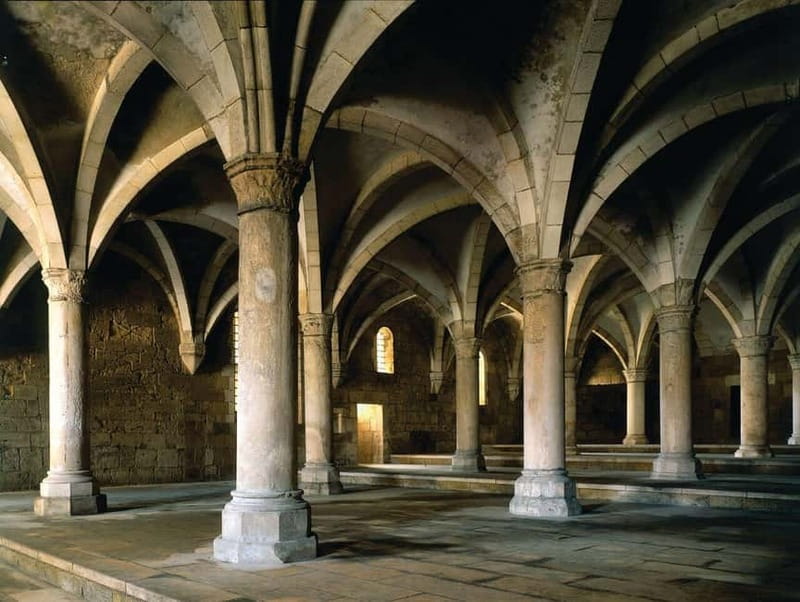
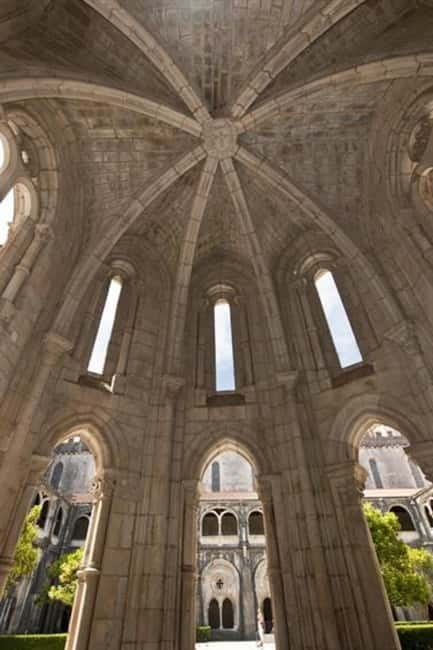
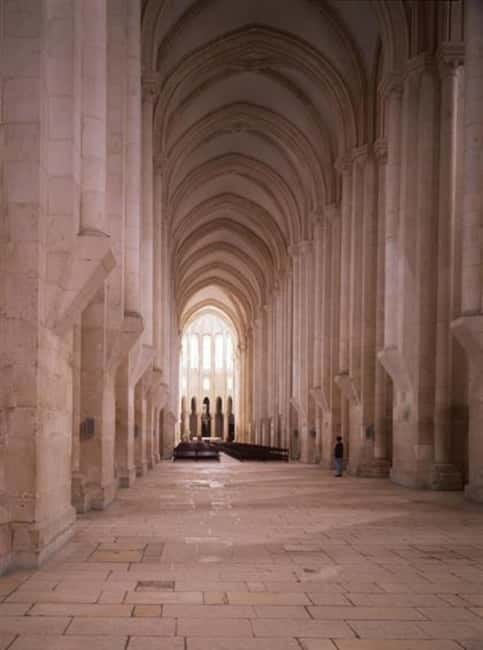
The first major pleasure is visual. Alcobaça is often described as a white Gothic monument, and that description fits the way the stone, height, and restrained decoration work together.
I like the sense of quiet created by the architecture. The building does not need a wall of colorful decoration to make an impression. Its strength comes from proportion, height, light, and the repeated lines of Gothic design.
You may notice how the simplicity gives the interior a serious mood. This was a religious house built around prayer and discipline, not a palace designed purely for display. Even when later architectural styles appear, the earlier Gothic character remains easy to recognize.
Take your time at the beginning rather than rushing toward the next room. The first few minutes help you understand the scale of the complex and the contrast between its plain Cistercian ideals and its later development.
Photography is allowed, but flash is not. That rule is easy to follow and protects the atmosphere for everyone inside. A phone or camera is useful here, but I would also leave time to look without photographing every surface.
Medieval rooms and monastic life
The ticket includes access to the medieval rooms, one of the strongest reasons to choose this experience. The main church gives you the grand architectural view, but the medieval rooms bring the abbey down to human scale.
These preserved spaces help you think about the daily life of the monks who lived and worked here. You can better understand that Alcobaça was not only a ceremonial church. It was also a working religious community with sleeping, eating, studying, and administrative needs.
The rooms are valuable because they connect the large religious institution to ordinary routines. You are not just admiring arches. You are seeing the setting in which a community followed its rules over many generations.
The available information does not provide a full room-by-room description, so you should not expect an elaborate staged exhibition. Instead, treat these rooms as architectural evidence. Look at their size, layout, materials, and relationship to the main parts of the monastery.
This is also where a self-guided visit can be helpful. You can pause longer in a room that interests you, or move on if you are mainly visiting for the church and Gothic design. There is no included guide directing the group from one stop to another.
Same place, a different morning at the gates:
- Lisbon: Belem Walking Tour with Jeronimos Monastery Ticket
★ 4.7 · 490 reviews - Lisbon: Belem, Jeronimos Monastery, and Coach Museum Tour
★ 4.8 · 478 reviews - Belem and Jeronimos Monastery Guided Small Group Walking Tour
★ 5.0 · 410 reviews - “Porto: Fado Show with Guided Tour in a Historic Monastery”
★ 4.9 · 164 reviews
The abbey’s strategic purpose
One of the most interesting parts of Alcobaça is its strategic importance. The monastery’s location and construction were connected to the Christian expansion of Portugal.
That does not mean the building was merely a military site. Its religious role was central, but the abbey also represented a growing Christian presence and a more organized political order. A major monastery could support settlement, learning, worship, and administration while reinforcing the power of the Portuguese crown and church.
As you walk through the complex, keep this wider purpose in mind. The scale is part of the message. This was meant to be a prominent religious foundation, not a small isolated chapel.
The monastery’s position also helps explain why it feels both separate from daily town life and closely tied to the region. It was described as isolated yet prominent, a white monument visible in its surroundings. That combination gives the site a strong sense of place without requiring invented scenery or dramatic storytelling.
If you enjoy history, this context makes the visit much more rewarding. If you mainly want attractive architecture, the building still works on that level. You do not need a detailed background in Portuguese history to appreciate the setting, but a little context helps explain why such a large abbey was built here.
A self-guided visit, not a guided tour
The most important practical point is simple: this ticket does not include a guide.
That can be a benefit. You are free to set your own pace, linger in the Gothic spaces, and spend extra time in the medieval rooms. You can also avoid being tied to a group schedule.
The tradeoff is that interpretation is limited to what you can learn from the site itself and any information available during your visit. If you want detailed explanations about the Cistercians, the construction phases, or Portugal’s Christian expansion, you may need to prepare before arriving.
I would read a short introduction before going. Learn the founding date, remember that construction began in 1178, and keep the 12th to 18th century development in mind. Those few facts will make the building easier to read.
This format suits independent visitors, architecture lovers, and people who prefer quiet sightseeing. It is less suitable if you want a historian beside you explaining every sculpture, room, and architectural change.
How much time should you allow?
The ticket is valid for one day, but the supplied information does not set a fixed visit length. That flexibility is useful, yet your real time inside depends on the hours of operation and the time you arrive.
Do not plan to enter half an hour before closing unless you are content with a very quick look. A late visit caused one visitor to feel pressured, and the dormitory area was not available because staff were already preparing to close. The stated closing time and the practical end of access are not always the same thing.
For a more comfortable visit, arrive with enough time to see the main Gothic spaces and the medieval rooms without watching the clock. The complex rewards a slower pace, especially if you want to compare the early simplicity with later architectural additions.
Check the available starting times before booking. The ticket is not refundable, so a last-minute change of plan can be costly.
The $17 price and overall value
At $17 per person, this is a fair price if you want direct access to one of Portugal’s major religious monuments and especially if the medieval rooms are important to you.
The value comes from the quality and scope of the site, not from added services. You are paying for admission and the chance to explore the complex independently. There is no meal, drink, transport, or guide included.
That makes the ticket a better fit for you if you already plan to be in Alcobaça and want a straightforward entrance arrangement. It is less appealing if you expect a full sightseeing package with transport and expert commentary.
The skip-the-ticket-line feature may add value during busy periods, though it does not guarantee a longer visit or priority access to every room. Since the experience is non-refundable, check the date, opening hours, and closure calendar before paying.
When to visit and what to avoid
The monastery is closed on January 1, Easter Sunday, May 1, August 20, and December 25. These dates are especially important because a paid ticket does not help if the monument is shut.
Avoid booking the final available entry unless your main goal is a brief look. The late-entry problem is practical rather than theoretical: visitors may be admitted but still have limited time before rooms close and staff begin clearing the building.
Photography is permitted without flash. This gives you room to record details of the architecture, but do not let the camera turn the visit into a checklist. The monastery’s quiet design is best understood when you pause and look at the full space.
The central location at Praça 25 de Abril also makes it easy to continue exploring Alcobaça after your visit. The ticket itself does not include anything beyond the monastery, so plan separately for food, drinks, and other local stops.
Who should book this experience?
I would recommend this entry for:
- Independent visitors who do not need a guide
- Architecture fans interested in Gothic design and later additions
- History-minded visitors studying Portugal’s Christian expansion
- People who want access to medieval rooms
- Visitors who value a central meeting point and wheelchair accessibility
- Anyone already spending time in Alcobaça
I would think twice if you need detailed commentary in your own language, organized transport, or a fixed guided route. None of those services is included.
The experience is also less suitable for a rushed itinerary. Alcobaça is not best treated as a ten-minute photo stop, especially if you want to understand the monastery’s scale and changing architectural character.
Should you book Alcobaça Monastery entry?
Book it if you want a flexible, self-guided visit to an important Portuguese monument, particularly for the combination of Gothic architecture and medieval rooms. At $17, it offers solid value for independent sightseers who are already in the area.
Skip it if you are looking for a guided history lesson or a complete day tour with transport and refreshments. Most importantly, check the closure dates and arrive well before the final entry period.
For the best experience, give yourself enough time, read a little about the Cistercians beforehand, and treat the monastery as both a beautiful building and a record of Portugal’s religious and political growth.
FAQ
How much does entry to Alcobaça Monastery cost?
The listed price is $17 per person.
What does the ticket include?
The ticket includes entry to Alcobaça Monastery and access to the medieval rooms.
Is a guided tour included?
No. A guide is not included, so the visit is self-guided.
Where is the meeting point?
The meeting point is the monastery’s main entrance at Praça 25 de Abril.
How long is the ticket valid?
The ticket is valid for one day. You should check availability for the available starting times.
Can I skip the ticket line?
Yes. The activity includes skip-the-ticket-line access.
Is Alcobaça Monastery wheelchair accessible?
Yes. The activity is listed as wheelchair accessible.
When is the monastery closed?
It is closed on January 1, Easter Sunday, May 1, August 20, and December 25. Photography is allowed, but flash photography is not.
Just added around Portugal
- Belém: Jeronimos Monastery, Tickets and Guided tour★ 4.9 · 30 reviews
- Lisbon: Tour of Belem and Jerónimos Monastery★ 3.2 · 5 reviews
- Lisbon: Belém Private Walking Tour & Jerónimos Monastery★ 4.5 · 83 reviews
- Lisbon: Skip-the-line Jerónimos Monastery Tour with Tickets★ 5.0 · 4 reviews
- From Lisbon: Évora, Chapel of Bones, & Roman Temple Tour★ 5.0 · 8 reviews
- Lisbon: Belem Tour with Pastéis at Jerónimos Monastery★ 4.7 · 96 reviews
- From Lisbon: Fátima Sanctuary and Batalha Monastery (UNESCO)★ 5.0 · 5 reviews
- Between Life & Death: Roman Temple, Cathedral & Bone Chapel★ 4.9 · 6 reviews
Portugal Temple Tours, compared.
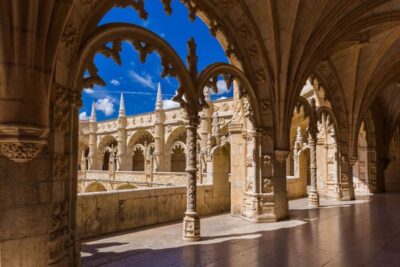
Belém Walking Tour with Jerónimos Monastery Ticket
Read our review →Belem Walking Tour with Jeronimos Monastery Ticket
Read our review →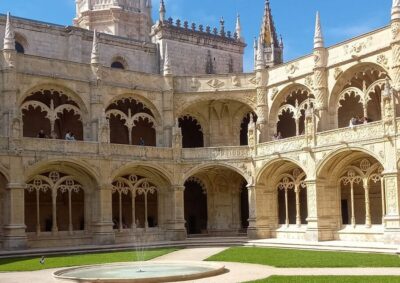
Belem, Jeronimos Monastery, and Coach Museum Tour
Read our review →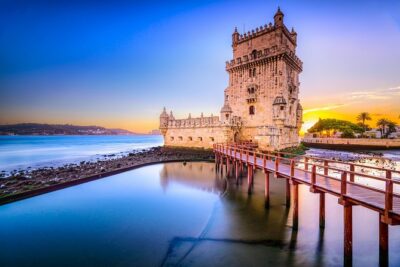
Belem and Jeronimos Monastery Guided Small Group Walking Tour
Read our review →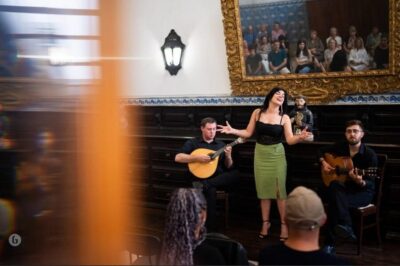
“Porto: Fado Show with Guided Tour in a Historic Monastery”
Read our review →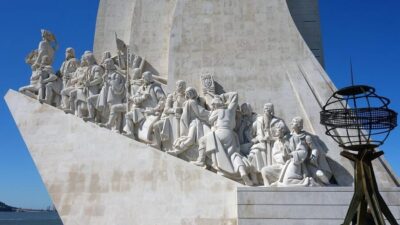
Belem Walking Tour with Jeronimos Monastery Entry
Read our review →Browse the lists this tour appears in