Review · 1-DAY TOURS
Full Day Trip to Durres, Apollonia and Ardenica Monastery
Ancient Albania fits into one very full day. This eight-hour trip links the port city of Durres, the ruins of Apollonia, and Ardenica Monastery in a tidy route through more than 2,500 years of regional history. I like the strong mix of Roman, Greek, medieval, and modern Albanian stories, and I like that the small group is limited to six people.
I also appreciate the practical setup: hotel pickup, air-conditioned transport, a live English or Italian-speaking guide, and entrance fees at the listed sites are included. The main drawback is the pace. You cover three important places in one day, so some stops will feel like an introduction rather than a long, unhurried visit. Uneven ground also makes this a poor choice for anyone with mobility problems.
Key points to know before booking
- Three major sites in eight hours: You visit Durres, Apollonia Archaeological Park, and Ardenica Monastery on one history-focused route.
- The group is capped at six people: This gives the day a more personal feel than a large coach tour.
- Durres begins the story: Its Roman amphitheatre once held up to 20,000 people, and the city marked the start of the Via Egnatia.
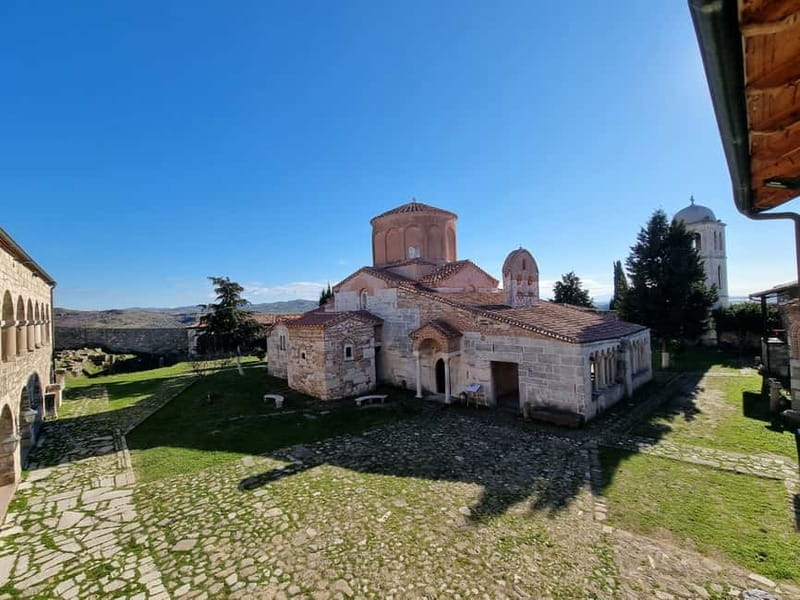
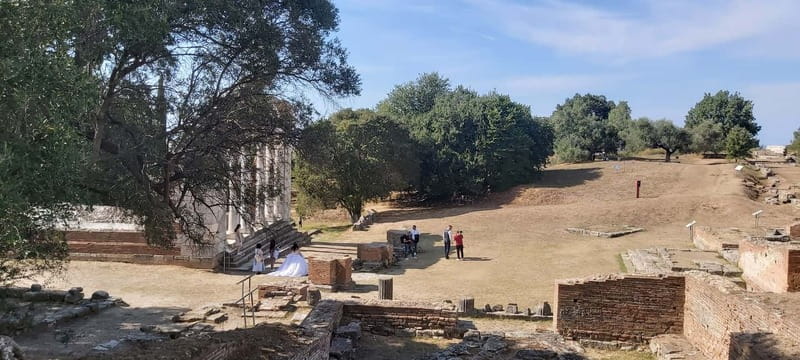
- Apollonia is the longest cultural stop: You see the Church of Saint Mary, museum, Odeon, library, and Bouleuterion among open-air ruins.
- Ardenica still has living monastic life: It is described as the last monastery in Albania where monks continue to live.
- Bring a valid passport: It is required on the day, and comfortable clothing is important for uneven surfaces.
Why this route works so well
I like this excursion because it does not treat Albania as a collection of isolated monuments. The route shows how the region developed from Greek settlement to Roman trade center, medieval religious site, and modern coastal city.
Durres gives you the urban and Roman chapter. Apollonia shifts the mood to open archaeological ground and classical learning. Ardenica closes the day with Orthodox religious history and links to Albania’s national hero, Skanderbeg. The three stops feel different enough that the long drive between them has a clear purpose.
The day is also useful if you are staying in Tirana and want to reach several southern and western sights without arranging a rental car. You get pickup and return to the same place, a driver-guide, and admission to the named monuments and museums. At $212 per person, this is not a budget outing, especially since meals and drinks are extra. Still, the price becomes easier to justify if you value a small group, private-feeling transport, and a guide who can connect the sites rather than simply point them out.
The small group matters. With a maximum of six people, you can ask questions and hear more than you would in a packed bus. Guides such as Ilir and Arnir have been praised for punctuality, clear English, flexibility, and broad knowledge of Albanian history and daily life. One guide also adjusted a route after a request made the night before, which suggests some room for personal arrangements, though you should never assume every change will be possible.
More Full-Day Tours in the world:
- Siem Reap: Full-Day Angkor Wat Guided Tour with Sunset
★ 4.9 · 3,803 reviews - Full-Day Angkor Wat Sunrise Private Tour with Guide from Siem Reap
★ 5.0 · 2,920 reviews - Siem Reap: Angkor Wat Sunrise and Full-Day Sightseeing Tour
★ 4.9 · 2,828 reviews
Durres and the amphitheatre that anchors the morning
Durres is Albania’s second-largest town and one of the country’s most important ports. The city was founded around the seventh century BC and was known in the ancient world as Dyrrachium.
The key visit is the Amphitheatre of Durres, the largest amphitheatre in the Balkan Peninsula according to the supplied information. Its estimated capacity reached 20,000 people, a striking figure when you consider the scale of the ancient city that supported it.
I find this kind of stop valuable because it gives physical shape to Roman power. You are not simply hearing that Durres mattered to the empire. You are looking at a large public building designed for mass entertainment and civic life.
Durres also marks the beginning of the Via Egnatia, the major Roman road that connected the Adriatic with the eastern Mediterranean. That detail helps explain why this port was more than a coastal settlement. It was a gateway for people, goods, armies, and ideas moving inland.
The city later played a brief political role after Albania declared independence in 1912. Durres served as the capital of the Principality of Albania for a short period. Your guide can place the ancient ruins within that longer national story, which is one reason I would choose a guided visit over a quick independent stop.
After the amphitheatre, the tour allows a short coffee break by the marina or in the modern center. This is a useful change of rhythm. You can pause, look at present-day Durres, and see how a working port city has developed beyond its ancient core.
Do not expect a long city walking tour. The Durres section is an opening chapter, not the whole book. If you want extended time by the water, a leisurely meal, or a detailed look at the city’s modern neighborhoods, this schedule may feel too brief.
Apollonia turns ruins into a full afternoon story
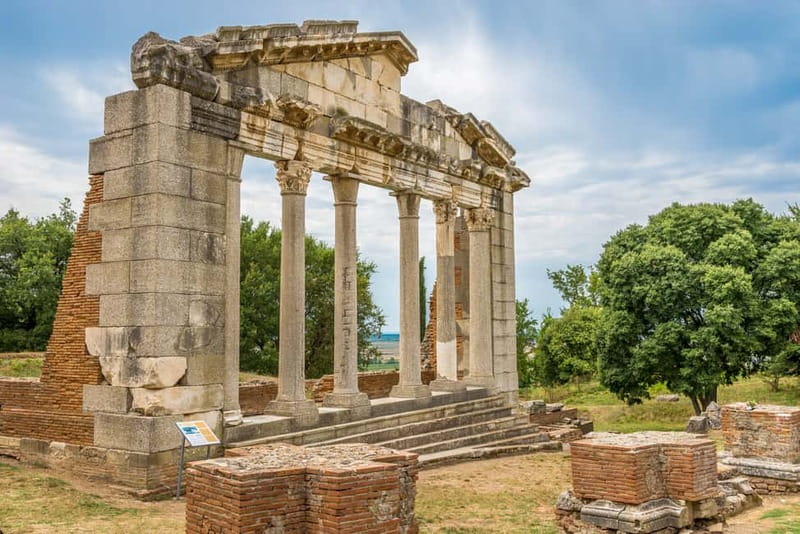
From Durres, the route continues to Pojan, where Apollonia Archaeological Park spreads across an open area shaped by centuries of abandonment and excavation. The settlement was founded around 600 BC and became an important cultural center beside the Adriatic.
Apollonia’s most interesting distinction is its connection to philosophy and education. The city had a famous school of philosophy and attracted major students, including Augustus, who later became the first Roman emperor.
That fact gives the ruins extra weight. You are not only walking through an old city. You are visiting a place linked to the education of one of Rome’s most important rulers. It also reminds you that ancient cities were centers of study and debate, not just markets, temples, and military bases.
The site’s setting is a major part of the experience. Apollonia was abandoned in the fourth century AD, and the open ground around the ruins has changed little in broad character since its ancient period. I like the chance to pause here and think about how quickly a major city can fade from daily life.
The tour includes several major features:
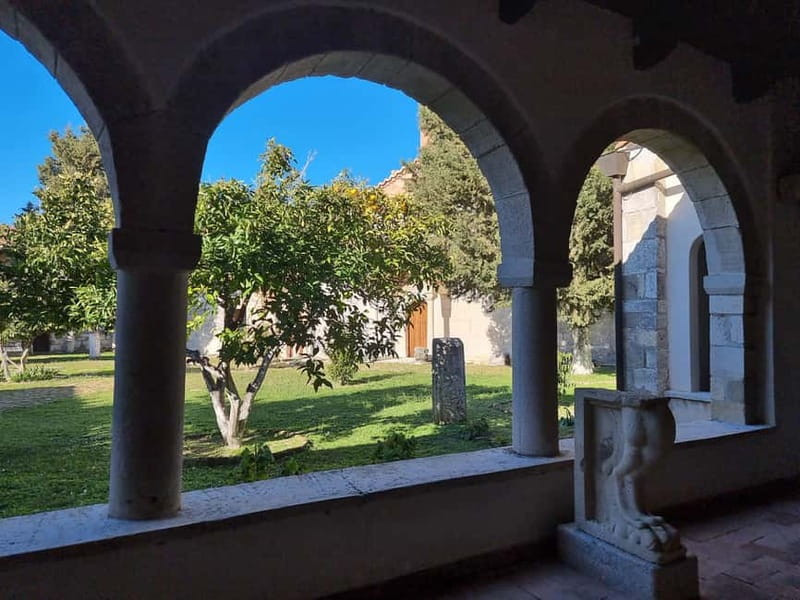
- The Church of Saint Mary: This is one of the important surviving religious buildings within the archaeological area.
- The Archaeological Museum: It helps give meaning to the stones and foundations outside.
- The Odeon: This smaller performance space shows another side of civic life.
- The library: Its presence points to the city’s role in learning and culture.
- The Bouleuterion: This is the site’s most photographed monument and one of its clearest reminders of organized public government.
Apollonia is likely the highlight for anyone who enjoys archaeology. It also requires more walking on uneven ground, so comfortable clothing is not just a suggestion. Wear shoes that feel secure, and expect the visit to be more physical than a museum-only tour.
A practical limitation is that only part of the ancient city is available to explore. One reviewer wished the site had more resources and access for visitors. That is useful to keep in mind. Apollonia is impressive because of its scale and setting, but it is not a fully restored ancient city where every street and building is easy to picture.
A guide adds real value here. Without context, a library, council building, and theatre can look like piles of stone with labels. With a good explanation, you can understand how education, government, religion, and public entertainment fit together.
Ardenica Monastery adds a quieter final chapter
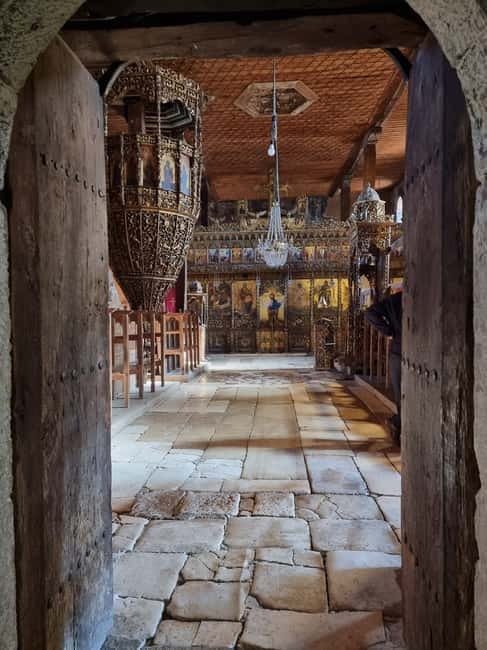
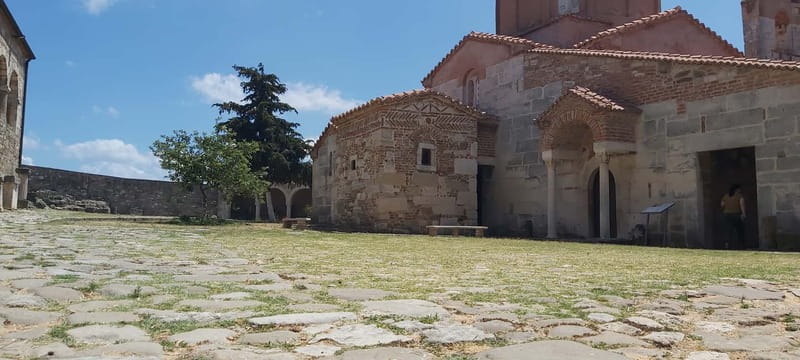
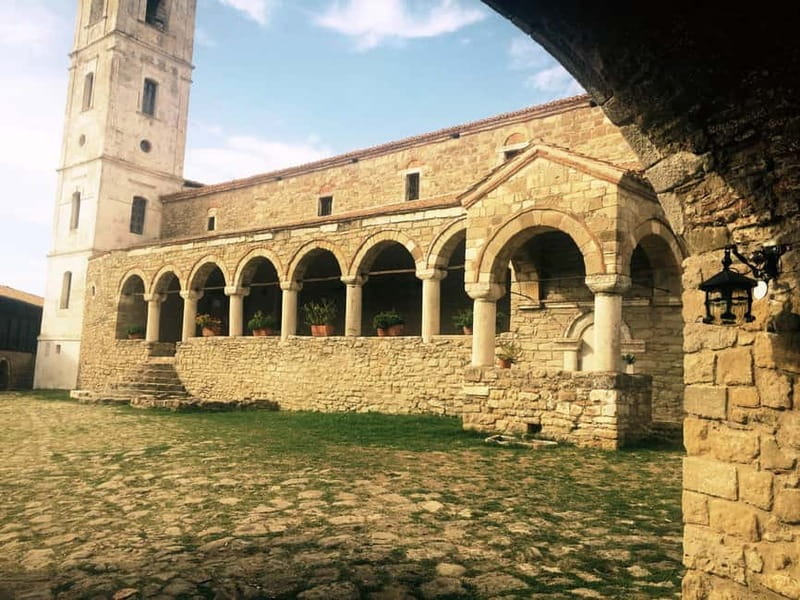
The final major stop is Ardenica Monastery, an Eastern Orthodox monastery built in 1282. It is described as the last monastery in Albania where monks still live, giving the visit a living religious dimension that the ancient ruins cannot provide.
Ardenica is also linked to Skanderbeg, Albania’s national hero. His marriage to Andronika Arianiti was celebrated here in 1451. That connection makes the monastery important not only to Orthodox history but also to the country’s national story.
In 1780, the monastery began a theological school for clerics in Greek Orthodoxy. It also held a library of 32,000 volumes. Sadly, the entire collection was destroyed in a fire in 1932. That loss is a sobering detail, especially after visiting Apollonia, a place where education and written culture were also central.
The monastery provides a different mood from Durres and Apollonia. You move from Roman public spectacle and classical civic life to a religious site shaped by worship, learning, and local memory. I would give yourself time to take in the setting rather than treating Ardenica as a quick photo stop.
Lunch is optional, and free time is included. Since meals and drinks are not part of the price, bring money for food or ask your guide about the timing of the break. The supplied details do not specify a particular restaurant or menu, so I would not book this tour expecting a planned culinary experience.
More Day Trips in the world:
- Athens: Cape Sounion & Poseidon Temple Sunset Half-Day Trip
★ 4.8 · 8,241 reviews - From Aswan: Abu Simbel Temple Day Trip with Hotel Pickup
★ 4.4 · 2,807 reviews - From Malta: Gozo Day Trip Including Ggantija Temples
★ 4.2 · 2,399 reviews - Montenegro: Durmitor, Tara & Ostrog Monastery Day Trip
★ 4.8 · 1,894 reviews
Transport, timing, and group size
The tour lasts eight hours, including pickup, driving, guided visits, breaks, and the return to Tirana. Hotel pickup begins 15 minutes before departure, but the exact start time depends on availability.
The air-conditioned vehicle is a welcome feature for a full day that links several parts of Albania. You are not responsible for navigation or parking, and the driver-guide handles the route. That gives you more energy for the sites, though a full day on the road can still feel tiring.
A group limit of six is one of the strongest practical advantages. You get the efficiency of a planned excursion without the scale of a large bus. You can also ask about Albania beyond the formal tour, something that has been praised in connection with guides such as Illir.
The tour is available in English and Italian. If language is important to you, confirm your preferred option before departure. The guide’s role is central here because the monuments need explanation, and the stops span several periods rather than one simple theme.
What the $212 price really covers
At $212 per person, this is a premium day trip. The price includes air-conditioned transport, hotel pickup and return, a driver-guide, guided visits in Durres, Apollonia, and Ardenica, and entrance fees for the named monuments and museums.
You still pay for meals, drinks, personal spending, and optional activities. That means the real daily cost will be higher than the advertised price, especially if you choose a sit-down lunch.
I think the value is strongest for a first visit to Albania when you want three major cultural sites without hiring a car. It is less compelling if you already have a vehicle, prefer to set your own pace, or want long periods at one archaeological site.
The flexible booking terms also help. You can cancel up to 24 hours before departure for a full refund, and you can reserve now and pay later. Those policies reduce the risk of committing too early, though you should still check the available starting time before booking.
Who should choose this day trip?
I would recommend it to you if:
- You want a history-focused day from Tirana.
- You prefer a small group to a large coach.
- You enjoy ancient ruins, museums, and religious sites.
- You want a guide to explain the connection between Greek, Roman, medieval, and modern Albania.
- You would rather leave driving and admissions to someone else.
- You can manage uneven paths and a long day.
I would hesitate if you use a wheelchair, have a mobility impairment, or find uneven surfaces difficult. The tour is specifically not recommended for people with walking disabilities or wheelchair users.
Families can book, but children must be accompanied by an adult, and unaccompanied minors are not allowed. Since the day focuses heavily on history and archaeology, younger children may need extra patience during the Apollonia visit.
Bring a current valid passport. Wear comfortable clothing and shoes. A small amount of flexibility is wise because the tour includes several stops, an optional lunch break, and transport between sites.
Should you book Durres, Apollonia and Ardenica?
Book this tour if you want a tightly organized introduction to western Albania’s major historical sites. Durres gives you Roman scale, Apollonia gives you ancient learning and ruins, and Ardenica gives you living religious history. Few day trips offer that range in one route.
I would choose it especially for a first visit, a short stay in Tirana, or anyone who values a guide who can answer questions beyond the basic schedule. The 4.9 rating from six reviews reflects the qualities that matter most here: punctual pickup, comfortable transport, friendly guides, strong historical explanations, and some flexibility.
I would skip it if your priority is a slow day, a long lunch, or extensive independent exploration. At $212, you are paying for convenience and interpretation, not simply a ride between monuments. For the right visitor, that makes the cost reasonable. For someone who prefers freedom and a quiet pace, a self-guided plan may suit better.
FAQ
How long does the tour last?
The tour lasts eight hours, including the visits, transport, breaks, and return to Tirana.
What places does the tour visit?
It visits the port city of Durres, Apollonia Archaeological Park in Pojan, and Ardenica Monastery.
Is hotel pickup included?
Yes. Hotel pickup and drop-off are included, with pickup beginning 15 minutes before departure.
What languages are available?
The live tour guide service is available in English and Italian.
Are entrance fees included?
Yes. Entrance fees for the mentioned monuments and museums are included.
Are meals and drinks included?
No. Meals and drinks are not included. Lunch is optional during free time.
Is the tour suitable for wheelchair users?
No. Because of uneven surfaces, the tour is not recommended for people with mobility impairments or wheelchair users.
Just added around the world
- No.1 Chiang Mai: 3-Hour Monk Trail Hike to Wat Doi Suthep & Palad★ 5.0 · 11 reviews
- 8 Days Private South India Temple Tour with 4 Star Luxury Hotels★ 5.0 · 3 reviews
- Chennai City Highlights – Government Museum & Temple Discovery★ 4.0 · 7 reviews
- South India Tour- Temple Architecture and Backwaters★ 5.0 · 7 reviews
- Chania Private Tour: Monastery, Scenic Gorge & Mountain Views★ 5.0 · 12 reviews
- 2-Day Private Tour of Leshan Grand Buddha and Emei Shan including Monastery Stay★ 4.5 · 8 reviews
- Half-Day Trip to Arkadi Monastery and Melidoni Cave★ 4.5 · 4 reviews
- Monastery, Elafonissi and Winery Tour from Chania★ 5.0 · 8 reviews
1-Day Tours, compared.
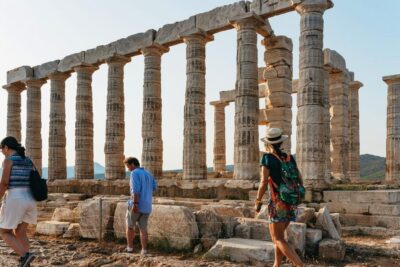
Cape Sounion & Poseidon Temple Sunset Half-Day Trip
Read our review →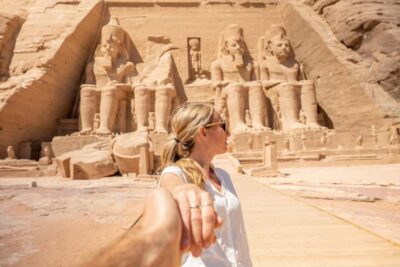
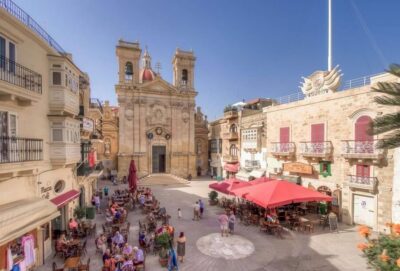
From Malta: Gozo Day Trip Including Ggantija Temples
Read our review →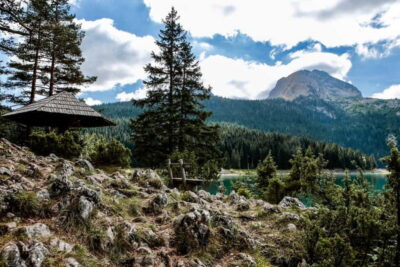
Montenegro: Durmitor, Tara & Ostrog Monastery Day Trip
Read our review →
Rhodes: Symi Island & Panormitis Monastery Day Trip by Boat
Read our review →
Small-Group Mekong Delta Day Trip: Boat Ride, Cottages & Pagoda
Read our review →
Tokyo Panoramic 1 Day: Meiji Shrine, Asakusa, Odaiba and SKYTREE®
Read our review →