
Review · PORTUGAL
Alcobaça: Discover the Monastery with a Local Guide Tour
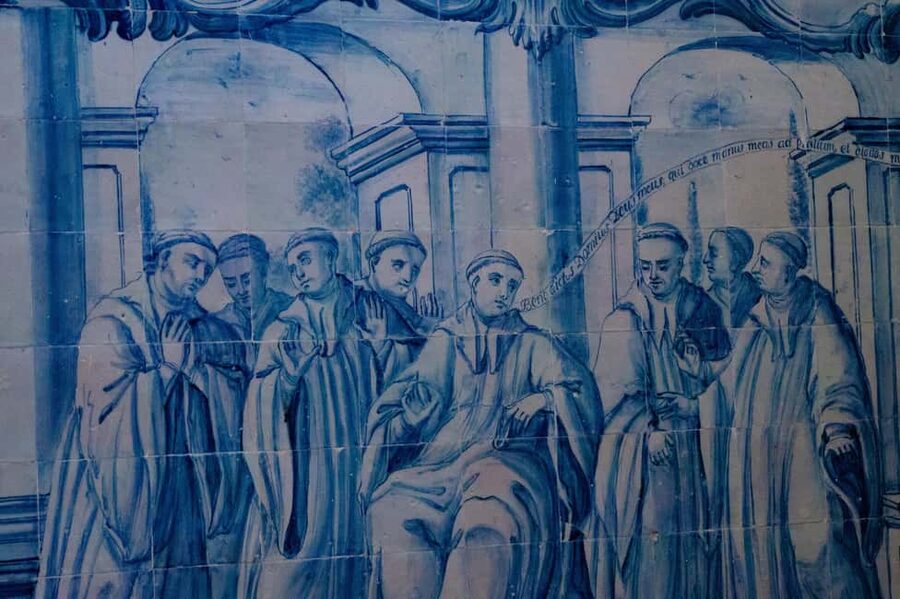
Gothic stone tells a very human story. This 90-minute tour makes the Monastery of Santa Maria de Alcobaça easier to understand, pairing its soaring church with the tragic story of Pedro and Inês. I especially like the focus on the Cistercian monks’ working life, including the kitchen, dormitory, library, and hydraulic systems. I also like that the guide explains how the monastery helped support the Portuguese Crown, rather than treating it as just another old church.
The main consideration is the pace. Ninety minutes is enough for a strong introduction, but not enough to examine every carving or pause at length in each room. You should also clarify mobility arrangements before booking: the activity is described as wheelchair accessible, yet it is also marked as unsuitable for wheelchair users and people with mobility impairments.
Key points to know before you book
- Pedro and Inês have the emotional center of the visit: Their carved tombs turn medieval politics into a tragic love story.
- The church is an early Gothic landmark: Its three-aisle design reflects Cistercian simplicity and discipline.
- The monks were farmers and engineers too: Their estate helped make the area one of Portugal’s most productive agricultural regions.
- Wilson and Ana received especially warm praise: Wilson mixed humor with solid explanations, while Ana was described as precise, friendly, and responsive.
- The tour covers more than the church: You also see the royal burial space, cloister, kitchen, refectory, Chapter Room, dormitory, and library.
- The price is $47 per person: That is fair if you want context and access to the lesser-seen monastic rooms, rather than a quick look at the façade.
Why Alcobaça Monastery deserves your time
The Monastery of Santa Maria de Alcobaça is not a small religious building you can understand in a quick glance. Its scale, royal connections, and monastic purpose are tied to the formation of Portugal itself.
The story begins in 1153, when King Afonso Henriques donated land to Bernard of Clairvaux. The gift fulfilled a promise connected with the Reconquest, and it brought the Cistercian Order into a major role in the development of the region.
That background gives the building a double identity. It was a place of prayer, but it was also connected to royal power, land management, farming, and political legitimacy. A good guide helps you see these threads at the same time.
I like this approach because the monastery becomes more than a beautiful shell. You begin to understand why a king would support such a large religious foundation, and why the monks mattered beyond their daily prayers.
A few more temple visits around Portugal worth a look
- Lisbon: Jerónimos Monastery Entrance Ticket
★ 4.1 · 14,164 reviews - Lisbon: Jerónimos Monastery E-Ticket and Audio Guide
★ 3.7 · 660 reviews - Lisbon: Belém Walking Tour with Jerónimos Monastery Ticket
★ 4.9 · 637 reviews
Meeting your guide at the church entrance
The meeting point is directly in front of the monastery church entrance. That is simple, but give yourself enough time to find the correct side of the complex and gather there before the start.
The guide leads the visit in English or Portuguese. A private group option is available, which may suit you if you want to ask many questions or prefer a more personal pace.
The strongest praise has gone to the guides’ ability to explain and respond. One guest specifically appreciated that the guide answered questions beyond the prepared narration. That matters at Alcobaça because the site invites questions about monarchy, religion, architecture, agriculture, and the complicated relationship between private devotion and public power.
Wilson received particularly warm comments for combining humor with clear explanations. Carolina from Portugal said she wished he had continued with her for the rest of her holiday, while Helena called his tour one of her best in Portugal. Ana was also praised for being friendly and precise. Since guides can vary, you should treat these names as useful indications of the team’s strengths, not a guarantee that one particular guide will lead your departure.
The façade and the first look inside
The tour begins with the grand exterior. The façade shows the scale of the institution before you even enter. It is a useful first stop because you can see how the monastery presents itself to the outside world: formal, powerful, and built to last.
Inside, the church changes the mood. The design is linked to the Cistercian preference for simplicity and spiritual focus. Rather than overwhelming you with decoration at every turn, the architecture gives space and height to the building.
The church has three aisles, an unusual design described as the only one of its kind from the 12th and 13th centuries. That detail is worth hearing in person because it helps you look at the interior with purpose. You are not just seeing tall walls and stone vaults. You are seeing how an order shaped architecture around its ideals.
I would pay close attention to the proportions here. The church’s impact comes from its scale and structure, not simply from ornamental detail. If you enjoy architecture, this part may be the clearest reason to book a guide instead of wandering alone.
The Cistercians, Bernard of Clairvaux, and a royal promise
The monastery’s religious story is closely connected to Bernard of Clairvaux and the Cistercian Order. The tour explains how Afonso Henriques supported the foundation after making a promise during the Reconquest.
This is where the visit moves from architectural sightseeing to Portuguese history. The monastery helped give spiritual support to the Crown, while royal support helped the monastery grow in land, influence, and resources.
The Cistercians are often associated with discipline, simplicity, and a vow of poverty. Yet the monks also managed a large estate. That apparent contradiction is one of the most interesting parts of the visit. The monks lived under strict religious rules, but their institution needed food, water, buildings, workers, and careful administration.
The tour explains how they used innovative farming methods to transform the surrounding area into one of Portugal’s most fertile agricultural zones. You do not need to be an agricultural historian to appreciate the point. The monastery was not isolated from daily life. It changed the way the region worked.
Same place, a different morning at the gates:
- Lisbon: Belem Walking Tour with Jeronimos Monastery Ticket
★ 4.7 · 490 reviews - Lisbon: Belem, Jeronimos Monastery, and Coach Museum Tour
★ 4.8 · 478 reviews - Belem and Jeronimos Monastery Guided Small Group Walking Tour
★ 5.0 · 410 reviews - “Porto: Fado Show with Guided Tour in a Historic Monastery”
★ 4.9 · 164 reviews
Pedro and Inês: the tombs that hold the room
The tombs of Pedro and Inês are likely to be the most memorable stop for many people. Their story brings romance, family conflict, royal authority, and revenge into the same room.
Pedro and Inês had a tragic relationship, and their elaborately carved tombs preserve that story in stone. The craftsmanship is worth examining closely, but the emotional force comes from knowing who they were and why their burial place matters.
The guide gives the tombs a human focus. You are not simply looking at medieval decoration. You are considering how a royal love story became part of Portugal’s cultural memory.
I recommend listening carefully here, then taking a quiet moment to look at the carvings. This is one of those stops where a short explanation changes what you see. Without context, the tombs are impressive. With context, they become the emotional heart of the monastery.
The Royal Pantheon and the power of burial
The Royal Pantheon adds another layer to the visit. Kings and queens were buried here, linking the monastery directly to the Portuguese monarchy.
Royal burials were never only private matters. They helped establish memory, succession, and legitimacy. By placing royal remains in an important religious foundation, the Crown reinforced its connection with the church and with the country’s wider story.
That makes the Pantheon especially valuable for anyone interested in how medieval rulers used architecture and sacred places. The monastery was a site of prayer, but it also helped present the Portuguese Crown as established and worthy of loyalty.
The room may feel more formal than the tombs of Pedro and Inês. That contrast works well. One stop focuses on a personal tragedy, while the other shows the public role of monarchy.
The Chapter Room and the monks’ working lives
The Chapter Room helps you picture the community behind the grand church. This was a place tied to the administration and discipline of monastic life.
The tour explains how the monks followed a vow of poverty while overseeing a large and productive estate. That is a useful corrective to the common image of monks as people who simply withdrew from the world.
The monastery needed systems. Land had to be managed, supplies organized, rules followed, and buildings maintained. The monks’ spiritual life depended on this practical structure.
You also have access to the monks’ dormitory and library. These spaces bring the visit down to a more personal scale. The church shows institutional power, while the dormitory and library suggest routine, study, sleep, and shared community life.
The information provided does not specify how long the group spends in each room, so you should expect the guide to balance the major highlights within the 90-minute schedule. If you want to inspect every architectural detail, you may wish for extra independent time afterward, if access and opening arrangements allow.
The Cloister of Silence
The Cloister of Silence offers a quieter pause in the route. Its purpose was tied to meditation and reflection, and the name alone captures the different rhythm of monastic life.
After the scale of the church and the royal burial spaces, the cloister gives you a more contained setting. Look at how the space frames movement and quiet. The monks passed through it as part of their daily routine, not as a sightseeing stop.
I find cloisters most useful when a guide explains their role instead of treating them as a pretty courtyard. Here, the point is not only the stonework. It is the way architecture controlled sound, movement, and attention.
The cloister may also be a welcome change if you prefer calmer spaces to grand interiors. Still, the tour is structured and time-limited, so do not expect a long period of silent contemplation.
The kitchen and medieval water engineering
The kitchen is one of the tour’s most practical stops. It shows that feeding a large religious community required planning and technical skill.
The visit includes an explanation of medieval hydraulic engineering. That detail gives the kitchen more importance than a simple room filled with old stone. Water management was essential for cooking, cleaning, and maintaining a large estate.
This is a strong part of the tour for anyone who enjoys seeing how historic buildings worked. Grand churches often receive all the attention, but kitchens, water systems, and storage spaces reveal how people actually lived.
The kitchen also helps connect the monastery to the surrounding farms. The monks’ estate produced food and resources, and the building needed systems to move and use them. You get a clearer picture of a working institution, not just a ceremonial one.
The Refectory and austere meals
The Refectory was where the monks gathered for meals, so it brings together the spiritual and physical sides of their routine.
The guide discusses their austere diets, which helps you imagine the discipline expected within the community. Eating was necessary, but it was also governed by religious practice and communal rules.
This stop may not have the drama of the royal tombs, but it adds useful detail. You see how religious ideals reached into ordinary acts such as eating, working, studying, and sleeping.
I appreciate this part because it keeps the tour grounded. The monastery was built for people who followed a schedule. Their lives were shaped by both prayer and practical chores.
How much does the $47 price offer?
At $47 per person, this is not the cheapest way to see Alcobaça. The value depends on what you want from your visit.
If you only want to see the church and the famous tombs, a self-guided visit may be enough for you. If you want to understand why the monastery was built, how the Cistercians shaped the region, and how the Crown used the site, the guide adds real value.
The price includes a 1.5-hour guided visit and access to the monks’ dormitory, kitchen, and library. Those rooms are important because they take you beyond the main church. You are paying for explanation, structure, and access to several parts of monastic life, not simply for an escort through the entrance.
The high rating from seven published bookings is encouraging, and the praise is consistent in one area: the guides explain clearly, answer questions, and keep the visit interesting. That is particularly important at a site with so many dates, names, and religious terms.
For a couple or small private group, the cost may feel worthwhile. For a budget-minded solo visitor focused mainly on architecture, compare the price with the monastery’s regular admission options before booking.
Practical details, clothing, and mobility
The tour lasts 90 minutes and returns to the monastery entrance. There is no transportation component, so you meet at the church and remain at the site throughout the experience.
Dress modestly because the monastery is a religious site. Food and drinks are not allowed inside.
The activity is listed as wheelchair accessible, but the same information also says it is not suitable for wheelchair users or people with mobility impairments. That conflict needs attention. Contact Open Roads Portugal before paying and ask exactly which rooms are reachable, how many steps are involved, and whether an alternative route is available.
Children under six are not suitable for this activity. Older children may enjoy the Pedro and Inês story, but the religious and architectural material is likely to appeal most to adults and older students.
Free cancellation is available up to 24 hours before the tour for a full refund. You can also reserve now and pay later, which helps if your Portugal schedule is still changing.
Who will enjoy this Alcobaça tour most?
I would recommend this experience to you if you enjoy:
- Medieval architecture and early Gothic design
- Royal tombs and Portuguese political history
- Religious orders and daily monastic life
- Stories that connect personal drama with national history
- Asking questions and learning from a live guide
- Seeing working spaces such as kitchens, dormitories, and libraries
You may prefer a self-guided visit if you want to linger at your own pace, skip historical explanation, or spend a long time photographing details. The 90-minute format gives you a strong overview, but it does not allow unlimited time in every room.
The tour is also a good fit if Alcobaça is one stop among several on your Portugal route. You get a clear framework without giving the entire day to the monastery.
Should you book it?
Book this tour if you want Alcobaça to make sense, not just look impressive. The best parts are the explanation of Cistercian life, the connection between the monastery and the Portuguese Crown, and the stories behind the tombs of Pedro and Inês.
At $47, it is a reasonable choice for a guided introduction that includes the church, royal spaces, cloister, kitchen, refectory, dormitory, and library. I would be more cautious if you need step-free access, since the mobility information is contradictory. Confirm that point directly before booking.
If you value clear storytelling, the available guide feedback is encouraging. Wilson’s humor and Ana’s careful explanations suggest a warm, informed style. For most history-minded visitors, this is a worthwhile way to meet one of Portugal’s great monastic buildings.
FAQ
Where does the Alcobaça Monastery tour begin?
The guide waits in front of the entrance to the monastery church.
How long does the guided visit last?
The tour lasts 1.5 hours, or 90 minutes.
What languages are available?
The tour is offered in English and Portuguese.
What parts of the monastery are included?
The visit includes the Monastery of Santa Maria de Alcobaça, with access to the monks’ dormitory, kitchen, and library. The route also covers the church, Royal Pantheon, Chapter Room, Cloister of Silence, and Refectory.
Does the tour include the tombs of Pedro and Inês?
Yes. The tour explains their tragic love story and visits their intricately carved tombs.
Is this a private tour?
A private group option is available. The supplied information does not specify that every departure is private.
How much does the tour cost?
The listed price is $47 per person.
Can children join the tour?
Children under six are not suitable for this activity.
Can I cancel for a full refund?
Yes. You can cancel up to 24 hours in advance for a full refund. You can also reserve now and pay later.
Just added around Portugal
- Belém: Jeronimos Monastery, Tickets and Guided tour★ 4.9 · 30 reviews
- Lisbon: Tour of Belem and Jerónimos Monastery★ 3.2 · 5 reviews
- Lisbon: Skip-the-line Jerónimos Monastery Tour with Tickets★ 5.0 · 4 reviews
- Lisbon: Belém Private Walking Tour & Jerónimos Monastery★ 4.5 · 83 reviews
- From Lisbon: Évora, Chapel of Bones, & Roman Temple Tour★ 5.0 · 8 reviews
- Lisbon: Belem Tour with Pastéis at Jerónimos Monastery★ 4.7 · 96 reviews
- From Lisbon: Fátima Sanctuary and Batalha Monastery (UNESCO)★ 5.0 · 5 reviews
- Between Life & Death: Roman Temple, Cathedral & Bone Chapel★ 4.9 · 6 reviews
Portugal Temple Tours, compared.
Belém Walking Tour with Jerónimos Monastery Ticket
Read our review →Belem Walking Tour with Jeronimos Monastery Ticket
Read our review →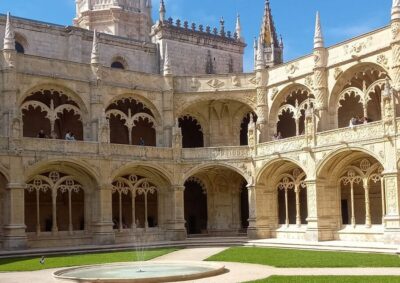
Belem, Jeronimos Monastery, and Coach Museum Tour
Read our review →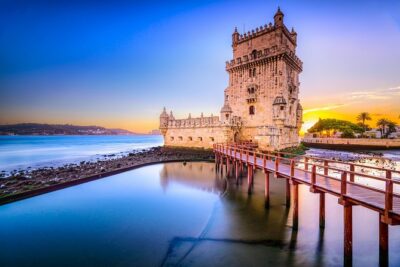
Belem and Jeronimos Monastery Guided Small Group Walking Tour
Read our review →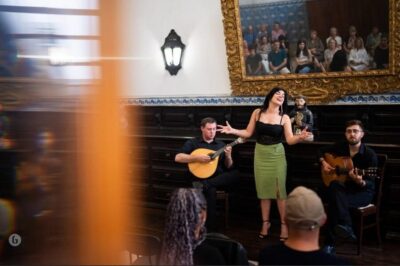
“Porto: Fado Show with Guided Tour in a Historic Monastery”
Read our review →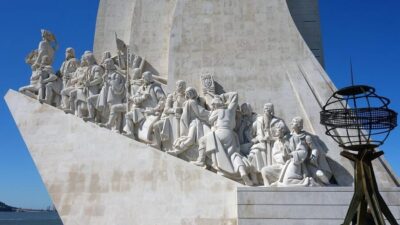
Belem Walking Tour with Jeronimos Monastery Entry
Read our review →Browse the lists this tour appears in