
Review · SPAIN
From Girona: Cadaqués, St Pere de Rodes Monastery
A dramatic Costa Brava day awaits. This nine-hour trip links the rocky Cap de Creus Natural Park, the seaside village of Cadaqués, and Sant Pere de Rodes, one of Catalonia’s finest Romanesque monasteries. I like the small group of up to six people, which should make the 1.5-hour van ride from Girona more relaxed, and I like the way the day mixes nature, art, village life, and medieval architecture.
I also like that the guides can shape the day around the group. Claudia received especially warm praise for her English, driving, and ability to tailor the outing for three guests, while Kim and Pau were singled out for bringing the area’s history to life. The main drawback is the pace: you cover a lot of ground in nine hours, and summer access to part of Cap de Creus can close because of fire risk.
Key details at a glance
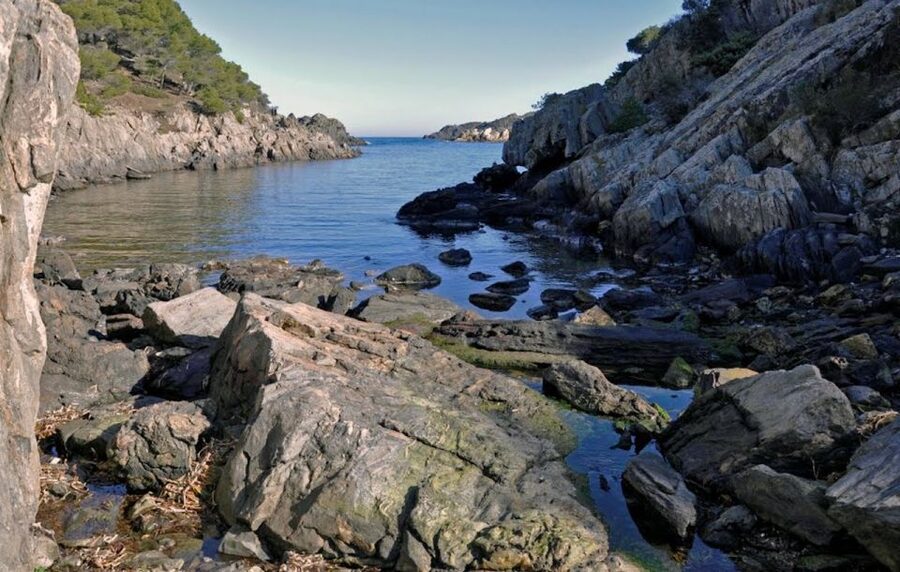
- Cap de Creus views: Walk among the park’s rocky formations and vegetation, with wide views over the Gulf of Roses.
- Cadaqués for 2.5 hours: Wander its stone-paved streets, see the Church of Santa Maria, and enjoy free time by the water.
- Port Lligat photo stop: Pause in the place closely linked with Salvador Dalí, who lived in the area for many years.
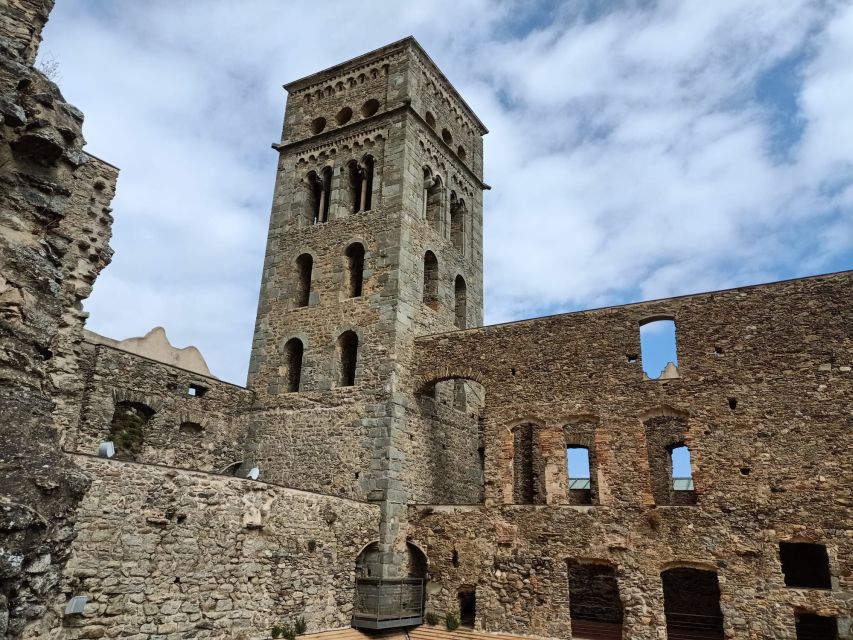
- Sant Pere de Rodes: Visit a remarkable Romanesque monastery high in the Rodes mountains, with views toward Port de la Selva.
- Small-group transport: Travel in an air-conditioned vehicle with no more than six participants and a guide in English or Spanish.
- Price and extras: The $175 cost includes transport, guiding, and bottled water, but not lunch, drinks, or the monastery ticket, which costs €6.
Why this Costa Brava day works so well
Girona is an excellent base for exploring northern Catalonia, but reaching Cadaqués and Cap de Creus without a car takes planning. This tour handles the long drives and mountain roads for you, leaving your attention free for the views and the stories.
The route also has a pleasing variety. Cap de Creus gives you open sea and bare rock. Cadaqués offers a compact town for walking and lunch. Sant Pere de Rodes changes the mood again, taking you into a quieter mountain setting filled with medieval stonework.
I would not book this simply as a beach outing. Cadaqués is coastal, but the day is really about the meeting point of sea, mountains, art, and religious architecture. You get a broad look at this corner of Catalonia rather than hours in one place.
The strongest feature is the guide. A good guide matters here because the scenery can be enjoyed on your own, while the legends surrounding the monastery and the connection between Dalí and the Cap de Creus area add meaning. The strongest feedback names Claudia, Kim, and Pau, with particular praise for clear English, historical anecdotes, and careful driving.
A few more temple visits around Spain worth a look
- Montserrat Monastery Half Day Experience from Barcelona
★ 5.0 · 6,014 reviews - Montserrat Monastery Small Group or Private Tour Hotel pick-up
★ 5.0 · 5,144 reviews - Escorial Monastery and the Valley of the Fallen Tour from Madrid
★ 5.0 · 2,494 reviews
Leaving Girona for Cap de Creus
The meeting point is Plaça de Sant Feliu beside the River Caffe in Girona. From there, you travel for about 1.5 hours in an air-conditioned van.
That first ride is a real part of the day, not a minor transfer. You are heading from Girona toward the northeastern tip of the Iberian Peninsula, near the French border. A small vehicle helps because the group stays limited to six people, and the ride should feel less cumbersome than a large coach.
Bring water, sunscreen, a hat, and comfortable shoes. Bottled water is included, but lunch and other drinks are not. Since the itinerary includes a half-hour walk at Cap de Creus and walking through Cadaqués on uneven stone streets, sensible footwear matters more than stylish footwear.
The tour is not suitable for people with mobility impairments. That is important to take seriously, since the day includes outdoor walking, streets paved with pointed stones, and a monastery visit in a mountain setting.
Cap de Creus: bare rock and open sea
The first stop is Cap de Creus Natural Park, where you have about 30 minutes for a guided visit and walk. The park sits at the northeastern end of the peninsula and is known for its unusual rocky formations and hardy vegetation.
The main reward is the view. From the cliffs, you can look over the Gulf of Roses and see how the coast breaks into rugged headlands and coves. The guide can point out features of the park, while you get time to walk around, take photographs, and enjoy the open air.
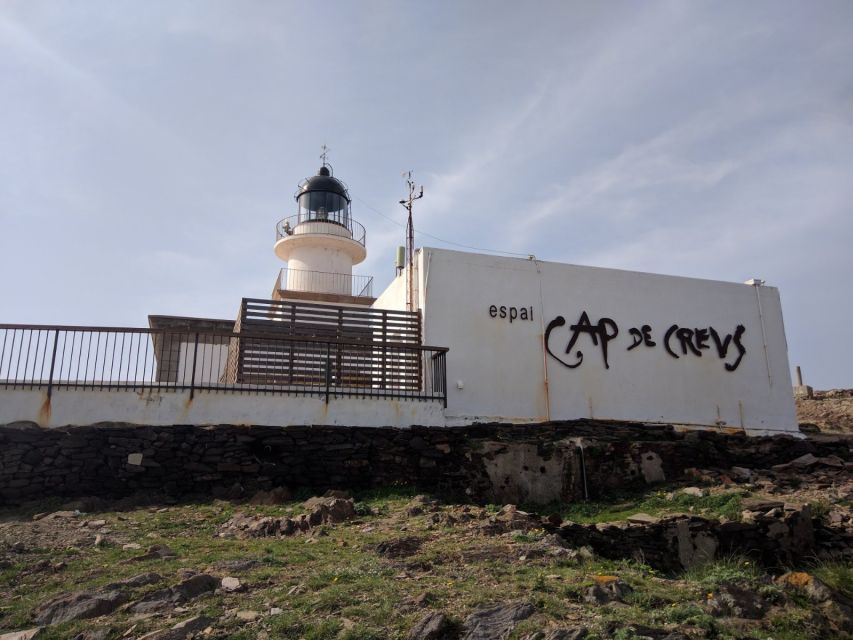
The lighthouse is part of the planned visit. Even with a short stop, the setting gives you a strong sense of why this area has attracted artists and visitors. It is not a polished resort coast. The rock and sea dominate, and the terrain has a stark, windswept character.
There is one important seasonal limitation. Between June and September, this part of the natural park may be closed because of high fire risk. If access is restricted during your visit, the day’s route may not include the lighthouse area as described. Check conditions before booking if Cap de Creus is your main reason for choosing this trip.
The 30-minute walking period is enough for a taste, not an extended hike. You should expect a scenic introduction rather than a long trail excursion. That makes the stop suitable for people who want dramatic views without committing to a full day of hiking.
Port Lligat and the Dalí connection
After Cap de Creus, the van makes a short trip of about 10 minutes to Port Lligat. This is a photo stop lasting around 10 minutes.
Port Lligat is closely associated with Salvador Dalí, who lived in the area for many years. Cadaqués and Port Lligat were among the places most often reproduced in his paintings, so this brief stop adds an artistic layer to the coastal scenery.
Do not expect a full museum visit here. The time is designed for photographs and a quick look at the setting. That is useful if you want to connect the physical coast with Dalí’s work, but it may feel too short if you hoped to explore the artist’s life in detail.
Still, the stop is well placed. It breaks up the drive between the natural park and Cadaqués, and it gives you a direct look at the area that inspired so much of Dalí’s art.
Same place, a different morning at the gates:
- Montserrat Museum and Monastery Entry Ticket
★ 4.5 · 1,740 reviews - Montserrat Small Group: Monastery, Black Madonna & Natural Park
★ 5.0 · 1,690 reviews - From Madrid: Escorial Monastery and the Valley of the Fallen
★ 4.7 · 1,434 reviews - Madrid: Flamenco Show at Tablao Sala Temple with Drink
★ 4.8 · 1,206 reviews
Two and a half hours in Cadaqués
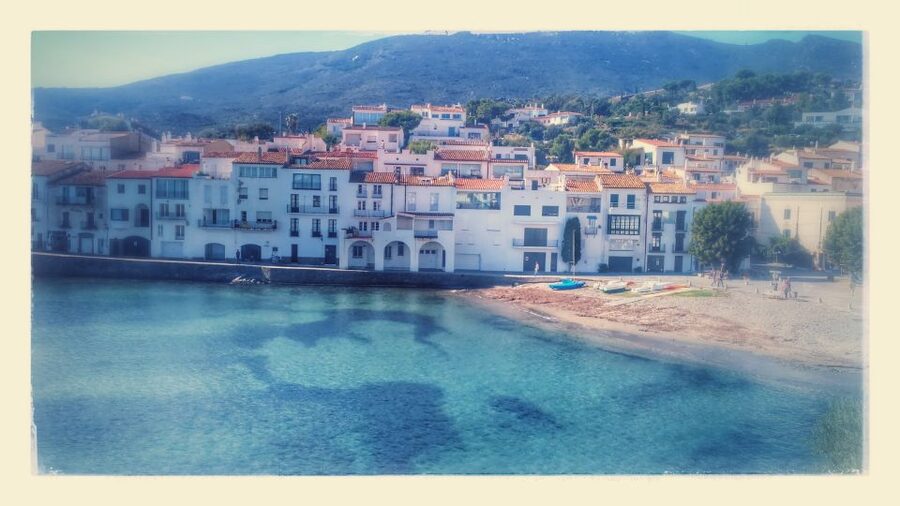
Cadaqués is the heart of the day for many people. You get roughly 2.5 hours for a guided visit and free time, which is enough to walk the center, see important sights, and stop for lunch.
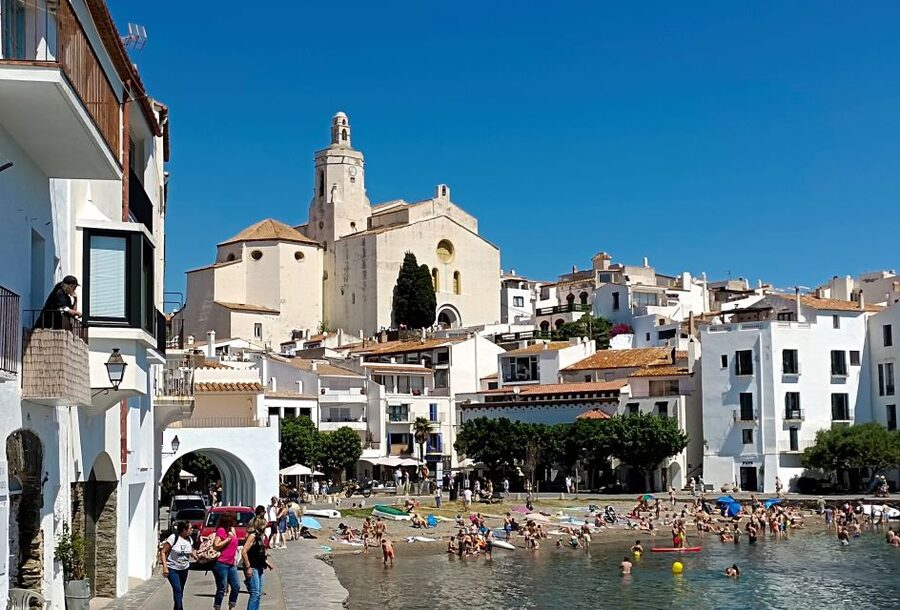
The town is known for its white buildings, coastal position, and narrow streets paved with pointed stones. The streets give Cadaqués a distinctive feel, though they also make comfortable shoes essential. You will want time to wander without rushing, since the pleasure here comes from small details and changing views rather than a long checklist of attractions.
The Church of Santa Maria sits in the highest part of the village. Its position makes it an obvious point to visit while walking through town, and the climb gives you a different view over the buildings and coast. The church is included as part of the guided exploration, but the exact time spent there can depend on the group and the guide.
The free time is useful because you can set your own rhythm. You might prefer a slow lunch, a walk along the beaches, or more time among the lanes. Food is not included, so budget separately for lunch and drinks. That arrangement gives you choice, but it also means you should keep an eye on the clock.
Cadaqués is often described as quaint, and here that word fits better than it does in many coastal towns. The setting feels tied to the sea and to its older stone streets rather than to a large resort atmosphere. At the same time, its beauty is the reason it draws visitors, so you should not expect complete solitude.
The 2.5-hour stop is a sensible compromise. You get enough time to see the town without turning the day into a single-destination visit. If you want a long meal, beach time, and an extensive walk, you may find the schedule tight.
Sant Pere de Rodes and the Romanesque past
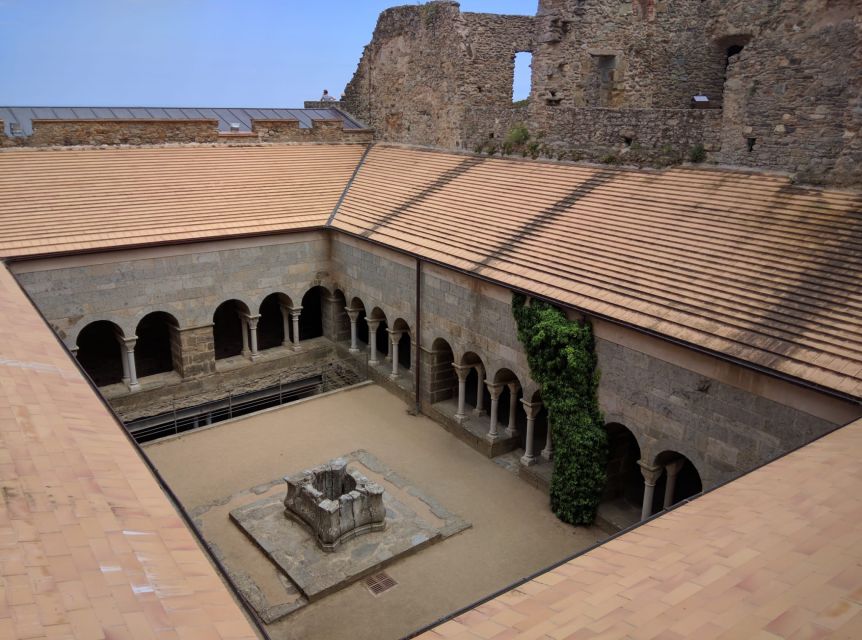
After Cadaqués, the drive to Sant Pere de Rodes takes about 35 minutes. The monastery sits at 520 meters in the Verdera mountains, within the Rodes mountain chain.
The location is a major part of the appeal. From here, you have a commanding view toward the Bay of Port de la Selva and the northern part of Cap de Creus. After the sea-level streets of Cadaqués, the monastery feels remote and elevated in the literal sense, with the mountains and coast spread below.
The monastery’s origins are linked with legends as well as archaeological and historical questions. That uncertainty gives the site a sense of mystery, but the building itself is the main reason to visit. Its church is considered one of the leading examples of Romanesque architecture in Catalonia because of its unusual design.
You receive a guided visit lasting about one hour. The guide’s storytelling can make a real difference here. Pau was praised for using historical anecdotes to bring both the monastery and the park to life, while the attention given to Claudia and Kim suggests that the operator has several strong English-speaking guides.
The €6 entrance ticket is not included in the tour price. That is a small extra compared with the overall cost, but you should know about it before setting out. The included guided visit is valuable because the monastery is more than a photogenic ruin. Its setting, legends, and Romanesque church reward some explanation.
An hour is enough for a focused visit, though not for an in-depth study of every part of the complex. If Romanesque architecture is your main interest, you may wish the stop were longer. For a day that also includes Cap de Creus and Cadaqués, the timing is reasonable.
Is $175 a fair price?
At $175 per person, this is not a cheap sightseeing outing. It is also not simply a transfer between Girona and Cadaqués.
The price includes a nine-hour day, an air-conditioned vehicle, an English or Spanish-speaking guide, a guided monastery visit, and bottled water. You also get a small group limited to six participants, which is one of the better reasons to choose this option over a large coach tour.
You still pay for lunch, additional drinks, and the €6 monastery admission. Those extras are easy to plan for, but they raise the final cost a little.
I see the value in the price if you do not have a car and want to combine three difficult-to-link stops in one day. Driving yourself would give you more control over timing, but it would also leave you responsible for navigation, parking, and the long return trip. The tour is especially useful if you value commentary and want someone else to handle the road.
The value is weaker if you want a slow day in Cadaqués. The schedule is designed for coverage, not lingering. You pay for access to a wide stretch of northern Costa Brava, with the tradeoff of spending several hours in the van.
Who should book this day?
I would recommend it to a first-time visitor based in Girona who wants to see beyond the city. It suits you if you enjoy scenic stops, short walks, coastal towns, and historic buildings in equal measure.
It is also a good choice for couples, friends, or small groups who prefer a personal guide. With only six places, the day should offer more room for questions and adjustments than a full-size bus tour. Claudia’s ability to tailor the outing for a group of three is a good example of how that format can help.
The trip is less suitable if you have mobility limitations, dislike long drives, or want a full hiking day. It is also worth reconsidering if you visit between June and September mainly for the lighthouse and Cap de Creus walk, since fire restrictions can close that part of the park.
English and Spanish are the available tour languages. Several guides have received praise for strong English and clear historical explanations, so English-speaking guests should feel well supported.
Practical planning is simple. Meet at Plaça de Sant Feliu beside the River Caffe, wear comfortable shoes, and bring sun protection. Free cancellation is available up to 24 hours before departure, and you can reserve without paying immediately if you want to keep plans flexible.
Should you book the Cadaqués and monastery tour?
Book it if you want one efficient day covering the wild coast of Cap de Creus, the streets of Cadaqués, and one of Catalonia’s finest Romanesque sites. The best reasons are the small van, the scenic variety, and the quality of the guiding associated with Claudia, Kim, and Pau.
Skip it if you need a slow, unstructured beach day or if outdoor walking is difficult. For everyone else, $175 is a reasonable price for reaching several hard-to-combine places from Girona, provided you are comfortable with a full day, several hours on the road, and a few extra costs for food and the monastery ticket.
FAQ
Where does the tour begin and end?
The tour begins and returns to Plaça de Sant Feliu beside the River Caffe in Girona city.
How long does the experience last?
The full tour lasts nine hours.
What languages are available?
The tour is offered in English or Spanish.
How large is the group?
The group is limited to six participants.
Is transportation included?
Yes. Transport is provided in an air-conditioned vehicle.
Is lunch included?
No. Food and additional drinks are not included, so you should budget for lunch in Cadaqués.
Is the Sant Pere de Rodes entrance ticket included?
No. The monastery ticket costs €6 per person and is paid separately.
Is Cap de Creus open all year during the tour?
The lighthouse and part of the Cap de Creus visit may be closed from June through September because of high fire risk.
Just added around Spain
- Montserrat Monastery Horse Riding & Walk – Small Group (Max 8)★ 5.0 · 45 reviews
- Montserrat Nature Walk, Monastery and Museum from Barcelona★ 5.0 · 58 reviews
- Montserrat & beyond private from Barcelona with different options★ 5.0 · 32 reviews
- Transfer to Montserrat Monastery from Barcelona★ 4.5 · 94 reviews
- Private Montserrat & Hot-Air Balloon Ride with Monastery visit★ 4.5 · 5 reviews
- Montserrat Tour with Cogwheel Train, Monastery & Black Madonna★ 4.0 · 10 reviews
- Montserrat Monastery and Mountain Half Day Hiking from Barcelona★ 4.5 · 6 reviews
- Montserrat Horseback Riding & Monastery – Small Group (Max 8)★ 5.0 · 45 reviews
Spain Temple Tours, compared.
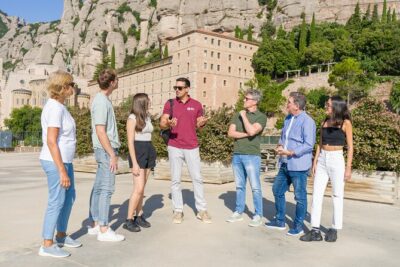
Montserrat Monastery Half Day Experience from Barcelona
Read our review →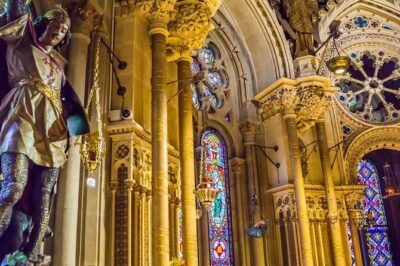
Montserrat Monastery Small Group or Private Tour Hotel pick-up
Read our review →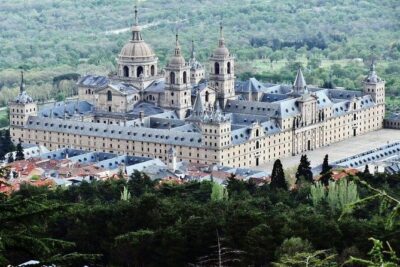
Escorial Monastery and the Valley of the Fallen Tour from Madrid
Read our review →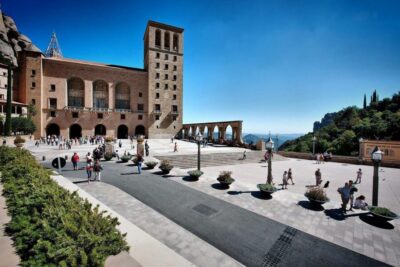
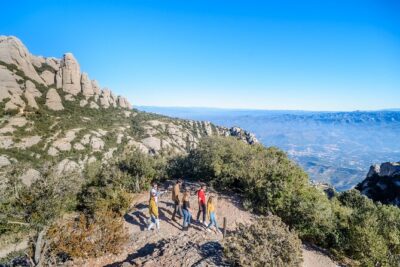
Montserrat Small Group: Monastery, Black Madonna & Natural Park
Read our review →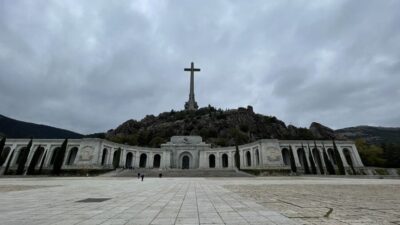
Escorial Monastery and the Valley of the Fallen
Read our review →
Flamenco Show at Tablao Sala Temple with Drink
Read our review →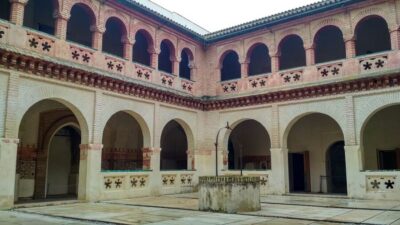
From Seville: Italica Roman City & Medieval Monastery Tour
Read our review →Browse the lists this tour appears in