
Review · ACROPOLIS & ANCIENT GREEK
Zeus Temple Acropolis & Acropolis Museum Private Guided Tour
Ancient Athens rewards a well-planned morning. This four-hour private tour links the Acropolis, the Temple of Olympian Zeus, and the Acropolis Museum with an English-speaking licensed guide, giving you a clear route through the city’s most important ancient sights. I especially like the private format, since your guide can answer questions and adjust the conversation to your interests. I also like entering the Acropolis from the south slope, where you see the Sanctuary and Theatre of Dionysus before reaching the famous hilltop monuments.
The main drawback is the pace. Three major sights in four hours means you will see a great deal, but you will not have unlimited time at each stop. The extra entrance cost also matters: the tour is $269 per person, with entrance fees of about €43 paid separately. Still, if your time in Athens is short and you want context rather than a quick look at old stones, this is a strong option.
Key points to know before booking
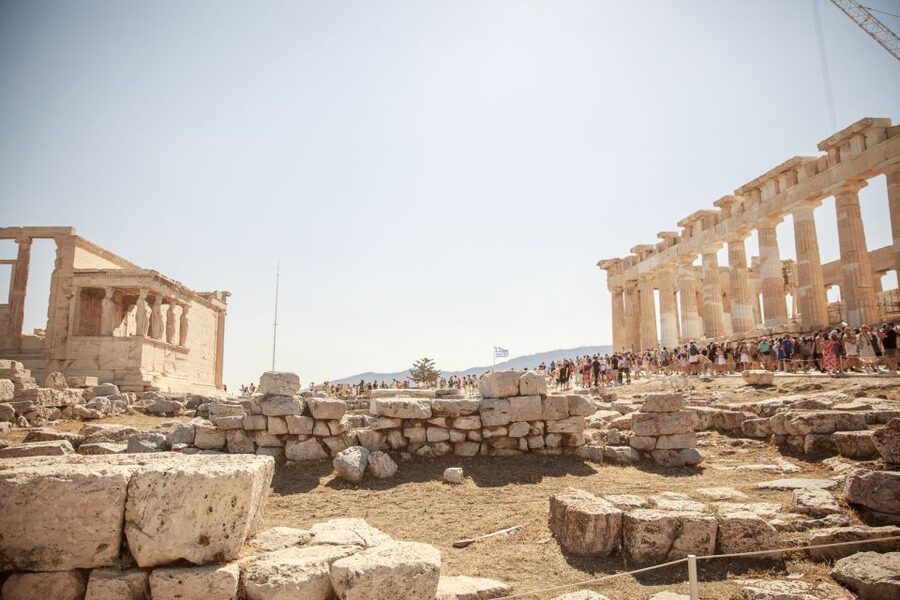
- South-slope Acropolis entrance: The route begins near the Sanctuary and Theatre of Dionysus, with fine views toward the Odeon of Herodes Atticus and nearby hills.
- Three major sights in four hours: You visit the Acropolis, Temple of Olympian Zeus, and Acropolis Museum in one private outing.
- Private English-speaking guide: Guides such as Magda, Harula, and Ari have been praised for clear explanations, patience, and engaging discussions.
- Museum access matters: The Acropolis Museum displays about 4,000 artifacts and includes excavations visible beneath glass floors.
- Tickets cost extra: Entrance fees are about €43 per person and must be arranged separately using your booking reference.
- Good shoes are essential: Expect uneven ancient surfaces, sun exposure, stairs, and airport-style security checks.
Meeting at Dionysiou Areopagitou Street
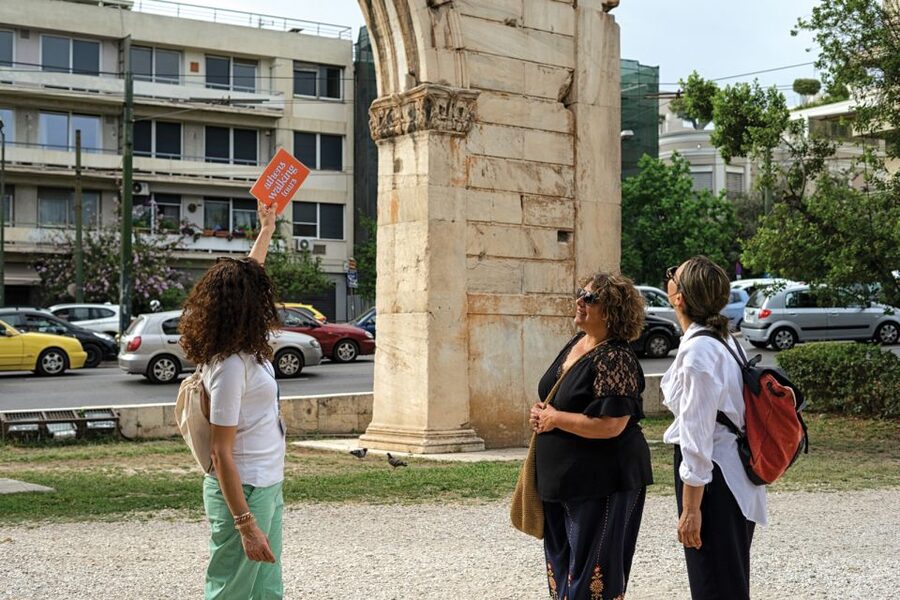
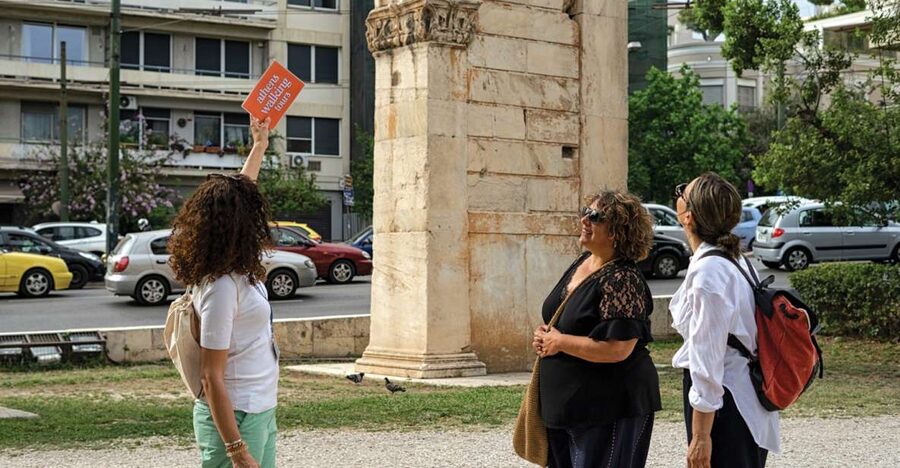
You meet your guide at the Fresko Yogurt Bar, 3 Dionysiou Areopagitou Street. This is at the beginning of the pedestrian walkway running from Hadrian’s Arch toward the Acropolis. Look for the orange sign held by your guide.
This meeting point is useful because you begin in a pedestrian area rather than beside heavy traffic. It also puts you close to several ancient landmarks, so the setting starts to feel historic before the tour officially gets moving. You will want to arrive early. Acropolis entry is timed, and late arrivals cannot be accommodated or refunded.
The tour does not include hotel pick-up or drop-off. That keeps the arrangement simple, but you need to plan your own way to the meeting point. If you are staying in central Athens, allow extra time for walking and finding the exact café.
More Acropolis and Ancient Greek Temple Tours in Athens:
- Athens: Cape Sounion & Poseidon Temple Sunset Half-Day Trip
★ 4.8 · 8,241 reviews - Athens: Cape Sounio & Poseidon Temple Trip with Audio Guide
★ 4.4 · 4,521 reviews - Cape Sounion and Temple of Poseidon Half-Day Small-Group Tour from Athens
★ 4.5 · 3,205 reviews
The south slope and Theatre of Dionysus
The Acropolis portion begins from the south slope. This is one of the best choices in the itinerary because it lets you approach the hill through some of Athens’ most meaningful ancient spaces rather than heading straight for the Parthenon.
You first encounter the Sanctuary of Dionysus and the Theatre of Dionysus, built in the fifth century BC. The theatre is closely tied to the beginnings of Greek drama, and a guide can make the worn seating and open stage easier to understand. Without context, it is easy to see only a semicircle of stone. With explanation, you begin to picture the public performances and religious celebrations that once took place here.
The route also gives you good photo opportunities. You can look toward the Philopappos Hill monument, the Odeon of Herodes Atticus, and the Observatory. The views are part of the experience, not just a pause between monuments. Athens spreads out below the Acropolis, and your guide points out useful angles for photographs.
Bring water, a hat, and clothing suited to the weather. The tour operates in rain or shine, and much of the Acropolis visit is outdoors. Comfortable shoes are more important than stylish ones. Ancient paving can be uneven, and the route is not suitable for wheelchairs, strollers, or people with mobility impairments.
Reaching the Acropolis monuments
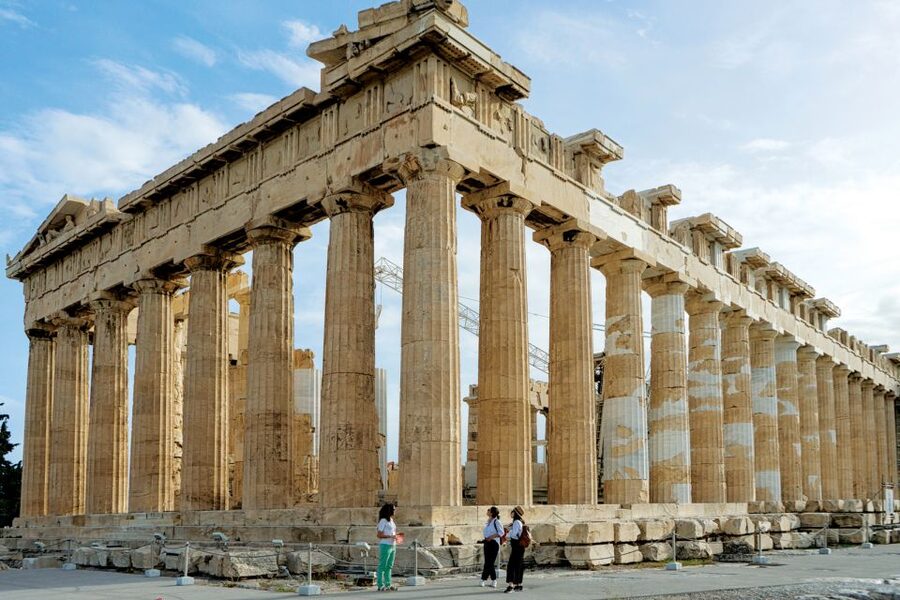
As you climb, the guide explains the major buildings rather than leaving you to identify them from a distance. The main stops include the Parthenon, Erechtheion, Propylaia, Temple of Athena Nike, and Agrippa Monument.
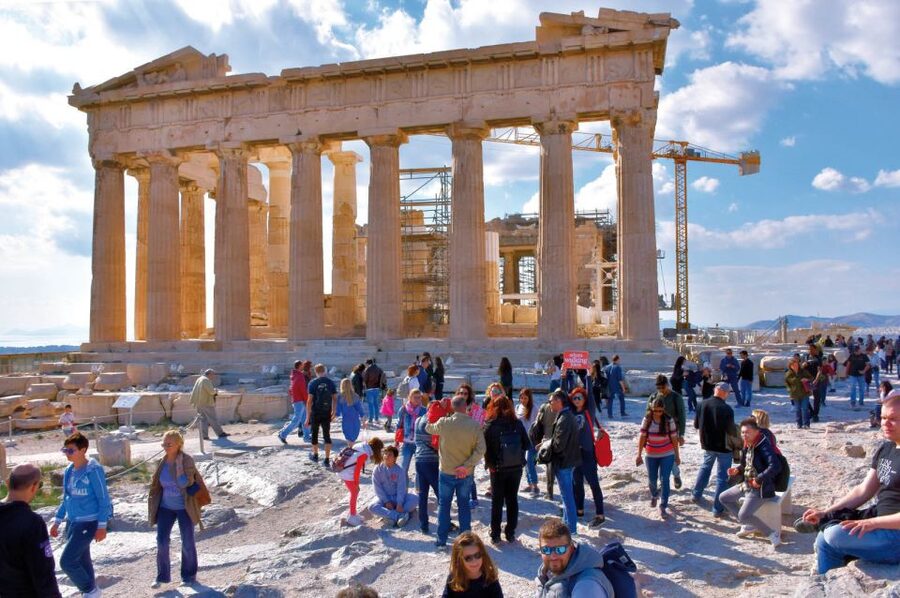
The Parthenon naturally receives the most attention. Its scale and position make it the image most people associate with Athens, but a guide helps you see more than its familiar outline. You can ask about its role, its design, and the changes it has experienced over time. The value of a private guide is strongest here, since you can stop when a question occurs instead of following a fixed group conversation.
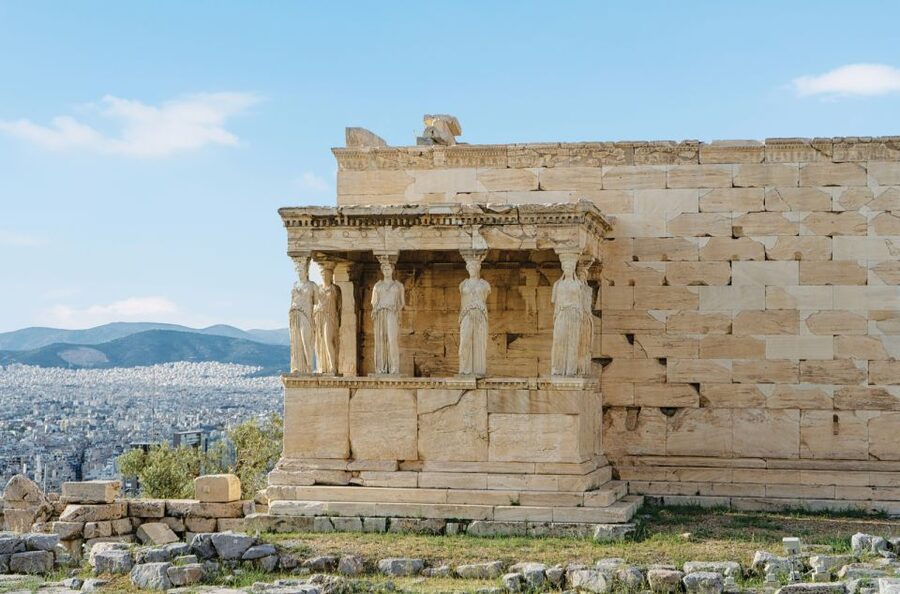
The Erechtheion offers a different kind of appeal. Its unusual plan and famous Caryatid figures give it a character distinct from the Parthenon. The Propylaia provides the grand entrance, while the Temple of Athena Nike is smaller but important to the overall approach. The Agrippa Monument is another reminder that the Acropolis was shaped by different periods, not just the fifth century BC.
Your guide also points out the Ancient Agora, Lycabettus Hill, and other city views. These explanations help you connect the hilltop monuments with the wider city. You are not simply looking at ruins in isolation. You are seeing how the Acropolis relates to the older civic center and to modern Athens below.
Security can affect the timing. All visitors pass through airport-style checks, and during the busiest months waits may reach more than 30 minutes. The advertised skip-the-line feature helps with the ticket process, but it does not mean you bypass every security queue. Keep that in mind when planning the rest of your day.
The Temple of Olympian Zeus from a different angle
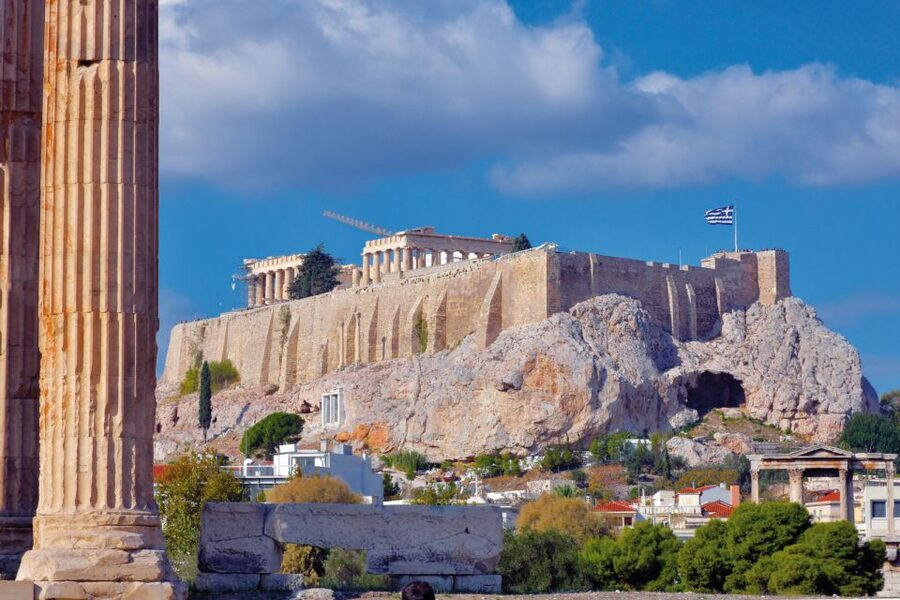
The Temple of Olympian Zeus, often called Zeus’s Temple, is a short but worthwhile part of the route. It was the largest temple of antiquity, and the remaining columns make its scale easy to grasp. The site is more open than the Acropolis, so you can step back and take in the size of the structure.
I like this stop because it changes your view of the Acropolis. From the temple grounds, you get a distinctive angle toward the hill, and the contrast between the massive columns and the Parthenon above makes for strong photographs. The stop also adds Roman-era context to a tour that otherwise focuses heavily on classical Athens.
The tradeoff is time. A four-hour itinerary has to divide attention among three major attractions, and the Zeus Temple receives less time than the Acropolis and museum. One family who used the tour found the overall education worthwhile but suggested choosing an Acropolis and museum-only option if time was very limited. That is sensible advice. If the Temple of Olympian Zeus is a personal priority, this tour includes it. If you want maximum time at the Acropolis and museum, you may prefer a shorter route with fewer stops.
More Museum Visits in Athens:
- Delphi Full Day Private Tour: Temple of Apollo, Museum, Navel of Earth & Oracle
★ 5.0 · 11 reviews - Montserrat Museum and Monastery Entry Ticket
★ 4.5 · 1,740 reviews - Lisbon: Belem, Jeronimos Monastery, and Coach Museum Tour
★ 4.8 · 478 reviews - From Sofia: Rila Monastery and Optional Museum, Cave or Spa
★ 4.6 · 270 reviews
Inside the Acropolis Museum
The Acropolis Museum gives you a needed change of pace after the outdoor climb. Its displays contain about 4,000 artifacts, and the building itself is part of the experience. Glass floors reveal excavations beneath the museum, allowing you to look down into the remains rather than treating the building as a sealed box.
Inside, the Acropolis sculptures and architectural pieces receive careful presentation. Natural light, clear access, panoramic views, and a thoughtful exhibition layout make it easier to study details that can be hard to see on the hill. The museum also helps you understand what belongs to the Acropolis and what has been moved indoors for protection and closer study.
This is where a guide can add real value. The displays cover a large amount of material, and four hours is not long enough for you to read every label. A good guide can focus your attention on the pieces most connected to the monuments you have just seen. You can also ask direct questions about mythology, construction, later changes, and the role of Athens in the ancient world.
The guides named in the feedback received strong praise for their style. Magda was described as patient, enthusiastic, and able to make the sites feel connected to the past. Harula led a family through discussions of mythology, Roman influence, the rise of Athens as Greece’s capital, and the Bavarian monarchy. Ari, an archaeologist, was praised for keeping the visit interesting and sharing detailed information. Guide quality can vary on any scheduled experience, but these examples show the kind of personal interpretation the tour is designed to provide.
What $269 plus entrance fees really buys you
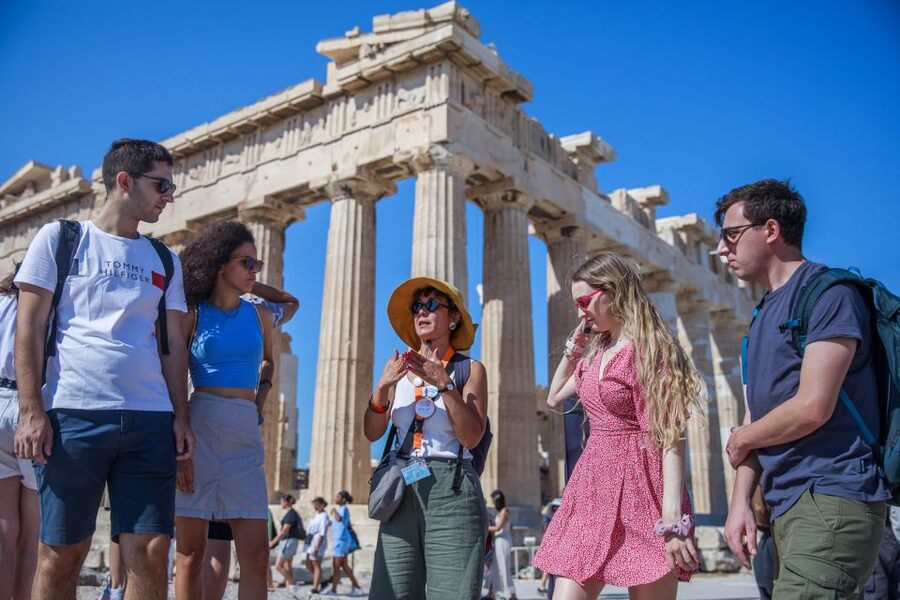
At $269 per person, this is not a budget sightseeing walk. Entrance fees of about €43 are separate, so you need to calculate the full cost before booking. Food, drinks, transport to the meeting point, and hotel transfers are also outside the price.
The value depends on your group and your priorities. For a private group, the price buys four hours with a licensed guide rather than a large fixed party. You can ask questions, spend more time on the Parthenon if that matters most to you, or focus on mythology, archaeology, architecture, or modern Greek history. That level of conversation is hard to get on a basic group tour.
The value is also stronger if you have only one day in Athens. The tour reduces the need to organize separate visits to the Acropolis, museum, and Zeus Temple. You still need to arrange the entry tickets correctly, but the route itself is planned.
For a couple or family that prefers independence, the price may feel high. You could visit the same places on your own for less, especially if you are comfortable researching the monuments in advance. The private guide is what justifies the cost, so book this only if personal explanation and efficient planning matter to you.
The four-hour pace and practical limits

The itinerary is compact. You move between outdoor ruins, a major archaeological site, and an indoor museum in one session. That gives you a useful first understanding of Athens, but it is not designed for lingering.
You should bring water and snacks because food and drinks are not included. Large bags and luggage are not allowed, so leave bulky items elsewhere. Sun protection is important, especially during warmer months when the exposed hilltop can feel tiring.
The experience is available in English and is intended for a private group. It is not suitable for wheelchair users, people with mobility impairments, or strollers. You should also expect the tour to continue in poor weather, since it runs rain or shine.
Cancellation is flexible only up to three days in advance for a full refund. That is helpful if your plans are uncertain, but once you are inside the three-day window, the strict Acropolis entry rules become more important.
Buying the tickets correctly
You must purchase the Acropolis entrance tickets separately. Use the supplied ticket link, select the right category, such as adult or student, and enter the booking reference beginning with GYG.
If you qualify for a reduced or free ticket, carry official documentation or valid identification showing your age and nationality. If you cannot prove eligibility at the entrance, you may be required to pay the full price, subject to availability. The tour fee is not refundable in that situation.
This is one of the most important practical details. Do not treat the tour price as an all-inclusive ticket. Confirm the entrance category before the tour date, and arrive at the meeting point on time because the Acropolis uses strict timed entry.
Who should book this Athens tour?
I would choose this tour if you want a guide to connect the monuments rather than simply point them out. It suits first-time visitors, families who want questions answered, and anyone with limited time in Athens. The private format is particularly useful if your group has different interests or if you prefer a measured conversation instead of a set script.
It also suits people who want both the physical Acropolis and the museum collection. Seeing the monuments outdoors and then studying related artifacts indoors gives you a fuller picture than visiting either one alone.
I would think twice if you dislike a fixed schedule, need frequent breaks, or want a slow archaeological visit. The four-hour duration is efficient, but it leaves little room for wandering. I would also compare the cost with a shorter Acropolis and museum tour if the Temple of Olympian Zeus is not important to you.
Should you book it?
Book this private tour if your Athens schedule is tight and you value clear explanations, personal attention, and a carefully linked route. The Acropolis entry, the Temple of Olympian Zeus, and the museum make a sensible trio, and the south-slope approach adds the Theatre of Dionysus and several good viewpoints.
Skip it if the $269 price plus about €43 in entrance fees feels too steep, or if you want to set your own pace. For everyone else, this is a practical way to meet Athens’ main ancient sights in one morning or afternoon, with enough expert guidance to make the stones meaningful.
FAQ
How long does the tour last?
The tour lasts four hours.
What sights are included?
The tour includes the Acropolis, the Temple of Olympian Zeus, and the Acropolis Museum. The Acropolis route also includes the Sanctuary and Theatre of Dionysus, along with views of nearby monuments and hills.
Is the tour private?
Yes. It is a private group tour with a licensed English-speaking guide.
Where do I meet the guide?
Meet at the Fresko Yogurt Bar at 3 Dionysiou Areopagitou Street, near the start of the pedestrian walkway from Hadrian’s Arch to the Acropolis. Your guide will hold an orange sign.
Are entrance fees included?
No. Entrance fees cost approximately €43 and must be purchased separately.
Is hotel pick-up included?
No. You must make your own way to the meeting point, and hotel drop-off is not included.
What should I bring?
Bring comfortable shoes, a sun hat, snacks, water, and clothing suitable for the weather.
Is the tour suitable for wheelchairs or strollers?
No. The tour is not suitable for wheelchair users, people with mobility impairments, or strollers.
Just added around Athens
- Mt. Villages of Arcadia & Clifftop Monastery Private Day Trip★ 4.5 · 5 reviews
- Relax Day: Thermal Lake, Olive Oil Tasting & Poseidon Temple Tour★ 5.0 · 5 reviews
- Mercedes Private Tour to Classical Athens and Temple of Poseidon★ 5.0 · 13 reviews
- Sunset Private Tour to Poseidon Temple & Vouliagmeni Thermal Lake★ 4.5 · 20 reviews
- The adventure of Athens best and Poseidon’s temple in cape Sounion★ 4.5 · 9 reviews
- Temple of Olympian Zeus: Self-Guided Audio Tour on your Phone (without ticket)★ 4.0 · 8 reviews
- Temple of Poseidon and Cape of Sounion private sunset Tour★ 5.0 · 30 reviews
- Temple of Poseidon and Cape Sounion Half Day Afternoon Tour★ 4.0 · 32 reviews
Acropolis & Ancient Greek Temple Tours, compared.
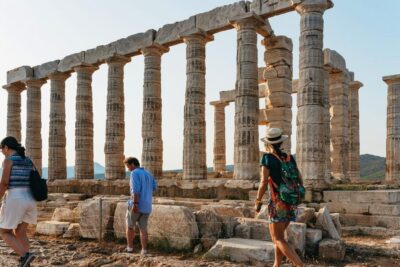
Cape Sounion & Poseidon Temple Sunset Half-Day Trip
Read our review →
Cape Sounio & Poseidon Temple Trip with Audio Guide
Read our review →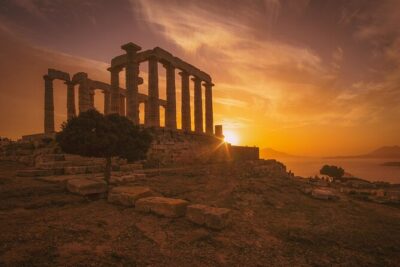
Cape Sounion and Temple of Poseidon Half-Day Small-Group Tour from Athens
Read our review →
Cape Sounion & Temple of Poseidon: Small Group Tour
Read our review →
Ephesus Temple of Artemis and House of Mary Private Half Day Tour
Read our review →
Cape Sounion & Temple of Poseidon Sunset Experience
Read our review →
Temple of Poseidon & Cape Sounion Half-Day Tour
Read our review →
Ephesus and Temple of Artemis Private Tour from Kusadasi Port
Read our review →Browse the lists this tour appears in