
Review · LUXOR
Private Tour: Luxor West Bank, Valley of the Kings and Hatshepsut Temple
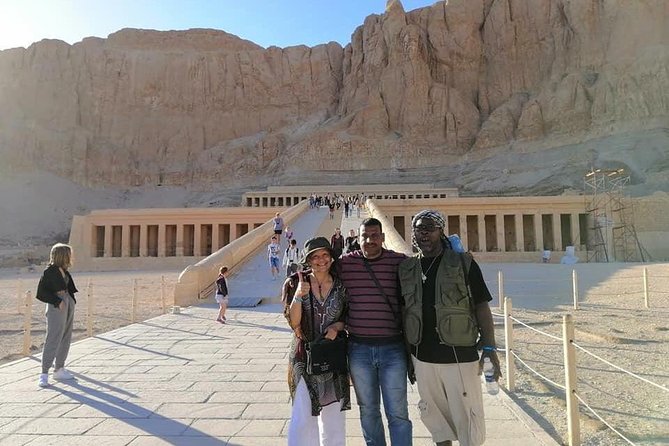
Ancient Egypt gets personal here. This private four-hour tour takes you from Luxor across the Nile to the Valley of the Kings, the Temple of Hatshepsut, and the Colossi of Memnon with an Egyptologist guide. I like the early 7:00 am start, which helps you handle the desert heat, and I like having a private vehicle and guide who can shape the commentary around your interests.
The main compromise is time. Four hours gives you a useful first look, but the West Bank has enough monuments for a full day. You should also expect an optional alabaster shop stop, and some visitors have found the sales pitch too forceful. King Tutankhamun’s tomb costs extra, too.
Key points at a glance
- Three major West Bank sights in four hours: You visit the Valley of the Kings, Hatshepsut Temple, and the Colossi of Memnon.
- Three Valley of the Kings tombs included: The guide explains the decoration outside, then you enter the selected tombs on your own.
- Private transport matters in Luxor: Your group travels by air-conditioned minivan from a central hotel or Luxor river port.
- The 7:00 am departure is a smart choice: Cooler temperatures make the exposed valley and Hatshepsut’s terraces easier to enjoy.
- King Tut requires an extra ticket: The tomb is not included, but you can pay directly if you want to see it.
- The guide makes the difference: Guides such as Yolanda, Yulanda, Ahmad, and Youla have been praised for clear explanations, flexibility, and a friendly manner.
Why the Luxor West Bank deserves your morning
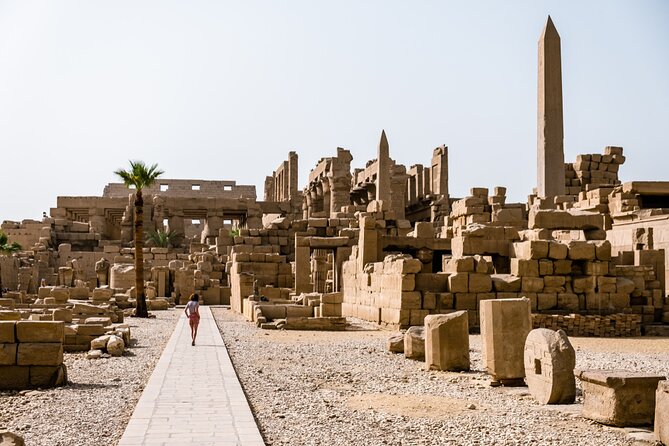
Luxor is split by the Nile in a way that still reflects ancient Egyptian beliefs. The East Bank was linked with living temples and city life. The West Bank was associated with burial and the afterlife. This tour takes you into that western necropolis, where cliffs, tombs, temples, and enormous statues are spread across dry open ground.
The private format is useful because you are not tied to the pace of a large coach group. You can ask about a particular pharaoh, focus on painted tomb decoration, or request more local and religious context. The guide can adjust the commentary, which is especially helpful if you already know something about ancient Egypt or if this is your first serious look at it.
The tour begins at 7:00 am with pickup from a central Luxor hotel or river port. You cross the Nile by air-conditioned minivan, with the guide explaining what you are seeing along the way. The journey itself is short, but the change from river farmland to dry hills gives you a useful sense of Luxor’s geography.
At $107.88 per person, the cost is not the cheapest way to see the West Bank. It becomes more reasonable if you are traveling as a small private group and value door-to-door transport, a dedicated Egyptologist, and the ability to ask questions. Admission to the Valley of the Kings and Hatshepsut Temple is included. Food, drinks, and the special ticket for Tutankhamun’s tomb are not.
More Private Temple Tours in Egypt
- Private tour West Bank Luxor, Valley of the Kings, temples, lunch
★ 5.0 · 73 reviews - Private Day Trip to Abu Simbel Temple with Guide from Luxor
★ 4.5 · 67 reviews - Karnak And Luxor Temples Private Tour
★ 5.0 · 66 reviews
Entering three tombs in the Valley of the Kings
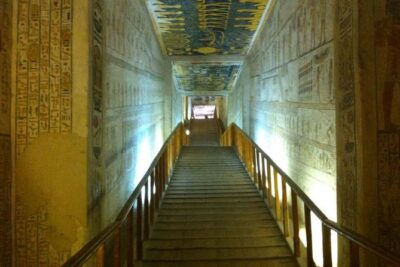
The Valley of the Kings is the emotional center of the tour. Ancient rulers were buried here in rock-cut chambers rather than in the exposed pyramid tombs associated with earlier periods. The result is a valley of entrances, tunnels, painted walls, and unfinished sections cut into the mountain.
You receive about an hour and a half here, including a short stop at the visitor center. Three tombs are included, and the exact selection can vary according to site conditions and the day’s arrangements. Before you enter, your guide explains what to notice: the painted gods, burial texts, symbolic colors, and scenes meant to help the dead ruler reach the afterlife.
Guides cannot accompany you inside the tombs. That sounds like a limitation, but a good briefing makes a real difference. Once you are underground, you can move at your own pace and look closely at the walls without trying to follow a speech in a crowded chamber. Several people have especially liked being given time alone after the guide’s explanation.
The tombs can be physically demanding. You walk through corridors and chambers, often on uneven surfaces, and the valley is exposed to the sun between entrances. The morning departure helps, though you still want sunglasses, water, and sensible shoes. The information provided does not specify accessibility arrangements, so anyone with mobility concerns should check before booking.
The artwork is the reason to take your time. Look for the way the corridors turn the journey into a religious story, with inscriptions and painted figures guiding the pharaoh through the next world. Even if you know little about Egyptian beliefs, the colors and scale are striking. The closeness of the walls also gives the experience a more direct feeling than viewing a monument from a distance.
King Tutankhamun’s tomb is optional and costs extra. The burial chamber is smaller than many people expect, but the chance to see the tomb connected with one of Egypt’s most famous rulers is important to some visitors. The extra ticket is paid directly, so decide before the tour whether that priority fits your budget.
Photography rules can change, and the supplied details specifically warn that photographs are not allowed inside the tombs. Treat the interiors as places to look rather than places to stage a photo session. Sunglasses are useful outside, but you will want to remove them in the darker chambers.
Hatshepsut Temple and the story behind the terraces
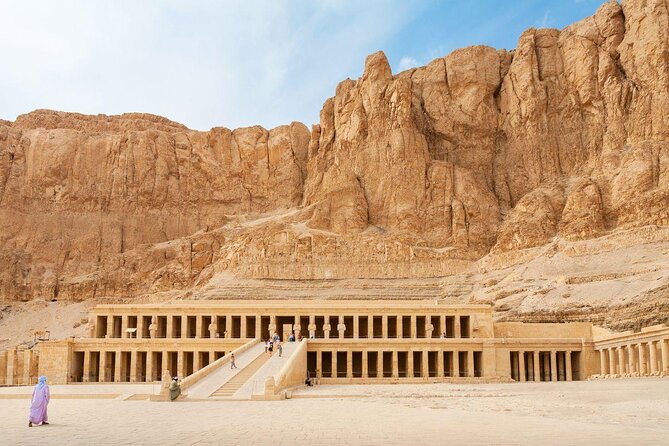
After the tombs, the tour continues to Deir el Bahari and the Temple of Hatshepsut. The change in mood is immediate. Instead of narrow underground corridors, you get broad terraces, long lines, pale stone, and a temple built against a dramatic cliff face.
Hatshepsut ruled Egypt as a female pharaoh, a fact that makes her story especially compelling. The guide explains how she presented herself as a male ruler in official art and how the temple supported her claim to the throne. This is where a private guide can add real value, because the monument is easier to understand when its political message is pointed out rather than left as a series of columns and walls.
You have about an hour and 20 minutes here, with time to walk through the courtyards and terraces after the main explanation. Look for the reliefs and hieroglyphs, along with the remaining statues and the geometric structure of the complex. The temple is visually grand, but it is also a place where the guide’s storytelling matters. Without context, the terraces can feel like a beautiful set of ruins. With context, they reveal how Hatshepsut wanted her reign to be remembered.
The stone can be intensely bright under the sun. One useful tip from the experience is to bring sunglasses, especially at this stop. The open courtyards offer little shade, so the early start is more than a scheduling detail.
Not everyone will rank Hatshepsut Temple above the Valley of the Kings. The tombs often feel more intimate and surprising because their paintings are enclosed in narrow chambers. Hatshepsut’s temple is larger and more architectural, so your enjoyment depends on whether you prefer decoration and atmosphere or broad monumental design.
A quick stop at the Colossi of Memnon
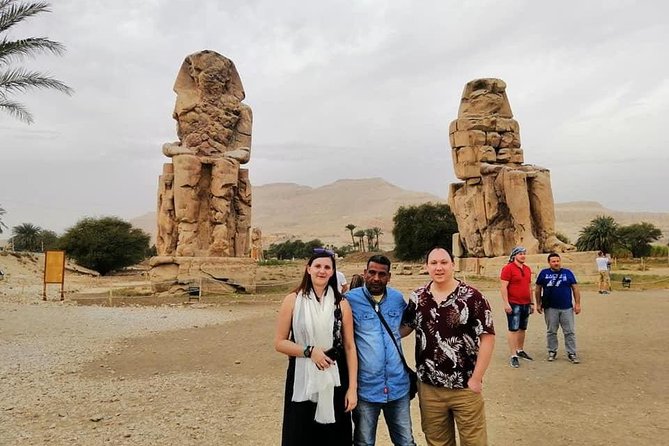
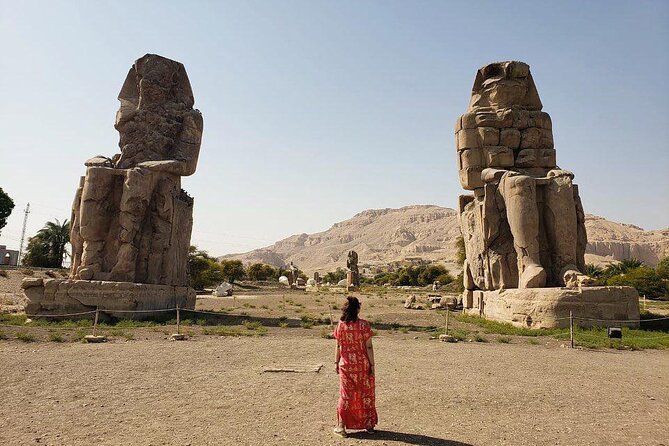
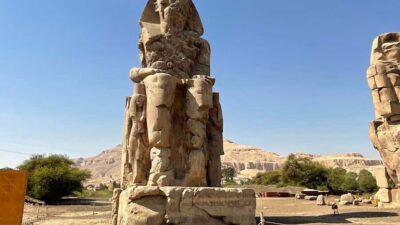
The Colossi of Memnon are a short photo stop on the return route. These two huge seated figures represent Amenhotep III and once guarded his funerary temple. The temple itself has largely disappeared, leaving the statues to carry the memory of the complex.
You receive around 20 minutes here. That is enough to see the scale, take photographs, and hear the stories linked to the statues. Your guide may also point out Roman-era graffiti cut into the stone, a reminder that these monuments attracted attention long after the pharaoh’s time.
This is the least substantial stop. One visitor described it as easy to miss, and that is a fair assessment if your time is tight. Still, it requires little effort and helps complete the picture of the West Bank. You are not spending an hour here, so the stop works well as a final look before returning to Luxor.
More Private Temple Tours in Luxor
- Luxor: Private Tour to Valley of Kings & Hatshepsut Temple.
★ 4.4 · 16 reviews - Luxor: East & West Bank Temples Private Tour with Tickets
★ 4.7 · 10 reviews
What the private guide adds
The strongest part of the experience is the chance to have one guide focused on your group. The best guides connected with this tour have been praised for making the sites clear, answering questions about local life and religion, and knowing when to step back so you can look around alone.
Yolanda, also spelled Yulanda in some accounts, is described as friendly, flexible, and able to make the visit fun without losing the historical detail. Ahmad and Youla are also names associated with particularly positive guiding experiences. You cannot assume a particular guide will be assigned, but you can ask when booking if a named guide is important to you.
A private tour does not automatically guarantee great guiding. One account describes a guide who was accurate but less proactive, requiring the visitor to ask most of the questions. That is a useful warning. Tell your guide at the start what interests you: royal burials, art, architecture, Hatshepsut’s rule, or modern Luxor. You will get more from the morning if you take an active role.
The vehicle is a private, air-conditioned minivan, with pickup and drop-off from a central hotel or cruise port. That removes the need to arrange a taxi across the Nile and keeps the short schedule under control. After four hours, you return to your hotel or ship.
The alabaster stop and the one part to question
Before the tour ends, you may be offered a visit to an alabaster factory. The idea is appealing. Hand-cut stone objects can make attractive souvenirs, and seeing how the pieces are presented may add a local craft element to the morning.
The concern is pressure to buy. Some people have found the sales approach too hard, while others have enjoyed the stop and purchased pieces. If you do not want souvenirs, say so clearly and ask how much time the stop will take. This is the one part of the tour that can feel less connected to the archaeological sites.
The same applies to any other showroom-style visit. The main attractions are strong enough that you should not feel obliged to purchase anything. A private tour gives you a better chance to discuss the stop with your guide and keep the focus on what you came to see.
Who will get the most from this tour
This tour suits a first visit to Luxor, especially if you have limited time or are arriving by Nile cruise. It covers the West Bank essentials without asking you to plan transport, tickets, and guiding on your own.
It is also a good match for couples, families, or friends who want a private pace. You can ask questions freely, pause for photographs, and spend more or less time on a detail that catches your attention. The private setup is less useful if you are happy to join a large group and want the lowest possible price.
The four-hour length is both its strength and its limit. It is efficient, but it does not allow a leisurely tour of every West Bank site. If you want additional tombs, workers’ villages, or other temples, you will need a longer program. For a focused morning, though, the route is sensible.
The tour is recommended by 90 percent of those who rated it, with a 4.6 score from 111 ratings. The repeated praise focuses on the guides, the organization, the chance to explore without being rushed, and the impact of the tombs. The repeated cautions are just as useful: Hatshepsut Temple may feel less exciting after the Valley of the Kings, the Colossi stop is brief, and the alabaster visit can bring sales pressure.
You can cancel for a full refund if you do so at least 24 hours before the local start time. Changes or cancellations inside that window are not accepted for a refund. English guiding is included in the listed price, while a supplement of 1,000 Egyptian pounds applies to languages other than English.
Should you book the Luxor West Bank tour?
I would book this tour if you want the main West Bank sights in one well-organized morning, especially from a Luxor hotel or river port. The private vehicle, early departure, included admissions to the main sites, and access to an Egyptologist make the price easier to justify for a small group.
Choose something longer if you want to see many tombs or explore the West Bank at a slow pace. Also go in with clear expectations about the optional Tutankhamun ticket and the alabaster stop. If you can accept those extras and want personal guiding rather than a large coach, this is a strong first visit to the Valley of the Kings.
FAQ
What time does the tour start?
The tour starts at 7:00 am.
How long does the West Bank tour last?
The tour lasts approximately four hours.
What sites are included?
The route includes the Valley of the Kings, the Temple of Hatshepsut at Deir el Bahari, and a photo stop at the Colossi of Memnon.
Are admission tickets included?
Admission to the Valley of the Kings and Temple of Hatshepsut is included. The ticket for King Tutankhamun’s tomb costs extra, and the Colossi of Memnon stop does not include an admission ticket.
Can the guide enter the tombs?
No. Guides are not permitted inside the tombs, but the Egyptologist explains what to look for before you enter.
Where does pickup and drop-off take place?
Pickup and drop-off are offered at central Luxor hotels or the Luxor river port.
More Karnak and Valley of the Kings Tours in Luxor
- Luxor: Valley of the Kings and Hatshepsut Temple Day Tour
★ 4.4 · 1,404 reviews - Luxor: Valley of Kings, Hatchepsut Temple ,Karnak & Luxor-DayTour
★ 5.0 · 735 reviews - Full Day Tour of Luxor West Bank Temples and Tombs (Private)
★ 5.0 · 722 reviews - Luxor: Karnak Temple and Luxor Temple Tour with Lunch
★ 4.4 · 658 reviews
Just added around Luxor
- Luxor: Karnak and Luxor Temples Private Half-Day Tour★ 4.7 · 27 reviews
- Luxor: Tour to Edfu Temple & Lunch & Felucca & Entrance Fees★ 4.8 · 7 reviews
- Luxor: Valley of The Kings and Hatshepsut Temple Day Trip★ 4.3 · 55 reviews
- Luxor: Temple of Hatshepsut QR Ticket – Skip The Line★ 4.8 · 5 reviews
- Luxor: Karnak and Luxor Temples Private Half-Day Tour★ 4.4 · 4 reviews
- Luxor: Private Tour to Valley of Kings & Hatshepsut Temple.★ 4.4 · 16 reviews
- Luxor Half-Day Tour to Explore Karnak and Luxor Temples★ 4.7 · 4 reviews
- Luxor: Shared Half-Day tour of Dendera Temple with guide★ 4.2 · 35 reviews
Karnak & Valley of the Kings Tours, compared.
Valley of the Kings and Hatshepsut Temple Day Tour
Read our review →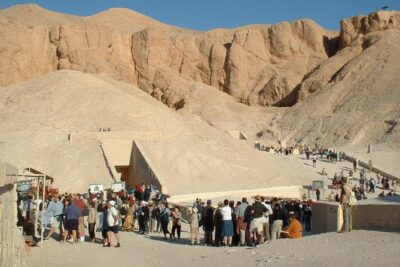
Valley of Kings, Hatchepsut Temple ,Karnak & Luxor-DayTour
Read our review →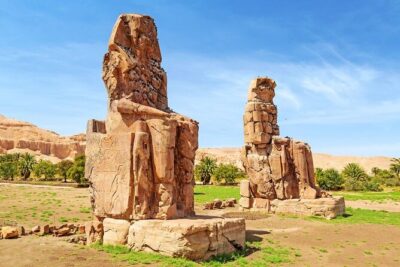
Full Day Tour of Luxor West Bank Temples and Tombs (Private)
Read our review →
Private Half Day West Bank Tour to Valley of the Kings Queen Hatshepsut Temple and Colossi of Memnon
Read our review →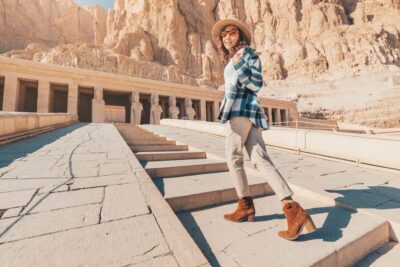
Valley of the Kings and Hatshepsut Temple w/Nile Boat
Read our review →
Dendera Temple All-Inclusive Tour & Felucca Ride
Read our review →
Hot Air Balloon Ride Over Temple of Hatshepsut
Read our review →Browse the lists this tour appears in