
Review · LUXOR
Luxor Day Tour: Valley of Kings & Queens & Hatchepsut Temples
Ancient tombs reward an early start. This private Luxor tour packs the West Bank’s major sights into about eight hours, with an Egyptologist guide, air-conditioned transport, and admission fees to the main sites. I like the private format, which gives you room to ask questions and adjust the pace, and I like the wide mix of royal tombs, workers’ homes, temples, and colossal statues. The main concern is the uneven guide quality, with several reports of unwanted shopping stops and pressure for tips.
At $89.24 per person, the tour offers solid value for a full day of driving, guiding, and entry tickets. Guides such as Abdo Esmael, Roshdy, Mohamed Awad, Mohsen, and Abdo have earned especially warm praise for clear explanations and kind service. Still, you should set firm expectations before setting off, since a few serious complaints describe poor communication, rushed sightseeing, or aggressive behavior.
Key points to know before you go
- Six major West Bank stops in one day: You visit the Valley of the Kings, Hatshepsut Temple, Colossi of Memnon, Medinet Habu, Deir el-Medina, and the Valley of the Queens.
- The private vehicle matters: Round-trip pickup from your Luxor hotel or Nile cruise comes in an air-conditioned vehicle, with a driver waiting while you explore.
- Your guide shapes the whole day: Abdo Esmael, Roshdy, Mohamed Awad, Mohsen, and Abdo received especially strong praise for their explanations and care.
- Lunch is not included: The schedule allows time for lunch, but you pay for the meal yourself.
- Shopping stops need a clear no: Some departures included unwanted visits to alabaster or perfume shops, with pressure to buy.
- The day involves walking and heat: Good shoes, water, and an early start will make the long West Bank circuit much easier.
Why this West Bank tour works so well
Luxor’s West Bank can feel scattered if you try to arrange every stop alone. The tombs and temples sit across a broad area, and a private car removes the need to negotiate transport between them. You are picked up at your hotel or Nile cruise, driven in an air-conditioned vehicle, and returned to the same general starting point at the end.
That convenience has real value in Luxor. You can spend your energy looking at painted burial chambers instead of sorting out the next taxi. A bottle of water is provided, and several excellent accounts also describe drivers keeping the vehicle cool and offering extra refreshments while people were inside the monuments.
The private setup is another advantage. Your group does not have to follow a large coach through every chamber. You can ask about a hieroglyph, pause for photographs, or request a little more time at a site. One group of six appreciated that the guide waited when they were delayed, while another praised the flexibility to stop at a local restaurant.
The schedule is still ambitious. Six places, lunch, driving, and a possible final visit to the Tombs of the Nobles make for a full day. You will see a great deal, but this is not a slow, meditative tour. Start early if you can. Summer heat is obvious, but even winter afternoons can feel hot after repeated walks across open ground.
A few more temple visits around Luxor worth a look
- Luxor: Valley of the Kings and Hatshepsut Temple Day Tour
★ 4.4 · 1,404 reviews - Luxor: Valley of Kings, Hatchepsut Temple ,Karnak & Luxor-DayTour
★ 5.0 · 735 reviews - Full Day Tour of Luxor West Bank Temples and Tombs (Private)
★ 5.0 · 722 reviews
Valley of the Kings: the day’s great underground show
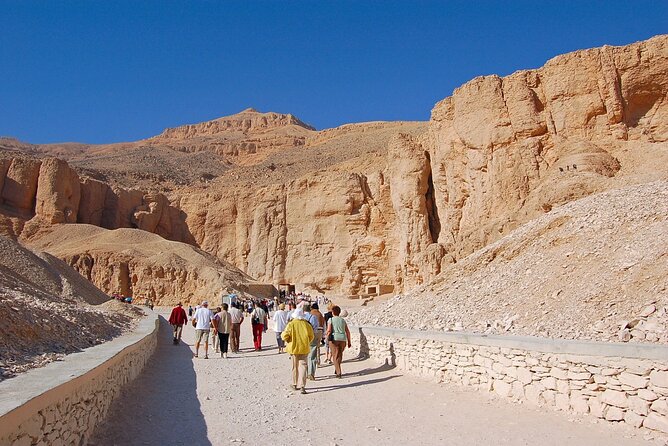
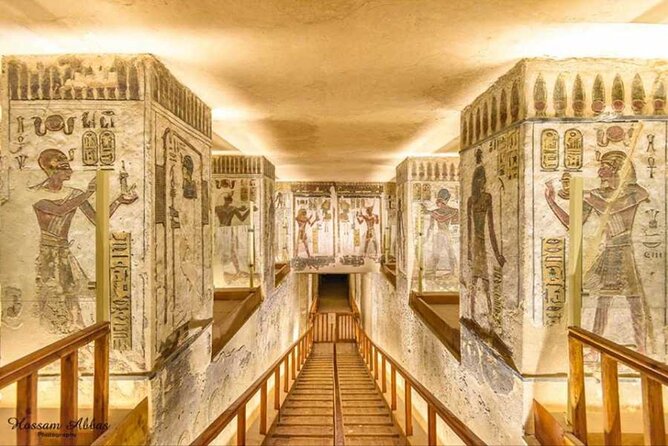
The tour begins at the Valley of the Kings, usually the main event for first-time visitors to Luxor. The valley contains 63 known tombs, although only some are open at any given time. The royal chambers were cut into the hills and decorated with scenes from Egyptian belief, especially the journey through the afterlife.
Your guide’s explanation matters here. Without context, the painted corridors can look like a blur of gods, symbols, and repeated figures. A good Egyptologist can explain how the images functioned, point out details in the hieroglyphs, and connect the tomb decoration to the beliefs of the period.
King Tutankhamun’s tomb is the famous name, but it is not automatically the only or best choice for every person. Some visitors paid extra for Tutankhamun’s tomb and the tombs of Ramses V and VI, finding the extra cost worthwhile. Special tombs can carry separate fees, so ask your guide or ticket staff before committing to an add-on.
Allowing about three hours here gives you time to visit several chambers, but the exact experience depends on which tombs are open and how long you spend underground. Some accounts describe rushed visits, so say clearly that you want enough time to see the principal tombs rather than simply collecting a quick photograph at each entrance.
The valley is also the place where the tour’s walking demands become clear. You may walk between the entrance, transport points, and tomb openings, then climb or descend into chambers. Wear shoes with good grip and carry water.
Hatshepsut Temple and the story of a powerful queen
From the royal tombs, the tour moves to the Temple of Hatshepsut at Deir el-Bahari. Its broad terraces and strong lines make it very different from the underground tombs. The temple is built against the cliffs, creating one of the most striking settings on Luxor’s West Bank.
Hatshepsut’s name is often translated as Foremost of Noble Ladies. She ruled as pharaoh and is linked with the growth of early trading routes. This is a useful point to discuss with your guide, since the monument is not only a pretty structure. It also reflects the political challenge of a woman presenting herself with the symbols and authority of a king.
The planned visit lasts about an hour. That is enough to see the main terraces and reliefs, but not enough for a leisurely study of every detail. Ask your guide to explain the temple’s purpose and the images that survived damage. The contrast between Hatshepsut’s monument and the burial sites earlier in the day helps give the itinerary a clear rhythm.
Colossi of Memnon: a short stop with a big visual payoff
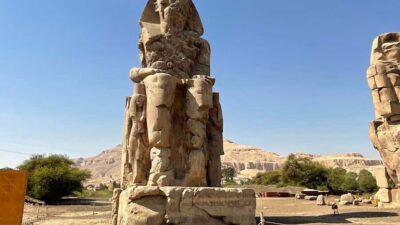
The Colossi of Memnon take only about 20 minutes, but they are an easy and worthwhile stop. These twin statues were made from blocks of quartzite sandstone and once formed part of a larger temple complex.
This is primarily a photo and orientation stop. You will not spend an hour here, and the visit can feel brief after the Valley of the Kings. Still, the scale of the figures gives you a quick reminder of the resources and labor used by Egypt’s rulers.
Use the short pause to listen to the guide’s explanation, take photographs, and rest your feet before the next temple. The statues are close to the road, so they also break up the longer walks at the other monuments.
Same place, a different morning at the gates:
- Luxor: Karnak Temple and Luxor Temple Tour with Lunch
★ 4.4 · 658 reviews - Luxor: Abu Simbel Temple Private Guided Day Trip with Lunch
★ 4.6 · 546 reviews - Private Half Day West Bank Tour to Valley of the Kings Queen Hatshepsut Temple and Colossi of Memnon
★ 5.0 · 268 reviews - From Luxor: Dendera Temple All-Inclusive Tour & Felucca Ride
★ 4.2 · 207 reviews
Medinet Habu: a temple with room to look closely
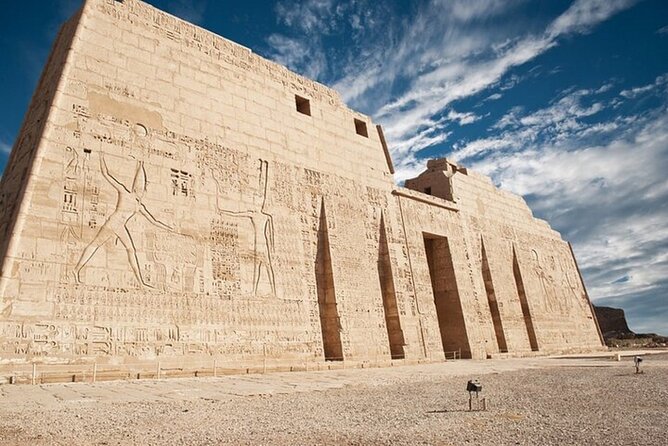
After time for lunch, the route continues to Medinet Habu, also called the Temple of Habu. The temple was built to commemorate Ramses III after his death, following the king’s own orders.
This stop gets about an hour, and it is one of the more useful places to slow down and look at the wall decoration. The temple’s reliefs and inscriptions can be hard to read without help, so this is another point where your Egyptologist guide earns the fee. Ask about the scenes, the purpose of the temple, and how it differed from a royal tomb.
Lunch is not included in the price. The guide may offer restaurant choices, and one well-received outing included a meal at a family-run local restaurant near the Colossi of Memnon. That is not guaranteed, so budget separately and confirm the price before ordering. You can also ask to keep lunch efficient if you want more time at the monuments.
Deir el-Medina: seeing the workers behind the royal tombs
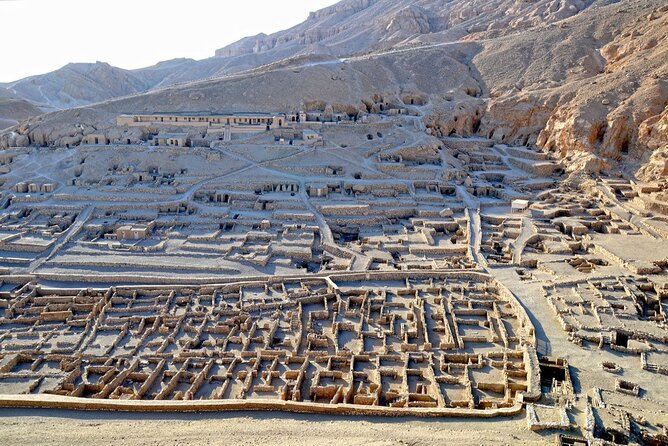
Deir el-Medina is one of the most interesting stops because it changes the focus from pharaohs to the people who made the royal tombs possible. The remains belong to an ancient village of artists, craftsmen, and workers who built and decorated the burial chambers in the Valley of the Kings.
This site gives the day a human scale. The royal tombs show the finished work, while Deir el-Medina helps you think about the homes and working lives of the people who carved, plastered, and painted them.
The scheduled visit lasts about an hour. This is a good place to ask your guide how the village related to the nearby tombs and why its residents were important. The remains are not as grand as Hatshepsut’s temple, but the change of focus makes the overall tour more thoughtful.
Valley of the Queens and the Nefertari question
The final major valley is the Valley of the Queens, home to the tomb of Queen Nefertari. The site complements the Valley of the Kings by showing where queens and other royal family members were buried.
Nefertari’s tomb is the name most people want to hear about, but access and special admission can vary. The tour includes entry to the Valley of the Queens, while premium tombs may require an extra ticket. Ask exactly what is open and what is included before entering.
You are given about an hour here. That should be enough for the main visit, but it is not a guarantee that you will enter every famous tomb. If Nefertari is your top priority, tell the guide at the start of the day and ask about the current ticket arrangements.
The itinerary also mentions the Tombs of the Nobles, a group of more than 400 tombs belonging to high-ranking people. These tombs were decorated with passages from the Book of the Dead and scenes connected with the afterlife. The exact timing of this final addition is not clearly fixed, so treat it as part of the possible closing route rather than a promise of a long visit.
The guide can make or break the experience
The strongest part of the tour, when everything goes right, is the guiding. Abdo Esmael received praise for fluent English, patience with many questions, and a strong grasp of Egyptian history. Roshdy was praised for clear English, punctual service, and friendly explanations. Mohamed Awad was valued for pointing out small details in the hieroglyphs and explaining their meaning.
Mohsen, Abdo, Barry, and other guides also received praise for being attentive and helping with photographs. One guide, Abdo, turned the day into a more active lesson by asking questions about what the group had just seen. That sort of interaction can help the monuments stick in your memory.
But guide assignments matter. A few accounts describe poor English, frequent phone calls, missed sites, and explanations that were difficult to understand. One serious complaint from a solo woman described unwanted touching and intimidating pressure for money. That conduct is unacceptable, and you should take any personal safety concern seriously.
At pickup, confirm the guide’s name, the six main stops, the expected finish time, and that shopping visits are not part of your plan. If you do not want a shop stop, say so plainly before the car leaves. You should never feel obliged to buy alabaster, perfume, souvenirs, or anything else.
Shopping pressure and tipping: set boundaries early
Unwanted stops at alabaster factories and perfume shops are the clearest recurring weakness in the experience. Some visitors were shown items described as Egyptian stone or malachite and felt pressured by high prices. Others were taken to perfume shops and found the sales approach annoying.
You can decline firmly and politely. A useful approach is to say that you want the advertised archaeological route only, with no shopping stops. If the guide insists, contact the operator during the tour and document the stop.
Tipping is not included. The amount is your choice, and you should not be taken to an ATM or pressured to provide a large tip. Keep small cash available only if you wish to reward good service. Pay the driver and guide separately if that feels clearer, and do not confuse a demand with an obligation.
Price, comfort, and who gets good value
At $89.24 per person, this is a fair price for a private eight-hour day if the guide covers the listed sites and the admissions are handled as promised. The price includes round-trip transfers, an air-conditioned vehicle, a licensed Egyptologist guide, a bottle of water, taxes, and entry to the Valley of the Kings, Hatshepsut Temple, Medinet Habu, Deir el-Medina, and the Valley of the Queens.
It does not include lunch, optional activities, special tomb tickets, tips, or the $10 airport pickup supplement. Confirm the cost of any additional tomb or boat-style outing before agreeing.
I would choose this tour if you have one full day for Luxor’s West Bank and want a guide beside you. It suits couples, families, and small groups who value convenience and questions. It is less suitable if you want a very slow visit, complete control over every minute, or a guaranteed particular guide.
The booking pattern suggests people reserve it well ahead, with an average lead time of 33 days. That is useful if your dates are fixed, but it does not change the need to confirm your pickup details. Free cancellation is available up to 24 hours before the start time. Changes made inside that window are not accepted.
Should you book this Luxor day tour?
I would book it for the route and private transport, but I would book it with clear boundaries. The West Bank highlights are excellent, and a strong guide can turn a long list of monuments into a connected story about kings, queens, workers, and the afterlife.
Before departure, ask for an early pickup, confirm lunch is separate, request no shopping stops, and ask which special tombs require extra payment. If you are a solo woman, consider booking only after receiving clear reassurance about guide assignment and safety standards, and keep the operator’s contact details with you.
Choose this tour when you want maximum coverage in one day and are prepared for a brisk pace. Skip it in favor of a slower custom arrangement if you dislike fixed schedules or do not want to manage the risk of an inconsistent guide.
FAQ
How long does the Luxor West Bank tour last?
The experience lasts approximately eight hours, although the exact finish time can vary with traffic, site conditions, lunch, and any agreed additions.
What sites are included?
The main route includes the Valley of the Kings, Hatshepsut Temple, Colossi of Memnon, Medinet Habu, Deir el-Medina, and the Valley of the Queens. The itinerary also mentions the Tombs of the Nobles near the end of the day.
Is hotel pickup included?
Yes. Pickup and return are provided from a Luxor hotel or Nile cruise. Airport pickup costs an additional $10.
Is transportation air-conditioned?
Yes. Transfers use a modern air-conditioned vehicle.
Are admission fees included?
Entry to the Valley of the Kings, Hatshepsut Temple, Medinet Habu, Deir el-Medina, and the Valley of the Queens is included.
Is lunch included?
No. The schedule includes time for lunch, but you pay for the meal separately.
Are special tombs included?
The included admissions cover the listed valleys and temples, but optional tours and some special tombs may require extra payment. Ask before purchasing an additional ticket.
Is this a private tour?
Yes. Only your group participates, so you can ask questions and may have some flexibility with timing.
Who leads the tour?
A qualified, fully licensed Egyptologist guide leads the experience. Guide assignments can vary, so you may wish to confirm the guide’s name in advance.
Can I cancel for a refund?
You can cancel at least 24 hours before the local start time for a full refund. Cancellations or changes made less than 24 hours before the start time are not accepted.
Just added around Luxor
- Luxor: Karnak and Luxor Temples Private Half-Day Tour★ 4.7 · 27 reviews
- Luxor: Tour to Edfu Temple & Lunch & Felucca & Entrance Fees★ 4.8 · 7 reviews
- Luxor: Valley of The Kings and Hatshepsut Temple Day Trip★ 4.3 · 55 reviews
- Luxor: Temple of Hatshepsut QR Ticket – Skip The Line★ 4.8 · 5 reviews
- Luxor: Karnak and Luxor Temples Private Half-Day Tour★ 4.4 · 4 reviews
- Luxor: Shared Half-Day tour of Dendera Temple with guide★ 4.2 · 35 reviews
- Luxor: Private Tour to Valley of Kings & Hatshepsut Temple.★ 4.4 · 16 reviews
- Luxor Half-Day Tour to Explore Karnak and Luxor Temples★ 4.7 · 4 reviews
Luxor Temple Tours, compared.
Valley of the Kings and Hatshepsut Temple Day Tour
Read our review →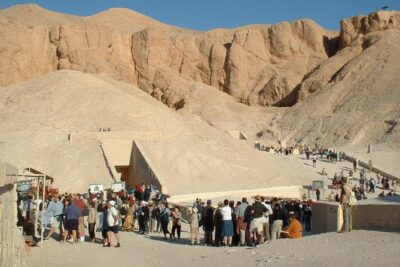
Valley of Kings, Hatchepsut Temple ,Karnak & Luxor-DayTour
Read our review →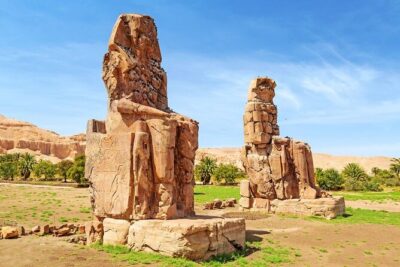
Full Day Tour of Luxor West Bank Temples and Tombs (Private)
Read our review →
Abu Simbel Temple Private Guided Day Trip with Lunch
Read our review →
Private Half Day West Bank Tour to Valley of the Kings Queen Hatshepsut Temple and Colossi of Memnon
Read our review →
Dendera Temple All-Inclusive Tour & Felucca Ride
Read our review →
Hot Air Balloon Ride Over Temple of Hatshepsut
Read our review →Browse the lists this tour appears in