
Review · CHINA
4-Hour Shanghai Best Garden and Temple Tour with Tea Tasting
Discover Shanghai’s old soul. This four-hour private tour links the Jade Buddha Temple with the Old Town bazaar, Yu Garden, and a traditional tea tasting. I like the mix of quiet religious spaces and lively street scenes, and I also like the choice of private car or local Uber and metro transport. The main drawback is pace: four hours covers a lot, so you will have limited time to wander on your own.
The guides receive especially strong praise for their warmth and cultural explanations. Ruby, Sunny, Mabel, and Sammi are named as friendly, helpful guides, and one visitor was even assisted after losing a phone in a Didi car. At $99 per person, the tour makes the most sense if you value door-to-door help and a private guide more than a low-cost, self-guided outing.
Key points at a glance
- Jade Buddha Temple first: Explore the Hall of Four Heavenly Kings, Grand Hall, and jade Buddhist statues from Burma with an English-speaking guide.
- Old Town details: Walk through Qing Dynasty-style streets, local stalls, the nine lucky bridge, and a roughly 400-year-old tea house.
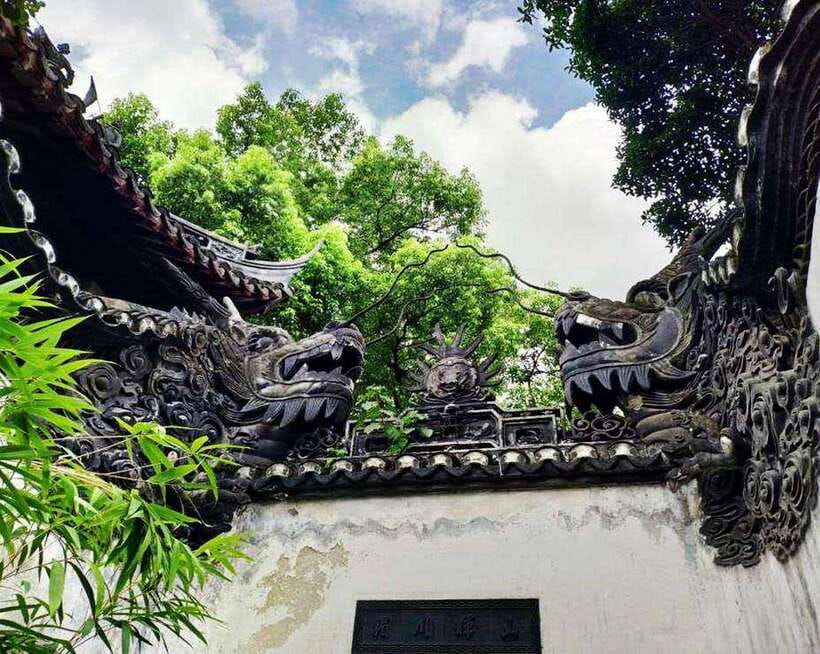
- Yu Garden’s classic design: See dragon walls, rockeries, ponds, pavilions, and quiet chambers in a garden dating back about 500 years.
- Tea tasting included: Sit down for a guided tea ceremony and learn about local tea customs, with the choice of your preferred tea.
- Private and flexible transport: Pick downtown hotel service with either a private air-conditioned car or local Uber and metro travel.
- Best for first-time visitors: The tour gives you a clear introduction to religion, gardens, old neighborhoods, and tea culture in one half-day.
A useful four-hour introduction to old Shanghai
Shanghai is a city of sharp contrasts. Glass towers and broad commercial streets share space with temple courtyards, old lanes, carved stone bridges, and formal gardens. This tour gives you a compact way to see some of the city’s most important traditional sights without spending a full day arranging taxis, tickets, and directions.
You begin with pickup from your downtown Shanghai hotel or another downtown location. The group is private, and the guide speaks English. That matters here because each stop has details that are easy to miss when you simply walk through, from the purpose of temple halls to the symbolism built into garden walls and bridges.
I see this as an orientation tour rather than a slow, highly specialized study of any one site. You visit four main elements: Jade Buddha Temple, the Old Town bazaar, Yu Garden, and a tea house. The order gives the morning or afternoon a sensible rhythm, moving from temple quiet to market streets, then into the garden and a seated tea experience.
A few more temple visits around China worth a look
- Private Tour to the Temple of Heaven and Tea tasting at the Maliandao Tea city
★ 5.0 · 3 reviews - Bangkok by Night: Temples, Markets and Food Tuk-Tuk Tour
★ 5.0 · 3,752 reviews - Bangkok: Markets, Temples and Food Night Tour by Tuk Tuk
★ 4.9 · 2,371 reviews
Jade Buddha Temple and its calm inner courts
The first stop is the Jade Buddha Temple, one of Shanghai’s best-known Buddhist sites. Your guide leads you through several parts of the complex, including the Hall of Four Heavenly Kings and the Grand Hall. These buildings give you a useful introduction to the layout and atmosphere of a working religious site.
The temple is valued not only for its architecture but also for its jade Buddha statues, which were brought from Burma. The jade figures are the visual focus of the visit, and your guide explains their place within Buddhist culture and practice. If you have never visited a Chinese temple before, this introduction helps you understand that the site is more than a monument for photographs.
The setting also gives the tour a quiet opening. You are not rushed straight into the busy Old Town streets. Instead, you begin with incense, courtyards, halls, and religious imagery, then gradually shift toward Shanghai’s commercial past.
The temple visit does require respectful behavior. You should expect a religious environment rather than a museum arranged solely for sightseeing. Your guide can explain what you are seeing, but you should still allow space for worshippers and follow any posted rules.
A practical point: the temple is explored on foot, and the overall tour contains several walking sections. Comfortable shoes will make the four hours easier, especially when combined with the Old Town bazaar and garden paths.
Old Town bazaar, lucky bridge, and local street life
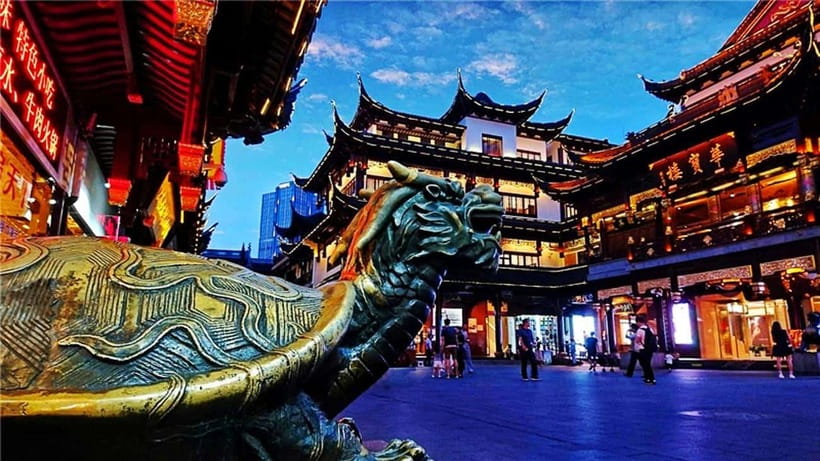
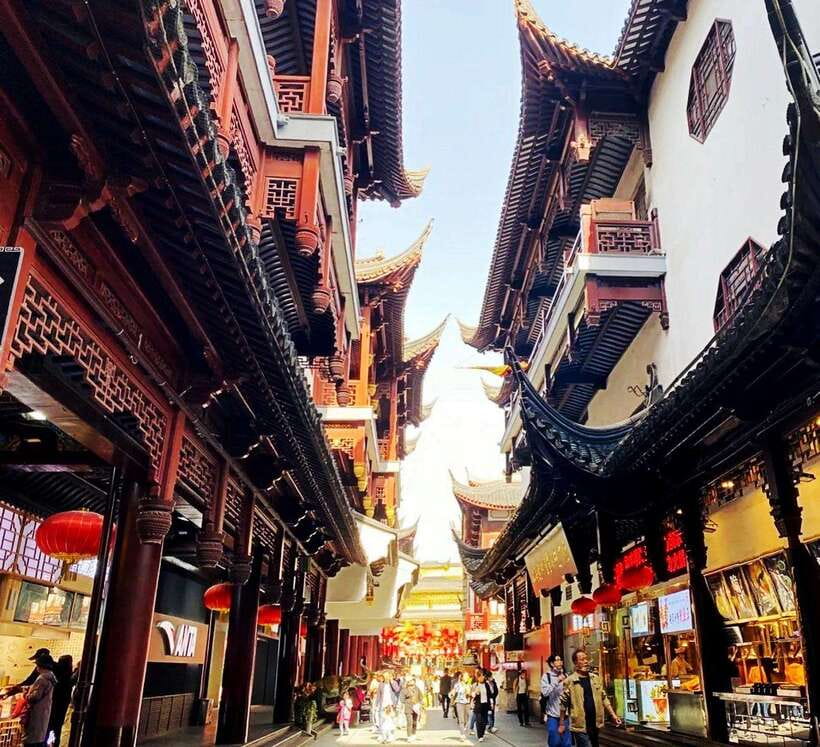
After the temple, the tour turns toward Shanghai Old Town. This is where the experience becomes more informal. Instead of visiting only polished landmarks, you walk through bazaar streets with local vendors, crafts, small artworks, and trinkets.
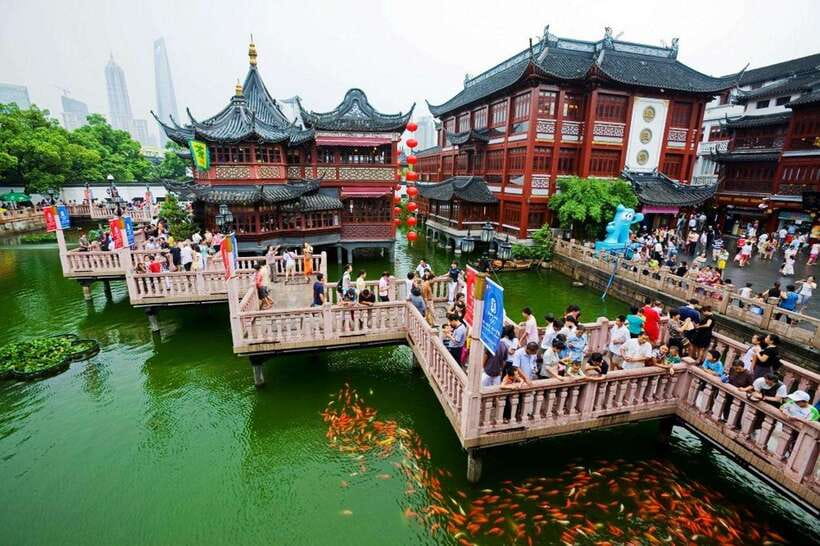
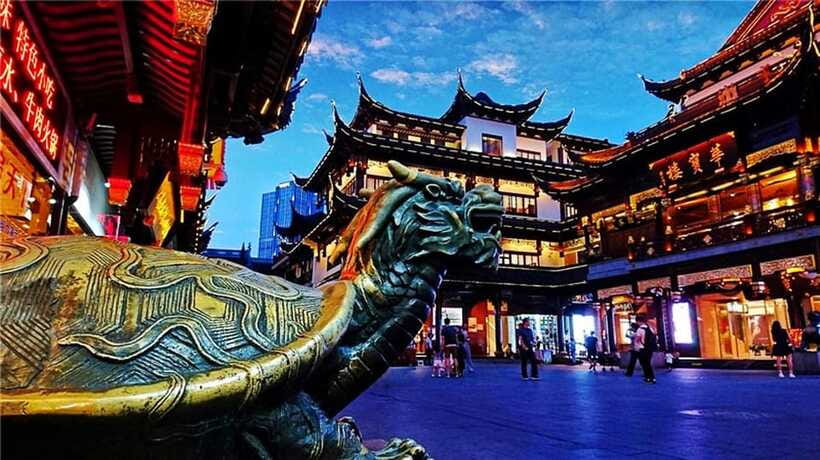
The Qing Dynasty-style architecture gives the area its visual character. Rooflines, narrow passages, traditional details, and old-fashioned shopfronts create a very different mood from modern Shanghai. You can browse as you walk, though this is not described as a dedicated shopping tour. The point is to see the area, notice the street life, and understand how old commercial lanes fit into the modern city.
A particularly nice detail is the nine lucky bridge. The route also passes a tea house said to be about 400 years old. Details like these make the Old Town stop more than a simple transfer between the temple and Yu Garden. They give you small stories and symbols to look for as you move through the streets.
The bazaar may be the least structured part of the tour. That can be a plus if you like the freedom to pause at a stall or take photographs. It can also feel short if you want a long, unhurried shopping session. Since the complete experience lasts four hours, your guide needs to keep the group moving.
I would treat this stop as a visual and cultural walk, not as a chance to buy everything on your list. If you see a craft or keepsake you truly want, ask about the time available before wandering too far from the group.
Yu Garden’s rockeries, ponds, and dragon walls
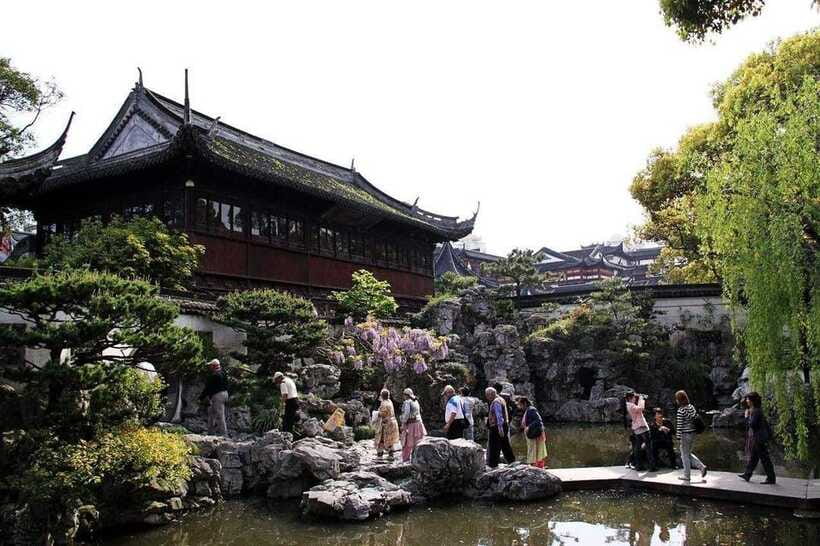
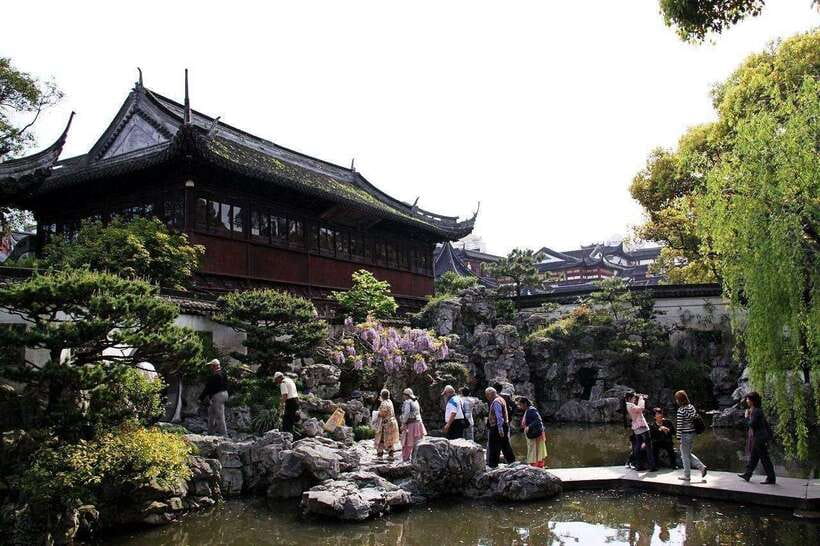
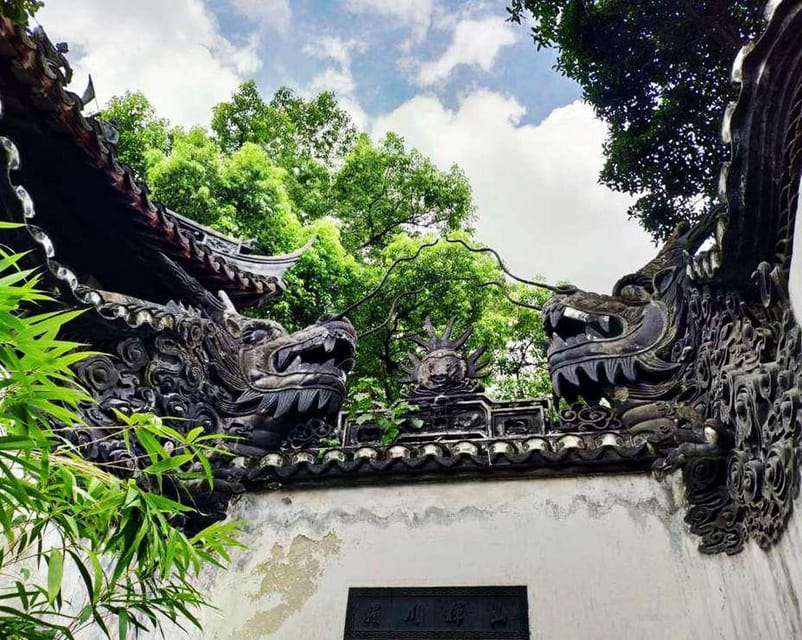
Yu Garden is the centerpiece for many visitors. The garden dates back about 500 years and was designed around a sequence of courtyards, pavilions, ponds, rockeries, and enclosed chambers. It is not one broad open park. Instead, you move through a series of framed views and changing spaces.
The design rewards slow looking. A doorway may frame a pavilion. A wall may hide a pond until you reach the next passage. Rockeries add height and texture, while the dragon wall provides one of the garden’s best-known decorative features.
Your guide explains the garden’s design and history as you walk. That guidance is important because the garden can otherwise seem like a collection of attractive buildings and plants. With context, you begin to notice the deliberate arrangement of water, stone, walls, windows, and rooflines.
One useful expectation: Yu Garden is a popular major attraction, and four hours for the entire tour does not allow unlimited time inside it. You will see the main features, but this is not the right choice if your goal is to study every courtyard at a leisurely pace. For that, you would want a separate visit.
Still, the garden works very well within this itinerary. The temple introduces spiritual traditions, the Old Town shows everyday streets and commerce, and Yu Garden presents the refined private-garden tradition. The three stops give you different views of Shanghai’s past without repeating the same kind of sightseeing.
Same place, a different morning at the gates:
- Mini Group Xian Day Tour to Terracotta Army, City Wall, Pagoda and Muslim Bazaar
★ 5.0 · 1,320 reviews - Beijing: The Temple of Heaven or Summer Palace Entry Ticket
★ 4.6 · 1,286 reviews - Beijing Classic Full-Day Tour including the Forbidden City, Tiananmen Square, Summer Palace and Temple of Heaven
★ 4.0 · 610 reviews - Temple of Heaven Ticket
★ 5.0 · 482 reviews
A seated tea tasting to finish the visit
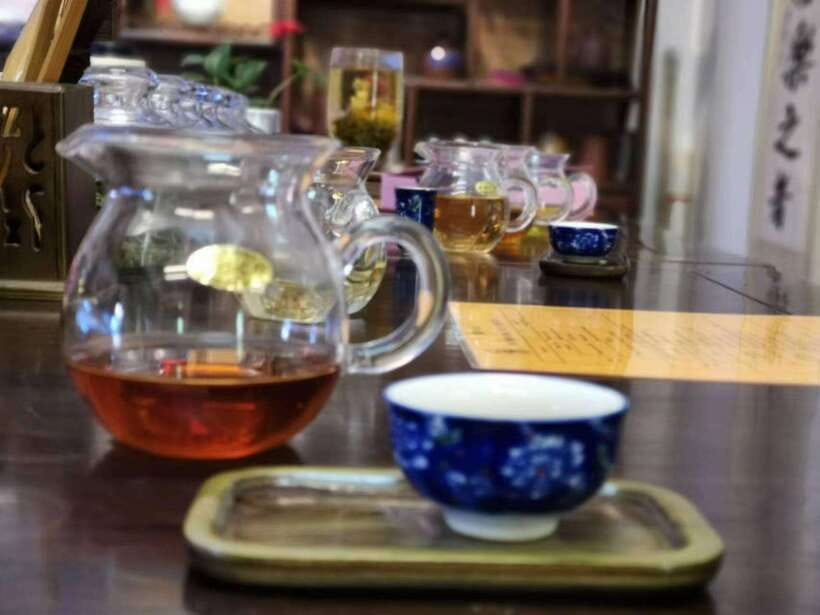
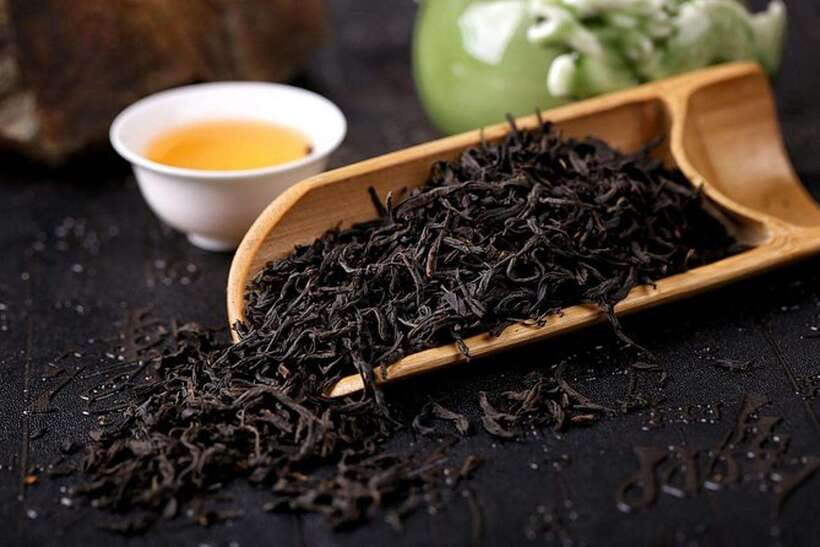
The tea tasting provides a welcome change of pace after the walking portions. You sit down in a tea house and learn about local tea-drinking customs while sampling a tea of your choice.
This part is not just a quick drink at the end. The guide or tea host explains the local culture around tea, giving you a chance to ask questions and compare flavors. One completed tour included five different teas, which shows that the tasting can offer more variety than a single ceremonial cup.
The choice of tea is useful for anyone who already has a preference. If you are unfamiliar with Chinese teas, ask for help choosing rather than selecting at random. The value here is in the explanation as much as in the tasting itself.
Tea also gives the tour a natural closing point. You have just walked through a temple, market streets, and a formal garden. Sitting down helps the experience feel less like a checklist of attractions. It is also a good moment to ask your guide about Shanghai customs, food, neighborhoods, or other places to visit.
The tour does not include lunch or dinner. The tea tasting is included, but you should plan a separate meal before or after the activity. Since the tour lasts four hours, meal timing will depend on whether you book it in the morning or afternoon.
Guide quality and the value of a private group
The strongest feature of this experience is the guide service. Several guides are praised by name for being friendly, attentive, professional, and clear when explaining local culture. Sunny is noted for making the tea tradition easy to understand. Mabel provided detailed explanations at both the temple and Yu Garden. Ruby was praised for professional service and a comfortable pickup, while Sammi was described as especially patient and helpful.
That personal service can matter in Shanghai, where language and transport can add friction to a short visit. One visitor needed help after losing a phone in a Didi ride, and the guide assisted with the problem. That is not a promised part of the itinerary, but it shows the practical value of having a local person with you.
The private format also lets you ask questions without competing with a large group. You can ask for more detail at the temple, spend a little longer looking at the garden, or get help choosing tea. The guide still has to keep the schedule on track, but the experience should feel more personal than a crowded coach tour.
There is a tradeoff. A private tour costs more than using the metro and visiting the sites independently. You are paying for the guide, entrance fees, pickup and drop-off, and the convenience of having the route arranged. At $99 per person, the value improves for couples, families, or small groups who want help making the most of a short stay.
Choosing between private car and Uber or metro
Two transport options are available. The private-car option includes a driver and an air-conditioned vehicle. The Uber and metro option uses local transport instead.
The car is the easier choice if you want a smooth route with less attention to navigation. It is also useful if you are traveling with older family members, carrying luggage, or simply want to conserve energy for the sights. One account describes pickup and return in luxury cars, though you should not assume that every booking uses the same vehicle type.
The Uber and metro choice may suit you if you prefer a more local way to move around or want to keep the transport arrangement lighter. The guide remains part of the experience, so you are not left to figure out every connection alone.
Check the exact option when booking. The included transport depends on which version you select. In both cases, pickup and drop-off apply to downtown Shanghai areas, and you should wait in your hotel lobby at the scheduled start time.
Who should book this Shanghai tour?
I would recommend this tour to first-time visitors who want a well-organized introduction to traditional Shanghai. It is also a good fit if you have only half a day, prefer a private group, or want an English-speaking guide to connect the sights rather than visit them as isolated stops.
Families may appreciate the variety. Children who are not interested in long museum visits get temple halls, bridges, market streets, garden paths, unusual rocks, and tea. The guide can help turn the cultural details into a story rather than a string of unfamiliar names.
This tour also works well for visitors who enjoy photography, though the short schedule means you should keep moving. Yu Garden offers framed views and decorative details, while the Old Town provides street scenes and architectural contrasts.
I would hesitate to recommend it if you dislike guided schedules or want extensive shopping time. It is also not ideal if your main goal is a long tea lesson, a full garden study, or a slow temple visit. The route is broad by design.
You can cancel up to 24 hours before the start for a full refund, and you can reserve now and pay later. Those terms are useful if your Shanghai plans are still changing, but the real decision is about style: organized and informative versus independent and unhurried.
Final verdict: a strong half-day choice at $99
I like this tour because it connects four different sides of Shanghai in only four hours. The temple provides quiet and religious context, the Old Town adds street life and old architecture, Yu Garden supplies carefully planned beauty, and tea gives you time to sit and reflect.
The price is fair when you want private guiding, entrance fees, downtown pickup, and transport handled for you. It is less compelling if you are comfortable using the metro, buying your own tickets, and exploring without help.
Book it if you want cultural context, friendly personal service, and an efficient route through several major sights. Skip it if you prefer to spend an entire morning at one garden or wander the bazaar without a schedule. For a first look at old Shanghai, it offers a practical mix with very little wasted time.
FAQ
How long does the Shanghai garden and temple tour last?
The tour lasts four hours.
What language does the guide speak?
The live tour guide speaks English.
Is this a private group experience?
Yes. The activity is offered as a private group tour.
Where does pickup take place?
Pickup is included from downtown Shanghai areas. You should wait in your hotel lobby at the scheduled start time.
Which attractions are included?
The tour includes Jade Buddha Temple, the Old Town bazaar area, Yu Garden, and a tea tasting.
Are entrance fees included?
Yes. Entrance fees for Yu Garden and Jade Buddha Temple are included.
Is food included?
No. Lunch and dinner are not included, although the tea ceremony and tasting are included.
Just added around China
- 2-Day Private Tour of Leshan Grand Buddha and Emei Shan including Monastery Stay★ 4.5 · 8 reviews
- Temple of Heaven Morning Walking Tour with Ticket★ 5.0 · 7 reviews
- Temple of Heaven Admission Ticket★ 4.0 · 36 reviews
- 3-Hour Private Tour: Temple of Heaven and Lama Temple★ 5.0 · 3 reviews
- Small Group Beijing Temple of heaven and Summer Palace with Pearl market★ 5.0 · 3 reviews
- Full-Day Beijing Forbidden City, Temple of Heaven and Summer Palace Tour★ 4.5 · 40 reviews
- Summer Palace and Temple Of Heaven Private Tour★ 5.0 · 9 reviews
- Private Day Trip of Forbidden City, Temple of Heaven and Summer Palace★ 4.5 · 3 reviews
Food & Drink, compared.

Bangkok by Night: Temples, Markets and Food Tuk-Tuk Tour
Read our review →
Markets, Temples and Food Night Tour by Tuk Tuk
Read our review →
1-Day Snow Monkeys, Zenko-ji Temple & Sake in Nagano
Read our review →
Arashiyama Bamboo, Temple, Monkeys, or Secret Sake Brewery
Read our review →
Tuk Tuk Adventure Chinatown Michelin Food & Temples
Read our review →
Old Delhi Food-Spice Market-Temples Tour Soon Featured on NETFLIX
Read our review →
Seoul Night Palace & Market Food Tour with Vehicle
Read our review →Browse the lists this tour appears in