
Review · BETHLEHEM, PALESTINIAN TERRITORIES
Discover about Bethlehem, Jordan River and temptation monastery
Bethlehem opens the door. This full-day private trip links sacred Christian sites with the Jordan River, the Dead Sea, Jericho, and the West Bank’s living story. I like the wide range: you move from Bethlehem’s old city to desert monasteries and a saltwater swim in one long day. I also like the personal approach of guide Shareef, who is praised for clear English, patience, safety, and tailoring the day to your interests. The main drawback is the pace. Seven stops in eight or nine hours means plenty of time in the car and only a short visit at several sites.
I especially like that this is not just a church tour. You can ask about Palestinian daily life, politics, religion, and local culture while walking through Bethlehem. The air-conditioned vehicle, private transportation, and free Wi-Fi make the long route easier. Still, you should confirm the exact route and site access before booking, since weather, local conditions, religious services, and opening arrangements can affect the day.
Key points at a glance
- Seven major stops in one day: Visit Bethlehem, the Dead Sea region, Jericho, the Jordan River, and several desert monasteries.
- A private group price: The $400 rate covers up to four people, making the per-person cost much better for a full group.
- Shareef leads the day: His strong English, local knowledge, patience, and flexible style receive repeated praise.
- More than religious sightseeing: The tour can include historical, cultural, and political discussion, with time to walk in Bethlehem’s old city.
- A demanding schedule: The tour lasts about eight to nine hours, with long drives and seven planned stops.
- Free cancellation with a cutoff: Cancel at least 24 hours before the start for a full refund. Bad weather may lead to a new date or refund.
Why this Bethlehem day is different
Many visits to Bethlehem focus on the Church of the Nativity, a quick photo, and a return to Jerusalem. This trip takes a much broader view. You begin in Bethlehem, then travel east and south through the Jordan Valley and desert country before returning to the starting point in Beit Sahour.
That wider route gives the day a useful rhythm. You get sacred places, archaeological sites, natural scenery, and a chance to ask questions about the present-day West Bank. I like this mix because it keeps the tour from becoming a string of similar church interiors.
The experience is private, so only your group participates. That matters if you want to stop for questions, change the order of the day, or spend more time at one place. Several published ratings give the experience 4.9 out of 5 from 22 ratings, and the strongest praise centers on Shareef’s personal service rather than on transport alone.
Shareef is described as an English-speaking local guide with a pleasant manner, a comfortable car, and the patience to work with older family members. His style also appears flexible. If you have already visited one of the planned sites, you may be able to adjust the day and use that time elsewhere.
A few more temple visits around the world worth a look
- Lisbon: Jerónimos Monastery Entrance Ticket
★ 4.1 · 14,164 reviews - Angkor Wat Sunrise or Sunset Tour with Guide from Siem Reap
★ 5.0 · 12,109 reviews - Teotihuacan, Guadalupe Shrine & Tlatelolco Day Tour with Lunch
★ 5.0 · 11,603 reviews
Church of the Nativity: Bethlehem’s essential first stop
The Church of the Nativity is the anchor of the Bethlehem portion. Christian tradition identifies this church as the birthplace of Jesus. The present building dates back to the fourth century, and the complex contains three churches together.
You have about 50 minutes here. That is enough for a focused introduction and a look at the main religious spaces, but it is not an unlimited visit. If a service, crowd, or queue slows things down, your time may feel short. A guide is especially useful here because the building’s story involves several Christian traditions in one place.
Shareef’s explanations of the church receive particular praise. He is noted for explaining the story of Jesus and the surrounding Christian landmarks in detail, while also helping visitors move through the site efficiently. One important practical point is that he may help you avoid wasting time in line when conditions allow, but you should not treat quick access as guaranteed.
I would arrive ready to listen, ask questions, and notice the layers of worship rather than simply search for one famous marker. This is the stop where a local guide can turn a crowded historic building into a place you understand.
Milk Grotto and the story of the white stone
The Milk Grotto is a quieter religious stop, scheduled for about 30 minutes. Christian tradition says Mary and Joseph paused here while fleeing to Egypt. Mary nursed the infant Jesus, and drops of milk fell onto the cave’s rock, turning it white. That story gives the church its name.
You receive free admission at this stop, but the short visit means you should keep your expectations focused. This is not a long guided exploration. It is a brief chance to hear the tradition, see the site, and connect it with the larger story of Bethlehem.
I like its place in the schedule. After the larger Church of the Nativity, the Milk Grotto offers a smaller setting and a different part of the local Christian tradition. If you are interested in religious history, ask Shareef to explain how the two places relate to one another.
The Dead Sea region: a change of pace
The tour then shifts from churches and city streets to the Dead Sea region. You have about 1 hour and 15 minutes for swimming in the salty water. This is the most relaxed part of the day, though it is still a timed stop.
The unusual feature here is the water itself. Its saltiness makes floating possible and gives the stop a playful break from the more serious religious and political subjects earlier in the morning. I would bring what you need for swimming and keep personal items to a minimum, since personal expenses are not included.
The tour information does not promise a private beach, changing facilities, towels, or food, so confirm those practical details before departure. Lunch is not included. Since the route is long and the day is full, ask in advance when and where you will eat rather than assuming a meal stop is built into the schedule.
This stop may be less appealing if you prefer archaeology and churches to recreational time. For most people, though, the swim helps break up the driving.
Same place, a different morning at the gates:
- From Bangkok: Ayutthaya Temples Guided Tour with Lunch
★ 4.7 · 10,535 reviews - Siem Reap: Angkor Wat: Small-Group Sunrise or Sunset Tour
★ 5.0 · 9,444 reviews - Athens: Cape Sounion & Poseidon Temple Sunset Half-Day Trip
★ 4.8 · 8,241 reviews - Ubud: Monkey Forest, Jungle Swing, Rice Terrace, and Water Temple
★ 5.0 · 7,160 reviews
Mount of Temptation: a dramatic view over Jericho
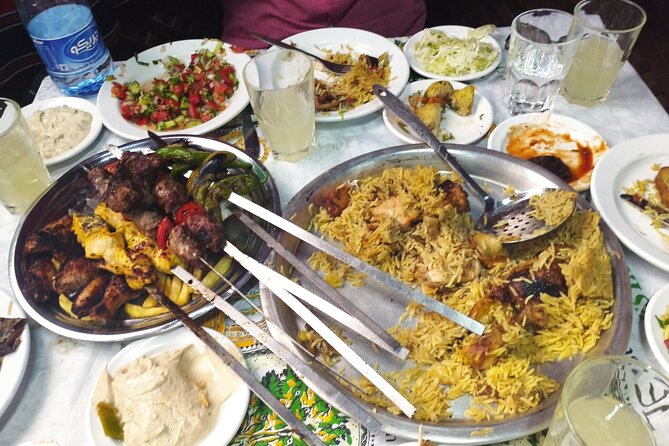
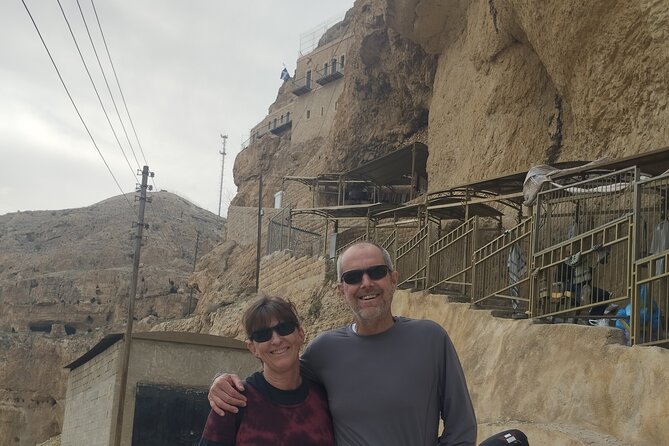
At the Mount of Temptation, you visit Deir Quruntal, the monastery associated with the biblical account of Satan testing Jesus after a 40-day fast. The monastery sits in the middle of the mountain above Jericho, and the scheduled visit lasts about 1 hour and 30 minutes.
The view is a major reason to come. From the monastery, you can look across Jericho, toward the Dead Sea, and toward Transjordan. This is one of the day’s strongest scenic moments, especially after the low, open surroundings of the Dead Sea region.
You should take the word monastery seriously. This is a religious site in a mountain setting, not simply a viewpoint reached from the vehicle. The tour data does not specify the exact walking arrangements or accessibility of the approach. Most people can participate, but anyone with mobility concerns should ask Shareef about the route before booking.
I would give this stop the full allotted time. The monastery’s setting, the story connected to it, and the broad view all deserve more than a quick photograph. It is also a good place to ask how religious traditions, geography, and local life meet in this part of the Jordan Valley.
Qasr el Yahud and the Jordan River
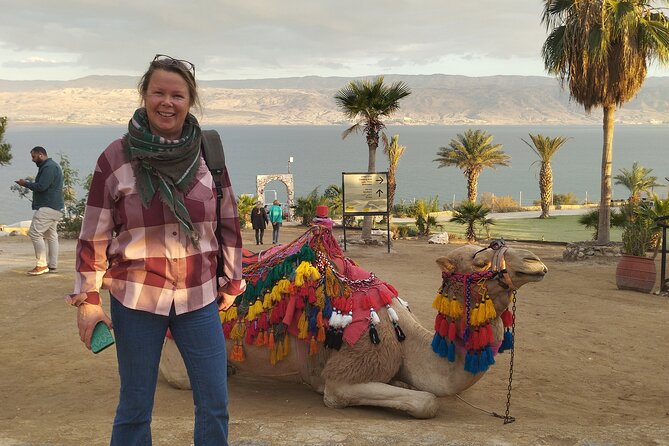
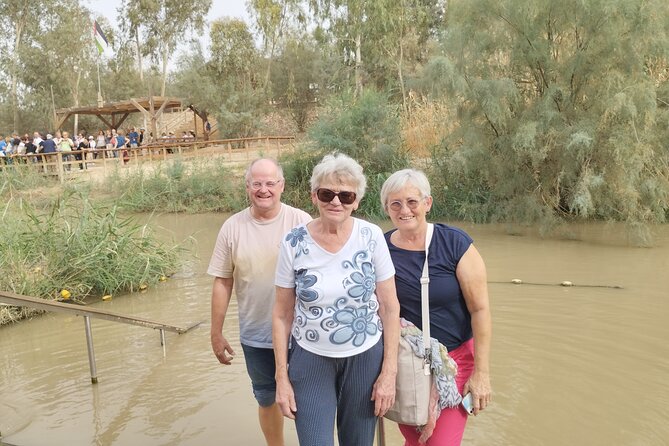
Qasr el Yahud is the tour’s Jordan River stop, where Christian tradition identifies the baptism of Jesus. You have about one hour, and admission is included.
This place carries strong meaning for Christian visitors, particularly anyone making a pilgrimage connected with baptism. The Jordan River is also a border region, so the site brings together faith, geography, and modern politics in a way that fits the tour’s wider purpose.
You can expect Shareef to provide context rather than leave you to look at the river without explanation. His strongest praised qualities are his ability to answer questions, explain Christian landmarks, and discuss the area in clear English.
The site may feel very different from Bethlehem’s churches. Bethlehem is urban and historic, while Qasr el Yahud is an open river setting with a more direct connection to the baptism tradition. The one-hour stop should give you time to take in the place without turning it into a rushed photo break.
Because local access and site conditions can change, confirm what is open on your date. The tour includes admission here, but included admission does not mean every part of the site will always operate in exactly the same way.
St. George’s Monastery in the Jericho wilderness
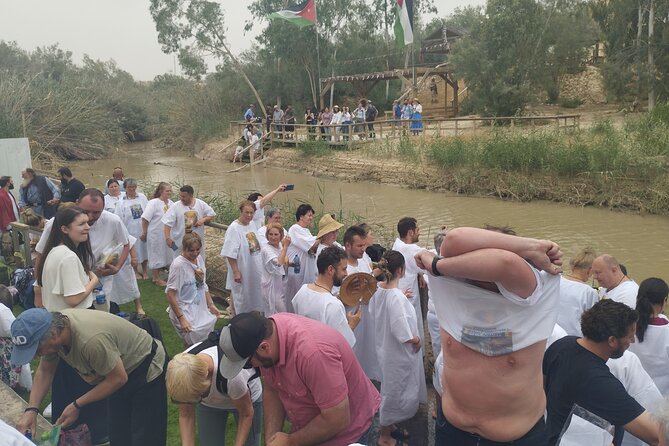
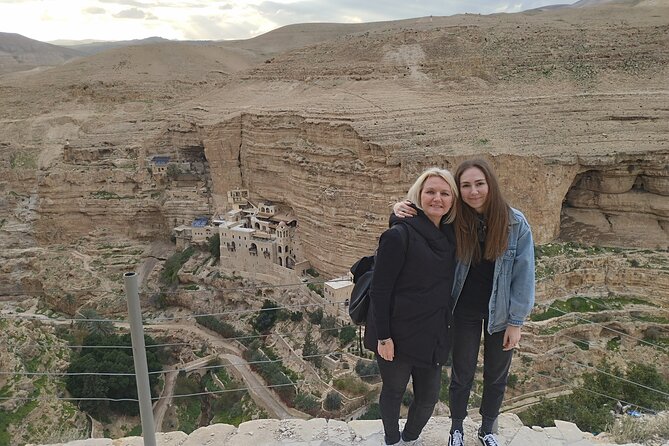
St. George’s Monastery is described as a cliff-hanging monastery in the wilderness near Jericho. You have about 50 minutes, and admission is included.
The setting is the attraction. The monastery clings to the rock, with a view that the tour describes as charming. After the broad outlook from Mount of Temptation, this stop gives you another angle on the desert country, this time from a monastery built into the cliffs.
The short time limit is the main consideration. Fifty minutes can work well for a guided look and photographs, but it may feel tight if access takes time or you want a slow visit. Ask about walking requirements if anyone in your group has limited mobility.
I like that this stop adds architectural variety. The day does not show you only churches in city centers. It takes you to religious buildings shaped by harsh terrain, which helps explain why monasteries in this region often feel so remote.
Tel es-Sultan and the ancient city of Jericho
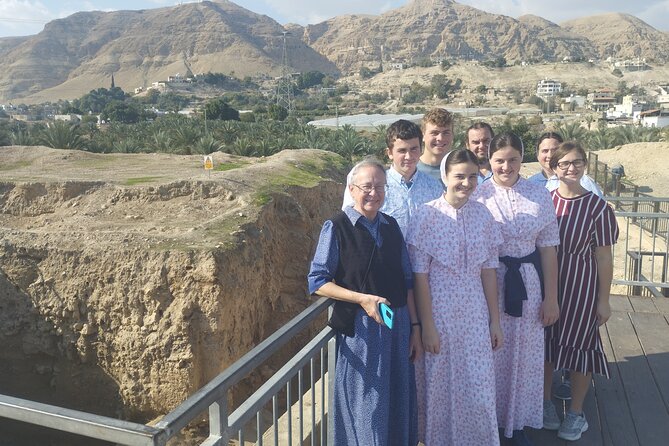
The final major stop is Tel es-Sultan, described as the oldest city in the world. The visit lasts about 40 minutes, and admission is not included.
That claim is best understood as a reference to Jericho’s extremely ancient settlement history and its place among the world’s earliest known cities. A guide matters here because an archaeological mound can look simple at first glance. Shareef can provide the historical background that helps you understand what you are seeing.
Forty minutes is enough for an introduction, but not a full archaeological study. If ancient history is your main interest, you may want to ask ahead about the exact areas covered and the admission fee. Since that fee is separate, carry a way to pay for it along with money for personal expenses.
Tel es-Sultan also gives the day a useful ending. You began with the birthplace tradition in Bethlehem and finish among the remains of one of the oldest urban settlements associated with Jericho. The route connects sacred stories with physical evidence of very old human settlement.
What the $400 price really buys
The price is $400 per group of up to four people. At four participants, that works out to $100 each for an eight-to-nine-hour private day. For two people, the effective rate is $200 each, so the value depends heavily on group size.
The cost includes an air-conditioned vehicle, private transportation, guiding, and free Wi-Fi. It also includes admission at Qasr el Yahud and St. George’s Monastery. The Church of the Nativity and Milk Grotto are listed with free admission, while Tel es-Sultan is not included.
Lunch and personal expenses are extra. You should also account for the Tel es-Sultan ticket and any spending connected with the Dead Sea stop. Even with those extras, the price can be fair for a full private route that covers several areas and avoids joining a large group.
The best value comes from sharing the vehicle with three other people who want the same type of day. You are paying not only for transport but also for Shareef’s time, local interpretation, and the ability to ask questions throughout the route.
The guide’s role in the experience
The guide can make or break a day like this. The tour covers religion, archaeology, politics, local life, and modern Palestinian identity. You need someone who can explain sensitive subjects clearly and let you ask direct questions.
Shareef receives repeated praise for his English, honesty, patience, and care with safety. He is also described as willing to recommend local food and attractions. That matters because a private tour works best when the guide listens rather than delivers the same speech to every group.
You should tell him your priorities before the day starts. If you care most about Christian pilgrimage, ask for more explanation at the churches and Jordan River. If your main interest is daily life and politics, set aside time for those questions while walking through Bethlehem. If you have an older family member, mention mobility needs early. His patient approach is repeatedly highlighted, but the itinerary itself remains physically varied.
The political side deserves a thoughtful attitude. You are receiving a local Palestinian perspective on the West Bank. That can be valuable, especially if you want to understand how history and present-day life are discussed locally. At the same time, listen critically, ask respectful questions, and remember that one guide gives you one informed perspective, not every possible view.
Timing, transport, and who should book
The tour starts and ends at Bethlehem-Beit Sahour 6. Pickup is offered, and the air-conditioned vehicle is a real advantage on a long route through warm, exposed country. Free Wi-Fi is also useful during the driving portions.
The schedule is ambitious. You visit seven stops over roughly eight to nine hours, so this is not a slow holiday outing. Expect a mixture of short guided visits, scenic pauses, and time on the road. The private format gives you some flexibility, but it cannot remove the distance between Bethlehem, Jericho, the Dead Sea area, and the Jordan River.
I would recommend this experience to:
- First-time visitors who want Bethlehem plus Jericho in one day
- Christian pilgrims who want several important sites explained together
- Families or friends who can share the $400 group price
- Visitors interested in Palestinian culture and present-day politics
- People who prefer a private guide to a large scheduled group
I would be more cautious if you want a relaxed pace, extensive time at every site, or a tour focused only on archaeology. You should also confirm the day’s route if you want a specific half-day option or a two-city version, since both are offered as alternatives.
Booking changes are straightforward if you act early. You can cancel at least 24 hours before the start for a full refund. Cancellations or changes inside that window are not refunded or accepted, and poor weather or failure to meet the minimum group requirement may lead to a different date, another experience, or a full refund.
Should you book this Bethlehem and Jericho tour?
I would book it if you want a full, varied day with a local guide and your group can handle the pace. The strongest reasons are Shareef’s attentive guiding, the private vehicle, the mix of Christian sites and Palestinian context, and the chance to connect Bethlehem with Jericho, the Dead Sea, and the Jordan River.
I would not choose it if you want to linger at one church, spend a whole day swimming, or avoid long transfers. Before paying, confirm pickup details, site access, walking requirements, lunch plans, and the extra cost at Tel es-Sultan.
For four people, the $400 group price is attractive. For two people, it is a more serious purchase, but the private service and broad route may still make sense. If your goal is to see more than the standard Bethlehem highlights and understand the places through a local Palestinian guide, this is a strong choice.
FAQ
Where does the tour start and end?
The meeting point is Bethlehem-Beit Sahour 6. The activity ends back at the meeting point.
How long does the experience last?
The tour lasts approximately eight to nine hours.
Is this a private tour?
Yes. Only your group participates, with a maximum of four people at the listed group price.
What is included in the price?
The price includes an air-conditioned vehicle, private transportation, guiding, and free Wi-Fi. Admission is included at Qasr el Yahud and St. George’s Monastery.
Is lunch included?
No. Lunch and personal expenses are not included.
What is the cancellation policy?
You can cancel at least 24 hours before the start time for a full refund. Cancellations or changes made less than 24 hours before the start are not refunded or accepted. If poor weather or the minimum number of participants affects the booking, you may be offered another date or experience, or a full refund.
Just added around the world
- No.1 Chiang Mai: 3-Hour Monk Trail Hike to Wat Doi Suthep & Palad★ 5.0 · 11 reviews
- 8 Days Private South India Temple Tour with 4 Star Luxury Hotels★ 5.0 · 3 reviews
- Chennai City Highlights – Government Museum & Temple Discovery★ 4.0 · 7 reviews
- South India Tour- Temple Architecture and Backwaters★ 5.0 · 7 reviews
- Chania Private Tour: Monastery, Scenic Gorge & Mountain Views★ 5.0 · 12 reviews
- 2-Day Private Tour of Leshan Grand Buddha and Emei Shan including Monastery Stay★ 4.5 · 8 reviews
- Half-Day Trip to Arkadi Monastery and Melidoni Cave★ 4.5 · 4 reviews
- Monastery, Elafonissi and Winery Tour from Chania★ 5.0 · 8 reviews