
Review · ACROPOLIS & ANCIENT GREEK
Blue Lake, Sanctuary of Hera, Mycenae, Ancient Corinth, Canal
Ancient Greece meets a swimming stop. This private 9-hour day trip from Athens packs the Corinth Canal, Mycenae, Ancient Corinth, Acrocorinth, and the Sanctuary of Hera into one long outing, with a quiet coastal finish at the Blue Lake. I like the door-to-door transport and the freedom to adjust the schedule with your driver. I also like the mix of major ruins, countryside views, and time by the water.
The main drawback is pace. You cover a lot of ground, and some stops last only 15 or 30 minutes. At $337.15 per person, the price makes the most sense for a small group that values a private car, flexible timing, and hotel pickup. Entrance fees, meals, and a licensed guide inside the sites cost extra.
Five useful things to know before booking
- You visit Mycenae and Corinth in one ambitious day: This is an efficient choice if you have limited time in Athens and want two major archaeological areas.
- The Blue Lake is the relaxing finale: The Sanctuary of Hera in Perachora gives the day a coastal setting and a chance to swim under the Greek sun.
- Your driver is not automatically a licensed site guide: Drivers provide historical background on the road, but a licensed guide inside museums and ruins must be added separately.
- The schedule can change: Previous guests adjusted stops to spend longer at places they liked, or changed the Blue Lake visit for an older fortress during winter.
- Private transport changes the experience: You avoid buses, transfers, and navigation, with hotel or port pickup, bottled water, Wi-Fi, and a comfortable vehicle.
Leaving Athens for the Corinth Canal
The day begins with pickup at your Athens hotel. Your driver meets you in the lobby, or contacts you at the entrance if you are staying in an Airbnb apartment. Airport and port pickup can be arranged for an additional cost.
The first major stop is the Corinth Canal, cut through the narrow Isthmus of Corinth. The canal links the Gulf of Corinth with the Saronic Gulf and gave ships a way around the southern Peloponnese. You get about 45 minutes here, enough to take in the scale of the cut, photograph the waterway, and walk near the historic crossing.
The stop also includes Ancient Diolkos, the paved trackway used in antiquity to move boats overland across the isthmus. It is an easy detail to miss if you only look at the modern canal, but it helps explain why this narrow strip of land mattered long before 19th-century engineers completed the present water route.
I find the canal a good opening because it gives you a clear sense of place. You are not just driving from one ruin to another. You are seeing the strategic link between central Greece and the Peloponnese.
More Acropolis and Ancient Greek Temple Tours in Athens:
- Athens: Cape Sounion & Poseidon Temple Sunset Half-Day Trip
★ 4.8 · 8,241 reviews - Athens: Cape Sounio & Poseidon Temple Trip with Audio Guide
★ 4.4 · 4,521 reviews - Cape Sounion and Temple of Poseidon Half-Day Small-Group Tour from Athens
★ 4.5 · 3,205 reviews
Mycenae, where Bronze Age power feels close
Mycenae is the heart of the archaeological part of the day. The site is associated with King Agamemnon and the heroic world described in Homer, though the ruins themselves belong to the late Bronze Age. Mycenae was one of the most important centers of that period, and its heavy stone fortifications still give the place a powerful presence.
You have about 90 minutes at the wider Mycenae stop, with additional short visits to the Lion Gate, the tombs, and the museum. That sounds generous, but it goes quickly. Wear shoes suited to uneven ground, and keep your camera ready.
The Cyclopean Walls are the first major visual shock. Huge limestone blocks form the defensive walls, and the ancient Greeks later explained their size by saying that only Cyclopes could have moved them. You can see why the story survived. Even in ruins, the construction looks far beyond ordinary human effort.
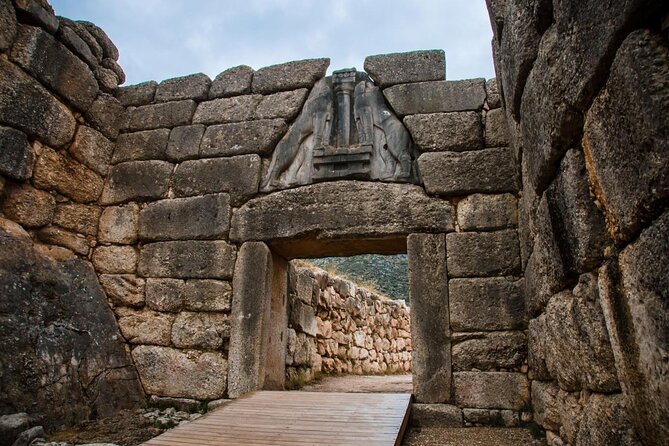
The Lion Gate is the famous entrance to the citadel, built in the 13th century BC. Two large lions or lion-like animals face each other above the doorway, beneath a triangular relief. The gate is compact, but it carries more drama than many larger monuments because it was the formal threshold to Mycenae’s royal center.
Inside the citadel, the remains of the palace include domestic rooms, a throne-room suite, a grand staircase, official rooms, and a forecourt. Much of the structure is fragmentary, so the value comes from understanding the plan and setting rather than expecting complete buildings.
Royal tombs and the gold of Mycenae
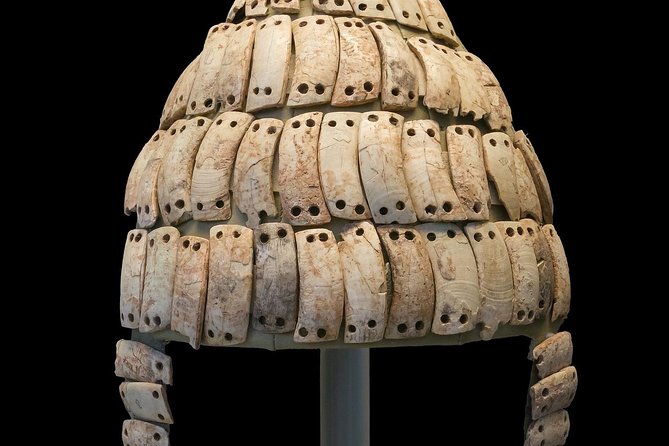
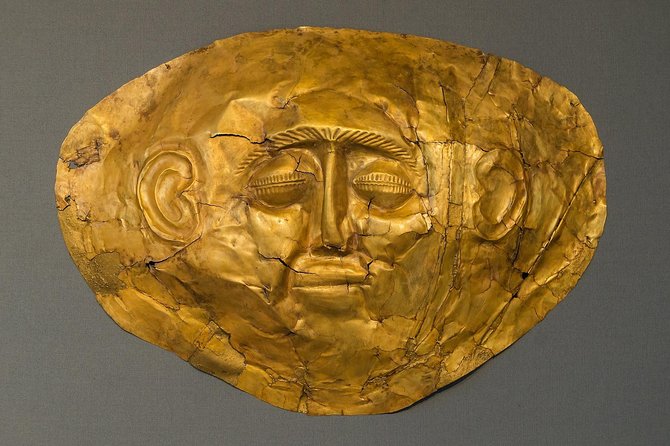
The Grave Circles, identified as A and B, were royal burial areas outside the Bronze Age citadel. The finds from these cemeteries made Mycenae famous for its gold burial goods, masks, jewelry, weapons, worship figures, and other objects.
The Treasury of Atreus is one of the best-preserved structures connected with the site. It is a tholos tomb, shaped like a large beehive and built around 1250 BC. The long entrance passage leads into a tall circular chamber with carefully fitted stone courses. The space is bare now, but its scale and acoustics make it easy to understand its ceremonial weight.
The nearby Tomb of Clytemnestra is another Mycenaean tholos tomb, also dated to about 1250 BC. Its name comes from Clytemnestra, the wife of Agamemnon in Greek myth. The names are legendary, while the architecture is archaeological, and the two layers make this stop especially engaging.
The museum holds the site’s most important discoveries. You can see grave goods, burial masks, weapons, jewelry, idols, and frescoes in a more organized setting than the open ruins allow. I recommend saving enough energy for the museum. It gives useful shape to what you see outside, especially if you are not adding a licensed guide.
The advertised schedule separates some Mycenae stops into 30-minute and 15-minute visits, and entrance tickets are not included. Ask your driver how the timing will be handled on your day. A private tour gives you some control, but it cannot make every stop long.
Acrocorinth and the high view over Corinth
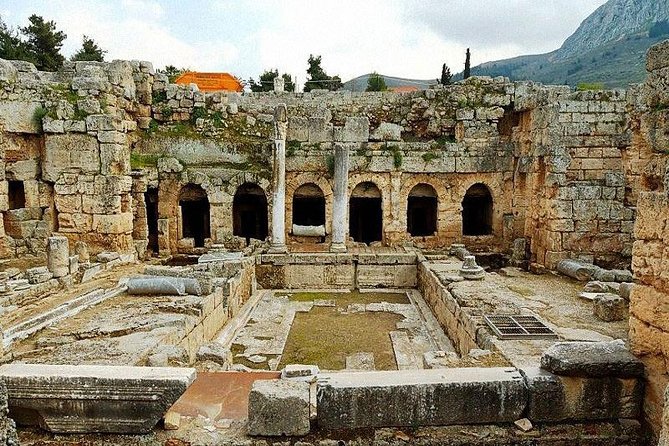
After Mycenae, the route turns toward Corinth and climbs to Acrocorinth, the acropolis of ancient Corinth. The fortress sits on a large rocky height above the ancient city, and the views toward the Corinthian Gulf and Geraneia Mountain are one of the day’s rewards.
You have about an hour here. The gates lead through a system of three circuit walls reinforced with towers. Inside are remains from several periods, including a keep, churches, mosques, houses, fountains, cisterns, and a Frankish tower.
At the summit area are traces of the Temple of Aphrodite, which once occupied the highest of two peaks. The site is a reminder that Corinth was shaped by many eras, not just classical Greece. Ancient, Roman, Byzantine, Frankish, and Ottoman layers appear in the same fortified setting.
Acrocorinth is also the stop most likely to test your legs. The route involves uneven surfaces and uphill walking, and the site is spread across a large area. You may prefer to focus on the gates, the fortifications, and the views rather than trying to inspect every remaining structure.
The Upper Peirene Fountain is given about 15 minutes. The spring is linked in mythology to Asopus and Sisyphus, and it sits within the encircling walls. It is a small stop, but it adds another practical detail to the ancient settlement: cities needed reliable water as much as temples and walls.
A few more temple visits around Athens worth a look
- Cape Sounion & Temple of Poseidon: Small Group Tour
★ 4.7 · 1,945 reviews - Athens: Cape Sounion & Temple of Poseidon Sunset Experience
★ 4.3 · 1,338 reviews - From Athens: Temple of Poseidon & Cape Sounion Half-Day Tour
★ 4.3 · 1,082 reviews - Athens Half Day Tour, Acropolis, Parthenon, Temple of Olympian Zeus & Hephaistus
★ 5.0 · 609 reviews
Ancient Corinth, from Apollo to Saint Paul
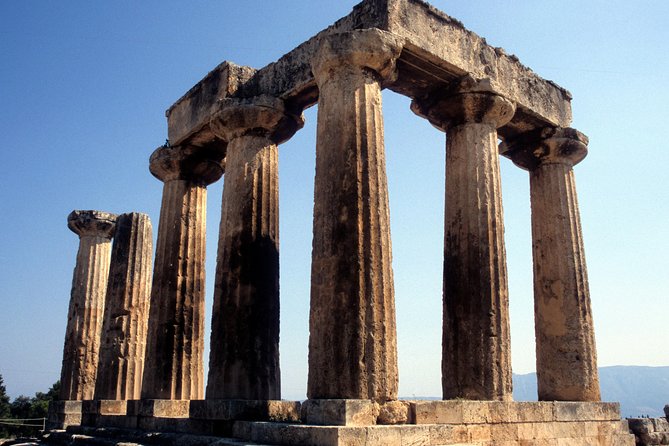
Ancient Corinth receives the longest site visit, about three hours including time for lunch and village shops. That is helpful because the area has several separate points of interest, and rushing through all of them would flatten the experience.
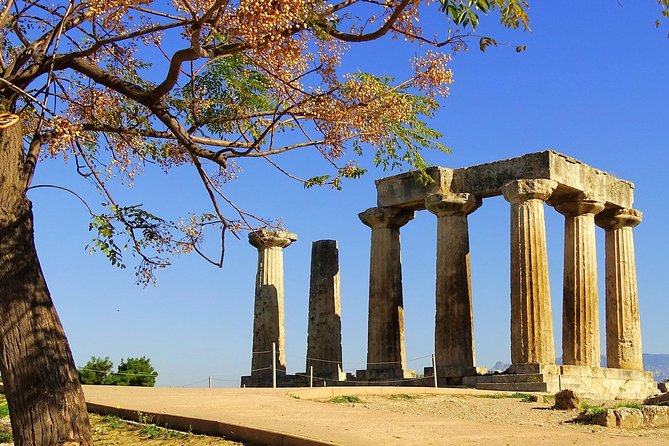
The Temple of Apollo is the visual center. Built around 560 BC, it is one of the earliest Doric temples in the Peloponnese and mainland Greece. Its monolithic columns are unusual because each column was made from a single stone rather than stacked drums. Only part of the temple survives, but the remaining columns make the ancient city easy to picture.
The Agora was a large rectangular public area, about 160 meters long and 70 meters wide. Shops, small temples, and an altar once lined the space. The Bema, or speaker’s platform, is especially important for visitors interested in early Christianity because Apostle Paul is associated with addressing the Corinthians here in AD 52.
You can also see Roman buildings, the theatre and Odeon, the Asklepieion, and the Lechaion Road leading toward the old port. The Hadgimoustafa spring adds an Ottoman-era feature to the site, while St. Paul’s Church contains a mosaic mural showing Saul’s vision of Christ on the road to Damascus.
The Ancient Corinth Archaeological Museum displays objects from the site and nearby settlements. It helps explain how the city functioned over time, from Greek religious center to Roman city and later Christian community.
Lunch is not included, but the plan allows time for a village-style meal on a terrace overlooking the ruins and the Temple of Apollo. This is one of the more appealing details of the day because you are not forced into a quick meal in the car. Your driver can suggest a local restaurant, and one previous guest specifically praised the food and view.
You can also browse village shops for handmade souvenirs. Keep this part flexible. If you are fascinated by the museum and ruins, you may want to use most of the three hours on the site itself.
The Sanctuary of Hera and the Blue Lake
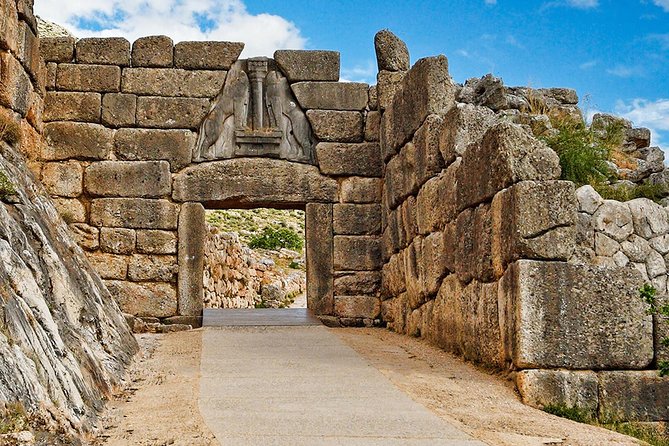
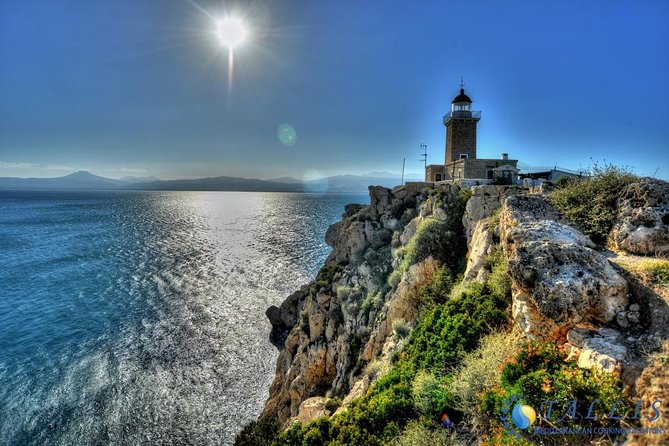
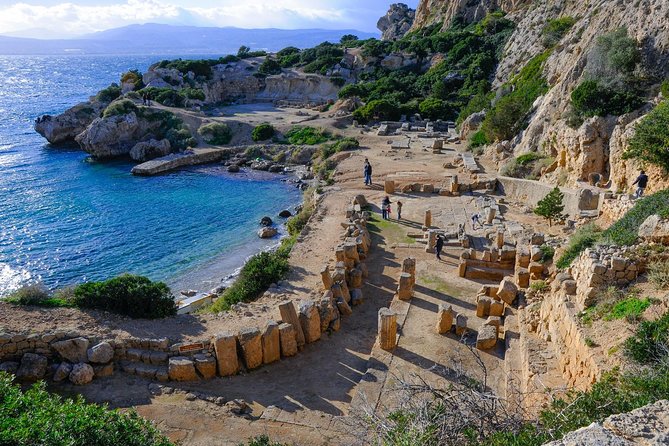
The final major stop is the Sanctuary of Hera at Perachora, near the Blue Lake and Malagavi Lighthouse. This is a very different setting from Mycenae and Corinth. Instead of citadel walls and crowded historical layers, you get a coastal setting, open views, and time to slow down.
The visit lasts about an hour and includes the chance to swim. The water is described as clear, and the setting makes a refreshing finish after a full day of walking through ruins. Bring a swimsuit, towel, and a change of clothes if swimming is important to you. The tour provides bottled water and refreshing wipes, but beach equipment is not listed.
The sanctuary is dedicated to Hera, and the nearby lighthouse adds another point of interest. The view toward the Corinthian Gulf and the surrounding coast makes this stop valuable even if you decide not to enter the water.
Timing may matter here. A previous winter outing replaced the Blue Lake visit with an 18th-century castle because the conditions were less suitable for swimming. That flexibility is useful, but you should confirm the plan with your driver, especially outside the warmest months.
Some visitors may find the Blue Lake stop too short if they want a full beach afternoon. I see it as a one-hour reset, not a dedicated swimming excursion.
What the private car adds
This is a private tour for your own group, not a shared coach outing. The driver picks you up and returns you to your Athens hotel, which removes the stress of finding a bus, parking, or working out several separate connections.
The vehicle is described as private and comfortable, with Wi-Fi, bottled water, handmade Greek biscuits, and refreshing wipes. Those small supplies matter on a nine-hour road day. One guest also appreciated that the driver had enough water for the long drive.
The strongest part of the service is the ability to adjust the day. Yannis was praised for arriving on time, helping with timing, and making an extra sunset stop at the Temple of Hera. Panos was also praised for giving useful site and restaurant suggestions. Yannis even provided a history book that children could use in the car.
Still, keep the driver’s role clear. The driver can explain the sites and provide historical context while you travel, but does not automatically accompany you inside the archaeological areas or museums. You can request a licensed guide for an added fee if you want detailed commentary at each location.
Price, tickets, and the true value
The listed price is $337.15 per person. That is a serious day-trip price, but you are paying for a full private vehicle, hotel or port service, a long route, flexible timing, and the convenience of combining places that would be difficult to connect independently in one day.
The value improves as your group grows because the price is charged per person but the service is private. Group discounts may also be available. I would compare the total cost for your party rather than judging the figure in isolation.
Entrance fees are not included. The major archaeological sites and museums require separate tickets, and skip-the-line ticket service is available on request. Food, drinks beyond the supplied water and biscuits, tips, airport transfers, and a licensed guide are also extra.
Free cancellation is available if you cancel at least 24 hours before the start time. Changes made inside that window are not accepted, so check your schedule before the deadline.
Who should book this day trip?
I would choose this outing if you want to see Mycenae and Corinth but do not want to rent a car or manage the route yourself. It suits couples, families, and small groups who value a private vehicle and who prefer a driver to handle the roads.
It is also a good choice for people who like variety. In one day, you move from modern engineering to Bronze Age fortifications, classical temples, Roman streets, Christian history, mountain views, and a coastal swim.
I would hesitate if you want slow archaeological study. Mycenae alone can fill much of a day, and Ancient Corinth deserves time in its own right. The schedule is ambitious, and the short stops at the Lion Gate, Upper Peirene Fountain, and Geraneia viewpoint may feel rushed.
Should you book it?
Book this tour if your priority is range and convenience. You will see some of the most important ancient sites near Athens, enjoy private door-to-door transport, and finish beside the water instead of returning directly from the ruins.
Skip it if you want a specialist archaeological tour with long museum visits and detailed guiding at every monument. For most small groups with only one free day, though, the combination of Mycenae, Corinth, Acrocorinth, the canal, and Hera’s Sanctuary offers strong value, especially when a thoughtful driver such as Yannis helps shape the day around your interests.
FAQ
How long is the tour?
The experience lasts approximately 9 hours, including the drive back to Athens.
Is hotel pickup included?
Yes. Pickup and drop-off are provided at Athens hotels. For an Airbnb apartment, the driver contacts you on arrival at the building entrance.
Can I be picked up at the airport or port?
Yes, airport and port pickup can be arranged, but an additional cost applies. At those locations, the driver meets you in the arrivals area with a sign bearing your name.
Are entrance fees included?
No. Entrance fees to the archaeological sites and museums are not included. Skip-the-line ticket service can be requested.
Is a licensed guide included?
No. The tour includes professional drivers who provide historical information during the journey. A licensed guide to accompany you inside the sites and museums can be added for an extra fee.
Is swimming included at the Blue Lake?
The itinerary includes time for a refreshing swim at the Blue Lake near the Sanctuary of Hera. Bring your own swimsuit and towel, as those items are not listed among the included supplies.
Is the tour private?
Yes. Only your group participates, and transportation is provided by private vehicle.
Just added around Athens
- Mt. Villages of Arcadia & Clifftop Monastery Private Day Trip★ 4.5 · 5 reviews
- Relax Day: Thermal Lake, Olive Oil Tasting & Poseidon Temple Tour★ 5.0 · 5 reviews
- Mercedes Private Tour to Classical Athens and Temple of Poseidon★ 5.0 · 13 reviews
- Sunset Private Tour to Poseidon Temple & Vouliagmeni Thermal Lake★ 4.5 · 20 reviews
- The adventure of Athens best and Poseidon’s temple in cape Sounion★ 4.5 · 9 reviews
- Temple of Olympian Zeus: Self-Guided Audio Tour on your Phone (without ticket)★ 4.0 · 8 reviews
- Temple of Poseidon and Cape of Sounion private sunset Tour★ 5.0 · 30 reviews
- Temple of Poseidon and Cape Sounion Half Day Afternoon Tour★ 4.0 · 32 reviews
Acropolis & Ancient Greek Temple Tours, compared.
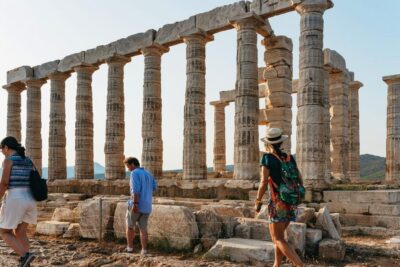
Cape Sounion & Poseidon Temple Sunset Half-Day Trip
Read our review →
Cape Sounio & Poseidon Temple Trip with Audio Guide
Read our review →
Cape Sounion and Temple of Poseidon Half-Day Small-Group Tour from Athens
Read our review →
Cape Sounion & Temple of Poseidon: Small Group Tour
Read our review →
Ephesus Temple of Artemis and House of Mary Private Half Day Tour
Read our review →
Cape Sounion & Temple of Poseidon Sunset Experience
Read our review →
Temple of Poseidon & Cape Sounion Half-Day Tour
Read our review →
Ephesus and Temple of Artemis Private Tour from Kusadasi Port
Read our review →Browse the lists this tour appears in