
Review · ACROPOLIS & ANCIENT GREEK
St. Paul’s Footsteps: Biblical Ancient Corinth & Daphni Monastery
Ancient Corinth connects faith, myth, and real stone. This private Athens excursion brings you to the Corinth Canal, the ruins linked with Saint Paul, the hilltop fortress of Acrocorinth, the old harbor at Kechries, and Daphni Monastery. I like the private vehicle and flexible pace, and I like the onboard Wi-Fi, bottled water, and pickup from an Athens address or Piraeus port. The main catch is that your driver is not a licensed guide and will not enter the archaeological sites with you.
This is a full eight-hour day, so you should expect a long outing rather than a quick side trip. The $425.85 group price covers up to four people, private transport, an air-conditioned vehicle, and an English-speaking driver with strong knowledge of the area. Site admission is extra, with Ancient Corinth and its museum costing €15 per person.
Key points to know before booking
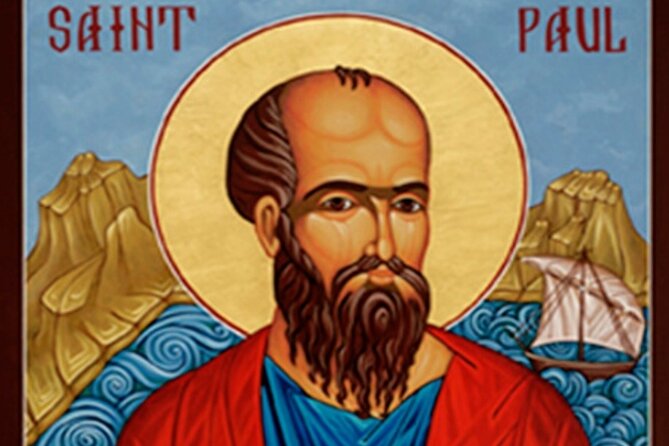
- Saint Paul’s Corinth is the heart of the day: Ancient Corinth, the Bema, the Temple of Apollo, and Kechries give the biblical theme real substance.
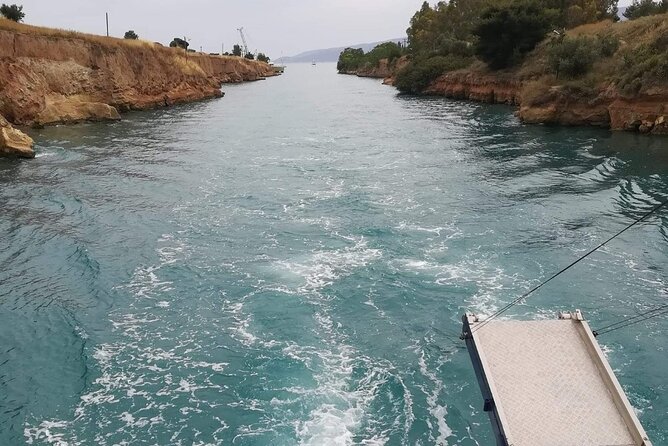
- The Corinth Canal makes an easy first stop: You get about 30 minutes for photographs and a look at this 6.4-kilometer engineering project.
- Acrocorinth adds the best views: The old fortress brings Greek, Byzantine, and Ottoman chapters into one steep hilltop visit.
- Daphni Monastery changes the mood: Its Byzantine mosaics offer a quiet, art-filled finish outside central Athens.
- You tour the sites independently: Your driver can explain the background and suggest a route, but a licensed guide must be requested separately and is subject to availability.
- The price works best for a small group: Split among four people, the private transport becomes far better value than it first appears.
Why this Corinth day trip works
The route covers several layers of Greek history without asking you to arrange separate taxis, buses, and entrance tickets. You leave Athens, cross the Isthmus of Corinth, visit ancient sites on both sides of the peninsula, then return through the western edge of the Athens area to Daphni Monastery.
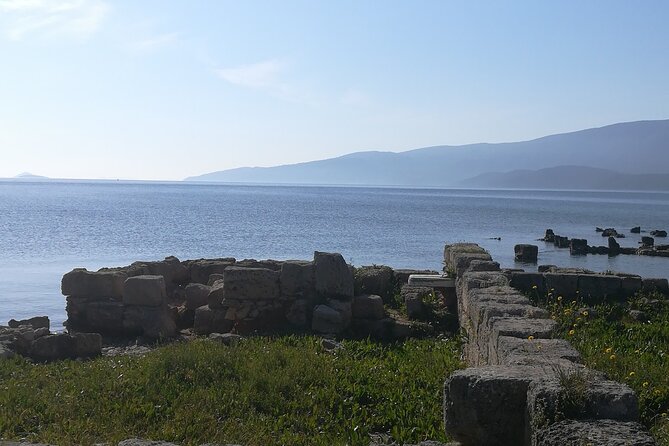
I especially like the way the day links Saint Paul’s travels with places you can still see. At Ancient Corinth, you can walk near the Bema, the public platform associated with Paul’s appearance before the Roman authorities. At Kechries, the remains of the old harbor connect with the port from which Paul sailed on one of his missionary journeys.
The biblical theme is not the only reason to come. Corinth was also a major center of trade, politics, religion, and Roman life. The ruins and museum give you a wider picture than a purely devotional visit, while Acrocorinth adds military history and broad views over the region.
The schedule is active but not frantic. Most stops run from 30 minutes to one hour. That gives you enough time to see the main features, but not enough for a slow archaeological study of every wall and inscription. If you enjoy taking your time in museums, or if steep ground is difficult, the pace may feel tight.
More Acropolis and Ancient Greek Temple Tours in Athens:
- Athens: Cape Sounion & Poseidon Temple Sunset Half-Day Trip
★ 4.8 · 8,241 reviews - Athens: Cape Sounio & Poseidon Temple Trip with Audio Guide
★ 4.4 · 4,521 reviews - Cape Sounion and Temple of Poseidon Half-Day Small-Group Tour from Athens
★ 4.5 · 3,205 reviews
Crossing the 6.4-kilometer Corinth Canal
The Corinth Canal is the first visual reward of the morning. It cuts through the narrow Isthmus of Corinth and links the Aegean Sea with the Ionian Sea. The present canal dates from the 19th century, though the idea of crossing this strip of land is far older.
You have about 30 minutes here. That is enough for photographs and a short look at the canal’s sharp sides, but it is not a boat trip or an extended engineering tour. Use the stop to understand the geography: Corinth sits at a natural crossroads, and control of this narrow passage helped shape the area’s commercial and military importance.
This stop also breaks up the drive nicely. You are not asked to begin with a long archaeological explanation before you have your bearings. The canal gives you an immediate sense of why Corinth mattered.
Walking through Ancient Corinth and the Temple of Apollo
Ancient Corinth is the main historical stop. You spend about an hour among the ruins, with a separate half-hour focus on the Temple of Apollo. The admission fee is not included, so plan on €15 per person for Ancient Corinth and the Archaeological Museum of Corinth.
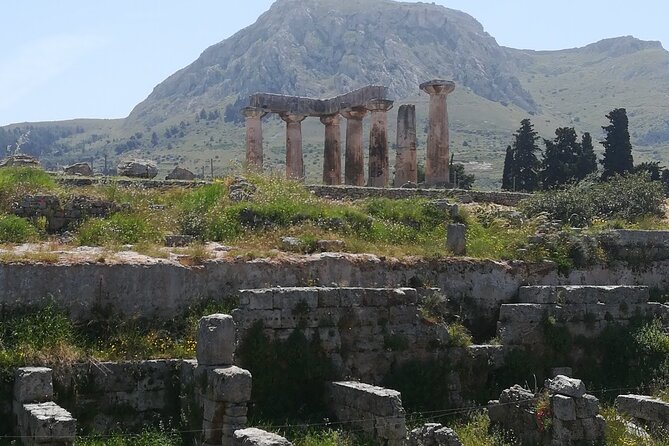
The Temple of Apollo is the most recognizable sight. Its surviving Doric columns date to the 6th century BC, making it one of the oldest stone temples in Greece. The remains are limited, but the setting gives you a clear sense of the temple’s scale and Corinth’s importance in the ancient Greek world.
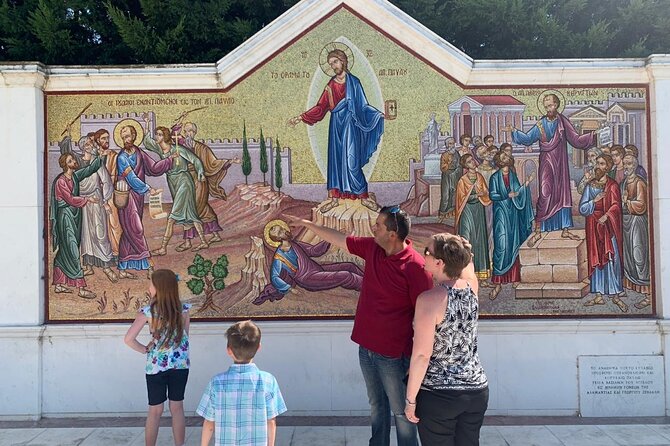
The wider site includes the old marketplace, temples, fountains, public buildings, and the Bema. The Bema has special meaning for anyone following Paul’s journeys. It also helps explain that Paul’s time in Corinth took place within a busy civic center, not an isolated religious settlement.
The route through the ruins is self-guided unless you arrange a licensed guide. Your driver can give you useful background and explain a sensible order for seeing the site, but you will explore on foot without the driver beside you. One past visitor particularly appreciated receiving directions to the Bema and the Peirene Fountain, along with the Temple of Apollo and Acrocorinth.
That arrangement suits independent visitors who enjoy reading signs and moving at their own speed. If you want detailed explanations of architecture, inscriptions, and Roman politics at every stop, request a licensed guide in advance. Availability is not guaranteed.
Adding context at the Archaeological Museum
The Archaeological Museum of Ancient Corinth helps turn scattered stones into a more complete picture. You can see pottery, sculpture, Roman mosaics, and ordinary objects that show how people lived in the city across several periods.
Allow about one hour here. The museum is especially useful after the ruins because it gives you details that stone fragments cannot provide. Sculptures reveal the city’s religious world, mosaics show Roman taste and wealth, and everyday objects bring the ancient settlement closer to daily life.
The museum also adds context to the early Christian period connected with Paul. Do not expect a museum devoted only to the apostle. Instead, you get a broader presentation of Corinth, with the Christian chapter forming one part of a much longer story.
The admission charge covers both Ancient Corinth and the museum, at €15 per person. That makes the combined ticket reasonable, particularly if you care about archaeology rather than only taking photographs outside the ruins.
A few more temple visits around Athens worth a look
- Cape Sounion & Temple of Poseidon: Small Group Tour
★ 4.7 · 1,945 reviews - Athens: Cape Sounion & Temple of Poseidon Sunset Experience
★ 4.3 · 1,338 reviews - From Athens: Temple of Poseidon & Cape Sounion Half-Day Tour
★ 4.3 · 1,082 reviews - Athens Half Day Tour, Acropolis, Parthenon, Temple of Olympian Zeus & Hephaistus
★ 5.0 · 609 reviews
Climbing to Acrocorinth
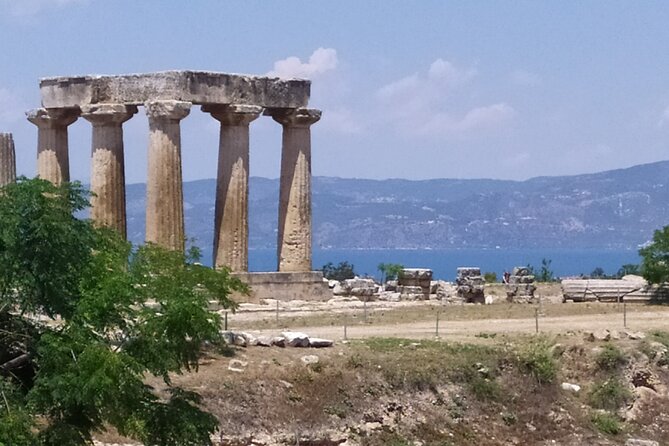
Acrocorinth rises above Ancient Corinth and gives the day its strongest sense of scale. This fortified acropolis served defensive roles from ancient Greek times through the Byzantine and Ottoman periods. Its walls, gates, and remains of older religious buildings show how each era reused this commanding position.
You have about one hour here, and that may pass quickly. The site involves walking around a large hilltop fortress, so wear shoes suited to uneven ground. The tour information does not promise a full climb to every section, and your actual route will depend on time and conditions. Ask your driver where to focus before setting off.
The reward is not only the fortifications. Acrocorinth helps you read the geography around Corinth. From above, the old city, the Isthmus, and the wider region make more sense. You can see why this hill mattered for defense and why Corinth held such a strong position between mainland Greece and the Peloponnese.
This is also the stop most likely to challenge anyone with limited mobility. The tour says most people can participate, but it does not describe the paths as accessible. If you need a gentler schedule, discuss this before departure and consider shortening the time at Acrocorinth.
Pausing at Kechries, the old harbor
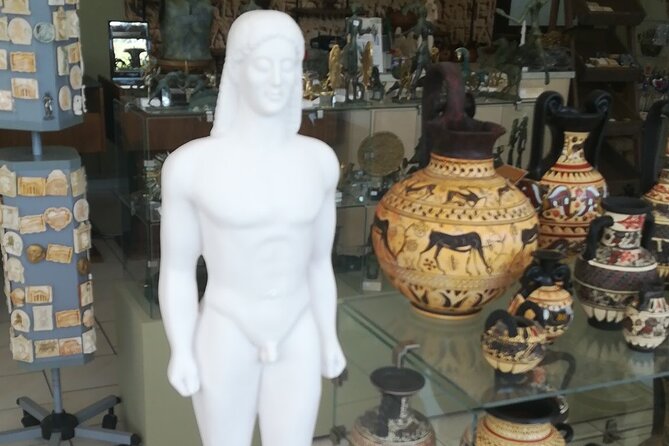
Kechries is a smaller and quieter stop, lasting about 30 minutes. It was the eastern port of Corinth, where trade and sea travel linked the city with other parts of the ancient world.
The surviving remains are not as extensive as those at Ancient Corinth. You will see a more open archaeological setting, with traces of the old harbor area rather than a large collection of standing buildings. That is part of the appeal. Kechries gives the day a reflective pause after the larger ruins and fortress.
For visitors following Saint Paul’s route, Kechries carries special weight. It is identified as the port from which he departed on one of his missionary journeys. The connection is easier to appreciate here than in a museum because the sea and harbor setting remain central to the experience.
Do not expect a long guided presentation or a packed attraction. This is a short stop for context, photographs, and a moment to connect the ancient port with Corinth’s wider trade network.
Finding Byzantine art at Daphni Monastery
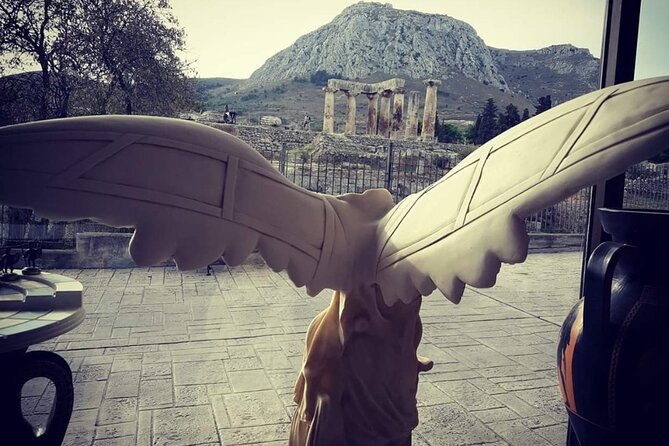
Daphni Monastery provides a strong change of pace near the end of the day. Located outside Athens, the 11th-century monastery is a UNESCO World Heritage site, known for its Byzantine architecture and detailed mosaics.
You have about one hour here. The church and its mosaics are the main reason to visit. Religious scenes cover the interior with a level of detail and artistic control that feels very different from the open stones of Ancient Corinth. After a day focused on Greek temples, Roman life, military walls, and Paul’s journeys, Daphni offers a quieter Orthodox setting.
The monastery also gives the tour a useful chronological sweep. You begin with a 19th-century canal, look back to ancient Greek and Roman Corinth, visit a fortress used across several eras, then finish with medieval Byzantine art. That range is one of the strongest reasons to choose this route instead of a simple Corinth transfer.
The stop is not a substitute for a full monastery tour. Your driver will not enter the site with you, and no official guide is included by default. Still, the hour is enough to appreciate the church, grounds, and mosaics if you prefer to look carefully rather than rush.
The private car, driver, and group setup
Pickup and return are offered from your Athens hotel, residence, or Piraeus port. That matters if you are staying outside the central hotel zone or arriving by cruise ship. You avoid working out a separate transfer to the Corinth area, which can make the day much easier.
The vehicle is air-conditioned, and Wi-Fi is provided onboard. Wi-Fi will not change the archaeological sites, but it is useful for maps, messages, and avoiding mobile roaming charges during a long day on the road. Bottled water is also included.
Your driver speaks English and has strong knowledge of local history, but is not licensed to accompany you inside the sites. This distinction is important. You receive commentary during transfers, practical directions, and answers to questions, but not a formal guided lecture beside the Temple of Apollo or inside Daphni Monastery.
The private format is a real advantage. You are not waiting for a large group to gather at every gate, and your party can spend more time at the stops that matter most. The listed capacity is up to four people, so the price becomes easier to justify when shared by a family or small group.
One past booking praised a driver named Spiro for making the history easier to follow and for giving clear directions around Ancient Corinth. That kind of driver-led help is valuable, but remember that service can vary by assigned driver and that the driver’s role remains different from that of a licensed guide.
Is $425.85 a fair price?
At $425.85 per group, the tour is not a budget bus excursion. For one person, the cost is high. For four people, it works out to about $106 per person before admission, which is more reasonable for a full private day with pickup, return transport, Wi-Fi, water, and an air-conditioned vehicle.
You still pay the €15 entrance fee per person for Ancient Corinth and the museum. The tour does not include a licensed guide, though one can be requested depending on availability. Add that possibility to your budget if detailed site interpretation is important to you.
The best value comes from convenience and coverage. You visit several places that are spread across the Corinth area without arranging your own car. You also get a private schedule instead of a fixed large-group routine.
The weaker value appears if you are only interested in Ancient Corinth. In that case, public transport or a simpler excursion might cost less. This tour earns its price through the combination of Corinth, Acrocorinth, Kechries, and Daphni Monastery in one day.
Who should book this experience?
I would choose this tour if you want biblical sites but also care about Greek temples, Roman archaeology, fortifications, and Byzantine art. It suits couples, families, and small groups who value a private vehicle and do not mind exploring the sites without a guide beside them.
It is also a good fit for cruise passengers using Piraeus as a starting point. Pickup and return reduce the risk of wasting time on transfers, though you should confirm that the eight-hour schedule fits your ship’s departure time.
You may want another option if you prefer a slow museum visit, need a fully accessible route, or expect a licensed historian to lead you throughout the day. The tour covers a lot, and Acrocorinth in particular may require more walking than some visitors expect.
Cancellation is free if you cancel at least 24 hours before the start time. Changes or cancellations inside that window are not accepted for a refund.
Should you book it?
Book this experience if your ideal day links Saint Paul’s Corinth with temples, a fortress, an ancient port, and Byzantine mosaics. The private vehicle, hotel or port pickup, and small-group format make the long route practical, while the driver can help you use your time well.
Before paying, decide how much interpretation you need. If you are happy to explore ruins independently after receiving background from your driver, this is a strong and flexible choice. If a formal guide is essential, request one early and confirm availability. For a group of up to four, the cost is fair for the amount of ground covered and the convenience of private transport.
FAQ
How long is the tour?
The experience lasts approximately eight hours.
How much does the private tour cost?
The price is $425.85 per group, for up to four people.
Is pickup included?
Yes. Pickup and return are offered from an Athens hotel, residence, or Piraeus port.
Is a licensed guide included?
No. The driver is not a licensed tour guide and will not accompany you inside the sites. A licensed guide may be requested, depending on availability.
How much is admission to Ancient Corinth and its museum?
Admission costs €15 per person and can be purchased on-site.
Is transportation private?
Yes. The tour provides private transportation in an air-conditioned vehicle, and only your group participates.
Is Wi-Fi available during the drive?
Yes. Wi-Fi is available onboard, and bottled water is included.
Can I cancel for a full refund?
Yes, if you cancel at least 24 hours before the experience start time. Cancellations made less than 24 hours before the start are not refunded.
Just added around Athens
- Mt. Villages of Arcadia & Clifftop Monastery Private Day Trip★ 4.5 · 5 reviews
- Relax Day: Thermal Lake, Olive Oil Tasting & Poseidon Temple Tour★ 5.0 · 5 reviews
- Mercedes Private Tour to Classical Athens and Temple of Poseidon★ 5.0 · 13 reviews
- Sunset Private Tour to Poseidon Temple & Vouliagmeni Thermal Lake★ 4.5 · 20 reviews
- The adventure of Athens best and Poseidon’s temple in cape Sounion★ 4.5 · 9 reviews
- Temple of Olympian Zeus: Self-Guided Audio Tour on your Phone (without ticket)★ 4.0 · 8 reviews
- Temple of Poseidon and Cape of Sounion private sunset Tour★ 5.0 · 30 reviews
- Temple of Poseidon and Cape Sounion Half Day Afternoon Tour★ 4.0 · 32 reviews
Acropolis & Ancient Greek Temple Tours, compared.
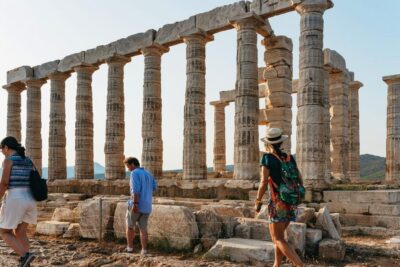
Cape Sounion & Poseidon Temple Sunset Half-Day Trip
Read our review →
Cape Sounio & Poseidon Temple Trip with Audio Guide
Read our review →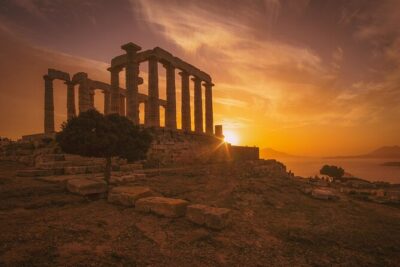
Cape Sounion and Temple of Poseidon Half-Day Small-Group Tour from Athens
Read our review →
Cape Sounion & Temple of Poseidon: Small Group Tour
Read our review →
Ephesus Temple of Artemis and House of Mary Private Half Day Tour
Read our review →
Cape Sounion & Temple of Poseidon Sunset Experience
Read our review →
Temple of Poseidon & Cape Sounion Half-Day Tour
Read our review →
Ephesus and Temple of Artemis Private Tour from Kusadasi Port
Read our review →Browse the lists this tour appears in