
Review · INDIA
Private Tour of Step well, Modhera Sun Temple & Patola saree weaving by car
History gets personal here. This private 10-hour trip from Ahmedabad links three remarkable Gujarati sights: Rani ki Vav, Modhera Sun Temple, and the Patan workshops where Patola sarees are made. I like the private car and guide, which remove the trouble of arranging several long journeys yourself, and I like the mix of grand architecture with a living craft tradition.
Lunch is included, and the route can be adjusted to suit your interests. The main point to consider is the driving time. The road stretches can run two to three hours each way, so this is a full, active day rather than a relaxed outing close to Ahmedabad.
Key points to know before booking
- Rani ki Vav is a rare royal memorial: This seven-level stepwell was built by a queen in memory of a king, an unusual reversal of the more familiar royal memorial tradition.
- Modhera Sun Temple dates to 1026: Built for the Sun God under Bhimadeva I of the Solanki dynasty, it offers two hours to study its design and setting.
- Patola weaving takes patience: One saree can involve four weavers working for about 100 days, making the visit a useful look at a highly skilled Gujarati craft.
- Your group has the car to itself: Private transport and a private guide give you room to ask questions, request small changes, and set your own pace.
- Lunch is part of the package: You do not need to arrange a separate midday meal during this long day out.
- The experience costs $150 per person: That price makes the most sense for couples, families, or small groups who value a private vehicle, guide, lunch, and included admission.
Why this makes a strong day out from Ahmedabad
Ahmedabad has plenty to keep you occupied, but the finest sights in this part of Gujarat are spread across the surrounding area. Rani ki Vav is in Patan, Modhera lies farther along the route, and the Patola visit also takes place in Patan. Organizing these stops independently means sorting out transport, directions, tickets, and timing across a long day.
This tour puts those pieces together in one trip. You leave Ahmedabad at 8:00 in the morning, ride in private transport, and spend real time at each stop rather than simply pulling over for a quick photograph. The planned visits add up to about five hours, with the rest of the 10-hour schedule used for driving, lunch, and transitions.
I especially like the balance between monumental buildings and working artisans. Rani ki Vav and Modhera show what Gujarati rulers commissioned centuries ago. The Patola visit shows a craft that still depends on human skill, patience, and close attention. You get more than a procession of old buildings.
The tour is also customizable. That does not mean every possible change is guaranteed, but small adjustments have been accepted without an extra charge in the past. If you care more about architecture than shopping, or want extra time at a particular site, tell the provider when booking and discuss it with your guide at the start.
More Private Temple Tours in India
- Full Day Varanasi Private Tour with Temples, Ghats & Rituals
★ 4.5 · 105 reviews - Full-Day Private Tour to the Kanchipuram Temples from Chennai
★ 5.0 · 73 reviews - Ayodhya Private Tour & VIP Darshan -Special support for Seniors
★ 5.0 · 56 reviews
Rani ki Vav: seven levels below ground
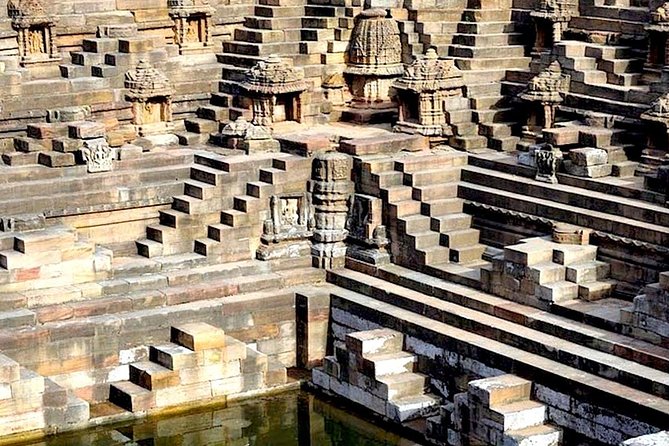
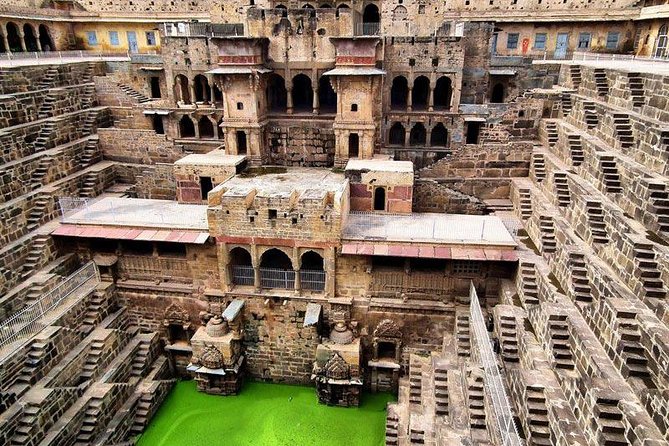
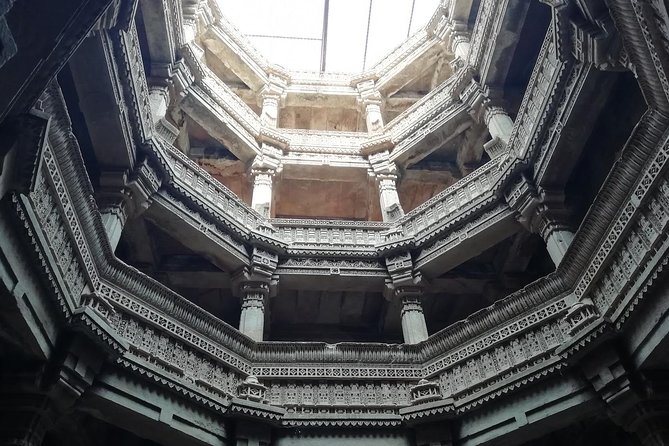
The first major stop is Rani ki Vav, a seven-story stepwell and UNESCO World Heritage Site. It was commissioned by a queen as a memorial to her husband, making it different from the many Indian monuments built by kings for queens.
A stepwell was not simply a hole for collecting water. It combined practical water access with carefully planned architecture and decoration. As you move down through the structure, the changing levels reveal the engineering behind the design. The scale makes more sense when you see how much stonework was required to create a usable, shaded route toward the water.
You have about two hours here, with admission included. That is a sensible amount of time. A quick stop would let you admire the outline, but it would not give you enough room to study the carved details or understand the building as a complete work of design.
Your guide can add useful context about Gujarati culture and the monument’s purpose. This is one place where a private tour has an advantage: you can stop to ask why the stepwell was built, how it served people, and what makes its memorial role unusual instead of moving along with a large group.
The practical drawback is that the site requires walking through a large historic structure. The tour information says most people can participate, but you should still be ready for a substantial visit on foot. Wear footwear suitable for a long morning of exploring, and keep water with you for the day.
Rani ki Vav is likely to be the architectural high point for anyone drawn to stone carving and engineering. Modhera is more open and ceremonial. Together, they show two very different ways that power and religion shaped Gujarati buildings.
Modhera Sun Temple and its Solanki design
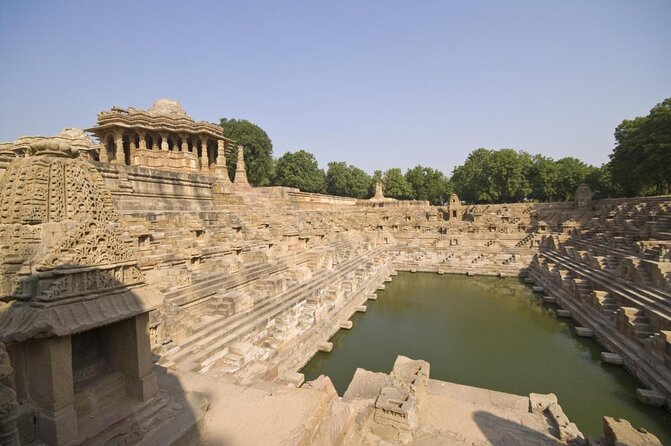
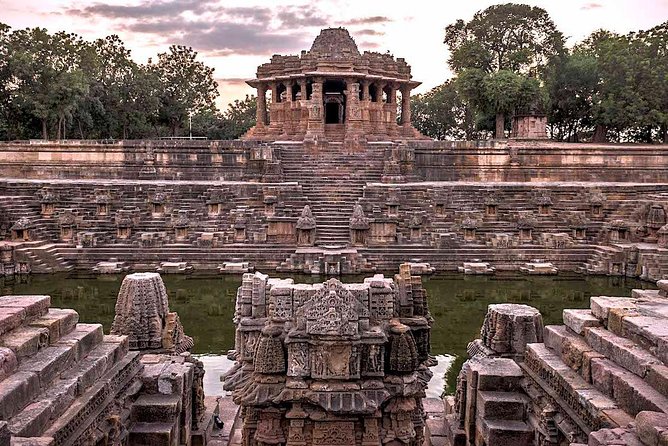
The next major stop is Modhera Sun Temple, built in the 11th century for the Sun God. The temple was commissioned by Bhimadeva I of the Solanki dynasty in 1026, on the banks of the Pushpavati River.
You get about two hours here, again with admission included. That gives you time to look carefully at the temple’s design instead of treating it as a short photo stop. The architecture is the focus, and the guide’s explanation can help you connect the layout, religious purpose, and Solanki period.
I like the way this stop follows Rani ki Vav. The stepwell draws you downward through a series of levels. Modhera gives you a different spatial experience, with a temple made to express devotion to the sun. The contrast keeps the day from feeling repetitive, even though both stops involve historic stone architecture.
The temple is also a good place to slow down and look beyond the most obvious view. Pay attention to the relationship between the structure and its setting, then ask your guide about the symbols and design choices you notice. Guides named Sanket, Anand, and Bhupendra Oza have been praised for tailoring explanations to individual interests, telling stories, and discussing Indian culture and architecture in detail.
That detail matters on a tour like this. Without explanation, you may appreciate the workmanship but miss why the building was planned as it was. With a guide, you can shape the conversation around architecture, religion, dynastic history, or the practical work involved in constructing such a temple.
The distance from Ahmedabad is the catch. The drive can take two to three hours each way, depending on the day and road conditions. You should not book this expecting a quick excursion. Bring something to read or listen to, and treat the road time as part of the cost of reaching these sites.
The upside is the view from the car. One direct booking described the journey as long but worthwhile, with excellent views along the way. You will see changing scenery outside the city, though the tour information does not promise a specific route or set of roadside stops.
Patan Patola: a craft measured in months
The Patola visit is shorter, about one hour, but it gives the day a welcome change of pace. In Patan, you visit silk weavers who produce Patola sarees, one of Gujarat’s most prized textile traditions.
The striking fact is the time involved. A single saree can take four weavers about 100 days to make. In an age of quick production, that process helps explain why Patola pieces are valuable and sought after. You are not just looking at finished clothing. You are seeing a careful form of textile work that depends on repeated, coordinated effort.
The stop is described as a chance to see the weaving in action. The exact demonstration can depend on the workshop and the day, so I would approach it as a working craft visit rather than a guaranteed hands-on class. You may see how the weavers handle the silk and build the pattern, while your guide explains the value of the work and its place in Gujarati culture.
This is also the point where some visitors may feel pressure to buy. The provided details do not say that a purchase is required, and the tour is presented as a visit to the weavers. You can enjoy the process without assuming you must take home a saree.
One hour is enough for an introduction, but not for a complete study of Patola production. If textiles are your main interest, ask in advance if the schedule can give this stop more attention. The private format makes that request more realistic than it would be on a fixed group excursion.
The Patola visit works best for anyone who wants the day to include present-day culture, not just monuments. It also gives you a more grounded understanding of why handmade objects can command high prices. Four people and roughly 100 days of work put the $150 tour price into a different perspective, especially if you value access to local craft traditions.
Same place, a different morning at the gates:
- New Delhi: Akshardham Temple Tour with Water and Light Show
★ 4.8 · 313 reviews - Old Delhi Food-Spice Market-Temples Tour Soon Featured on NETFLIX
★ 5.0 · 304 reviews - Private Guided Spiritual Walk in Banganga Hindu Temples
★ 5.0 · 271 reviews - Taj Mahal Sunrise with Lord Shiva Temple:- All Inclusive
★ 5.0 · 207 reviews
The private car, guide, and long road hours
Private transport is the backbone of this experience. You avoid arranging separate taxis or working out public bus connections between Ahmedabad, Patan, and Modhera. That is especially useful when three major stops are spread across a large area.
A private vehicle also changes the rhythm of the day. You can talk with the guide as you go, ask for cultural background, and make small requests without needing to suit a busload of strangers. The tour is private, so only your group participates.
The guide is just as important as the car. The strongest part of the experience depends on the person explaining the monuments and answering questions. Sanket has been singled out for making a solo visitor feel comfortable, personalizing the information, and helping with food and local context. Anand has been praised for detailed explanations and attentive care. Bhupendra Oza has been noted for using stories and talks about Indian culture and architecture to make the long drive more interesting.
Those names give you a useful booking tip: ask which guide is available, and tell the provider what interests you. A person focused on architecture may want different explanations from someone interested in religion, textiles, or daily life in Gujarat.
The road time remains the main limitation. A 10-hour day with two to three hours of driving each way can feel tiring, particularly after walking around Rani ki Vav and Modhera. The tour is better for you if you prefer covering important sights efficiently rather than spending a whole day in one place.
Lunch, price, and overall value
At $150 per person, this is not the cheapest way to see the area. You are paying for a private car, guide, lunch, and admission to the listed attractions, along with the convenience of having the route arranged.
The value improves as your group gets larger, since one private vehicle and guide serve the whole party. Couples and small families may also prefer paying more for comfort and control rather than piecing the day together with several separate rides.
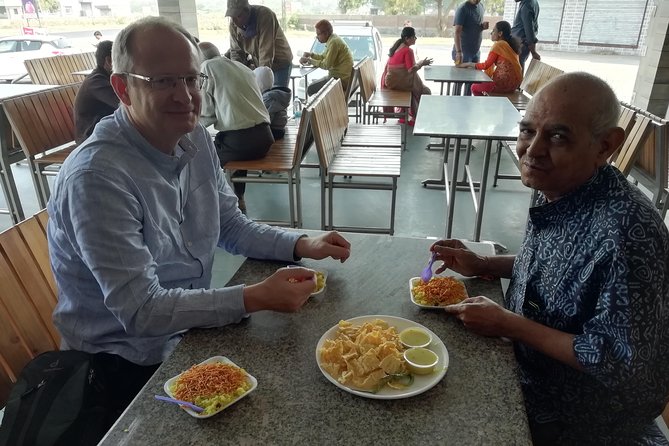
Lunch is included, while dinner is not. That distinction matters because the tour starts at 8:00 in the morning and runs for about 10 hours. You should plan for your evening meal yourself after returning to Ahmedabad.
I would judge the price favorably if you have limited time in Gujarat, want all three highlights, and place a high value on reliable transport. If you are an experienced independent visitor who enjoys public buses and arranging tickets on the go, you may find the premium harder to justify.
The strongest value comes from the combination of access and explanation. Rani ki Vav, Modhera Sun Temple, and Patola weaving are not interchangeable sights, and the guide helps connect them to Gujarati culture rather than leaving you with three disconnected stops.
Who should book this Ahmedabad excursion?
I would recommend it most strongly to:
- First-time visitors based in Ahmedabad
- Couples or families wanting a private day without transport hassles
- People interested in architecture, religion, history, or textiles
- Solo visitors who value a guide and personal attention
- Anyone with only one spare day for Patan and Modhera
You should think twice if you dislike long car rides, tire easily after several hours of walking, or prefer to spend a full day at one location. The trip is efficient, but it is not slow travel.
It also suits people who want a flexible conversation. The private setup means you can ask for more detail at the stepwell, discuss temple design at Modhera, or focus on craft methods in Patan. That personal exchange is one of the clearest reasons to choose this tour over a basic transfer service.
Booking confirmation is sent within 48 hours, subject to availability. Free cancellation is available if you cancel at least 24 hours before the start time. Changes or cancellations inside that 24-hour window are not accepted for a refund.
Should you book this tour?
Book it if you want the three major cultural stops handled in one carefully packed day. Rani ki Vav and Modhera Sun Temple justify the journey, while the Patola visit adds a human, working craft tradition that many sightseeing plans leave out.
I would particularly choose it with a partner, family, or small group, since the $150 price buys private transport, a guide, lunch, and included admission. Ask about the available guide, share your interests early, and accept that the road time is part of the deal.
Skip it if your ideal day has little driving and plenty of unscheduled time. For everyone else, this is a practical way to see some of Gujarat’s finest architecture and one of its most demanding textile traditions without wrestling with the transport yourself.
FAQ
What time does the tour start?
The tour starts at 8:00 am.
How long does the experience last?
The tour lasts approximately 10 hours.
Is transportation included?
Yes. Private transportation by car is included, along with a private guide.
Is lunch included?
Yes. Lunch is included. Dinner is not included.
Which sites are visited?
The tour visits Rani ki Vav, Modhera Sun Temple, and Patan for a Patola saree weaving visit.
Can I cancel for a full refund?
Yes, if you cancel at least 24 hours before the experience start time. Cancellations or changes made less than 24 hours in advance are not accepted for a refund.
Just added around India
- South India Tour- Temple Architecture and Backwaters★ 5.0 · 7 reviews
- 8 Days Private South India Temple Tour with 4 Star Luxury Hotels★ 5.0 · 3 reviews
- Chennai City Highlights – Government Museum & Temple Discovery★ 4.0 · 7 reviews
- Full Day Tour of Konark Temple and Puri★ 5.0 · 7 reviews
- Divine Delhi: Full-Day Tour of Temples & Spiritual Sites★ 4.5 · 3 reviews
- 6-hour Temples tour of Bhubaneswar including hotel pick-up & drop-off★ 4.0 · 3 reviews
- Bhubaneswar city tour & Konark Sun Temple in private car with guide★ 5.0 · 29 reviews
- Puri Jagannath, Konark Sun temple, Pattachitra art in best of Odisha in 2 days★ 5.0 · 10 reviews
Private Temple Tours, compared.

Waterfalls, Water Temple & Rice Terraces Private Tour
Read our review →
Montserrat Monastery Small Group or Private Tour Hotel pick-up
Read our review →
Full-Day Angkor Wat Sunrise Private Tour with Guide from Siem Reap
Read our review →
Chiang Rai Temples: Private Tour from Chiang Mai
Read our review →
Private Tour: Teotihuacan and Guadalupe Shrine
Read our review →
Grand Palace, Wat Pho, and Wat Arun Private Tour
Read our review →
Ephesus and Temple of Artemis Private Tour from Kusadasi Port
Read our review →
Browse the lists this tour appears in