
Review · ITALY
Paestum: Temples and Museum Tour with Archaeologist Guide
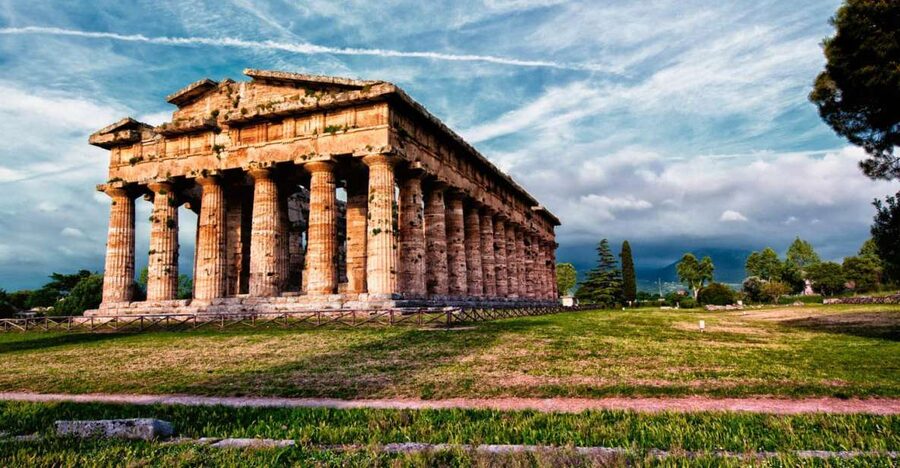
Ancient Greece, far from Athens. This two-hour Paestum tour pairs three remarkably preserved Doric temples with the National Archaeological Museum, giving you both the outdoor ruins and the art that once decorated them. An archaeologist guide leads the way in English, Italian, Spanish, or French.
I especially like the private-group format and the fact that admission lines are handled for you. Guides including Angelo, Angela, and Luciana have earned warm praise for clear explanations, thoughtful pacing, and a real passion for the site. The main drawback is practical: transportation, food, and drinks are not included, and the $260.56 price is for a group up to one, so the value depends heavily on how many people your booking covers.
Paestum in a nutshell
- Three Greek temples in one archaeological park: See the Temple of Neptune, Temple of Ceres, and Basilica, all in the Doric style.
- A guide with an archaeology background: The tour focuses on the religious buildings, their design, and the world around them.
- A museum visit that completes the ruins: The National Archaeological Museum preserves temple decorations and important Greek art.
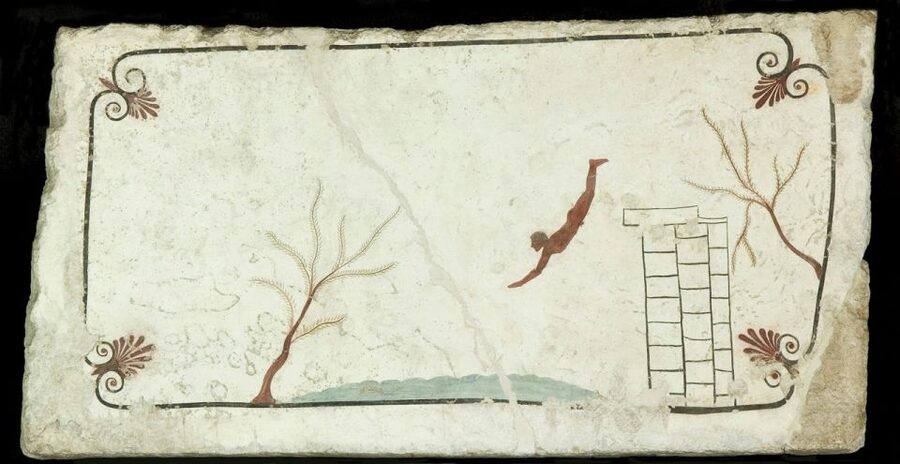
- The Tomb of the Diver: This carefully preserved painted tomb is one of the museum’s most memorable objects.
- A compact two-hour plan: The park and museum are covered in a short, focused visit rather than an all-day outing.
- Private guiding in four languages: You can book a private group with an English, Italian, Spanish, or French-speaking guide.
Why Paestum deserves a place in your Campania plans
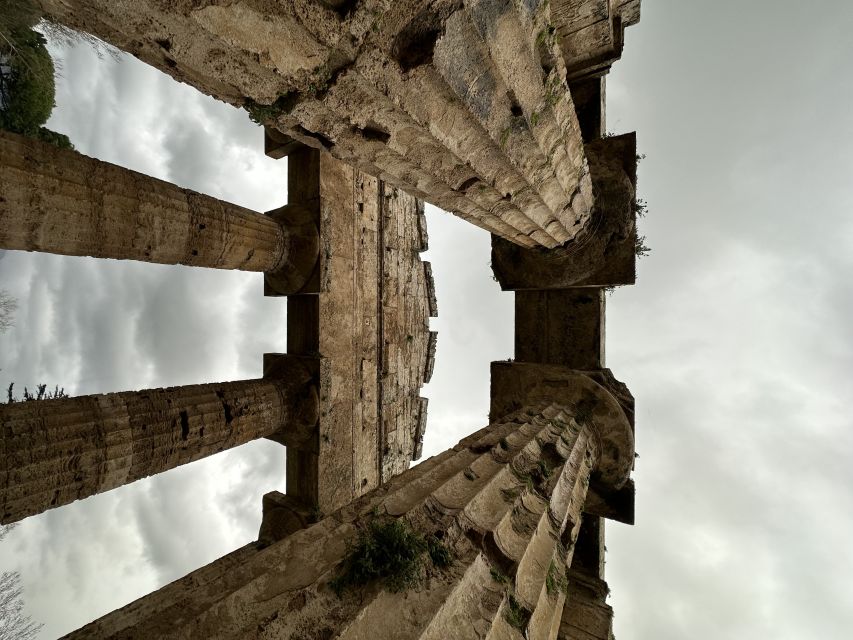
Paestum offers a different kind of ancient-site experience from the better-known ruins around Naples. Here, the main attraction is not a city frozen in place with houses, shops, and streets. It is the powerful remains of a Greek religious center, with temples that still give you a clear sense of their original scale and design.
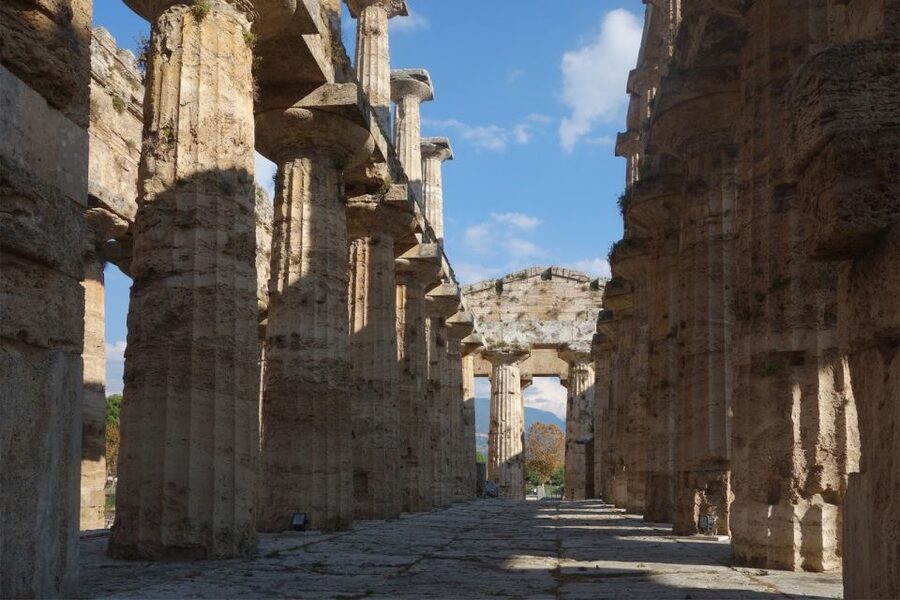
That clarity is the great appeal. The three Doric temples are not reduced to a few scattered stones. Their columns and major architectural forms remain impressive enough for you to understand why these buildings mattered. You can walk along ancient streets, pause for photographs, and compare the different temples while your guide explains what you are seeing.
I like the way this tour connects the stones outdoors with the objects inside the museum. Without that second stop, you might admire the columns but miss the sculptures, decorations, and painted scenes that help explain how the site looked and functioned in antiquity.
The visit is also short enough to fit into a broader Campania itinerary. Two hours will not leave much room for lingering, but it gives you a focused introduction to Paestum without turning the day into a full archaeological marathon.
More Valley of the Temples Tours in Italy:
- Agrigento: Valley of the Temples Skip-the-Line Sunset Tour
★ 4.5 · 1,512 reviews - Palermo: Agrigento and the Valley of the Temples Day Tour
★ 4.2 · 1,240 reviews - Agrigento: Valley of the Temples Ticket & App Audioguide
★ 4.3 · 1,160 reviews
Starting at Via Magna Graecia 917
The meeting point is at the entrance to the Archaeological Museum of Paestum on Via Magna Graecia 917. This detail matters because the tour begins at the museum rather than at a hotel or transport hub. You need to arrange your own way to the meeting point, since transportation is not included.
Starting at the museum also creates a logical route. You meet your guide, enter the archaeological area, visit the temples, and then return to the museum for the indoor portion. At the end, the activity finishes back at the same meeting point.
I would allow enough time to locate the entrance without rushing. The tour has a fixed two-hour duration, so arriving late could cut into the explanation at the temples or the museum. Starting times vary, so check the available slot carefully when booking.
Walking through Paestum’s three Doric temples
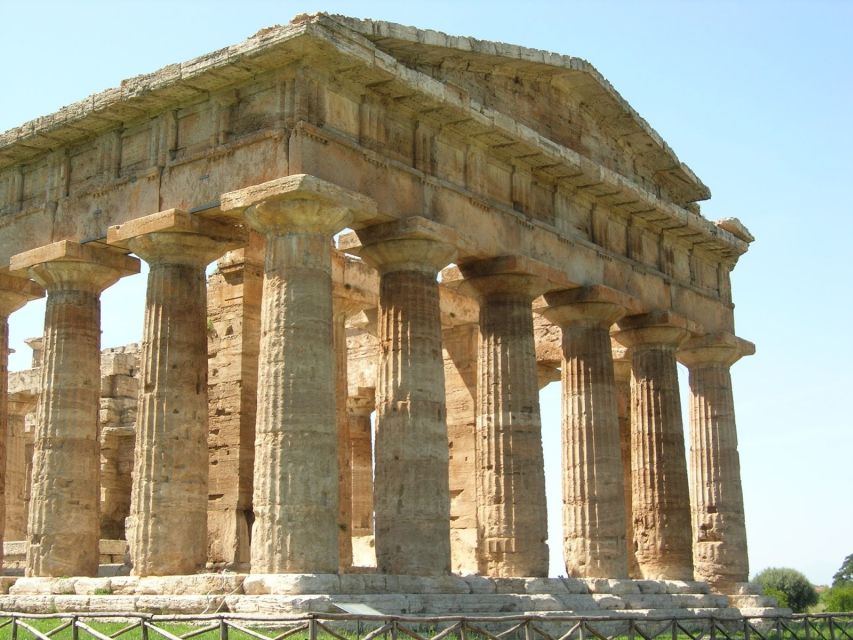
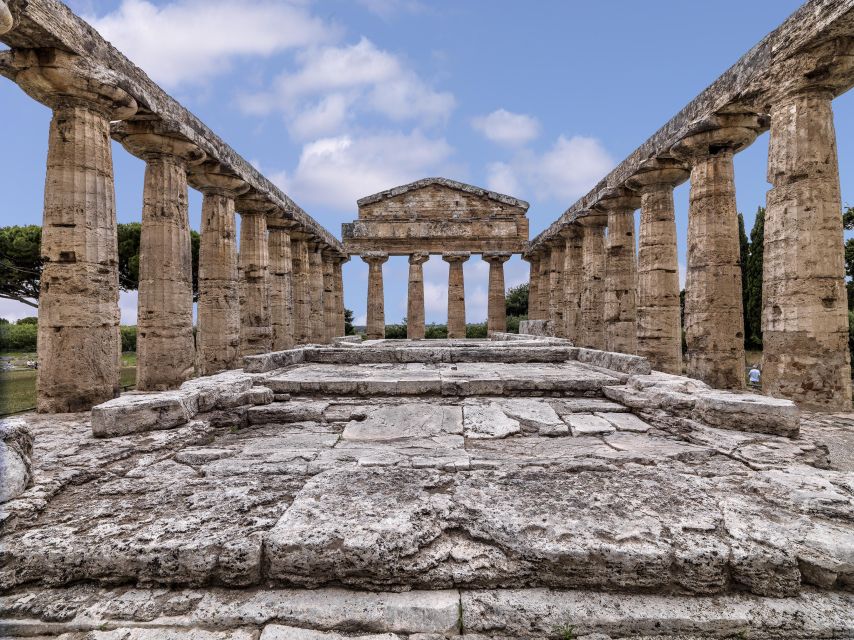
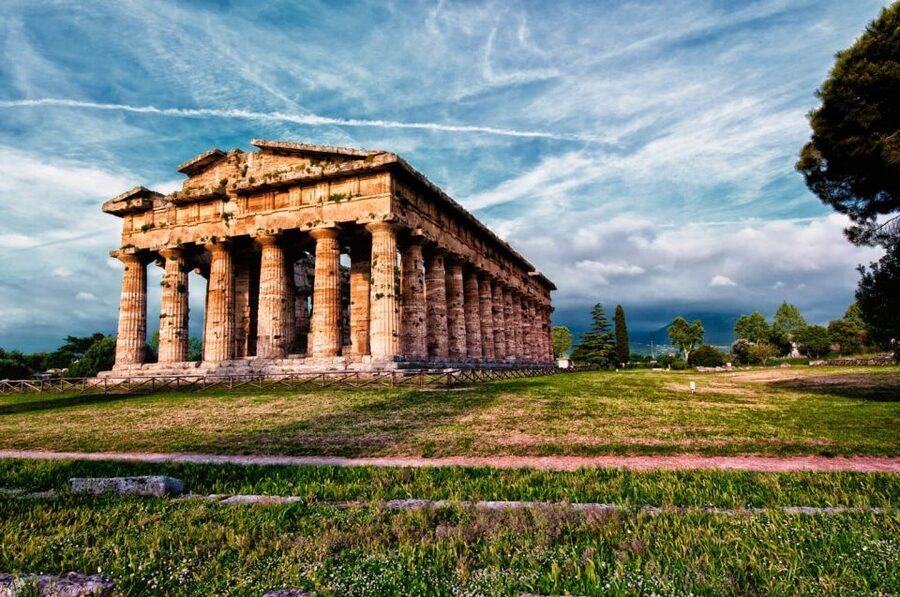
The archaeological park is the heart of the experience. Your guide takes you along ancient streets and introduces the religious buildings that make Paestum famous. The main stops are the Temple of Neptune, the Temple of Ceres, and the Basilica.
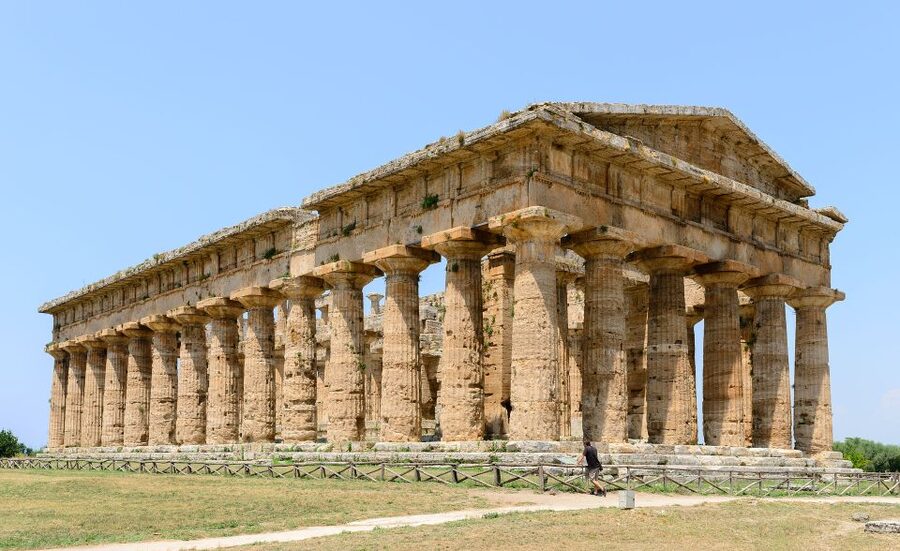
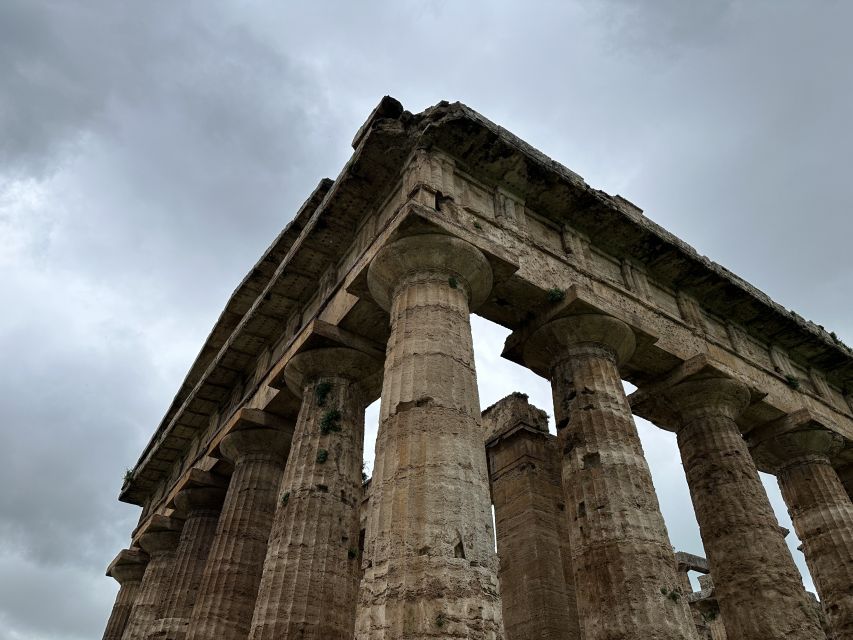
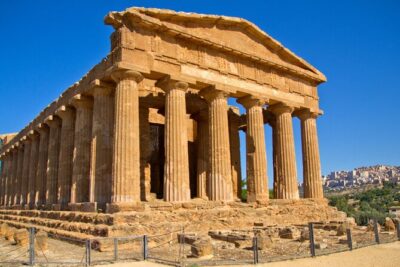
The Temple of Neptune is the headline sight. Its surviving Doric structure gives you a strong sense of the order and discipline of Greek architecture. The columns are the kind of feature that can look simple in a photograph but feel much more impressive when you are close enough to study their size and arrangement.
The Temple of Ceres adds another important point of comparison. Seeing more than one temple helps you notice the shared Doric language while also appreciating differences in preservation and form. This is where a guide earns the fee. Rather than simply pointing toward columns, the guide can help you understand why the buildings look the way they do.
The Basilica is another major stop in the park. Despite its name, it is part of the Greek temple group at Paestum, and its remains make the site feel larger than a single monument visit. You are not simply taking a photograph at one famous ruin. You are moving through a wider sacred area with several major buildings.
The exact route and amount of time at each monument can vary with the guide and the group. That is useful if you have a particular interest in architecture or archaeology. A private visit lets you ask questions as you go, rather than waiting for a large group to catch up or move on.
Still, keep your expectations realistic. Two hours includes both the archaeological park and the museum. You will get an informed overview, not a slow, academic examination of every stone. If you want long stretches for photography or independent wandering, you may feel the schedule is brisk.
What the archaeologist guide adds
The strongest feature of this experience is the guide. The temples are impressive on their own, but the meaning behind them is easier to grasp with someone who can explain the architecture and religious setting in plain language.
Angelo is praised for giving a useful introduction, answering questions, and keeping a comfortable pace. That combination is important at an open-air site. A good opening explanation helps you get your bearings quickly, while a steady pace keeps the tour from becoming either rushed or too slow.
Angela is described as bringing clear expertise and real passion for the subject. That matters because Paestum rewards curiosity. You can ask why the temples were built in the Doric style, how their decorative pieces relate to the buildings, or what separates one temple from another.
Luciana also receives strong praise for the information she provided and for making the site enjoyable. Her approach is a reminder that an archaeological tour need not feel dry. The best guiding gives you useful facts while leaving room for the site itself to make an impression.
Because the group is private, you have more freedom to ask questions and request clarification. The group size is listed as private, with the price described as applying to a group up to one. Since the wording and pricing are unusual, check the exact booking details for your party before paying. If you are booking for more than one person, confirm how the final group price is calculated.
More Museum Visits in Italy:
- Paestum: Private Tour of Greek Temples and Archaeological Museum
★ 5.0 · 60 reviews - Paestum: 2-Hour Greek Temples & Archaeological Museum
★ 4.8 · 19 reviews - Montserrat Museum and Monastery Entry Ticket
★ 4.5 · 1,740 reviews - Lisbon: Belem, Jeronimos Monastery, and Coach Museum Tour
★ 4.8 · 478 reviews
Inside the National Archaeological Museum of Paestum
The museum is not an afterthought. It holds important examples of Greek art, including pieces connected with the temples you have just seen. That pairing gives the visit a satisfying before-and-after structure: first you see the architecture, then you see some of the art and decoration associated with it.
You can expect to see relics that once served as temple decorations. These objects help fill in the visual details that time has stripped from the outdoor ruins. The temples may appear severe and stone-colored today, but museum pieces can show you that ancient religious buildings were part of a more decorated world.
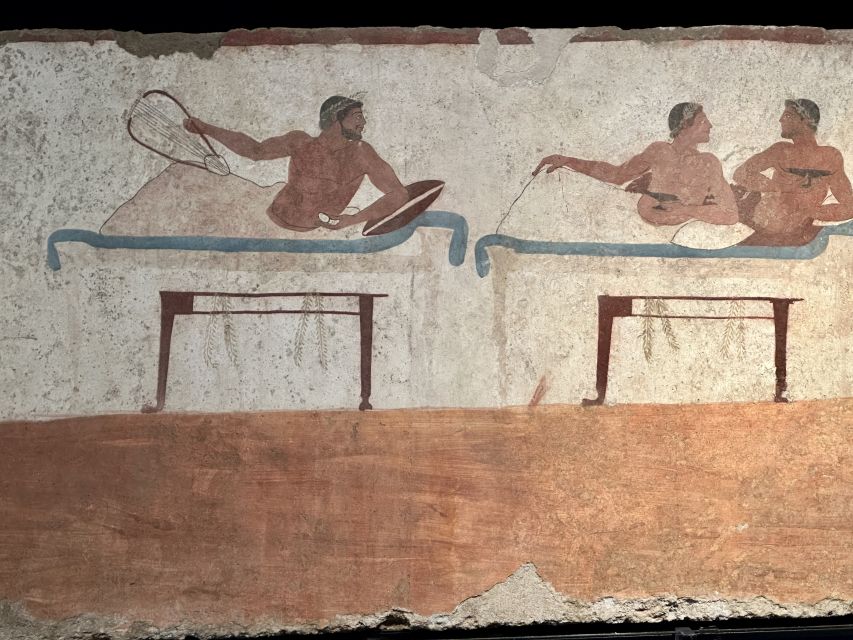
The museum also preserves painted tombs from Campania. These are valuable because they bring a different side of ancient life into the tour. The temples show public religious architecture, while the tomb paintings offer a more personal and figurative record.
The main museum highlight is the Tomb of the Diver, preserved in excellent condition. Its painted scene is one of the objects that can stay with you after the tour because it is both visually striking and unusual. Your guide’s explanation can help you look beyond the image itself and understand why the tomb belongs in the story of Paestum.
The museum portion is especially useful for anyone who prefers context to isolated monuments. If you only visit the park, you may leave with beautiful photographs but unanswered questions about the artwork and decoration. The museum gives those questions a place to land.
Is two hours enough for Paestum?
Two hours is enough for a solid introduction, provided you are happy with a focused route. You can visit the three principal temples, walk through sections of the archaeological park, and tour the museum with a guide.
It is not enough for a leisurely day at the site. You should not expect extended independent time at every monument, long pauses for sketching, or a detailed look at every museum case. The compact schedule is best for a first visit or for anyone fitting Paestum between other Campania plans.
I like the duration for practical reasons. Ancient sites can be tiring, especially when the visit combines outdoor walking with a museum. A two-hour format gives you the main story without requiring an entire day of concentration.
Your starting time matters. In bright or warm conditions, an earlier slot may make the outdoor portion more comfortable, though the available starting times depend on the date. Since no transport is provided, build your travel time to Via Magna Graecia 917 into your day.
What the $260.56 price really means
At $260.56 per group up to one, this is not a budget entry ticket. You are paying for a private guided experience, the guide’s services, and skip-the-line admission rather than simply access to the site.
The value is strongest if you want interpretation and convenience. An archaeologist guide can turn the temples from impressive ruins into a readable historical site. Skip-the-line entry also saves you from spending part of a short visit dealing with ticket queues.
The price is harder to justify if you mainly want to walk around independently. Paestum’s temples are visually powerful, so an independent visit may suit you if you already understand Greek architecture or prefer exploring at your own speed.
The group arrangement deserves close attention. The listed amount applies to a group up to one, and the experience is private. Confirm how the price works for your own party before booking, especially if you are traveling as a couple or family. A private tour can become better value when the cost is shared across several people, but the supplied price wording should not be treated as a universal per-group rate without checking.
There is no food, drink, or transport included. That keeps the tour focused, but it means you handle the rest of the day yourself. Plan your route to the meeting point and bring whatever refreshments you need.
Who will enjoy this Paestum tour most?
I would choose this tour if you want the major Paestum sights explained by a specialist and you prefer a private setting. It is particularly well suited to:
- First-time visitors who want help understanding Greek temple architecture.
- Couples or families who value a private pace and the chance to ask questions.
- Museum lovers who do not want to see only the outdoor ruins.
- Visitors with a tight schedule who need the main highlights covered in two hours.
- People who prefer English, Italian, Spanish, or French guiding.
It may be less suitable if you want a full-day archaeological experience or a long period of unstructured exploration. You might also prefer another arrangement if you need transportation included. That is not part of this activity, so you must reach Via Magna Graecia 917 on your own.
The tour also suits someone deciding between Paestum and other ancient sites in Campania. One guide’s comparison placed Paestum above Pompeii as an enjoyable visit, though that is a matter of taste. Pompeii offers streets, houses, and public buildings, while Paestum gives you a more concentrated encounter with Greek temples and museum art.
A few practical ways to get more from the visit
Read the meeting point carefully. The tour starts at the entrance to the Archaeological Museum, not at a general city center location, and the activity ends there.
Arrive ready for both outdoor and indoor time. You will move through the archaeological park before visiting the museum, so comfortable clothing and shoes are sensible choices. The supplied details do not specify accessibility conditions, so contact the provider directly if you have mobility concerns.
Use the private format to ask focused questions. You might ask your guide to compare the three temples, explain the Doric features, or connect the museum’s decorative pieces with the buildings outside.
Do not skip the museum mentally just because the temples are the main attraction. The Tomb of the Diver and the painted tombs of Campania add a human and artistic side to the visit that the columns alone cannot provide.
Check the language and starting time before confirming. Guiding is available in English, Italian, Spanish, and French, and the exact departure times depend on availability.
Free cancellation is available up to 24 hours before the activity for a full refund, and you can reserve now and pay later. Those terms are useful if your Campania schedule is still shifting, but always confirm the conditions shown for your selected booking.
Should you book the Paestum temples and museum tour?
Book it if you want Paestum explained rather than simply photographed. The combination of three Greek temples, a museum filled with related art, and a private archaeologist guide gives you a well-shaped two-hour visit.
The best reasons to choose it are the guides’ praised pacing and enthusiasm, the skip-the-line admission, and the chance to see the Tomb of the Diver after walking among the temples. The main reasons to hesitate are the high listed price, the lack of transportation, and the limited time for independent wandering.
For a first visit, I think the guided format earns its place, especially if you care about architecture and want the museum included. Just confirm the group pricing, arrange your own transport to Via Magna Graecia 917, and arrive ready to make the most of a compact but worthwhile introduction to Paestum.
FAQ
Where does the Paestum tour begin?
The tour begins at the entrance to the Archaeological Museum of Paestum on Via Magna Graecia 917.
Where does the activity end?
The tour ends back at the same meeting point, at the entrance to the Archaeological Museum of Paestum.
How long does the tour last?
The experience lasts two hours. Starting times vary, so check availability for your chosen date.
What languages are available?
The live guide can lead the tour in English, Italian, Spanish, or French.
Is transportation included?
No. Transportation is not included, and you need to make your own way to the meeting point.
What is included in the price?
The price includes the guide’s services and skip-the-line entrance tickets. Food and drinks are not included.
Just added around Italy
- Private Tour to the Villa Romana del Casale and the Valley of the Temples★ 4.5 · 19 reviews
- Agrigento and Piazza Armerina: Valley of the Temples and Villa Romana del Casale★ 4.5 · 121 reviews
- Villa Romana Del Casale in Piazza Armerina and Valley Of Temples in Agrigento★ 4.5 · 38 reviews
- Padre Pio’s Shrine in San Giovanni Rotondo from Bari (Apulia)★ 5.0 · 3 reviews
- Cooking Class in a former Artist Monastery in the Heart of Monopoli★ 5.0 · 18 reviews
- Agrigento to Siracusa with Valley of Temples and Roman Villa Trip★ 5.0 · 5 reviews
- Private transportation to the Valley of the Temples + Agrigento★ 5.0 · 8 reviews
- Agrigento Valley of the Temples Archaeological Area★ 4.0 · 33 reviews
Valley of the Temples Tours, compared.
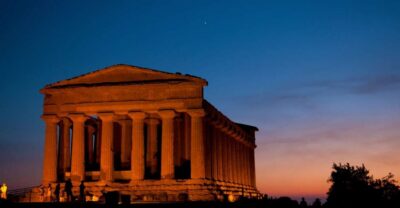
Valley of the Temples Skip-the-Line Sunset Tour
Read our review →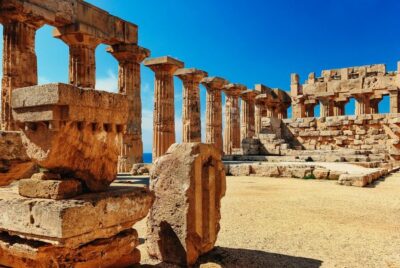
Agrigento and the Valley of the Temples Day Tour
Read our review →
Valley of the Temples Ticket & App Audioguide
Read our review →
Valley of the Temples and Scala dei Turchi Day Trip
Read our review →
Catania: Valley of the Temples and Turkish Steps with Snack
Read our review →
Valley of the Temples Entry Ticket & Audio Guide
Read our review →Browse the lists this tour appears in